
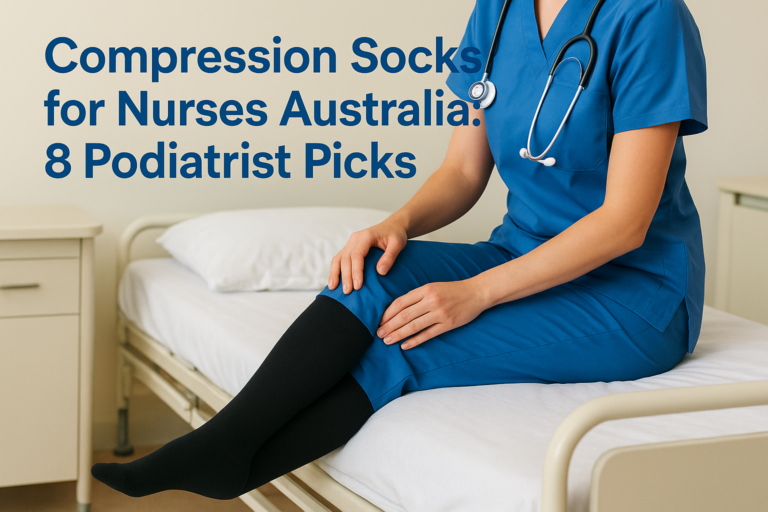
Twelve-hour shifts on hard hospital floors take a toll on your legs long before the pain shows up as swelling, heaviness, or aching calves by hour eight. If you’re searching for compression socks for nurses Australia wide, you already know the wrong pair can pinch, roll down, or do nothing for your circulation at all.
The short answer is that you need graduated compression, meaning tighter at the ankle and looser up the calf, typically in the 15-20mmHg or 20-30mmHg range for most nursing shifts. Beyond that, fit, fabric, and durability through daily washing matter just as much as the compression rating printed on the packet.
As podiatrists who fit compression garments and assess lower limb circulation for a living, we’ve tested and reviewed the options our own patients in healthcare rely on. This list covers eight podiatrist-approved picks, what makes graduated compression effective, and how to choose the right pressure level and size so your legs feel fresher at the end of a long shift, not worse.
1. What to look for in nursing compression socks
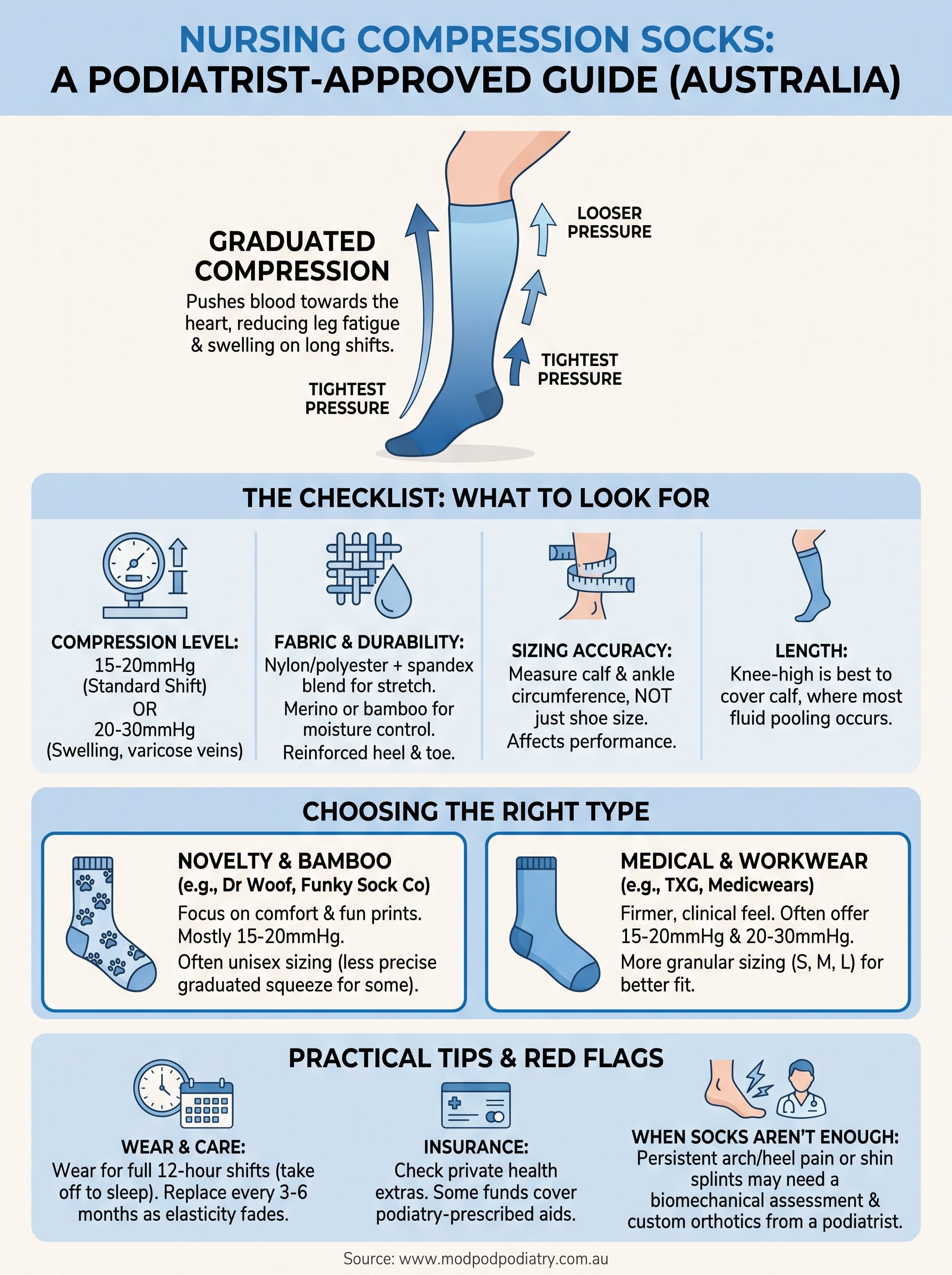
Compression rating is the first thing to check, and it’s the one nurses get wrong most often. Graduated compression works by squeezing hardest at the ankle and gradually easing off towards the knee, which pushes blood back up towards the heart instead of letting it pool in your lower legs. For a standard 8 to 12 hour shift on your feet, 15-20mmHg is the sweet spot for most people. If you already deal with visible swelling, varicose veins, or you’re on your feet for back-to-back shifts, 20-30mmHg gives a firmer, more medical-grade squeeze.
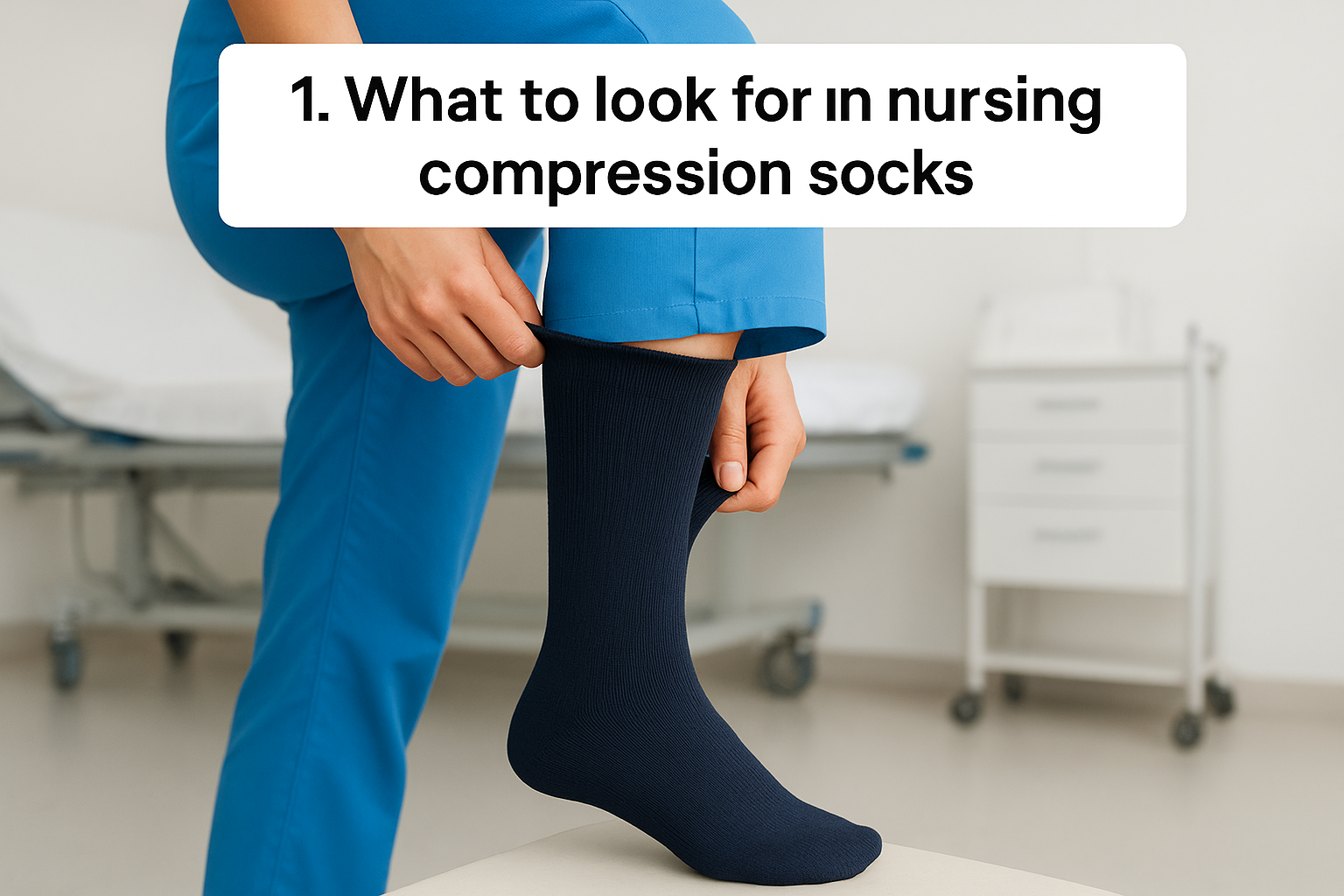
Fabric matters just as much as pressure. Nurses need socks that survive daily washing in hot water, so look for a blend of nylon or polyester with spandex for structural stretch, plus either merino wool or bamboo for moisture control. Cotton-heavy socks lose their compression fast and stay damp inside closed shoes, which is exactly the environment fungal infections love. Sizing accuracy also affects performance far more than people expect. A compression sock that’s too big won’t apply even pressure and will bunch at the ankle; too small and it cuts off circulation instead of assisting it. Always size against a calf and ankle circumference chart rather than shoe size alone.
The compression number on the packet only works if the sock actually fits your calf and ankle measurements.
Durability and toe construction round out the practical checklist. Reinforced heels and toes matter for anyone walking 8,000 to 15,000 steps a shift, and a cushioned sole helps absorb impact on vinyl and concrete hospital floors. Below is the quick reference we use when fitting patients who work in healthcare.
| Feature | What to look for | Why it matters for nurses |
|---|---|---|
| Compression level | 15-20mmHg (standard shift) or 20-30mmHg (swelling, long shifts) | Matches pressure to your actual circulation needs |
| Fabric | Nylon/polyester with spandex, merino or bamboo | Withstands daily washing, controls moisture |
| Sizing | Measured against calf/ankle circumference chart | Ensures even, effective graduated pressure |
| Toe/heel | Reinforced construction | Handles high step counts without wearing through |
| Length | Knee-high over ankle or crew | Knee-high covers the calf, where most nursing swelling occurs |
Finally, think about length. Knee-high socks are the standard choice for nursing because most fluid retention happens in the calf, not just the foot. Ankle or crew-length compression socks look neat under scrubs but skip the calf entirely, so they’re better suited to short shifts or as a backup pair rather than your daily workhorse.
2. Dr Woof bamboo compression socks
Dr Woof built a following among Australian nurses by leaning into novelty prints without skimping on function, and that combination is why patients keep bringing this brand up in clinic. Bamboo compression socks from Dr Woof are designed specifically for people on their feet all day, which makes them a genuine contender for anyone comparing compression socks for nurses rather than generic athletic pairs.
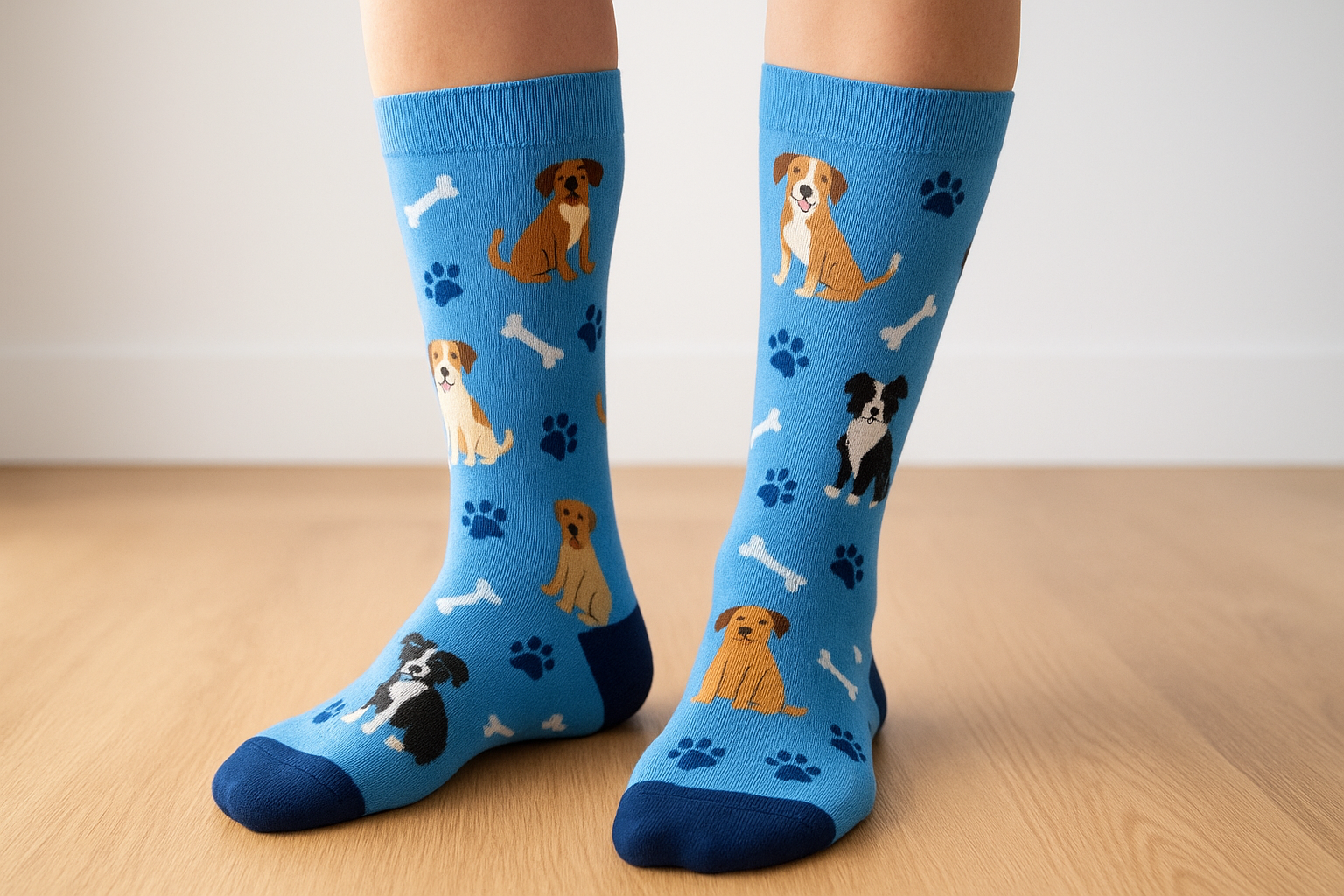
Compression level
Each pair delivers a firm graduated compression of 15-20mmHg, sitting right in the range podiatrists recommend for standard 8 to 12 hour shifts. It’s not a medical-grade sock aimed at diagnosed venous conditions, so if you’re managing visible varicose veins or significant swelling, you’ll want to look further down this list at a 20-30mmHg option instead.
A 15-20mmHg bamboo sock covers most standard shifts, but it isn’t built for diagnosed circulation problems.
Materials and comfort
Bamboo fibre gives these socks a natural edge over synthetic-only blends, since it wicks moisture and resists odour better across a 12-hour shift in closed shoes. Combined with spandex for structural stretch, the fit stays snug at the ankle without digging in, and the cushioned sole adds a layer of shock absorption on hard hospital flooring.
Sizing range
Dr Woof runs a fairly standard unisex sizing split, covering shoe sizes roughly 6 to 11 in one size band. Calf circumference isn’t broken into multiple sizes the way some medical-grade brands offer, so if you have a larger or smaller calf than average, expect a looser or tighter graduated squeeze than the printed rating suggests.
Price and where to buy
Expect to pay around $24.95 to $29.95 AUD per pair directly through the Dr Woof website, with multi-packs bringing the per-pair cost down. They’re also stocked through some Australian pharmacy and uniform retailers, so check local stock before ordering online if you need them before your next shift.
3. Funky Sock Co classic compression socks
Funky Sock Co has carved out a loyal following among Australian healthcare workers who want their compression socks to double as a bit of personality under scrubs. Funky Sock Co compression socks come in dozens of prints, from paw prints to native Australian animals, and patients tell us they buy multiple pairs simply to match their mood for a shift, not just for the support.
Compression level
The brand’s classic range sits at 15-20mmHg graduated compression, which lines up with what most nurses need for a standard shift on their feet. It’s a moderate pressure designed to reduce fatigue and swelling without feeling restrictive, so it suits day-to-day wear rather than diagnosed venous disease. If you already manage varicose veins or chronic oedema, this isn’t the firm end of the market you’re after.
A fun print doesn’t mean a weak sock, but check the mmHg number before assuming it matches your medical needs.
Materials and comfort
These socks use a nylon and spandex blend with reinforced heel and toe panels, which holds up reasonably well against daily hot washing. They run breathable rather than plush, so nurses in warmer Sydney clinics or wards without strong air conditioning tend to rate the comfort higher than those wanting a thicker cushioned sole.
Sizing range
Funky Sock Co offers a single unisex size covering shoe sizes roughly 6 to 11, similar to Dr Woof. There’s no separate small or large calf option, so anyone outside the average calf circumference should expect the graduated pressure to shift slightly from the printed rating.
Price and where to buy
Pairs typically retail for $19.95 to $24.95 AUD through the Funky Sock Co website, with bundle discounts on three or more pairs. Stock also turns up through independent Australian gift and novelty retailers, though the full print range is usually only available online.
4. Sistasaidso+ compression socks
Sistasaidso+ is an Aboriginal-owned Australian brand that’s built genuine trust with healthcare workers, partly because it puts First Nations culture and community into every print, and partly because the socks perform well on a 12-hour ward shift. Many of our patients working in hospitals mention buying these socks specifically to support an Australian-owned business rather than a generic overseas import, which matters when you’re choosing compression socks for nurses and want your money staying local.
Compression level
The standard range sits at 15-20mmHg graduated compression, the same moderate pressure most podiatrists recommend for a typical shift on your feet. It’s suited to fatigue and mild swelling prevention rather than managing diagnosed venous disease, so nurses with existing circulation conditions should look at the firmer 20-30mmHg brands further down this list.
Choosing a sock that supports a cause you believe in still means checking the mmHg rating matches your actual shift demands.
Materials and comfort
Expect a cotton-nylon-spandex blend with reinforced heel and toe zones, giving a breathable feel that suits Sydney’s warmer months better than thicker thermal options. The stretch holds its shape through regular hot washing, though the cushioning is lighter than some medical-grade brands, so nurses on concrete floors for back-to-back shifts may want extra insole support underneath.
Sizing range
Sistasaidso+ runs a single unisex size, covering roughly shoe sizes 6 to 11, without a separate calf-circumference option. If your calf sits well outside the average range, the graduated pressure will feel slightly firmer or looser than the printed number suggests.
Price and where to buy
Pairs cost around $19.95 to $24.95 AUD through the Sistasaidso+ website, with bundle pricing on multi-packs. Stock also appears through select Australian Indigenous retail marketplaces and healthcare uniform suppliers.
5. TXG compression socks for nurses
TXG built its name in the sports recovery world before nurses started buying the same socks for shift work, and that medical-adjacent background shows in the build quality. TXG compression socks are designed with a firmer, more clinical feel than the novelty print brands above, which makes them a solid pick for nurses who care more about performance than pattern.
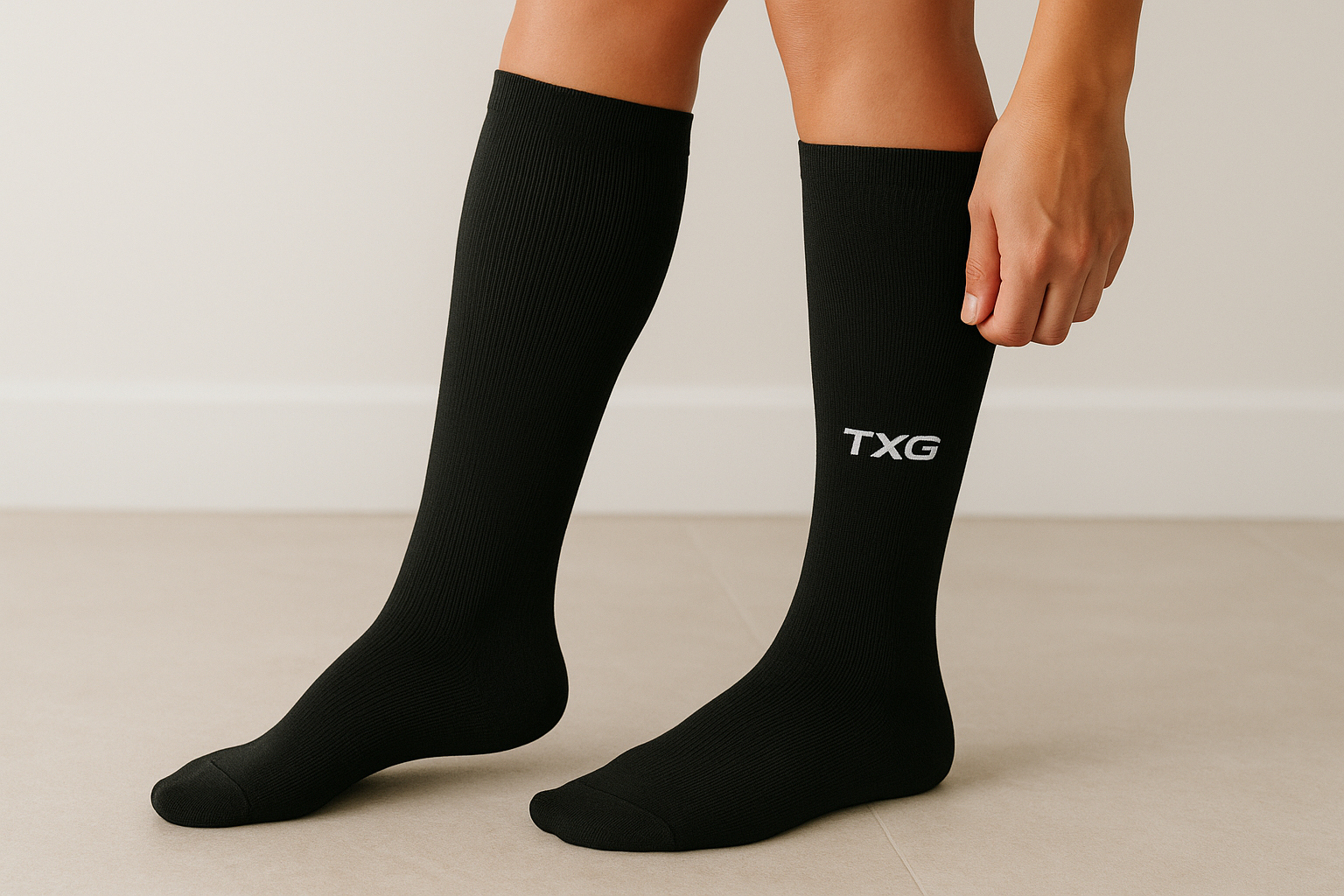
Compression level
TXG offers both 15-20mmHg and 20-30mmHg options within its nursing-friendly range, so you can match the pressure to your actual shift demands rather than settling for one fixed rating. The 20-30mmHg pair suits nurses managing visible swelling, varicose veins, or back-to-back 12-hour rosters, while the lighter option covers standard shifts without feeling restrictive.
A brand offering two compression tiers lets you match the sock to your actual circulation needs, not just your shift length.
Materials and comfort
The nylon and spandex construction feels noticeably firmer underfoot than the cotton-blend brands above, with a compact weave that holds its shape through repeated hot washing. Reinforced heel and toe panels handle high step counts well, and the moderate cushioning suits nurses standing on hard vinyl or concrete flooring for extended periods.
Sizing range
TXG breaks sizing down by shoe size across small, medium, and large, rather than the single unisex band most novelty brands use. That extra granularity means a more accurate graduated squeeze for nurses whose calf circumference sits outside the average range, which matters more at the firmer 20-30mmHg level.
Price and where to buy
Expect to pay $29.95 to $34.95 AUD per pair through the TXG website, sitting slightly above the novelty print brands given the added compression tier and sizing options. Some Australian sports and recovery retailers also stock select TXG ranges, though the full nursing-specific line is easiest to find online.
6. Medshop nursing compression socks
Medshop is one of Australia’s biggest uniform and scrubs suppliers, so it makes sense that its compression sock range gets bought as an add-on when nurses are already stocking up on shirts and shoes. Medshop compression socks sit firmly in practical, workwear territory rather than novelty prints, which suits nurses who want function first and don’t mind a plain black or navy pair doing the job quietly under scrubs.
Compression level
The range sits at 15-20mmHg graduated compression, matching the standard pressure recommended for an 8 to 12 hour shift on your feet. It’s a moderate squeeze aimed at reducing fatigue and mild swelling rather than treating diagnosed venous conditions, so nurses managing visible varicose veins should look at a firmer 20-30mmHg option instead.
A workwear-branded sock still needs to earn its compression rating, not just its uniform-matching colour.
Materials and comfort
Expect a polyester and spandex blend with a compact, close-fitting weave that holds shape through frequent hot washing, which matters given how often uniform items get laundered between shifts. The finish runs lighter and more breathable than bamboo or merino options, so nurses in busy, warm wards tend to find them comfortable, though the cushioning underfoot is modest compared with dedicated recovery brands.
Sizing range
Medshop offers a single unisex size covering roughly shoe sizes 6 to 11, without a separate small or large calf-circumference option. That means the graduated pressure will run slightly firmer or looser than the printed rating if your calf sits well outside the average range.
Price and where to buy
Pairs typically cost $14.95 to $19.95 AUD, making them one of the more budget-friendly options on this list. They’re available through the Medshop website and in-store at Medshop’s physical locations across Sydney, Melbourne, and Brisbane, often bundled with scrubs or shoe orders.
7. eNurse ecare compression socks
eNurse built its ecare range specifically around the nursing profession, and that focus shows in the branding, the fit, and the way patients describe wearing them. eNurse compression socks skip novelty prints altogether and stick to solid colours designed to sit neatly under scrubs, which appeals to nurses who want their compression gear to look as clinical as the rest of their kit.
Compression level
The ecare range delivers 15-20mmHg graduated compression, the standard pressure podiatrists recommend for an 8 to 12 hour shift on your feet. It’s aimed at reducing daily fatigue and mild swelling rather than managing diagnosed venous disease, so nurses already dealing with visible varicose veins should look towards the firmer 20-30mmHg options covered earlier in this list.
Solid, workwear-styled socks still need graduated pressure that matches your calf, not just a matching colour scheme.
Materials and comfort
Expect a nylon and spandex blend with a tight, compact weave that resists sagging through repeated hot washing between shifts. The fabric runs breathable rather than plush, and reinforced heel and toe zones hold up well against high daily step counts on hospital vinyl, though the cushioning underfoot is lighter than dedicated recovery brands like TXG.
Sizing range
eNurse offers a single unisex size covering roughly shoe sizes 6 to 11, without a separate calf-circumference option. Nurses with a larger or smaller calf than average should expect the graduated squeeze to sit slightly outside the printed 15-20mmHg rating.
Price and where to buy
Pairs cost around $18.95 to $22.95 AUD through the eNurse website, with multi-pack pricing bringing the per-pair cost down for anyone stocking up for a full roster. Selected Australian uniform and nursing supply stores also carry the range, though online ordering guarantees the full colour selection.
8. Medicwears compression socks
Medicwears is a smaller Australian online retailer that focuses almost entirely on medical and allied health compression wear, which means the nursing range feels more clinical than the novelty print brands earlier on this list. Medicwears compression socks target people who want a no-fuss, medical-grade option without paying hospital-supply prices, and that positioning suits nurses who’ve already decided they want firm support over fun patterns.
Compression level
Medicwears stocks both 15-20mmHg and 20-30mmHg graduated compression pairs, giving you a choice depending on how your legs feel by the end of a shift. The firmer 20-30mmHg option suits nurses managing visible swelling or varicose veins, while the 15-20mmHg pair covers standard 8 to 12 hour rostering without feeling overly tight.
Having two compression tiers in one range means you’re not stuck guessing which pressure actually suits your legs.
Materials and comfort
Overwhelmingly these socks use a polyester and spandex weave with a compact, medical-style finish rather than a plush cushioned sole. Reinforced heel and toe panels handle repeated hot washing well, though nurses used to bamboo or merino blends may find the fabric feels thinner and less breathable across a full 12-hour shift.
Sizing range
Sizing runs across small, medium, and large bands tied to shoe size rather than a single unisex fit, which gives a more accurate graduated squeeze than the one-size brands covered earlier. This matters most at the 20-30mmHg level, where an inaccurate fit can undermine the therapeutic pressure entirely.
Price and where to buy
Pairs cost roughly $22.95 to $27.95 AUD through the Medicwears website, sitting mid-range compared with the rest of this list. Stock is mostly online only, so factor in shipping time if you need them before your next roster starts.
9. Infectious Clothing Co compression socks
Infectious Clothing Co has become something of a cult favourite among Australian nurses, thanks to bold, medically-themed prints that riff on syringes, cells, and hospital humour rather than generic patterns. Infectious Clothing Co compression socks trade on personality first, but they still back that up with a graduated compression build that holds its own against the more clinical brands on this list.
Compression level
The range sits at 15-20mmHg graduated compression, the standard pressure recommended for an 8 to 12 hour shift on your feet. It suits everyday fatigue and mild swelling prevention rather than diagnosed venous conditions, so nurses managing visible varicose veins or significant oedema should look towards the firmer 20-30mmHg brands covered earlier in this list.
A bold print under your scrubs is a bonus, not a substitute for checking the mmHg rating actually suits your shift.
Materials and comfort
Expect a nylon and spandex blend with reinforced heel and toe panels, giving a snug, breathable fit that holds up through regular hot washing between shifts. The fabric runs lighter than bamboo or merino options, so nurses in warmer wards or clinics without strong air conditioning tend to find them comfortable over a full 12-hour stretch, though the cushioning underfoot is modest rather than plush.
Sizing range
Infectious Clothing Co runs a single unisex size, covering roughly shoe sizes 6 to 11, without a separate calf-circumference option. Nurses with a calf outside the average range should expect the graduated squeeze to sit slightly firmer or looser than the printed 15-20mmHg rating.
Price and where to buy
Pairs typically retail for $19.95 to $24.95 AUD through the Infectious Clothing Co website, with bundle discounts on three or more pairs. Stock also turns up through select Australian healthcare uniform retailers, though the full print range is usually easiest to find online.
10. When aching legs need more than compression socks
Socks can only do so much. Compression socks for nurses ease fatigue and support circulation, but they don’t fix a biomechanical problem, a stress fracture, or nerve pain radiating from your lower back down through your calf. If you’ve tried three or four brands from this list and you’re still finishing shifts with throbbing arches, numb toes, or swelling that doesn’t settle overnight, that’s your body telling you the issue sits deeper than fabric and pressure ratings.

Heel pain, plantar fasciitis, and shin splints are common among nurses who spend 12 hours on concrete and vinyl flooring, and none of these conditions respond to compression alone. Custom orthotics built from a proper gait assessment address the actual mechanical cause, correcting how your foot strikes the floor and distributing pressure away from irritated tissue. A podiatrist can also check whether your footwear is contributing to the problem, since even a well-fitted compression sock can’t compensate for shoes that have lost their support.
Compression socks manage symptoms; a podiatry assessment finds out why your legs are aching in the first place.
Swelling that’s worse on one side, skin discolouration, or persistent pins-and-needles are signs worth getting checked rather than covered up. If any of that sounds familiar, book in with a podiatrist for a proper biomechanical and vascular assessment before your next roster, so you’re treating the cause rather than masking it under another pair of socks. ModPod Podiatry sees this exact pattern in healthcare workers across our Sydney clinics, and a same-week appointment often clears up what months of sock-shopping couldn’t.
11. Frequently asked questions about nursing compression socks
Can I wear compression socks for a full 12-hour shift?
Yes, most graduated compression socks rated 15-20mmHg are designed for exactly that. Take them off before bed rather than sleeping in them, and give your legs a break during days off so your circulation isn’t relying on compression around the clock.
What compression level do nurses actually need?
For a standard shift, 15-20mmHg covers most people without feeling restrictive. If you’re managing visible swelling, varicose veins, or back-to-back rosters, step up to 20-30mmHg, which several brands on this list, including TXG and Medicwears, stock alongside their standard range.
The right pressure depends on your legs, not on whichever pair is cheapest that week.
Are compression socks covered by Medicare or private health insurance?
Compression socks generally aren’t claimable through Medicare, but many private health funds with extras cover include them under general aids or podiatry-prescribed items. Check your policy’s fine print, since some funds only cover compression garments when prescribed by a podiatrist for a diagnosed condition.
How often should I replace my compression socks?
Elastic fibres break down with heat and washing, so most compression socks for nurses Australia wide lose meaningful pressure after three to six months of regular shift wear. If a pair feels loose around the ankle or slides down your calf during a shift, that’s your cue to replace it rather than push through.
Can compression socks cause harm if I wear the wrong size?
Yes. A sock that’s too tight for your calf circumference can restrict blood flow rather than assist it, particularly at the 20-30mmHg level. If you notice numbness, discolouration, or persistent discomfort after putting a pair on, take them off and get your calf measured properly before trying another size.
Putting your best foot forward on shift
The right pair of compression socks for nurses makes a real difference to how your legs feel by the end of a 12-hour shift, but the eight picks above only work if you match the compression level and size to your actual needs rather than grabbing whatever’s cheapest or cutest under your scrubs. Start with 15-20mmHg for standard rosters, step up to 20-30mmHg if swelling or varicose veins are already part of your day, and always measure your calf before you buy.
Graduated compression is one part of looking after your legs, but it’s not the whole picture. If aching arches, heel pain, or persistent swelling are sticking around no matter which socks you try, that’s a biomechanical issue worth investigating properly. Book an appointment online with ModPod Podiatry and let a proper assessment do what socks alone never will.