
No homeopathic remedies for nail fungus have been shown to clear an infection in a controlled trial. The better picks are natural products with at least some human data. A tea tree oil blend suits you if you want a low-risk first try. Vicks VapoRub suits you if you want a low-cost product from the pharmacy shelf. A vinegar soak suits you if you want a mild step to use beside another treatment. True homeopathic pills and drops rank last.
You have a thick, yellow or crumbling nail, and the internet offers a dozen cures. Many sound gentle and natural, so they feel safe to try. This article rates five of them by the evidence, shows how people use each one, and names the risks. It also tells you when a home remedy stops being a sensible choice.
Our podiatrists treat fungal nails across four Sydney clinics, so we know the questions that come up first. We wrote this to help you judge your options fast and keep your time and money for what has a chance of working.
Do homeopathic remedies work for nail fungus?
Homeopathic remedies do not clear nail fungus, and no controlled trial shows that they do. Natural topical products have a stronger record, though the research on them is small and mixed.
What the research shows
Homeopathy treats illness with substances diluted many times, so a finished remedy can hold none of the original ingredient. In 2015 Australia’s National Health and Medical Research Council reviewed the research and found no reliable evidence that homeopathy works for any health condition. The published reports on homeopathy and nails are single-patient case reports, not trials.
The other four remedies on this list work differently. They are plant oils, a household liquid and an over-the-counter rub, and each has been tested against fungus in a lab or in people. A 2022 systematic review of complementary therapies for onychomycosis, the medical name for nail fungus, found small studies of mixed quality and a few promising results. That is why these four rank above homeopathy.
A product that kills fungus in a dish has not yet shown that it can clear a nail.
Why nails resist home treatment
Fungus lives in and under the nail plate, where oils and rubs struggle to reach it. A toenail grows slowly, so a clear nail takes a year or more to grow out, whichever treatment you use. Any remedy needs daily use for months.
Not every thick, yellow nail is fungus. Psoriasis, old injuries and shoe pressure can look the same. At ModPod Podiatry we diagnose fungal nails by sight, with no clippings or lab tests, so you can confirm the cause before you spend months on a remedy.
The five remedies at a glance
The table lists the five remedies from strongest evidence to weakest. "Strongest" is a relative term here, because none of these has the proof behind prescription treatment.
| Rank | Remedy | Type | Human evidence | Main risk |
|---|---|---|---|---|
| 1 | Tea tree oil blends | Essential oil | Small studies, one open study of 20 people | Skin irritation |
| 2 | Vicks VapoRub | Over-the-counter rub | One small human study | Irritation, camphor harm if swallowed |
| 3 | Ozonised sunflower oil | Treated plant oil | One 2010 trial | Products vary |
| 4 | Apple cider vinegar soak | Household liquid | One published report | Stinging, damp skin |
| 5 | Homeopathic remedies | Diluted substances | None from controlled trials | Delayed care |
When a podiatrist is the better choice
See a podiatrist before you try any remedy if you have diabetes or a weak immune system. Nail infections in people with diabetes can contribute to foot ulcers, so home treatment carries too much risk. Pain, spreading discolouration or no change after a few months of daily use are also reasons to book.
A podiatrist can offer treatment with stronger evidence. ModPod Podiatry uses the Lunula cold laser for fungal toenails. The treatment is painless, takes 12 minutes a session and has no downtime. Most courses run four sessions, and some need three to six. Each session costs $160, and the clinic reports a success rate of 75 to 90%. You do not need a GP referral.
1. Tea tree oil and essential oil blends
Tea tree oil blends are the best-supported natural option, and they suit you if you have a mild infection on one nail.
How people use it
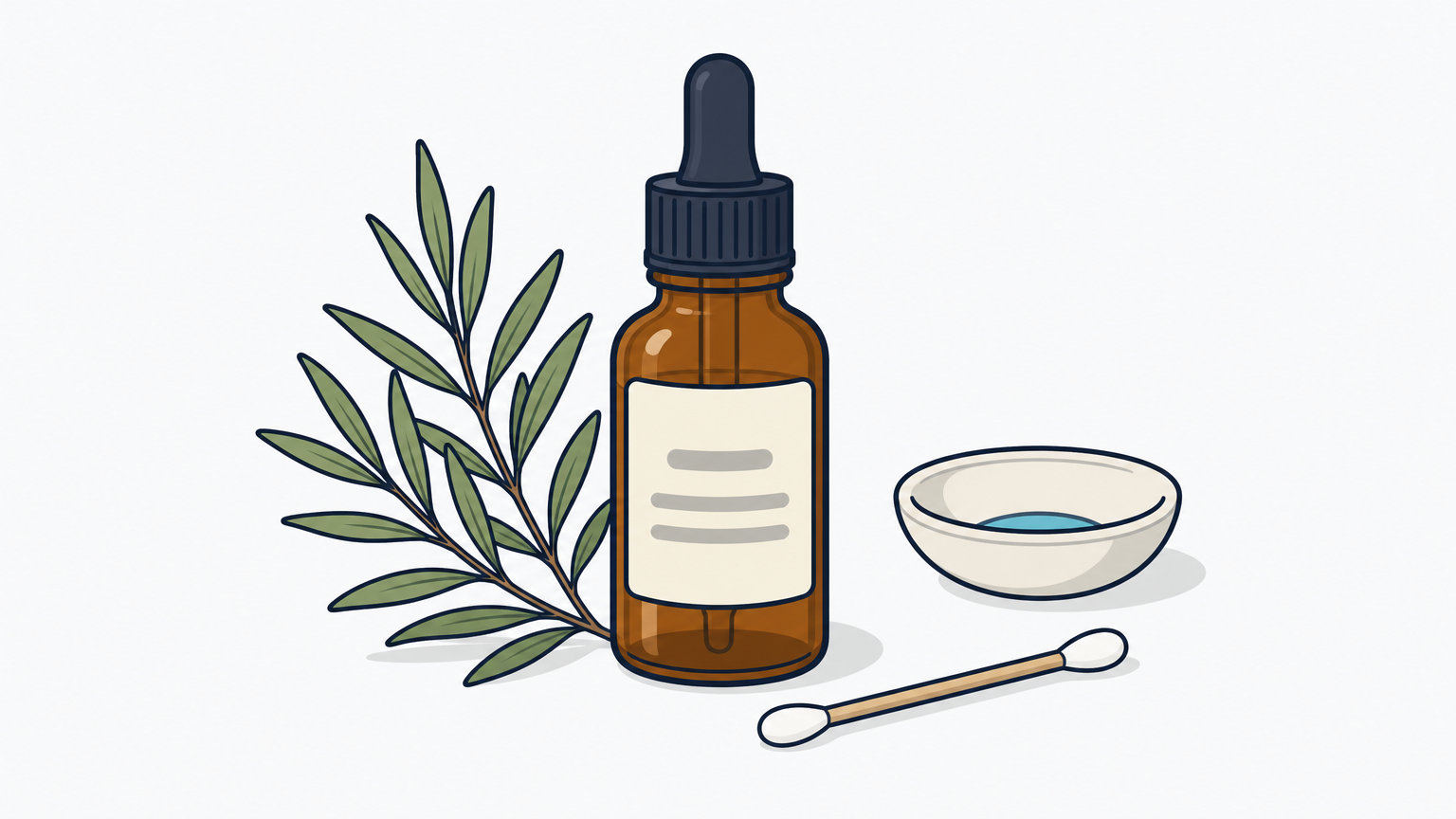
Tea tree oil comes from the leaves of a native Australian tree and works as a skin antiseptic. Some products blend it with oregano oil, lime oil and vitamin E. Most instructions follow the same steps:
- Wash and dry the nail and the skin around it.
- Test one drop on your inner forearm and wait 24 hours for a reaction.
- Brush a thin layer onto the nail with a cotton swab, twice a day.
- Keep going for months, until healthy nail grows out.
Evidence and risks
A small open study gave 20 people a nail oil with vitamin E and essential oils for 12 months. The report describes a cure in almost all of them. The study had no control group, so it cannot rule out a placebo effect or natural change. The US National Institutes of Health describes the clinical research on tea tree oil as small.
Essential oils can irritate skin or cause an allergic rash, and mixing two oils raises that risk. Stop if the skin turns red, sore or swollen.
Tea tree oil has the best human data of the natural options, and that data is small.
2. Vicks VapoRub
Vicks VapoRub is an easy first try, and it suits you if you want a low-cost product from the pharmacy shelf.
How people use it
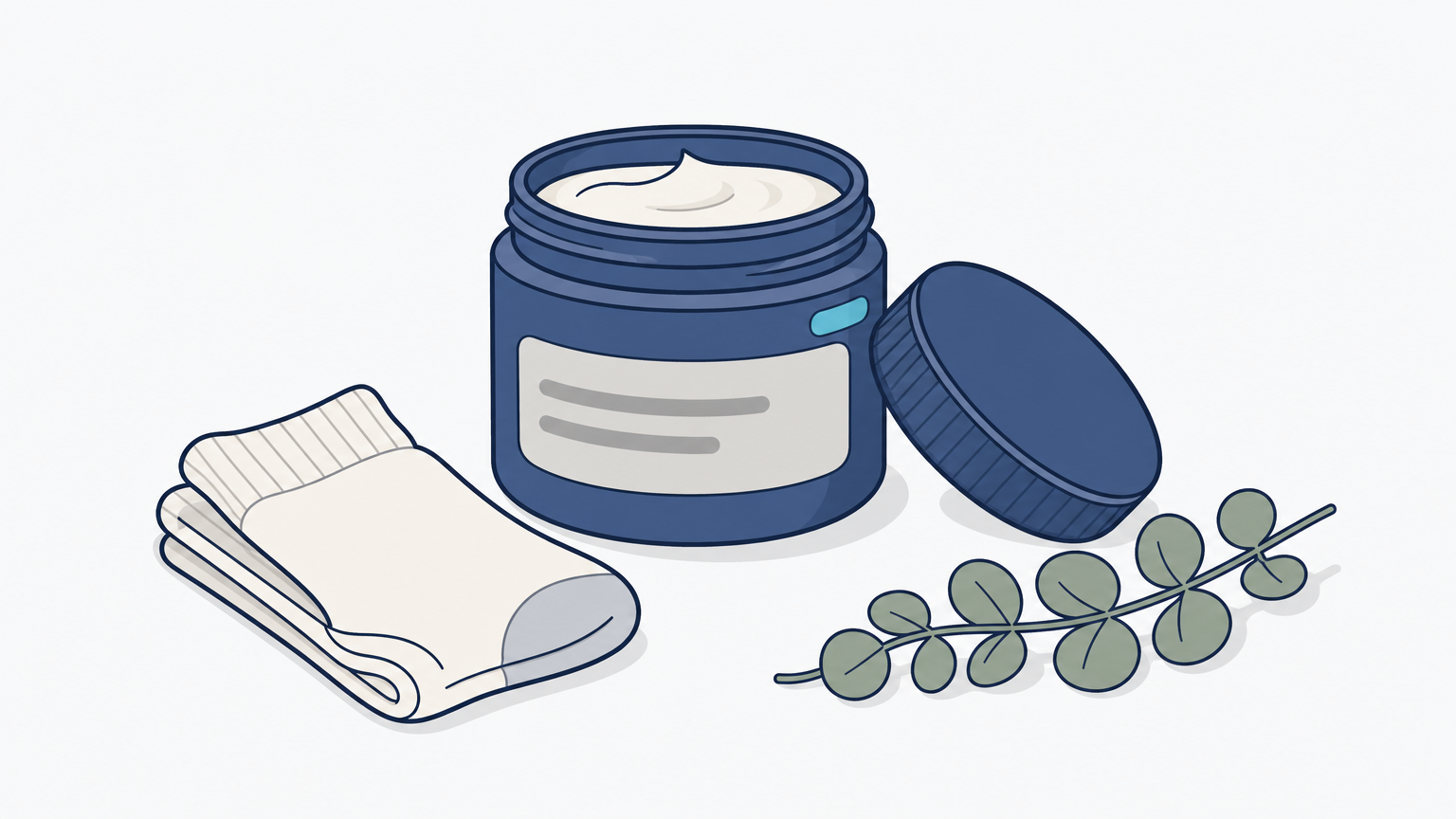
Vicks VapoRub is a cough rub that contains camphor, eucalyptus oil and menthol. You rub a small amount onto the nail and the skin around it once a day. Do this at night and pull on cotton socks to keep the rub in place.
Keep the habit for months. A toenail needs time to grow out, so a week or two of rubbing tells you nothing.
Evidence and risks
Lab studies and one small human study found that the rub helped some people, and most had no side effects. A 2022 review of home remedies reported improvement in many cases, but the studies were small.
Camphor is harmful if swallowed, so store the jar away from children. Skip the rub on broken skin.
Vicks VapoRub is easy to try, but small studies cannot promise a cure for your nail.
3. Ozonised sunflower oil
Ozonised sunflower oil has one trial behind it, and it suits you if you want a plant-based option and can find a reliable product.
How people use it
Ozonised oil is sunflower or olive oil treated with ozone gas. Lab work shows that it can act against fungi and bacteria. You apply it to the nail with a cotton swab, twice a day, as the product label directs.
Strength and quality vary between brands. Read the label, check who makes the product, and ask your pharmacist before you buy.
Evidence and risks
A 2010 trial of a topical ozonised sunflower oil found that it worked better than ketoconazole, a conventional antifungal, and no one reported side effects. That is a good result, but one trial cannot settle the question. Larger trials would need to confirm it.
Most people tolerate the oil, but any oil can irritate sensitive skin. Test a small area first.
One good trial is a reason for interest, not proof that the oil works for you.
4. Apple cider vinegar soak
An apple cider vinegar soak is a mild option, and it suits you if you want a helper to use beside another treatment.
How people use it
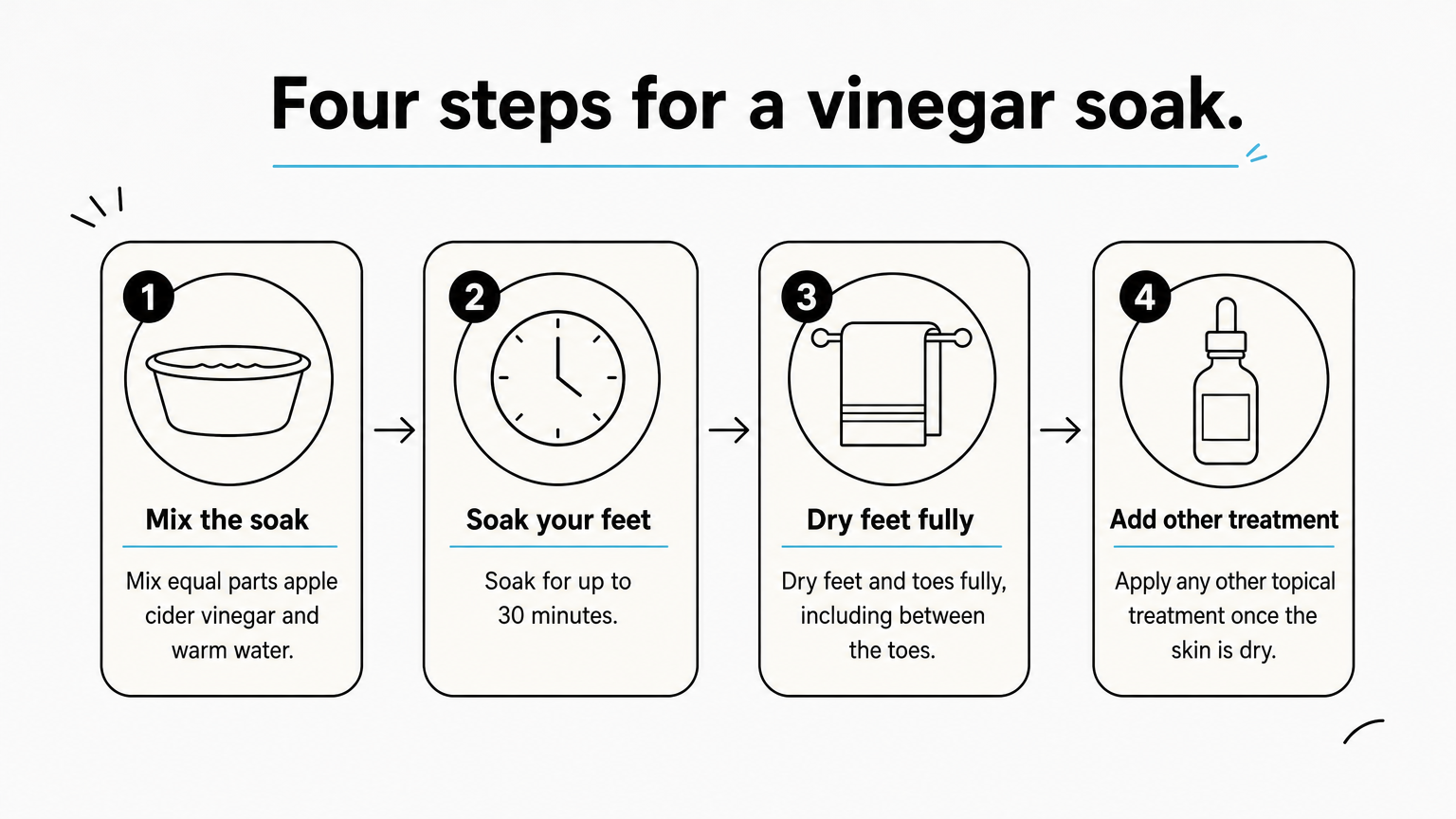
Vinegar is acidic, and acid slows the growth of some microbes in the lab. The soak takes four steps:
- Mix equal parts apple cider vinegar and warm water in a basin.
- Soak your feet for up to 30 minutes.
- Dry your feet and toes until no dampness remains, including between the toes.
- Apply any other topical treatment once the skin is dry.
Evidence and risks
There is little evidence for drinking vinegar as a nail treatment. For soaks, one published report found benefit when the soak was used with other topical treatments. That makes it a helper, not a stand-alone treatment.
Vinegar can sting and can irritate cracked skin. Damp feet help fungus grow, so a soak you do not dry properly does harm.
Treat a vinegar soak as a helper to another treatment, not as the treatment.
5. Homeopathic remedies
Homeopathic remedies rank last because no controlled trial shows they treat nail fungus, and they suit you as an extra, not a replacement for real treatment.
How people use it
Homeopathic nail products come as pills, drops and ointments. Practitioners suggest remedies such as Thuja, Silicea or Graphites for nail complaints, and some shop products list marigold and St John’s wort as active ingredients.
Dose and schedule vary by product and by practitioner. Follow the label, and tell your podiatrist or doctor what you use.
Evidence and risks
No controlled trial shows that any homeopathic remedy clears nail fungus. The Therapeutic Goods Administration lists many homeopathic products without assessing whether they work, so a place on a pharmacy shelf is no proof.
The main risk is delay. While you wait, the fungus can spread to other nails and the nail can thicken, which makes treatment harder. Pills and drops carry little direct risk, but nothing shows that they act on the fungus.
A gentle label is not evidence, and months lost on an untested remedy are months the fungus keeps growing.
Your next step
Homeopathic remedies have no evidence for nail fungus. Tea tree oil blends, Vicks VapoRub, ozonised sunflower oil and vinegar soaks have thin but real data, and they carry low risk when you use them with care. None of them is a proven cure.
If your infection is mild and you are otherwise healthy, give a natural option a fair trial of daily use. If the nail does not change, or you have diabetes, a weak immune system or pain, get it checked.
A podiatrist can confirm the cause and start treatment on the same visit. Read about Lunula cold laser treatment for fungal nails at ModPod Podiatry. Then book at our Sydney CBD, Mosman, Dee Why or Rose Bay clinic. We offer same-day appointments whenever we can.