
What a fungus nail looks like depends on how long the infection has lasted, but the signs follow a pattern. The nail turns yellow, white or brown, thickens, and becomes brittle or crumbly. It can lift from the nail bed and trap chalky debris underneath. Doctors call the condition onychomycosis. It starts as a small white or yellow-brown spot under the tip of the nail and spreads toward the cuticle.
This guide walks you through each sign, the colours you may see (black included), and how fingernails differ from toenails. You will learn how to check your own nail, which other conditions look the same, and whether toenail fungus can kill you.
ModPod Podiatry has treated feet, ankles and lower limbs in Sydney for over 20 years. Fungal nails are one of the conditions we treat at our four clinics.
Why the look of your nail matters
The look of a nail tells you how far an infection has spread, and that decides how simple treatment will be. A nail with one white or yellow spot at the tip is a small problem. A thick, crumbling nail that hurts in your shoe is a bigger one.
Early nails are easier to treat
Nail fungus grows in the nail plate and the nail bed beneath it. Early infections affect a small part of one nail, so treatment has less to clear. Left alone, the fungus spreads across the nail and thickens it. It can move to nearby nails and to the skin of your foot as athlete’s foot.
Many people wait because the nail does not hurt. Pain shows up late, when the nail gets thick enough to press on the toe or rub on a shoe. By then the nail takes longer to clear. A toenail needs 6 to 12 months to grow out clean, even after the fungus is gone.
A nail that looks wrong but feels fine is the best time to act.
Will toenail fungus kill you?
No. Toenail fungus is a slow infection of the nail, not a blood infection, and it is not life-threatening for most people. The risk rises when your body struggles to heal or fight germs. A thick, cracked nail can break the skin and let bacteria in, which can lead to a serious skin infection. Take extra care if you have:
- diabetes
- poor blood flow in your legs or feet
- a weak immune system, from illness or medicine
- numb feet
If you fall into one of these groups, see a podiatrist at the first change in a nail instead of waiting to see what happens.
What nail fungus looks like, step by step
Nail fungus looks like a nail that has changed colour, thickened and turned brittle, and the changes build in a set order. Here is what you will see at each stage.
The first signs
Check the tip of the nail first. The earliest sign is a white, yellow or yellow-brown spot or streak under the free edge or at a corner. A white form starts on the surface, leaving chalky patches that feel soft, dry and powdery. You can scrape some of it off. Wash your hands after you do, because the fungus can spread to other nails.
How the nail changes over time
As the fungus moves deeper, more of the nail changes at once. Look for these signs:
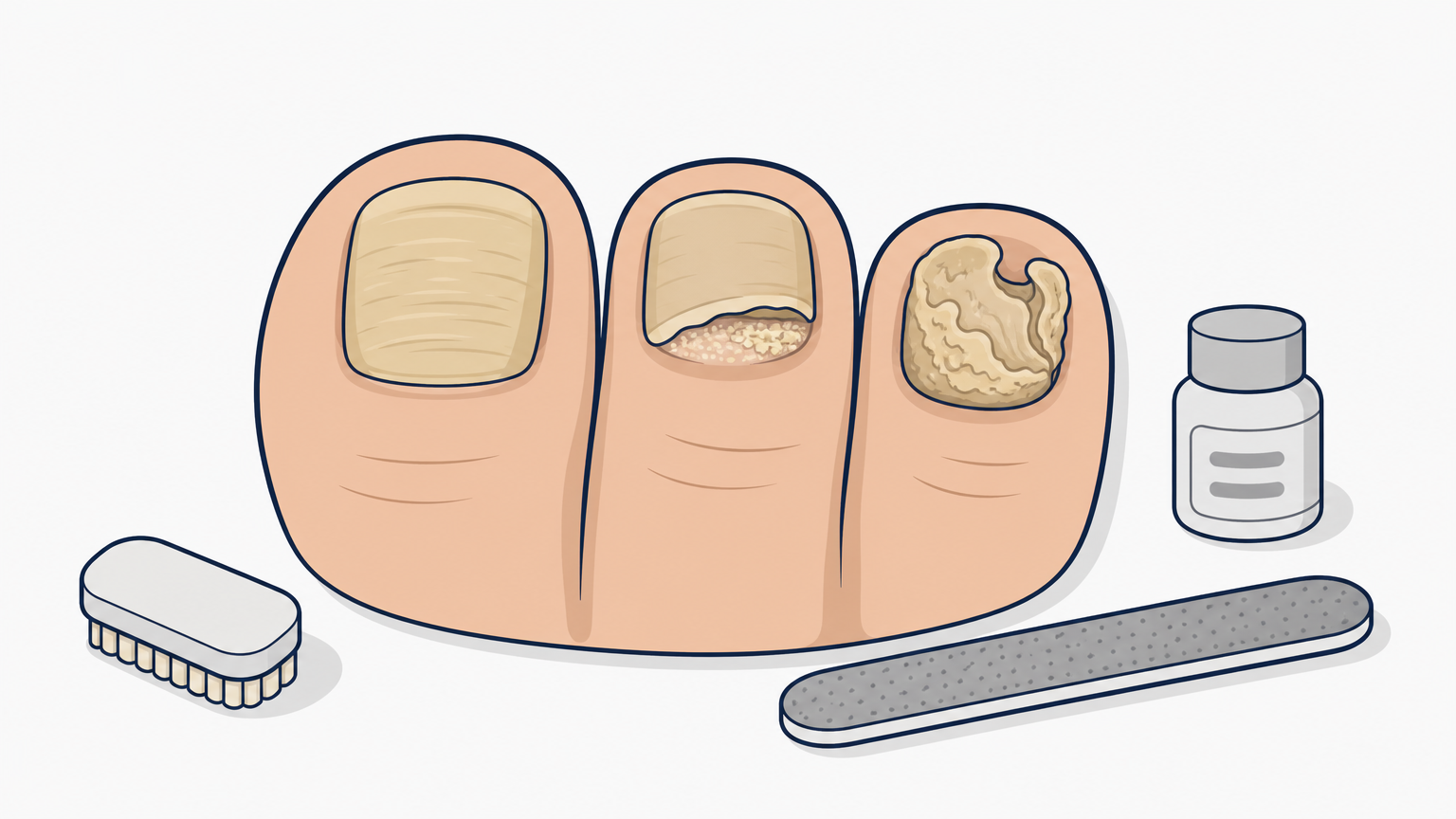
- Thickening. The nail gets hard to cut and may press on the toe.
- Brittleness. The edge cracks, splits or crumbles.
- Debris. Chalky or crumbly material builds up under the nail.
- Lifting. The nail separates from the nail bed.
- Odour. An infected nail can smell.
- Shape change. The nail warps, and in severe cases it falls off.
- Skin change. The skin around the nail turns red, or darker than your usual skin tone.
Colour change at the tip, then thickening and crumbling, is the classic path of nail fungus.
What each colour can mean
Colour is the sign most people notice, so the table below sets out what each shade can point to.
| What you see | What it can mean |
|---|---|
| White, chalky patches on the surface | Surface fungus. The patch feels soft and powdery. |
| Yellow or yellow-brown streak under the tip | The most common early sign |
| Thick brown or yellow nail | Longer-term infection. Thick nails look brown on darker skin tones and yellow on lighter ones. |
| Orange-brown streaks | Fungus, sometimes mixed with yellow and white |
| Green-black or black nail | Debris, mould or bacteria in the nail. It can also be a bruise or another cause, so get it checked. |
Black nail fungus happens when debris, mould or bacteria darken the nail. Bacterial infections tend to turn a nail green or black. Check the cause before you assume fungus, because a bruise or a skin cancer can also turn a nail black.
Nail fungus on fingernails and toenails
Nail fungus looks the same on fingernails and toenails, but toenail infections are more common. The signs match: colour change, thickening, crumbling and lifting.
Toenails
Your toenails spend most of the day in a dark, warm, damp space. Fungus thrives in those conditions. These habits and settings raise your risk:
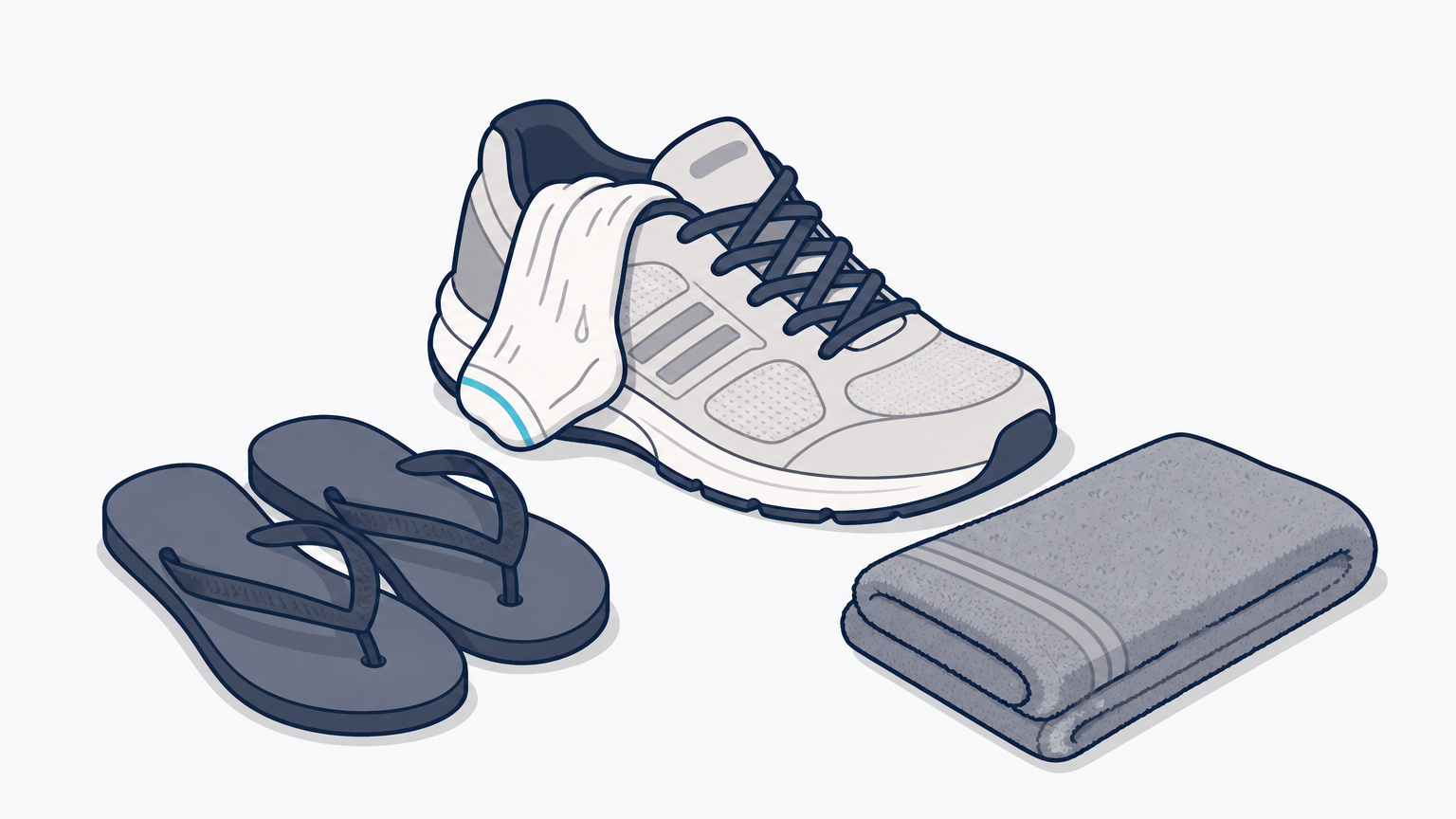
- shoes that make your feet sweat for hours
- bare feet in pool areas, gyms and shower rooms
- past athlete’s foot
- small nail injuries, such as from tight shoes
- older age
Toenails grow at a slow pace, so the changes build over months.
Fingernails
On your hands, look for the same colour and texture changes. Yeast is a common cause of fingernail infection, and it can show as swollen, red skin around the nail as well as thickening and colour change. Wet work, damaged cuticles and artificial nails raise the risk. Psoriasis, eczema and injury can mimic fungus, so a strange-looking fingernail is not proof of infection.
Toenails get nail fungus more than fingernails do, but the signs look alike on both.
How to check your nail and rule out look-alikes
Check your nail in good light, note what has changed, and compare it with other conditions that mimic fungus. You can do the first part at home in five minutes.
A five-step self-check
- Wash and dry your foot or hand, and remove any nail polish.
- Look at the tip, the sides and the base of the nail. Note the colour, the thickness and any lifting.
- Press the nail gently. Notice if it feels thick, soft or loose.
- Check the skin. Look between your toes for peeling or itch, and around the nail for redness or swelling.
- Take a photo now and another in four weeks. A nail that stays the same or gets worse needs a professional look.
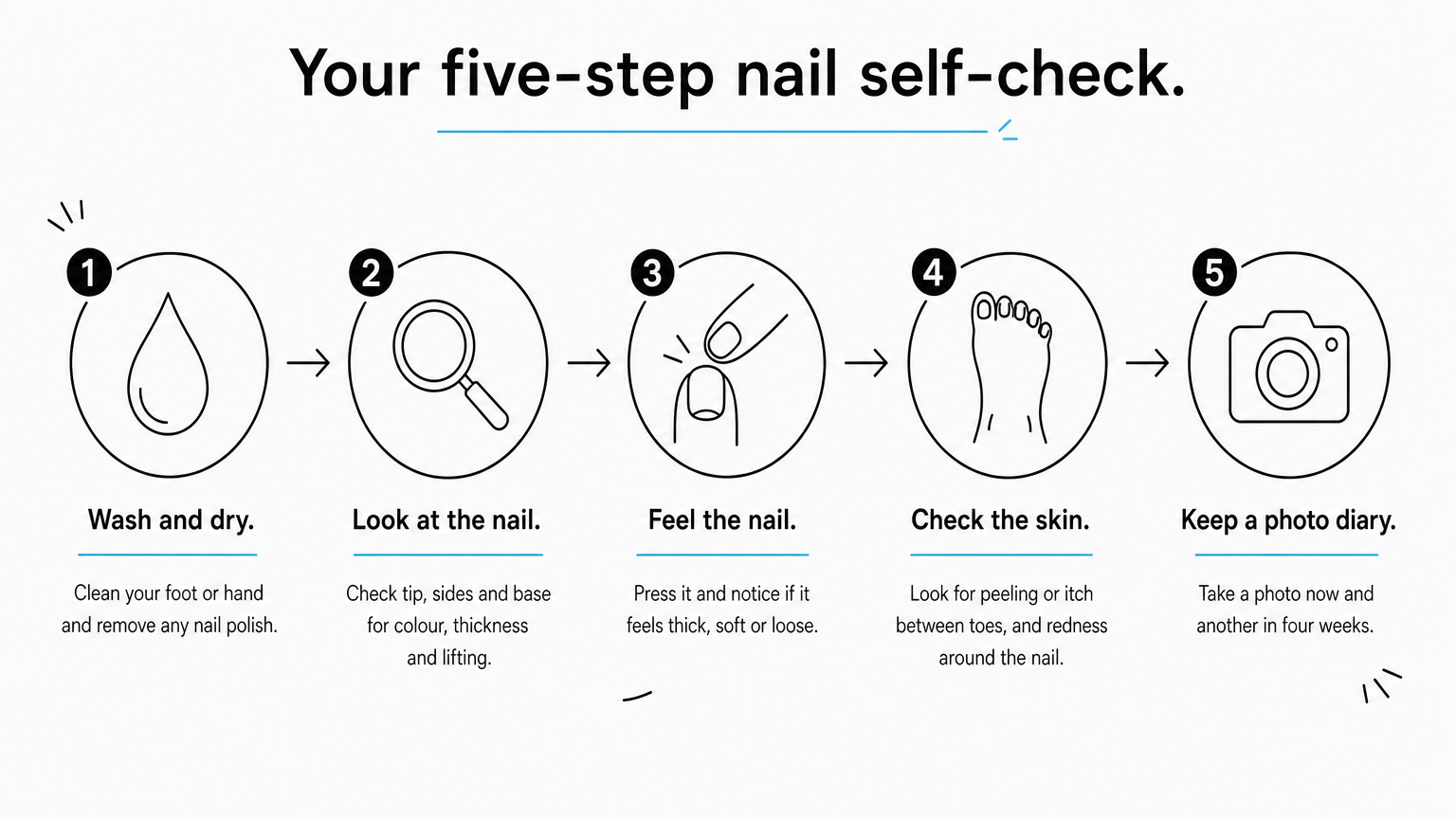
A photo diary shows change that is hard to see day to day. Bring it to your appointment.
Conditions that look like fungus
Several problems copy the look of nail fungus. A podiatrist can tell them apart by examining the nail.
- Bruise. A black or purple patch after a knock. A bruise grows out with the nail, and it does not spread.
- Psoriasis. Small pits in the nail, or a yellow-red spot that looks like a drop of oil under it.
- Old injury. A nail that grew back thick or ridged after trauma.
- Bacterial infection. A green or black colour, with the skin around the nail sore or red.
- Melanoma. A new dark streak in one nail with no injury, a streak that widens, or dark colour that spreads onto the skin beside the nail.
A dark streak with no injury behind it needs a prompt check, not a wait-and-see approach.
When to see a podiatrist and what treatment involves
See a podiatrist when a nail keeps changing, hurts, or belongs to someone at higher risk. The sooner a clinician looks, the more options you have.
Signs you should book
Book a visit if you notice any of these:
- thickening, lifting or crumbling that spreads or does not improve
- pain, swelling or bleeding around the nail
- trouble walking or fitting your shoes
- diabetes, poor circulation or a weak immune system
- a dark streak on a nail, or dark colour on the skin beside it
A dark streak or bleeding needs a prompt appointment. Do not treat it yourself first.
What happens at ModPod Podiatry
Our podiatrists diagnose fungal nails by looking at the nail. You do not need clippings or lab tests, and treatment starts the same day. You do not need a GP referral. We offer same-day appointments at our Sydney CBD, Mosman, Dee Why and Rose Bay clinics whenever possible.
For fungal toenails we use laser treatment for fungal nails, which uses the Lunula cold laser. The treatment is painless and needs no downtime. Each session takes about 12 minutes, and a typical course is 4 sessions. The nail clears as healthy nail grows from the base, which takes months. You can claim on the spot with HICAPS if your health fund covers the service.
Diagnosis by sight and a same-day start mean you leave your first visit with a plan.
Check your nails and book a review
Nail fungus looks like a nail that turns yellow, white, brown or, in some cases, black. It thickens, crumbles and lifts, and the change starts at the tip. Toenail fungus will not kill you, but it can lead to serious problems if you have diabetes, poor circulation or a weak immune system. A dark streak with no injury needs a check from a professional.
Early nails clear faster than advanced ones. If your nail matches what you read here, book an appointment online at the ModPod Podiatry clinic closest to you.