
If you’ve ever felt a sharp, nagging pain with every step — like there’s a tiny pebble permanently lodged under your skin — there’s a good chance you’re dealing with a corn on foot. Corns are one of the most common foot complaints we see at ModPod Podiatry, and while they might seem like a minor nuisance, they can seriously affect your day-to-day comfort. The good news? They’re very treatable.
What Is a Corn on the Foot?
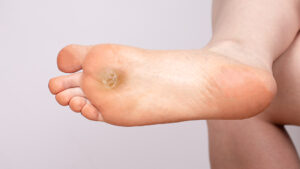
A corn on foot is a small, concentrated area of thickened, hardened skin that forms in response to repeated pressure or friction. Unlike a callus — which tends to be larger and more spread out — a corn is typically round or cone-shaped, with a hard centre that points inward. This is exactly why they’re so uncomfortable: that hard core presses against sensitive nerve endings beneath the skin.
Corns are also commonly mistaken for plantar warts — though the two conditions are quite different and require separate treatment approaches.
There are two main types:
- Hard corns (heloma durum) — The most common type, usually found on the tops or sides of toes, or on the ball of the foot. They have a dense, dry core.
- Soft corns (heloma molle) — Found between the toes, these are whitish and rubbery due to moisture from sweat. They can be particularly painful and prone to infection.
What Causes Corns on the Feet?
Corn feet don’t just appear out of nowhere. They’re your body’s defence mechanism — a way of protecting skin that’s being repeatedly irritated. The most common culprits include:
- Ill-fitting footwear — Shoes that are too tight, too narrow, or that rub on specific areas are the number one cause of corns.
- Structural foot issues — Hammertoes, bunions, or other toe deformities can create pressure points where corns form easily.
- Going barefoot — Walking without adequate cushioning on hard surfaces increases friction and pressure on the skin.
- Abnormal gait or biomechanics — The way you walk can place uneven pressure on certain areas of your foot, triggering corn formation over time.
- Repetitive activities — Long-distance runners, dancers, and people who spend hours on their feet (especially on hard floors) are particularly susceptible.
Recognising the Symptoms
Not sure if what you’re dealing with is a corn? Here’s what to look for:
- A small, rough patch of raised skin — often yellow or grey in colour
- A hard, central “plug” that feels like it’s digging into your foot
- Tenderness or pain when direct pressure is applied
- Skin that appears waxy or dry around the affected area
If you’re noticing pain that’s getting worse over time, or if the area looks red and inflamed, it’s time to book a general podiatry appointment. For patients managing diabetes, proper diabetic foot care is essential — untreated corns can lead to more serious complications, so please don’t leave it too long.
How to Remove a Corn From Your Foot — Safely
We know it’s tempting to reach for a pumice stone or even a pair of nail scissors, but how to remove corn from foot tissue safely really does require professional hands. Over-the-counter corn medicine foot pads often contain salicylic acid, which can damage the surrounding healthy skin — and in some cases, cause burns or infections if used incorrectly.
At ModPod Podiatry, our experienced podiatrists use a process called enucleation — a precise, painless technique to remove the hard core of the corn without damaging healthy tissue. It’s quick, effective, and you’ll typically feel relief immediately after the procedure.
Professional Corn Removal: What to Expect
During your appointment, we’ll:
- Assess the corn and surrounding skin
- Identify the underlying cause (footwear, gait, foot structure, etc.)
- Perform gentle, sterile corn removal using specialist instruments
- Apply dressings and padding to relieve pressure while the area heals
- Discuss long-term prevention strategies to stop the corn from returning
Depending on what’s causing your corn, we may also recommend custom orthotics to redistribute pressure across your foot and prevent recurrence. Our clinics across Sydney — including Dee Why, Mosman, Rose Bay, and North Ryde — are equipped to handle everything from simple corn removal to complex biomechanical assessments.
Preventing Corns From Coming Back
Corn removal is only half the battle — prevention is just as important. Here are some practical tips our podiatrists recommend:
- Wear well-fitted, supportive shoes with adequate toe room
- Use moisture-wicking socks to reduce friction
- Keep feet moisturised to prevent excessive skin hardening
- Consider a regular medical pedicure to keep skin maintained and prevent corn build-up if you’re prone to corns
- Address any underlying foot deformities or gait issues with professional help
Ready to Say Goodbye to Foot Pain?
You don’t have to put up with the discomfort of a corn on foot any longer. With over 20 years of experience helping Sydney locals get back on their feet, the team at ModPod Podiatry knows exactly how to treat corns quickly and effectively — and keep them from coming back.
Whether you’re in Sydney CBD, Dee Why, Mosman, or anywhere across our clinics, we’d love to help. Book online at ModPod Podiatry today, or give us a call on (02) 9960 3981. Your feet will thank you for it.