
Corn vs Wart: A Complete Comparison Guide
Understanding the differences between corns and warts, particularly plantar warts, can be challenging for many Australians. Both are common skin conditions that can cause discomfort and confusion — and both are conditions our Sydney podiatrists at ModPod Podiatry treat regularly across our clinics in Dee Why, Mosman, Rose Bay, North Ryde, and the CBD.
This article aims to clarify these differences, providing a comprehensive comparison of corns and warts. We’ll delve into their causes, symptoms, and treatment options.
Whether you’re dealing with these conditions or simply seeking knowledge, this guide will serve as a valuable resource. Let’s explore the world of corns and warts together.
Understanding Corns: Definition and Characteristics
Corns are small, hard areas of skin that often develop on the feet. They’re typically caused by friction or pressure from ill-fitting shoes.
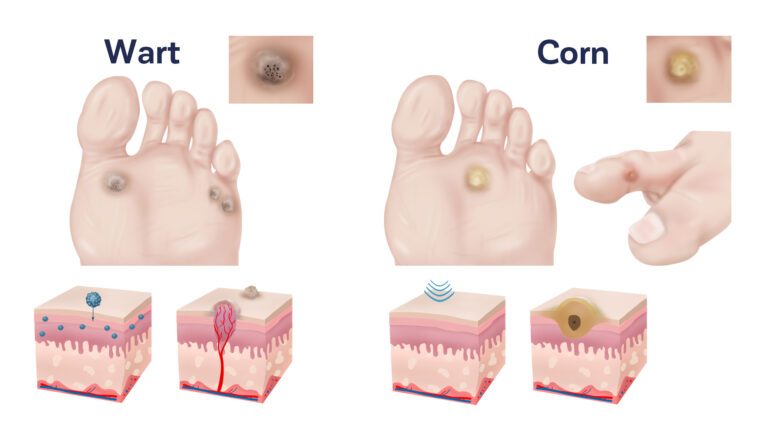
Corns have a hard centre, surrounded by inflamed skin. They’re usually round in shape and can cause discomfort when pressed.
Unlike warts, corns are not contagious and are more common in adults than in children.
Understanding Warts: Definition and Characteristics
Warts are skin growths caused by the human papillomavirus (HPV). They can appear anywhere on the body, including the feet.
Plantar warts, specifically, grow on the soles of the feet. Unlike corns, they’re often flat due to the pressure of walking and standing.
Warts can be painful, especially when squeezed from the sides, and are contagious. They’re more common in children than adults.
Corn vs Wart: Identifying the Differences
Corns and warts, while similar in appearance, have distinct differences. Understanding these can help in self-diagnosis and treatment.
Corns are typically round, hard, and dry. They have a clear centre and can be painful when pressed. On the other hand, warts are rough, flat or slightly raised, and may have black dots (tiny blood vessels).
Here are some key differences:
- Corns are caused by pressure and friction, while warts are caused by HPV.
- Corns are not contagious, but warts are highly contagious.
- Corns often occur on areas that bear weight or friction, while warts can appear anywhere.
- Corns have a translucent core; warts typically have black dots when the surface is pared back.
Remember, professional diagnosis is always best for skin conditions on the feet.
Causes and Symptoms: Corns vs Plantar Warts
Corns are primarily caused by pressure and friction. They often develop on bony areas of the foot due to ill-fitting footwear, high heels, or going barefoot on hard surfaces.
Plantar warts are caused by the HPV virus, which enters through small cuts or breaks in the skin — often contracted in public swimming pools, change rooms, or communal showers. This is particularly relevant across Sydney where public aquatic centres are popular.
Treatment Options for Corns
Treating corns effectively requires addressing the underlying cause — the pressure or friction causing the skin to thicken. Treatment options include:
- Professional debridement (removal of the corn) by a podiatrist
- Cushioning pads to reduce pressure
- Custom orthotics to correct biomechanical issues
- Footwear advice and modification
At ModPod Podiatry, our Sydney podiatrists use safe, effective techniques to remove corns and address the root cause to prevent recurrence. Read more about The Causes and Treatment of Corns.
Treatment Options for Plantar Warts
Wart treatment requires a different approach, as the viral cause must be addressed. Options include:
- Salicylic acid treatments
- Marigold therapy (a highly effective natural treatment)
- Cryotherapy (freezing)
- Swift microwave therapy
Read more about Marigold Treatments for Warts.
Prevention Tips: Avoiding Corns and Warts
Preventing corns often involves proper footwear. Shoes should be comfortable, well-fitted, and not cause friction. Orthotics can also help distribute pressure evenly across the foot.
Warts, being viral, require good hygiene to prevent. Avoid direct contact with warts, and don’t share personal items like towels or shoes. Always wear thongs in public change rooms and pool areas around Sydney.
Remember, prevention is always better than cure. Regular foot care and hygiene can go a long way in avoiding these skin conditions.
When to See a Podiatrist: Professional Advice for Foot Skin Conditions
If corns or warts become painful, it’s time to see a podiatrist. Persistent skin growths that don’t improve with over-the-counter treatments should also be professionally evaluated.
For individuals with diabetes or poor circulation, professional evaluation is crucial. These conditions can complicate treatment and increase the risk of complications.
Remember, while self-diagnosis can be helpful, it’s not a substitute for professional medical advice. Always consult a podiatrist for persistent or concerning skin conditions on your feet.
Frequently Asked Questions
How do I know if I have a corn or a wart?
The easiest way to tell is to look at the surface closely. Corns have a hard, translucent or yellowish core and are usually painful with direct pressure. Warts often have tiny black dots (thrombosed blood vessels) visible in the skin, and hurt more when squeezed from the sides rather than pressed directly. A podiatrist can definitively diagnose which you have.
Can corns and warts go away on their own?
Corns will not resolve unless the source of pressure or friction is removed. Warts may occasionally disappear on their own as the immune system fights the HPV virus, but this can take months to years. Professional treatment is almost always faster and more effective.
Are corn removal pads safe to use?
Over-the-counter corn pads containing salicylic acid can help, but they must be used carefully. They are not recommended for people with diabetes, poor circulation, or neuropathy, as they can damage surrounding healthy skin. Professional corn removal by a Sydney podiatrist is safer and more effective.
Can I get warts from touching someone else’s wart?
Yes. Plantar warts are caused by HPV and are contagious through direct contact or indirect contact via contaminated surfaces like pool decks or change room floors. Wearing footwear in public areas significantly reduces your risk.
How many treatments does it take to remove a wart?
This varies depending on the treatment method and how long the wart has been present. Marigold therapy may require 3–6 sessions, while Swift microwave therapy often achieves results in 1–4 treatments. Your podiatrist will recommend the best approach based on your specific situation.
Will a corn come back after treatment?
Corns can return if the underlying cause — such as ill-fitting footwear or a biomechanical issue — is not addressed. Your podiatrist will advise on footwear changes and may recommend custom orthotics to prevent recurrence.
Get Expert Corn and Wart Treatment in Sydney
Not sure whether you have a corn or a wart? Don’t guess — let our expert Sydney podiatry team at ModPod Podiatry give you a definitive diagnosis and effective treatment plan. With convenient clinics in Dee Why, Mosman, Rose Bay, North Ryde, and the CBD, expert foot care is close to home.
Book online today or call us on (02) 9960 3981. We’ll have you back on your feet pain-free in no time.