

Does tea tree oil kill toenail fungus? In a lab dish, yes. On a real toenail, rarely. Tea tree oil can stop fungus growing when it touches the fungus directly, but trials on people show it clears the infection in only a small share of cases. If you want the nail to clear, other treatments have better results.
Tea tree oil comes from the leaves of Melaleuca alternifolia, a plant native to Australia. Many households keep a bottle as an antiseptic. Toenail fungus, called onychomycosis, lives under and inside the nail plate. A thick, hard nail shields the fungus from anything you paint on top, and that shield is the main problem.
This article covers what the research says, how to use the oil safely if you still want to try it, and how it compares with other options. It also explains when to see a podiatrist. Our podiatrists treat fungal nails across four Sydney clinics, so we see which treatments work and which ones leave patients waiting for months.
Why the evidence matters before you try tea tree oil
Tea tree oil kills fungus in the lab, but that result does not carry over to the nail. The gap between the two is why you should check the evidence before you spend months on a home remedy.
What lab studies show
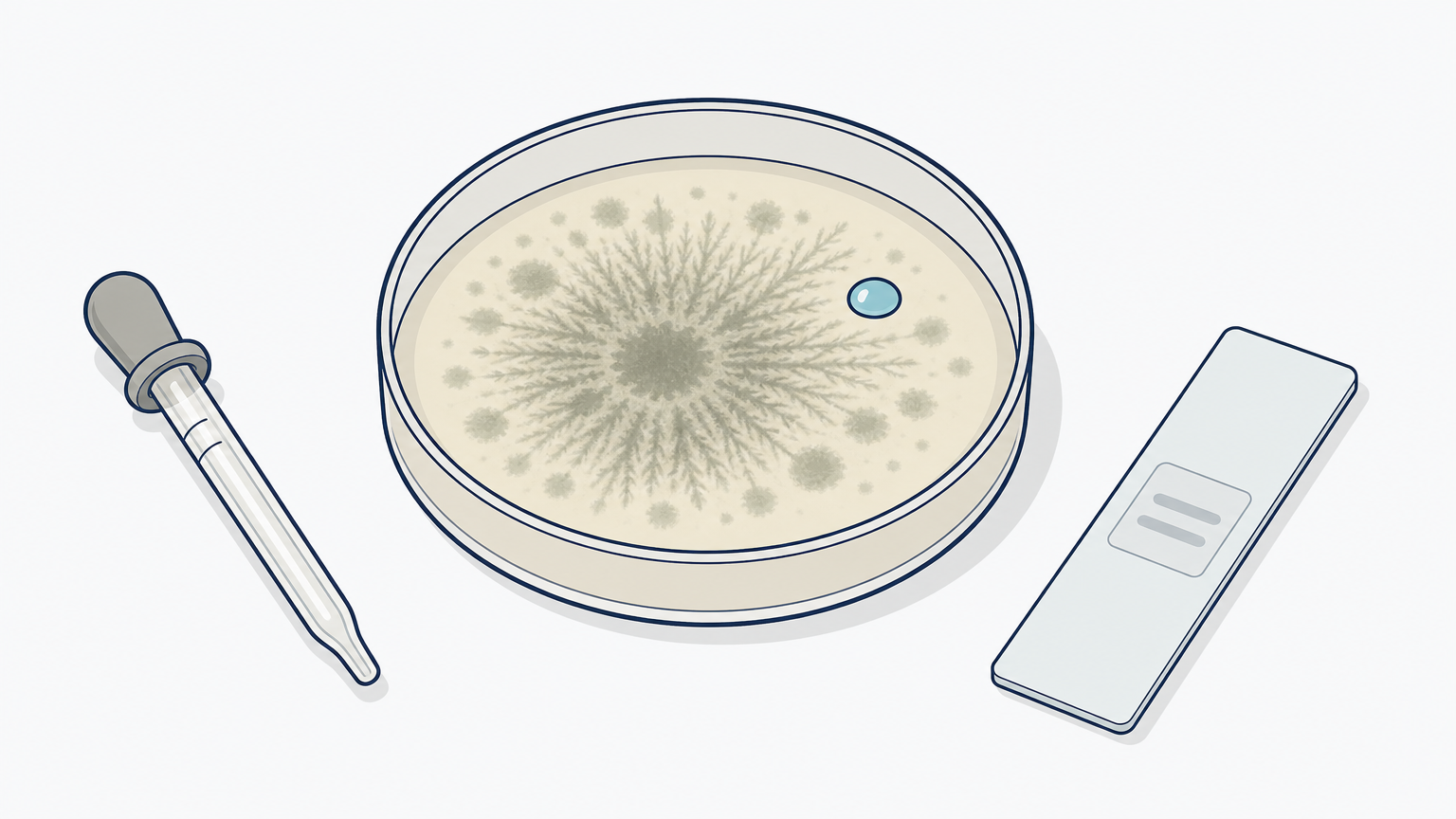
Lab studies show tea tree oil can kill Trichophyton rubrum, the most common cause of nail fungus. This is where most online claims come from. In those studies the oil sits directly on the fungus, with no nail in the way. A dish has no nail plate, so the result tells you little about a real toe.
What trials on people show
A randomised trial from the 1990s tested 100% tea tree oil against a 1% clotrimazole solution in 117 people with toenail fungus. Both groups applied the liquid twice a day for six months. Lab-confirmed cure reached 18% with tea tree oil and 11% with clotrimazole, and the gap between the two was not statistically significant. About six in ten people in each group saw some improvement in how the nail looked.
Those numbers cut two ways. A nail can look better while the fungus stays alive, and even the comparison drug performed poorly. A nail also needs 9 to 12 months to grow out, so a home remedy can take most of a year to prove itself. Many people stop early and the infection returns.
Tea tree oil kills fungus in a dish, but a toenail is not a dish.
How to use tea tree oil on a fungal nail
If you decide to try it, use a product made for nails, apply it each day and set a review date. Tea tree oil is a low-risk experiment for most people, but treat it as a trial with an end point.
A simple routine
- Wash your feet and dry them, including between the toes.
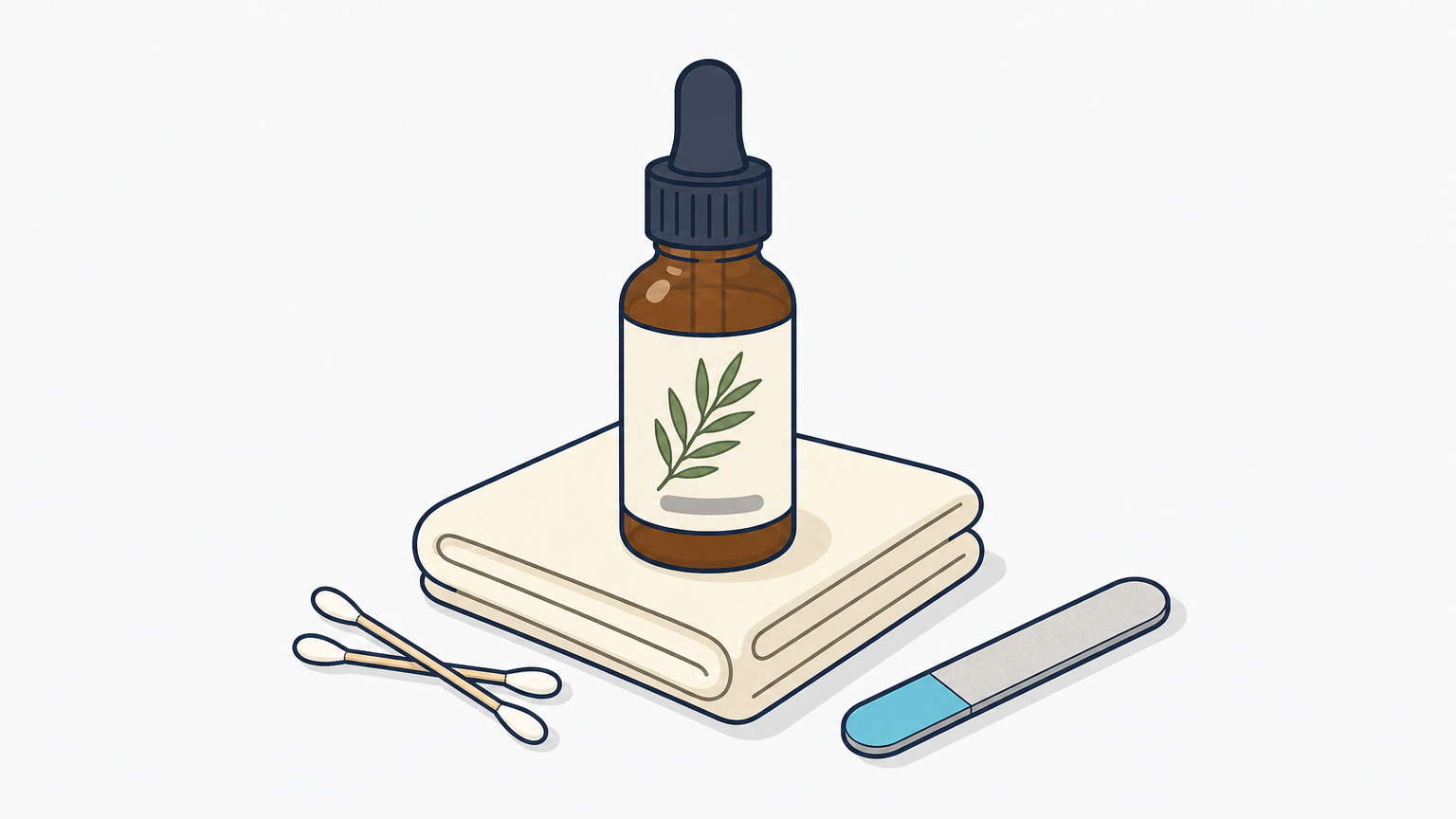
- Trim the nail short and file the surface gently to thin it.
- Patch test on your inner forearm and wait 24 hours.
- Apply the oil to the nail and the skin around it with a clean cotton bud, twice a day. Follow the label, because pure oil irritates some skin.
- Wash your hands after each use.
- Check at three months. Look for a clear band of new nail growing from the cuticle. If you see none, stop and get advice.
Safety and habits that help
Tea tree oil can cause contact dermatitis. Stop if you get redness, itching, blisters or swelling. Never swallow it, and keep the bottle away from children. The oil is also toxic to cats and dogs.
Fungus likes warm, damp shoes. Rotate your shoes, wear dry cotton or wool socks, and do not share nail clippers. These habits help any treatment work and cut the risk of reinfection.
Set a three-month review date, and stop if no clear nail has grown.
How tea tree oil compares with other treatments
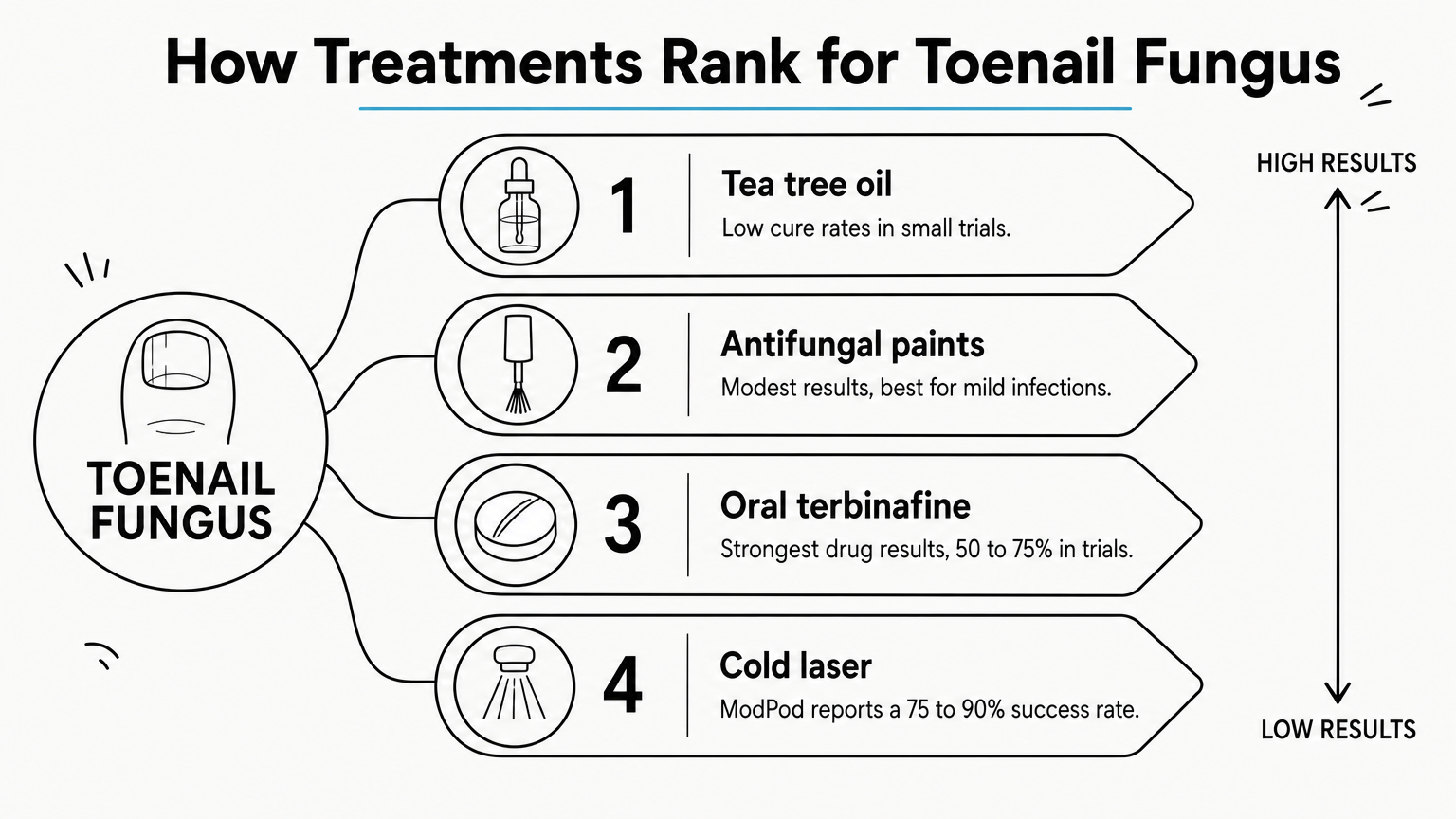
Tea tree oil sits at the low end for results, and prescription tablets and cold laser sit at the high end. The table sets the main options side by side.
The options side by side
| Treatment | How it works | What the evidence shows | Time needed |
|---|---|---|---|
| Tea tree oil | Applied to the nail surface | Low cure rates in small trials | 6 months or more, then 9 to 12 months for the nail to grow out |
| Pharmacy or prescription antifungal paints | Applied to the nail surface | Modest results, best for mild infections | Many months of daily use |
| Oral terbinafine (GP prescription) | Tablets carry the drug to the nail through the blood | Strongest results among drugs, in the range of 50 to 75% in trials | About 12 weeks of tablets for toenails |
| Cold laser at ModPod Podiatry | 405nm violet light, no heat or needles | ModPod reports a 75 to 90% success rate | 4 to 8 weekly sessions of about 12 minutes |
How to read the table
Tablets have strong results, but they pass through the liver and can clash with other medicines. Your GP will check before prescribing. Some people cannot take them at all. Paints and oils have the opposite problem. They are safe but struggle to cross a thick nail.
Cold laser avoids both problems. It causes no heat, no needles and no downtime. Success rates come from different studies and different patient groups, so treat them as a guide, not a head-to-head contest. New clear nail usually appears within 4 to 6 weeks, but the old nail still needs 9 to 12 months to grow out.
Tablets and laser reach the infection, and oils and paints struggle to.
When to see a podiatrist about nail fungus
See a podiatrist if the nail is thick, painful or spreading, or if home treatment has not worked after three months. Go sooner if you have diabetes or poor circulation, because a damaged nail can break the skin.
What to look for
Fungus turns nails yellow, white or brown. The nail thickens, crumbles and may lift from the nail bed. Other problems can look the same, including injury, psoriasis and, rarely, melanoma under the nail. A podiatrist can tell them apart. At ModPod Podiatry we diagnose fungal nails by sight, with no clippings or lab tests, and treatment can start the same day. You do not need a GP referral.
What laser treatment costs
Our cold laser suits people whose nails did not clear with creams or home remedies. The first session costs $205 and includes nail preparation. Each follow-up session costs $160. The price is the same whether you treat one nail or all ten.
Here is a worked example. Six sessions cost $205 plus five follow-ups at $160, which is $1,005. Your podiatrist sets the number of sessions, from 4 to 8, after assessing the nail. Medicare does not cover laser treatment. We accept HICAPS, so you can claim on the spot if your private health extras cover it. Rebates vary with your level of cover.
If a home remedy has not worked in three months, move to a treatment that reaches the nail.
The short answer on tea tree oil
Tea tree oil kills fungus in the lab but clears few real toenails. Trials show cure rates in the low double digits, and a nail needs 9 to 12 months to grow out. If you try it, use a nail product, patch test first and review at three months. Stop if you see no clear growth.
Tablets from your GP and cold laser have much stronger results. A podiatrist can confirm that fungus is the problem and match a treatment to your nail. If your nails have not improved, book a fungal nail assessment online at one of our four Sydney clinics.