
When you ask what kills toenail fungus instantly, the answer is that no home remedy does. The fungus lives in and under a thick nail that grows slowly. Each remedy needs weeks of steady use, and the nail needs months to grow out clear. Vicks VapoRub is the simplest to try and has the most human evidence. Tea tree oil and oregano oil suit a mild patch on one nail. Vinegar soaks and garlic cost little, but the proof for them is thin.
You want the fungus gone fast, without pills and without a big bill. That is a fair goal. This list ranks five home remedies by the evidence behind them, shows you how to use each one, and sets out the speed you can expect. It ends with the signs that tell you to stop and see a podiatrist.
ModPod Podiatry has treated feet in Sydney for over 20 years. Our APodA-registered podiatrists treat fungal nails at four clinics, so this advice comes from the treatment room, not from a lab bench.
Does anything kill toenail fungus instantly?
No product kills toenail fungus instantly. That holds for home remedies, pharmacy lacquers and clinic treatments alike. A remedy can slow the fungus within weeks, but a damaged nail stays damaged until new nail grows in its place.
Why no remedy works overnight
The fungus sits inside the nail plate and in the nail bed beneath it. A remedy that you rub on the surface has to reach that fungus through hard keratin. A toenail takes 9 to 12 months to grow out, so a clear nail is a slow result whatever you use.
Treat claims of an overnight cure with care. Hydrogen peroxide has little proof behind it, and bleach can harm your skin without clearing the fungus. A baking soda paste has no strong proof either.
Home remedies slow fungus over months, and none kill it in a day.
What to expect from each remedy
| Remedy | Strength of evidence | How you use it |
|---|---|---|
| Vicks VapoRub | Small human studies | Once a day on the nail |
| Tea tree oil | Small studies, limited proof | Two times a day with a swab |
| Oregano oil | One small study of a blend | Two times a day, diluted |
| Vinegar soak | Thin, best as a helper | Soak up to 30 minutes |
| Garlic paste | Lab work and one small study | 30 minutes a day |
Expect several months of use with all five. Take a photo of the nail each month so you can see real change.
When a home remedy is the wrong choice
See a podiatrist before you try any remedy if you have diabetes or a weak immune system. A fungal nail can lead to a foot ulcer in a person with diabetes. Book a visit too if the nail hurts, the skin around it turns red or leaks, the nail lifts, or the colour spreads. The same goes for a nail that looks the same after three months of steady use.
A podiatrist also confirms the cause. Thick, yellow nails can come from psoriasis or an old injury. At ModPod Podiatry we diagnose a fungal nail by sight, with no clippings or lab tests, and treatment can start the same day.
Our fungal nail laser uses the Lunula cold laser. Sessions run about 12 minutes, and you need 4 to 8 sessions, one week apart. The first session costs $205 and each follow-up costs $160, so four sessions come to $685. The treatment is painless, has no downtime, and needs no referral. Medicare does not cover it.
1. Vicks VapoRub
Evidence and speed
Vicks VapoRub has the most human evidence of the five remedies. It contains camphor, eucalyptus oil and menthol. A 2022 review of complementary treatments found that small studies reported improvement in many users, and some people cleared the infection.
The studies were small, and none show a fast result. Plan for months of daily use, because new clear nail has to grow from the base to the tip.
Vicks VapoRub is the easiest remedy to test, but it works over months, not days.
How to use it
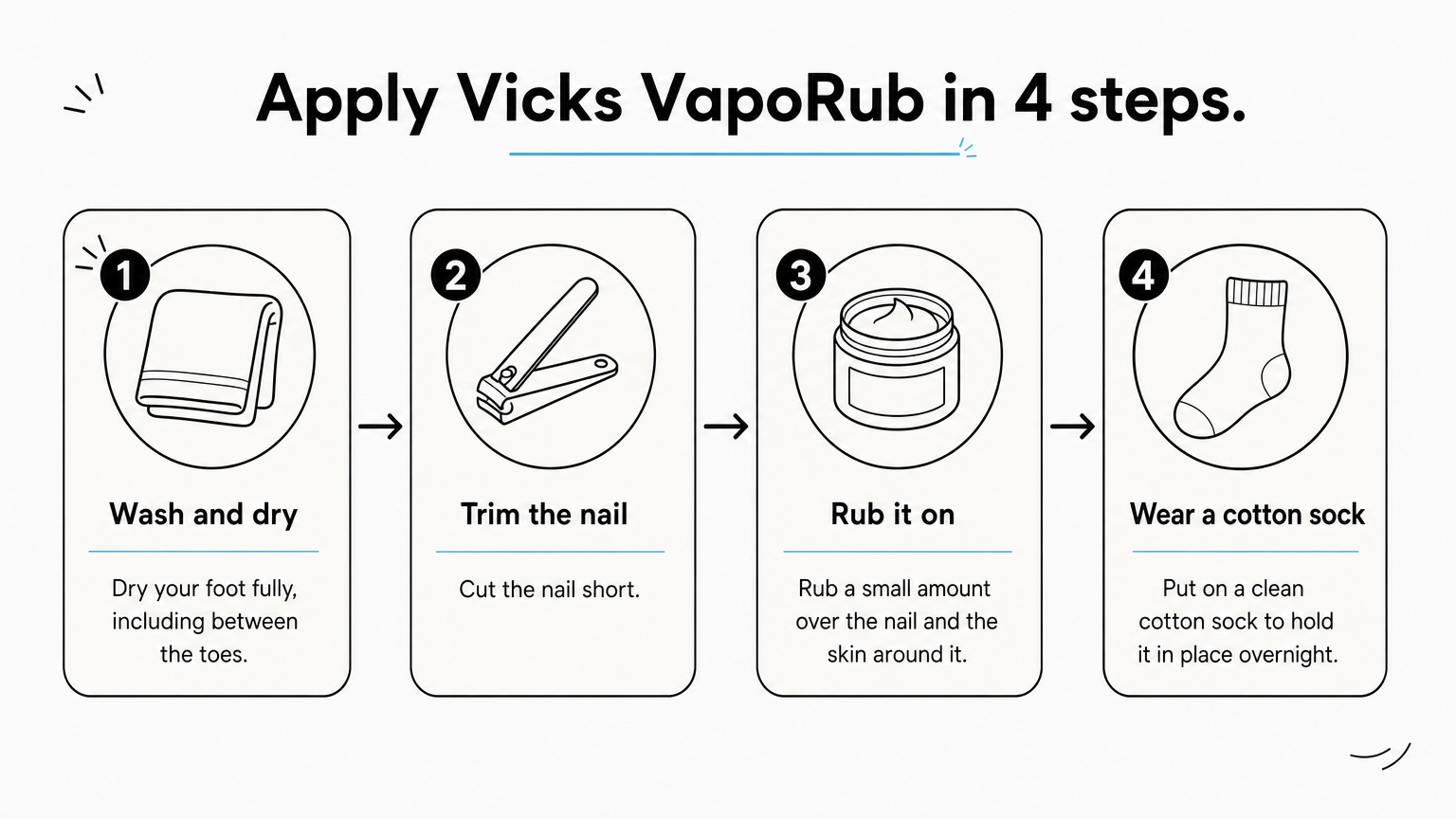
Follow these steps each day:
- Wash your foot and dry it until no damp stays, including between the toes.
- Trim the nail short.
- Rub a small amount over the nail and the skin around it.
- Put on a clean cotton sock to hold it in place overnight.
Stop if the skin turns red or sore.
2. Tea tree oil
Evidence and speed
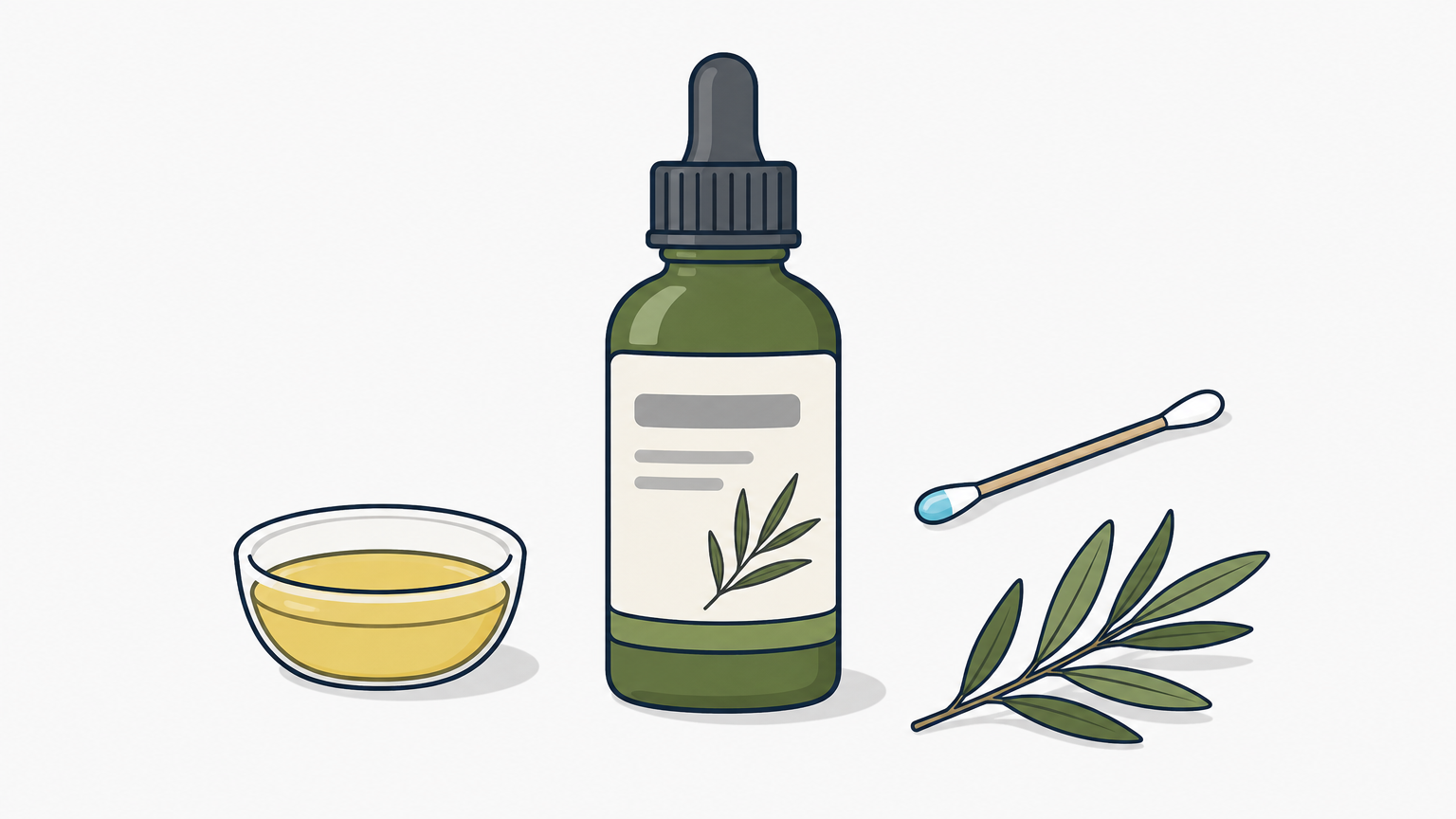
The US National Center for Complementary and Integrative Health notes that small studies suggest tea tree oil may help toenail fungus. Researchers have not run enough studies of tea tree oil to say for sure. The oil works as an antiseptic and fights some fungi in the lab.
Expect slow change over months. A small share of people get skin irritation from the oil.
Tea tree oil is a fair choice for a mild case, but the proof is limited.
How to use it
Dip a cotton swab in the oil and brush a thin layer over the nail two times a day. If you use pure oil, mix it with a carrier oil such as olive oil first. A nail-care product with the oil already diluted is an easy option.
Test a drop on your inner arm before you start. Stop if you see redness, itching or swelling.
3. Oregano oil
Evidence and speed
Oregano oil shows antifungal action in the lab. A 2019 study tested a nail oil that blended oregano, tea tree and lime oils with vitamin E. People with mild to moderate infections used it for 12 months, and their nails improved with no safety problem.
That study tested a blend, so it does not prove that oregano oil alone works. The 12-month length tells you how slow this route is.
The best study of essential oils ran for a year, so treat oregano oil as a slow option.
How to use it
Mix one drop of oregano oil into a teaspoon of olive oil. Brush the mix on the nail with a cotton swab two times a day.
Oregano oil is strong, so test a small patch of skin first. If you combine it with tea tree oil, you raise the chance of irritation, so pick one oil.
4. Vinegar soak
Evidence and speed
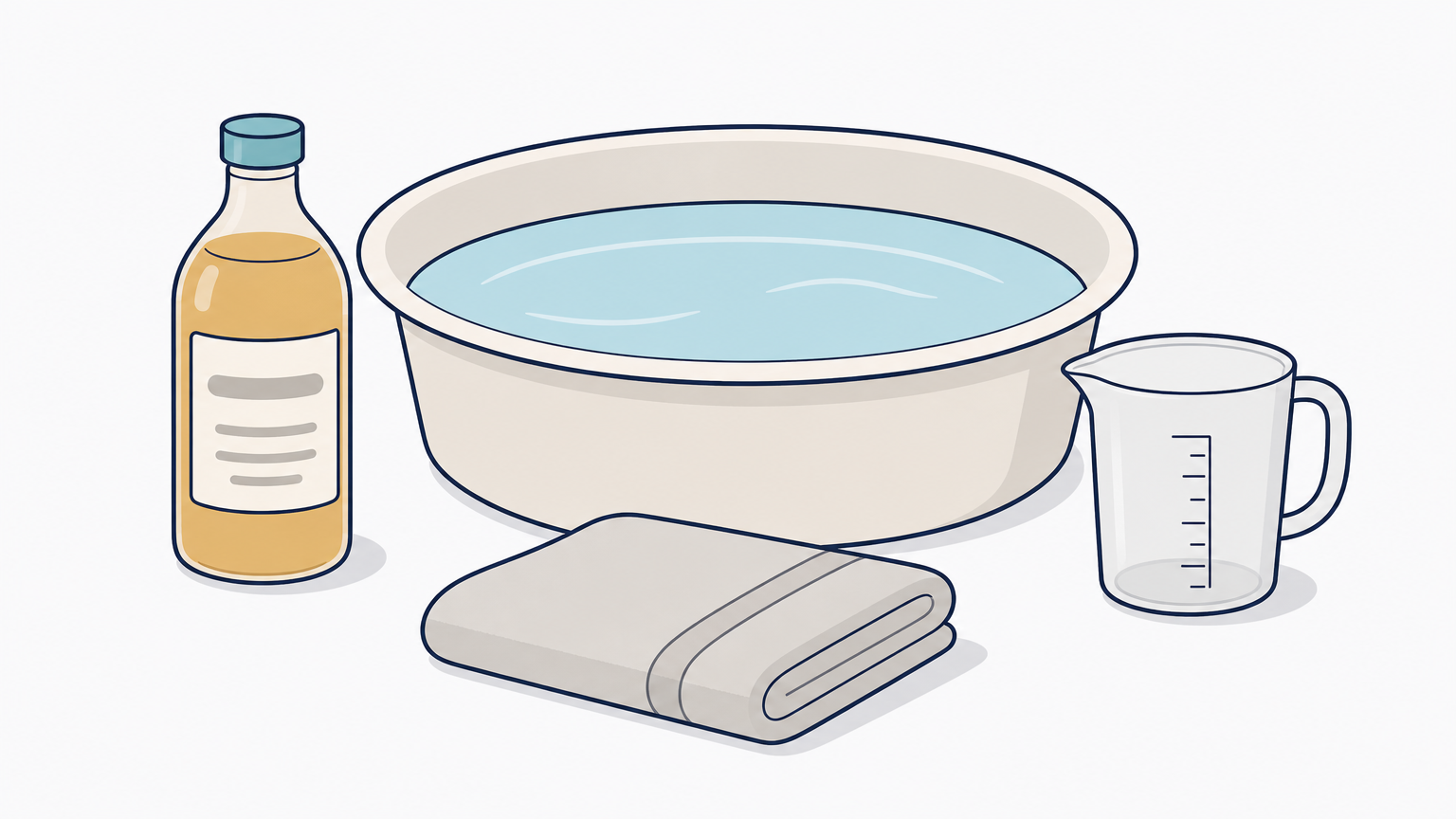
Vinegar slows the growth of some microbes in lab tests. Proof in people is thin. One report found that a vinegar soak may help when you use it with other topical treatments, so treat it as a helper, not a cure.
Its main value is low cost and low risk for people with healthy skin. Expect no quick change in the nail.
A vinegar soak supports other treatments but will not clear the fungus on its own.
How to use it
Soak once a day:
- Mix equal parts apple cider vinegar and warm water in a basin.
- Soak the foot for up to 30 minutes.
- Dry the foot until no damp stays, including between the toes.
- Apply your topical treatment after the soak.
Skip the soak if the skin on your foot is cracked or broken.
5. Garlic
Evidence and speed
Garlic extract slows fungus growth in lab tests. A 2019 study found that garlic extract may help the nail when you use it with other antifungal treatments. The authors say more research is needed.
Garlic suits you if you want to use something from your kitchen. Treat it as an extra, not a main treatment.
Garlic costs almost nothing, but the proof behind it is the thinnest on this list.
How to use it
Crush one clove into a paste. Spread it on the nail for 30 minutes a day, then rinse and dry the foot.
Raw garlic can burn skin. Keep the paste off cuts and stop if the skin stings or blisters.
What to do next
No home remedy kills toenail fungus instantly. Vicks VapoRub, tea tree oil and oregano oil give you the best chance in a mild case, and each one needs months of daily use. Photograph the nail each month. If it looks the same after three months, or it hurts or spreads, get it checked.
If you want faster and steadier progress, our podiatrists can look at the nail and start treatment on the day. See how laser treatment for fungal nails works at our Sydney clinics and book a visit when you are ready.