

Ankle sprains
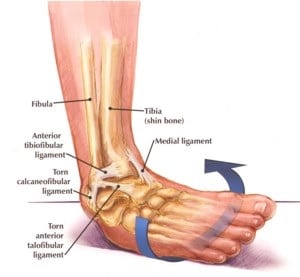
Anatomy of a Rolled Ankle
Ligaments are mostly composed of collagen, which is why they are stretchy and resistant. However, they can only stretch up to a certain point. When a sudden movement causes them to stretch beyond this range, they suffer injuries that can range from small rips to a complete tearing of the ligament; in severe cases, the ligament can become fully detached from the bone, and bones can even become fractured.
Depending on the affected ligament, sprained or rolled ankles can be classified as:
- Lateral ankle sprain: this is the most common type of rolled ankle. It occurs when you twist your ankle inwards, and the reason this sprain is so common is because the ligaments on the outer portion of the ankle are the weakest of all ankle ligaments, and they become easily injured when the foot rolls in the opposite direction.
- High ankle sprain: this type of rolled ankle involves injury to the syndesmotic ligament, which runs between the tibia and fibula bones. It usually occurs after an outward twisting of the ankle, and it can take longer to heal.
- Medial ankle sprain: this is the least common type of rolled ankle, since the ligaments on the inner portion of your ankle are thicker and stronger. It requires a strong, traumatic outward twisting of the ankle.
Symptoms of a Rolled Ankle
Symptoms of a rolled ankle include pain, swelling, bruising, and joint instability. In some cases, you’ll hear a popping sound when the injury occurs. You should always see a podiatrist if you suspect you have a rolled ankle; other conditions, such as fractures, need to be ruled out even if your sprain is only mild. A Sydney podiatrist will also be able to assess the severity of your injury and the type of treatment you should follow to make a full recovery.
Rolled Ankle Treatment in Sydney
The treatment for a rolled ankle always starts with a period of rest to allow your tissues to heal properly. In some cases, a walking boot might be required in order to keep the joint immobile and stable. After this period, your podiatrist or physiotherapist will recommend sprained ankle treatment; only severe rolled ankles require surgery. Our podiatrists at ModPod Podiatry — with clinics in Dee Why, Mosman, Rose Bay, North Ryde, and the Sydney CBD — can provide a comprehensive assessment and rehabilitation plan to get you back to full activity.
Frequently Asked Questions
What should I do immediately after rolling my ankle?
Apply the R.I.C.E. protocol as soon as possible — Rest, Ice, Compression, and Elevation. This helps control swelling and pain in the acute phase. Then book an appointment with a Sydney podiatrist for a thorough assessment to determine the severity of the injury.
How do I know if my rolled ankle is serious?
Indicators of a more serious rolled ankle include inability to bear weight, severe swelling, significant bruising, bony tenderness, or feelings of instability. If you have any of these symptoms, seek assessment from a podiatrist or emergency care promptly. Our Sydney clinics offer urgent appointments.
Can I go to work after rolling my ankle?
It depends on the severity. With a mild Grade 1 sprain, you may be able to work with relative rest and supportive footwear or taping. More severe sprains may require time off, especially if your job involves significant walking or standing. Your Sydney podiatrist can advise based on your specific situation.
How can I prevent rolling my ankle again?
Ankle strengthening and proprioception (balance) exercises, appropriate footwear, and — in some cases — custom orthotics or ankle bracing can significantly reduce the risk of re-injury. Our Sydney podiatrists at ModPod Podiatry can develop a personalised prevention plan for you.
Can I tape my ankle after rolling it?
Yes, taping or bracing an ankle can provide helpful support after a rolled ankle injury. Rigid sports taping and kinesiology tape both have roles in managing ankle sprains. Our Sydney podiatrists are skilled in ankle taping techniques and can show you how to apply it at home.
Do I need surgery for a rolled ankle?
The vast majority of rolled ankles — including most Grade 3 sprains — can be successfully managed without surgery. Surgical intervention is generally only considered for cases of chronic ankle instability that has not responded to conservative treatment. Our Sydney podiatrists will guide you through the appropriate management pathway.
Does ModPod Podiatry treat rolled ankles across Sydney?
Yes. ModPod Podiatry has convenient clinics in Dee Why, Mosman, Rose Bay, North Ryde, and the CBD (Hunter Street). Call (02) 9960 3981 or book online for expert rolled ankle treatment across Sydney.
Book a Rolled Ankle Assessment with Our Sydney Podiatrists
A rolled ankle should never be ignored — proper treatment and rehabilitation are key to avoiding chronic instability. The experienced podiatrists at ModPod Podiatry are here to help you recover fully and get back to what you love. With clinics across Sydney in Dee Why, Mosman, Rose Bay, North Ryde, and the CBD, we are easy to reach. Book online today or call (02) 9960 3981.

