
Toe walking means a child walks on the balls of the feet with little or no heel contact. Toe walking on the autism spectrum is more common than in other children, but it is a clue, not a diagnosis. Most toddlers who walk on tiptoe are not autistic, and many autistic children walk heel to toe. What counts is how long toe walking lasts and what comes with it.
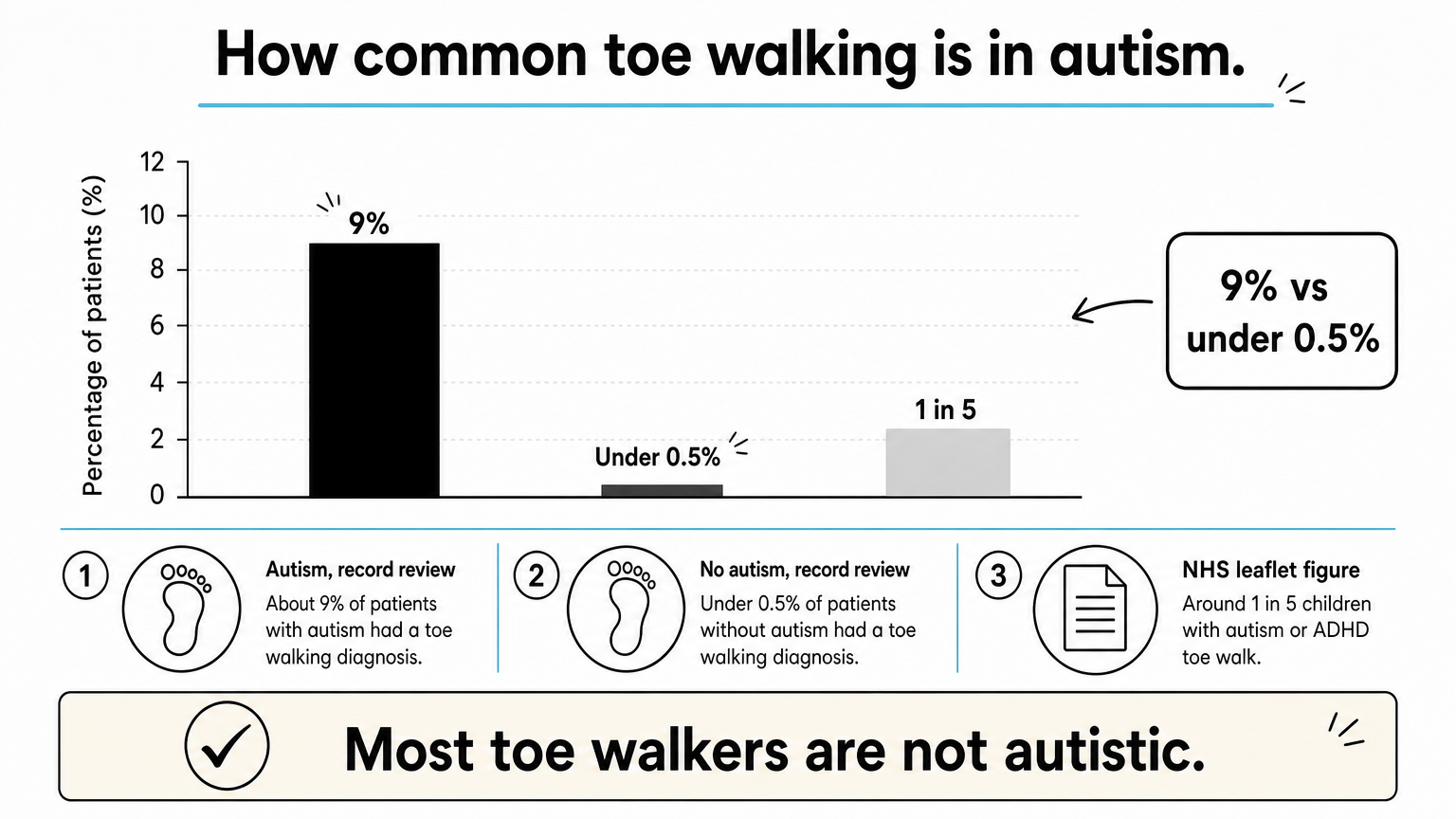
In one large review of patient records, about 9% of people with autism had a toe walking diagnosis, against under 0.5% of people without autism. That gap is why parents ask about it. This guide covers why autistic children walk on their toes, when it starts, what else causes it, and when to seek help.
ModPod Podiatry assesses toe walking in children at our Sydney clinics, and you need no GP referral. This guide draws on published research, so you can decide your next step with clear facts.
Why toe walking matters if your child is autistic
Toe walking matters because it is more common in autism, has several causes, and can tighten the calf and ankle if it lasts. Knowing the cause helps you pick the right response.
How common toe walking is in autism
Studies give different rates because they count different things. This table sets the main figures side by side.
| Source | What it found |
|---|---|
| 2019 review of patient records (Leyden et al.) | About 9% of patients with autism had a toe walking diagnosis, against under 0.5% of patients without autism |
| NHS children’s therapy leaflet | Around 1 in 5 children with autism or ADHD toe walk |
| Shetreat-Klein et al., cited in a 2022 study | About 68% of autistic children had some gait difference, and they walked 1.6 months later on average than non-autistic peers |
The record review counts diagnoses on file, so it misses mild cases. The leaflet figure covers autism and ADHD together and relies on parent reports. The true rate for autism probably sits between the two.
Toe walking is much more common in autistic children, but most toe walkers are not autistic.
Why autistic children walk on their toes
Researchers have found no single cause. These are the main explanations:
- Touch sensitivity. Some children seem to avoid full contact with the ground, so they touch it as little as they can.
- Balance and body sense. The vestibular system tells the brain about motion and position. If it works differently, toe walking may follow.
- Low muscle tone. A child with weak trunk muscles may walk on tiptoe to feel stable.
- Tight calves. Repeated toe walking shortens the calf muscles and Achilles tendon, which makes heel contact harder.
- Habit. Some children start and keep going because it feels normal.
A 2024 study of children and adolescents with autism linked toe walking to greater cognitive, language, autistic and motor impairment. It found no difference in sensory profiles. So sensory theories explain some children, but you cannot assume they explain yours.
What lasting toe walking can lead to
Toe walking that lasts can lead to equinus, a tight calf and ankle that cannot bend the foot upward. Podiatrists define it as less than 10 degrees of upward ankle movement with the knee straight. Research reports it in 50 to 70% of children who toe walk.
A stiff ankle changes how the whole leg works. Your child may trip more, struggle to stand flat in shoes, or complain of calf or foot pain. Early checks keep the ankle moving freely and keep more treatment options open.
Is toe walking a sign of autism?
Toe walking alone is no sign of autism. It is one possible clue, and it counts when it sits beside differences in communication, social interaction or repetitive behaviour.
When toe walking starts and when it should stop
Toe walking shows up when a child takes first steps, at around 12 to 18 months. Many toddlers walk on tiptoe for a while. This is a normal stage, and it should settle between ages 3 and 7.
In autism, the pattern can start the same way. The difference is that it may last longer. A child who walks on tiptoe at age 5 or older needs an assessment, whether or not you suspect autism. Autistic children also walk about 1.6 months later on average, so a late walker with persistent toe walking is worth raising with your GP.
Does toe walking mean autism?
No. Doctors call toe walking with no clear medical cause idiopathic toe walking, and they reach that label only after ruling out other causes. Other causes include a short Achilles tendon, cerebral palsy and muscular dystrophy. Family history matters too. Studies report a family history of toe walking in 10 to 85% of cases.
You may also search for Asperger’s and toe walking. The current diagnostic manual, DSM-5, folded Asperger syndrome into autism spectrum disorder. The research on autism covers these children, and the advice is the same. Toe walking is not a diagnostic criterion for autism in either case.
Signs that point towards autism
These signs, seen with toe walking, are worth a developmental assessment:
- Little response to their name or to people speaking to them
- Limited eye contact, or delayed or unusual speech
- Repeated movements, rigid routines or intense, narrow interests
- Strong reactions to sounds, textures, labels in clothes or touch
- Late walking or late talking
If you see several of these, speak with your GP or a paediatrician about an autism assessment. A podiatrist treats the feet and legs. A paediatrician assesses development.
Toe walking is a clue to watch, and you should weigh it with communication and behaviour, not alone.
What to do if your child walks on their toes
Watch the pattern, write down the details, and book an assessment if toe walking lasts to age 5 or comes with other concerns. A clear record makes the visit faster and more useful.
What to note before you book
Gather this information first:
- When your child started walking, and when toe walking began
- Where it happens: barefoot, in shoes, on grass, or when excited
- Whether one foot or both feet are affected
- Whether your child can stand flat when you ask
- Any pain, stiff calves, tripping or falls
- Whether toe walking runs in the family
- A short phone video of your child walking, from the side and the back
What helps at home
Home steps support your child but do not replace an assessment. The evidence for them is limited, so treat them as help, not treatment.
Never scold or nag your child about it. Toe walking is rarely a choice, and pressure adds stress. Choose shoes with a firm heel and a flat sole. Play games that build balance and body sense, such as swings, jumping, crawling and walking on varied surfaces. Ask a podiatrist before you start calf stretches, because the wrong stretch can upset a sensitive child.
Signs that need a prompt check
Book soon if you see any of these:
- Toe walking at age 5 or older
- Toe walking on one foot only
- A sudden start in a child who used to walk flat
- Pain, stiff calves, or a heel that cannot reach the floor
- Frequent tripping, falls or leg weakness
- Loss of skills your child once had
Book an assessment if toe walking lasts to age 5, affects one foot, starts suddenly, or comes with pain.
How a podiatrist assesses and treats toe walking
A podiatrist checks how far the ankle bends, how the calf muscles and joints work, and how your child walks, then builds a plan from those findings.
What happens at an assessment
Our Children’s Podiatry service covers toe walking for children from age 4, with no GP referral. A first appointment typically runs 30 to 45 minutes. Your podiatrist takes a full history, watches your child walk, tests ankle and leg movement, checks muscle strength and looks at footwear. Will Zalloua, our children’s podiatry specialist, consults at our Mosman clinic.
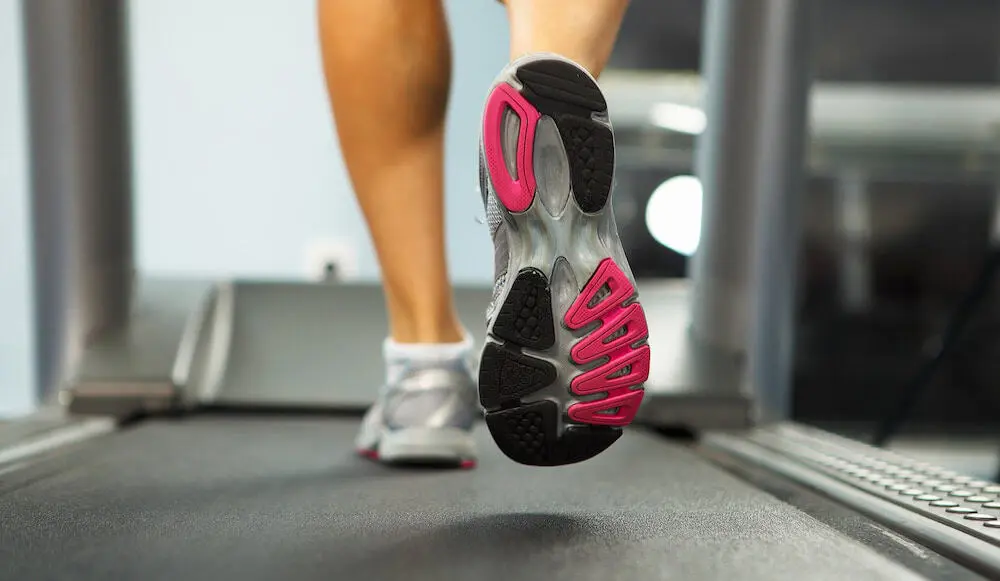
Where it helps, a biomechanical assessment adds digital video analysis and pressure mapping. These show how weight moves through each step. Tell us about your child’s sensory needs when you book. You can book online, or call the clinic if you cannot find a time.
Treatment options from gentle to invasive
Doctors start with the least invasive option. This table sets out the main choices described in the research.
| Option | What it involves | What to know |
|---|---|---|
| Observation | Regular checks of ankle movement and walking | Suits young children with full ankle movement |
| Stretching and strengthening | Calf stretches and leg exercises | One autism research body reports minimal success from stretching alone |
| Footwear and orthoses | Supportive shoes and inserts that discourage tiptoeing | A podiatrist prescribes and reviews these |
| Serial casting | Casts that stretch the tendon, changed every one to two weeks | A medical specialist applies them; one protocol took 30 to 40 days |
| Botulinum toxin with casting | One injection to relax the calf, then casts, braces and therapy | A small study of 22 autistic children found no adverse events, but 12 had a recurrence |
| Surgery | Lengthening the Achilles tendon | Reserved for severe cases; the foot can tighten again, and reviews found no clear gain over non-surgical care |
Podiatrists manage the first three options. A paediatrician or orthopaedic specialist can advise if your child may need casting, injections or surgery. Custom orthotics suit children when the assessment shows they will help.
Start with the gentlest treatment that works, and keep casting and surgery for children who fail to respond.
When to book a toe walking check
Toe walking on the autism spectrum has many causes, and no single sign proves autism. Watch how long it lasts, note what comes with it, and act if it reaches age 5, affects one side, starts suddenly or causes pain. An early check protects ankle movement and rules out other causes.
If you want answers for your child, book a children’s podiatry appointment at one of our Sydney clinics. Bring your notes and phone video, and we will explain what we find and what to do next.