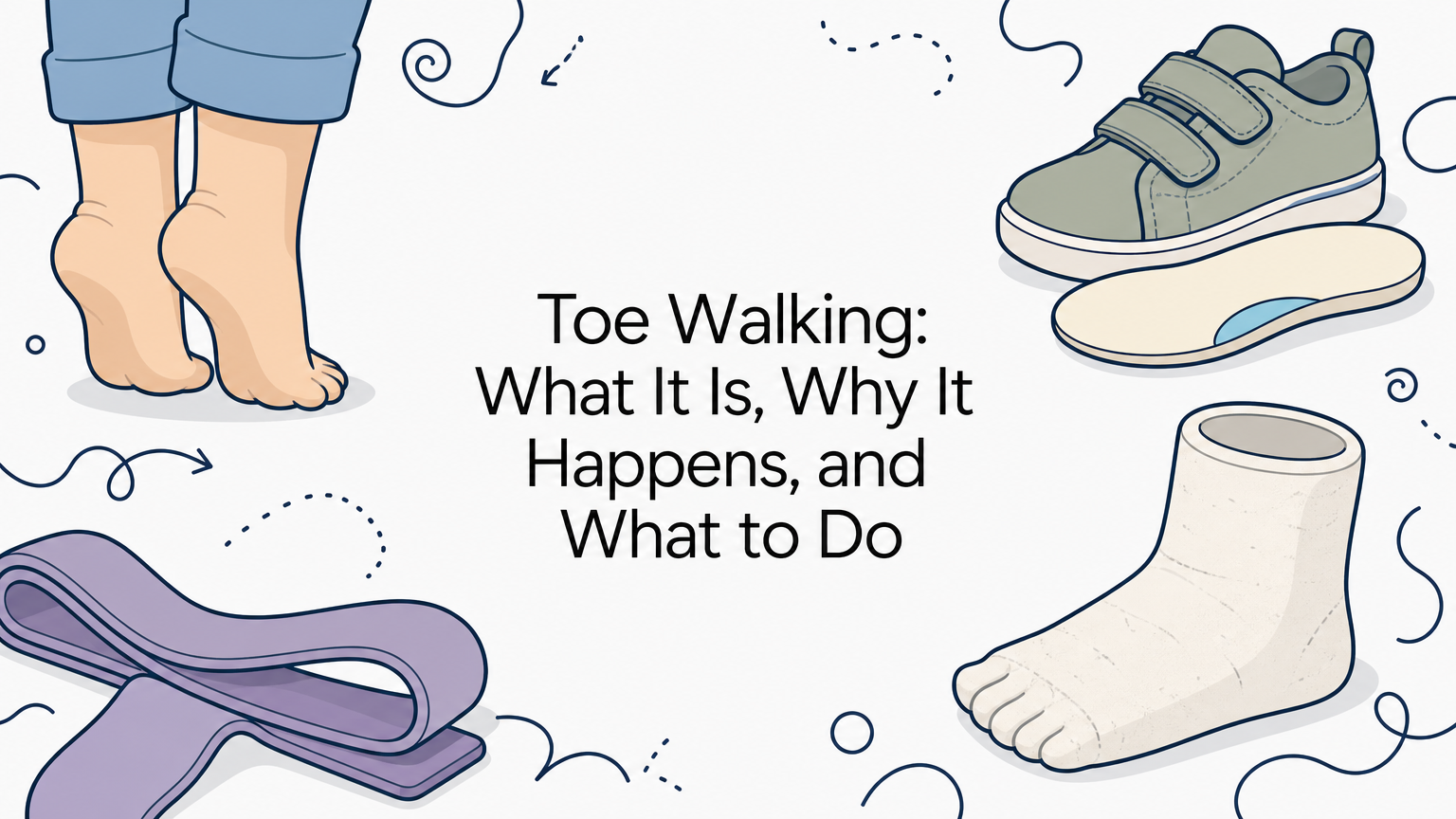

Toe walking means walking on the toes or the balls of the feet, with the heels off the ground. Toddlers do it as they learn to walk, and most children come down onto their heels by age 2 or 3. When doctors find no cause, they call it idiopathic toe walking. In some children, a tight Achilles tendon or a nerve or muscle condition is the reason.
This article explains why toe walking matters at each age, from infants to teenagers. You will see what causes it, how to check your child at home, and which treatments exist. Each section gives you a clear next step.
ModPod Podiatry assesses and treats toe walking in children at five Sydney clinics. You do not need a GP referral to book. Use this guide to decide whether to watch, stretch or book a visit.
Why toe walking matters
Toe walking matters because the same pattern can be a normal stage or a sign of a problem. Your child’s age and other signs tell you which one you are seeing.
Toe walking in infants and toddlers
Walking on tiptoes is common in children who are new to walking. Most outgrow it. If your toddler tiptoes during play, meets milestones and walks flat-footed at other times, you have little to worry about.
If your child keeps toe walking past age 2, mention it to your doctor or podiatrist. Book a visit now if your child has tight leg muscles, a stiff Achilles tendon or poor coordination.
Toe walking in older children and teenagers
Many teenagers who walk on their toes have done so since toddlerhood. Over the years, the calf muscles and Achilles tendon can tighten. That makes heel-down walking harder and can limit running, sport and shoe fit.
Constant toe walking can change the structure of the foot and raise the risk of falls. It can also draw comments from other children. A teenager who starts toe walking with no history needs a prompt check, because new onset can point to a nerve or muscle problem.
A toddler who tiptoes is learning to walk. A child who tiptoes past age 2 deserves a check.
What causes toe walking in children and teens
Habit is the most common cause of toe walking. A small group of children walk on their toes because of a medical condition.
Habit, or idiopathic toe walking
Idiopathic means no known reason. These children are healthy and can stand with their heels down when you ask. They choose to walk and run on their toes. The habit can run in families.
Some calf tightness may build up and make the habit stick. Children in this group come down onto their heels with age and growth. A podiatrist can confirm the diagnosis and tell you whether to watch or treat.
Medical causes and the clues to look for
Medical causes are rare, but you should know the clues. Toe walking by itself does not mean your child has autism or cerebral palsy.
| Cause | What it means | Clue to watch for |
|---|---|---|
| Short Achilles tendon | The tendon that links calf to heel is short or tight | The heel will not reach the floor |
| Cerebral palsy | A group of conditions that affect movement and posture | Stiff leg muscles, poor coordination |
| Muscular dystrophy | A genetic condition that weakens muscle over time | Your child walked flat-footed first, then began toe walking |
| Autism spectrum disorder | Linked to toe walking, with sensory differences | Other changes in communication and play |
Some children with autism may toe walk because of how they sense balance and touch. Their toe walking tends to sit alongside other signs, not alone.
Toe walking alone rarely signals a serious condition, but toe walking with other signs always deserves a check.
How to check your child’s toe walking at home
You can run a simple home check in five minutes. It tells you whether to watch your child or book an assessment.
A five-step home check
Have your child walk and run barefoot on a hard floor. Then work through these steps:
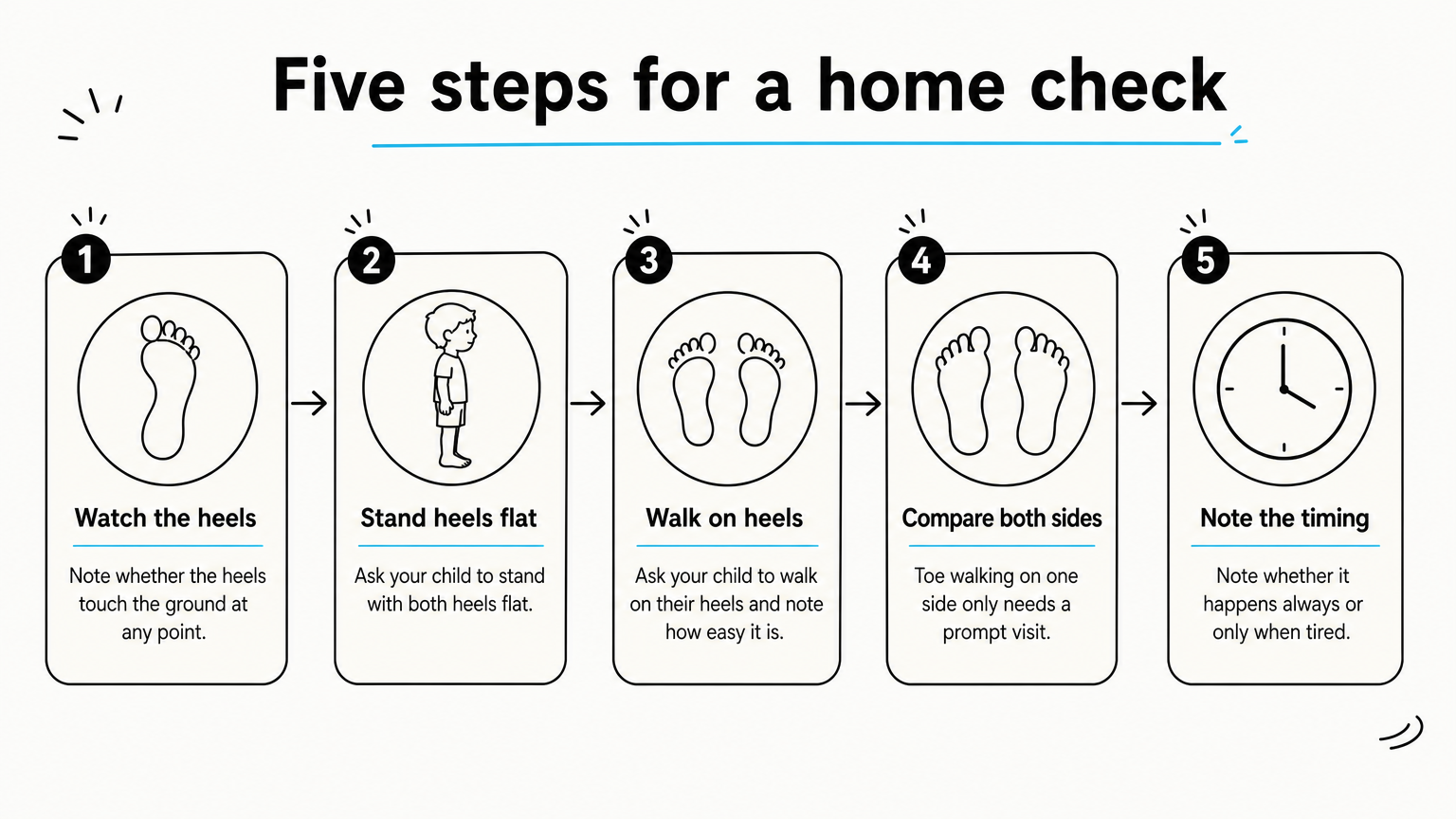
- Watch the heels. Note whether they touch the ground at any point.
- Ask your child to stand with both heels flat. See if they can.
- Ask your child to walk on their heels. Note how easy it is.
- Compare both sides. Toe walking on one side only needs a prompt visit.
- Note when it happens: all the time, or only when your child is excited or tired.
A child who can stand flat and walk on their heels on request fits the habit pattern. A child who cannot bring the heels down needs an assessment.
Signs that need a visit
Book an assessment if you see any of these:
- Toe walking past age 2
- Toe walking on one side only
- Heels that will not go down when asked
- Stiff or tight calves or ankles
- Tripping, falls or poor coordination
- Pain in the feet, legs or ankles
- Toe walking that began after your child walked flat-footed
If the signs point to a nerve or muscle cause, a podiatrist will send you to your doctor or a paediatrician.
If your child cannot stand with both heels flat, stop watching and book an assessment.
Toe walking treatment options
Treatment depends on the cause and on how stiff the calf and ankle are. Many children need only stretches and time. Others need support from a podiatrist or a specialist.
Start with stretches and play
For habit toe walking, watching and waiting is a valid choice. You can add a daily calf stretch. Stand your child with the feet pointing forward, heels down and the back knee straight. Hold for 30 seconds. Repeat with the back knee bent.
Games help your child learn heel-down walking:
- Balance on one leg
- Walk on the heels
- Walk heel to toe, forwards and backwards, along a line
Barefoot time on safe surfaces builds foot strength and balance.
Footwear, orthotics, casting and surgery
Treatment choices go up in steps. Shoe inserts or heel raises come first for some children. A tight Achilles tendon may need serial casting, splints or an ankle-foot orthosis. Botulinum toxin injections can relax a tight calf. Surgery to lengthen the tendon is for severe cases when other treatment has failed.
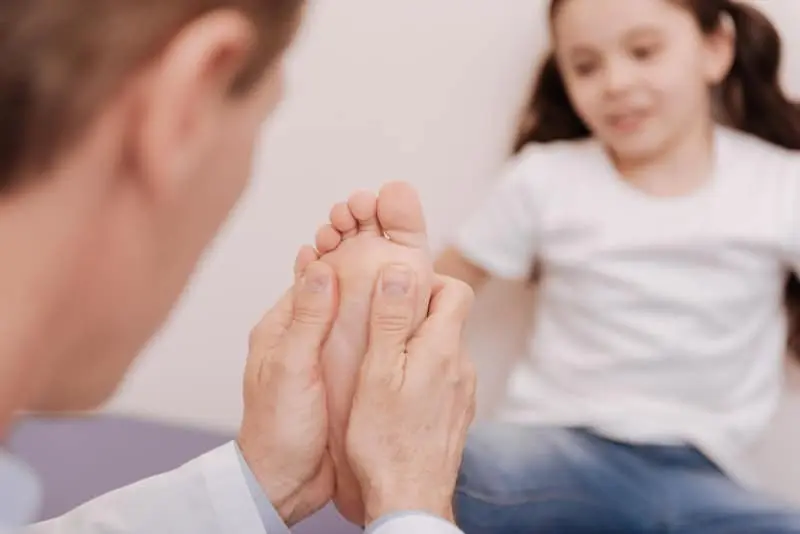
Children’s Podiatry at ModPod Podiatry covers toe walking. Your podiatrist checks your child’s foot and leg biomechanics, looks at how your child walks and runs, and sets up a stretch plan. If your child needs orthotics, the podiatrist prescribes children’s orthotics.
Most toe walkers need stretches and guidance, not surgery.
Next steps if your child walks on their toes
Toe walking is normal in toddlers, common as a habit in older children and rare as a sign of a medical condition. Your child’s age, heel position and other signs tell you which one you face. Run the home check, start the stretches and watch for the warning signs.
If your child toe walks past age 2, cannot stand with the heels flat or shows any warning sign, get an assessment. You do not need a GP referral. Book a toe walking assessment at one of our five Sydney clinics, and you will leave with a clear answer and a plan.