

Yellow toenails are toenails that have lost their clear pink-white colour and taken on a yellow tint. The most common cause is a fungal nail infection, but polish stains, injury, ageing and some health conditions can change nail colour in the same way. The fix depends on the cause, so work out which one you have before you buy a treatment.
This guide explains why toenails turn yellow and thick, how to tell a fungal infection from other causes, and which treatments and home remedies can clear the colour. You will learn when to stop self-treating and see a podiatrist.
ModPod Podiatry has treated feet, ankles and lower limbs in Sydney for over 20 years. Our APodA-registered podiatrists diagnose fungal nails by sight, with no clippings or lab tests, so treatment can start the same day. This guide draws on that clinical experience and gives you plain steps you can follow today.
Why your toenails turn yellow and why it matters
Toenails turn yellow because of a fungal infection, a stain, an injury, ageing or an underlying health condition. Most yellow nails are harmless, but the cause decides the treatment. A polish stain fades with time, while a fungal infection can spread and thicken if you ignore it.
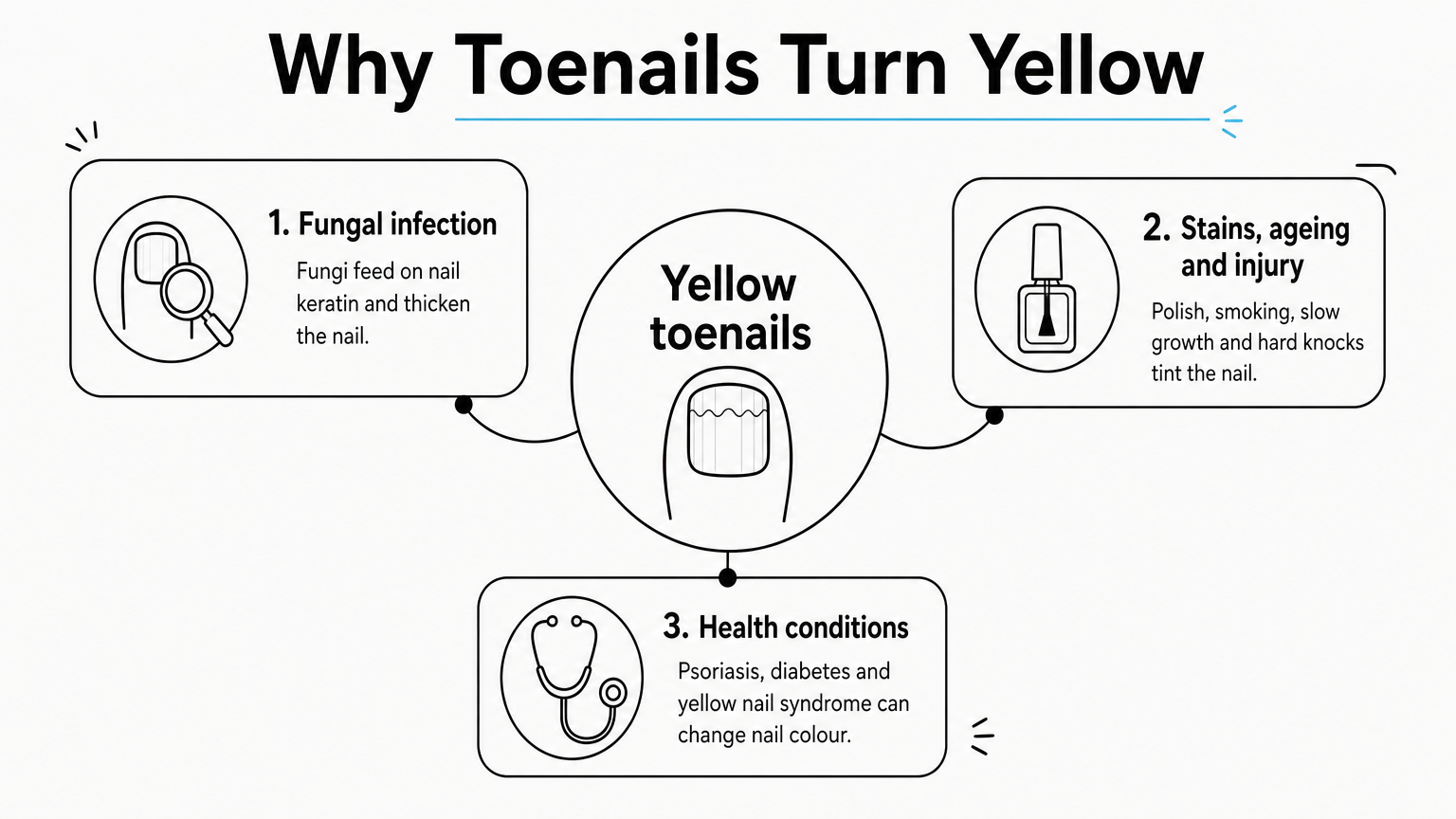
Fungal infection is the leading cause
Fungal nail infection, or onychomycosis, affects about 1 in 10 adults, and the risk climbs with age. Fungi called dermatophytes feed on keratin, the protein in your nails. They enter through tiny cracks in the nail or the skin beside it, and they thrive in warm, damp shoes.
Fungus explains most cases of thick yellow toenails. As the infection spreads under the nail, it builds crumbly debris that lifts the nail and makes it thick. The colour can shift to yellow, white or brown. Many people with fungal nails carry athlete’s foot as well, and some mistake it for dry skin.
Stains, ageing and injury
Dark nail polish can leave a yellow stain, mostly when you skip the base coat. The stain sits in the nail plate, so it fades as the nail grows out. Nicotine from smoking can tint nails yellow too.
Age changes nails. They grow slower, thicken and take on a yellow shade as blood flow drops. Injury has a similar effect. One hard stub, or years of pressure from tight shoes, can damage the nail bed and leave a yellow, thick nail. Athletes and people in ill-fitting shoes face the most risk.
Health conditions behind yellow nails
Some yellow nails point to a problem in the body, not on the nail. These are the main ones:
- Psoriasis can pit and thicken nails and turn them yellow-brown.
- Diabetes can change nail colour and thickness. Poor circulation also raises the risk of infection.
- Yellow nail syndrome is rare. It causes slow-growing, thick, curved yellow nails, and it can come with breathing problems.
- Thyroid, liver and lung disease can change nail colour and texture.
Yellow toenails are common and mostly harmless, but the cause sets the treatment.
How to tell if yellow toenails are fungal
Fungus leaves a pattern. The yellow starts at the tip or side of the nail, spreads towards the base, and comes with a thick, crumbly texture. A stain or a knock looks flatter and smoother. Use the clues below as a first check.
Fungal nail or something else
Compare your nail with each row. No single clue proves the cause, but three or more clues in one column point the way.
| Clue | Points to fungus | Points to another cause |
|---|---|---|
| Where the colour starts | Tip or side edge, spreading to the base | Whole nail at once, or one patch after a knock |
| Nail surface | Thick, crumbly, lifted, with debris underneath | Smooth, or pitted (psoriasis) |
| Number of nails | One or two nails, then spread over time | Many nails the same shade, fingernails included |
| Skin nearby | Peeling or itchy skin between the toes | Normal skin |
| Recent history | Damp shoes, gym floors, athlete’s foot | Dark polish, a hard knock, tight shoes |
How a podiatrist confirms the cause
A podiatrist can diagnose a fungal nail by examining it. At ModPod Podiatry, we diagnose by sight, with no clippings and no lab tests. You leave with an answer, and treatment can start the same day.
Your podiatrist looks for other causes too, such as injury, psoriasis or a skin problem between the toes. If a health condition looks likely, see your GP. A dark brown or black streak that runs along the nail needs a check by a doctor or podiatrist, because it can have causes other than fungus, including skin cancer.
Fungus starts at the edge and thickens the nail, while a stain leaves it smooth.
How to get rid of yellow toenails by cause
Treat the cause, then wait for clear nail to grow in. Toenails grow about 1 mm a month, so a full big toenail takes 12 to 18 months to replace. No treatment turns a yellow nail clear in a week, and a product that promises this is a cover-up.
Treatment by cause
Match your cause to a row. Stains and injuries need patience, not products. Fungus needs an antifungal that reaches the nail bed, and treating athlete’s foot at the same time stops it from coming back.
| Cause | What works | What to expect |
|---|---|---|
| Fungal infection | Antifungal lacquer, prescribed tablets or laser | Months of treatment while clear nail grows from the base |
| Polish stain | Stop polish, then use a base coat | Stain grows out with the nail |
| Injury or tight shoes | Shoes with room for your toes, and protection for the nail | Damaged part grows out |
| Psoriasis | Treatment of the skin condition from your doctor | Depends on the condition |
| Diabetes or another condition | Care for the condition with your GP, plus podiatry nail care | Ongoing |
Treating a fungal nail
Fungal nails respond to three treatments. Antifungal lacquers and creams from a pharmacy suit mild cases, and a podiatrist can thin a thick nail first so the product reaches deeper layers. Antifungal tablets need a prescription, and they carry side effects, so your doctor decides if they suit you. Laser works without drugs.
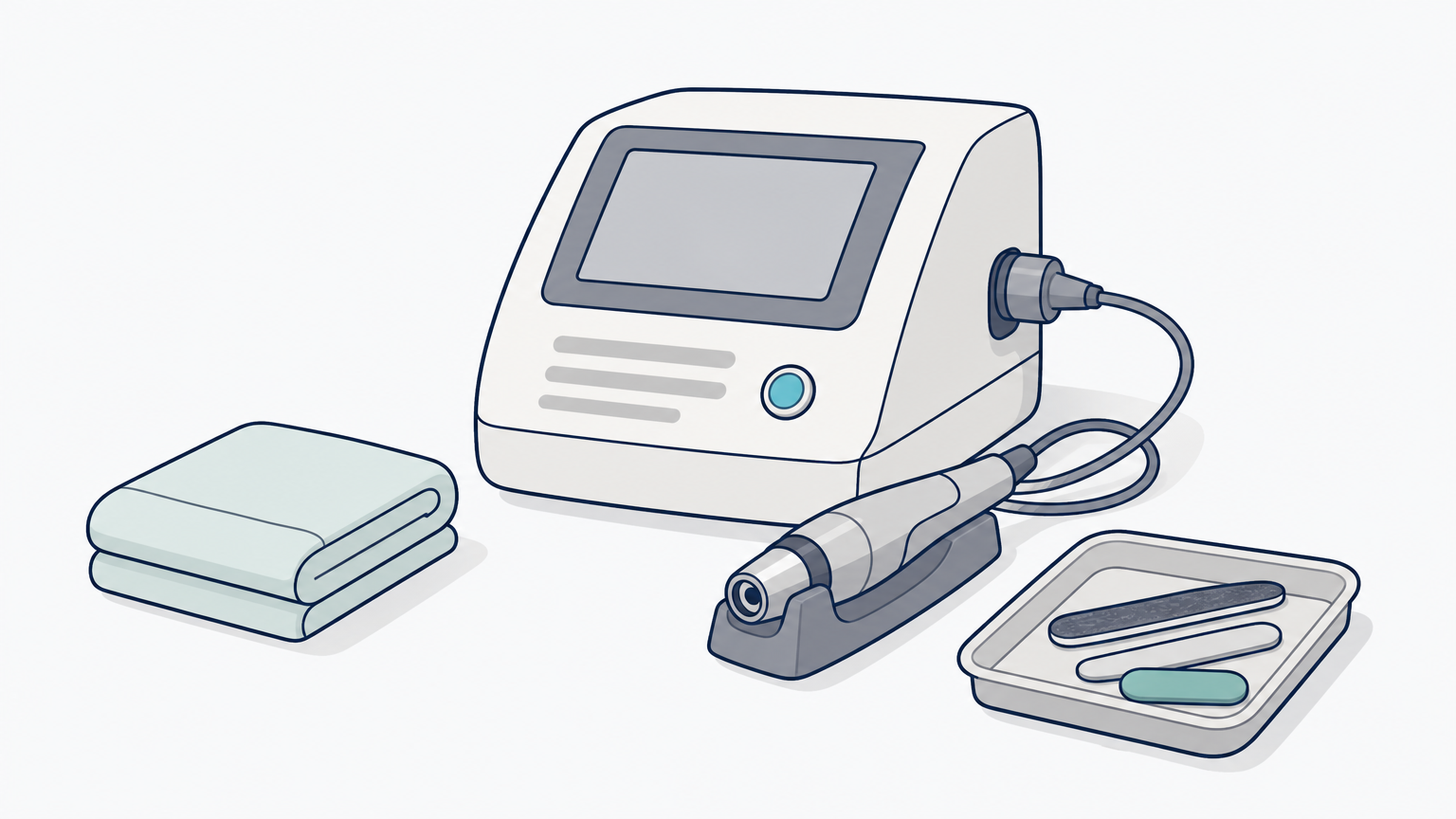
At ModPod Podiatry, we treat fungal nails with the Lunula cold laser. It is painless, it has no downtime, and each session takes about 12 minutes. The first session costs $205 and includes nail preparation. Each follow-up costs $160. A typical course is 4 sessions, so one course comes to $685 before any health fund rebate. Some people need more sessions. We quote a success rate of 75 to 90 percent, and clear nail grows in from the base as the treatment works.
Treatment clears the infection, and the nail takes months to grow clear.
Home remedies for yellow toenails: the evidence
Home remedies can help mild yellowing and stains, but few have strong evidence against fungus. Try them on a nail with light colour at the tip. Book a visit if the nail thickens or the colour spreads.

What the evidence says
Kitchen cures fill the internet. This table shows what research supports and where it falls short.
| Remedy | Evidence | Verdict |
|---|---|---|
| Tea tree oil | A 2022 review of studies found too little good evidence | Weak |
| Vicks VapoRub | A small study of 18 people reported promising results, and larger trials are missing | Possible, unproven |
| Baking soda or vinegar soaks | No strong trials against nail fungus | Weak, and can dry the skin |
| Coconut oil or olive leaf extract | No strong trials | Weak |
| Pharmacy antifungal lacquer | Made for mild nail fungus | Best home option |
Safe steps to take at home
These steps do no harm and give a mild nail the best chance:
- Cut nails straight across with clean clippers.
- Smooth a thick nail with a nail file before you apply a lacquer.
- Dry your feet and the skin between your toes after every wash.
- Change your socks each day, and choose moisture-wicking pairs.
- Skip polish until the nail clears, or use a base coat.
Give a remedy a few weeks. If the nail thickens, spreads or hurts, book a visit instead of stacking more products. Months of the wrong treatment cost more than one podiatry consult.
Pharmacy lacquer is the best home option, and kitchen remedies have little proof.
When to see a podiatrist and how to prevent a repeat
See a podiatrist when yellow toenails come with pain, thickening, spread or a health condition, or when home care changes nothing after a few weeks.
When to book a visit
Book a visit if any of these apply:
- The nail is thick, painful or hard to trim, or your shoe presses on it.
- Redness, swelling, bleeding or discharge appears around the nail.
- You have diabetes or poor circulation.
- The yellow spreads to other nails.
- You see a dark streak under the nail.
- You are unsure of the cause.
If yellow nails come with breathing problems or leg swelling, see your GP.
You need no GP referral to see a podiatrist at ModPod Podiatry. A new patient consult costs $135, and we claim on the spot with HICAPS if you have private health cover. We give you a receipt to claim your rebate, and we accept Medicare EPC plans for eligible patients. Choose from our clinics in Sydney CBD, Mosman, Dee Why and Rose Bay. We offer same-day appointments whenever possible.
How to stop yellow toenails coming back
Prevention comes down to dry feet, roomy shoes and quick action on athlete’s foot. Follow these habits:
- Keep your feet clean and dry, with dry skin between the toes.
- Wear breathable shoes and let them air out after sport.
- Wear thongs in pools, gyms and locker rooms.
- Treat athlete’s foot at the first sign.
- Wear shoes with room for your toes.
- Use your own nail tools, and keep them clean.
- Use a base coat, and give your nails a break from polish.
- Choose a salon that cleans its tools and foot baths between clients.
Dry feet, roomy shoes and early care keep yellow toenails away.
Next steps for your toenails
Yellow toenails have many causes, and the cause sets the fix. Fungus is the leading one, and it shows as a thick, crumbly nail that starts yellowing at the edge. Stains, injury, ageing and health conditions leave the nail smoother and need other care.
Home remedies suit mild cases, and a pharmacy lacquer is the best of them. Laser, lacquer and tablets treat fungus that home care cannot clear. Every option needs patience, because clear nail grows in at about 1 mm a month.
If your nails are thick, spreading or sore, or you cannot tell the cause, let a podiatrist look. Book an appointment online at one of our four Sydney clinics, and we will tell you what is behind the colour and set out your treatment plan.