
Toenail fungus or melanoma is the question many people ask when a nail changes colour. Toenail fungus is common. It turns a nail yellow, white or brown and leaves it thick and crumbly. Subungual melanoma is a rare skin cancer under the nail. It shows as a dark brown or black band or spot that widens and does not grow out. If one nail has a dark mark you cannot explain, get it checked.
Both problems can discolour and distort a nail, so people mix them up. Fungus is an infection of the nail, called onychomycosis. Toenail melanoma starts in the pigment cells of the nail bed. A mix-up costs time, and time matters with cancer.
This guide sets toenail fungus vs melanoma side by side. You will see why the difference matters, how to compare the signs at home, what causes each one, and when to book a check. ModPod Podiatry has treated feet in Sydney for over 20 years, and we want you to know when a nail needs a closer look.
Why telling toenail fungus from melanoma matters
The two conditions need opposite responses. Fungus is a common infection that you can treat at a steady pace. Melanoma is a cancer that needs a diagnosis and removal at the earliest stage.
Why fungus gets the blame
Nail fungus is so common that most people assume it explains any odd nail. Subungual melanoma is rare. It makes up 0.7% to 3.5% of melanomas worldwide, according to StatPearls. Rare conditions are easy to miss, and a dark nail looks like a bruise or a fungal nail.
Bob Marley is the best-known example. He believed a dark spot under his toenail came from a soccer injury. It was a melanoma, and it spread. Treating a cancer as a fungus gives the cancer time to grow.
What the odds look like
Timing changes the outcome. The five-year survival rate is around 97% when doctors find subungual melanoma at the earliest stage. It can fall as low as 15% when they find it late.
A dark nail that you cannot explain is a reason to get checked, not to wait.
Location is a clue too. The big toe or thumb carries 75% to 90% of cases, so a change on a big toenail deserves extra attention. Australians know melanoma as a sun-related cancer. Nail melanoma behaves differently, so a good sun habit does not rule it out.
How to tell toenail fungus from melanoma at home
Compare four things: colour, texture, change over time, and how many nails are involved. No home check gives a diagnosis, but these signs tell you how urgent the problem is.
Side-by-side signs
The table sets the signs of melanoma toenail changes next to those of fungus.
| Sign | Toenail fungus | Subungual melanoma |
|---|---|---|
| Colour | Yellow, white, brown or green | Brown or black band or spot, with mixed light and dark shades |
| Texture | Thick, brittle, crumbling edges | Thinning, splitting, cracking or bleeding |
| Pattern | Starts at the tip or side and spreads across the nail | A streak from cuticle to tip that gets wider |
| Skin beside the nail | Unchanged | Dark pigment can spread onto the skin |
| Nails involved | One or several | One nail, mainly the big toe |
| Over time | Slow thickening and crumbling | A band wider than 3 mm, with blurred edges |
Colour alone does not settle it. Fungus can darken a nail, and up to half of nail melanomas have little or no pigment. A pale nail that stays painful, thins, cracks or bleeds needs a check too.
Look at the skin beside the nail as well. Dark pigment that spreads onto the skin around the nail is called Hutchinson’s sign. It is a strong warning sign of melanoma.
A dark band that widens or does not fade as the nail grows needs a medical check.
Rule out a bruise
A knock or a tight shoe can bleed under the nail. This bruise is called a subungual haematoma. It changes from red to purple to dark brown or black, and the mark moves toward the tip as the nail grows. Toenails grow about 1 mm a month, so a bruise takes many months to clear.
A melanoma streak behaves in the opposite way. It stays attached at the base of the nail and does not fade. If you cannot recall an injury, or the mark has not changed after a few weeks, have it checked.
Photograph the nail
A photo record shows change that you cannot see day to day. Follow these steps:
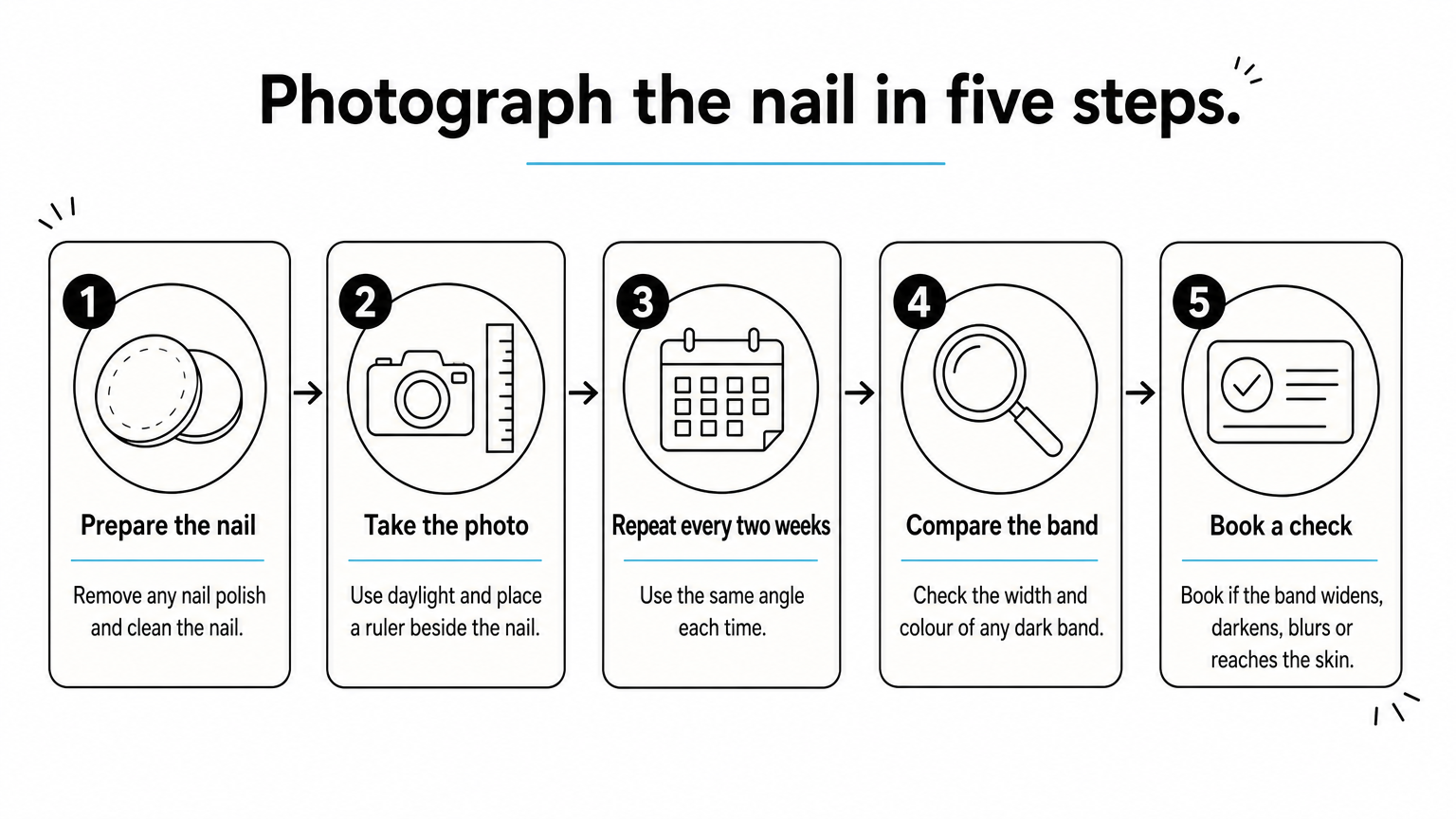
- Remove any nail polish and clean the nail.
- Take a photo in daylight with a ruler beside the nail.
- Repeat every two weeks from the same angle.
- Compare the width and colour of any dark band.
- Book a check if the band widens, darkens, blurs or reaches the skin.
A photo does not replace an examination. It gives your podiatrist or doctor a clear history to work with.
What causes toenail fungus and subungual melanoma
Fungus has a clear cause: a germ that enters the nail. Melanoma has no single known cause, but doctors know which factors raise the risk.
Causes of toenail fungus
Fungal nail infections come from dermatophytes, a common type of fungus, and from moulds. The fungus gets in through a crack or cut and settles between the nail and the nail bed. Several things raise your risk:
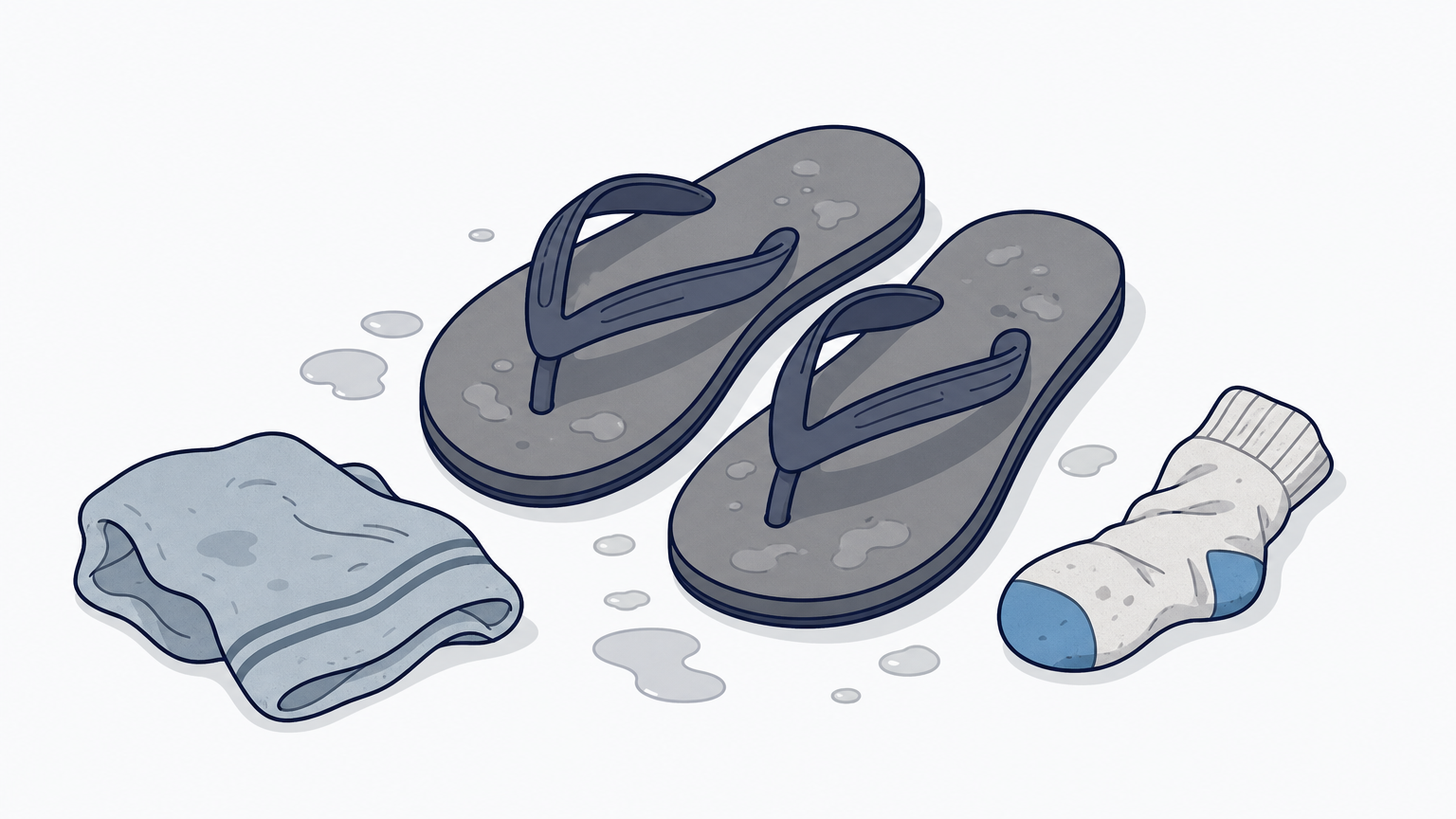
- Older age
- Sweaty feet
- Athlete’s foot
- Walking barefoot in damp places
- Diabetes
Risk factors for toenail melanoma
Doctors do not know the exact cause of subungual melanoma. Sun exposure does not seem to drive it, unlike melanoma on the skin. Known risk factors include severe injury to the nail, a family history of the condition, and gene changes linked to skin cancer. Risk also rises with age.
The cancer makes up a larger share of melanomas in people with deeply pigmented skin. That makes nail checks important whatever your skin tone.
Subungual melanoma does not follow the sun rule, so check your nails even if you cover up and wear sunscreen.
When to see a doctor and what happens next
Book a check as soon as you notice one of the signs below. Waiting costs more than a short appointment.
- A dark band wider than 3 mm, or a band that is growing
- Mixed shades or blurred edges
- Pigment on the skin beside the nail
- A dark mark with no injury you can recall
- A nail that splits, bleeds or has a sore that will not heal
- A change in one nail that keeps getting worse
What a nail check involves
A podiatrist looks at the nail and asks about injury, timing and family history. At ModPod Podiatry, our podiatrists diagnose fungal nails by looking, with no clippings or lab tests, and treatment can start the same day. You do not need a GP referral. We offer same-day appointments across our four Sydney clinics whenever possible. The new patient initial consult costs $135 and covers your history, diagnosis and treatment plan.
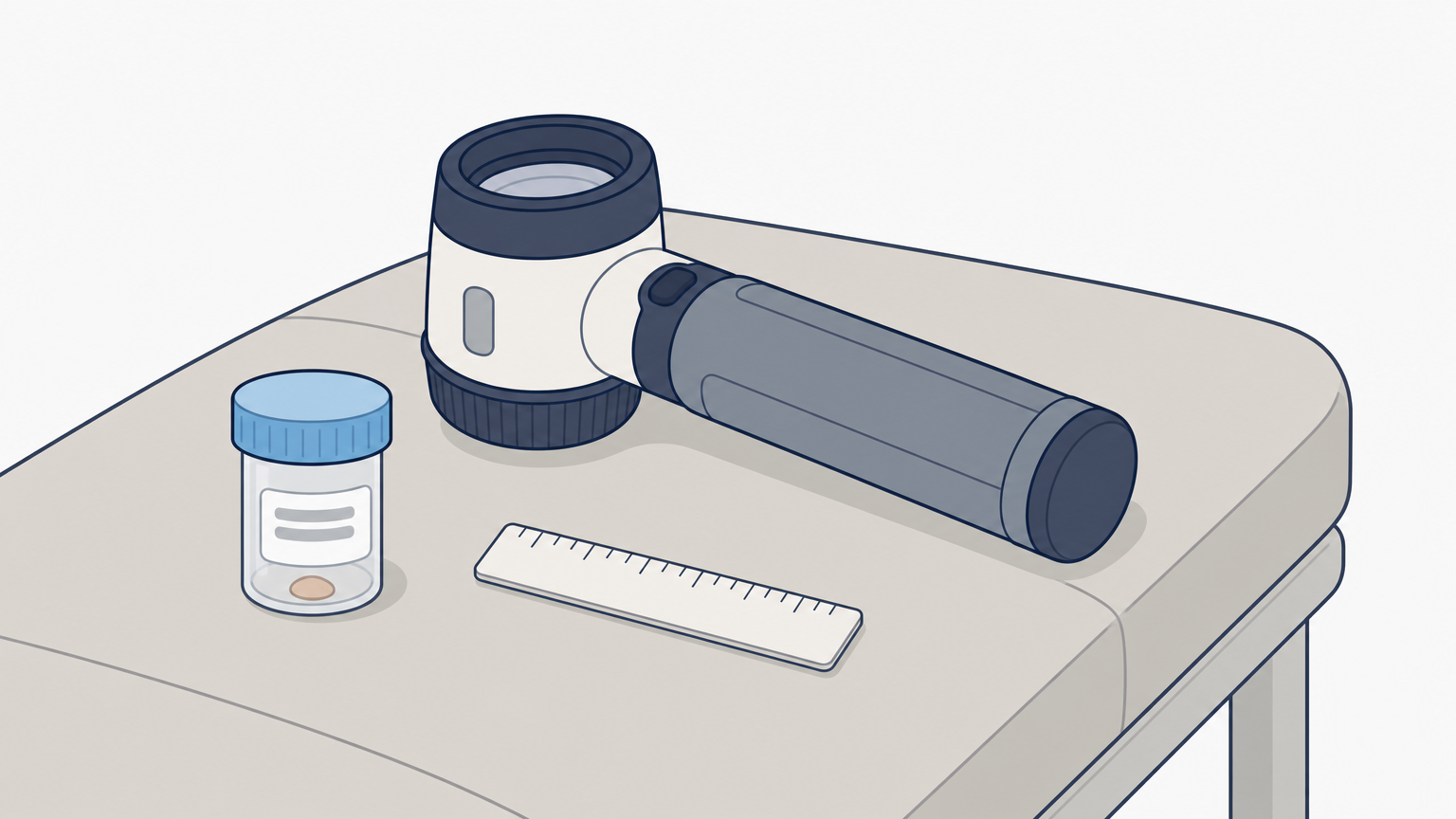
A podiatrist who sees melanoma warning signs will not start fungal treatment. You need a biopsy first. A doctor or dermatologist takes a sample of the nail bed to confirm the diagnosis. If the result shows melanoma, treatment starts with surgery to remove the cancer. Deeper cancers can need removal of part of the toe, and spread to other parts of the body needs further treatment.
Confirm the diagnosis before you treat the nail.
If it is fungus
Once a podiatrist confirms a fungal nail, you have a clear option. Laser treatment for fungal nails uses a Lunula cold laser. It is painless and has no downtime. Each session takes about 12 minutes per foot.
Most courses run about four sessions, and some need more. The first visit costs $205 and includes nail preparation. Follow-up sessions cost $160. Avoid home remedies and creams on a nail with a dark streak until someone has checked it.
What to do next
Toenail fungus is common and treatable. Subungual melanoma is rare and serious. Colour, texture, change over time and the skin around the nail help you tell them apart. A dark band that widens, a mark that does not grow out, or pigment on the skin all call for a prompt check.
If a nail worries you, do not wait to see if it settles. Book an appointment online at the ModPod Podiatry clinic nearest you in Sydney CBD, Mosman, Dee Why or Rose Bay. We will examine the nail, explain what we see and tell you what comes next.