
Fungal nail laser treatments use low-level light to kill the fungus that lives in and under an infected nail. The light passes through the nail, damages the fungal cells and supports healthy new growth. A session takes about 12 minutes, causes no pain and needs no recovery. Most courses run four sessions.
Nail fungus, or onychomycosis, turns a nail yellow, white or brown. The nail thickens, grows brittle and can lift from the nail bed. In this article, "nail laser treatment" means the medical kind that treats this infection. It has nothing to do with cosmetic nail work.
We treat fungal nails with the Lunula cold laser at ModPod Podiatry in Sydney. This guide explains why laser suits a stubborn infection, how a session works, what results to expect, what a course costs and how to find a clinic near you.
Why laser suits stubborn fungal nails
Laser suits fungal nails because it reaches the infection through the nail, which creams and paints struggle to do. It also needs no tablets.
Why nail fungus resists treatment
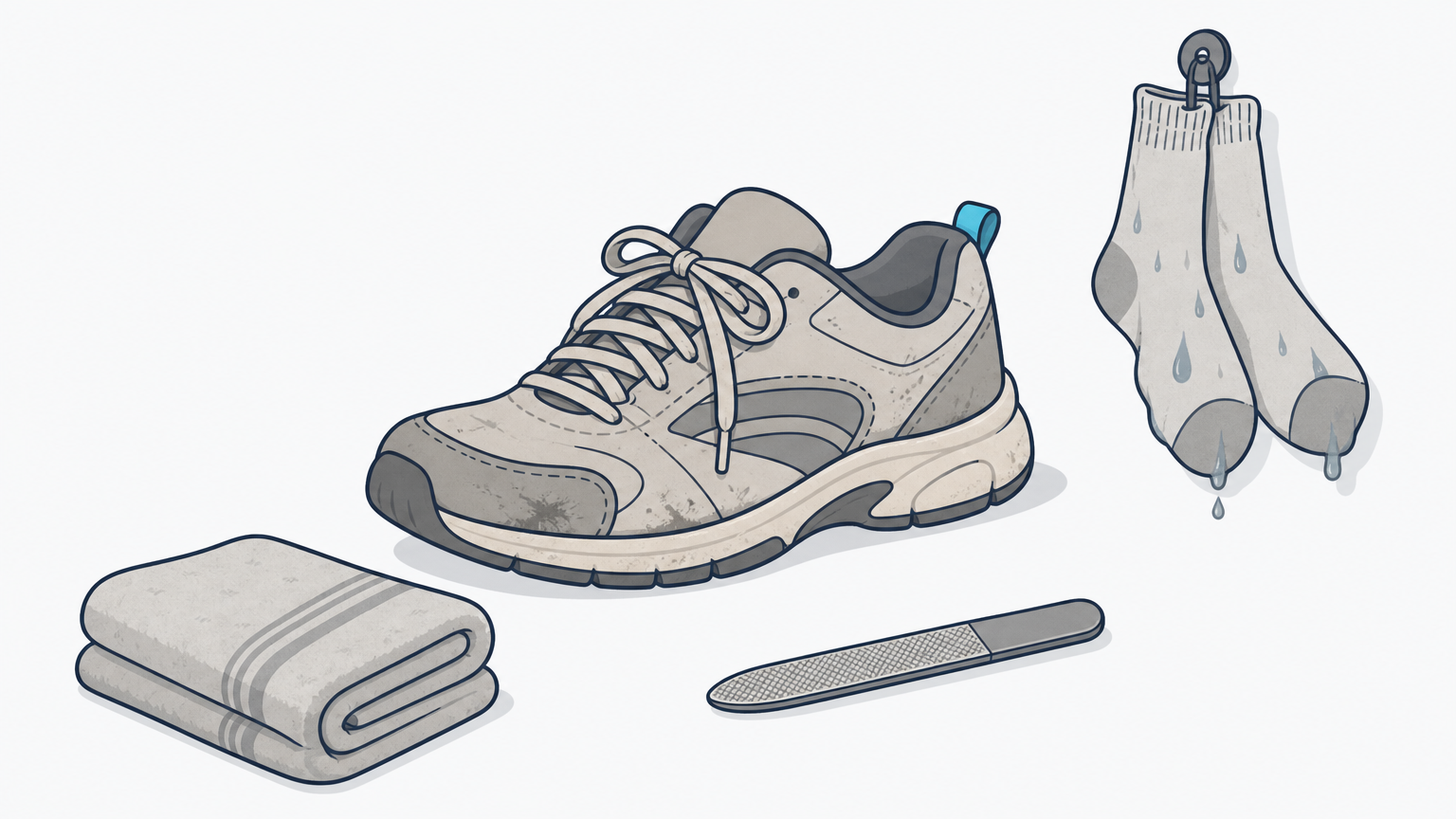
The fungus lives under and inside the nail plate, where little blood reaches. Toenails grow slowly, and blood flow drops with age, so your body clears the infection slowly. Damp feet, sweaty shoes, socks that hold moisture and cracked nails all raise your risk.
Cutting or filing a nail removes the dead surface. It leaves the infection in the nail bed untouched. Left alone, the fungus can spread to other nails and to the skin around them.
How laser compares with tablets and paints
Most people have three options. The table sets them side by side.
| Option | How you use it | Main drawback |
|---|---|---|
| Cold laser | Short clinic sessions of about 12 minutes | Costs more up front and needs several visits |
| Oral antifungal tablets | Prescription from your GP, taken for about three months | Side effects, including effects on the liver. Some people cannot take them |
| Paints and creams | Daily use for many months | They struggle to pass through the nail to the fungus |
Tablets work through your whole body, so they carry drug risks that laser avoids. Paints stay on the surface, so they miss fungus deep in the nail.
Laser reaches the fungus through the nail, with no tablets and no daily paint.
How a fungal nail laser session works
A session starts with a check of your nails, then the laser passes over each infected nail for a set time. You feel no pain and leave straight away.
What the laser does to the fungus
The Lunula is a cold (low-level) laser. It makes no heat, so it does not burn the nail or the skin around it. The light passes through the nail, damages the fungal cells and helps your body grow a clear nail.
Cold laser does not cure the old, damaged nail. The nail stays as it is until new growth pushes it out. You will see the change at the base of the nail first.
What happens at your appointment
Here is the path for a typical patient:
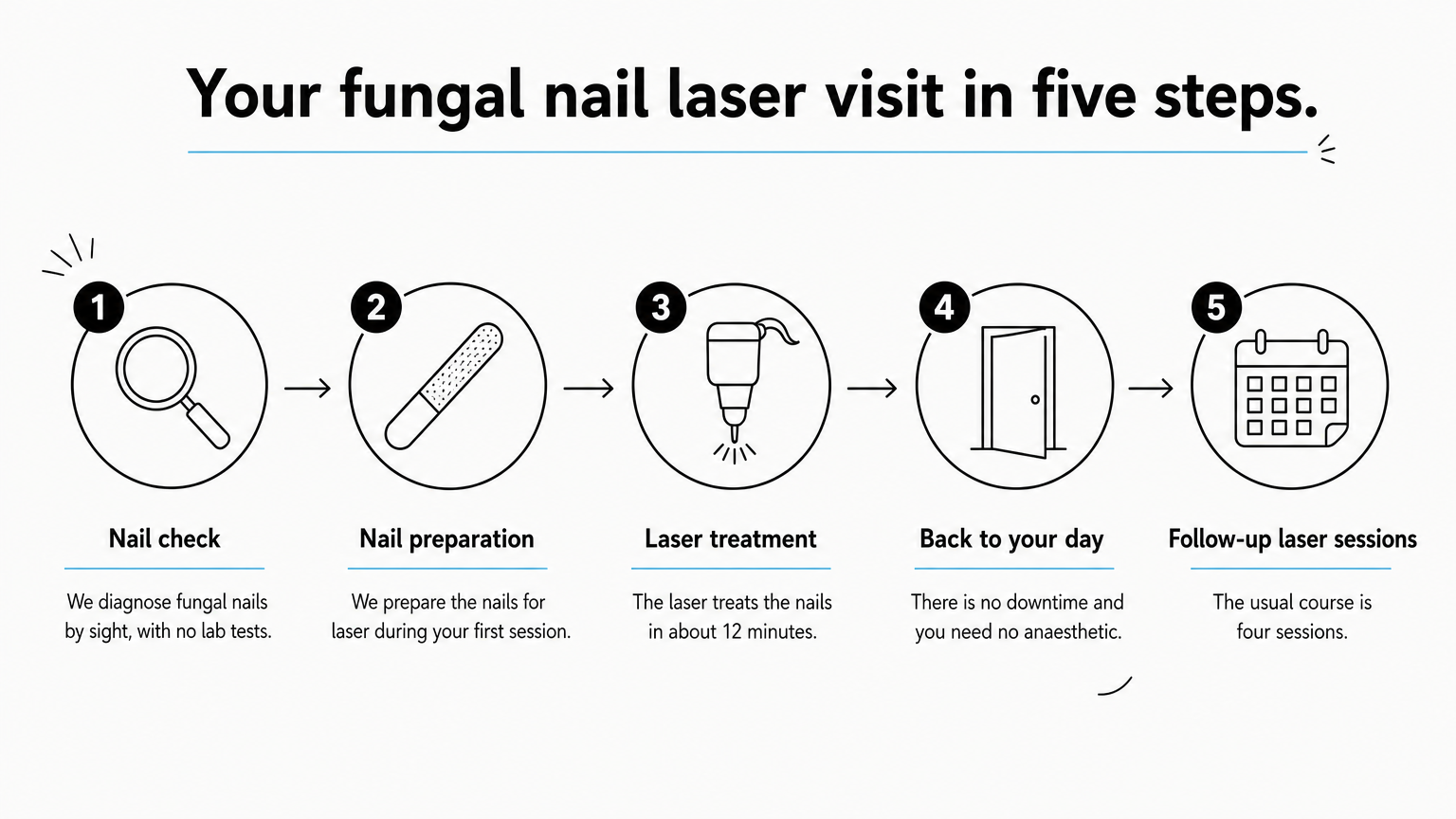
- Your podiatrist checks the nails. We diagnose fungal nails by sight. You need no clippings and no lab tests.
- We prepare the nails for laser. This step comes with your first session.
- The laser treats the nails. A session takes about 12 minutes, and you need no anaesthetic.
- You leave and carry on with your day. There is no downtime.
- You return for follow-up sessions. The usual course is four sessions.
Between visits, keep your feet dry, change your socks each day and let your shoes air out. Re-infection from damp shoes is a common reason for a fungus to return.
Diagnosis is by sight, treatment starts on day one, and each session takes about 12 minutes.
Results and safety of fungal nail laser treatment
We report a success rate of 75 to 90 per cent for the Lunula laser. No fungal treatment gives a 100 per cent guarantee, so expect an honest range, not a promise.
How effective laser treatment is
The type of fungus, the severity of the infection and your own response all shape the result. Mild and early infections tend to do better than thick, crumbling nails.
Time is the other factor. A toenail can take 12 to 18 months to grow out fully. Success means clear new nail growing from the base. Take a photo of your nails at the start, then compare it each month.
Is it safe, and does it hurt?
Laser is safe for most people and painless in most cases. You may feel nothing at all. There is no recovery period, and you take no drug, so you avoid the side effects of tablets.
Other conditions can look like fungus, such as psoriasis or nail injury. That is why a podiatrist checks first. Tell your podiatrist about diabetes, poor circulation or any other health condition before you start.
Painless, drug-free and backed by a 75 to 90 per cent success rate, though a clear nail takes months to grow.
What fungal nail laser treatment costs
At ModPod Podiatry, your first laser session costs $205 and each follow-up session costs $160. A typical four-session course costs $685.
Session fees and worked examples
The first session includes nail preparation for laser, which is why it costs more. The table shows the full cost for different course lengths. Each total is $205 plus $160 for every extra session.
| Sessions | Total cost |
|---|---|
| 3 | $525 |
| 4 (typical course) | $685 |
| 6 | $1,005 |
| 8 | $1,325 |
Your podiatrist sets the number of sessions after checking your nails. Ask any clinic for the price of the full course, not just the first session. A low price per session can hide a long list of visits. See the Laser for Fungal Nails page for current details.
Rebates and claiming
We do not bulk bill. We give you a receipt, and you claim a rebate from your private health fund. We accept EFTPOS, credit card and HICAPS, so you can claim on the spot if your fund covers the service.
Your rebate depends on your policy, so check your extras cover before you book. We also accept Medicare Enhanced Primary Care (EPC) plans for eligible patients. You need no GP referral to see us.
Budget $685 for a typical four-session course, then check your health fund for a rebate.
Finding fungal nail laser treatment near you in Sydney
ModPod Podiatry runs four clinics across Sydney. Pick the one closest to home or work, and confirm laser availability when you book.
Our Sydney clinics
| Clinic | Address |
|---|---|
| Sydney CBD | Suite 506/66 Hunter Street, Sydney NSW 2000 |
| Mosman | Shop 2/59 Harbour Street, Mosman NSW 2088 |
| Dee Why | Suite 4103/834 Pittwater Road, Dee Why NSW 2099 |
| Rose Bay | 668a New South Head Road, Rose Bay NSW 2029 |
You can read more about the Mosman, Dee Why, Rose Bay and Sydney CBD clinics on their own pages.
What to check before you book
Use the same checklist with any clinic that offers laser:
- Registration: Your podiatrist should be registered with AHPRA.
- Diagnosis: The clinic should check your nails before it treats them.
- Total cost: Ask for the price of the whole course.
- Session count: Ask how many visits to expect.
- Rebates: Ask whether the clinic can claim from your fund on the spot.
We offer same-day appointments across our clinics whenever we can, so you can start treatment on your first visit.
A good clinic diagnoses first, quotes the full course and starts treatment without delay.
Your next step for clearer nails
Fungal nail laser treatments use cold light to kill fungus through the nail. You get short, painless sessions, no downtime and no tablets. A typical course runs four sessions and costs $685 at our clinics. A clear nail takes 12 to 18 months to grow out, so start early and keep your shoes and socks dry.
If your nails are yellow, thick or crumbling, a quick check will tell you if laser can help. You can book your fungal nail laser appointment online with ModPod Podiatry in Sydney.