

That sharp, aching pain along your shinbone after a run isn’t something you should push through. Shin splints (medial tibial stress syndrome) usually show up when your shoes aren’t giving your lower leg enough support to handle the load, and finding the best shoes for shin splints is often the single biggest change you can make before you even think about rest or strapping your shins. As podiatrists who see this injury constantly across our Sydney clinics, we know the right footwear can take real pressure off your shins within a couple of weeks.
This guide gets straight to what matters: which shoes actually help, and why. We’ve focused on cushioning and stability features that reduce impact forces through the tibia, along with heel-to-toe drop and support structures that suit different foot types and running styles, from overpronators to neutral runners.
Below, you’ll find our pick of eight shoes worth trying in 2026, drawn from what we recommend to patients during gait analysis at our clinics. We’ll also cover how to match a shoe to your specific biomechanics, and when it’s time to book a proper podiatry assessment rather than relying on shoes alone to fix the problem.
1. What causes shin splints in runners
Shin splints develop when the muscles, tendons and bone tissue around your tibia get overloaded faster than they can repair themselves. Every time your foot strikes the ground, a shockwave travels up through your lower leg, and your tibialis posterior and tibialis anterior muscles work to control that impact and stabilise your ankle. When the repetitive load outpaces your leg’s ability to adapt, the tissue along the shinbone becomes inflamed and painful. This is medically known as medial tibial stress syndrome, and why shin splints develop in the first place is something we explain daily, since it’s one of the most common overuse injuries we treat at our Sydney clinics.
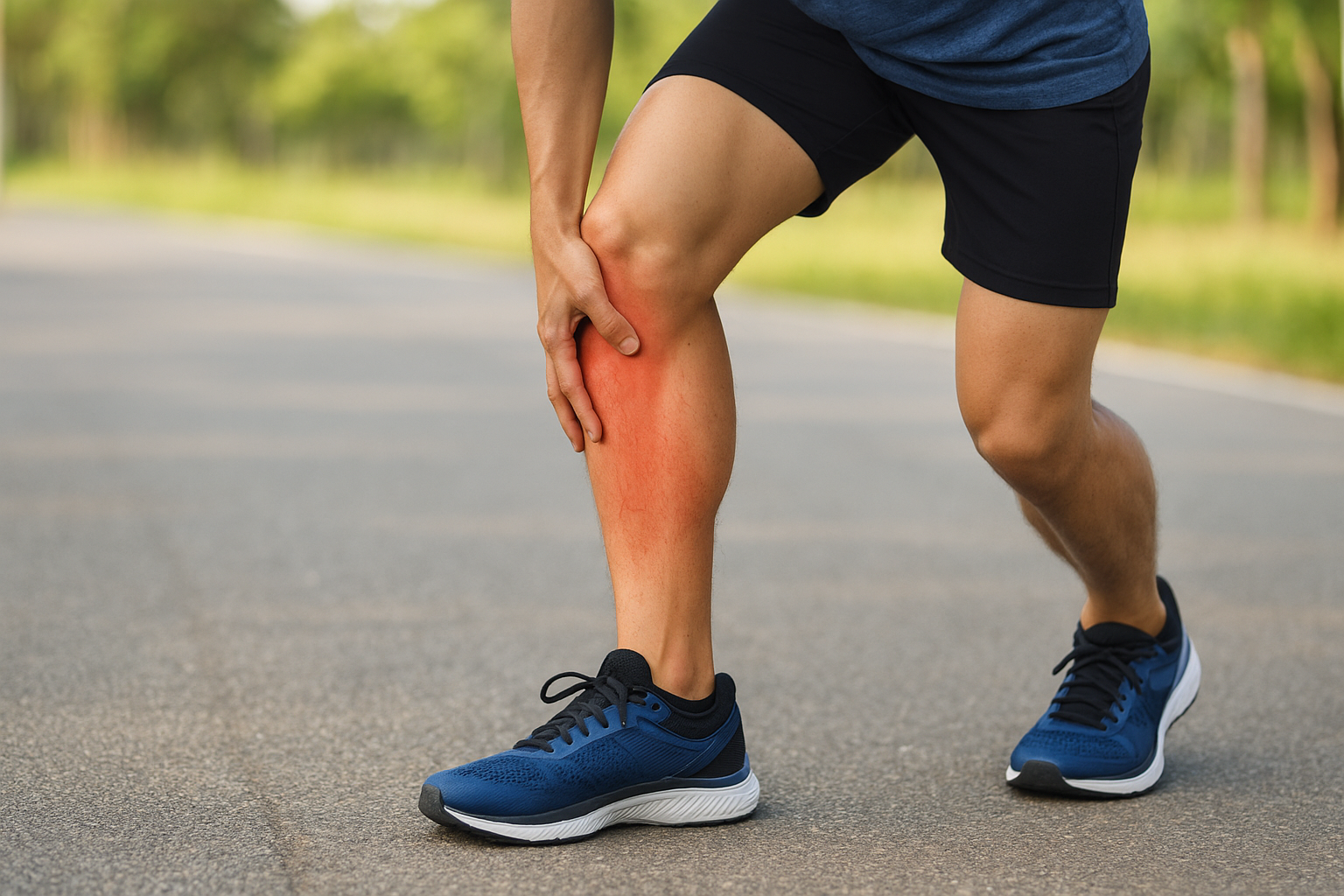
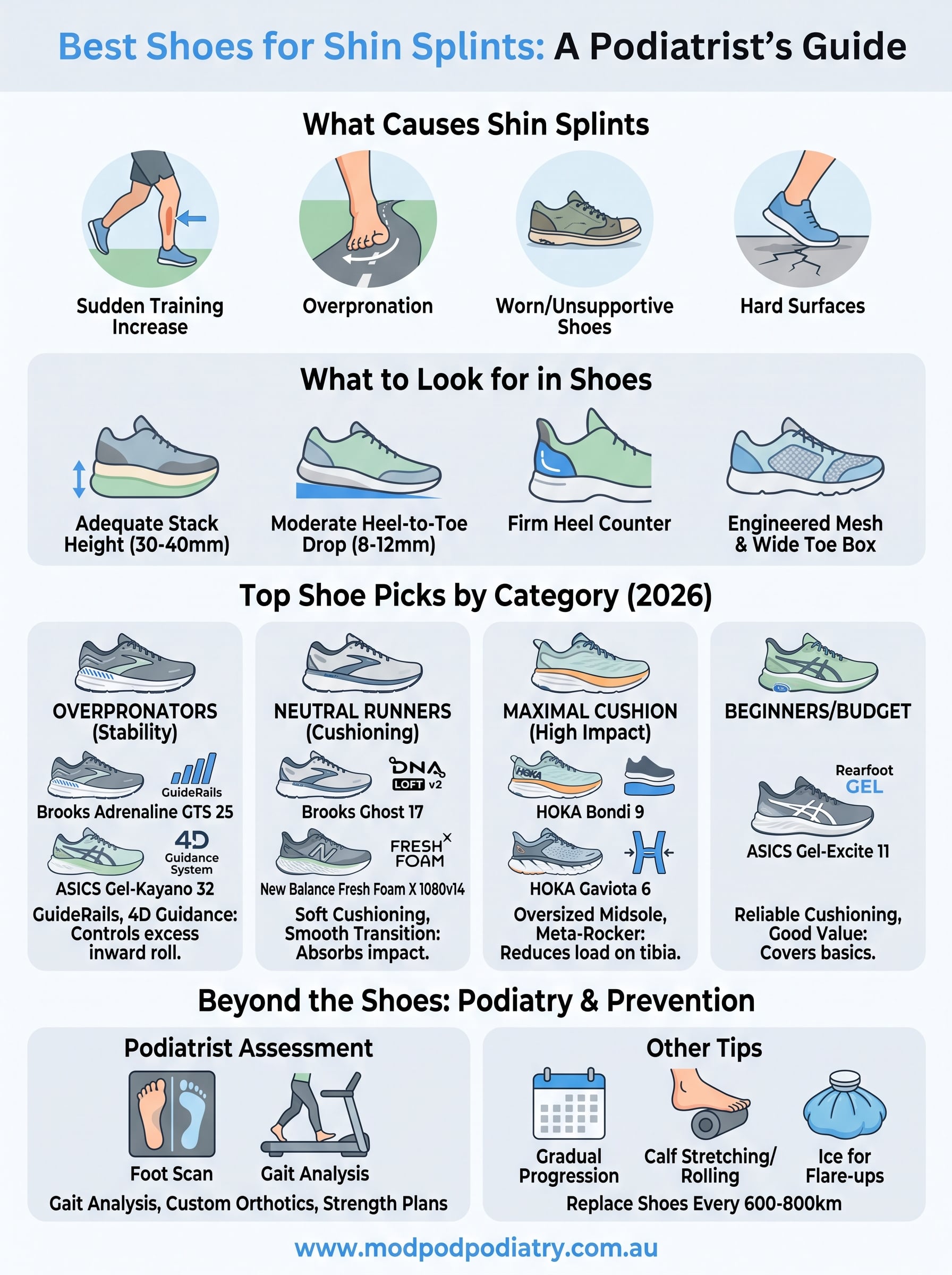
Several factors typically combine to cause it rather than a single cause acting alone. In our experience, the biggest contributors are:
- Sudden increases in training load, such as adding kilometres, hills or speed work too quickly
- Overpronation, where the foot rolls inward more than it should and increases strain on the inner shin
- Worn-out or unsupportive running shoes that no longer absorb impact effectively
- Running on hard surfaces like concrete footpaths without adequate cushioning
- Tight calf muscles and weak hip or ankle stabilisers that shift extra load onto the tibia
- Poor running biomechanics, including overstriding or a heavy heel strike
Footwear plays a genuinely outsized role here because it’s the one variable between your foot and the ground on every single stride. A shoe with the wrong support for your foot type can quietly compound each of the factors above, week after week, until the tissue simply can’t keep pace with the demand you’re placing on it.
Runners who overpronate tend to feel pain along the inner, lower third of the shin, while those with a more rigid, high-arched foot sometimes develop discomfort further up the leg due to poor shock absorption. Beginners returning to running after a break are especially vulnerable, since their bones and connective tissue haven’t yet adapted to the new load, even if their fitness feels ready for it.
Shin splints aren’t really a shoe problem or a training problem on their own, they’re what happens when load, biomechanics and footwear all work against your shin at once.
Understanding which of these factors applies to you matters more than grabbing whatever running shoe is popular this year. That’s exactly why the next section, and the shoe picks that follow, focus on matching specific support features to specific causes rather than offering a single blanket recommendation.
2. What to look for in shoes for shin splints
Matching a shoe to your specific gait matters more than chasing a brand name. Overpronators need firmer medial support built into the midsole, usually visible as a denser grey or darker foam wedge under the arch, to stop the foot rolling inward too far, which is why our shoe picks for overpronators all share that feature. Neutral runners with a normal foot strike generally do better in cushioned shoes without that added structure, since extra stability they don’t need can actually push load onto the wrong part of the leg. If you’re unsure which camp you fall into, a proper gait analysis at a podiatry clinic settles it in about twenty minutes rather than guessing from shoe reviews.
Beyond pronation control, a few specific features consistently show up in the shoes we recommend for shin splint recovery:
- Adequate stack height (around 30 to 40mm at the heel) to absorb impact before it reaches the tibia
- A moderate heel-to-toe drop of 8 to 12mm, which reduces strain on the tibialis anterior compared to very low-drop shoes
- A firm, supportive heel counter that limits excess ankle rolling on landing
- Engineered mesh uppers that lock the midfoot down without restricting circulation
- Durable outsole rubber in the heel strike zone, since worn tread flattens cushioning unevenly over time
Toe box width and overall shoe fit also deserve a mention, since a cramped forefoot can alter your stride length and push you into overstriding, which increases shin load with every step.
The right running shoes for shin splints aren’t the softest or the stiffest on the shelf, they’re the ones that match your specific foot mechanics.
With those criteria in mind, here’s how eight of the most relevant 2026 models stack up against each other, starting with a long-standing clinic favourite for overpronators.
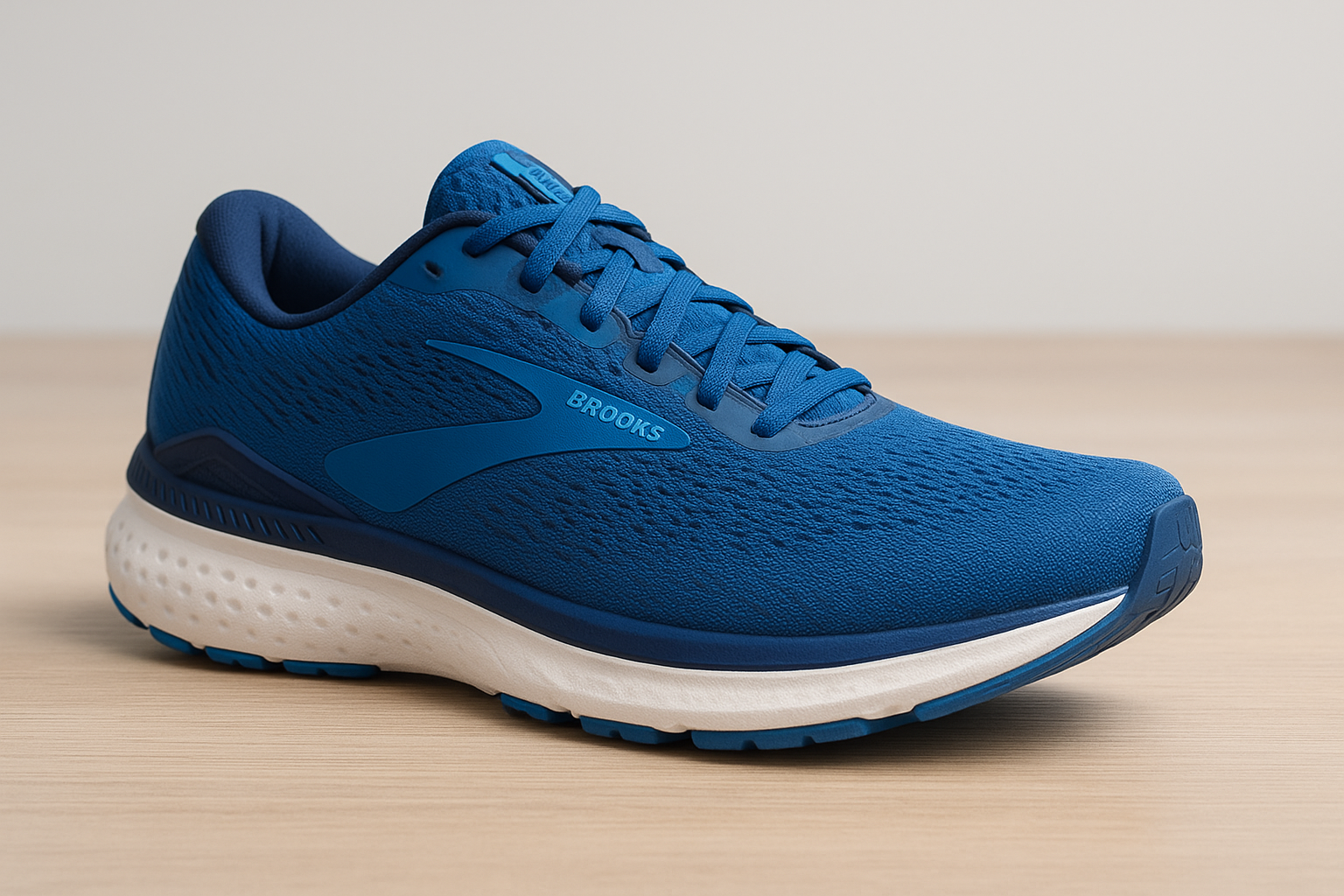
3. Brooks Adrenaline GTS 25
The Adrenaline GTS 25 is the shoe we reach for most often when an overpronator walks into clinic with shin pain. Brooks has refined this model for over two decades, and the GuideRails support system is the standout feature that sets it apart from a standard neutral trainer.
Key features for shin splints
GuideRails technology works differently to a traditional medial post. Instead of stiffening the arch, it adds firm foam bumpers along the outer edges of the heel and midsole that only engage when your leg moves outside its natural path. This keeps excess pronation in check without forcing your foot into an unnatural position, which matters because over-correction can create its own strain patterns higher up the leg. The DNA LOFT v3 midsole underneath also delivers soft, consistent cushioning that takes pressure off the tibia on every landing.
A stability shoe should guide your stride, not lock it in place, and that’s exactly what makes the GTS 25 work for shin splint recovery.
Who it’s best for
This shoe suits moderate to significant overpronators, particularly those clocking up steady mileage on roads or footpaths rather than trail terrain. We recommend it often to recreational runners returning from a shin splint flare-up who need reliable support while their tissue rebuilds capacity.
Stack height and drop
The GTS 25 sits at a 36mm heel stack with a 12mm heel-to-toe drop, placing it firmly in the range we look for when reducing tibialis anterior strain.
Price in Australia
Expect to pay between $220 and $260 AUD at Australian retailers, with prices varying slightly between colourways and online sales periods.
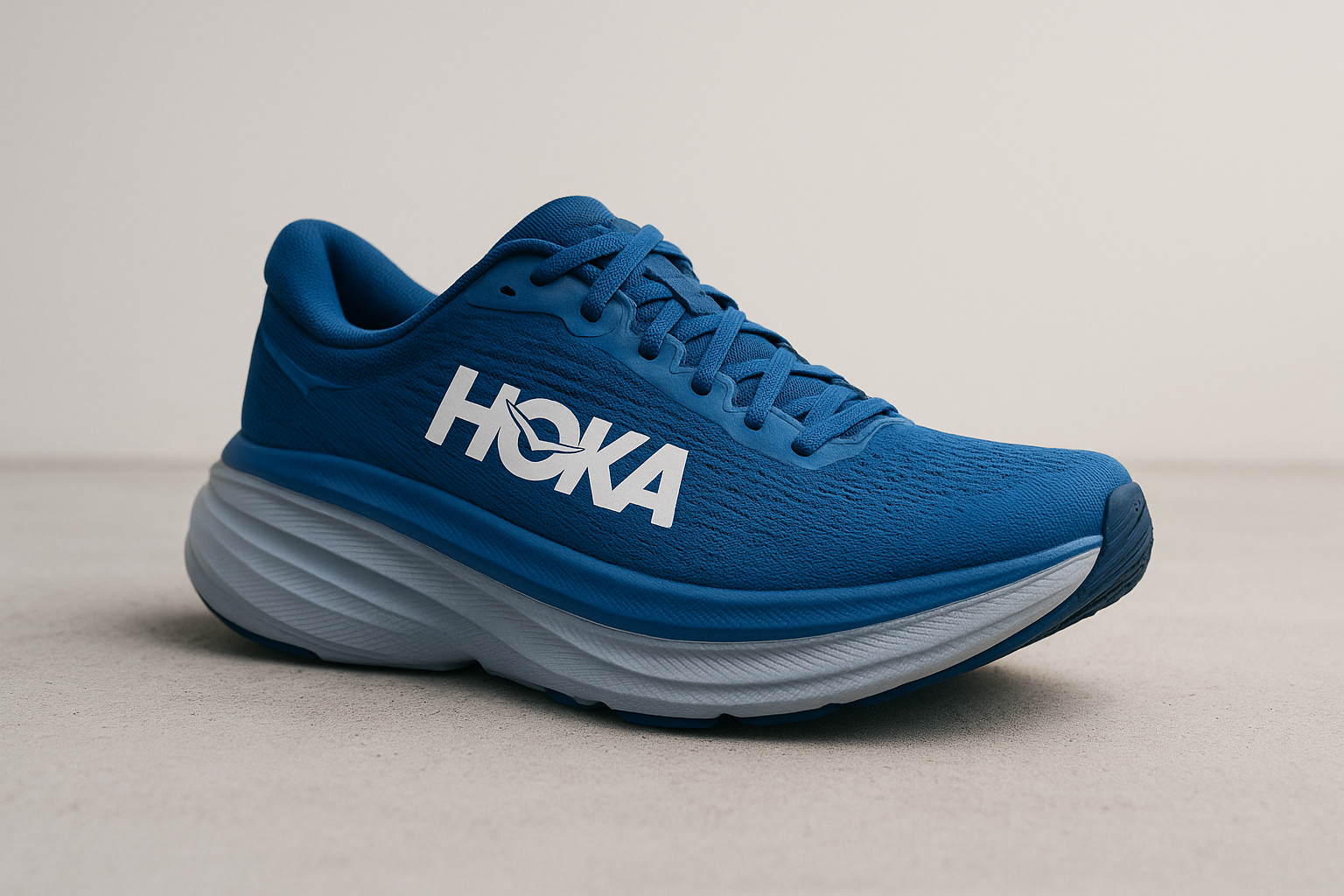
4. HOKA Bondi 9
The Bondi 9 is HOKA’s maximalist flagship, and it’s the shoe we suggest for runners whose shin splints stem from sheer impact rather than pronation issues. Nothing else on this list gives the tibia as much cushioning to work with before ground reaction forces travel up the leg.
Key features for shin splints
HOKA built this shoe around an oversized midsole of compression-moulded EVA foam that’s noticeably firmer underfoot than most maximalist shoes, which stops the platform feeling unstable despite its height. The early-stage meta-rocker geometry rolls your foot forward through toe-off, shortening the time your tibia spends absorbing load during each stance phase. A wide base also keeps the ride steady on landing, which matters for runners who’ve developed shin pain from a heavy, flat-footed strike pattern.
When shin splints come from raw impact rather than poor alignment, more foam under the heel solves more of the problem than any support cage ever will.
Who it’s best for
Heavier runners, those logging long, slow kilometres, and anyone recovering from a bone stress reaction benefit most from the Bondi 9. It’s less suited to neutral runners chasing a fast, responsive feel, since the ride prioritises protection over pace.
Stack height and drop
Expect a substantial 45mm heel stack with a 5mm drop, giving the tibialis anterior less work per stride while still delivering huge shock absorption underfoot.
Price in Australia
The Bondi 9 typically retails for $260 to $290 AUD through HOKA’s Australian stockists, sitting toward the upper end of what most recreational runners spend on a training shoe.
5. ASICS Gel-Kayano 32
The Gel-Kayano has been ASICS’ benchmark stability shoe for years, and the 32 continues that reputation with a redesigned support system built specifically for runners whose shins ache after every long run. We recommend it often to patients who’ve tried a firmer stability shoe and found it too rigid underfoot.
Key features for shin splints
ASICS replaced the old plastic support post with the 4D Guidance System, a dynamic structure that adapts to your specific pronation pattern through the gait cycle rather than applying a fixed correction. Paired with the FF Blast Plus Eco midsole, the shoe delivers a noticeably softer, more forgiving ride than earlier Kayano generations while still controlling excess ankle roll. That combination matters for shin splint recovery because it reduces impact loading without forcing an unnatural stride correction.
Adaptive support beats fixed support when your shin is already inflamed, since a rigid correction can shift strain to a new spot instead of removing it.
Who it’s best for
This shoe suits mild to moderate overpronators who want genuine cushioning alongside their stability features, particularly those running longer distances on tar or concrete footpaths. It’s also a solid option for runners returning to training after a shin splint diagnosis, since the softer ride is more forgiving during the early weeks back.
Stack height and drop
The Gel-Kayano 32 sits at a 41mm heel stack with an 8mm heel-to-toe drop, giving strong shock absorption while keeping the ride reasonably low to the ground for stability.
Price in Australia
Expect to pay between $260 and $300 AUD through ASICS Australia and major running retailers, reflecting its position as a premium stability model.
6. Saucony Ride 19
The Ride 19 is Saucony’s do-everything neutral trainer, and it’s the shoe we suggest when shin splints stem from overstriding or a hard-hitting midfoot strike rather than pronation. It won’t correct excess rolling, but for the right runner it doesn’t need to.
Key features for shin splints
Saucony built the Ride 19 around its PWRRUN midsole foam, a softer, more compliant compound than the brand used in previous versions, which absorbs impact well without feeling mushy underfoot. A wider forefoot platform than earlier Ride models gives the shoe genuine landing stability, which matters for runners whose shin pain comes from a slightly unsteady footstrike rather than true overpronation. The engineered mesh upper also holds the midfoot securely, so your foot doesn’t shift and add extra torque through the lower leg during longer runs.
A neutral shoe with a stable platform can protect your shins just as well as a stability shoe, provided your gait doesn’t actually need correction.
Who it’s best for
This shoe suits neutral to mildly pronating runners who log steady weekly mileage and want reliable cushioning without added medial support they don’t need. We recommend it often to patients whose gait analysis shows good alignment, since forcing them into a stability shoe can create new strain patterns rather than easing existing ones.
Stack height and drop
The Ride 19 sits at a 34mm heel stack with an 8mm heel-to-toe drop, a balanced setup that cushions impact while keeping the ride responsive enough for tempo sessions.
Price in Australia
Expect to pay between $220 and $250 AUD at Australian running retailers, making it one of the more accessible options on this list for runners rebuilding mileage after a shin splint flare-up.
7. HOKA Gaviota 6
The Gaviota 6 is HOKA’s stability offering, built for overpronators who still want the plush, high-stack ride the brand is known for. We recommend it to patients who’ve found the Bondi 9 comfortable but need extra guidance through the midfoot, without switching to a firmer, more traditional stability shoe.
Key features for shin splints
HOKA fits the Gaviota 6 with H-Frame technology, a supportive structure moulded into the midsole rather than a rigid post glued underneath it. This spreads the correction across a wider area of the foot, which reduces the sudden, jarring stops that older stability designs sometimes create. The same early-stage meta-rocker found in the Bondi carries over here too, shortening ground contact time and easing the workload on your tibialis anterior during push-off.
Supportive foam that flexes with your stride controls pronation more comfortably than a hard post that fights against it.
Who it’s best for
This shoe suits overpronators who also want maximum cushioning, particularly heavier runners or those returning from a shin splint diagnosis who need both correction and protection at once. It’s less suited to faster training days, since the weight and structure prioritise comfort over speed.
Stack height and drop
The Gaviota 6 carries a substantial 42mm heel stack with a 5mm drop, giving it one of the lowest drops paired with the highest stack heights on this list, a combination that suits runners needing both shock absorption and gentle correction.
Price in Australia
Expect to pay between $270 and $300 AUD through HOKA’s Australian stockists, positioning it as one of the pricier picks here, though patients managing chronic shin splints often tell us the extra support justifies the cost.
8. Brooks Ghost 17
The Ghost 17 is Brooks’ benchmark neutral trainer, and it’s the shoe we recommend most to runners whose shin splints come from a worn-out old pair rather than any real biomechanical issue. It’s a dependable, no-fuss option that suits the widest range of foot types on this list.
Key features for shin splints
Brooks fits the Ghost 17 with its DNA LOFT v2 midsole, a soft, cushioned foam that smooths out impact without feeling unstable underfoot. A segmented crash pad along the heel helps the shoe absorb landing forces evenly, rather than concentrating them on one edge of the foot, which matters for runners whose shin pain flares up after a slightly uneven footstrike. The smooth transition from heel to toe also keeps your stride consistent through longer runs, reducing the small compensations that add up to shin strain over a training block.
A reliable neutral shoe often solves shin splints faster than a specialised one, simply because it removes worn-out cushioning from the equation entirely.
Who it’s best for
This shoe suits neutral runners with no significant pronation issues who need dependable, everyday cushioning for regular training mileage. We suggest it often to patients whose shin splints developed gradually after months in the same pair of trainers, since fresh, supportive cushioning alone resolves a surprising number of these cases.
Stack height and drop
The Ghost 17 sits at a 36mm heel stack with a 12mm heel-to-toe drop, giving solid protection while keeping enough drop to ease strain on the tibialis anterior during longer efforts.
Price in Australia
Expect to pay between $210 and $240 AUD through Brooks Australia and major running retailers, making it one of the more affordable, dependable picks on this list.
9. ASICS Gel-Excite 11
The Gel-Excite 11 is ASICS’ budget neutral trainer, and it’s the shoe we point beginners toward when shin splints have flared up simply because their old shoes have died and they’re not ready to spend big on a premium model yet. It won’t match the plush ride of the Kayano or Ghost, but it covers the basics well for the price.
Key features for shin splints
ASICS fits the Excite 11 with its Flytefoam midsole, a lighter, more affordable cushioning compound than the gel and foam blends used in the brand’s premium range, though it still absorbs a fair amount of impact through the heel strike zone. A rearfoot gel unit sits directly under the heel to soften landing forces further, which matters most for runners still building up their weekly mileage after time off. The upper uses a simple, breathable mesh that holds the foot securely without adding bulk or weight.
An entry-level shoe with fresh, supportive cushioning beats a premium pair that’s worn past its use-by date, every time.
Who it’s best for
This shoe suits beginner runners and those returning to running after a break, particularly if budget is a genuine factor in choosing new shoes. We often recommend it to younger patients or those running under 20 kilometres a week, since it delivers reliable protection without the cost of a top-tier stability or maximalist model.
Stack height and drop
The Excite 11 sits at a 29mm heel stack with an 8mm heel-to-toe drop, lower than most shoes on this list but still adequate for lighter training loads.
Price in Australia
Expect to pay between $130 and $160 AUD through ASICS Australia and major retailers, making it comfortably the most affordable pick here.
10. New Balance Fresh Foam X 1080v14
The 1080v14 is New Balance’s flagship neutral trainer, and it’s the shoe we suggest to patients who want a genuinely plush ride without the bulk of a maximalist HOKA. It rounds out this list as the pick for runners who value a smooth, cushioned stride above all else while still keeping their shin splint recovery on track.
Key features for shin splints
New Balance builds the 1080v14 around a full-length Fresh Foam X midsole, a soft, nitrogen-infused foam that compresses gently on impact and rebounds without feeling firm underfoot. A Hypoknit upper wraps the foot securely without pressure points, which keeps your stride consistent through longer runs. The rounded heel geometry also encourages a smoother landing, softening the shock that would otherwise travel straight up toward the tibia.
Consistent, plush cushioning through the whole midsole protects the shin better than a shoe that’s only soft in one spot.
Who it’s best for
This shoe suits neutral runners who want maximum comfort on longer efforts, particularly those doing back-to-back training days where cumulative fatigue tends to worsen shin symptoms. We often recommend it to patients who’ve found firmer neutral trainers, like the Ghost 17, a bit too direct underfoot once their shins are already irritated.
Stack height and drop
The 1080v14 sits at a 38mm heel stack with a 6mm heel-to-toe drop, giving generous cushioning alongside a lower drop that suits runners easing strain gradually off the tibialis anterior.
Price in Australia
Expect to pay between $260 and $290 AUD through New Balance Australia and specialty running stores, positioning it alongside the Kayano and Gaviota as one of the premium picks on this list.
11. How a podiatrist assesses and treats shin splints
Shoes alone won’t fix shin splints if the underlying cause sits in your biomechanics, which is why a proper assessment matters more than another pair of trainers. At our ModPod Podiatry clinics, we start every consultation with a detailed gait analysis, watching how your foot loads and rolls through each phase of your stride, often using a pressure plate to map exactly where force concentrates through your foot and lower leg. This step alone usually explains why shin pain has developed on one side more than the other, or why it flares up only past a certain distance.
Once we’ve identified the mechanical cause, our shin splints care in Sydney moves beyond just swapping shoes. We typically combine several approaches depending on what the gait analysis and physical exam reveal:
- Custom orthotics built from 3D scans to correct excessive pronation or redistribute load away from the tibia
- Targeted calf and ankle strengthening to address weak stabilisers contributing to the overload
- Load management advice, adjusting your training volume so tissue can repair between sessions
- Shockwave therapy for stubborn cases where inflammation hasn’t settled with rest alone
- Footwear guidance specific to your foot type, rather than a generic recommendation
Fixing shin splints properly means treating the biomechanics behind the pain, not just the pain itself.
Getting this diagnosis right early matters because medial tibial stress syndrome, left untreated, can progress toward a tibial stress fracture. Patients who come in in the first few weeks of symptoms generally recover faster and with a much simpler treatment plan than those who’ve been running through pain for months. If you’re already unsure whether your shoes or your stride are the real problem, that’s exactly the sort of question a proper assessment settles quickly, rather than months of guessing at home.
12. Other ways to prevent and manage shin splints
Shoes solve part of the puzzle, but they work best alongside a few habits that keep shin splints from coming back and take pressure off your shins directly. Gradual training progression matters more than almost anything else, since jumping your weekly kilometres up by more than 10 percent gives your tibia no time to adapt to the new load. Rolling and stretching your calves before and after runs also keeps the tibialis posterior and anterior muscles supple, which reduces the strain they transfer to the bone underneath.
Beyond training habits, a few practical changes make a real difference for patients we see with recurring symptoms:
- Rotate between two pairs of shoes so the midsole foam fully recovers between runs
- Replace shoes every 600 to 800 kilometres, since worn cushioning is one of the most common causes we see
- Add hip and ankle strengthening twice weekly to improve stability through each stride
- Run on softer surfaces like grass or a synthetic track when your shins feel sensitive
- Ice the area for 10 to 15 minutes after runs during a flare-up to settle inflammation quickly
Switching surfaces alone won’t undo the effect of the wrong shoes for shin splints, so treat these strategies as support for good footwear rather than a replacement for it.
Prevention comes from consistency across training, strength and footwear together, not from any single fix on its own.
Tracking your symptoms honestly also helps. Note when the pain starts during a run, how long it lingers afterwards, and whether it’s improving week to week. That pattern tells you, and your podiatrist if you need one, whether your current approach is actually working or whether it’s time to change something before the injury progresses further.
13. When to see a podiatrist about shin splints
Most mild shin splints settle within the usual healing timeframe of a couple of weeks of reduced load and the right shoes, but you shouldn’t wait months to find out if yours won’t. Persistent pain that lasts beyond two to three weeks, despite rest and switching to supportive shoes for shin splints, usually means there’s a mechanical issue that footwear alone can’t fix. Pushing through that pain rarely pays off and often turns a simple overuse injury into a much longer recovery.
A few warning signs tell us it’s time to book an assessment rather than keep experimenting at home:
- Pain that starts earlier in your run than it used to, or lingers well after you’ve stopped
- A specific, pinpoint spot of tenderness on the shin rather than a general ache along its length
- Swelling or visible thickening along the bone itself
- Pain that continues even while walking, not just running
- Symptoms that return every time you resume training at the same level
That last point matters most. If shin splints keep coming back despite new shoes and sensible training breaks, the real cause is probably biomechanical, and only a proper gait analysis will find it.
A pinpoint sore spot on the shin, rather than a general ache, is the clearest sign you need a scan, not just new shoes.
Sharp, localised pain that continues even at rest deserves faster attention, since it can signal a developing stress fracture rather than straightforward medial tibial stress syndrome. According to Healthdirect Australia, stress fractures need imaging and a proper load management plan to heal safely, something a shoe change won’t provide on its own. If any of this sounds like what you’re dealing with, it’s worth booking a consultation with one of our podiatrists rather than guessing further at home.
14. Frequently asked questions about shoes for shin splints
Can new shoes alone fix shin splints?
Sometimes, but not always. New shoes for shin splints often resolve mild cases caused purely by worn-out cushioning, especially if you’ve been running in the same pair past 600 kilometres. If your pain stems from overpronation, weak calves or a training error, though, shoes only address part of the problem, and you’ll likely need a gait assessment alongside the footwear change.
How long does it take shoes to help shin splints?
Give a new pair two to three weeks of consistent, gradually increasing mileage before judging results. Shoe adjustment periods vary between runners, and switching too many variables at once, like new shoes plus a training spike, makes it harder to tell what’s actually working.
Do I need stability shoes or neutral shoes?
It depends entirely on your pronation pattern, not on what’s trending this season. Overpronators generally need the guided support found in shoes like the Adrenaline GTS 25 or Gel-Kayano 32, while neutral runners do better in cushioned shoes like the Ghost 17 without added structure they don’t need.
Guessing your shoe category from symptoms alone is a coin flip; a gait analysis removes the guesswork entirely.
Should I buy shoes half a size bigger?
A slightly roomier toe box can help, since it reduces overstriding and gives your foot room to swell during longer runs. Avoid going more than half a size up, though, as excess room in the heel can cause instability that offsets any benefit.
Are running shoes better than walking shoes for shin splints?
Yes, running shoes are built specifically to manage forward impact forces, while walking shoes lack the cushioning and rocker geometry designed for higher-impact loading through the tibia.
Getting back to pain-free running
The best shoes for shin splints give your tibia a fighting chance, but they work best as one part of a bigger picture. Match your shoe to your actual gait rather than a trending model, build your mileage up gradually, and don’t ignore a sore spot that keeps returning every time you lace up. Most of the runners we see recover fully once footwear, training load and biomechanics all line up properly, rather than fixing just one piece and hoping the rest sorts itself out.
If you’ve tried new shoes and the pain still creeps back, that’s your cue to stop guessing. A proper gait analysis pinpoints exactly what’s driving the strain through your shin, whether that’s overpronation, weak calves or a training error you can’t quite see from the inside. Book a shin splint assessment at one of our Sydney clinics and get a plan built around your own stride, not a generic shoe list.

