

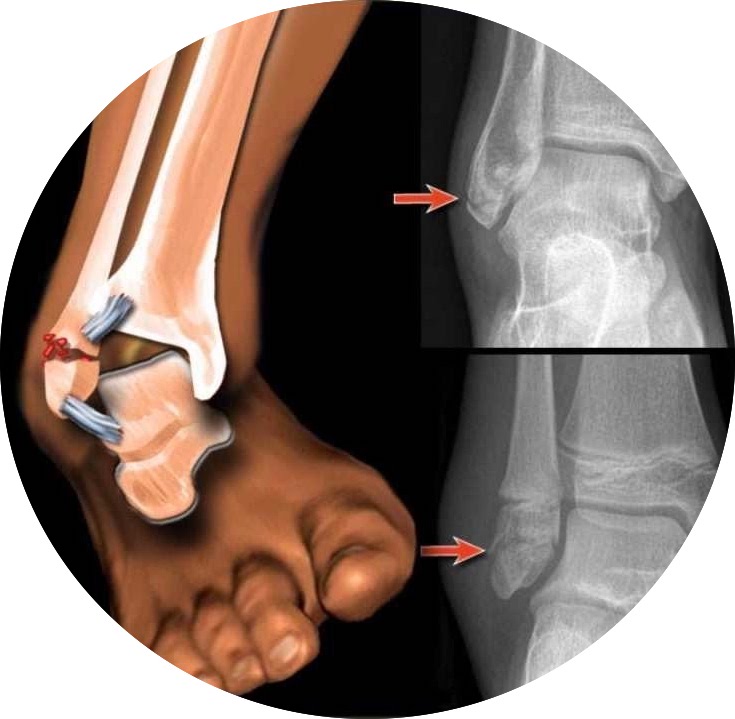

The severity of a broken ankle depends on the force of the trauma and the number of structures injured. Understanding the causes, symptoms, and treatment options can help you respond appropriately and support a full recovery.
Causes of a Broken Ankle
Broken ankles are usually caused by severe trauma. Common causes include:
- Twisting or rolling the ankle — typically inward (inversion)
- High-impact landings — such as jumping or falling from a height
- Direct blunt force — from a fall, collision, or accident
- Motor vehicle accidents — which can transmit significant force to the ankle joint
- Sports injuries — common in contact sports, running, and court sports
Factors that increase the risk of a broken ankle include osteoporosis, poor footwear, fatigue during athletic activity, and a prior history of ankle injury.
Symptoms of a Broken Ankle
The symptoms of a broken ankle vary in severity depending on the nature of the fracture. A minor fracture in one bone might cause only mild pain, while a severe fracture affecting multiple bones and ligaments may require emergency treatment.
Common symptoms include:
- Pain — varying in intensity depending on the severity of the fracture
- Swelling and/or bruising — indicating soft tissue damage
- Deformity — visible change in the shape of the ankle joint
- Inability to bear weight — difficulty walking or standing on the affected ankle
- Tenderness to touch — especially over the bony prominences
- Bone visible through the skin — in cases of open (compound) fracture
In most cases, it is difficult to differentiate between a broken ankle and a sprained ankle or dislocation without imaging. Your doctor or podiatrist will typically order an X-ray to confirm a diagnosis. In some cases, a CT scan or MRI may also be required to assess ligament damage or subtle fractures.
Treatment for a Broken Ankle
The treatment plan for a broken ankle depends on the severity of the injury, the type of fracture, and whether the joint is stable. Treatment options include:
Conservative (Non-Surgical) Treatment
For stable, non-displaced fractures, conservative management is often sufficient:
- Immobilisation — a short leg cast or walking boot to restrict movement during healing
- Non-weight bearing — using crutches to avoid placing stress on the ankle
- RICE protocol — Rest, Ice, Compression, and Elevation to manage swelling and pain
- Anti-inflammatory medication — to reduce pain and inflammation
- Physiotherapy — to restore strength and range of motion once the fracture has healed
Surgical Treatment
If the fracture is displaced, involves multiple bones, or makes the joint unstable, surgery may be required. The most common procedure is open reduction and internal fixation (ORIF), which involves repositioning the fractured bones and securing them with metal plates, screws, or rods. Proper alignment during healing is critical, as a poorly healed fracture significantly increases the risk of arthritis later in life.
Recovery Timeline for a Broken Ankle
Recovery time varies depending on the type and severity of the fracture:
- Minor fracture (stable): 6–8 weeks in a boot or cast
- More complex fracture: 3–6 months for full recovery
- Surgical repair: Up to 6–12 months for complete return to sport or high-impact activity
Rehabilitation with a physiotherapist and podiatrist is essential to restore ankle stability, prevent re-injury, and address any biomechanical issues that may have contributed to the original fracture. Our Sydney podiatrists at ModPod work closely with patients throughout the recovery process to support safe return to activity.
Frequently Asked Questions About Broken Ankles
How do I know if my ankle is broken or just sprained?
Both injuries can cause pain, swelling, and difficulty walking, making them difficult to distinguish without imaging. As a general rule, if pain is severe, you cannot bear weight at all, or there is visible deformity, you should seek emergency care immediately. An X-ray is needed to confirm a fracture. Our Sydney podiatrists can assess and refer you for imaging if required.
Can I walk on a broken ankle?
It depends on the type of fracture. Some minor or stable fractures allow limited weight-bearing in a boot, while more serious fractures require complete non-weight bearing on crutches. Walking on an unstable or displaced fracture can worsen the injury and delay healing. Always follow the advice of your treating clinician.
Do I need surgery for a broken ankle?
Not always. Many broken ankles heal successfully with conservative treatment (a boot or cast). Surgery is typically required when bones are significantly displaced, when the joint is unstable, or when multiple structures are injured. Your doctor will determine the appropriate treatment based on X-ray and clinical assessment.
How long does a broken ankle take to heal?
Most uncomplicated broken ankles take 6–12 weeks to heal. However, full recovery — including return to sport or normal activity — may take 3–6 months or longer, especially following surgery. Rehabilitation is an important part of recovery and helps restore strength, balance, and range of motion.
Can a podiatrist treat a broken ankle?
Yes. Podiatrists are trained in the assessment and management of ankle fractures, and can arrange X-rays, apply walking boots, and manage your rehabilitation. At ModPod Podiatry, our Sydney podiatrists work collaboratively with GPs, orthopaedic surgeons, and physiotherapists to ensure you receive the most appropriate care throughout your recovery.
Will I develop arthritis after a broken ankle?
Post-traumatic arthritis is a recognised complication of ankle fractures, particularly if the joint surfaces are damaged or the fracture heals in a misaligned position. The risk is higher with more severe injuries. Proper treatment and alignment during healing, along with ongoing foot and gait management, can help minimise long-term arthritis risk.
Book an Ankle Assessment at ModPod Podiatry Sydney
If you suspect a broken ankle or are recovering from an ankle fracture and need expert support, the team at ModPod Podiatry is here to help. Our experienced Sydney podiatrists provide thorough assessments, walking boot fittings, and rehabilitation guidance to help you recover safely and return to the activities you love.
With clinics across Sydney in Dee Why, Mosman, Rose Bay, North Ryde, and the CBD on Hunter Street, expert ankle care is always nearby. Book your appointment online today or call us on (02) 9960 3981.

