
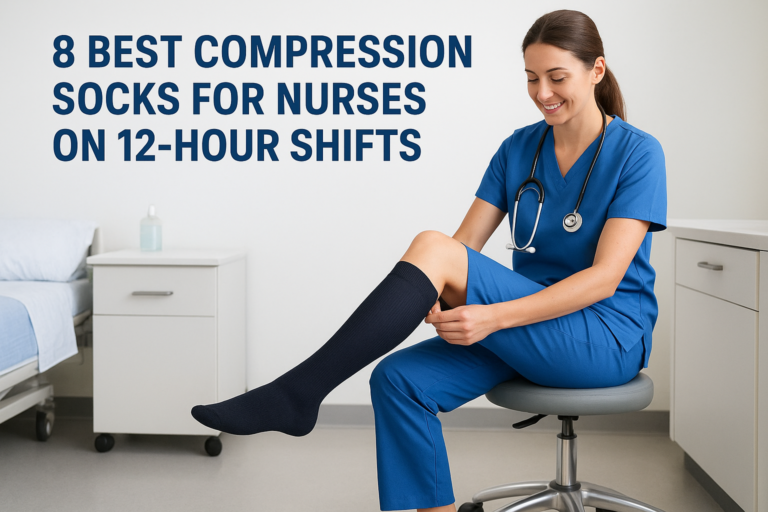
Twelve hours on your feet, moving between beds, med rooms and nurses’ stations, leaves most nurses with heavy, aching legs by the end of a shift. That’s why so many of our patients at ModPod Podiatry ask us about the best compression socks for nurses, hoping to find something that actually holds up to a full roster rather than just looking good in a shopfront. If your legs are throbbing by hour eight, you’re not imagining it, and the right pair of socks can make a genuine difference to how you feel walking out the door.
As podiatrists treating shift workers across our Sydney clinics every week, we’ve seen firsthand which compression levels and fabrics actually reduce leg fatigue and support leg circulation during long standing shifts, versus which ones bunch, slip or lose their squeeze by lunchtime. Getting the right graduated compression and fit matters more than the brand name on the box.
Below, we’ve shortlisted eight pairs worth your money, covering budget-friendly options and premium medical-grade picks, so you can match your choice to your shift length, foot shape and any existing foot or ankle concerns.
1. Dr Woof Apparel bamboo compression socks
Dr Woof Apparel has built a loyal following among Australian shift workers, and it’s easy to see why once you try a pair on a 12-hour ward round. The bamboo fabric blend feels noticeably cooler than the synthetic compression socks we usually see nurses bring into clinic, which matters when you’re on your feet in a warm hospital corridor all day. Nurses tell us the graduated squeeze feels supportive without the tight, cutting-in sensation some cheaper brands cause around the calf.
Compression level
Dr Woof’s range sits at 15-20mmHg, a level generally considered mild to moderate and well suited to everyday shift wear rather than post-surgical recovery. This is the sweet spot most podiatrists recommend for healthy nurses who want relief from tired, heavy legs without needing a prescription-strength stocking.
A moderate 15-20mmHg sock is usually the right starting point for nurses who don’t have a diagnosed vein or circulation condition.
Best for
These socks suit nurses doing back-to-back 12-hour shifts who want breathable, all-day comfort over clinical rigidity. They’re also a solid pick if you run warm or work in wards without strong air conditioning, since the bamboo fibre wicks moisture better than most polyester blends on the market.
Key features
Here’s what stands out about this pair:
- Bamboo-cotton-spandex blend for breathability and softness
- Seamless toe construction to reduce rubbing and blisters
- Reinforced heel and arch panels for extra support during standing shifts
- Fun, novelty prints alongside plain clinical colours
- Machine washable without losing elasticity after repeated wash cycles
Price range
Expect to pay around AU$25 to AU$35 per pair, with multi-packs bringing the per-pair cost down further. That places Dr Woof firmly in the budget-friendly bracket compared with medical-grade brands, making it an easy first pair to trial if you’ve never worn graduated compression before. Given the price point, they’re a reasonable option to buy in bulk so you always have a clean, elastic pair ready for your next roster.
2. Funky Sock Co classic compression socks
Funky Sock Co has carved out a niche with nurses who want their compression socks to double as a personality statement on the ward. Beyond the prints, though, these socks hold their graduated compression well across a full shift, which is the part that actually matters once the novelty of the paw-print pattern wears off. Patients tell us they reach for this brand when they want something that doesn’t scream "medical stocking" under scrubs.
Compression level
Most of the range sits at 12-15mmHg, a lighter grade than Dr Woof’s, making it a gentler entry point for nurses new to compression wear or those with sensitive skin.
Lighter compression still beats no compression at all if it’s the one you’ll actually wear every shift.
Best for
These suit nurses who split shorter shifts with standing and walking, rather than continuous 12-hour stints, and anyone easing into graduated compression for the first time.
Key features
- Wide range of novelty and clinical prints
- Cotton-nylon-spandex blend for stretch and durability
- Cushioned sole for added shock absorption
- Reinforced arch band for light ankle support
Price range
Pricing runs from AU$18 to AU$28 per pair, sitting slightly below Dr Woof and squarely in budget territory. They’re worth stocking a few pairs of if you rotate compression socks with different shift lengths and don’t always need moderate-strength support.
3. Medicwear compression socks
Medicwear positions itself as a step above novelty brands, aiming at healthcare workers who need compression that performs more like a proper medical stocking than a fashion item. Nurses who bring this brand up in clinic have usually tried something lighter first, then upgraded once swelling or tired calves weren’t settling with a mild sock.
Compression level
Core models sit at 20-30mmHg, a firm-graduated range one step above everyday shift socks.
If your ankles are still puffy after a day off, that’s a sign you need firmer graduated compression than a standard 15-20mmHg sock offers.
Best for
These suit nurses managing swelling around the ankle or varicose veins, or anyone doing long stretches on concrete hospital floors where a mild sock isn’t cutting it anymore. They’re also a sensible pick for night-shift nurses whose legs feel heavier by morning, since firmer compression helps push fluid back up the leg rather than letting it pool.
Key features
- Firm 20-30mmHg graduated compression
- Reinforced heel and toe for durability under daily wear
- Moisture-wicking synthetic blend
- Available in knee-high and closed-toe styles
- Designed with input from healthcare professionals
Price range
Pricing sits around AU$30 to AU$45 per pair, higher than the novelty brands but still well under full medical-grade stockings. Given the firmer squeeze, it’s worth trying a single pair before buying multiples, since 20-30mmHg feels noticeably tighter than what most first-time wearers expect.
4. Sigvaris medical compression stockings
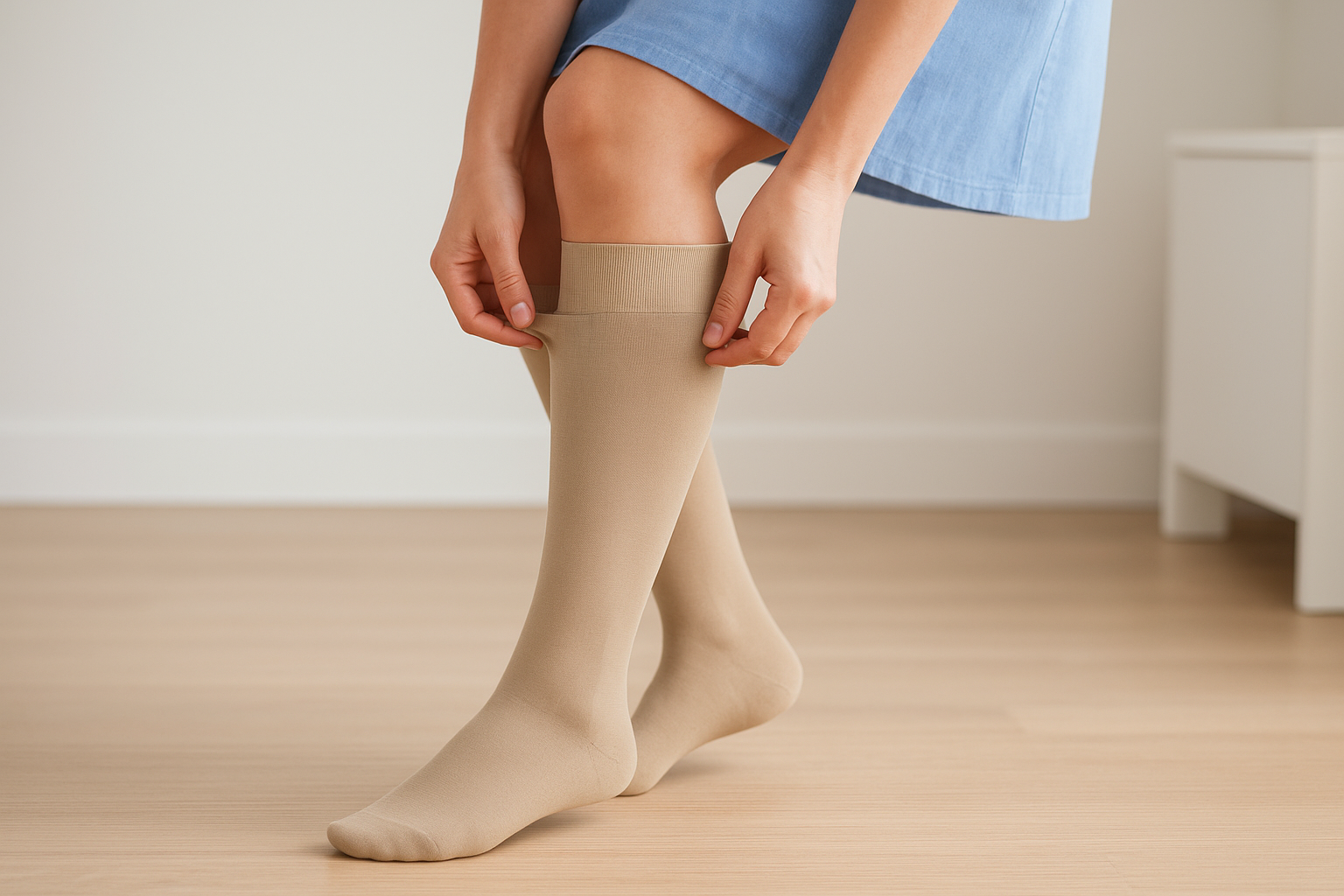
Sigvaris is the name podiatrists reach for when a patient needs genuine medical-grade compression stockings, not just a supportive gym sock. This Swiss brand has been manufacturing compression hosiery for decades, and it’s what we prescribe most often for nurses dealing with diagnosed venous issues rather than general shift fatigue. Expect a fitted, clinical feel rather than the sporty stretch of the brands above.
Compression level
Sigvaris offers a spread from 20-30mmHg through to 30-40mmHg, classified as therapeutic compression classes rather than lifestyle wear.
Once you’re into 30-40mmHg territory, you’re wearing a medical device, not just a supportive sock, so get properly measured first.
Best for
Nurses with a diagnosed circulatory condition, chronic venous insufficiency or noticeable varicose veins get the most benefit here. Anyone recovering from a leg or foot procedure, or managing lymphoedema alongside shift work, should also consider this range over the lighter options further up this list.
Key features
- Multiple compression classes to match a prescription or podiatrist recommendation
- Reinforced, seamless toe closure for comfort under closed shoes
- Durable knit that holds compression through repeated daily wear
- Available in knee-high, thigh-high and pantyhose styles
- Backed by clinical trials supporting venous health outcomes
Price range
Budget AU$45 to AU$90 per pair, depending on compression class and style, and it’s worth checking where to buy compression socks in Sydney before ordering online. That’s a genuine investment compared with the novelty brands, but if a podiatrist has recommended this strength, it’s not really optional, it’s treatment.
5. FIGS compression socks
FIGS built its name on scrubs that actually fit well, and its compression socks follow the same design-first approach that’s made the brand a favourite among younger nurses and hospital staff. Unlike the clinical brands further up this list, FIGS leans into fashion, offering colour-matched sets that coordinate with its scrub lines, though the compression underneath still does real work across a long shift. Patients who wear FIGS tend to like that the socks look like everyday fashion socks rather than something you’d find in a pharmacy aisle.
Compression level
FIGS sits at a mild 15-20mmHg, the same everyday range as Dr Woof, aimed at general fatigue relief rather than treating a diagnosed vein condition.
A stylish sock only earns its place in your locker if the compression underneath still holds up by hour ten.
Best for
These suit nurses who want their compression socks to match their scrubs and still feel supportive during standing shifts, particularly younger staff or those newer to shift work who haven’t needed firmer medical-grade support yet.
Key features
- Coordinated colours and patterns designed to match FIGS scrub ranges
- Nylon-spandex blend with a snug, fashion-sock fit
- Reinforced arch band for light standing support
- Breathable knit suitable for warmer wards
Price range
Expect to pay AU$28 to AU$38 per pair, positioning FIGS above the novelty brands but below true medical-grade options, reflecting its focus on design as much as function.
6. Sockwell Elevation merino wool compression socks
Sockwell takes a different approach again, swapping synthetic blends for merino wool as the core fibre. Nurses working colder wards or overnight shifts often mention this brand once they get tired of sweaty feet inside synthetic compression socks by 3am. Merino naturally regulates temperature, so it keeps feet warm on a cold night shift without turning clammy once the ward heats up during a busy morning handover.
Compression level
Graduated compression sits at 15-20mmHg, matching the everyday range most nurses without a diagnosed vein condition actually need.
Wool compression socks solve the sweaty-foot problem that synthetic brands can’t, without dropping the compression strength you actually need.
Best for
Overnight and rotating-shift nurses get the most out of these, since merino handles temperature swings between a chilly car park and an overheated ward better than cotton or nylon blends. They also suit anyone prone to sweaty feet or mild fungal issues, since wool’s natural moisture-wicking properties keep skin drier than most synthetic support stockings.
Key features
- Merino wool blend for temperature regulation and odour resistance
- Graduated 15-20mmHg compression throughout the leg
- Cushioned footbed for extra comfort on hard hospital floors
- Arch support built into the knit rather than a separate band
- Reinforced heel and toe for durability over repeated wears
Price range
Expect AU$35 to AU$50 per pair, reflecting the cost of merino wool over cheaper synthetic fibres. It’s a fair trade if sweaty, overheated feet are your main complaint by the end of a shift.
7. Physix Gear Sport compression socks
Physix Gear Sport built its reputation in the athletic recovery space before nurses started picking it up as everyday shift wear, and the crossover makes sense once you feel the graduated squeeze on a 12-hour ward round. Ribbed cuff construction stops the top from digging in or rolling down mid-shift, a common complaint we hear about cheaper compression socks that lose their grip by lunchtime. It’s a straightforward, no-frills pair that does the job without the fashion branding some of the picks above lean on.
Compression level
These sit at 20-30mmHg, a firmer graduated compression than the everyday 15-20mmHg range, putting them closer to Medicwear in strength.
Firmer compression only helps if the sock stays put, and a ribbed cuff matters more than most nurses realise.
Best for
Nurses doing genuine back-to-back 12-hour shifts with minimal sitting time suit this pair well, particularly anyone who’s found lighter socks simply aren’t cutting the fatigue by evening. Runners and gym-going nurses also like the crossover, since the same compression socks athletes use for recovery after a workout help legs recover after a double shift.
Key features
- Ribbed, non-slip cuff to prevent rolling
- Firm 20-30mmHg graduated compression
- Moisture-wicking synthetic blend
- Reinforced heel and toe panels
- Unisex sizing with a wide size range
Price range
Usually priced around AU$20 to AU$30 per pair, Physix Gear sits comfortably in the mid-range, offering firmer compression than most budget brands without the medical-grade price tag.
8. LEVSOX compression socks
LEVSOX rounds out this list as the budget all-rounder, the pair nurses grab when they need a reliable pair of compression socks for nurses without overthinking the purchase. It won’t win any style awards next to FIGS or Dr Woof, but the graduated squeeze is consistent from ankle to calf, and that consistency matters more than novelty prints once you’re six hours into a shift. Plenty of our patients keep a few pairs in their locker as backup for when their preferred brand is in the wash.
Compression level
LEVSOX sits at 15-20mmHg, the same everyday range as Dr Woof and FIGS, aimed squarely at general fatigue relief rather than treating a diagnosed vein condition.
A backup pair only earns its place in your bag if it delivers the same graduated compression as your main brand.
Best for
These suit nurses who want a dependable spare pair for busy weeks, or anyone testing whether graduated compression stockings actually help before spending more on a premium brand. Students and casual shift workers also gravitate here, since the price makes trying compression low-risk.
Key features
- Nylon-spandex blend with reinforced heel and toe
- Graduated 15-20mmHg compression throughout the leg
- Cushioned footbed for standing comfort
- Wide range of plain and patterned colourways
- Machine washable and quick-drying
Price range
Expect AU$15 to AU$25 per pair, making LEVSOX one of the cheapest options on this list. It’s a sensible starting point if you’re compression-curious but not ready to commit to a pricier brand yet.
9. How compression socks help nurses on 12-hour shifts
Gravity works against you every single shift. Standing and walking for hours all day pulls blood and fluid down into your lower legs, and your calf muscles normally pump it back up towards your heart with every step. Graduated compression gives that pump a mechanical assist, squeezing tightest at the ankle and gradually easing off up the calf, so blood and fluid move upward instead of pooling around your feet by hour ten, and the science behind that squeeze is well established.

That mechanical squeeze explains most of what nurses actually feel by the end of a shift. Here are the health gains compression socks deliver while you’re charting, medicating and walking the ward:
- Reducing blood pooling in the lower leg and ankle
- Supporting venous return back towards the heart
- Limiting swelling around the ankle and foot
- Reducing the ache and heaviness that builds through a long shift
- Lowering the risk of varicose veins developing over years of standing work
Compression socks don’t stop fatigue, they help your calf muscles fight gravity so fatigue builds slower.
Ongoing standing work also raises your risk of deep vein thrombosis over time, particularly on long-haul rosters with back-to-back 12-hour shifts. Podiatrists see this pattern often in nursing patients: leg fatigue that used to ease overnight starts lingering into the next shift. Wearing properly graduated compression socks for nurses, matched to the right mmHg for your legs, is one of the simplest ways to slow that pattern before it becomes a diagnosed venous problem.
10. Understanding compression levels and mmHg ratings
MmHg stands for millimetres of mercury, the same unit your blood pressure gets measured in, and it tells you exactly how much squeeze a sock applies at the ankle. Compression levels aren’t marketing fluff, they’re a measurable pressure gradient, and mismatching the number to your actual needs is the single biggest reason nurses give up on compression socks after a week.
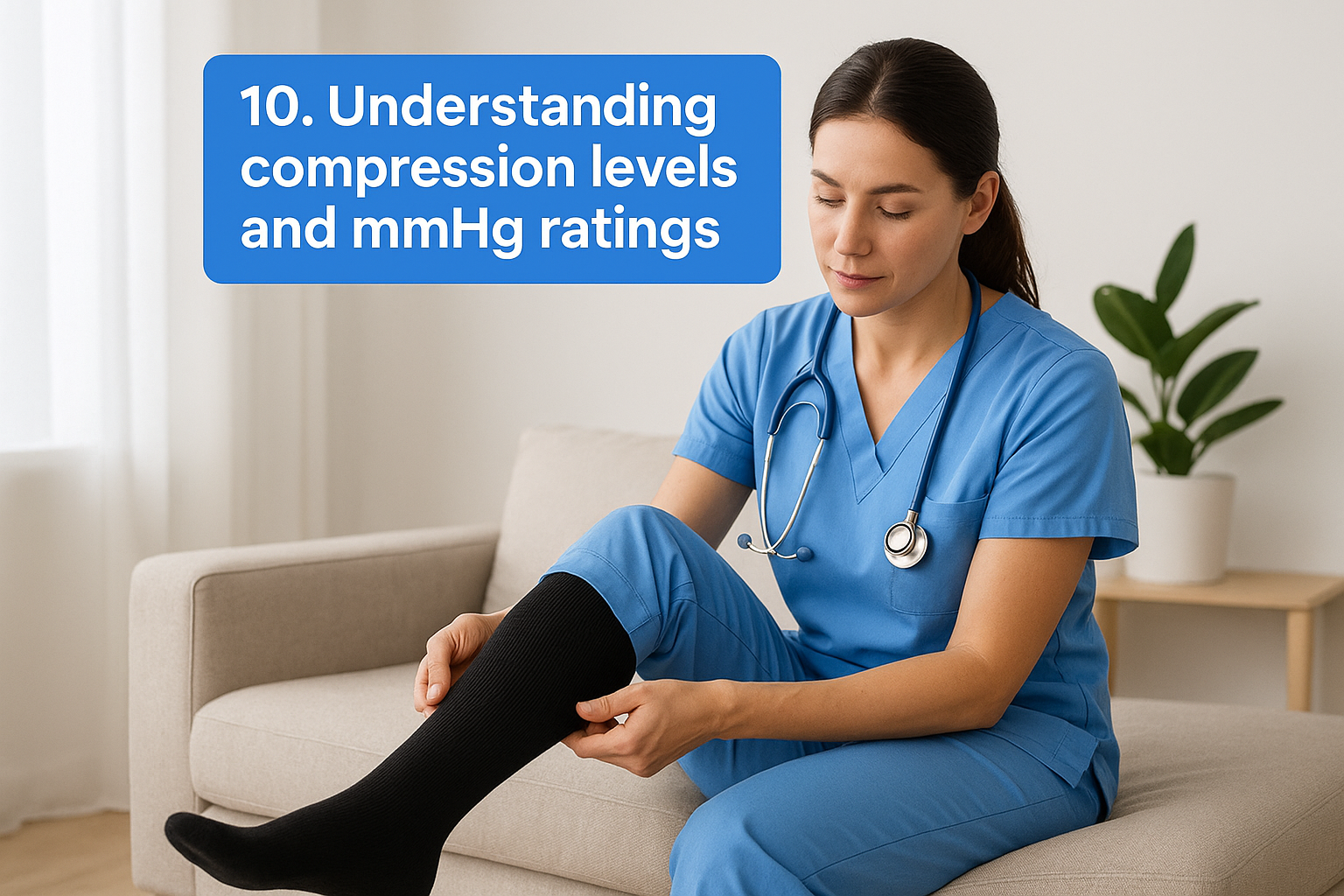
Getting this number right matters more than fabric, colour or brand when you’re choosing compression socks for nurses. Here’s how the common ranges break down in practice:
| mmHg range | Classification | Typical use |
|---|---|---|
| 8-15mmHg | Light | Mild, everyday tiredness |
| 15-20mmHg | Mild-moderate | Standard shift wear, no diagnosed condition |
| 20-30mmHg | Firm | Swelling, varicose veins, long standing shifts |
| 30-40mmHg | Extra firm | Prescribed medical conditions, post-procedure |
Buying a higher mmHg than you need won’t speed up recovery, it’ll just cut off circulation and leave your legs sore for a different reason.
Starting low makes sense if you’ve never worn graduated compression before. Most healthy nurses do well at 15-20mmHg, stepping up to 20-30mmHg only once mild compression stops relieving the heaviness by evening. Anything above 30mmHg deserves a proper fitting and, ideally, a chat with a podiatrist first, since that range is designed to treat a diagnosed circulatory issue rather than general shift fatigue.
11. What to look for when choosing compression socks
Fit matters more than any feature on the label. A sock that’s too tight at the top cuts off circulation at the calf, while one that’s too loose bunches around the ankle and stops delivering proper graduated compression altogether. Measure your calf circumference and ankle before buying, since most reputable brands size against these numbers rather than shoe size, and a mismatched size undoes whatever mmHg rating you paid for.
Beyond sizing, a handful of practical details separate a sock that survives a 12-hour shift from one you’ll be adjusting by lunchtime. Look for these features when comparing compression socks for nurses:
- Reinforced heel and toe panels that hold up to daily washing
- A seamless toe seam to prevent rubbing and blisters
- Moisture-wicking fabric suited to your ward’s temperature
- A non-slip cuff that won’t roll down mid-shift
- Breathable knit if you run warm, or merino wool if you’re often cold
The best compression sock is the one whose size, mmHg and fabric all match your actual shift, not just the one with the best reviews.
Open-toe versus closed-toe is worth deciding before you buy multiples, particularly if you wear closed shoes all shift and don’t need the extra toe room. Given how much time you spend standing, cushioning under the ball of the foot and heel also makes a genuine difference that fabric choice alone can’t fix.
12. When foot or leg pain means it’s time to see a podiatrist
Compression socks help most nurses manage everyday fatigue, and while they can ease some foot pain, they’re not designed to fix a structural problem in your feet or a worsening vein condition. Persistent pain that doesn’t ease overnight, even with the right mmHg sock and decent rest, is your body telling you something needs a proper assessment rather than another pair of socks.
Watch for these warning signs that go beyond normal shift-work tiredness:
- Swelling that hasn’t gone down by the next morning
- Visible varicose or spider veins that are getting worse
- Numbness, tingling or colour changes in your feet or toes
- Sharp heel pain first thing in the morning, a classic symptom of plantar fasciitis
- Pain that changes how you walk or forces you to favour one leg
If your legs still ache after a full day off, that’s not fatigue anymore, that’s a sign worth getting checked.
Sustained standing work is genuinely hard on feet, ankles and lower legs over a career, and shift-specific footwear only goes so far without addressing biomechanics underneath. A podiatrist assessment can pick up gait issues, arch problems or circulation concerns that no sock, however well-fitted, will resolve on its own, and there are clear signs it’s time to book one.
Our team at ModPod Podiatry sees plenty of nurses and shift workers across our Sydney clinics for exactly this reason. Getting a proper diagnosis early usually means a simpler fix than waiting until the pain becomes unmanageable.
13. Frequently asked questions about compression socks for nurses
Questions about compression socks for nurses come up constantly in clinic, so here are the ones we hear most often, answered the way we’d answer them for a patient sitting in front of us.
Can I wear compression socks every shift? Yes, daily wear is fine at 15-20mmHg for most healthy nurses, though it’s worth washing two or three pairs on rotation so the elastic doesn’t lose its squeeze between shifts.
Do compression socks work if I sit down often? They still help, just less dramatically than on a fully standing shift, since venous return relies on the calf pump most when you’re upright and moving.
How many hours a day should I wear compression socks? Put them on before your shift starts, while your legs are least swollen, and take them off once you’re home. Sleeping in graduated compression isn’t necessary unless a podiatrist has specifically recommended it.
If you’re only wearing compression socks occasionally, you’re getting a fraction of the benefit consistent daily wear provides.
Will a higher mmHg work faster? No, jumping straight to 20-30mmHg without needing it usually just leaves marks and discomfort rather than extra relief.
Do compression socks replace good shoes? Never. Worn-out or unsupportive footwear undoes most of what a well-fitted sock achieves, so treat the two as a pair, not a substitute for one another.
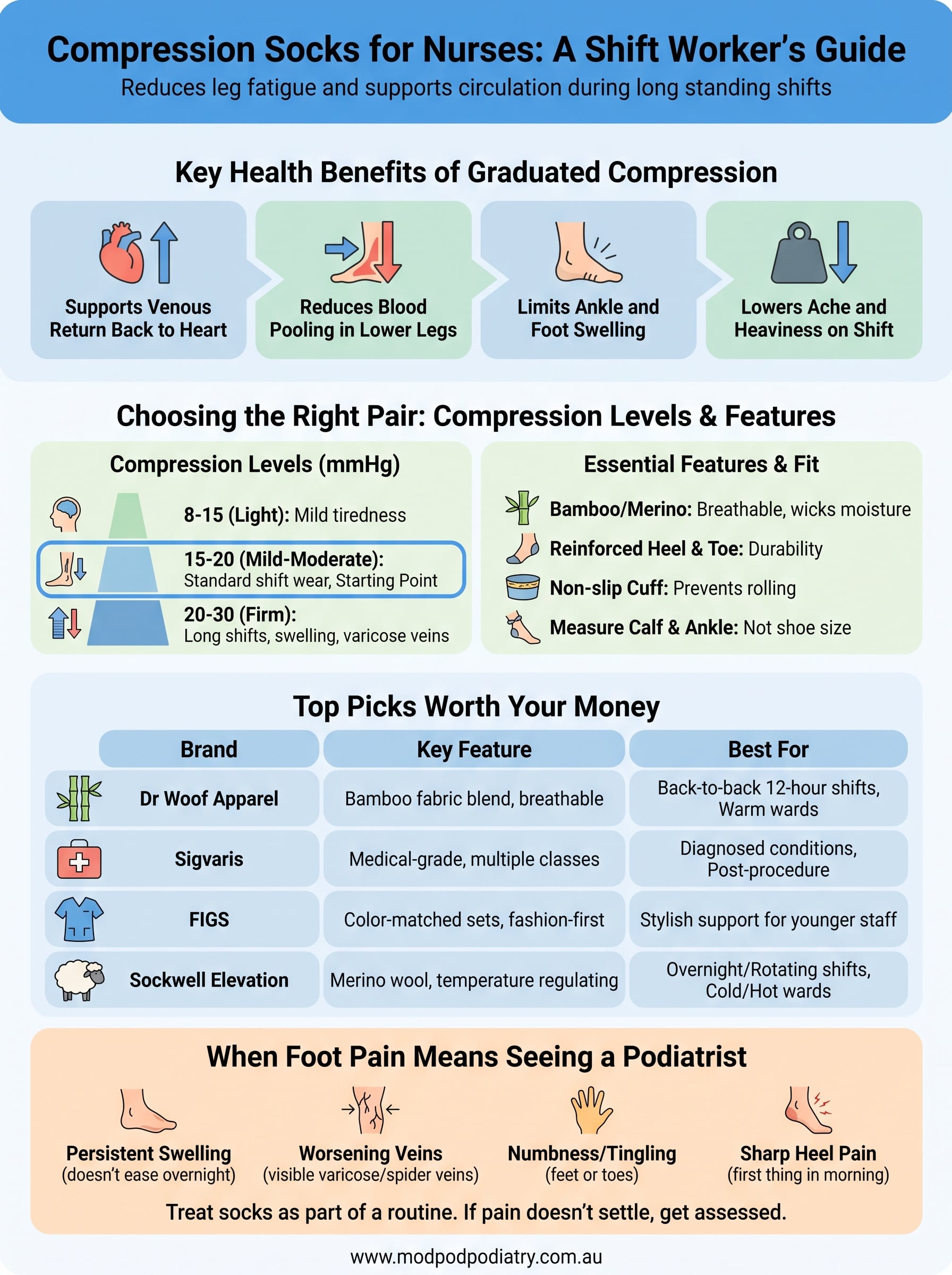
Keeping your legs shift-ready
The right pair of compression socks for nurses won’t fix everything, but matching the correct mmHg to your shift length and buying a fabric that suits your ward’s temperature makes a genuine difference by hour twelve. Start mild at 15-20mmHg if you’re new to graduated compression, and only step up once your legs tell you it’s not enough. Given how much wear your legs take over a career on the ward, treat socks as one part of a bigger routine that includes proper footwear, rest and paying attention when pain doesn’t settle overnight.
Heavy legs after a shift are normal. Legs that stay swollen, numb or sore after a full day off aren’t, and no sock will fix that on its own. If that sounds like you, book a leg and foot assessment at one of our Sydney clinics before it becomes a bigger problem.