


Fungal Toenail Infections: Causes, Symptoms & The Best Treatments in 2026

heading strip
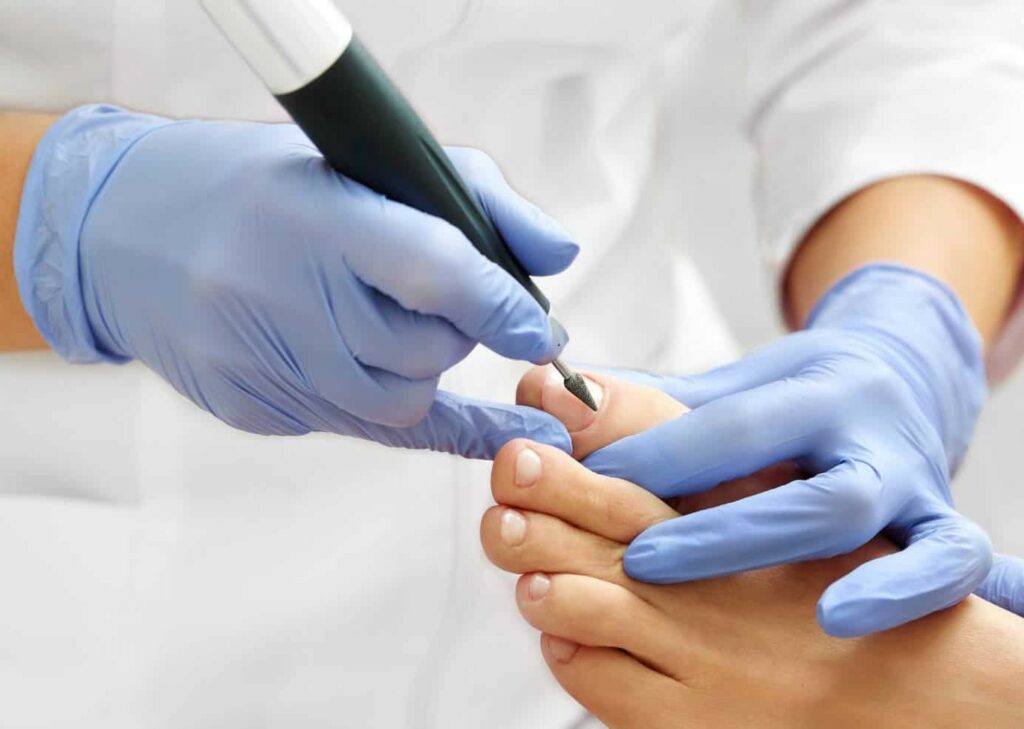
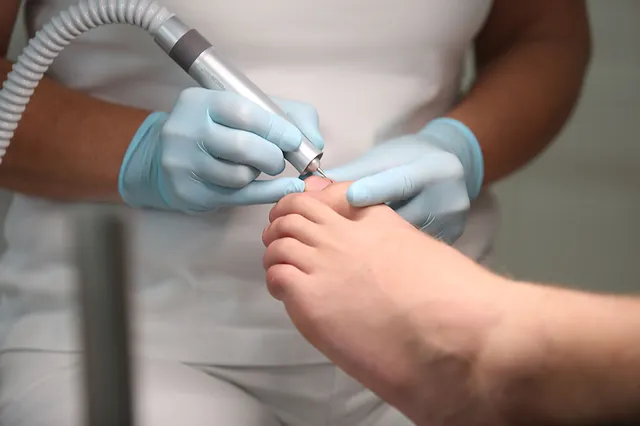
podiatrist treating fungal toenail infection with Lunula cold laser at ModPod Sydney clinic

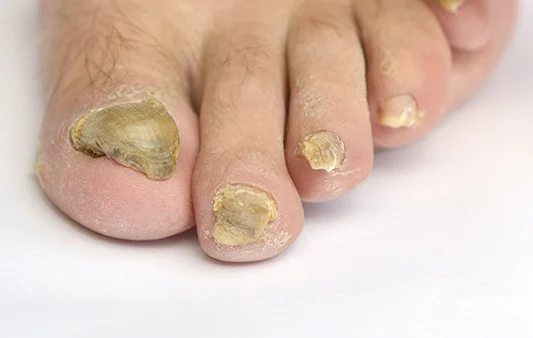
Autumn is the time of year Sydney-siders pack away their thongs and closed-toe shoes start coming back out — and that’s exactly when many people take their first good look at their toenails in months. If you’ve noticed a nail that looks yellowed, thickened, crumbly or detached from the nail bed, you may be dealing with a toenail fungus (onychomycosis). It’s one of the most common nail conditions we treat at ModPod, and one of the most undertreated. Over the years, our podiatrists have heard countless patients say they tried every cream on the pharmacy shelf with little result. This guide covers how fungal nail infections start, why over-the-counter treatments so often fail, and what toenail fungus treatment in Sydney actually works — including when laser therapy is the right call.

How Do You Get a Fungal Toenail Infection?

Fungal nail infections are caused by dermatophyte fungi — the same family responsible for athlete’s foot (tinea pedis). The fungi thrive in warm, moist environments and enter through small breaks in the skin around the nail or gaps between the nail plate and nail bed.

Common ways Sydneysiders pick up a fungal nail infection include:

  • Public pools and change rooms — Bondi, Manly, and local council pools are popular, but walking barefoot on wet tiles is a risk factor
  • Sharing nail clippers or files — fungi transfer easily on unsterilised tools
  • Nail salons — instruments not properly autoclaved between clients can carry infection
  • Wearing tight, enclosed shoes — heat and moisture build up inside the shoe, creating ideal conditions for fungal growth
  • Pre-existing athlete’s foot — tinea pedis can spread to the nails if left untreated
  • Age — circulation slows with age, nail growth rate drops, and immune function changes, all of which increase susceptibility
  • Diabetes or compromised immunity — these conditions significantly raise the risk of developing and spreading fungal infections

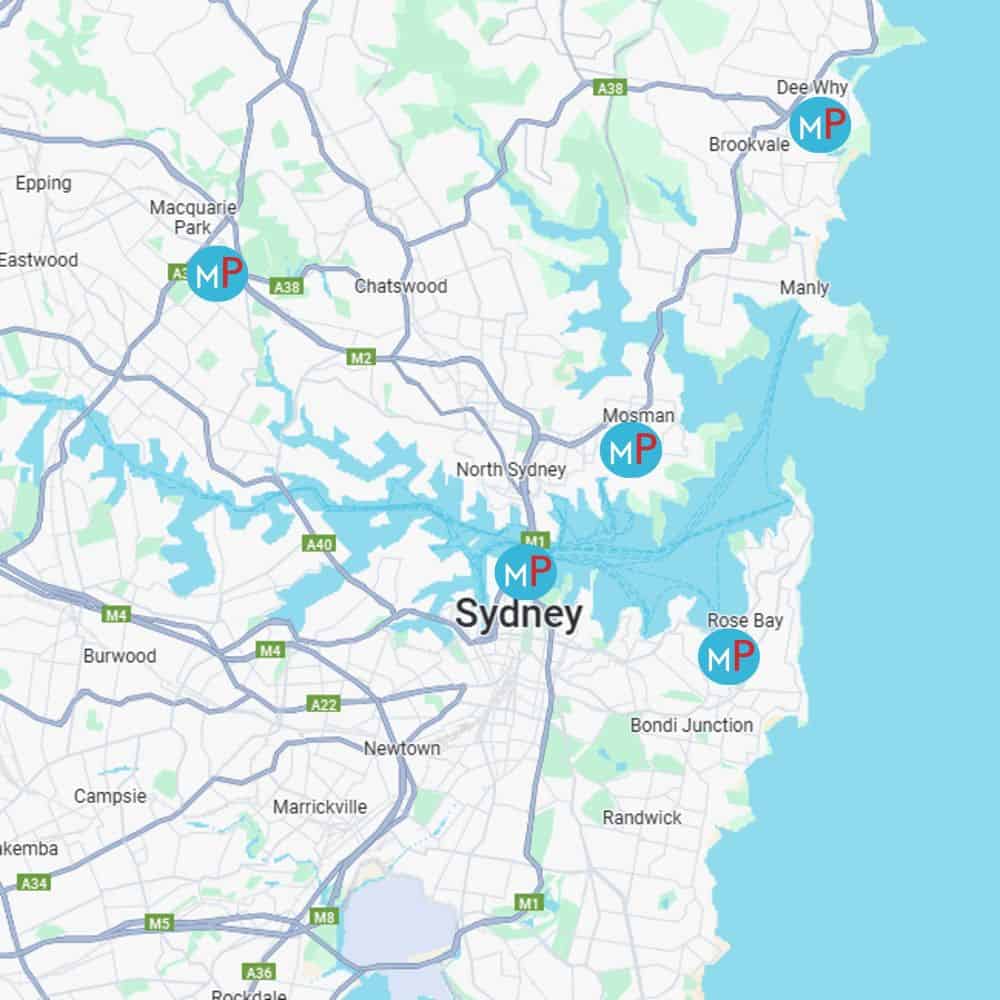
In our clinics across CBD, Mosman, Dee Why, Rose Bay, and North Ryde, we see a spike in fungal nail presentations through Autumn and early Winter — precisely because feet have been covered up through the warmer months and the infection goes unnoticed.

Early Signs: What a Fungal Toenail Actually Looks Like

Fungal nail infections develop gradually, and many people don’t notice them until the nail has changed significantly. Watch for these signs:

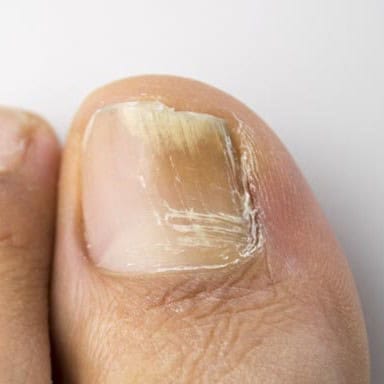
  • Discolouration — yellow, brown, or white patches on or under the nail
  • Thickening — the nail becomes harder and more difficult to cut
  • Crumbling or brittleness — the nail edge breaks apart rather than cutting cleanly
  • Onycholysis — separation of the nail from the nail bed, creating a white or opaque appearance
  • Debris under the nail — chalky or powdery material building up beneath the nail plate
  • Odour — a faint musty smell, especially when the nail is trimmed

It’s worth noting that not all nail discolouration is fungal. Trauma, psoriasis, and other conditions can look similar. If you’re not sure, a podiatrist can take a nail sample for laboratory confirmation before starting treatment — something we recommend for persistent or unusual presentations.

Why Over-the-Counter Treatments So Often Fail

The pharmacy shelf has no shortage of antifungal nail paints and creams. Many of our patients have tried them without success, and there are good clinical reasons why.

Topical Antifungals: Low Penetration Rates

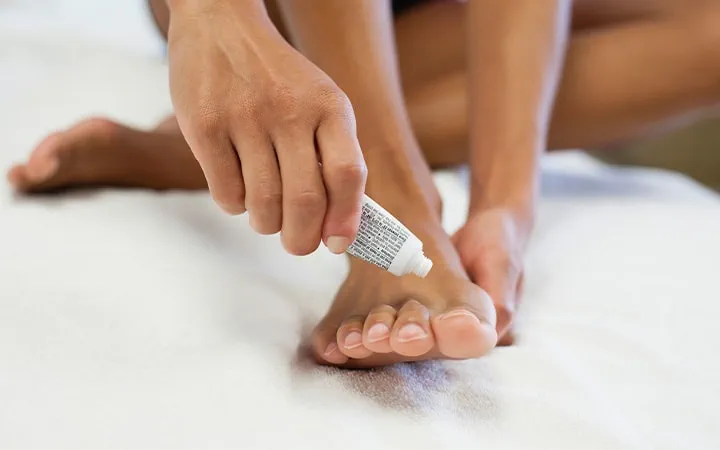
The nail plate is a dense, keratin structure. Most topical antifungal agents — including amorolfine and ciclopirox nail paints — simply cannot penetrate far enough to reach the fungi living deep in the nail bed. Studies consistently show success rates below 10% for topical treatments used alone.

To see results, you need to apply the treatment daily for 6–12 months, and the nail must be filed down regularly to help penetration. That level of commitment is hard to sustain, and the window for reinfection remains open throughout.

Oral Antifungals: More Effective, But Not Risk-Free

Oral terbinafine (Lamisil) is significantly more effective — around 50–70% cure rates in clinical trials. Your GP may prescribe it for severe infections. However, oral antifungals carry a risk of liver toxicity and require blood tests for monitoring. They also interact with a number of common medications. For many patients, the risk-benefit balance doesn’t favour oral treatment, particularly for an older, asymptomatic nail.

Lunula Cold Laser: The Most Effective Toenail Fungus Treatment in Sydney

This is where podiatry has made real advances. The Lunula Cold Laser fungal nail treatment at ModPod uses two low-level laser wavelengths — 405nm and 635nm — to target fungal cells without damaging the surrounding nail or skin tissue.

How the Lunula Laser Works

Unlike high-powered “hot” lasers, the Lunula is a cold laser — no heat, no pain, no downtime. The two wavelengths work synergistically: one disrupts the fungal cell structure, and the other stimulates the body’s own immune response in the nail bed. It’s a 12-minute treatment per foot, once a week.

Clinical studies show success rates of 75–90% with a full course of four treatments, compared to under 10% for topical agents alone. Most patients begin to see new, clear nail growth emerging from the base of the nail after the second or third session.

What to Expect: Number of Sessions and Timeline

  • Typical course: 4 weekly sessions (one foot takes 12 minutes per session)
  • When you see results: New clear nail grows from the base — toenails grow slowly (around 1–1.5mm per month), so a full nail replacement takes 9–12 months
  • Pain: None — the laser is completely cold
  • Downtime: None — you walk out and go about your day
  • Nail polish: We ask you to remove any nail polish before each session and avoid it during treatment

Cost Comparison

Four sessions of Lunula laser treatment at ModPod includes an initial assessment. When you factor in the months of daily topical treatment, nail files, follow-up appointments, and potential retreatment cycles, laser therapy is often comparable in cost — and far more likely to actually work. Our team can discuss pricing in detail when you come in for your initial consultation.

Health Funds and Medicare: What’s Covered?

Fungal nail laser treatment is generally not covered under Medicare as a standard item. However, many private health funds with Extras cover provide a rebate for podiatry consultations, which includes the initial assessment. Funds including Medibank, BUPA, HCF, and NIB typically offer podiatry rebates under their Extras policies — the amount varies by policy level.

If you have diabetes and a referral from your GP under a Chronic Disease Management (CDM) plan, you may be eligible for Medicare-subsidised podiatry visits (item numbers 10962 or 10964). This won’t cover the laser device itself but can offset your consultation costs. We recommend calling your health fund before your appointment to confirm what your policy covers.

For general nail care and maintenance, our medical pedicure for nail hygiene maintenance is covered under most Extras policies as a podiatry service.

Preventing Reinfection After Treatment

Getting rid of a fungal nail infection is one thing — keeping it gone is another. Reinfection is common if you don’t address the source. Here’s what we recommend to our patients after treatment:

  • Treat your footwear: Fungi survive in shoes for months. Use an antifungal shoe spray regularly during and after treatment
  • Replace old thongs and pool shoes: Especially any footwear worn during the period of infection
  • Treat athlete’s foot promptly: Tinea pedis is the most common entry point for nail infections — don’t let it linger
  • Wear thongs in public showers and pool areas: Bondi, Manly and your local aquatic centre are high-risk environments
  • Use your own sterilised nail instruments: Never share clippers or files, and clean your own tools regularly
  • Keep nails dry: Dry between your toes after bathing and choose moisture-wicking socks
  • Maintain general podiatry nail care: Regular professional nail trimming keeps nails in good condition and allows for early detection if the infection returns

Frequently Asked Questions

Q: How do I know if my nail discolouration is actually a fungal infection?

A: The most reliable way is to have a podiatrist take a nail clipping or scraping for laboratory testing. While yellowing, thickening, and crumbling are classic signs of fungal infection, trauma and conditions like nail psoriasis can look similar. Getting a confirmed diagnosis before treatment ensures you’re treating the right thing.

Q: Can I use nail polish during fungal nail laser treatment?

A: No — we ask patients to remove nail polish before each session. The laser needs direct access to the nail plate to be effective. You can resume nail polish once the full course of treatment is complete, but clear or breathable formulas are preferable during the recovery period.

Q: Is the Lunula Cold Laser painful?

A: Not at all. The Lunula is a cold (low-level) laser, which means it produces no heat and no discomfort. Most patients feel nothing during the 12-minute treatment. There’s no anaesthetic required and no recovery time.

Q: How many sessions of laser treatment do I need?

A: Most people complete four weekly sessions. Some cases — particularly longstanding infections or infections involving multiple nails — may benefit from a fifth or sixth session. Your podiatrist will assess your response after the initial course and recommend whether further treatment is needed.

Q: Can fungal nail infections come back after laser treatment?

A: Yes, reinfection is possible if the environmental source isn’t addressed. The laser eliminates the current infection, but it doesn’t prevent you from picking up a new one. Following the prevention steps above — particularly treating footwear and managing athlete’s foot — significantly reduces the risk of recurrence.

Book Your Fungal Nail Laser Consultation — Free Initial Assessment

If you’ve been putting up with discoloured, thickened, or crumbly toenails, don’t wait until next summer to do something about it. Our Sydney podiatrists have been treating fungal nail infections for over 20 years, and the Lunula Cold Laser is the most effective option we’ve seen in that time. We offer a free initial assessment so we can confirm the diagnosis and walk you through the treatment plan before you commit to anything.

We have clinics in CBD, Mosman, Dee Why, Rose Bay, and North Ryde. Book online to find an appointment that suits you — same-week bookings are usually available.

Share This Post

More To Explore

(02) 9960 3981