
The best girls school shoes hold the heel, bend at the ball of the foot and leave a thumb’s width of space at the toe. For most primary girls, a leather Mary Jane or T-bar is the safest pick. Older girls do well in a buckle strap or a lace-up. Every girl needs a separate pair of sports shoes for PE.
Buying online makes the choice harder. You can’t try the shoe, and one store can list dozens of styles from $39 to $170. This guide sorts the choice into five styles. Each style gets the same three checks: fit and support, who it suits, and price. The checks work with any Australian online store.
At ModPod Podiatry, our podiatrists treat children’s feet across five Sydney clinics. We see what poor school shoes cause: blisters, heel pain and shoes a child has outgrown. The advice below comes from that work. Read your school’s uniform policy before you buy, since colour and material rules differ by school.
1. Leather Mary Janes
Fit and support
A Mary Jane has one strap over the instep. The strap locks the heel in place, so the shoe stays on during play and on stairs. Leather moulds to the foot and breathes, which cuts sweat and blisters.
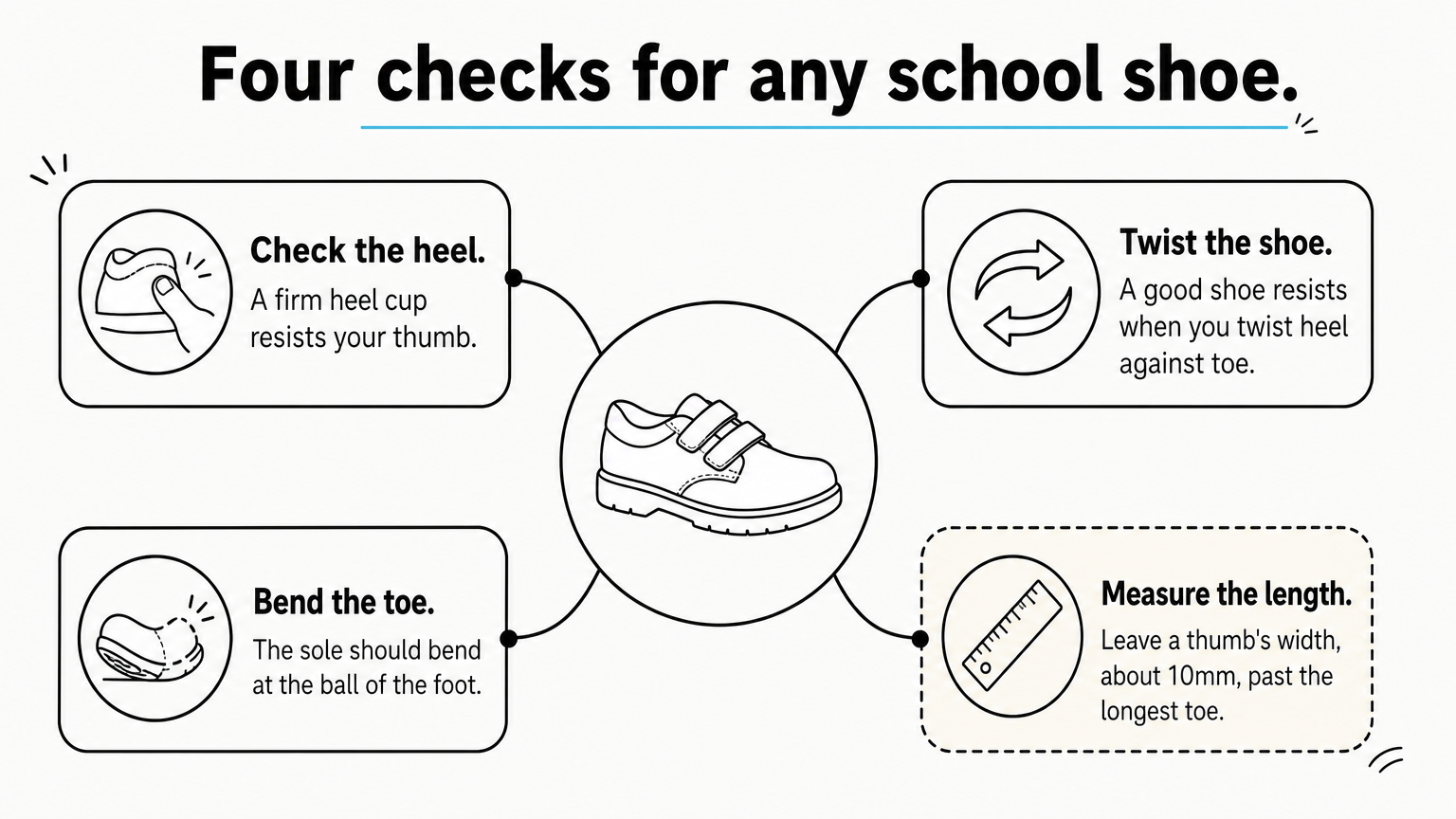
Run four checks on any school shoe, in a shop or at home:
- Heel: squeeze the back of the shoe. A firm heel cup resists your thumb.
- Twist: hold the heel in one hand and the toe in the other, and twist. A good shoe resists.
- Bend: push the toe up. The sole should bend at the ball of the foot, not mid-shoe.
- Length: with your daughter standing, leave a thumb’s width (about 10mm) past the longest toe. Fit to the bigger foot.
A good school shoe holds the heel and bends where the toes bend.
Who it suits
Mary Janes suit girls from prep to upper primary. Younger girls can fasten the strap themselves, which saves time at the school gate. They fit narrow and standard feet. A girl with a wide forefoot needs a brand that sells wider width fittings, because a squeezed forefoot rubs and aches.
Some senior schools ask for lace-up shoes in the upper years. Check the policy before you order a Mary Jane for an older girl.
Price and buying checks
Leather Mary Janes and T-bars cost about $70 to $150 online. At $89, a pair that lasts a 40-week school year costs about $2.20 a week. Check the fit every few months, since feet grow fast.
Before you order:
- Note the free delivery threshold. Stores set it between $79 and $99.
- Read the return policy. Some stores give 30 days.
- Try shoes indoors on a clean floor so you can return them.
2. T-bar school shoes
Fit and support
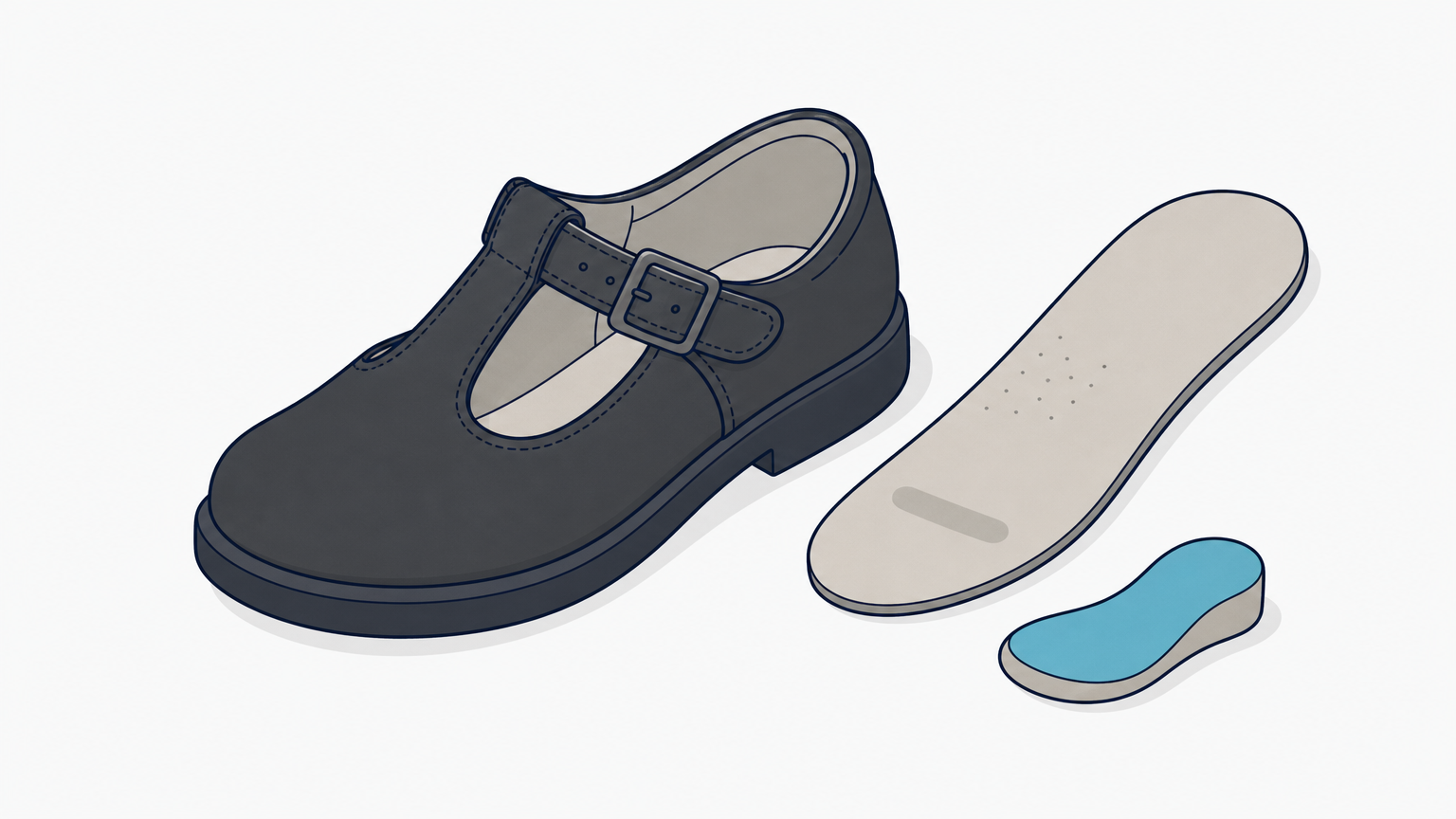
A T-bar adds a second strap down the centre of the foot, which forms a T. The extra strap gives a firmer hold on the midfoot. A girl with a narrow heel or a low arch keeps a T-bar on with less slipping.
A T-bar adds control, so check that the strap sits flat.
The strap should lie flat across the top of the foot. You should be able to slide one finger under it. A strap that digs into the bones on top of the foot will cause pain by lunchtime.
Who it suits
T-bars suit younger girls, girls who walk out of Mary Janes, and schools with a traditional uniform. They suit girls who need a secure fit more than a quick one.
If your daughter wears orthotics, look for a removable insole. Take the insole out, put the orthotic in, and close the strap. The shoe should shut without pressure on the foot. Bring the orthotics to the shop or try-on at home.
Price and buying checks
T-bars sit in the same $70 to $150 band as Mary Janes. Leather costs more than synthetic, but it moulds to the foot and lasts longer.
Check two points on the shoe:
- Pull the strap hard. Stitching at the anchor point should not move.
- Press the lining. A padded collar at the ankle stops rubbing.
3. Buckle shoes for older girls
Fit and support
Buckle school shoes for girls give fine adjustment, one hole at a time. That helps when feet swell by the afternoon or change during a growth spurt. A buckle is a sound choice for a girl with a high instep.
A buckle lets you adjust the fit hole by hole as the foot grows.
Check the buckle edge. Run a finger along it, and see where it sits when the strap is closed. The buckle should sit clear of the ankle bone and the top of the foot.
Who it suits
Buckle styles suit girls from about age 8 through senior school. They look neat, and they suit girls who like a clean, formal shoe. A girl needs the skill to thread a strap, so practise at home before the first day.
Buckles suit a foot that has grown wider across the arch. The strap can loosen as the foot grows.
Price and buying checks
Leather strap styles for older girls cost around $150 to $160 at full price. Sale pricing brings some pairs lower. Girls’ sizes in the older ranges run larger, so measure both feet before you pick a size.
Look at the strap:
- A spare hole or two gives room to grow.
- A keeper loop holds the loose end flat.
- Metal hardware should feel solid, not thin.
4. Lace-up leather shoes
Fit and support
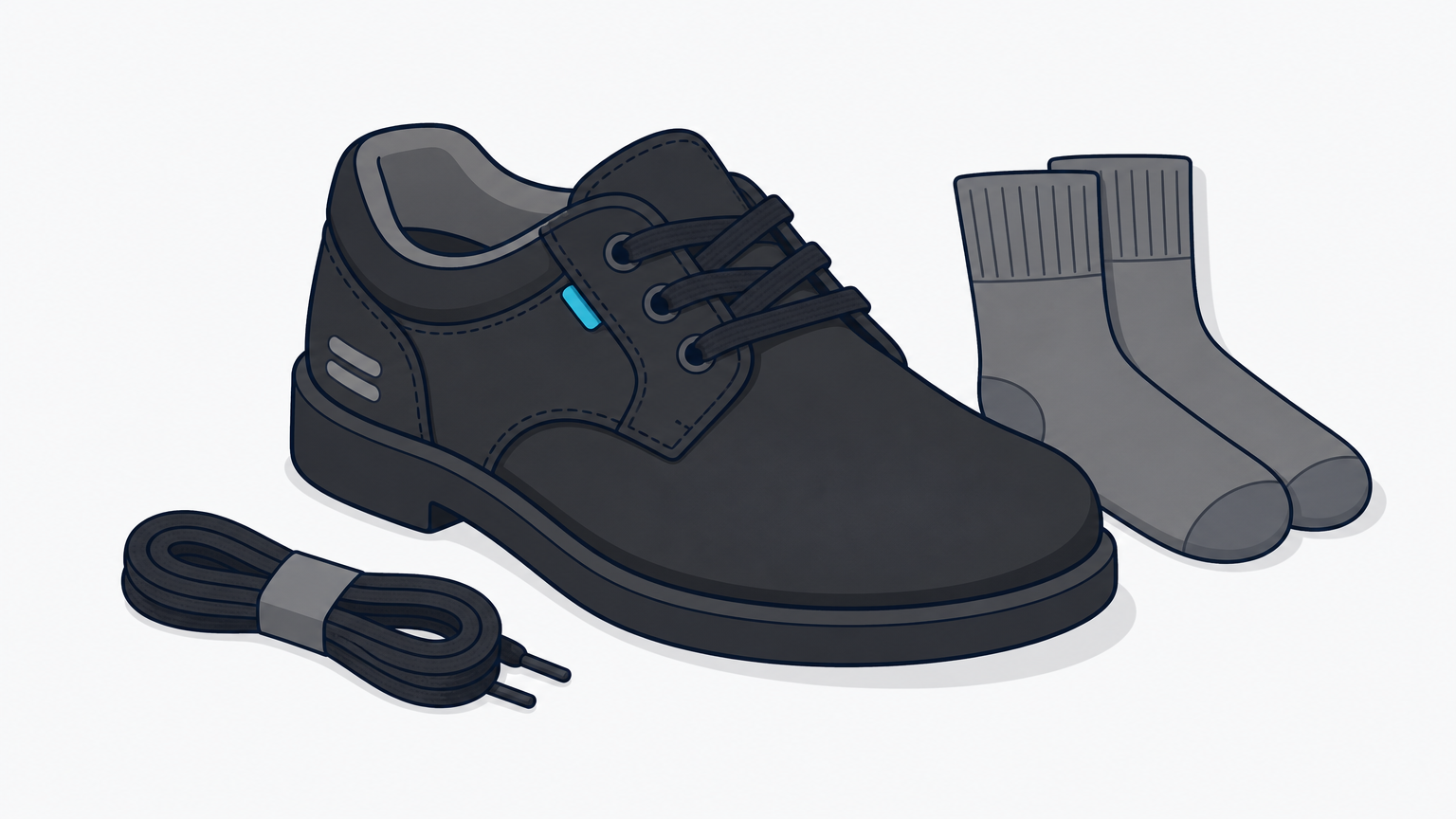
Laces adjust the fit across the whole foot. You can tighten the instep and loosen the toe area. That makes a lace-up the best fit for wide or high-volume feet. It also gives room for orthotics.
A lace-up gives the most control over fit, so use it for wide feet or orthotics.
Look for flat laces and padded tongues, which spread pressure. Double-knot the laces at home and check they hold through a full day. Replace a worn lace before it snaps.
Who it suits
Lace-ups suit older girls and any girl who needs a snug, adjustable shoe. Many senior schools require them. A girl who can’t tie laces yet should wear a Mary Jane or a self-fastening shoe instead, which saves a struggle at the school gate.
Girls with wide feet, high arches or orthotics gain the most. The laces open wide, and the foot slides in without force.
Price and buying checks
Leather lace-ups cost about $100 to $170. Senior sizes sit at the top of that range. The price reflects extra leather, so the pair lasts a long time if the shoe fits.
Check the details:
- Eyelets should be reinforced, not punched through thin leather.
- The tongue should be gusseted or padded.
- The sole should have a deep tread for wet playgrounds.
5. School sports shoes for girls
Fit and support
Sports shoes need cushioning, a flexible forefoot and a firm heel. They carry your daughter through PE, sport carnivals and playground running. Wear school socks to fit them, because thin socks give a false size.
A sports shoe needs cushioning and a firm heel, so a leather shoe cannot stand in for it.
Run the same four checks as for leather shoes. Add one more: press the midsole with your thumb. It should compress a little and spring back. A midsole that stays dented is worn out.
Who it suits
Every student needs a pair for PE days. Some schools allow all-black sports shoes for daily wear, and others ask for white or black with set trim. Read the policy before you order. Don’t buy a leather shoe for sport. It has no cushioning and will blister on the run.
If your daughter has heel pain after sport, a pair of cushioned shoes may help. Ask a podiatrist before you buy more.
Price and buying checks
School sports shoes cost about $40 to $80. Pair a $59 sports shoe with an $89 leather shoe, and a full set costs $148. Hook-and-loop styles save time for young girls, and laces hold better for older ones.
Check these before you buy:
- Weigh one shoe. A light shoe tires young legs less.
- Check the grip on the sole for wet courts.
- Look for a removable insole if your daughter uses orthotics.
Choosing the right pair
Start with fit, then pick the style. Your daughter needs a firm heel, a sole that bends at the ball of the foot, and a thumb’s width of room. A Mary Jane or T-bar suits younger girls, and a buckle or lace-up suits older girls. Add a cushioned sports shoe for PE. Check the size every few months.
If your daughter limps, complains of heel pain or has red marks after school, book an assessment. A podiatrist can check her feet and gait and tell you what shoe she needs. You can book a children’s foot assessment online at any of our five Sydney clinics.