

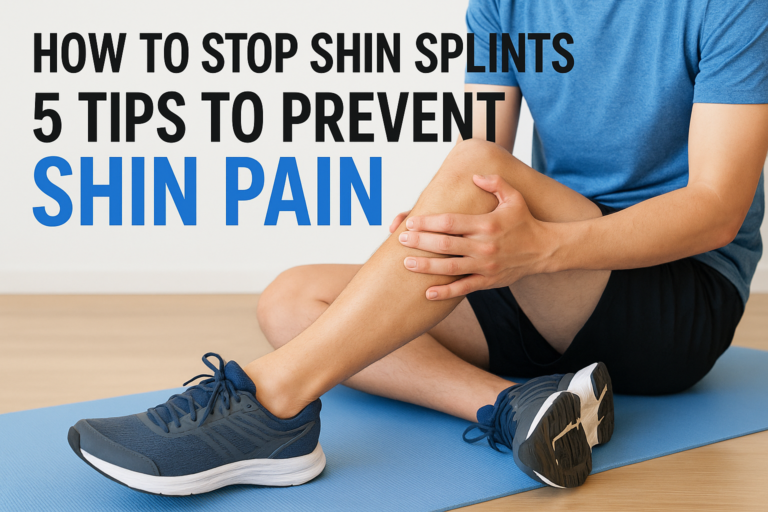
That dull ache along your shinbone after a run isn’t something to push through. Once you know how to stop shin splints, you can keep training instead of sitting out weeks of recovery while you wait for the pain to settle on its own.
The good news is that shin splints respond well to the right combination of load management, footwear checks and strengthening work. If you’re searching for how to prevent shin splints or wondering how to avoid shin pain when running altogether, the answer usually comes down to a few adjustable habits rather than one dramatic fix. Get these right and most runners see real improvement within a couple of weeks.
At ModPod Podiatry, we see shin splints regularly across our Sydney clinics, from weekend joggers ramping up mileage too fast to competitive athletes carrying an old niggle. Below are five practical, podiatrist-backed tips that address the actual causes of shin pain, not just the symptoms, so you can get back to running with confidence.
1. Get a podiatry assessment for your gait and biomechanics
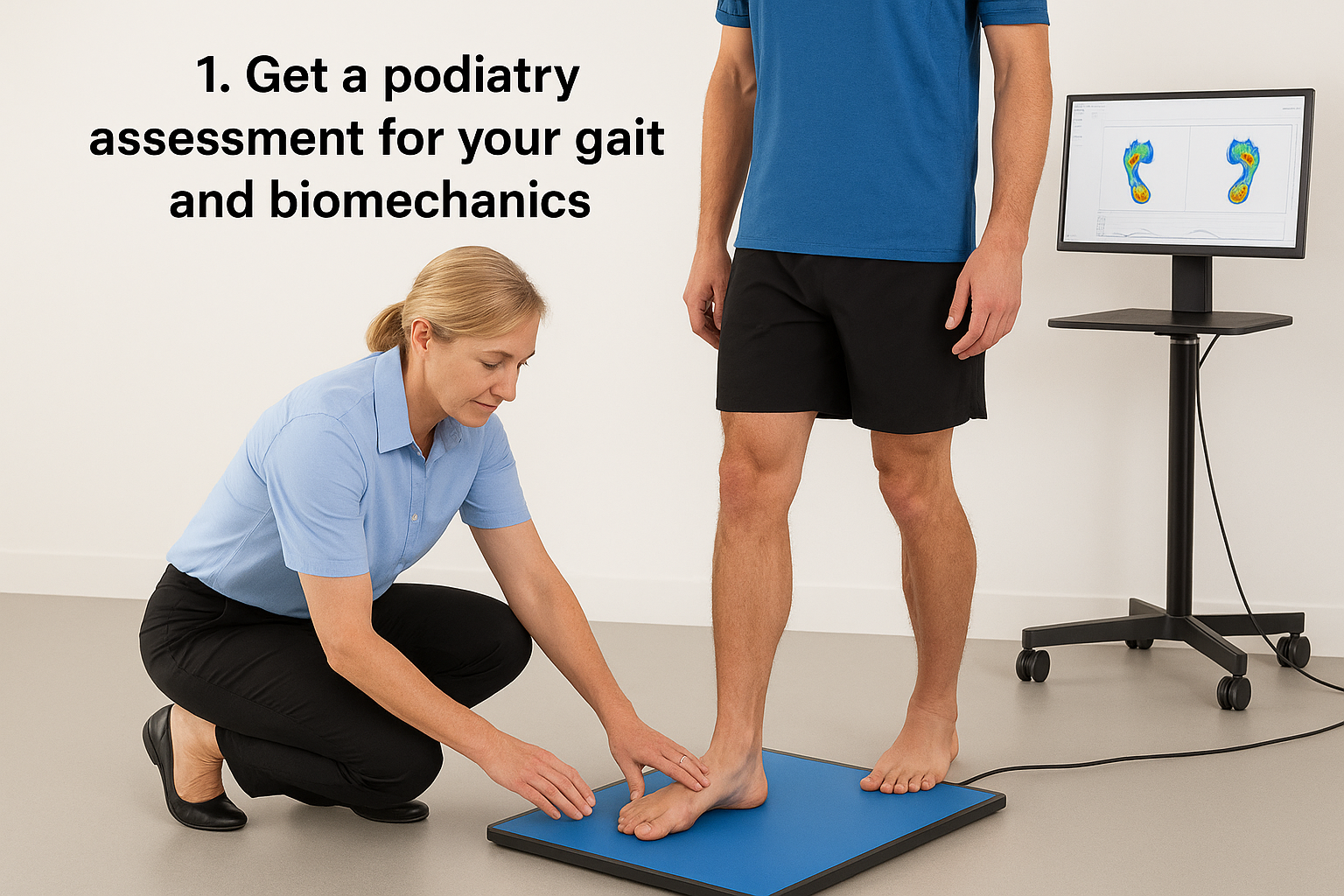
Shin splints often start with a biomechanical issue you can’t spot yourself, things like overpronation, a leg length difference, or calf tightness that lingers after a run and changes how force travels up your leg with every stride. A proper gait analysis for runners identifies exactly what’s driving the load through your shins, rather than leaving you to guess based on generic advice from a running forum.
Why it works
Medial tibial stress syndrome, the clinical name for shin splints, develops when repetitive stress outpaces your bone and muscle’s ability to recover, which is why shin splints treatment in Sydney starts with finding the overload. A podiatrist can use pressure plate analysis and video gait assessment to see precisely how your foot strikes the ground and where the excess strain is coming from. Once you know the mechanical cause, you’re treating the source of the problem instead of masking symptoms with rest alone.
Fixing the mechanics behind your shin pain stops it coming back once you’re running again.
How to do it
Book an assessment with a podiatrist experienced in sports injuries, ideally one who treats runners regularly. At ModPod Podiatry, our sports podiatry assessments combine 3D scanning with pressure plate technology to map exactly how your foot loads through each phase of your gait cycle. This gives us objective data rather than a rough visual guess, and it means any recommendation, whether that’s a strengthening plan, footwear change or custom orthotic, is based on your actual movement pattern.
Tips to get it right
Don’t wait until the pain is severe before booking in. Early assessment catches biomechanical issues before they cause a full-blown injury, and it’s far easier to adjust training loads than to rehabilitate a stress reaction.
- Bring your current running shoes to the appointment so the podiatrist can check wear patterns
- Mention any recent changes to training volume, terrain or footwear
- Ask for a written summary of findings you can refer back to
- Check whether you’re eligible for a Medicare EPC referral or private health rebate through HICAPS on-site claiming
2. Increase your running distance gradually
Ramping up your weekly kilometres too quickly is one of the most common reasons runners end up with shin splints. Your shins need time to adapt to new loads, and jumping from 20km to 35km a week in a fortnight rarely ends well.
Why it works
Bone and muscle tissue adapt to stress over weeks, not days. When you increase distance too fast, your tibia can’t remodel quickly enough to handle the extra impact, and micro-damage builds up faster than your body can repair it. Slowing the progression gives your shins time to strengthen rather than break down.
Shin splints are usually a pacing problem before they’re a technique problem.
How to do it
Stick to the well-tested 10% rule: increase your total weekly distance by no more than 10% from one week to the next. If you’re recovering from a break or new to running, build even more conservatively.
- Log your weekly mileage so increases are measurable, not guesswork
- Schedule a lighter recovery week every third or fourth week
- Add hills or speed work only after your base mileage feels comfortable
Tips to get it right
Resist the urge to chase big jumps after a good run or race. Consistency across months beats a few standout weeks, and it’s the single most reliable way to reduce shin pain from running long term.
3. Warm up properly and strengthen key muscles
Cold, tight muscles absorb shock poorly, and that puts extra strain straight through your shins. A proper warm-up combined with targeted strengthening addresses two separate weak points at once: how ready your muscles are for impact, and how well they support your lower leg over the course of a run.
Why it works
Your tibialis anterior and calf muscles act like shock absorbers for every stride. When they’re weak or under-warmed, more force transfers directly into the bone, which is exactly the mechanism behind shin splints. Strengthening these muscles builds their capacity to handle repetitive load, while a dynamic warm-up increases blood flow and muscle elasticity before you ask them to work hard.
Strong, warm muscles do the shock-absorbing job your shins shouldn’t have to.
How to do it
Spend 8 to 10 minutes on dynamic movements before every run, not static stretching, and save your shin splint stretches for after the session.
- Leg swings, high knees and walking lunges to raise muscle temperature
- Calf raises and toe raises, 3 sets of 15, done several times a week
- Single-leg balance work to improve lower leg stability
Tips to get it right
Build strength work into your week year-round, not just when shin pain flares up. Runners who treat it as ongoing maintenance rather than a quick fix see far fewer repeat episodes.
4. Choose supportive footwear and orthotics
Worn-out or badly matched shoes let your foot roll and pronate more than it should, and that extra movement travels straight up into your shinbone. Getting your footwear right, and adding orthotics where needed, is one of the most direct ways to stop shin pain when running.
Why it works
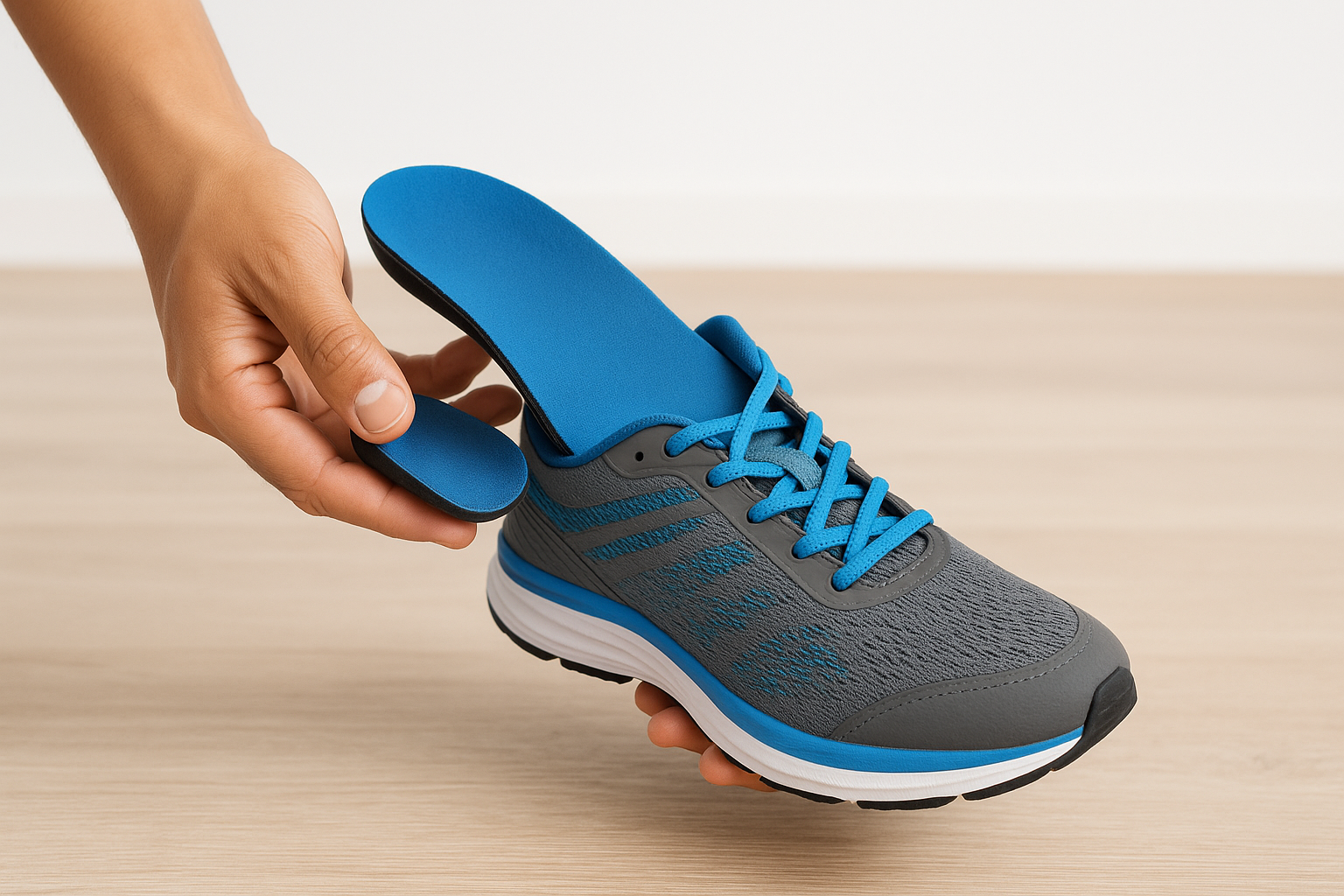
Shoes lose their cushioning and structure well before they look worn on the outside, usually around 500 to 800km of running. Once that support goes, your foot compensates by pronating or supinating more heavily, changing how load moves through your lower leg. Custom orthotics correct this by controlling excess foot motion at the source, so the tibia isn’t left absorbing forces it wasn’t designed for.
The right shoe and orthotic combination can take pressure off your shins before you even change how you run.
How to do it
Replace running shoes based on kilometres, not how they look, and match the shoe to your foot type rather than following trends. If a gait assessment shows significant overpronation or a structural issue, our 3D-scanned orthotics made for your feet are designed from scans of your specific foot shape.
Tips to get it right
Rotate between two pairs of running shoes rather than wearing one pair daily, since this reduces repetitive strain on the same points. Get orthotics fitted properly rather than buying generic inserts, since a poor fit can worsen the mechanics you’re trying to correct.
5. Rest, ice and recover the right way
Once shin splints flare up, pushing through the pain only sets your recovery back further. Knowing when to back off is just as important as any training or footwear change, and it’s often the missing piece for runners still wondering how to avoid shin pain when running despite doing everything else right.
Why it works
Shin splints are an overload injury, so the tissue needs time without repetitive impact to actually repair, and it helps to know how long shin splints usually take to heal before you plan your return. Rest allows the micro-damage to heal before you reload the bone and muscle, while ice reduces inflammation and pain in the acute phase so you’re not masking a worsening injury with painkillers alone.
Recovery isn’t downtime from training, it’s the part of training that lets the rest of it stick.
How to do it
- Drop to low-impact cross-training like swimming or cycling for 1 to 2 weeks
- Ice the area for 15 to 20 minutes after any activity that causes discomfort
- Reintroduce running gradually, starting well below your previous volume
- See a podiatrist if pain persists beyond two weeks of rest
Tips to get it right
Don’t judge readiness by pain alone. A gradual return to running, guided by professional advice rather than guesswork, prevents the frustrating cycle of recovering and reinjuring the same spot.
Getting back to pain-free running
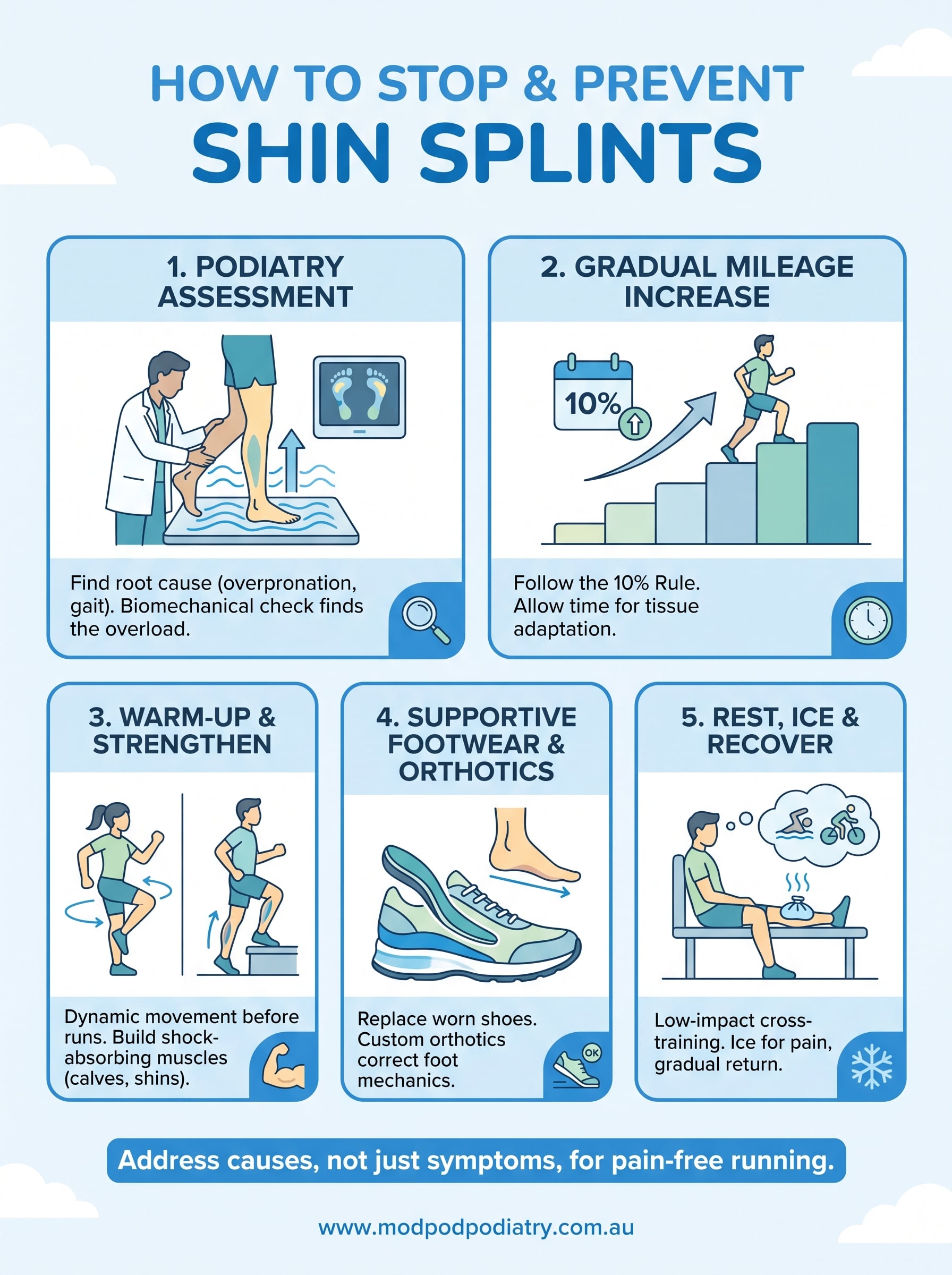
Shin splints rarely come down to one single cause, which is why the runners who recover fastest tend to work on several fronts at once. Fixing your gait, building mileage sensibly, strengthening your lower legs, sorting your footwear and respecting rest all pull in the same direction: less repetitive strain on your shins and more capacity to handle it.
Start with whichever tip feels most relevant to your situation, but don’t skip the assessment step if pain keeps returning despite doing everything else right. Guesswork only gets you so far, and a proper biomechanical check saves you months of trial and error.
If shin pain has been slowing you down, book a shin splints assessment with our Sydney podiatrists and get a clear plan instead of more guesswork. You can book online with any of our five Sydney clinics and get moving again, pain-free.