

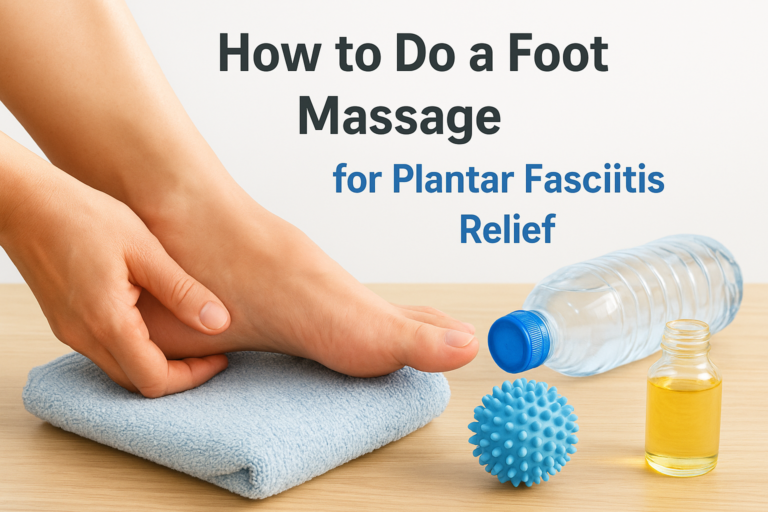
That stabbing pain under your heel with the first steps out of bed isn’t going away on its own, and you’re probably tired of hobbling to the kitchen every morning. A well-done foot massage for plantar fasciitis can loosen the tight fascia band, ease inflammation, and take real pressure off your heel, often within minutes of starting.
This guide walks you through specific self-massage techniques you can do at home, using nothing more than your hands, a golf ball, or a frozen water bottle. We’ll cover exactly where to press, how much pressure to use, and how long to hold each technique so you get relief rather than aggravate the tissue further.
As podiatrists who treat plantar fasciitis daily across our Sydney clinics, we’ve seen which massage habits speed up recovery and which ones patients waste weeks on. Below you’ll find a step-by-step routine you can build into your morning and evening, plus guidance on when massage alone isn’t enough and professional assessment becomes the smarter next step.
Before you begin: what you’ll need
Gathering a few simple items before you start saves you from stopping halfway through to hunt for supplies. Most of what you need for plantar fasciitis massage is already sitting in your house, and the rest costs less than a coffee. Set everything within arm’s reach of where you’ll be sitting, whether that’s the edge of your bed or a chair in front of the telly.
Simple tools you already have or can buy cheaply
Here’s what to have on hand:
- A towel or resistance band for the calf and toe stretches
- A golf ball, lacrosse ball, or tennis ball for rolling under the arch
- A frozen water bottle wrapped in a thin tea towel, for combining pressure with cold therapy
- A small amount of massage oil or moisturiser so your hands glide instead of dragging on dry skin
- A towel on the floor to protect carpet or timber from the frozen bottle’s condensation
Skip anything electric or vibrating for now, even the best foot massagers for plantar fasciitis. Manual pressure gives you far more control over exactly where you’re working, which matters when the sore spot is a specific point on the heel rather than the whole sole.
Timing and pain thresholds to keep in mind
Morning and evening are the two windows worth protecting for this routine, ideally before you take those first painful steps out of bed and again after a day on your feet. Consistency beats intensity here. Ten focused minutes twice a day for two weeks does more than one thirty-minute session that leaves you wincing.
Pain during massage should sit at a "hurts so good" level, roughly a 4 or 5 out of 10, never sharp or breath-catching. Sharp, stabbing pain means you’re pressing on inflamed tissue rather than releasing tight fascia, and you should ease off immediately.
If the pressure ever feels sharp rather than achy, you’re pushing on inflammation, not releasing tension.
Running through this checklist before every session keeps you consistent, and consistency is what actually shifts stubborn heel pain over weeks rather than days.
Step 1. Warm up your foot
Starting cold on tight fascia is a common mistake, and it’s why some people say massage makes their heel pain worse rather than better. Warming the tissue first, through movement or heat, makes the fascia more pliable so your fingers can actually work into it instead of pushing against a rigid band. Skipping this step is the fastest way to turn a helpful plantar fasciitis massage into ten minutes of poking at an angry, unyielding sole.
Get the blood moving first
Before your hands touch your foot, spend two to three minutes on simple movement:
- Ankle circles, ten in each direction, seated with your leg extended
- Toe curls and spreads, scrunching a small towel with your toes for thirty seconds, along with other at-home arch pain exercises
- A short walk on the spot, thirty seconds, to get circulation into the lower leg
If your heel is particularly stiff first thing in the morning, add a warm foot soak or a heat pack for five minutes before you start. Warmth relaxes the surrounding calf and Achilles tissue too, which matters because tightness there pulls directly on the plantar fascia.
A cold, stiff foot fights back against massage; a warm one lets you in.
Heat also dulls the background ache enough that you’ll notice the difference between normal tissue and the genuinely tender spots you need to target next. Once your foot feels loose and warm to touch, rather than stiff and guarded, you’re ready to move on to direct pressure with your hands.
Step 2. Massage the sole with your hands
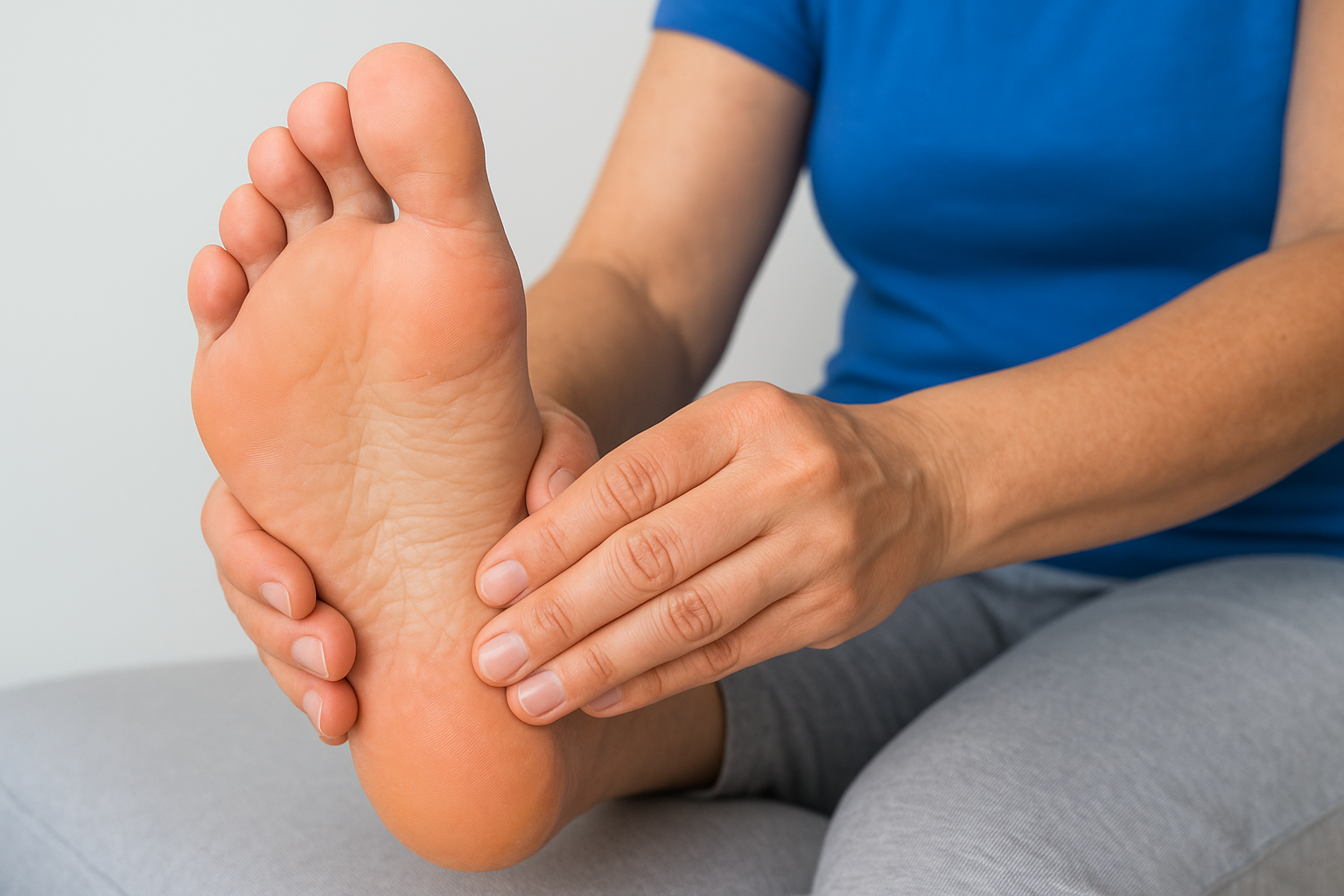
Once your foot feels warm and loose, sit down, cross the sore foot over your opposite knee, and get your thumbs directly onto the arch. Working with your hands and thumbs first gives you feedback that a ball or roller can’t, because you feel exactly where the tissue tightens under your fingers before you add harder tools into the mix.
The technique step by step
- Place both thumbs on the heel, just in front of where it meets the arch
- Press firmly and hold for five seconds, then release
- Slide your thumbs a centimetre forward and repeat, working along the arch toward the ball of the foot
- Once you reach the ball, switch to long strokes, dragging your knuckles from heel to toes six to eight times
- Finish by pinching and rolling the tissue between your thumb and fingers along the outer edge of the arch
Spend three to four minutes on this before moving to any tool-based technique. This is where a plantar fasciitis foot massage actually earns its name, since your hands can find and work the exact tender band that a golf ball might roll straight past.
Your thumbs find the tender knots a ball can’t feel for you.
Go slowly along the whole length of the arch rather than only pressing where it hurts most. Tightness upstream of the sorest point often feeds the pain, and if you’re still hunting for the right spot weeks later, our guide to what actually works for plantar fasciitis treatment covers what a podiatrist checks for.
Step 3. Roll a ball or frozen bottle under your foot
After your thumbs have loosened the surface tissue, a golf ball or frozen water bottle reaches deeper into the arch with steady, even pressure your hands can’t quite match. Rolling under the foot works the whole plantar fascia in one motion, which makes it a natural next step once you’ve already found the tender spots by hand, especially if you also get pain through the arch of your foot.
Rolling technique and timing
- Sit in a chair with the ball or wrapped frozen bottle on the floor in front of you
- Place your bare arch on top and press down with moderate weight
- Roll slowly from heel to toes and back, thirty seconds at a time
- Pause on any tender spot for ten seconds before continuing
- Repeat for three to five minutes, swapping feet if both are sore
Using the frozen bottle doubles as cold therapy for plantar fasciitis, which helps if your heel feels hot or swollen after a long day standing. The combination of pressure and cold calms inflamed tissue faster than either technique alone.
Cold plus pressure settles inflammation quicker than heat and rubbing ever will on their own.
Go barefoot rather than through a sock, since bare skin lets you feel exactly how much pressure you’re applying and stops the ball slipping sideways. If rolling brings on sharp pain rather than a dull ache, ease off the weight you’re putting through your foot and try again the next day.
Step 4. Release tight calf muscles
Your calf muscles and Achilles tendon connect directly into the plantar fascia, so a tight calf pulls on your heel with every step. Skipping this step is why some people massage their sole faithfully for weeks and still wonder why the pain won’t shift. Calf tightness is one of the biggest hidden drivers of stubborn heel pain, and it’s often the missing piece in a home routine.
Massage the calf itself
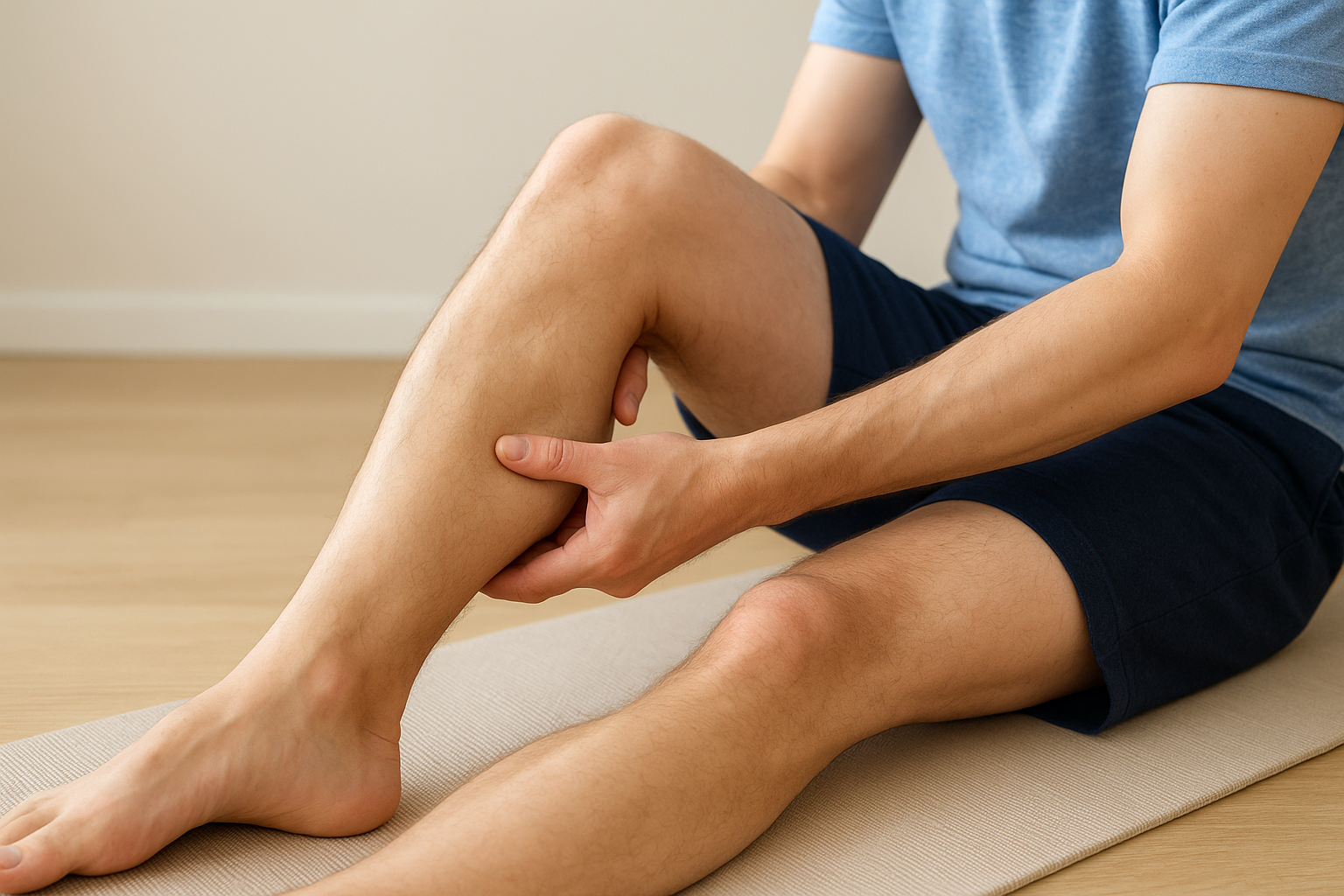
- Sit with your leg extended and reach both hands around your calf muscle
- Squeeze and knead the muscle belly, working from ankle to knee
- Spend extra time on any dense, rope-like bands you find
- Continue for two to three minutes per leg
A tight calf keeps pulling on the fascia no matter how well you massage the sole.
Add a wall stretch to finish
Finish with a calf stretch against a wall: place both hands on the wall, step the sore leg back with your heel flat on the floor, and lean forward until you feel a stretch through the calf. Hold for thirty seconds and repeat three times per leg, keeping the back knee straight for the first set and slightly bent for the second to target both calf muscles.
Doing this stretch daily, alongside the massage steps above, addresses the mechanical pull that keeps plantar fasciitis flaring even when the sole itself feels less tender. If your calves stay tight despite regular stretching, that pattern is worth mentioning at your next podiatry visit.
When to see a podiatrist for lasting relief
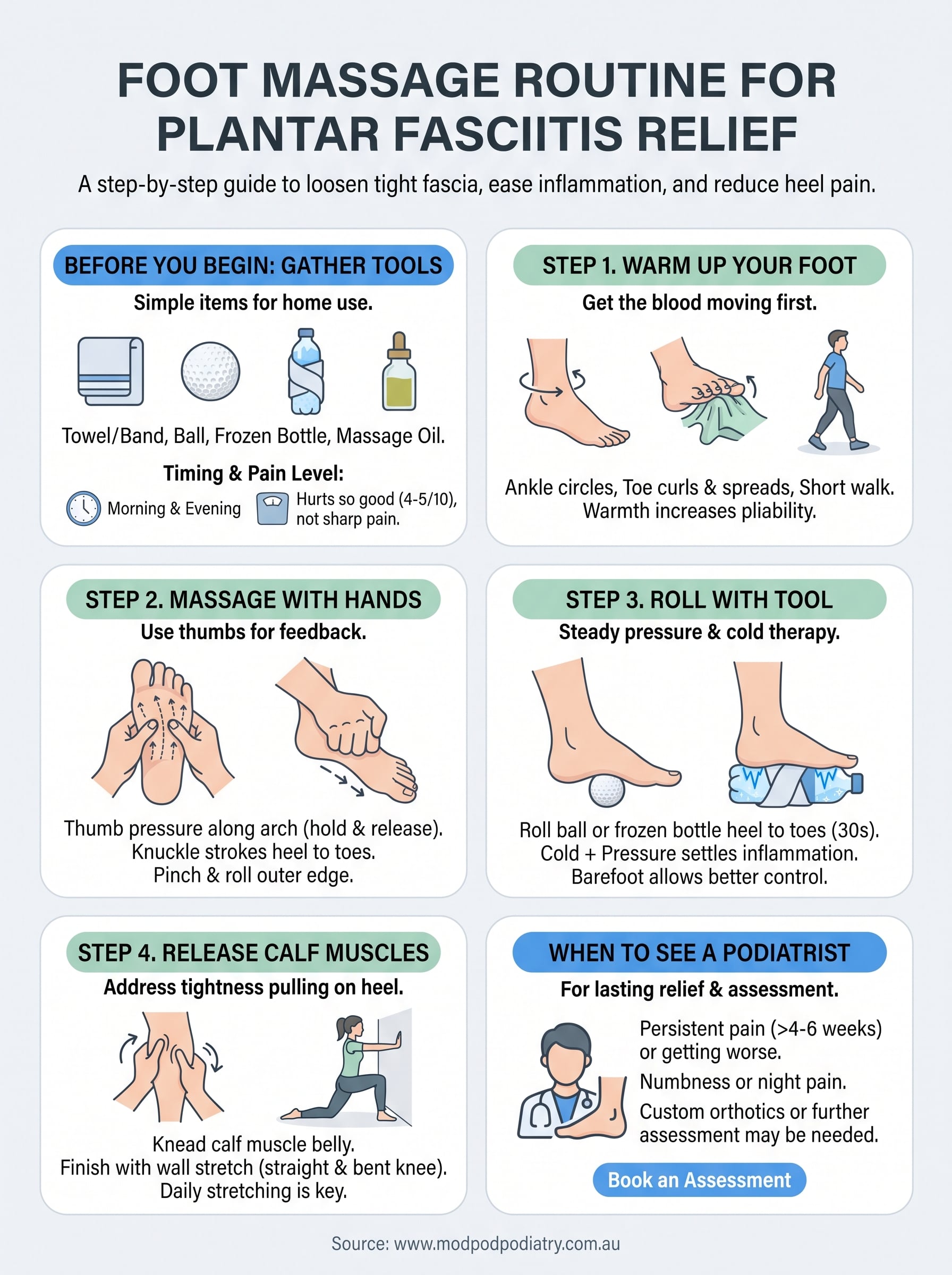
Massage genuinely helps most cases of plantar fasciitis, but it isn’t a fix for everything. Persistent heel pain that hangs around past four to six weeks of consistent home care, which is longer than the usual plantar fasciitis recovery timeline, or pain that’s getting worse rather than better, usually points to something a podiatrist needs to assess properly, like a biomechanical issue driving the strain in the first place. Numbness, tingling, or pain that wakes you at night also deserves a proper look rather than more rolling and stretching.
Your daily routine of warming up, working the sole by hand, rolling, and releasing the calf gives you real tools to manage the pain and speed healing. But if you’re still hobbling after weeks of effort, it’s worth finding out why. Custom orthotics can correct the underlying mechanics that keep loading up your fascia, and a proper assessment tells you exactly what’s going on. Book a plantar fasciitis assessment at one of our Sydney clinics and get a plan that actually fits your foot.