

That dull, gripping ache along the front of your shin after a run isn’t something to push through. Shin splints, or medial tibial stress syndrome, flare up when the muscles and tissue around your tibia get overloaded, usually from a sudden jump in training load or tight, weak lower leg muscles. If you’re searching for stretching exercises shin splints sufferers actually rely on, you’re in the right place.
The short answer is that targeted calf and shin stretches loosen the tissue pulling on your tibia, ease inflammation, and improve ankle mobility so the same strain doesn’t keep building up. Paired with the right strengthening work and a few proven home remedies for shin splints, stretching addresses both the pain you’re feeling now and the training habits that caused it in the first place.
Below, we’ve set out five stretches our podiatrists actually prescribe to runners and active patients across our Sydney clinics, each one explained step by step so you can start them today. If your pain doesn’t ease within a couple of weeks, our sports podiatry team can run a proper gait analysis with a podiatrist to find out what’s really driving it.
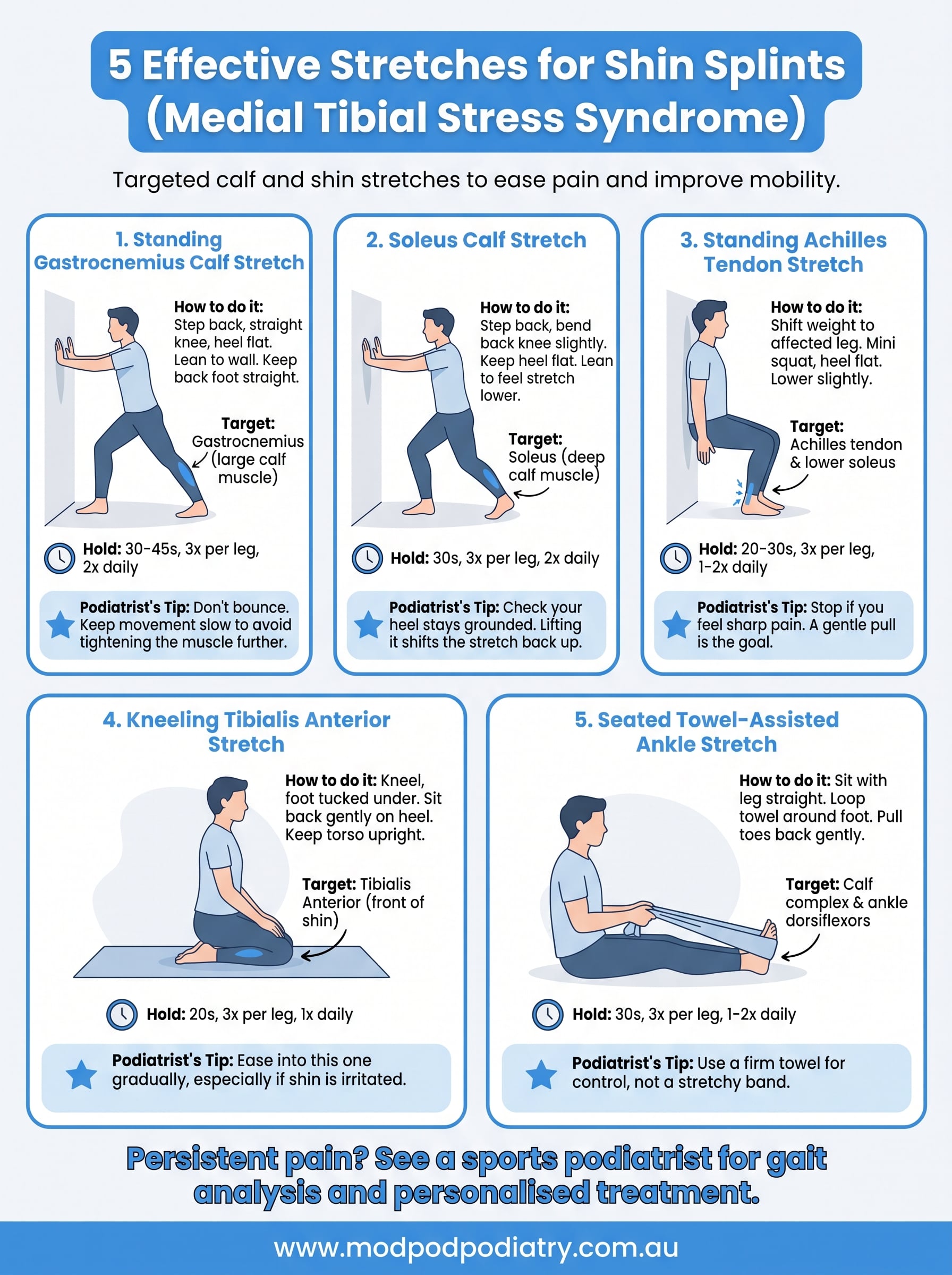
1. Standing gastrocnemius calf stretch
This is the classic wall stretch you’ve probably seen runners doing on footpaths, and it’s the first exercise we teach at ModPod because it targets the biggest muscle group pulling on your shin bone. The gastrocnemius is the large, superficial calf muscle, and when it stays tight after a run, it drags on the connective tissue that wraps around your tibia, which is exactly the mechanism behind most cases of medial tibial stress syndrome. Getting this stretch right is one of the simplest stretches for shin splints you can add to a daily routine.
How to do it
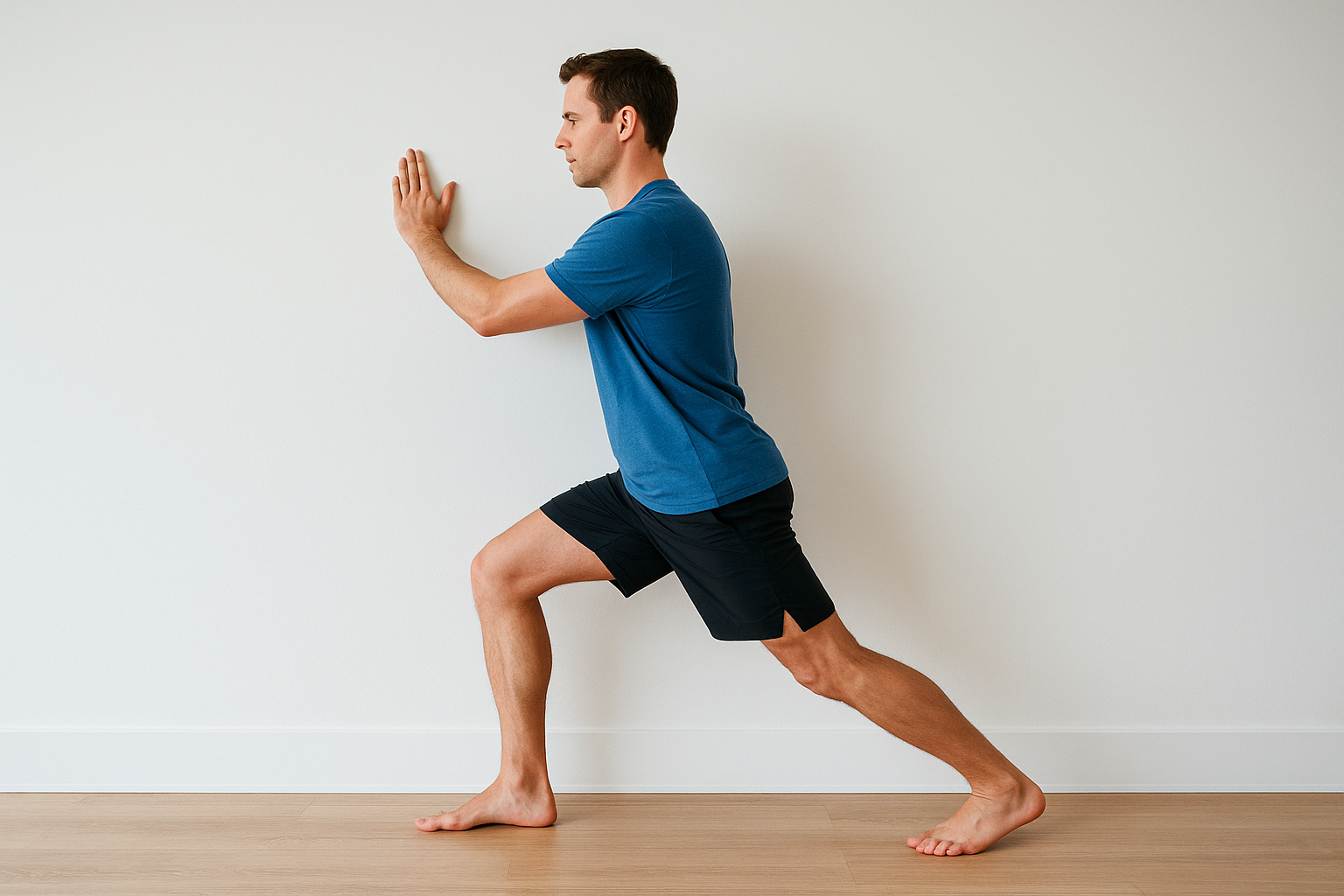
Stand facing a wall with your hands pressed against it at shoulder height. Follow these steps:
- Step your affected leg back about a metre, keeping that back knee straight and heel flat on the ground.
- Bend your front knee and lean your hips forward toward the wall.
- Keep your back foot pointing straight ahead, not turned outward.
- Hold the position, then swap legs and repeat.
Muscles targeted
The stretch loads the gastrocnemius muscle, the two-headed muscle that forms the visible bulge of your calf, along with the connective tissue running down toward your Achilles tendon. Because the knee stays locked straight, you’re isolating this muscle rather than the deeper soleus underneath it, which is a distinction that matters when you’re troubleshooting exactly which part of the calf is causing your pain.
A tight gastrocnemius is one of the most common, and most fixable, contributors to shin splint pain we see in Sydney runners.
How long to hold it
Hold each stretch for 30 to 45 seconds, then repeat three times per leg. Do this twice a day, ideally after a warm shower or following light activity when the muscle tissue is more pliable and less likely to resist the stretch.
Podiatrist’s tip
Don’t bounce. Bouncing in and out of this stretch actually triggers a protective reflex that tightens the muscle further, undoing the point of the exercise entirely. Keep the movement slow and controlled, and if you feel the stretch shifting into your Achilles rather than your calf belly, shorten your stance slightly. If tightness persists despite consistent stretching, that’s usually a sign your gait or footwear needs a proper look, which is exactly what our Sydney sports podiatrists assess during a full biomechanical workup.
2. Soleus calf stretch
Unlike its more visible neighbour, the soleus muscle sits deeper in the calf and stays active even when your knee is bent, which is exactly why runners with shin splints often need this stretch alongside the gastrocnemius version above. Many patients tell us they’ve tried stretching shin splints away with the standard wall stretch and still felt tightness lower down the leg, and that’s usually the soleus asking for attention, a common driver of shin pain along the inner edge of the tibia.
How to do it
Set up the same way as the gastrocnemius stretch, facing a wall with your hands at shoulder height, then adjust as follows:
- Keep your affected leg back but bend that back knee slightly this time.
- Keep the heel pressed flat on the floor throughout.
- Lean your hips gently forward until you feel the stretch lower in your calf, closer to the ankle.
- Hold, then switch legs.
Muscles targeted
This version isolates the soleus and deep calf tissue rather than the larger gastrocnemius, because bending the knee slackens the muscle that crosses behind it. It’s one of the more overlooked shin stretches for shin splints, yet it often relieves pain that other stretches miss.
If your shin pain sits lower near the ankle, the soleus, not the gastrocnemius, is usually the muscle you need to target.
How long to hold it
Hold for 30 seconds, repeating three times per leg, twice daily.
Podiatrist’s tip
Check your heel stays grounded. Lifting it even slightly shifts the stretch back into the gastrocnemius and defeats the purpose entirely.
3. Standing Achilles tendon stretch
Think of this as a natural progression from the soleus stretch, targeting the tendon itself rather than the muscle bellies feeding into it. Runners recovering from shin splints often skip this one, assuming the calf stretches above already cover it, but the Achilles tendon has its own stiffness pattern that responds better to a slightly different angle. Getting this right rounds out your shin splints stretching routine by addressing the point where all that calf tension actually transfers load into your ankle and lower leg.
How to do it
Stand close to a wall or sturdy chair for balance, then work through these steps:
- Shift your weight onto the affected leg, keeping a soft bend in the knee.
- Lower your body slightly by bending the knee further, like a mini squat.
- Keep your heel flat on the ground the entire time.
- Hold, then straighten up slowly before repeating.
Muscles targeted
This stretch loads the Achilles tendon directly, along with the lower fibres of the soleus that attach into it. It’s a useful addition for anyone whose pain sits right at the back of the ankle rather than up the shin itself.
A stiff Achilles often masquerades as shin pain, so stretching it directly can resolve tightness the calf stretches alone won’t touch.
How long to hold it
Hold for 20 to 30 seconds, three repetitions per leg, once or twice daily.
Podiatrist’s tip
Stop if you feel sharp pain behind the ankle rather than a gentle pull. That’s a sign to book an assessment before continuing.
4. Kneeling tibialis anterior stretch
Most people focus so hard on the calf that they forget the muscle running down the front of the shin, but the tibialis anterior is just as often part of the problem, and it’s the same muscle behind cramping in the front of the shin. This muscle sits right along the bone that’s giving you grief, and when it’s tight or overworked from downhill running or worn-out shoes, it adds direct tension to the exact area where shin splints flare up. Of all the stretches for shin splints we prescribe, this is the one patients are most surprised by, because it works the opposite side of the leg to everything above.
How to do it
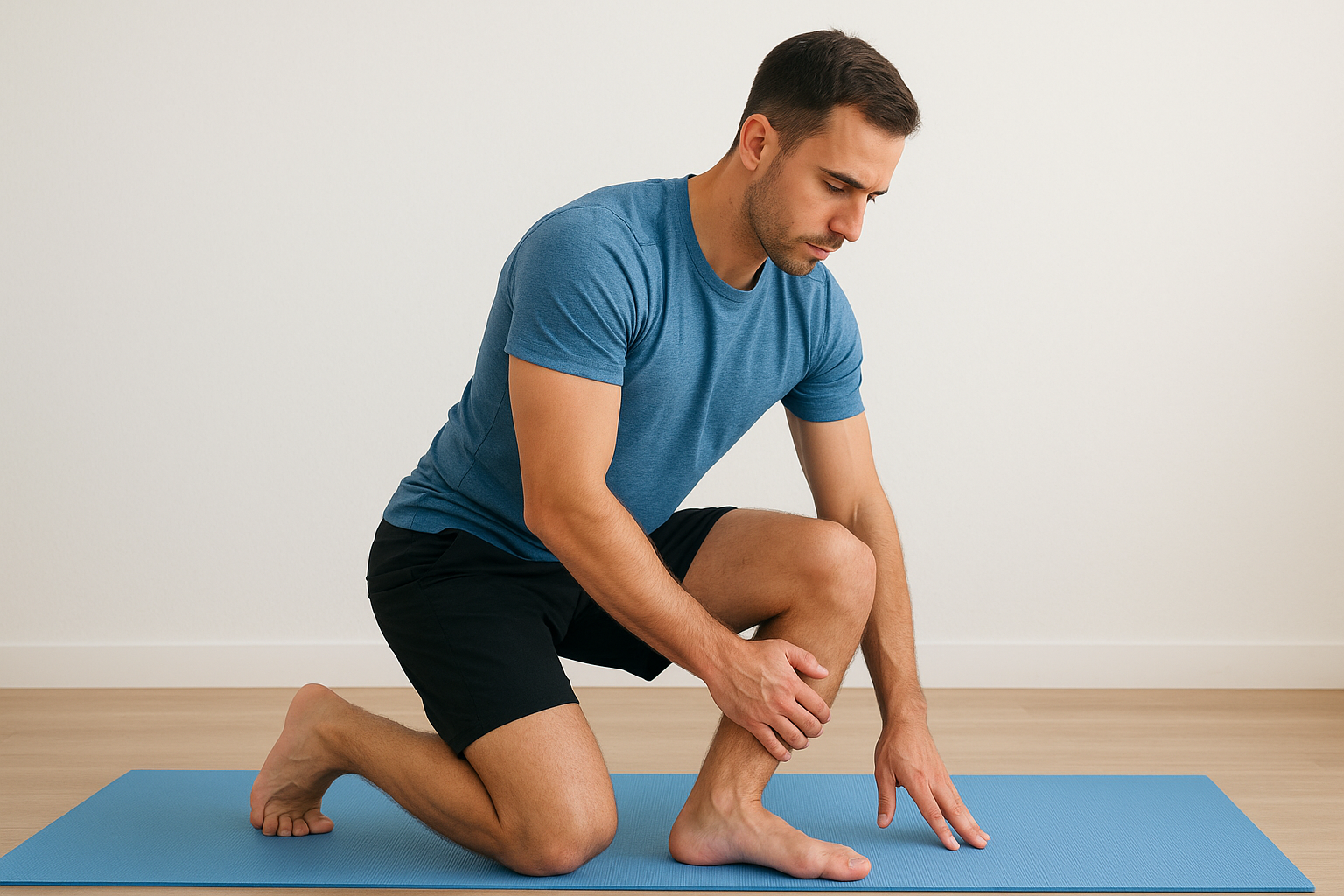
Kneel on a soft surface with your affected foot tucked underneath you, toes pointing backward, then work through these steps:
- Sit back gently onto your heel, keeping your torso upright.
- Press the top of your foot and toes into the floor as you sink your weight down.
- Use a wall or chair for balance if kneeling feels unstable.
- Ease off slowly, then repeat.
Muscles targeted
This stretch loads the tibialis anterior and the tendon running over the top of your foot, directly opposite the calf muscles targeted earlier.
Shin splints aren’t always a calf problem, tightness at the front of the shin needs its own dedicated stretch.
How long to hold it
Hold for 20 seconds, three times per leg, once daily.
Podiatrist’s tip
Ease into this one gradually, since kneeling weight can feel intense on an already irritated shin.
5. Seated towel-assisted ankle stretch
This stretch rounds out the list because it’s the gentlest option and the easiest to do without standing on a sore leg at all. Sitting down with a towel lets you control the exact angle and intensity of the pull, which makes it ideal for patients whose shin pain is still quite reactive. It’s often the first stretch we hand to patients in the early, more tender stages of medial tibial stress syndrome, before they’re ready for standing versions.
How to do it
Sit on the floor with your affected leg extended straight in front of you. Follow these steps:
- Loop a towel or resistance band around the ball of your foot.
- Keep your knee straight and gently pull the towel toward you.
- Flex your foot back until you feel a stretch through the calf and shin.
- Hold, release slowly, then repeat.
Muscles targeted
This version stretches the calf complex and ankle dorsiflexors together, giving you a combined stretch that’s useful when you’re short on time or easing back into a routine after a flare-up.
A seated towel stretch gives you the same benefit as standing stretches without loading the shin under body weight.
How long to hold it
Hold for 30 seconds, repeating three times per leg, once or twice daily.
Podiatrist’s tip
Use a firm towel rather than an elastic band when you’re starting out. It gives you more control over how hard you pull, which matters when the shin is still sensitive.
When to see a podiatrist about shin pain
These five stretches cover most of what drives shin splint pain, but stretching alone won’t fix everything. Persistent pain that lasts more than two weeks despite consistent stretching, swelling that doesn’t settle, or pain that starts earlier in your run each session are all signs the tissue needs more than a daily routine can offer. Sometimes the real cause is worn footwear, a training load spike, or a biomechanical issue like overpronation that no amount of calf stretching will resolve on its own.
Getting a proper assessment early stops a manageable niggle turning into a stress fracture, which is a far longer recovery. Our podiatrists across Sydney run gait analysis, check your footwear, and build a treatment plan suited to your specific pattern of pain. If you’ve been stretching for weeks without relief, it’s time to book a shin pain assessment online and get a clear answer.

