

That itch between your toes, the peeling skin, the redness that keeps creeping back no matter how often you wash your feet. If you’re searching for how to treat athlete’s foot, you already know it’s more stubborn than a simple rash, and you want something that actually works, not just a temporary fix.
The good news is that most cases clear up with the right combination of antifungal treatment and a few changes to your daily foot habits. This guide walks you through exactly what to do, from choosing an effective over-the-counter cream to the natural home remedies for athlete’s foot that support recovery, plus how long you should expect treatment to take before you see results.
We’ll also flag when athlete’s foot stops being a DIY job. Persistent or spreading infections, nail involvement, or symptoms in patients who need careful foot care with diabetes deserve proper assessment rather than another trip to the pharmacy. Our podiatrists across Sydney see this condition constantly, and we’ll point out exactly where professional care makes the difference between managing symptoms and actually getting rid of them for good.
Understanding athlete’s foot before you treat it
Athlete’s foot, medically known as tinea pedis, is a fungal skin infection that thrives in warm, moist environments. The fungi responsible, usually from the dermatophyte family, feed on keratin in your skin and multiply fastest in the damp, dark conditions inside shoes and socks. Sydney’s humid summers make this worse, which is why we see a spike in cases at our clinics from November through March. Knowing what you’re dealing with matters because treating athlete’s foot effectively depends on understanding how the fungus behaves, not just masking the itch.
How you catch it and why it spreads so easily
Fungal spores survive for weeks on damp surfaces, which is why communal showers, swimming pool decks, and gym change rooms are classic transmission points. Barefoot contact with contaminated floors lets the fungus transfer to your skin, and it takes hold fastest if your feet are already sweaty or if there’s a small crack in the skin for it to enter through. Shared towels and unwashed socks can carry the infection too, so anyone in your household with symptoms should avoid stepping barefoot in shared bathrooms.
Athlete’s foot spreads through moisture and contact, so drying your feet properly is half the battle before you even reach for a cream.
Recognising the symptoms
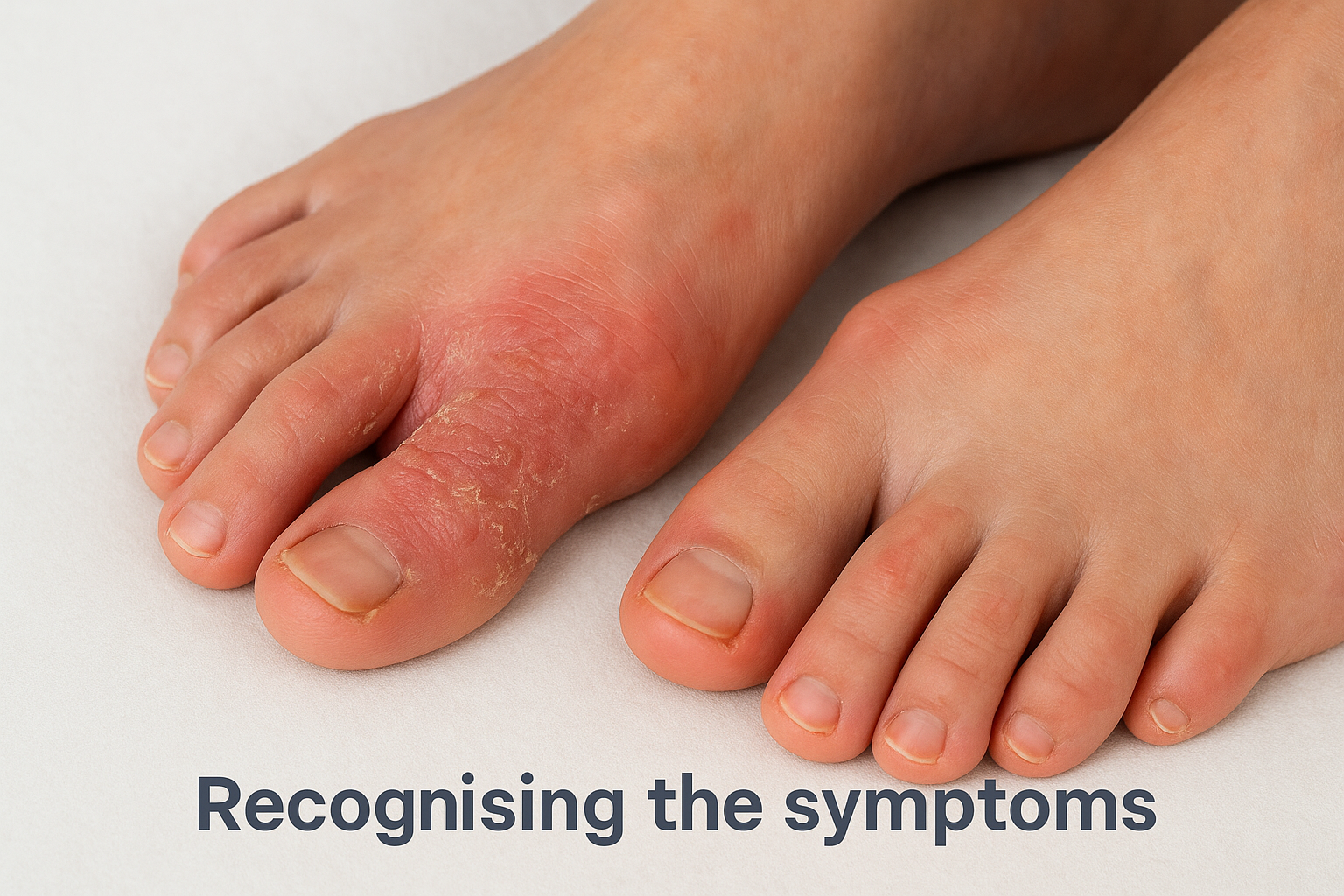
Most people notice symptoms between the toes first, particularly in the fourth and fifth toe web spaces where airflow is worst. Common signs include:
- Persistent itching, often worse after removing shoes and socks
- Peeling, flaking, or cracked skin between the toes
- Redness and mild swelling on the soles or sides of the feet
- A stinging or burning sensation, especially after sweating
- Small blisters in more severe cases
- A dry, scaly rash on the soles that resembles eczema in the "moccasin" pattern
Symptoms can range from mild flaking that’s easy to dismiss to painful cracking that interferes with walking. The severity often depends on how long the infection has been left untreated and how much moisture your feet are exposed to daily.
When it might not be athlete’s foot
Not every itchy, red foot is fungal. Conditions like contact dermatitis, psoriasis affecting the skin and nails, and eczema can look remarkably similar, and using an antifungal cream on a non-fungal rash won’t help and may irritate the skin further. If your symptoms don’t improve after two weeks of consistent antifungal treatment, or if you notice thickened, discoloured toenails alongside the skin symptoms, it’s worth getting a proper diagnosis and looking at treatment for fungal toenails in Sydney rather than guessing. A podiatrist can confirm the cause with a quick skin scraping before you waste time and money on the wrong product.
Step 1. Wash and dry your feet thoroughly
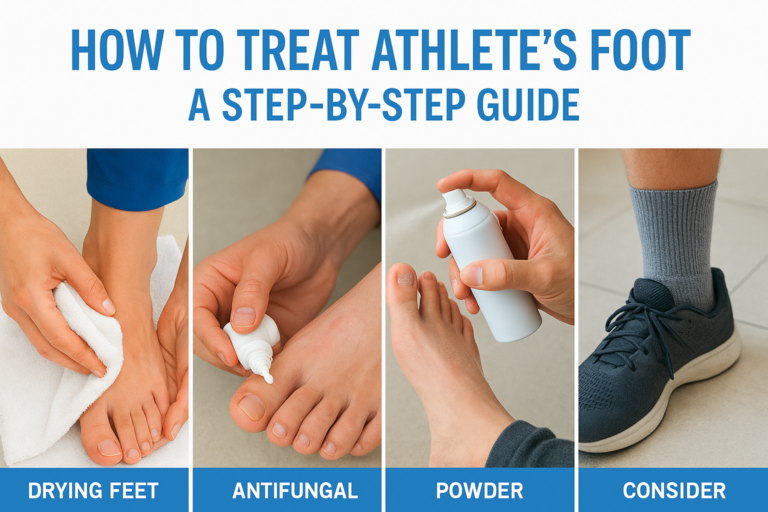
Before any cream goes near your skin, get the basics right. Washing and drying your feet properly removes surface fungus and sweat, and it gives whatever treatment you apply afterwards a clean surface to work with. Skip this step and you’re layering antifungal cream on top of the moisture that let the fungus thrive in the first place.
Wash with plain soap and warm water
Use a mild soap and warm, not hot, water once or twice daily, paying particular attention to the spaces between your toes. Scrubbing hard isn’t necessary and can crack already fragile skin, so a gentle wash is enough to lift away dead skin and surface spores. If you’ve been walking barefoot in a gym or pool area, wash as soon as you get home rather than waiting until your evening shower.
Dry thoroughly, especially between the toes
This is the step people rush, and it’s the one that matters most. Pat each toe web dry individually with a clean towel, since fungus loves the residual dampness left behind when feet are dried in a hurry. A few practical tips:
- Use a separate towel for your feet, not the one you use on your body
- Wash foot towels frequently in hot water
- Try a hairdryer on a cool setting for a few seconds between toes if you struggle to get them fully dry
- Never share towels while symptoms are present
Fungus can’t survive without moisture, so drying between your toes properly does more for treatment than most people realise.
Repeating this washing and drying routine every day, not just when symptoms flare, builds the foundation that the next steps rely on. Consistent foot hygiene is what stops the infection regaining ground while you’re treating it.
Step 2. Apply an antifungal treatment
Once your feet are clean and dry, it’s time to bring in the antifungal treatment that actually kills the fungus rather than just soothing the itch. Most pharmacies stock a range of over-the-counter options, and picking the right antifungal cream for your symptoms matters more than picking the most expensive one on the shelf.
Choosing the right product
Creams, sprays, and powders all contain active ingredients from the same antifungal families, but they suit different situations. A quick comparison:
| Product type | Active ingredients | Best for |
|---|---|---|
| Cream | Terbinafine, clotrimazole, miconazole | Cracked or peeling skin, direct application between toes |
| Spray | Tolnaftate, terbinafine | Covering larger areas quickly, less mess |
| Powder | Miconazole, tolnaftate | Ongoing moisture control inside shoes and socks |
A cream that touches the skin does more work than a spray that mostly lands on your sock.
Applying it correctly
Underdosing is the most common reason antifungal treatment fails. Follow the pack instructions closely, but as a rule:
- Apply a thin layer to clean, dry skin, extending slightly beyond the visible rash
- Use it once or twice daily, exactly as the label states
- Continue for the full course, usually one to two weeks, even after symptoms disappear
- Wash your hands after application to avoid spreading the fungus to other areas
Stopping early is where most people go wrong. Symptoms often settle within days, but the fungus can linger under the skin, and cutting treatment short is why athlete’s foot keeps coming back within a few weeks. If two weeks of consistent use brings no improvement, that’s your signal to book a podiatry assessment rather than switching products at random.
Step 3. Keep your feet dry throughout the day
Morning treatment and nightly washing count for little if your feet sit in damp socks for eight hours at work. Keeping your feet dry during the day is what stops the fungus rebuilding the moist environment it needs, and it’s the step most people forget once the itching settles down. Treating athlete’s foot properly means managing sweat all day, not just at the two moments you apply cream.
Choose socks and shoes that breathe
Swap synthetic socks for cotton or moisture-wicking wool blends, and change them midway through the day if you’re prone to sweaty feet. Alternate between two or three pairs of shoes rather than wearing the same pair daily, since it takes at least 24 hours for damp shoes to dry out fully inside. A quick checklist for daytime dryness:
- Change socks at least once a day, more if you’re active or the weather is humid
- Rotate shoes so each pair gets a full day to air out
- Choose leather or breathable mesh shoes over synthetic materials when you can
- Slip your shoes off during breaks to let air reach your feet
Use powder as a moisture barrier
Dust an antifungal powder into your socks and shoes each morning, not just onto your feet. It absorbs sweat throughout the day and adds another layer of fungus-fighting ingredient on top of your cream or spray. This combination, cream at night and powder in the morning, covers both treatment and prevention without adding much to your routine.
Dry feet by lunchtime beat dry feet by bedtime when you’re trying to starve a fungal infection.
Staying dry consistently for the full treatment course is what separates people who clear athlete’s foot in two weeks from those still dealing with it two months later.
Step 4. Prevent athlete’s foot from coming back
Clearing the infection is only half the job. Athlete’s foot has a high recurrence rate because fungal infections keep coming back from shoes, showers, and socks long after your skin looks clear, so preventing athlete’s foot from returning needs a few permanent habits rather than a one-off effort. Treating the current outbreak without changing what let it start means you’re likely to be back at the pharmacy within months.
Treat your shoes, not just your feet
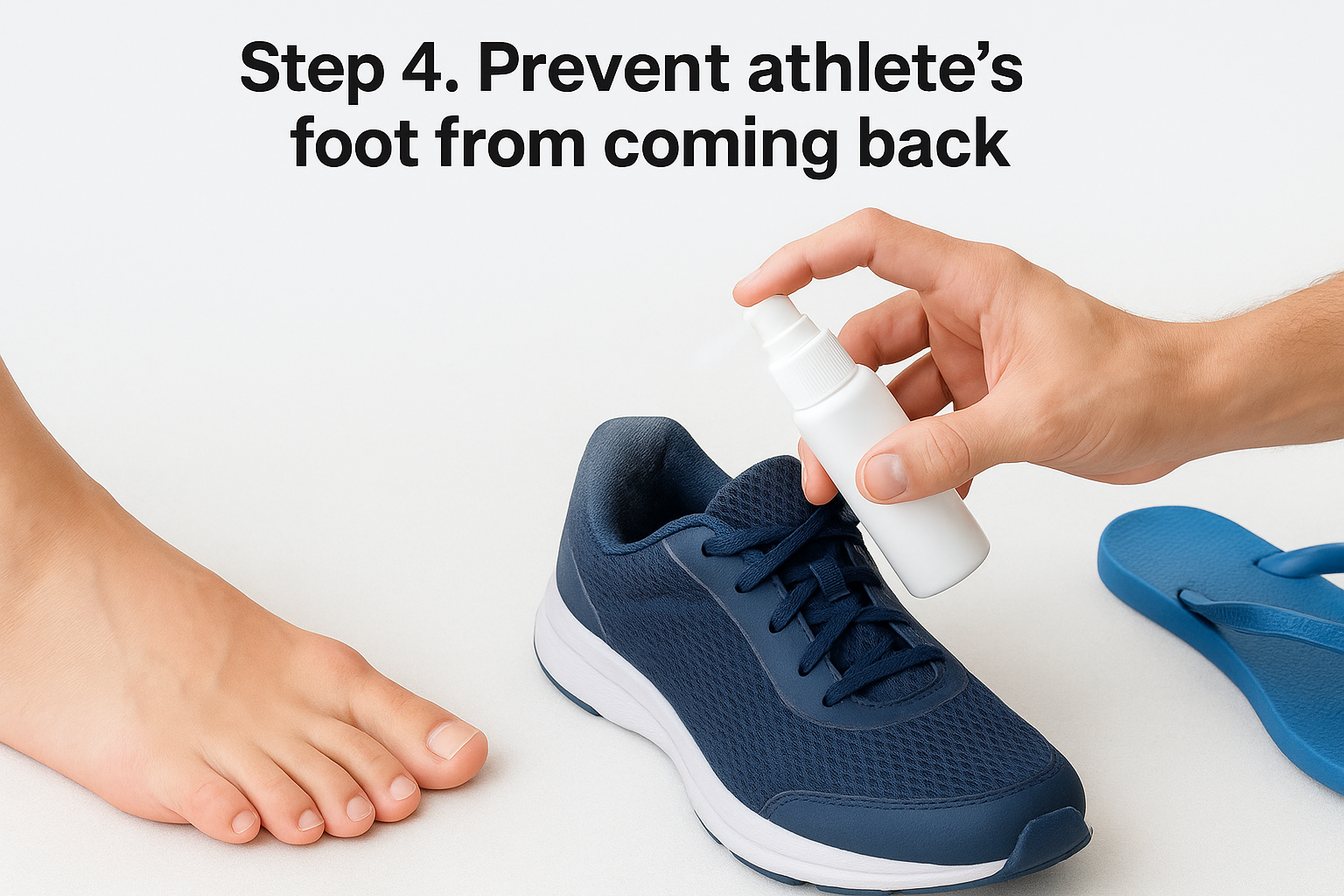
Fungal spores survive inside shoe linings for weeks, so disinfect footwear alongside your skin, the same habit that helps stop fungus reaching your toenails. Spray the inside of your shoes with an antifungal spray weekly, and leave older, well-worn shoes out in direct sunlight when you can, since UV light helps kill surface spores. Rotating shoes daily, as covered in Step 3, does double duty here by giving spores less time to multiply in a damp, dark environment.
Protect yourself in shared spaces
Gyms, pools, and shared showers remain the main source of reinfection. Wear rubber thongs or shower shoes in any communal changing area, and avoid going barefoot on gym mats or pool decks. If someone in your household has active symptoms, keep bathroom mats and towels separate until they’ve finished their full course of treatment.
The fungus that caused your athlete’s foot is still waiting in your shoes and shower, so prevention is really just hygiene continued past the point of feeling better.
Watch for early warning signs
Check between your toes weekly, even once symptoms have gone, for the earliest signs, mild itching or dry, flaking skin. Catching a flare-up in its first day or two, before it spreads across the foot, means a few days of cream rather than another full treatment cycle.
Keeping your feet healthy for the long run
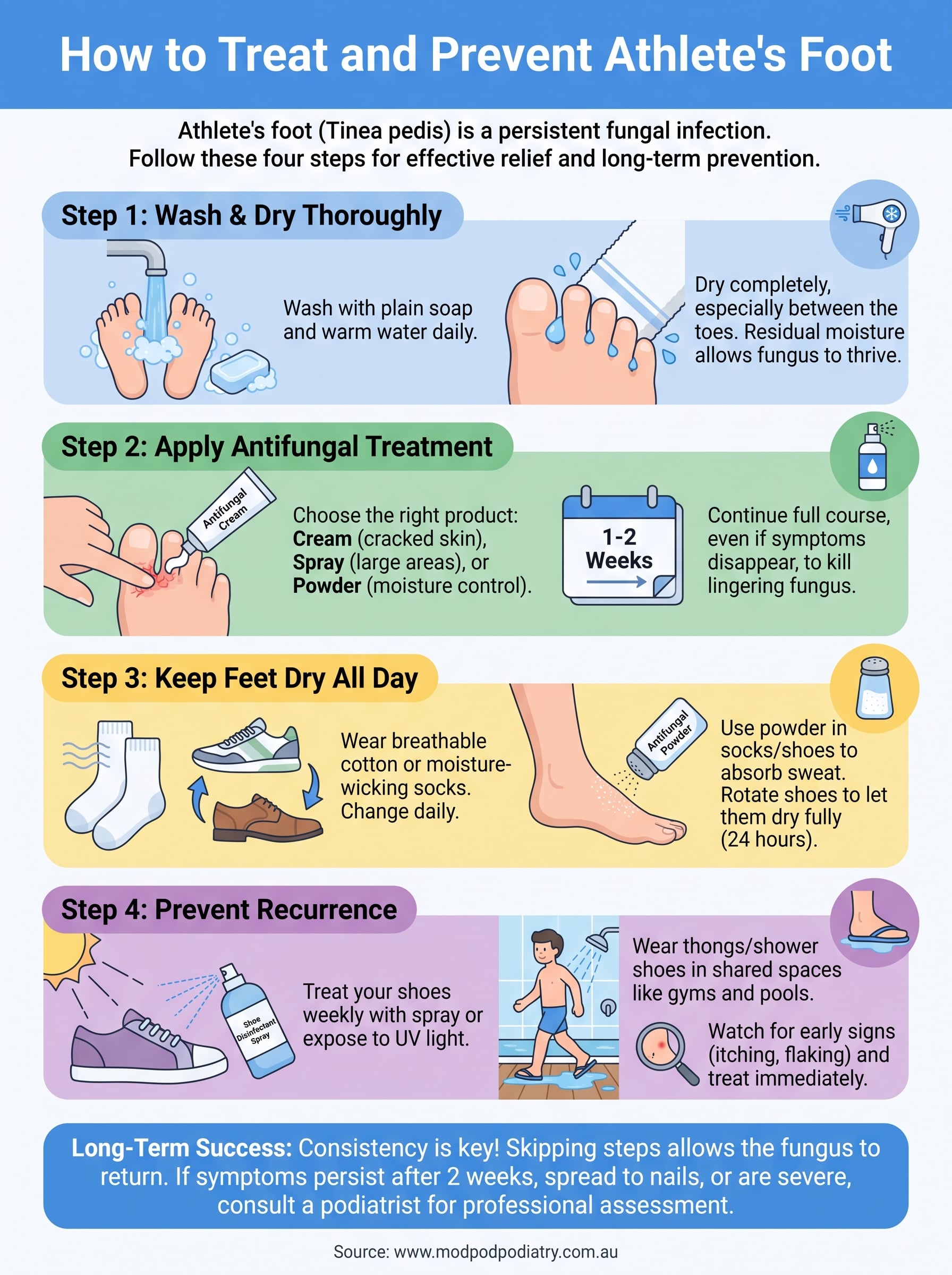
Most cases of athlete’s foot clear up within two weeks when you combine proper washing, consistent antifungal treatment, and daytime dryness. Skipping any one of these steps is usually why the itching comes back just as you thought you’d beaten it. Stick with the full course, keep your shoes and shower habits in check, and you’ll spend far less time dealing with flare-ups going forward.
But if your symptoms hang around past two weeks, spread to your toenails, or keep returning no matter what you try, that’s your cue to stop guessing. Persistent fungal infections sometimes need a stronger prescription treatment or a proper diagnosis to rule out something else entirely. Our podiatrists across Sydney see this exact pattern regularly, and a quick assessment can save you months of frustration. When you’re ready for a proper look at what’s going on, book an athlete’s foot assessment at one of our Sydney clinics and get it sorted properly.

