
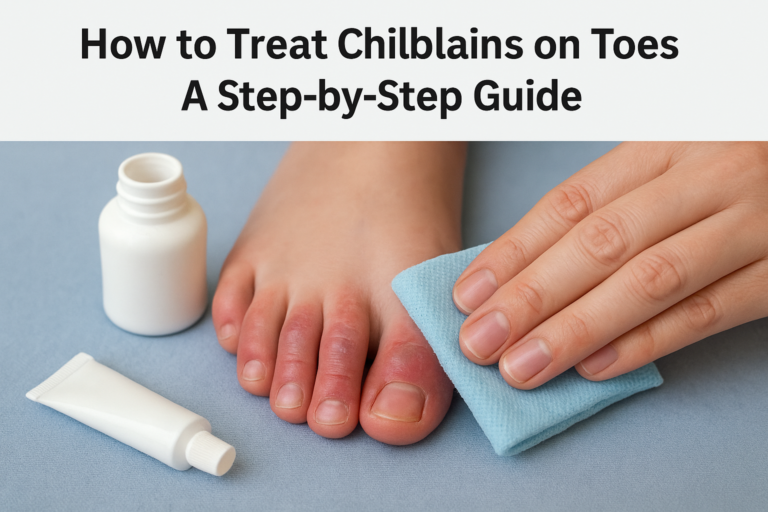
Winter in Sydney might be mild by global standards, but it’s cold enough to bring on chilblains, those itchy, red or purple patches that flare up on your toes when temperatures drop. If you’re dealing with swollen, tender toes that seem to get worse the moment you step from a warm room into the cold, you’re likely searching for how to treat chilblains on toes before the itching and discomfort get any worse. The good news is that most cases respond well to the right combination of home care and, when needed, professional treatment.
This guide walks you through exactly what to do, from immediate relief measures you can start tonight to longer-term prevention strategies that stop chilblains returning every winter. You’ll learn which home remedies actually help, which common habits make chilblains worse, and when it’s time to stop self-treating and see a podiatrist.
At ModPod Podiatry, our Sydney-based podiatrists see chilblains regularly through the cooler months, particularly in patients with poor circulation or existing foot conditions. We’ve built this step-by-step approach on what genuinely works in clinical practice, not just generic advice recycled from other sites.
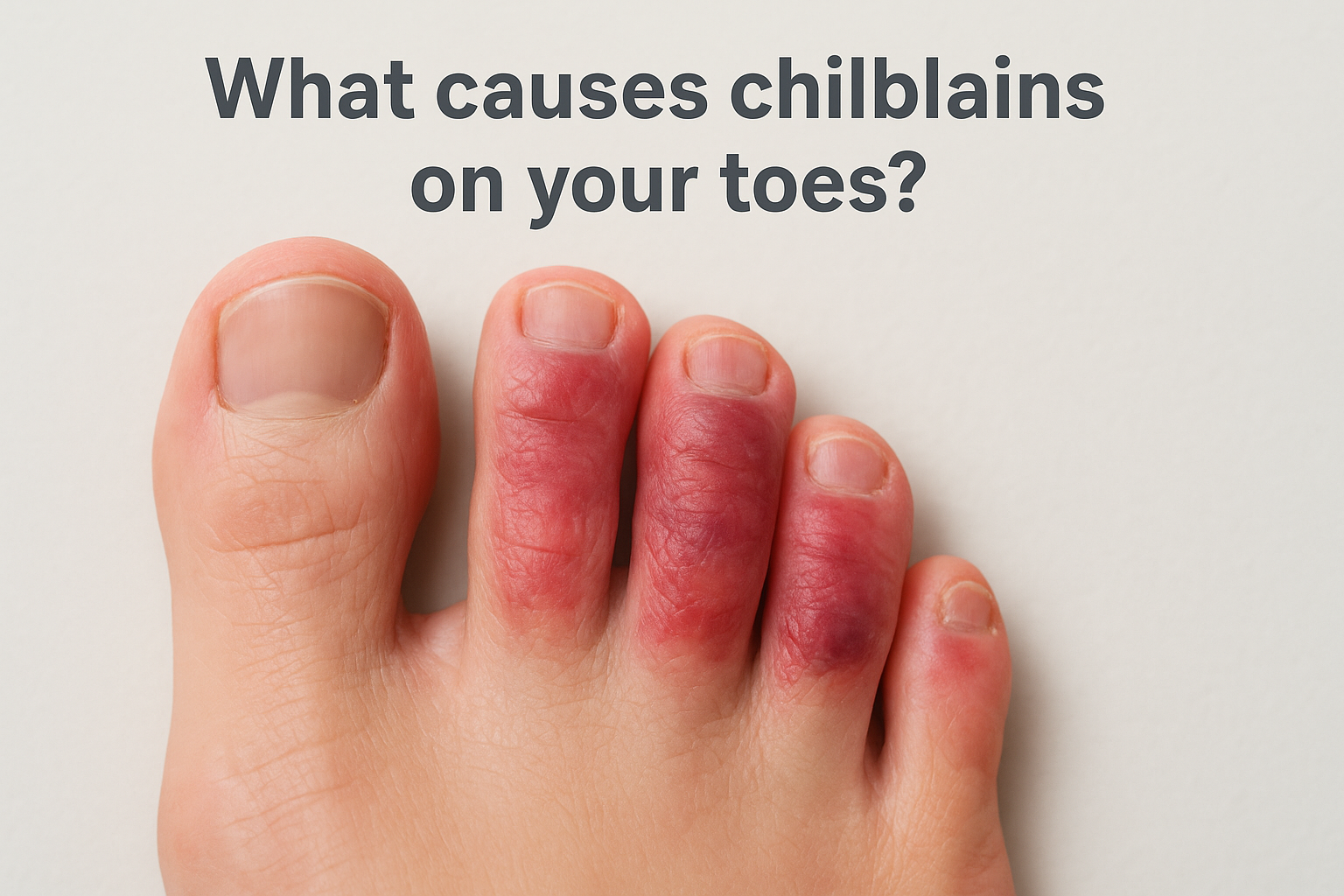
What causes chilblains on your toes?
Chilblains (also called pernio) happen when your small blood vessels react abnormally to a rapid change in temperature. Your toes get cold, the blood vessels near the skin’s surface constrict to preserve core body heat, and when you warm up too quickly, those vessels struggle to expand back to their normal size. Blood leaks into the surrounding tissue, and you’re left with the classic red or purplish, swollen, intensely itchy patches on your toes that define chilblains on toes. Understanding this mechanism matters because it explains why so many common winter habits, like blasting a heater straight at cold feet, actually make things worse rather than better.
Why your toes are particularly vulnerable
Toes sit furthest from your heart and have relatively poor circulation compared to other parts of your body, which makes them the most common site for chilblains alongside fingers, ears and the nose. Poor circulation is the single biggest underlying factor we see in clinic, whether that’s from a diagnosed vascular condition, low body weight, or simply spending long hours sitting still in cold offices or homes, which is one reason some patients benefit from wearing compression socks to support blood flow. Smoking narrows blood vessels further and is strongly linked to more frequent, more severe chilblains, so if you’re a smoker dealing with recurring toe chilblains, that’s worth addressing alongside any topical treatment.
Chilblains aren’t caused by the cold itself, but by how quickly your blood vessels react when you go from cold to warm.
Risk factors that make chilblains more likely
Some people get chilblains every winter without fail, while others never experience them at all. In our Sydney clinics, we consistently see certain patterns among patients presenting with cold-induced skin damage on their toes:
| Risk factor | Why it matters |
|---|---|
| Family history | Genetics play a role in how reactive your blood vessels are to temperature change |
| Low body weight or poor nutrition | Less insulating fat around the toes means faster heat loss |
| Raynaud’s phenomenon | Existing circulation disorders increase vessel sensitivity to cold |
| Autoimmune conditions | Conditions like lupus are associated with a higher chilblain risk |
| Smoking | Nicotine constricts blood vessels and worsens circulation |
| Damp, ill-fitting footwear | Moisture accelerates heat loss and prolongs cold exposure |
| Sedentary lifestyle | Reduced movement means less natural warming of the extremities |
Sydney’s climate plays a bigger role than you’d expect
Surprisingly, chilblains are more common in climates like Sydney’s than in genuinely freezing regions. That’s because homes and offices here are rarely built or heated for consistently cold conditions, so people go from a chilly outdoor temperature straight into an artificially warm room without any gradual transition. According to the Australasian College of Dermatologists, this rapid rewarming pattern, common in temperate climates with poor indoor heating, is a major contributor to chilblain flare-ups. Tight shoes, wet socks after rain, and standing on cold tiled floors barefoot are everyday Sydney habits that quietly set the stage for an outbreak.
When chilblains signal something more
Occasional mild chilblains are usually nothing to worry about, but recurring or unusually severe cases can point to an underlying circulatory or autoimmune issue that needs proper investigation. If you’re getting chilblains on your toes most winters, or if they appear alongside joint pain, fatigue, or skin changes elsewhere on your body, it’s worth mentioning to your podiatrist or GP rather than assuming it’s simply bad luck with the weather.
Step 1. Warm your toes gradually
The moment you notice cold, tingling or slightly discoloured toes, resist the urge to plunge them into a hot bath or hold them against a heater. Gradual rewarming is the single most important first step in treating chilblains on toes, because sudden heat is exactly what triggers the blood vessel overreaction that causes the swelling and itching in the first place. Instead, bring your toes back to normal temperature slowly, over ten to fifteen minutes, using lukewarm rather than hot conditions.
Warm socks, a blanket wrapped around your feet, or simply moving to a room-temperature space are far better first moves than direct heat. If your toes are genuinely cold from being outdoors, sit somewhere mild for a few minutes before you even think about socks or blankets, then layer up gradually as your circulation catches up. This approach protects the fragile capillaries near the skin’s surface and reduces how much blood leaks into surrounding tissue, which is what causes the visible redness and swelling.
Warm your toes slowly, not quickly, if you want to stop chilblains getting worse.
A simple gradual warming routine
Use this sequence whenever your toes feel cold after being outside or exposed to a cold floor:
- Move to a room at a moderate, not hot, temperature.
- Remove wet or damp socks and dry your feet thoroughly.
- Put on clean, dry wool or thermal socks.
- Gently wiggle your toes to encourage blood flow without rubbing or massaging vigorously.
- Wait at least ten minutes before adding extra heat sources like a hot water bottle wrapped in a towel.
What to avoid during rewarming
Some common Sydney habits actively work against you here. Avoid hot showers or baths straight after being cold, direct contact with heaters or open flames, and rubbing or scratching affected toes, however tempting that is when they’re itchy. These habits that worsen chilblains push blood vessels through the same rapid expansion that caused the problem, often leaving toes more inflamed than before you started warming them. If you’re prone to recurring chilblains, keeping a pair of thermal socks near the door for the moment you step inside is a small habit that makes a genuine difference through winter.
Step 2. Soothe the itching and pain
Once your toes have warmed gradually, the itching often kicks in properly, and it can be relentless. Itch relief for chilblains starts with resisting the scratch reflex entirely, because broken skin from scratching turns a manageable chilblain into an open wound that’s much slower to heal and far more prone to infection. Instead, pat the area gently rather than rub it, and keep your hands away from your toes as much as you can manage, especially at night when scratching tends to happen without you noticing.
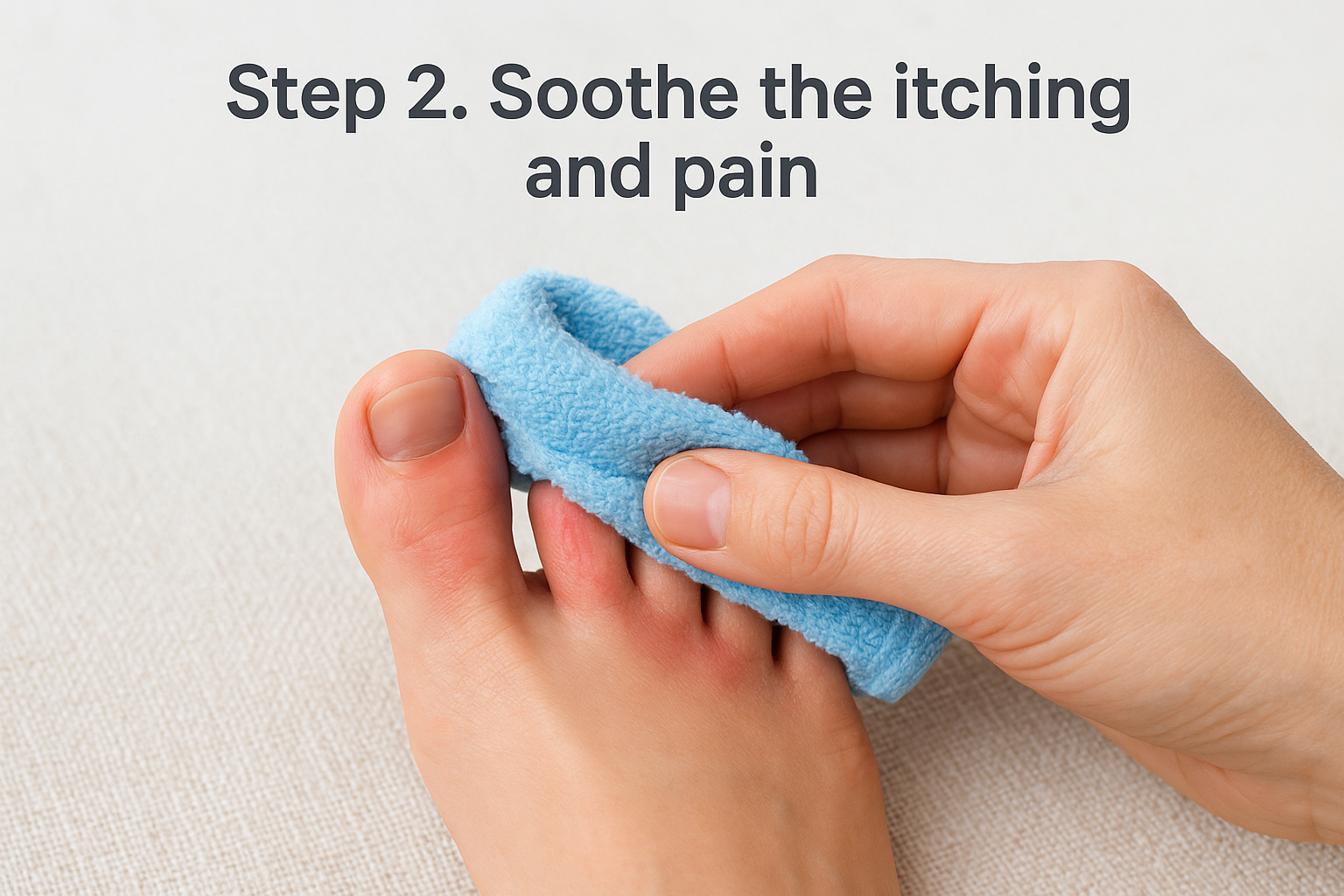
The itch feels unbearable, but scratching a chilblain almost always makes the outcome worse, not better.
Cooling and calming techniques that actually help
Applying a cool, damp cloth to the affected toes for a few minutes can take the edge off the itching without triggering the rapid temperature swing that caused the chilblain in the first place. Calamine lotion is a genuinely useful, low-cost option here, since it has a mild cooling and drying effect on inflamed skin. Some patients find relief with the following simple routine, repeated two to three times a day while symptoms are at their worst:
- Wash the area gently with lukewarm water and pat dry.
- Apply a thin layer of calamine lotion or a soothing aloe vera gel.
- Leave the area uncovered for a few minutes to let it absorb.
- Cover with a loose, breathable sock if you need to protect it during the day.
When over-the-counter pain relief makes sense
Occasionally the discomfort goes beyond itching into genuine pain, particularly if the chilblain is swollen or the skin feels tight. A standard dose of paracetamol or ibuprofen, taken as directed on the packaging, can take the edge off while the tissue settles down over the following days. Antihistamines aren’t typically effective for chilblain itching specifically, since the itch here comes from inflamed blood vessels rather than a histamine reaction, so don’t expect much relief from allergy tablets alone.
Throughout this stage, keep monitoring the affected toes for any change in colour, increasing pain, or skin that starts to weep or blister, since that shifts you into the next stage of care rather than simple symptom management. If the itching and swelling haven’t started easing within a few days despite consistent home care, it’s worth booking a podiatry consultation rather than persisting with self-treatment alone.
Step 3. Protect broken or blistered skin
Some chilblains stay intact, but plenty break open, blister, or crack, especially once the itching has led to scratching despite your best efforts, and the same principles apply as when you’re treating a foot blister safely. Broken skin protection becomes the priority the moment you notice weeping, cracking or blistering on a chilblain, because open skin on your toes is an easy entry point for bacteria and a much slower area to heal than an intact chilblain would be. Treat any break in the skin as a small wound rather than just another symptom of the chilblain itself.
Once the skin breaks, you’re managing a wound, not just a chilblain, so treat it accordingly.
Cleaning and dressing an open chilblain
Start by washing your hands before you touch the area at all, then clean the broken skin gently with saline solution or cooled boiled water rather than soap, which can sting and irritate already inflamed tissue. Pat the area dry with a clean, soft towel, never rub, and apply a simple non-adherent dressing to keep it protected from friction inside your shoe. A basic routine that works well for most patients looks like this:
- Clean the broken area with saline or cooled boiled water.
- Pat dry gently with a clean towel.
- Apply a thin layer of antiseptic cream if the skin is broken but not actively weeping heavily.
- Cover with a non-stick dressing or breathable adhesive bandage.
- Change the dressing daily, or sooner if it becomes damp or dirty.
Footwear choices while healing
Tight or narrow shoes rub directly against a blistered chilblain and slow healing considerably, so switch to your roomiest, softest footwear until the skin has properly closed over. Avoid seams or thick socks that press against the affected toe, and if you normally wear closed-in work shoes, consider a wider alternative for a week or two while the area recovers. Barefoot walking indoors on cold tiles is also worth avoiding here, since it reintroduces the cold exposure that caused the chilblain in the first place, undoing the healing work your dressing is doing.
Don’t use adhesive tape directly over broken skin, since removing it later can tear fragile tissue and reopen a wound that was starting to close. If a blister is large, tense, and clearly causing pain from pressure, resist the urge to pop it yourself. A podiatrist can drain it safely and appropriately if genuinely needed, which reduces the infection risk that comes with doing it at home with unsterile tools.
Step 4. Apply soothing creams and lotions
Applying the right cream at the right stage speeds up healing and takes the edge off the discomfort that lingers after the itching settles. Chilblain creams and lotions work best once the skin has calmed from the acute inflammation stage, typically a day or two after the toe first flared up, rather than during the initial rewarming phase when the tissue is still highly reactive. Look for products containing ingredients that support circulation and reduce inflammation, and steer clear of anything heavily fragranced, since perfumed lotions tend to irritate already sensitised skin, so it’s worth checking our podiatrist-recommended foot moisturisers before you buy.
The right cream supports healing between flare-ups, but it won’t replace gradual warming as your first line of defence.
What to look for on the label
Getting the ingredient list right matters more than the price of the product. A few options consistently perform well for our patients:
| Ingredient | What it does |
|---|---|
| Heparinoid cream | Improves local blood flow and reduces bruised, swollen appearance |
| Aloe vera gel | Calms inflamed skin and supports the healing of minor cracks |
| Urea-based moisturiser | Softens thickened or dry skin around a healing chilblain |
| Arnica cream | Traditionally used for bruising and mild swelling, though evidence is limited |
| Vitamin E oil | Supports skin repair once any broken skin has closed over |
Nicotinamide-based creams, sometimes recommended overseas for chilblain treatment, aren’t widely available in Australian pharmacies, so heparinoid or urea-based options are usually the more practical choice here.
How to apply cream properly
Gently massaging cream into cold, constricted toes can trigger the same rapid vessel response you’re trying to avoid, so timing and technique both count. Follow this sequence for the best result:
- Make sure your toes are at a comfortable, room-temperature state before applying anything.
- Wash your hands and clean the toe gently if there’s any broken skin nearby.
- Apply a small, pea-sized amount of cream and smooth it in with light strokes, never firm rubbing.
- Allow it to absorb fully before putting socks back on.
- Repeat twice daily, morning and evening, for consistent results.
Using too much cream, or applying it while your feet are still cold, tends to do more harm than good, so less is genuinely more here. If a cream stings, reddens the skin further, or seems to make the itching worse rather than better, stop using it and switch to a plain, unscented moisturiser until things settle.
Step 5. Keep your feet warm and dry
Prevention matters just as much as treatment once a chilblain has settled, and keeping feet warm and dry is the single habit that stops a mild flare-up turning into a recurring winter problem. Damp socks or shoes hold cold against your skin for hours, so any moisture from rain, sweat, or a wet walk to the bus stop keeps your toes in the exact temperature range that triggers chilblains. Changing out of damp footwear the moment you’re indoors is a small habit that genuinely reduces how often you deal with cold-induced skin damage through the colder months, and it sits alongside the other daily foot hygiene habits worth building into winter.
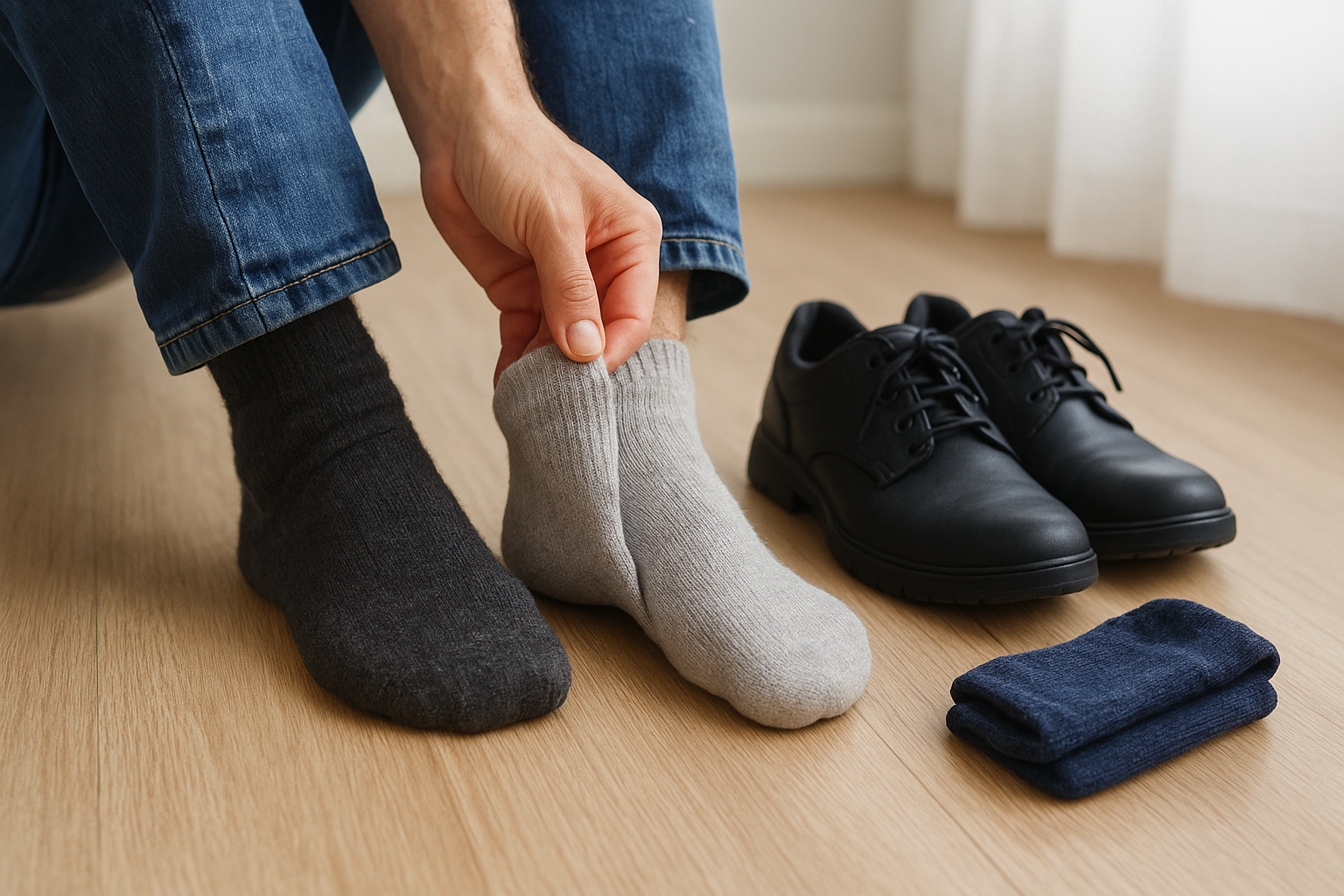
Dry feet stay warmer for longer, and warmer feet are far less likely to develop chilblains in the first place.
Choosing the right socks and shoes
Material choice matters more than most people realise. Cotton socks trap moisture against the skin and dry slowly, while wool or wool-blend socks wick sweat away and retain warmth even when slightly damp. Look for these features when you’re choosing winter footwear:
- Wool or thermal socks rather than cotton, especially for anyone who sweats through the day
- Shoes with enough room to wiggle your toes freely, since tight footwear restricts circulation
- Waterproof or water-resistant outer material for wet Sydney days
- A spare pair of dry socks in your bag if you’re commuting or exercising outdoors
Building a daily warmth routine
Mornings and evenings are when most Sydney households lose the temperature battle, since floors are coldest and heating hasn’t kicked in yet. Layering up before you leave a warm bed or shower, rather than after your toes have already gone cold, keeps blood vessels from having to react at all. A simple routine looks like this:
- Put on socks before your feet touch a cold floor in the morning.
- Keep slippers by the bed for the same reason.
- Swap wet socks for dry ones the moment you’re back inside.
- Avoid standing barefoot on tiles or floorboards for extended periods.
- Use a hot water bottle wrapped in a towel to pre-warm bedding rather than applying direct heat to cold toes.
Regularly checking your socks and shoes for hidden damp patches, particularly after rain or a sweaty gym session, catches the problem before your toes ever get cold enough to react.
Step 6. Improve circulation with exercise
Movement is one of the most underrated tools in chilblain prevention, because sluggish blood flow through your lower legs and feet is exactly the condition that leaves toes vulnerable to cold in the first place. Sitting still for hours, whether at a desk or in front of the television, means your calf muscles aren’t doing their usual job of pumping blood back up towards your heart, so your toes sit at the tail end of a slower circulation loop all day. Regular movement through the day keeps that pump working, which means your toes start each cold snap with better baseline circulation rather than fighting from behind.
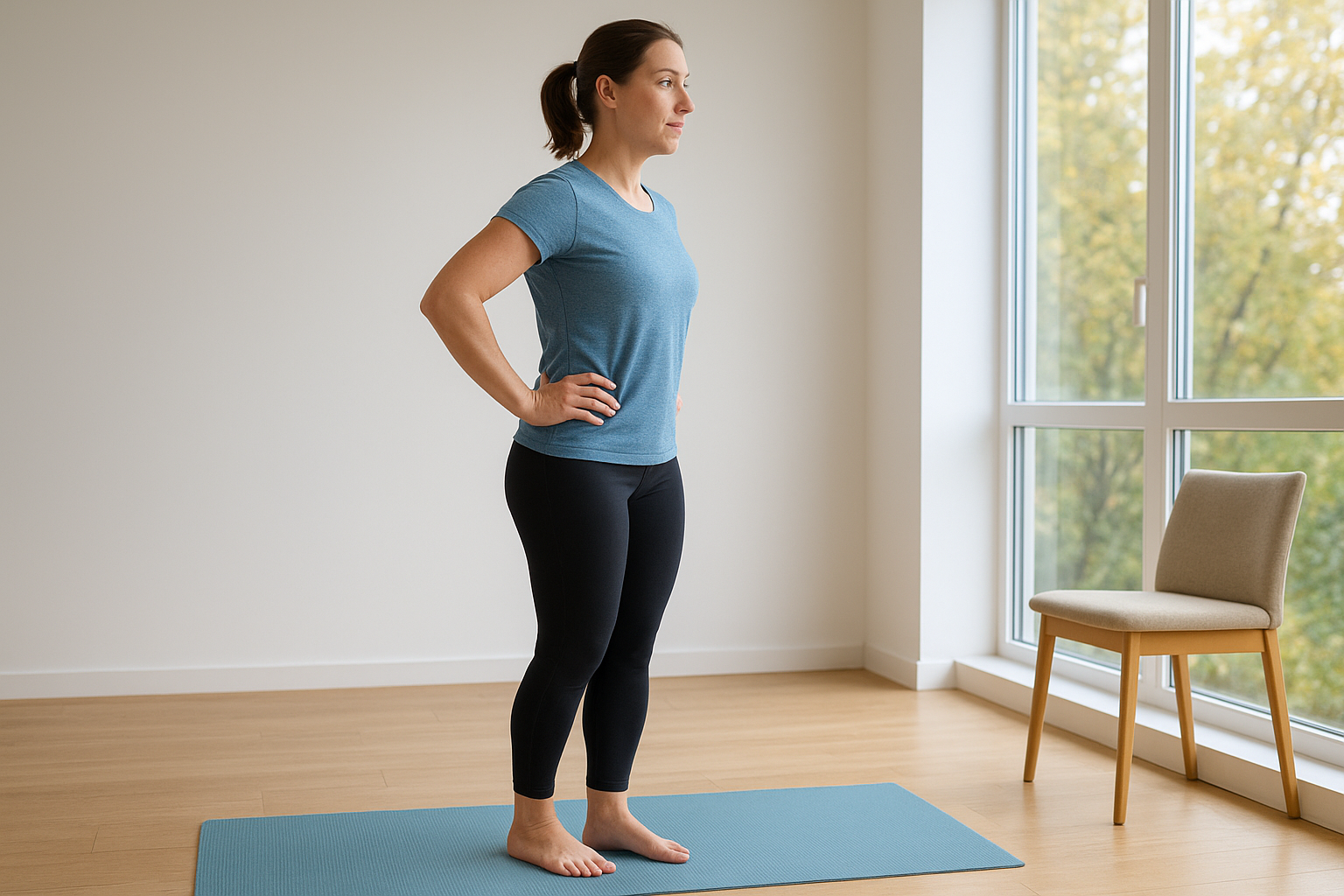
Toes that move stay warmer, and warmer toes are far less likely to develop chilblains.
Simple exercises that boost circulation
You don’t need a gym membership or a structured program to make a real difference here, and these work well alongside other simple foot exercises you can do at home. Try building these into your daily routine, particularly if you spend long stretches sitting still at work:
- Toe curls and flexes, ten repetitions, several times a day
- Ankle circles in both directions while seated
- Calf raises, holding a chair or desk for balance if needed
- A brisk ten-minute walk during any extended sitting period
- Standing and shifting weight foot to foot for a minute if you’re stuck at a desk
Each of these takes almost no time and works because muscle contraction physically pushes blood through your veins, which matters most in the parts of your body furthest from your heart.
Building movement into a cold-weather routine
General aerobic exercise, whether that’s walking, swimming or cycling, improves circulation more broadly over weeks rather than instantly, so consistency through winter matters more than any single session. Aim for at least thirty minutes of moderate activity most days if your general health allows it, since this supports vascular function throughout your body, not just in your toes. If you’re already active but still getting chilblains, the issue is more likely localised circulation or cold exposure habits rather than fitness itself, and it’s worth reviewing your footwear and warming routine alongside your exercise habits.
People managing diabetes, vascular disease or reduced mobility should check with their GP or podiatrist before starting a new exercise routine, since some circulation issues need a tailored approach rather than generic advice. A podiatry assessment can also identify whether reduced movement in your gait itself, rather than general inactivity, is contributing to poor circulation in your toes.
Step 7. Watch for signs of infection
Most chilblains heal within one to three weeks with consistent home care, but broken or blistered skin creates an opening for bacteria that turns a straightforward chilblain into a genuine infection. Signs of infected chilblains are much the same as what an infected toe looks like generally: spreading redness, increasing warmth in the toe, pus or cloudy discharge, and pain that gets worse rather than better a few days into treatment. Watching closely during this stage matters because catching an infection early usually means a short course of antibiotics, while a missed one can escalate quickly, particularly in people with diabetes or poor circulation.
What to check daily
Getting into a habit of a quick daily check stops small problems turning into bigger ones. Look for:
- Redness spreading beyond the original chilblain, rather than staying contained
- Increasing swelling or heat when you touch the area
- Yellow, green or cloudy discharge from broken skin
- A foul smell coming from the dressing or the toe itself
- Throbbing pain that worsens overnight rather than settling
- A red line tracking up the foot or towards the ankle
A chilblain that’s getting worse after a few days of proper care, not better, is telling you it needs medical attention.
Table: normal healing versus infection
| Normal healing | Possible infection |
|---|---|
| Redness fades gradually over days | Redness spreads or deepens |
| Mild, decreasing itch | Increasing pain or throbbing |
| Skin dries and closes over | Skin weeps, oozes or smells |
| Swelling reduces steadily | Swelling worsens or feels hot |
| No fever or fatigue | Fever, chills or feeling unwell |
Recognising the difference between these two columns is often the deciding factor in whether you keep self-managing or book an appointment. Should you notice fever, chills, or a general feeling of being unwell alongside a toe infection, treat that as urgent rather than something to monitor for another day, since infections can spread quickly through the foot’s soft tissue.
Those managing diabetes, vascular disease or a compromised immune system need a lower threshold for concern altogether, as infected chilblains in this group can progress faster and cause more serious complications than in an otherwise healthy adult, which is why understanding how diabetes affects your feet matters so much. If you fall into any of these categories, contact your podiatrist or GP at the first sign of broken, weeping or increasingly painful skin rather than waiting to see how things develop over the following days.
Step 8. See a podiatrist for lasting relief
Most chilblains settle with consistent home care, but some toes flare up every winter regardless of how carefully you rewarm, moisturise and protect them. Professional chilblain treatment becomes worthwhile once you’re dealing with recurring episodes, chilblains that haven’t improved after two to three weeks, or any of the infection signs covered above. A podiatrist can also investigate whether an underlying circulation issue, rather than bad luck with the weather, is driving your symptoms year after year.
If chilblains keep coming back despite good home care, the answer usually lies in a proper assessment, not another cream.
When it’s time to book an appointment
Several situations point clearly towards professional care rather than continued self-management, and they overlap with the broader reasons you should see a podiatrist:
- Chilblains that recur most winters despite consistent prevention habits
- Skin that’s broken, blistering or showing any sign of infection
- Pain or swelling that hasn’t eased after two to three weeks of home treatment
- Diagnosed circulation issues, diabetes or an autoimmune condition alongside your symptoms
- Uncertainty about whether a discoloured toe is actually a chilblain or something else entirely
What a podiatry consultation actually involves
At ModPod Podiatry, what happens at your first podiatry appointment starts with examining the affected toes and taking a history of when and how your chilblains typically flare, since patterns often point straight to the cause. Depending on what we find, that might include a circulation assessment, a review of your footwear and gait, or pressure plate analysis to check whether uneven weight distribution is contributing to poor blood flow through your toes. For patients with recurring or severe cases, we can also discuss prescription-strength options and, where appropriate, refer you on for further vascular investigation.
Ongoing management matters as much as the initial visit. If orthotics made for your feet or footwear advice would reduce your risk of flare-ups, we’ll walk you through that during your appointment rather than leaving you to work it out alone. Eligible patients can also use a Medicare EPC plan or claim through HICAPS on the day, and you don’t need a GP referral to see a podiatrist in Sydney, so cost and paperwork needn’t be a barrier to getting a proper assessment sorted before the cold months set in properly. Booking early in the season, rather than waiting until you’re mid-flare, gives us the best chance to break the cycle before it repeats again next winter.
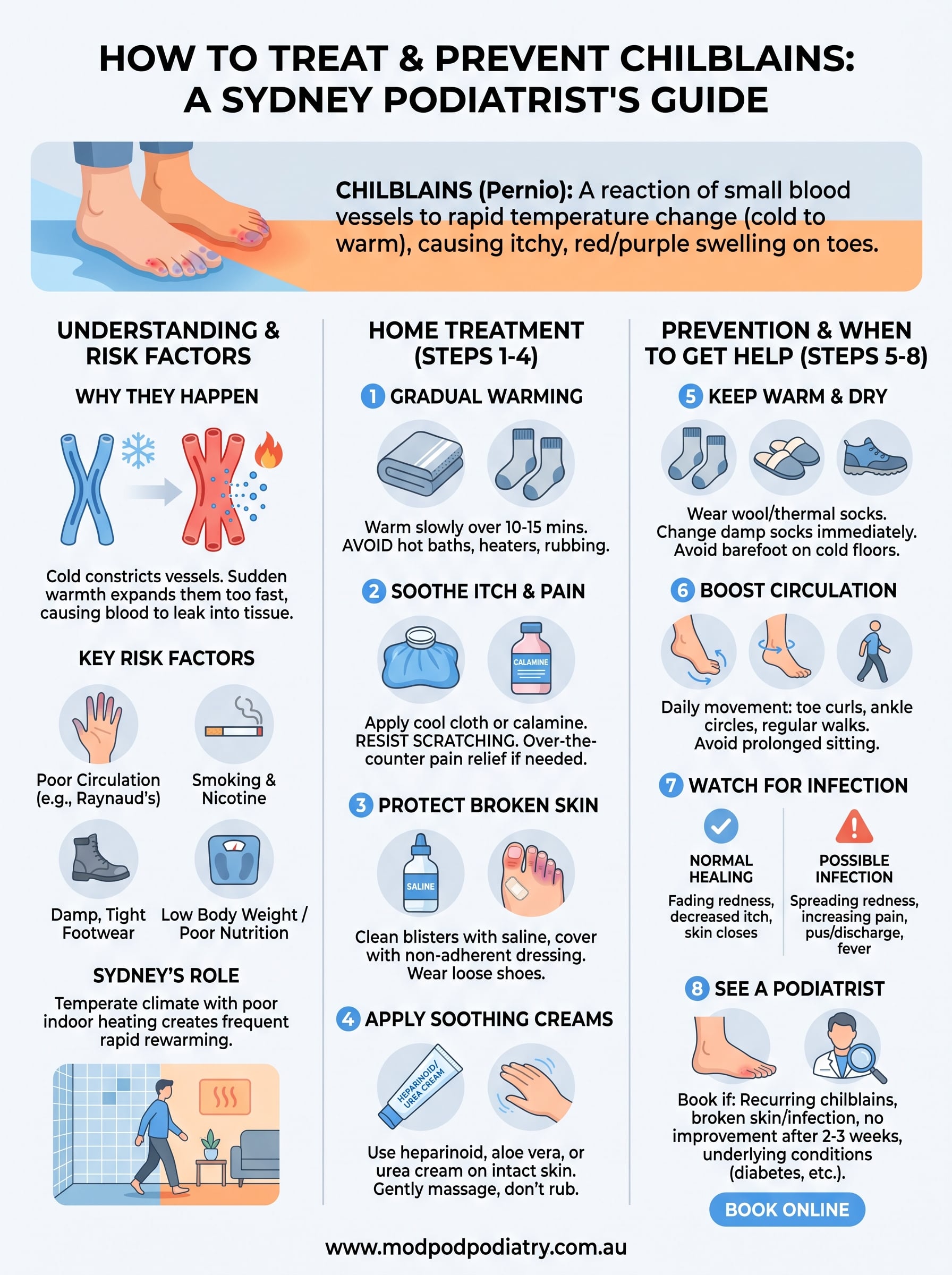
Keeping your toes chilblain-free this winter
Most chilblains respond well to the basics: gradual warming, gentle skin care, dry socks, and a bit of daily movement to keep circulation moving. Consistent home care handles the majority of cases within a few weeks, and the habits in this guide work just as well as prevention once your toes have settled. The trick is catching cold, tingling toes early and warming them slowly, rather than waiting until you’re dealing with broken skin or a full flare-up.
Still, some toes need more than home remedies, particularly if chilblains keep returning or an underlying circulation issue is driving them. That’s where a proper podiatry assessment makes the real difference, especially if you’re heading into another Sydney winter unsure why your toes keep reacting the same way. If your chilblains haven’t budged after a few weeks, or you’d rather sort the cause before it becomes a yearly pattern, book your podiatry appointment online with our Sydney team and get ahead of it properly.