
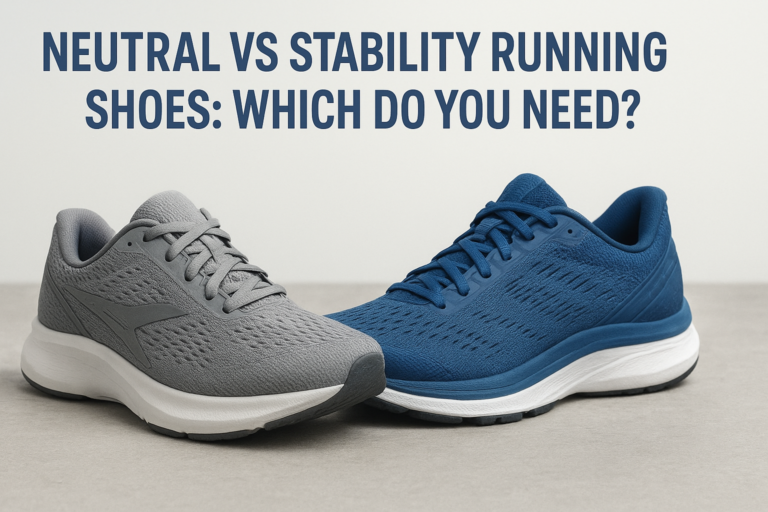
Neutral vs stability running shoes comes down to how much guidance the shoe gives your foot. A neutral shoe has no corrective structure and lets your foot move the way it wants to. A stability shoe adds firmer foam, a wider base or a guide rail to limit how far your foot rolls inward (pronation). Most runners with a typical gait run well in neutral shoes. Stability suits runners whose feet roll in a lot, who tire late in a run, or who simply feel steadier with structure.
This article covers why the choice matters, how to read your pronation, arch and stride to find your starting point, how to test a pair before you buy, and where stable-neutral shoes and orthotics fit in.
At ModPod Podiatry, our APodA-registered podiatrists assess how people run at our five Sydney clinics. The advice below follows the same approach we use in a gait assessment, so you can apply it yourself before you shop.
Why the neutral vs stability choice matters
The choice matters because your shoe changes how force travels through your foot, shin and knee with every stride. A poor match can leave you sore, unsteady or fighting your shoes. Each foot lands several thousand times on a 10 km run, so small mismatches add up quickly.
What separates the two types
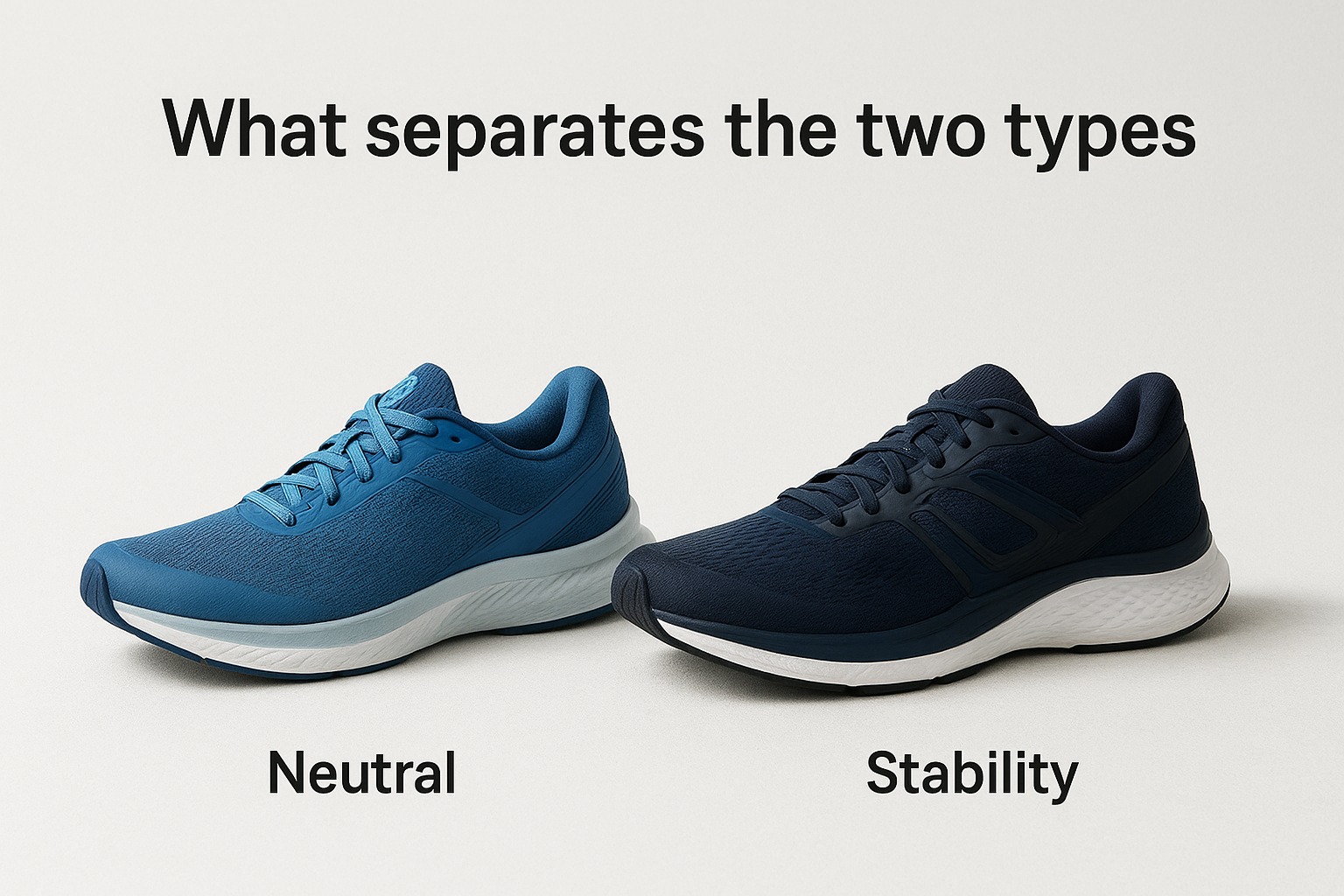
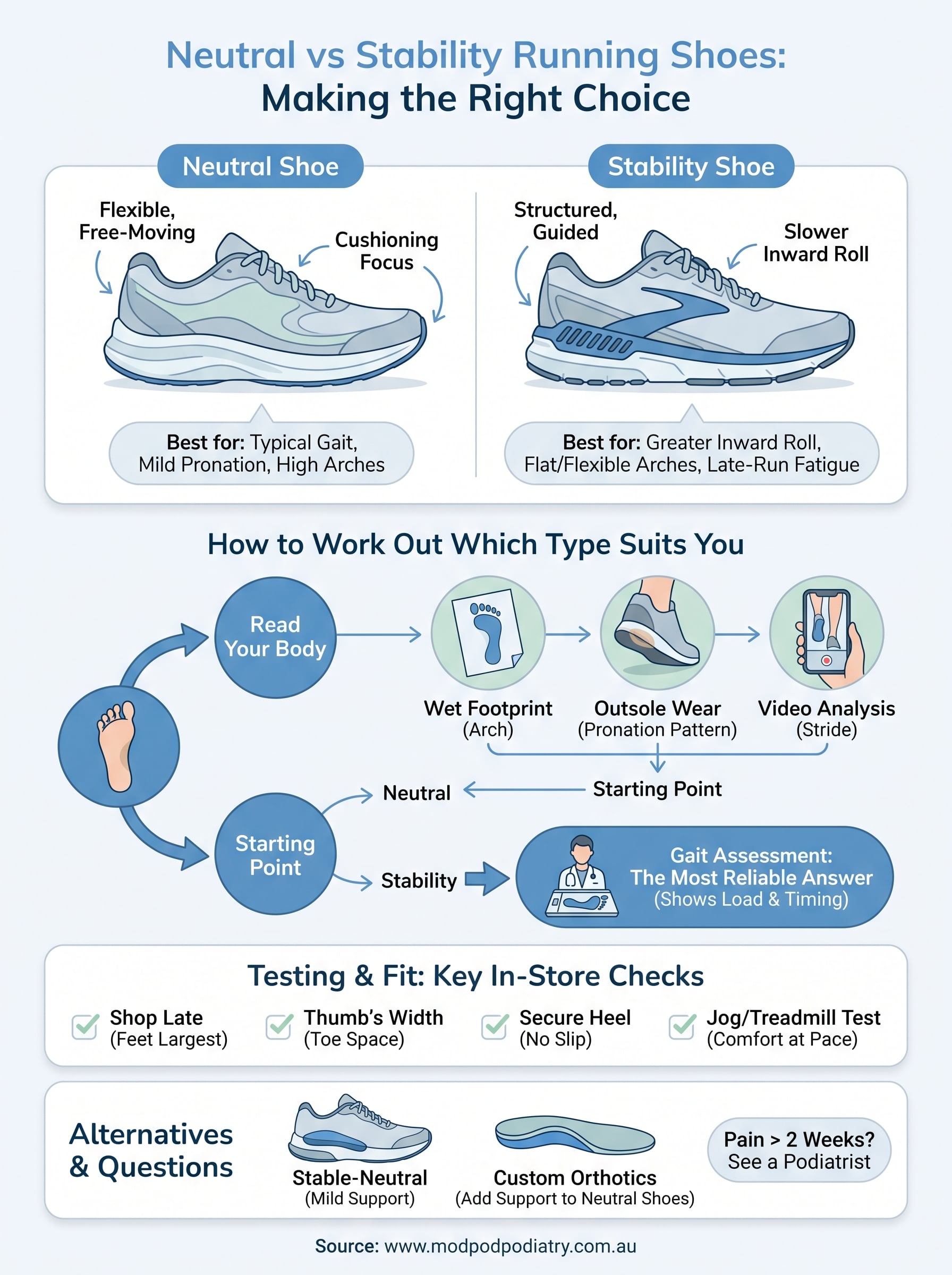
Neutral shoes provide cushioning and a flexible platform without corrective features. Stability shoes add structure that slows inward roll. Older models used a hard medial post. Modern ones use dual-density foam, a wider base or a side rail that feels far less rigid.
| Feature | Neutral | Stability |
|---|---|---|
| Guidance | None built in | Firmer inner foam, guide rail or wider base |
| Feel | Flexible, free-moving | Structured, steady |
| Weight | Often slightly lighter | Often slightly heavier |
| Usually suits | Typical gait, mild pronation, high arches | Greater inward roll, flexible low arches, late-run fatigue |
Cushioning is a separate question. A neutral shoe can be firm or very soft, and so can a stability shoe. "Neutral" describes the support, not the softness.
What a poor match can cost you
Excessive pronation is linked with overuse problems such as shin splints, Achilles tendon pain and runner’s knee. Research on whether matching shoes to foot type prevents those injuries is mixed. Training load, strength and running surface all play a part. Shoes are one factor, but they are the easiest one to change.
A shoe is one input among many, but it is the one you can change today.
How to work out which type suits you
Start with how your foot behaves while you run, then use your arch shape as a secondary clue. Your pronation, arch and stride together tell you more than any single test. A running gait assessment confirms it. This is the most reliable way to settle the neutral vs stability running shoes question for your own feet.
Reading your pronation, arch and stride
Flat feet do not automatically mean you need stability shoes. Some low arches are stiff and stable, while some high arches roll more than you would expect. What matters is how much your foot and ankle move under load.
| What you notice | Likely starting point |
|---|---|
| Ankle rolls inward, arch collapses on landing, knees drift inwards | Try a stability shoe |
| Even landing, even wear, no niggles | Neutral |
| High, rigid arch, wear on the outer edge, harsh impact | Cushioned neutral |
| Low arch but comfortable in neutral shoes | Stay neutral |
Treat this as a starting point. If a neutral shoe feels fine over several weeks and you have no pain, there is little reason to switch.
Simple checks you can do at home
Three quick checks give you useful clues.
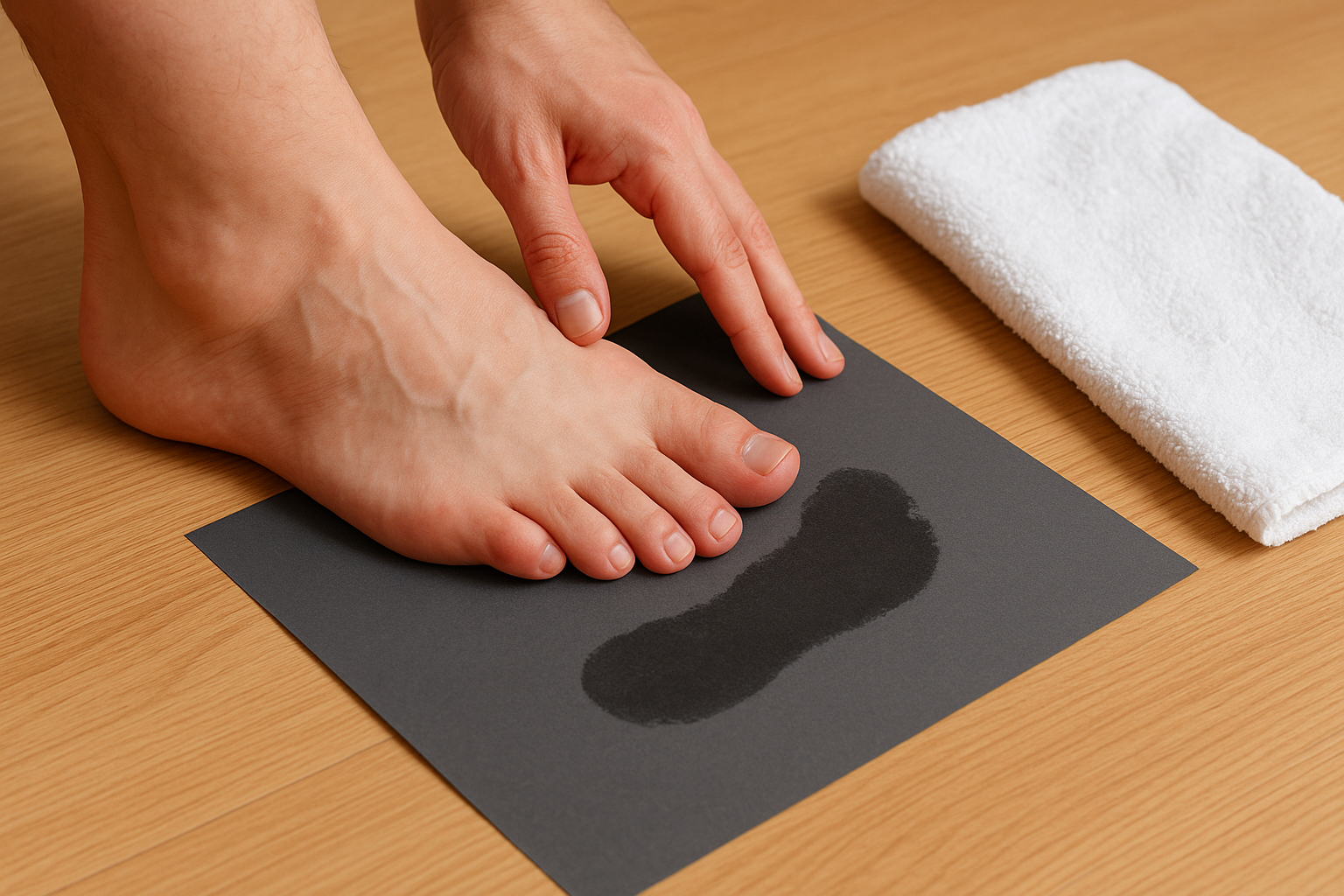
- Wet footprint. Wet your foot and step on dark paper. A wide, filled-in print suggests a low arch. A thin band along the outside suggests a high one.
- Outsole wear. Look at your old shoes from behind. Heavy wear along the inner edge can point to pronation. Wear on the outer edge points the other way.
- Phone video. Film your lower legs from behind while you run on a treadmill. Slow motion shows whether your heel tilts inward on landing.
These are clues, not a diagnosis. Surface, shoe construction and technique all change the pattern.
What a gait assessment adds
A gait assessment shows what the home checks cannot. A pressure plate records where your load goes and when. A podiatrist then looks at your hips, knees, strength and injury history alongside it. We also ask you to run for long enough that fatigue shows up, because many runners hold form early and lose it late.
Your foot type is a clue, but how your foot behaves while running is the evidence.
How to test and choose a pair
Choose by trying at least one neutral and one stability shoe in the same session, then run in both. Categories blur, and some neutral shoes feel very steady. The shoe should feel comfortable and stable at your normal pace, not just while you stand in the shop.
In-store checks that matter
Use this checklist when you try on neutral vs stability running shoes:
- Shop late in the day, when your feet are at their largest.
- Wear your usual running socks, and bring your orthotics if you use them.
- Leave about a thumb’s width in front of your longest toe.
- Check the heel holds firmly without slipping.
- Jog on the spot or on a treadmill for a few minutes.
- Press the inner midsole. A firmer inner side suggests a stability design.
Shoe width matters as much as length. A narrow toe box can cause problems that people wrongly blame on pronation. A secure heel and roomy forefoot beat any technology label.
When to replace your shoes
Foam compresses with use, and stability foam is no exception. Many runners replace shoes somewhere between 500 and 800 km, depending on the shoe, their body weight and the surface. Replace sooner if the midsole looks creased, the inner side has flattened, or old niggles return. Rotating two pairs can also help, because foam recovers between runs and different shoes load you slightly differently.
Fit and comfort override every category label on the box.
Stable neutral shoes, orthotics and common questions
Many runners sit between the two types, and the options reflect that. A stable-neutral shoe, or a neutral shoe with orthotics, often solves the problem without a full stability shoe. Both are worth knowing about if you cannot settle the neutral vs stability running shoes debate.
The middle option: stable neutral
Stable-neutral shoes look and feel like neutral shoes but add quiet structure. That structure may be a wider base, a raised edge or a firmer foam on the inner side. They suit runners who want mild support without a guided feel. They are also a sensible first step if you are unsure.
When orthotics beat a stability shoe
If your feet roll in more than is comfortable but you love a particular neutral shoe, custom orthotics can add the support without changing the shoe. We design custom orthotics from 3D scans and pressure plate data. Orthotics also move between shoes, so one prescription can support your runners, work shoes and trainers. Prefabricated insoles can help some runners, but custom devices suit more complex or persistent problems.
Quick answers to common questions
Can a neutral runner wear stability shoes? Yes. It is not harmful, and many neutral runners use them for long runs, easy days or a return from injury. Do flat feet need stability? Not always. Do high arches need neutral? Usually, with generous cushioning. If you have pain that lasts more than a couple of weeks, see a podiatrist rather than changing shoes repeatedly.
Choosing your next pair
Neutral shoes give your foot freedom and stability shoes give it guidance. Your pronation, arch and stride point you towards one, but comfort over a real run makes the final call. Test both types, check fit and heel hold, and use orthotics when a favourite shoe needs a little extra support.
If you are unsure where you sit, or running already hurts, a proper assessment saves guesswork. You do not need a GP referral to see us. You can book a running gait assessment online at any of our Sydney clinics, and leave with a clear answer on which shoe suits your stride.