
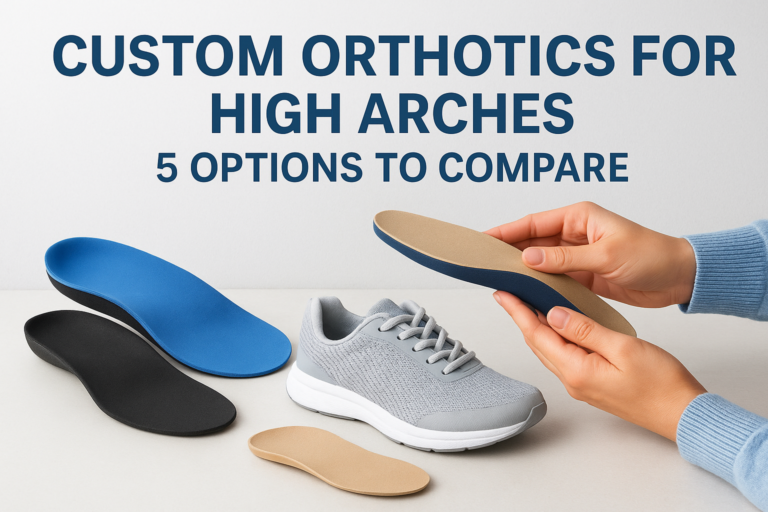
If you have persistent pain, custom orthotics for high arches are usually the better fix, because most pre-made insoles are built for average or flat feet. Choose custom if you deal with heel pain, ball-of-foot pain or repeated ankle sprains. Choose a podiatrist-designed pre-made insole if your symptoms are mild and you want to test support first. Whatever you pick, your shoes matter as much as the insole.
The problem with a high arch is that it is rigid. It holds your weight on two small areas, the heel and the ball of the foot, and it absorbs shock poorly. Many insoles push up into the arch, which feels like a lump under a foot that never needed lifting. It is common to try three or four pairs from the chemist before giving up.
This guide ranks five options, from a fully custom device to generic arch supports, so you can see what each one does, who it suits and where to get it in Australia. It draws on how our APodA-registered podiatrists assess high arched feet across ModPod Podiatry’s five Sydney clinics.
1. Custom orthotics from ModPod Podiatry
How it works
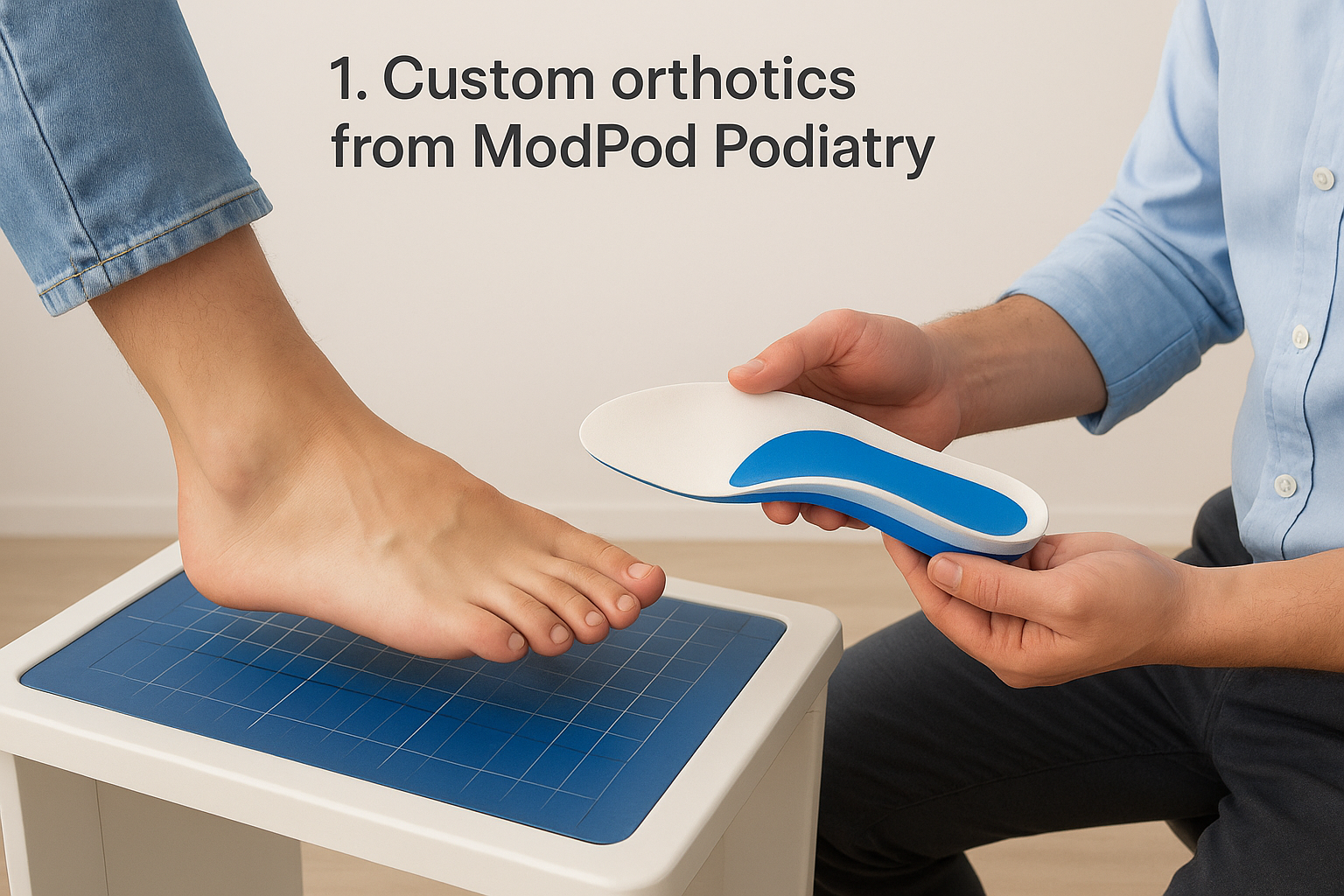
A custom orthotic is made from a 3D scan of your foot and designed around how you load it when you walk. At ModPod, your podiatrist takes your history, assesses your foot and ankle, scans both feet and checks pressure under each foot on a pressure plate. For a high arch, the aim is to spread load across the whole sole, not to push the arch up. Features your podiatrist may build in:
- Full contact under the arch, so it shares weight instead of bridging a gap
- Cushioning under the heel and the ball of the foot
- Lateral support to limit rolling outwards, where your gait calls for it
- Metatarsal offloading if you have forefoot pain
Good high arch orthotics spread your weight across the sole instead of lifting the arch.
Who it suits
This option suits you if you have recurring heel pain, plantar fasciitis, metatarsalgia or ankle sprains that keep returning, or if shop-bought insoles have already failed. It also suits runners and other athletes, because a slim, firm device fits into sports shoes and can be tuned to your activity.
Custom is not always necessary. If your arch is high but your feet feel fine, you do not need a prescription device. Wait until symptoms justify the cost.
Cost and where to get it
You can book online at any of our five clinics (Sydney CBD, Mosman, Dee Why, Rose Bay and North Ryde), with same-week appointments and no GP referral. Consultations are usually $110 to $140. HICAPS lets us claim your private health rebate on the spot, depending on your extras cover, and eligible patients can use a Medicare EPC plan. We quote the cost of your orthotics at your appointment. You can read more about custom orthotics for high arches before you book.
2. Pre-made insoles adjusted by a podiatrist
How it works
Your podiatrist starts with a quality pre-made insole and modifies it for your foot. Common additions are a deeper heel cup, a small lateral wedge or a metatarsal dome just behind the ball of the foot. It sits in the middle: more targeted than a boxed insole, less precise than a scanned device, because the base shape is still made for an average foot.
A modified insole is a sensible trial before you commit to a full custom pair.
Who it suits
This option suits mild to moderate symptoms, such as aching under the ball of the foot after a long day on hard floors. You want relief, but you do not yet need a fully prescribed device.
It also works as a trial run. If it settles your pain, you may never need more. If it does not, you have learned which features your feet respond to, and that information helps when designing a custom pair later.
Cost and where to get it
Expect a cost between a pre-made insole and a custom orthotic. Not every clinic offers modifications, so ask your podiatrist before you book. Ask too whether your health fund pays a rebate for the item.
Review the result after four to six weeks. If your heel, forefoot or ankle symptoms are no better by then, the insole is not doing enough and custom orthotics for high arches are the logical next step.
3. Pre-made insoles designed for high arches
How it works
These are off-the-shelf insoles labelled for high arches or supination, usually with a cushioned top layer, a deep heel cup and an arch profile that is higher than standard. They cannot match your exact foot shape, but the better ones take load off the heel and forefoot. Check for these features before you buy:
- A label that names high arches or supination, not just "arch support"
- A cushioned top layer, not a hard plastic shell
- An arch that touches your arch gently without jabbing
- A deep heel cup that holds your heel in place
- A podiatrist-developed design, ideally listed with the TGA
If an insole jabs into your arch, it was built for a different foot.
Who it suits
Pre-made high arch insoles suit mild, occasional discomfort, people who want to try support cheaply, and anyone who needs a spare pair for a second pair of shoes. They are a reasonable first step when you have no injury history.
They are a poor choice if you have had repeated sprains, a stress fracture or long-running heel pain. Those problems usually need a device tailored to your gait.
Cost and where to get it
Pre-made insoles cost well below a custom pair. You can find them at podiatry clinics, specialist foot care retailers online and some pharmacies.
Remove the factory insole from your shoe first, then build up wear over a week or two. If you still have pain after a few weeks, see a podiatrist. If you have diabetes or reduced sensation in your feet, see a podiatrist before you use any insole.
4. Cushioned neutral shoes with a removable insole
How it works
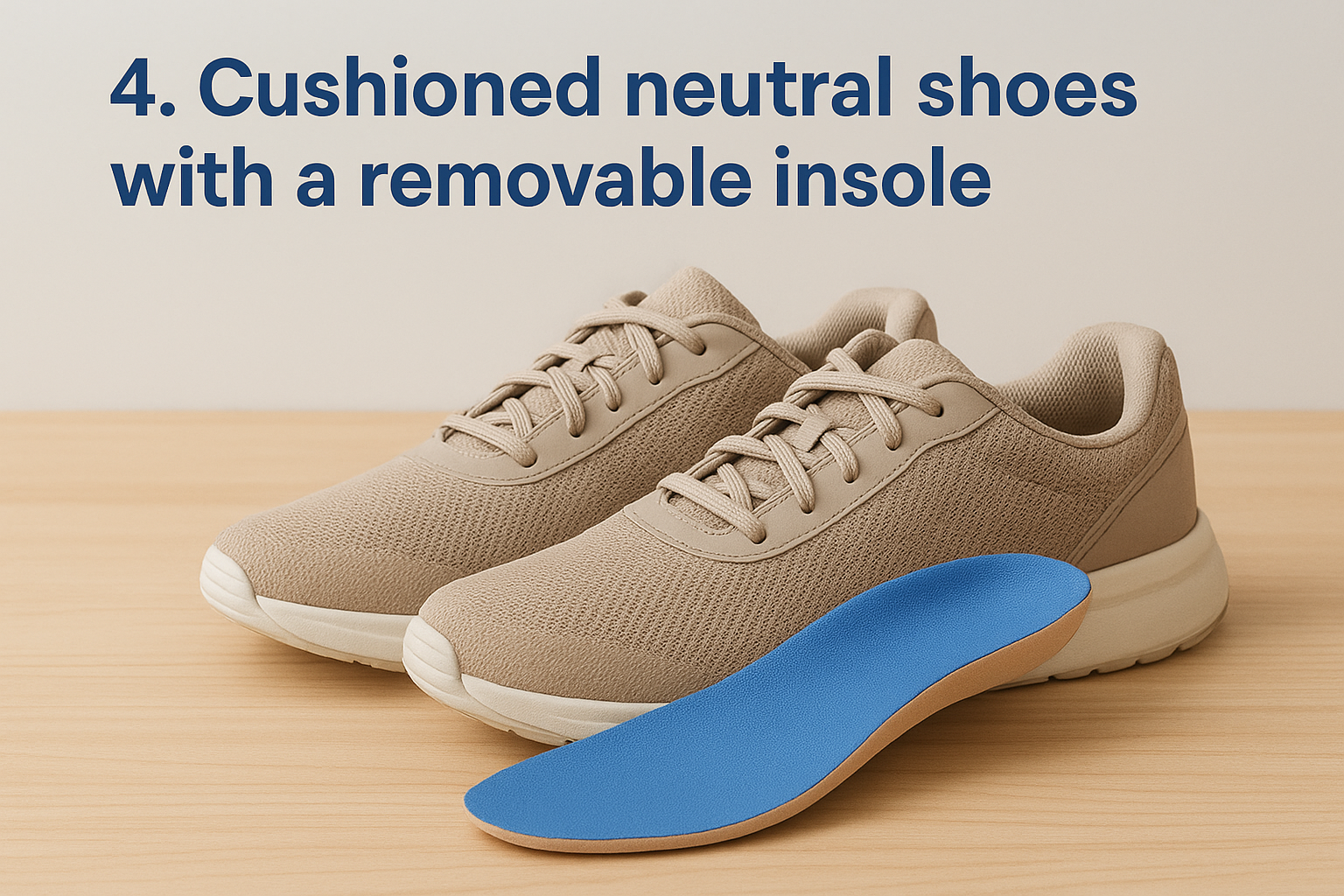
The right shoe does half the job. High arched feet absorb shock poorly, so you want a cushioned midsole and a neutral shape. Stability shoes are built to correct feet that roll inwards, and they usually add firmness under the arch, which is the opposite of what a high arch needs. A shoe with a removable insole also lets you swap in an orthotic.
Choose shoes for cushioning and a removable insole, not for built-up arch support.
Who it suits
Every high arched foot benefits, but it matters most if you run, walk long distances or stand all day. It also matters if you already own orthotics, because a shoe with a fixed insole or a narrow toe box squashes the device and reduces its effect.
Look for a firm heel counter, enough room in the toe box and a flexible forefoot. Avoid thin flats, narrow dress shoes and slip-ons with no heel hold.
Cost and where to get it
Specialist running stores and good footwear retailers stock shoes for high arch feet, and a sensible mid-range pair usually outperforms a cheap one. Replace running shoes once the midsole feels flat or looks compressed.
Take your orthotics or insoles with you when you try shoes on. Your podiatrist can also tell you which styles suit your foot and your activity, which saves a lot of trial and error.
5. Generic arch-support insoles from the chemist
How it works
These are the cheap, one-shape insoles sold at pharmacies and department stores. They are sized by shoe size, not by arch height, and they are designed around a standard arch profile. On a high arch, the support often stops short and presses on the heel and ball of the foot, which are already overloaded.
Generic arch supports ask your foot to fit the insole, when the insole should fit your foot.
Who it suits
Honestly, they suit very few people with a high arch. They are fine as an occasional short-term cushion for a long day, if they feel comfortable straight away. If they feel like a bump under your arch, take them out.
They are the wrong choice if you have ongoing pain, a history of sprains or fractures, or diabetes. In those cases, spend the money on a proper assessment.
Cost and where to get it
This is the cheapest option and the easiest to find. The catch is that a cheap pair that fails is wasted money, and several failed pairs often add up to the price of an assessment.
Pain that continues after two to three weeks, numbness, swelling or pain that wakes you at night are signs to stop and see a podiatrist. They can confirm your foot type and tell you whether custom orthotics for high arches are the right fix.
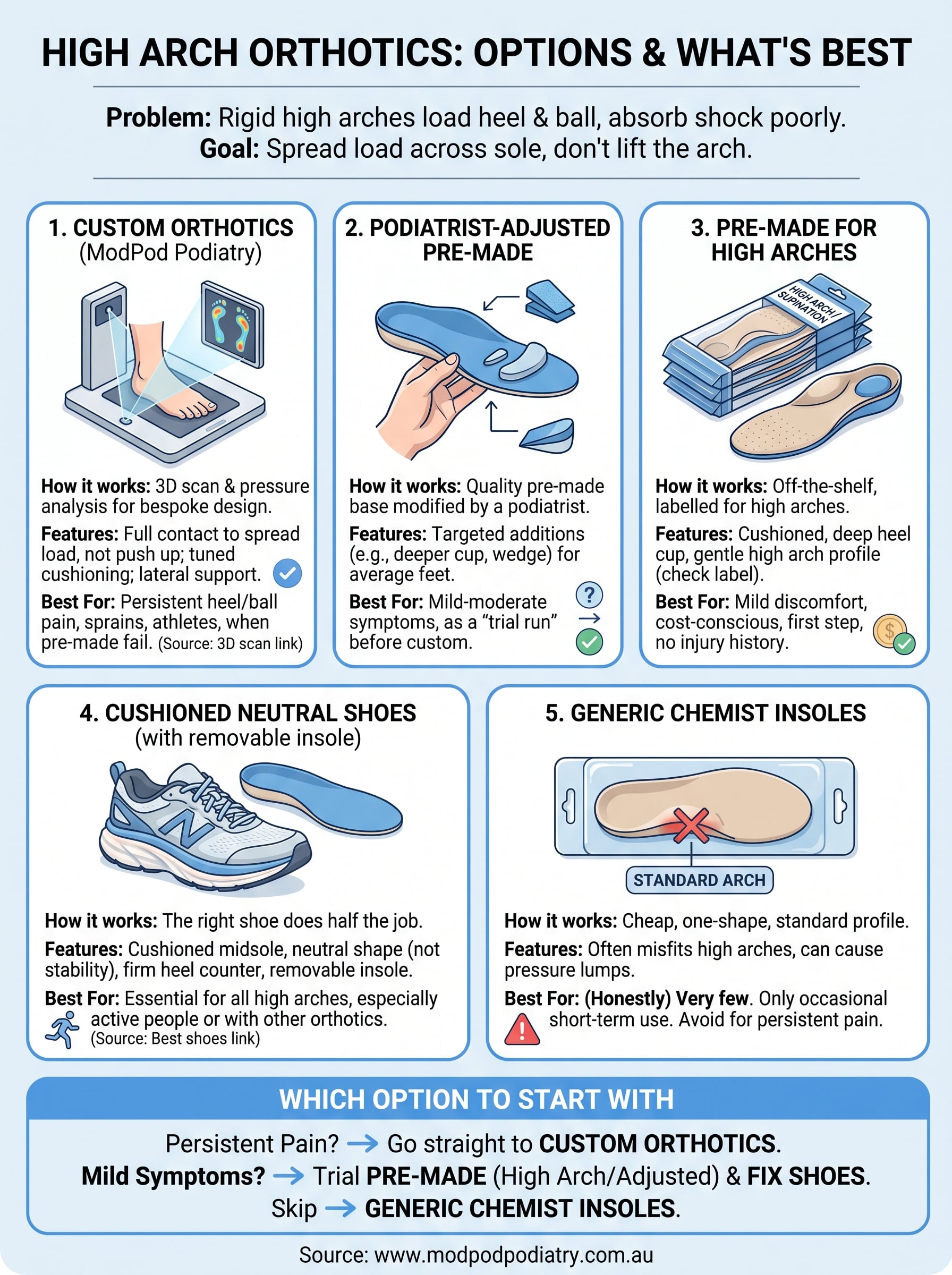
Which option to start with
If your high arches cause regular pain, go straight to custom orthotics. If symptoms are mild, trial a high-arch pre-made insole or a podiatrist-adjusted one, and fix your shoes at the same time. Skip generic chemist insoles for anything beyond an occasional long day.
The decision rests on one question: is your foot hurting often enough that a trial-and-error approach is costing you more than an assessment? If so, book an orthotic assessment online at any ModPod clinic and we will scan your feet, check your pressure patterns and tell you plainly what you need.