
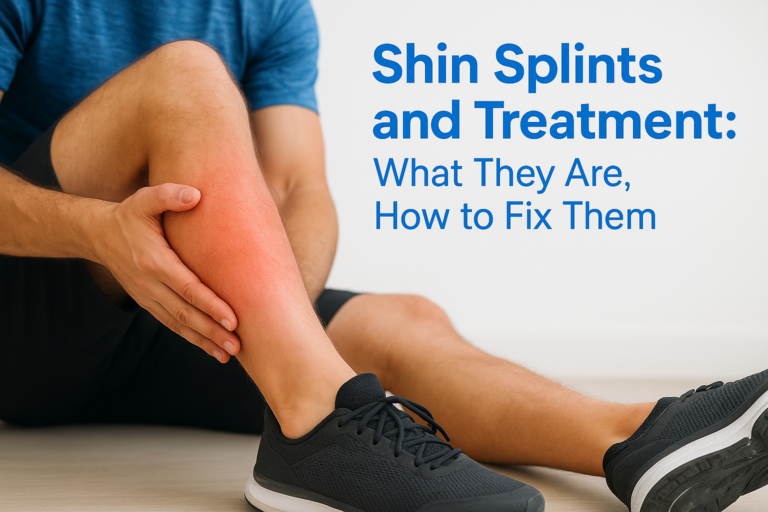
Shin splints and treatment are easier to understand than most people expect. Shin splints, known medically as medial tibial stress syndrome, are an overuse injury that causes a dull ache along the inside edge of your shinbone. They settle when you reduce the load that caused them. For most people that means a few weeks of lighter activity, ice, calf stretching, supportive shoes and a gradual return to training.
The pain comes from repeated stress on the tibia and the muscles, tendons and thin tissue that wrap around it. Runners, dancers, court-sport players and anyone who suddenly walks or trains much more than usual are the usual suspects. This guide covers why early treatment matters, how to treat shin splints at home, what causes them, how to rule out a stress fracture, what a podiatrist can add, and how to stop them coming back.
At ModPod Podiatry, our APodA-registered podiatrists assess shin pain in runners, walkers and weekend athletes across our five Sydney clinics. The advice below follows how we work with patients: find the load error, fix the cause, then rebuild.
Why shin splints are worth treating early
Shin splints are worth treating early because the injury does not stay mild if you keep loading it. Pain that appears at the start of a run can become pain that lasts all day, and in some people it progresses to a stress fracture of the tibia. Catching it in the first week or two usually means a shorter break from the activities you care about.
How shin splints get worse when you push through
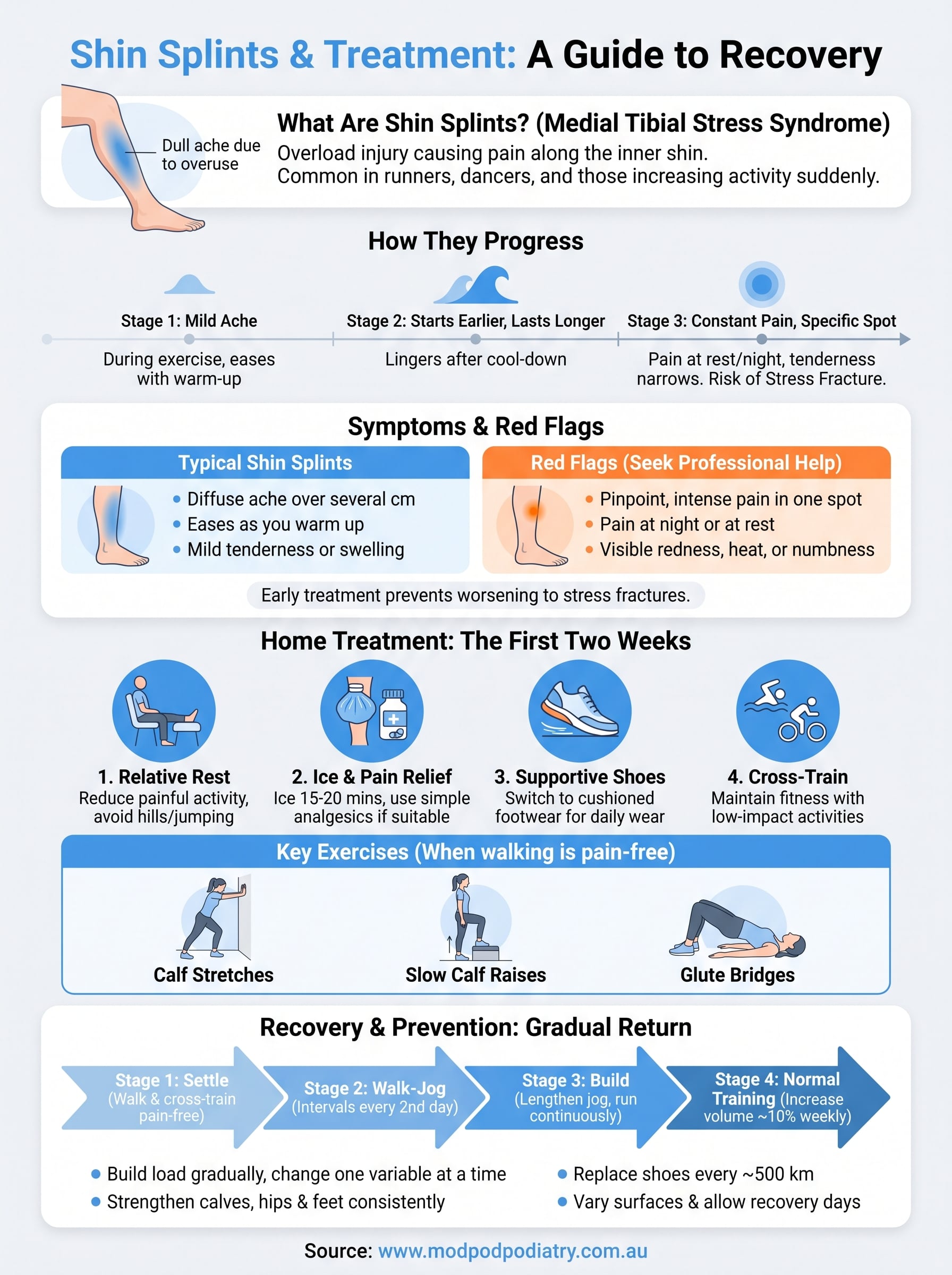
Shin splints follow a fairly predictable pattern. At first you feel a mild ache that comes and goes during exercise, often easing once you warm up. Over the following weeks, the pain starts earlier and lasts longer, then lingers through your cool-down and into the evening. In the later stage you feel it while walking around the house or lying in bed, and the tenderness narrows to a sore, specific spot.
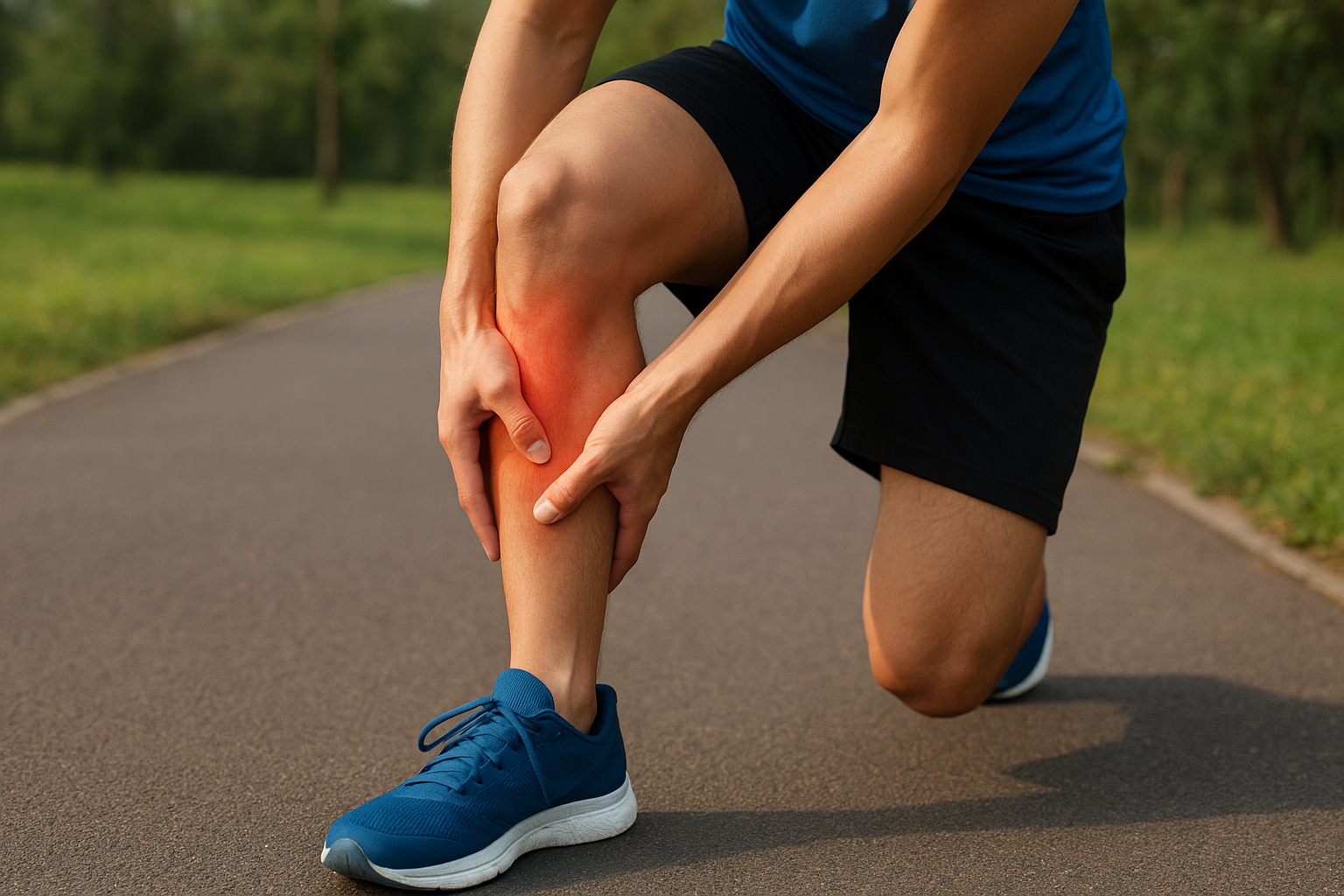
That progression matters because shin splints sit at the mild end of a spectrum of bone stress injuries. Overload the leg cannot adapt to starts as inflammation around the bone. If the load keeps coming, it can end as a tiny crack in the bone itself. Clinical reviews describe medial tibial stress syndrome as an early stress injury on the way to tibial stress fractures, which is why the first ache deserves attention.
Shin splints are your shin telling you the load is higher than it can currently handle, so act on the first ache.
Can shin splints cause permanent damage?
In most cases, no. Treated sensibly, shin splints usually settle within a few weeks and leave no long-term effects on the bone. Some people need longer, especially if they kept training on sore shins for a month or more before getting help.
The risk of lasting trouble comes from how people handle the injury. Pushing through pain can lead to a stress fracture, which means a longer break and a much more cautious return. Surgery exists for severe, persistent cases that fail months of proper non-surgical care, but it is rarely needed and the evidence for it is limited. Most of the "damage" people experience is lost fitness and a frustrating cycle of stop, start, flare up.
How common shin splints are
Research reviews put shin splints at roughly 6% to 16% of all running injuries and up to half of all lower leg injuries in sporting groups. Studies in athletes report them more often in women than in men. Military recruits, dancers and runners are the groups most often diagnosed.
You do not need to be an athlete to get them. A new job on hard floors, a holiday spent sightseeing on foot, or starting a walking program after a sedentary year can all overload the shin. The common thread is a sudden jump in load, not the sport itself.
How to treat shin splints at home
You treat shin splints at home by lowering the load on your shin, calming the pain with ice and simple measures, and then rebuilding strength in your calves, hips and feet. Most people can manage a first episode this way without scans or appointments. The steps below are the ones we recommend most often.
The first two weeks: load, ice and pain relief
Start by cutting back the activity that hurts until daily walking is comfortable. This is relative rest, not bed rest. Keep moving with activities that do not provoke the pain, and follow this order:
- Reduce running, jumping and hills. If a session causes pain that lingers after you finish, you did too much.
- Ice the sore area for 15 to 20 minutes, several times a day. Wrap the ice pack in a thin towel so it never sits directly on your skin.
- Cross-train. Swimming, cycling and an elliptical trainer keep your fitness up with far less impact, as long as they stay pain-free.
- Consider a compression sleeve or bandage if the area is a little swollen. It is optional, not essential.
- Use over-the-counter pain relief carefully. Anti-inflammatory tablets can ease the ache, but they are not suitable for everyone, so check with your pharmacist or GP first.
- Switch to cushioned, supportive shoes for daily wear, including at home if you are on hard floors.
Pain relief and ice treat symptoms, not the cause. Reducing load is the part that actually lets the tissue recover, so do not skip it because the pain has dropped.
Ice and tablets quiet the pain, but only less load lets the shin heal.
Exercises that help recovery
Once everyday walking is pain-free, add gentle exercises for shin splints. Stop any exercise that sharpens the shin pain.
- Calf stretches: 30 seconds, three times each, with the knee straight and then bent, to reach both calf muscles.
- Slow calf raises: three sets of 10 to 15, lowering over about three seconds. Do some with a bent knee to target the deeper soleus muscle.
- Heel walks or toe taps: 20 to 30 repetitions to wake up the muscle on the front of the shin.
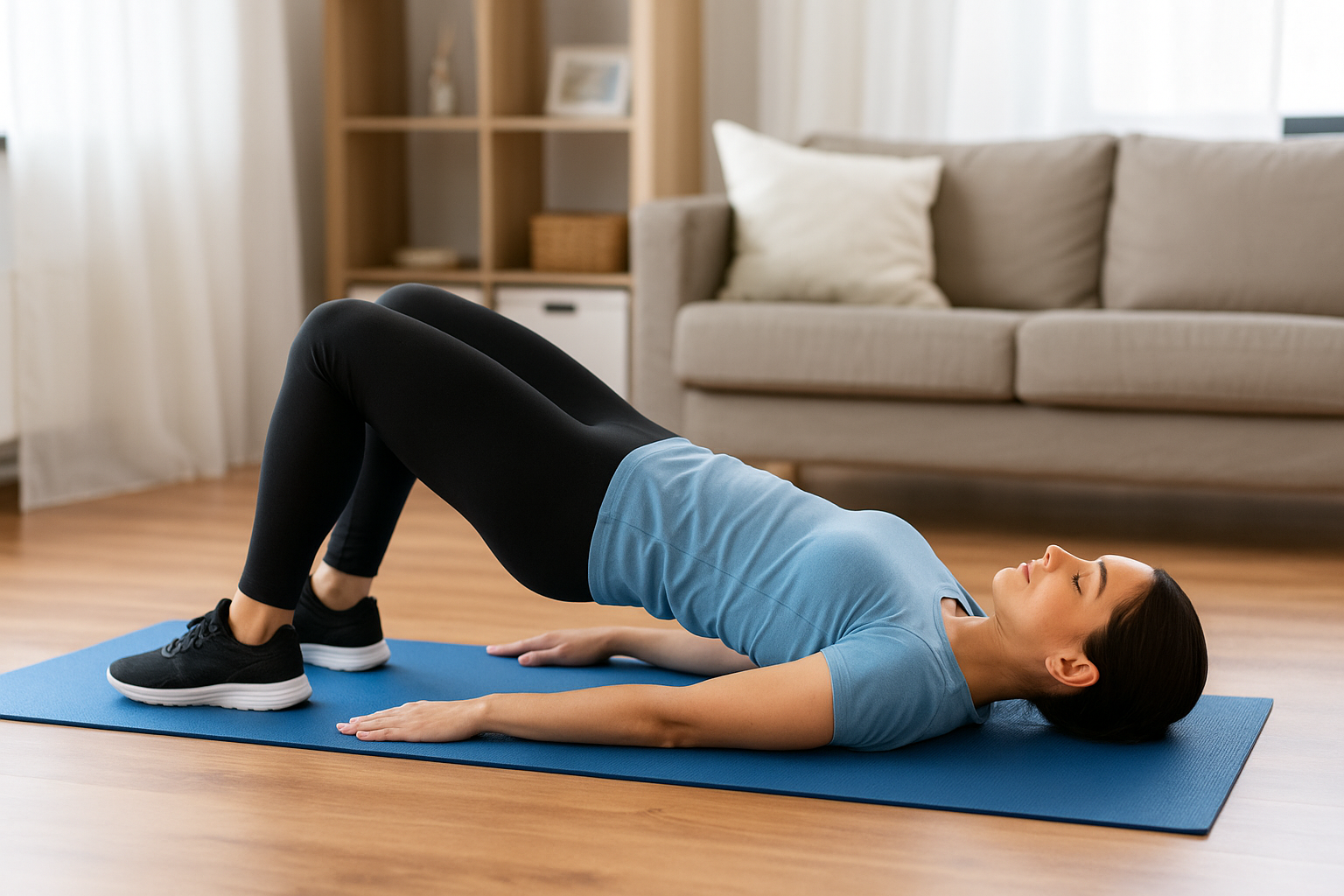
- Glute bridges and side-lying leg raises: two or three sets of 12. Weak hips let your knee and foot collapse inwards, which loads the shin.
- Short foot exercise: gently draw the ball of your foot towards your heel without curling your toes, and hold for five seconds. It builds arch control.
Do these about every second day. Strong calves and hips share the work that your shin is currently doing alone, which is why strengthening is central to any good shin splints and treatment plan rather than an optional extra.
Treatment for shin splints from walking
Shin splints from walking need the same logic with different adjustments. Shorten your walks and break long ones into two or three shorter blocks across the day. Choose flat, even routes, and avoid hills and long stretches of concrete until the shin settles.
Footwear matters more for walkers than most people think. If you are on your feet at work, wear cushioned, supportive shoes all day, not only on the walk. Swap worn-out pairs, and add a simple cushioned insole if your arches are flat. After a big walking holiday, ease back in over a week, not a day.
What causes shin splints and how they feel
Shin splints cause a dull, aching pain along the lower inner shin that builds with activity and eases with rest, and they develop when repeated loading outpaces the leg’s ability to adapt. The pain is the visible end of an overload problem. Knowing the typical pattern helps you recognise it and fix the right thing.
Symptoms: what shin splints feel like
The classic pain is a diffuse ache over several centimetres of the inner shinbone, usually in the lower two thirds of the leg. It is typically worse at the start of activity, may ease as you warm up, and returns afterwards. It often affects both legs, though one side is usually worse.
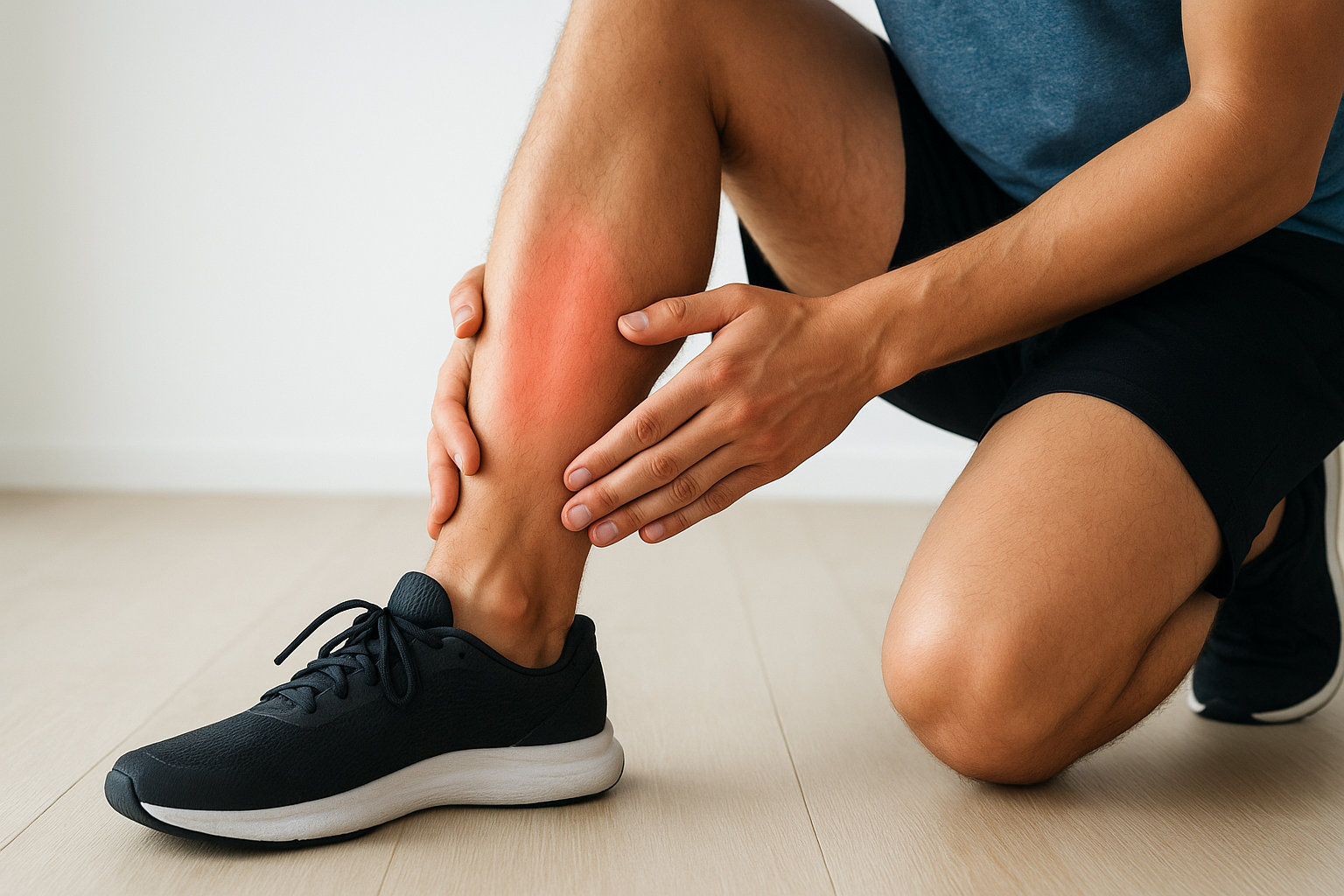
Your shin may be tender when you press along the edge of the bone, and you might see mild swelling. Pain that ranges from a mild ache to a sharper, pulling sensation is normal. What is not typical is intense pain in one tiny spot, pain at night, or pain that starts the moment you put weight on the leg. Those point towards something else, covered in the next section.
What causes shin splints
The exact mechanism is still debated, but the leading explanation is that the calf and deep leg muscles pull on the tissue covering the tibia, and repeated pulling without enough recovery irritates it. The triggers fall into predictable groups.
| Cause | Why it overloads the shin | What to change |
|---|---|---|
| Sudden jump in training | Bone and muscle adapt over weeks, not days | Build volume gradually and change one thing at a time |
| Hard or sloped surfaces | Higher impact and uneven loading | Mix in softer, flatter surfaces |
| Worn or unsupportive shoes | Less shock absorption and control | Replace shoes at around 500 km or when the cushioning feels flat |
| Flat feet, rolling in or very rigid arches | Alters how the lower leg shares load | Footwear review, orthoses where appropriate |
| Weak or tight calves, hips and core | Lower leg absorbs forces it should share | Strength and mobility work |
| Higher body weight, low vitamin D, low bone density, irregular periods or low energy intake | Reduce bone’s capacity to cope with load | Medical review with your GP |
Most cases involve more than one cause. A runner who steps up mileage in old shoes, with weak hips, is much more likely to develop shin splints than someone who changes just one of those things.
Shin splints rarely have a single cause, so the fix is usually a combination of small changes.
How to tell shin splints from other problems
You can tell shin splints from other lower leg problems by where the pain sits, how it behaves, and whether it is getting sharper, more localised or more constant. Diffuse pain that eases with warm-up suggests shin splints. Pinpoint pain, night pain, numbness or visible skin changes need checking.
Shin splints, stress fractures and compartment syndrome
Stress fractures and exertional compartment syndrome share some features with shin splints, which is why a persistent case should be assessed.
| Feature | Shin splints | Tibial stress fracture | Chronic exertional compartment syndrome |
|---|---|---|---|
| Pain location | Diffuse, along inner shin | One small, very tender spot | Tight, squeezing feeling in the leg |
| Pattern | Eases as you warm up, returns after | Gets worse during activity, may ache at rest or at night | Builds to a predictable point in exercise, eases within minutes of stopping |
| Other signs | Mild tenderness or swelling | Pain on hopping or pressing the spot | Possible numbness, tingling or foot weakness |
| Next step | Home care, then review if no improvement | See a health professional promptly, imaging may be needed | Professional assessment |
If you suspect a stress fracture, stop impact activity and book an assessment. X-rays can miss early stress fractures, so an MRI is sometimes needed to confirm one.
Calf and shin pain, or knee and shin pain, when running
Pain in the calf or knee alongside the shin does not automatically mean shin splints. Where exactly it hurts gives useful clues.
- Calf belly pain or tightness often points to a strained or overworked calf muscle, which can sit alongside shin splints because tight calves add to the load on the shin.
- Pain on the front of the shin, worse when lifting your foot, can be irritation of the muscle tendon in that area, rather than inner-shin pain.
- Pain at the knee and shin together often means the load is being shared poorly up the leg. Weak hips, overstriding and poor landing control are common culprits, and a bony tender bump just below the kneecap in a teenager can be a growth-related condition.
A running assessment looks at how you land and move. It separates "my shin is overloaded" from "my knee or calf is the real problem", which changes what you should do.
Can shin splints cause redness?
Shin splints can cause mild swelling and tenderness, but visible redness is not a typical feature. If your shin looks red, feels hot, or the redness is spreading, treat it as a different problem until proven otherwise. Possible causes include a skin infection, an insect bite, or inflammation unrelated to the bone.
See a doctor promptly if redness comes with heat, fever, increasing swelling or pain in one calf, because infection and blood clots need urgent attention. In an emergency, call triple zero (000).
Diffuse, warm-up-easing pain suggests shin splints, while pinpoint, red, hot or numb legs need a professional look.
How a podiatrist treats shin splints
A podiatrist treats shin splints by finding out why your shin is overloaded, then combining a load plan, strengthening, footwear advice and, where it suits, orthoses or other therapies. Home care works for many people. Professional help matters when pain keeps returning, when you want to keep training, or when you cannot tell what is driving it.
What happens at an assessment
A good assessment starts with your history: what changed in your training, surfaces, shoes and daily activity in the weeks before the pain began. Then we examine the leg. That includes pressing along the tibia to map the tender area, checking calf strength and ankle movement, looking at foot posture, and testing hip control with single-leg tasks.
Gait and movement analysis adds the rest. At ModPod we use pressure plate analysis to see how load travels through your feet as you walk or run. If a stress fracture is suspected, we recommend imaging and adjust the plan. The aim is a specific explanation, not a generic "rest and stretch".
Custom orthotics, footwear and other options
When foot mechanics contribute, orthoses can reduce stress on the lower leg. They are most useful for flat or very rigid feet and for people whose shin splints keep returning. The evidence is mixed, and orthotics help some people far more than others, so we treat them as one part of a plan alongside load management and strength work.
We prescribe custom orthotics using 3D scanning and pressure plate data, so the device matches how you actually move. We also review your shoes, because the wrong pair can undo the benefit of a good insert. Where shin pain is stubborn, other options such as shockwave therapy can be considered as part of the plan.
Booking, rebates and referrals
You do not need a GP referral to see a podiatrist. Eligible patients can use a Medicare EPC plan, and we offer on-site HICAPS claiming for private health insurance rebates. We also check your rebate eligibility at the appointment so you know what to expect.
Returning to running and preventing recurrence
You return to running safely by building up in stages, only moving on when each stage is pain-free, and you stop shin splints coming back by fixing the load errors, strength gaps and footwear that caused them. A rushed return is the most common reason shin splints recur within a month or two.
A gradual return plan
Aim to be pain-free in daily life for about two weeks before you restart running. Then progress through stages. This is a general guide, not a prescription, so adjust it with a professional if you have had a stress fracture.
| Stage | What you do | Move on when |
|---|---|---|
| 1. Settle | Cross-train, walk as pain allows, do calf and hip exercises | Walking and hopping on the spot are pain-free |
| 2. Walk-jog | 20 minutes of 1 minute jogging, 2 minutes walking, every second day | Comfortable during and the next morning for three sessions |
| 3. Build | Lengthen jog intervals, then run continuously for 20 minutes | No pain during or after the run |
| 4. Normal training | Increase weekly volume by no more than about 10%, adding hills and speed one at a time | Pain-free across a full week |
A common clinical guide is that mild discomfort of up to about 2 out of 10 that settles within 24 hours is acceptable. Sharper or lingering pain means you step back a stage. The 10% rule is a rule of thumb, not a law, so go slower if you are still sore.
Only move up a stage when the last one was pain-free, because progress only counts if the shin stays calm.
How to stop shin splints coming back
Prevention is the same list as the causes, turned around. Do these consistently:
- Increase load gradually and change only one variable at a time: distance, speed, hills or frequency.
- Replace your shoes at roughly 500 km or when the cushioning feels flat, and rotate pairs if you train often.
- Vary your surfaces so you are not pounding concrete every session.
- Strengthen calves, hips and feet at least twice a week all year, not only when you are injured.
- Warm up and cool down with some easy movement and calf mobility.
- Allow recovery days, including after a hard week or a new sport.
These habits answer the question "how do I stop shin splints" better than any single trick. They also make up the core of any lasting shin splints treatment and prevention plan.
What to do about recurring shin splints
If shin splints keep returning, something in the cause list has not changed. The usual culprits are repeated training jumps, a calf and hip strength gap, worn shoes, or foot mechanics that nobody has assessed. Another is a medical factor such as low vitamin D or low bone density, which your GP can check.
Recurring episodes also deserve a proper assessment to rule out a stress fracture hiding behind "shin splints". Do not keep treating it at home on repeat. A podiatrist can identify the pattern, set a load plan with clear limits, and decide whether orthoses or further investigation make sense for you.
Getting back to the activity you love
Shin splints are an overload injury, and they respond to less load, targeted strength work, better footwear and a gradual return. Take the first ache seriously, ice and ease off, rebuild your calves and hips, and only progress when each step is pain-free. If the pain is pinpoint, night-time, red or hot, or keeps coming back, get it assessed.
If your shins are still sore after a couple of weeks of sensible care, or you want a plan to stay injury-free, book an assessment online at any of our Sydney clinics. We will find what is driving the pain and give you a straightforward plan to fix it.