
Children’s flat feet are one of the most common concerns parents bring to a podiatrist in Sydney — and most of the time, the answer is reassuring. In the majority of cases, a flat arch in a young child is completely normal and will resolve on its own. But there are situations where children’s flat feet do warrant attention, and knowing the difference matters.
At ModPod Podiatry, we assess children’s feet across our five Sydney clinics — CBD, Mosman, Dee Why, Rose Bay, and North Ryde. The question we answer most often is not “does my child have flat feet?” but “do my child’s flat feet need treatment?” Here is what you need to know.
What Is Normal? Understanding Arch Development
Almost all newborns have flat feet. The arch develops as the ligaments, tendons, and muscles of the foot mature — a process that typically completes between ages three and six. A layer of fat padding under the arch in younger children also makes feet appear flatter than they are.
Research suggests that by age six, around 80 per cent of children have developed a visible arch. By age ten, children’s flat feet that are pain-free and not affecting function are rarely a clinical concern. Flat feet that persist into adulthood can still be completely normal — many adults have flat feet and no problems whatsoever.
Flexible vs Rigid: The Most Important Distinction
Not all flat feet are the same. The most clinically important distinction in children’s flat feet is whether the flat arch is flexible or rigid.
Flexible flat feet: When your child stands, the arch is not visible. When they stand on tiptoes or sit with their feet off the ground, an arch appears. This is by far the most common type. Flexible flat feet are usually benign, particularly when the child is pain-free and active.
Rigid flat feet: The arch is absent even when your child stands on tiptoe or is non-weight-bearing. This is less common and always warrants podiatric assessment. Rigid flat feet can indicate tarsal coalition — a bony or cartilaginous bridge between two or more bones in the foot — or other structural differences that may require treatment.
When Should Your Child See a Podiatrist?
Children’s flat feet warrant a podiatry assessment if:
- The flat arch persists beyond age six
- Your child complains of foot, heel, knee, or leg pain during or after activity
- They tire more quickly than other children during sport or play
- They are reluctant to walk, run, or participate in physical activity
- They walk with an awkward gait — ankles rolling inward, toes pointing inward, or frequent tripping
- There is a family history of flat feet with pain or orthopaedic problems
Australian children participate in sport at high rates — ABS data shows more than half of children aged 5–14 play organised sport outside school. When sport loads increase, symptoms in children with flat feet often appear for the first time. School terms involving cross-country running, football, or athletics commonly trigger referrals.
Associated Conditions
Flat feet in children can be associated with several other conditions:
- Sever’s disease (calcaneal apophysitis): children’s heel pain caused by inflammation at the growth plate at the back of the heel. Common in active children aged 8–14, particularly during growth spurts.
- Genu valgum (knock knees): the inward collapse of the arch at the ankle contributes to a knock-kneed posture. Treating the foot mechanics can improve knee alignment.
- Tibial torsion: the lower leg rotates inward, causing the toes to point inward during walking. This often resolves with development but warrants monitoring.
- Growing pains: diffuse leg and foot aches, typically at night, that can overlap with mechanical symptoms from flat foot mechanics.
What a Podiatry Assessment Involves
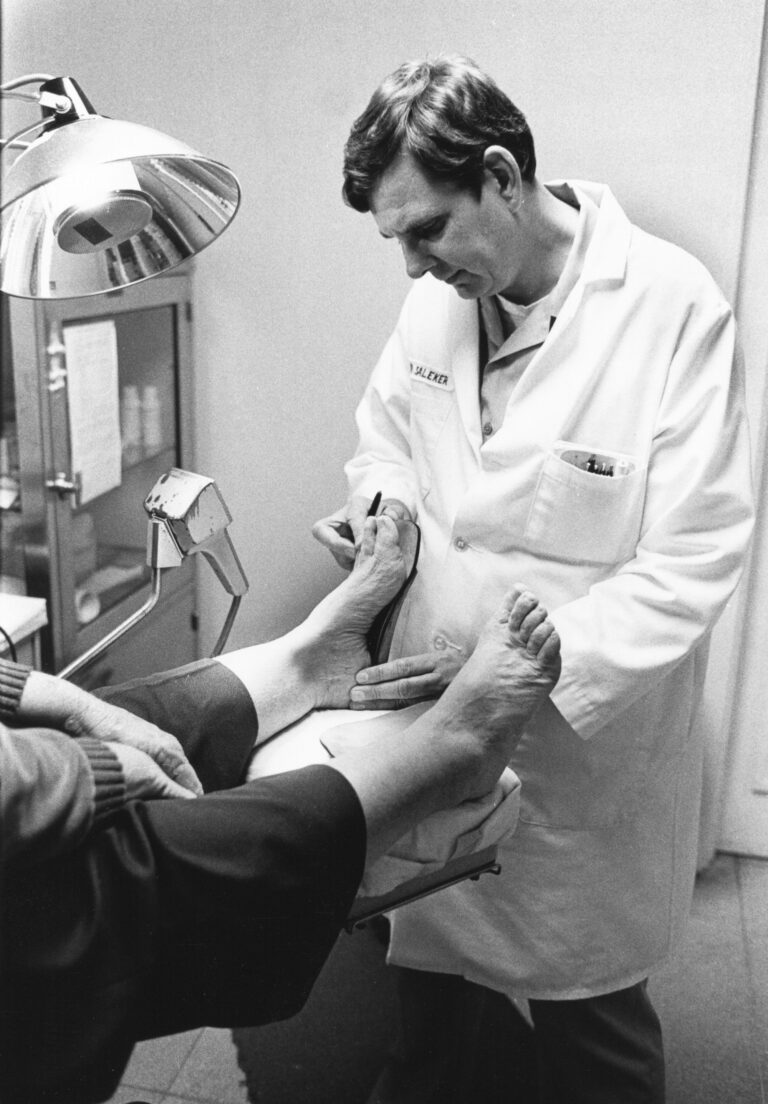
When you bring your child to ModPod, our podiatrists carry out a structured clinical assessment. This includes watching your child walk and run (gait analysis), assessing their footwear for wear patterns, testing the range of motion at the ankle and subtalar joints, and performing the tiptoe test to distinguish flexible from rigid flat feet. Where indicated, we use computerised gait scanning to map foot pressure distribution and identify specific loading patterns.
For paediatric podiatry assessments, we also review footwear — both school shoes and sport shoes — as inappropriate footwear is one of the most common contributors to symptomatic flat feet in children.
Treatment Options
Not every child with flat feet needs treatment. Pain-free, flexible flat feet in a child who runs, jumps, and plays without difficulty rarely require intervention. Treating normal developmental variation is not our aim.
When treatment is appropriate, options include:
- Footwear advice: well-fitted shoes with a firm heel counter and adequate arch support. Avoid thongs and unsupported sandals as everyday footwear during the primary school years.
- Strengthening exercises: activities that develop the foot’s intrinsic muscles — barefoot walking on varied surfaces, single-leg balance drills, and toe-spreading exercises.
- Custom orthotics: prescribed when symptoms are significant and simpler measures have not resolved the problem. Children’s orthotics are reviewed and replaced as feet grow.
A Note on Orthotics in Children
Orthotics are appropriate for children with symptomatic flat feet — pain, activity limitation, or gait problems that affect daily life. They are not routinely prescribed for children who are asymptomatic. The evidence for routine orthotic prescription in pain-free childhood flat feet is limited. If a clinician recommends orthotics for a child with no symptoms, it is reasonable to ask for the clinical rationale.
Medicare and Health Fund Cover for Children’s Podiatry
If your GP refers your child through a Medicare Enhanced Primary Care (EPC) plan, podiatry consultations may attract a Medicare rebate — typically up to five sessions per calendar year under a Team Care Arrangement. Private health funds with Extras cover generally include podiatry rebates. Medibank, BUPA, HCF, and NIB all offer children’s podiatry rebates, though the amount varies by policy tier. Check your specific policy before booking.
Frequently Asked Questions
Q: Is it normal for young children to have flat feet?
A: Yes. Almost all children under three have flat feet, and most develop arches naturally by age six. Flat feet in toddlers and preschool children are developmentally normal and rarely require any intervention.
Q: When should I worry about my child’s flat feet?
A: If the flat arch persists beyond age six, causes foot or leg pain, or affects how your child walks or participates in sport, a podiatry assessment is worthwhile. A child who avoids activity, tires quickly, or trips often should be seen.
Q: Do flat feet in children need orthotics?
A: Not necessarily. Orthotics are appropriate when a child has symptoms — pain, fatigue, or gait problems affecting daily life. Pain-free flat feet in an active child who functions normally do not usually require orthotics.
Q: Can flat feet cause knee pain in children?
A: Yes. Excessive pronation (rolling inward at the ankle) associated with flat feet can alter load through the knee and create anterior knee pain, especially during sport. Addressing the foot mechanics often reduces the knee symptoms.
Q: When is the right age to bring my child to a podiatrist?
A: If you have concerns at any age, it is worth getting an opinion. There is no harm in a reassurance visit. For developmental concerns, many parents bring children between ages four and seven, when arch development should be progressing and any problems become clearer.
Book an Assessment at ModPod Podiatry
If you are concerned about your child’s feet, our podiatrists are experienced in assessing and treating children’s flat feet and paediatric foot conditions across all five Sydney clinics. Early assessment gives you clarity — and, where treatment is needed, the best outcomes.
Book online to see one of our Sydney podiatrists, or call your nearest ModPod clinic in CBD, Mosman, Dee Why, Rose Bay, or North Ryde.