

That stabbing pain in your heel with your first steps out of bed isn’t something you can just stretch away, and someone at the pharmacy or in a running forum has probably told you to try compression socks for plantar fasciitis. It’s a fair question. They’re cheap, easy to wear, and don’t require a referral, so before you spend $30 or $40 on a pair, you want to know if they actually do anything for the sharp arch and heel pain that plantar fasciitis causes.
The short answer is that compression socks can ease swelling and improve circulation, which helps with discomfort and recovery, but they don’t fix the underlying cause of plantar fasciitis. They’re a support tool, not a cure, and understanding that distinction matters before you rely on them as your main treatment.
In this article, we’ll explain exactly how compression works on the foot, what the research actually says, and where socks fit alongside proven treatments like custom orthotics and targeted stretching. As podiatrists who see plantar fasciitis daily across our Sydney clinics, we’ll give you a straight answer on whether they’re worth adding to your routine.
Why compression socks can ease plantar fasciitis pain
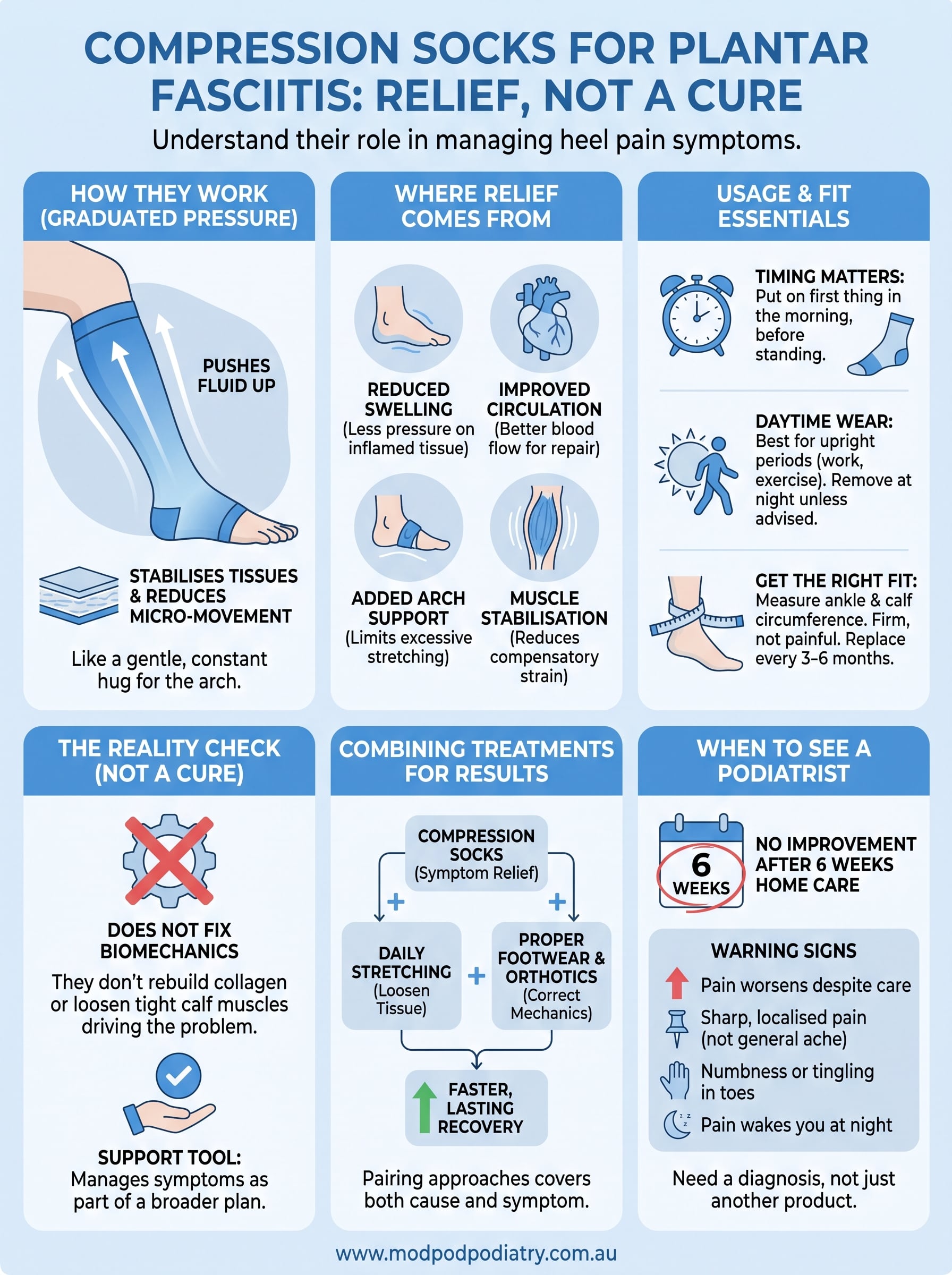
The plantar fascia is a thick band of connective tissue running along the sole of your foot, and when it’s inflamed, every step stretches damaged fibres and reawakens the pain response. Compression socks apply graduated pressure to the foot and lower leg, tightest at the ankle and gradually looser toward the calf. This pressure gradient pushes fluid out of the tissues and back toward your heart, which is exactly the mechanism used in medical compression stockings for varicose veins and swelling. Applied to plantar fasciitis, that same principle reduces the pooling of fluid around the heel and arch that contributes to the puffy, tender feeling many sufferers describe first thing in the morning, which is part of why heel pain peaks with your first steps of the day.
The mechanics of compression on the plantar fascia
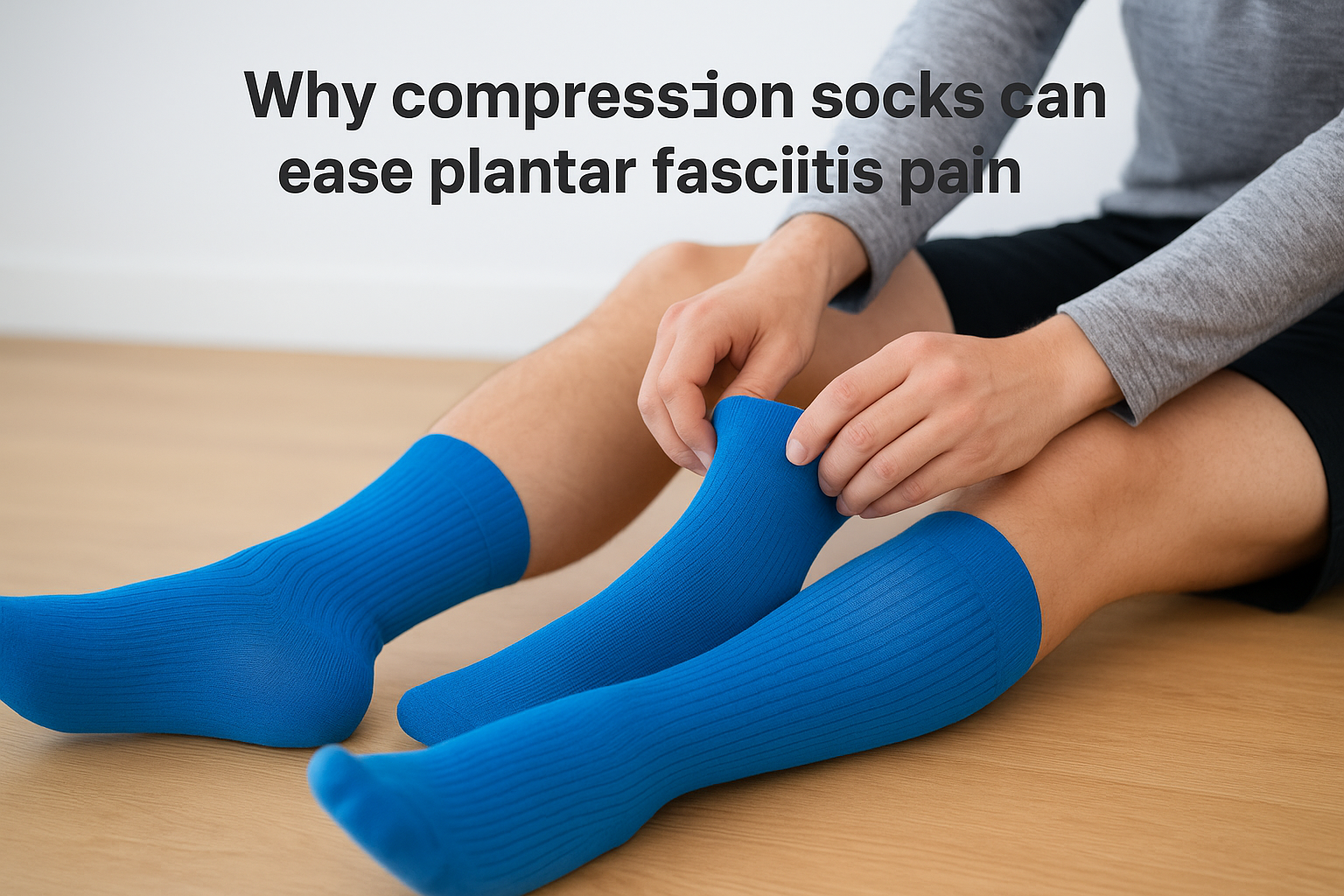
How graduated compression works comes down to stabilising the tissues surrounding the fascia, which limits the micro-movement that aggravates already inflamed fibres with every step. Think of it as a gentle, constant hug for the arch rather than a rigid brace. Because the sock wraps the whole foot and lower leg, it also supports the surrounding muscles, including the calf and Achilles tendon, both of which influence how much strain the plantar fascia takes during walking or running. Patients often tell us the socks feel noticeably better during long shifts on their feet or after training, even though the sock isn’t correcting whatever biomechanical fault caused the injury in the first place.
Compression socks calm the symptoms of plantar fasciitis by improving circulation and support, but they don’t correct the biomechanics causing it.
What the evidence actually shows
Direct research on compression socks for plantar fasciitis is still limited, but the broader evidence on graduated compression therapy for swelling and venous return is well established, and resources such as Healthdirect Australia confirm that managing inflammation and supporting the foot are legitimate parts of treating the condition. Clinically, we see plenty of patients report less throbbing by the end of the day and less stiffness on that first morning step after adding compression to their routine, particularly when it’s paired with icing and calf stretching. That’s a genuine, useful outcome, even if it’s not the same as reversing damage to the fascia itself.
Where the relief actually comes from
- Reduced swelling: less fluid build-up around the heel and arch means less pressure on already inflamed tissue.
- Improved circulation: better blood flow through the lower legs supports the oxygen and nutrient delivery needed for tissue repair.
- Added arch support: gentle compression limits excessive stretching of the fascia during weight-bearing activity.
- Muscle stabilisation: the calf and Achilles get subtle support, which reduces compensatory strain on the foot.
Substantially, none of these mechanisms rebuild collagen or loosen the tight calf muscles often driving the problem underneath, which is why compression socks work best as one part of a broader plan rather than a standalone fix. If you’re dealing with a stubborn case, pairing socks with a proper podiatry assessment and a complete guide to plantar fasciitis treatment helps you understand exactly what’s causing your pain and whether compression is even the right tool for your specific presentation.
How to wear compression socks for plantar fasciitis relief
Getting the timing right matters more than most people realise. Slipping on compression socks for plantar fasciitis first thing in the morning, before you’ve even stood up, catches the swelling before gravity and weight-bearing make it worse. Many of our patients keep a pair by the bed specifically for this reason, since the socks work best when applied before inflammation has a chance to settle into the arch and heel overnight.
Getting the fit and duration right
Wearing them too loose defeats the purpose, and wearing them too tight for too long can restrict circulation rather than improve it. A proper graduated compression sock should feel firm but not painful, with no numbness or tingling in the toes. Most people get the best results wearing them during the day, particularly on your feet at work, during exercise, or on long flights, then removing them at night unless a podiatrist has specifically recommended overnight use for your case, so it pays to know the right daily wear time for a pair.
A simple daily routine
- Morning: put socks on before standing up, ideally within a minute or two of waking.
- Daytime: wear them during work, walking, or training sessions where you’re upright for extended periods, and choose a pair suited to standing all day if that’s your job.
- Evening: remove them once you’re off your feet and resting, unless your podiatrist advises otherwise.
- Washing: hand wash or use a gentle cycle to preserve the elastic fibres, since compression socks lose their graduated pressure quickly if they’re stretched out or washed too roughly.
- Replacement: swap them out every three to six months of regular wear, as the compression weakens well before the fabric looks worn.
Compression socks only work if the graduated pressure stays intact, so treat the fit and the fabric as seriously as the timing.
Signs you’re wearing them wrong
If your toes go pale, cold, or numb, the sock is too tight and you need a larger size or a lower compression rating. Numbness combined with pain is a signal to stop immediately rather than push through it. Skin marks that don’t fade within a few minutes of removal also suggest the pressure is too high for your leg. Repeated slipping down the ankle usually means the sizing is wrong rather than the sock itself being faulty, so it’s worth getting properly measured rather than guessing based on shoe size alone. Sorting out fit issues early saves you from abandoning a genuinely useful tool over a sizing mistake.
Choosing the right compression socks for your feet
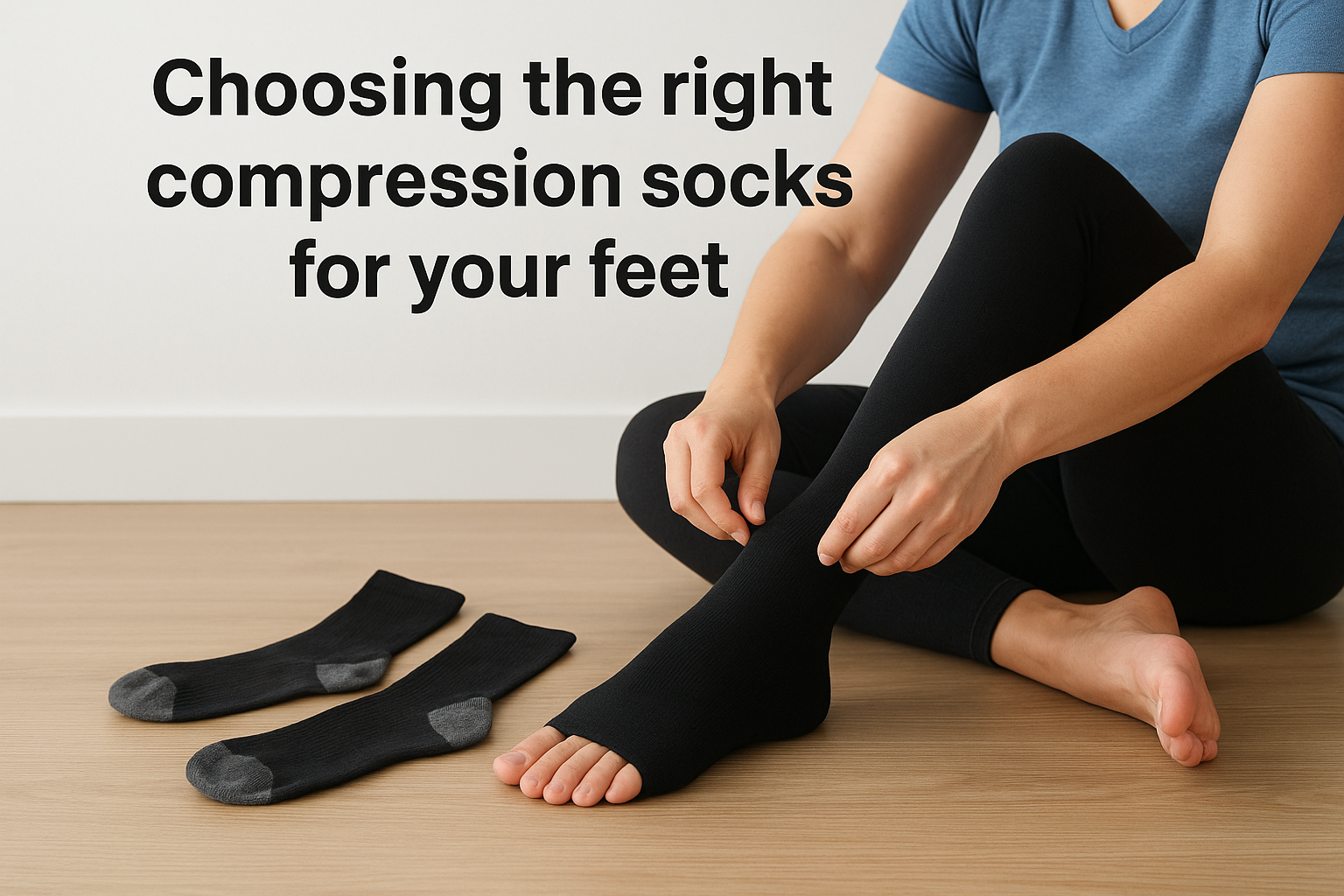
Picking the right pair comes down to compression level, length, and material, not just the first product that shows up in a search for compression socks for plantar fasciitis, so it’s worth seeing which brands sold in Australia actually stack up. A sock rated too low won’t do much beyond feeling snug, while one rated too high can be genuinely uncomfortable for all-day wear. Getting this right the first time saves you money and stops you writing off compression therapy because you happened to buy the wrong strength.
Compression levels explained
Compression is measured in millimetres of mercury (mmHg), and the right number depends on how severe your swelling and pain actually are. Mild cases usually do fine with a lower rating, while people on their feet all day or managing more stubborn inflammation often need something firmer.
| Compression level | mmHg range | Best suited for |
|---|---|---|
| Light | 8-15 mmHg | Mild discomfort, general daily support |
| Moderate | 15-20 mmHg | Noticeable swelling, active people, long shifts standing |
| Firm | 20-30 mmHg | Persistent inflammation, podiatrist-recommended cases |
| Extra firm | 30-40 mmHg | Medical-grade use, only under professional guidance |
The right compression level matters more than the brand name on the packet, so check the mmHg rating before you buy.
Length, style, and material
Ankle-length compression sleeves for plantar fasciitis target the foot and heel directly, which suits people who just want relief in the arch without extra bulk in their shoes. Knee-high socks extend support up through the calf, which helps if calves that won’t loosen up are part of what’s driving your heel pain. Materials matter too: look for a blend with nylon or spandex for durable elasticity, and avoid all-cotton options that stretch out and lose graduated pressure within weeks.
Getting properly sized
Sizing by shoe size alone is a common mistake, since compression socks are sized by ankle and calf circumference, not foot length. Take a tape measure to the narrowest part of your ankle and the widest part of your calf before ordering, and check the brand’s own sizing chart rather than assuming sizes are standard across manufacturers. Standing barefoot on a hard floor when you measure gives a more accurate reading than measuring first thing after lying down, since your foot naturally swells slightly through the day.
Combining compression socks with other plantar fasciitis treatments
Compression socks work best as part of a wider plan, not as a lone fix for stubborn heel pain. Treating plantar fasciitis properly means addressing the tight calf muscles, weak foot structure, and biomechanical faults that caused the fascia to become inflamed in the first place. Socks manage the symptoms while these other treatments target the actual cause, and combining them speeds up recovery far more than relying on compression alone.
Compression socks work best when paired with stretching and proper footwear, not used as a replacement for either.
Stretching and strengthening exercises
Daily calf stretches and plantar fascia-specific exercises loosen the tissue that compression alone can’t reach. Rolling your foot over a frozen bottle or tennis ball, calf stretches against a wall, and towel scrunches with your toes all reduce the tension pulling on the heel bone. Doing these stretches in the morning, then putting your socks on straight after, gives you the benefit of both the loosened tissue and the reduced swelling at the same time. Patients who pair the two consistently tend to report faster improvement than those using either approach in isolation.
Footwear and custom orthotics
Good footwear matters just as much as the sock itself, since a worn-out or unsupportive shoe undoes a lot of the good compression is doing. Shoes with proper arch support and cushioned heels reduce the load on the fascia with every step, and pairing them with orthotics made for plantar fasciitis addresses the underlying foot mechanics that compression socks can’t touch. Orthotics correct how your foot strikes the ground and distributes pressure, while the sock manages inflammation, and together they cover both the cause and the symptom.
Other therapies worth considering
- Icing: 10 to 15 minutes after activity reduces acute inflammation alongside the sock’s ongoing support.
- Night splints: keep the fascia gently stretched overnight, complementing daytime compression.
- Shockwave therapy: a clinical option for chronic heel pain that hasn’t responded to conservative measures, often used alongside orthotics and compression.
- Taping: offers short-term arch support during activity when you need extra stability beyond what a sock provides.
Getting a proper podiatry assessment before layering treatments together ensures you’re not wasting time or money on approaches that don’t suit your specific case, since plantar fasciitis presents differently from patient to patient.
When to see a podiatrist about ongoing heel pain
Six weeks is roughly the point where most self-managed heel pain should be showing real improvement, and if compression socks, stretching, and better shoes haven’t shifted your symptoms by then, it’s time to get a proper diagnosis rather than keep guessing. Plantar fasciitis can mimic other conditions, including heel spurs, nerve entrapment in the heel, or a stress fracture, and treating the wrong problem with the wrong tool just wastes weeks you don’t need to lose. A podiatrist can confirm what’s actually going on with a hands-on assessment and imaging if needed, rather than leaving you to work through pharmacy shelves on trial and error.
If home care hasn’t eased your heel pain within six weeks, you need a diagnosis, not another product.
Warning signs you shouldn’t ignore
Some symptoms point to something more serious than straightforward inflammation, and pushing through them rarely ends well.
- Pain that worsens despite consistent stretching, icing, and compression over several weeks
- Sharp, localised pain in one specific spot rather than a general ache through the arch, which can indicate a stress fracture
- Numbness or tingling spreading into the toes, suggesting nerve involvement rather than fascia inflammation
- Pain waking you at night, which is unusual for standard plantar fasciitis and worth investigating properly
- Swelling that doesn’t respond to rest, ice, or compression after a few days
Any of these on their own is reason enough to book an appointment rather than wait it out.
What a podiatry assessment involves
Expect a thorough physical examination, a discussion of your activity levels and footwear, and often a podiatrist-led gait analysis using pressure plate technology to see exactly how your foot loads with each step. This is where clinics like ours differ from a quick chemist consultation, since we can measure biomechanics directly rather than relying on guesswork. Depending on what we find, treatment might include custom orthotics, shockwave therapy, targeted stretching programmes, or in persistent cases, further imaging to rule out structural damage. Most Medicare-eligible patients can also claim part of the cost under an EPC plan, and HICAPS is available on-site for those with private health cover.
Getting seen early genuinely matters here, because plantar fasciitis that’s allowed to become chronic takes considerably longer to resolve than a case caught and treated within the first couple of months. If your heel pain has outlasted your patience, book an assessment with ModPod Podiatry and get a clear answer instead of another guess.
Finding lasting relief for your feet
Compression socks genuinely help with plantar fasciitis, easing swelling and improving circulation enough that many people notice real comfort during the day and less stiffness first thing in the morning. What they won’t do is fix the tight calves, weak arches, or biomechanical faults driving the inflammation in the first place, which is why we keep coming back to the same point: use them as support, not as your whole strategy. Pair them with proper stretching, decent footwear, and a real diagnosis, and you’ve got a plan that actually addresses the cause rather than masking it for a few hours at a time.
If six weeks of home care hasn’t shifted your heel pain, or you’re not sure whether compression socks for plantar fasciitis are even the right tool for your case, don’t keep guessing. Book a heel pain assessment at one of our five Sydney clinics and get a proper answer this week.