
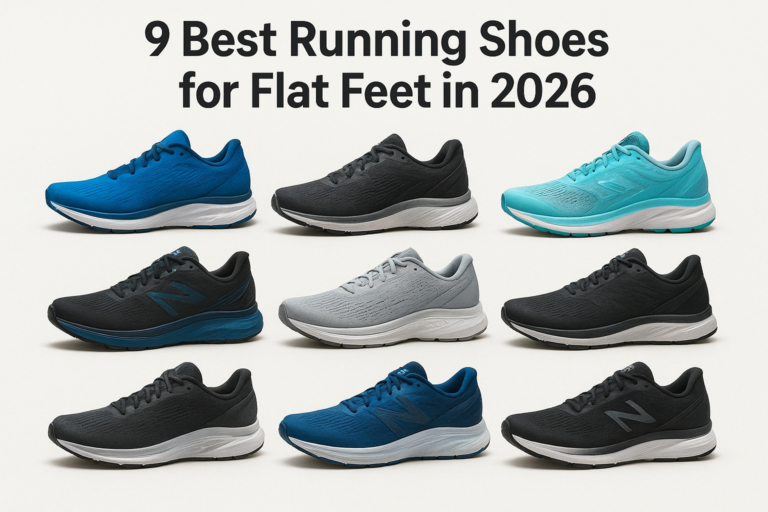
If your arches roll inward every time your foot hits the pavement, the wrong shoe turns a easy run into shin pain, blisters, or worse. Finding the right running shoes for flat feet matters more than most runners realise, because overpronation puts extra strain through your knees, ankles, and lower back with every stride. We see this daily in clinic, and the shoe on your foot is often the difference between a manageable niggle and a proper injury.
This guide gets straight to the point: nine shoes that actually deliver structured arch support and stability control for flat-footed runners, based on what we recommend to patients at our Sydney clinics. No filler, no guesswork, just models that hold up to real biomechanical scrutiny.
Below, you’ll find our picks ranked for different needs, from marathon training to casual jogging, along with the key features that separate a supportive shoe from a marketing gimmick. We’ll also cover how to check your own fit, because even the best shoe on this list won’t fix flat feet if it’s sized or laced wrong. If your pain persists once you’ve got the right pair, that’s usually a sign it’s time for a proper gait assessment for runners with a podiatrist rather than another shoe swap.
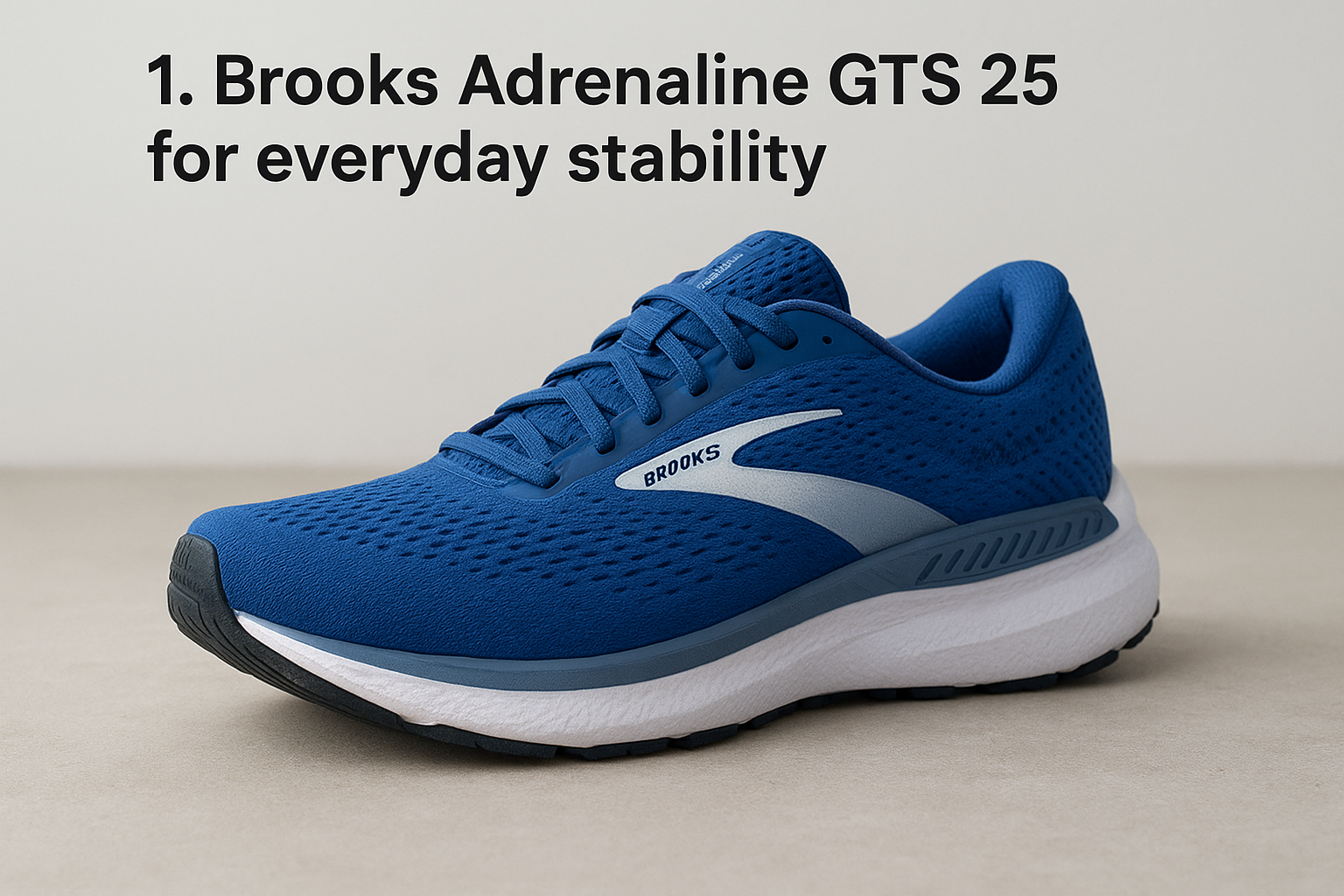
1. Brooks Adrenaline GTS 25 for everyday stability
The Adrenaline GTS 25 has been the benchmark stability shoe for flat-footed runners for over two decades, and the latest version keeps earning that reputation. Brooks updated the GuideRail support system in this release, which now cradles the foot only when your gait drifts out of alignment rather than forcing a rigid path the whole run. That means less bulk underfoot and a more natural stride, which is exactly what most of our patients want from running shoes for flat feet that they’ll wear five days a week.
Why it suits flat feet
Overpronation happens because a collapsed arch lets the ankle roll inward past what’s structurally sound, and the GTS 25 counters this with dual-density foam positioned along the medial side of the midsole. This firmer foam resists compression under load, so your foot doesn’t sink and roll the way it would in a soft neutral shoe. The DNA LOFT v3 cushioning above it still feels plush, so you’re not sacrificing comfort for control.
A stability shoe should correct your stride without you noticing it’s working, and the Adrenaline GTS 25 does exactly that.
Best for
This shoe suits the largest group of flat-footed runners we see in clinic, people who need reliable arch support for daily training without any of the harshness older motion-control shoes carried.
- Everyday runners logging 20 to 60 kilometres a week
- Mild to moderate overpronators confirmed by a gait assessment
- Runners transitioning from a bulkier motion-control shoe
- Heavier runners who need more structure than a lightweight trainer offers
- Anyone wanting one shoe for both training runs and easy recovery jogs
Key features
| Feature | Detail |
|---|---|
| Support type | Guiderail-based stability (mild to moderate) |
| Cushioning | DNA LOFT v3, medium-firm |
| Drop | 12mm |
| Weight (men’s) | Approx. 292g |
| Upper | Engineered air mesh, wider forefoot fit |
| Outsole | Full-length blown rubber crash pad |
The wider forefoot box is worth flagging on its own, because flat feet often splay more under load and a narrow toe box will crowd the bunion joint over long distances, which is why some runners end up in running shoes built for wide feet. Brooks widened this area in the GTS 25 without changing the overall stability platform, which is a detail a lot of competing brands still get wrong.
Price
Expect to pay between AUD $220 and $260 for the Adrenaline GTS 25, depending on colourway and whether you catch a sale between seasonal releases. It sits at the premium end for a daily trainer, but the outsole rubber and midsole foam typically hold their support properties for 600 to 800 kilometres, which works out to solid value if you’re running regularly. If you’re unsure whether mild or moderate stability suits your foot type, that’s a quick thing to confirm during a biomechanical assessment rather than guessing at the shop counter.
2. Asics Gel-Kayano 33 for moderate overpronation
Asics rebuilt the Kayano line a few years back around a new foam compound, and the 33rd edition is the most refined version yet for flat-footed runners who need serious support without a harsh ride. The 4D Guidance System replaces the older, more rigid medial post with a system that reads your gait in real time and adjusts resistance through the stride, so the shoe corrects overpronation without fighting your natural movement. This makes it one of the more forgiving stability running shoes we recommend to patients moving up from a basic trainer.
Why it suits flat feet
Underneath the guidance system sits a wider platform than previous Kayano models, which gives a flat foot more surface area to load into before the arch collapses inward. PureGEL cushioning at the heel absorbs impact without going soft under body weight, a common failure point in shoes marketed as supportive but built on standard neutral foam.
Good arch support isn’t about stiffness, it’s about foam that holds its shape when your foot needs it most.
Best for
Runners with confirmed moderate overpronation get the most out of this shoe, particularly those clocking longer distances where fatigue makes form breakdown worse.
- Half marathon and marathon training blocks, where long-distance shoe choice matters most
- Runners with a history of shin splints or medial knee pain
- Those wanting a plush ride alongside firm structural support
- Runners transitioning off orthotics who still need built-in guidance
Key features
| Feature | Detail |
|---|---|
| Support type | 4D Guidance System, moderate stability |
| Cushioning | PureGEL + FF Blast Plus Eco foam |
| Drop | 10mm |
| Weight (men’s) | Approx. 310g |
| Upper | Engineered mesh, structured heel counter |
Sizing runs true, though Asics keeps a slightly narrower heel counter than Brooks, so if your ankle sits loosely in most shoes, try a half size down and check the lace-through fit before committing.
Price
Expect around AUD $260 to $290 for the Gel-Kayano 33, sitting toward the top of the stability category. Given the 4D system and durable outsole rubber, most runners get 700 to 900 kilometres before support noticeably fades, which justifies the price if you’re training seriously rather than jogging occasionally.
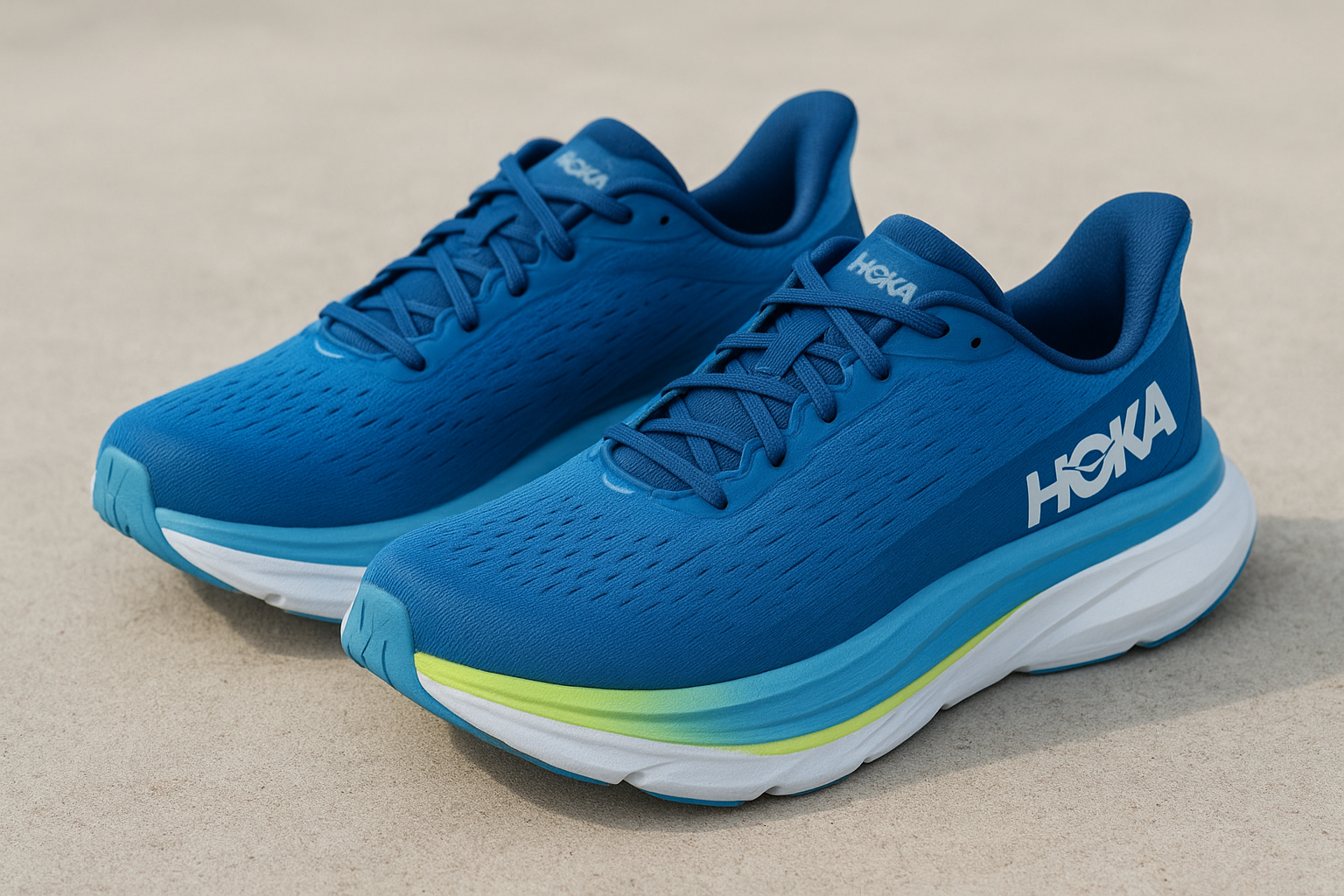
3. Hoka Arahi 8 for a lightweight supportive ride
Hoka built its reputation on maximalist cushioning, but the Arahi 8 proves the brand can do stability without piling on grams. This shoe strips out the bulk you’d expect from a supportive trainer and replaces it with a firmer foam wall along the medial midsole, called J-Frame technology. It’s the shoe we point runners toward when they want structured arch support but hate the heavy, clunky feel of older motion-control designs.
Why it suits flat feet
The J-Frame sits like an exoskeleton wrapped around the softer core foam, so it resists collapse on the inside edge without needing a separate hard plastic post. That means your foot gets guided back into alignment through the whole gait cycle rather than just at heel strike, which suits flat feet that overpronate progressively as fatigue sets in during longer runs.
Support doesn’t need weight behind it, the Arahi 8 proves a lightweight shoe can still hold a collapsing arch in check.
Best for
Runners who’ve tried heavier stability shoes and found them sluggish tend to switch to the Arahi 8 and stay there.
- Runners wanting stability without added shoe weight
- Faster-paced training runs and tempo sessions
- Flat-footed runners with a lower body weight who don’t need maximum motion control
- Anyone transitioning from a neutral Hoka model who now needs guidance
Key features
| Feature | Detail |
|---|---|
| Support type | J-Frame medial support, mild to moderate |
| Cushioning | Compression-moulded EVA |
| Drop | 5mm |
| Weight (men’s) | Approx. 269g |
| Rocker geometry | Meta-Rocker for smoother forward roll |
Geometry matters here as much as the foam. Hoka’s Meta-Rocker shape rolls the foot forward through toe-off, which reduces the amount of time your arch spends under load compared with a flat-soled shoe, a small but genuine advantage for flat feet prone to arch fatigue after longer runs.
Price
Expect to pay roughly AUD $230 to $260 for the Arahi 8. Given the low weight and durable J-Frame construction, most runners get 500 to 700 kilometres of reliable support before the midsole starts to soften unevenly, making it a solid mid-tier investment for anyone chasing a lighter stability shoe.
4. Saucony Guide 19 for plush cushioned support
Saucony rebuilt the Guide line around a single-density PWRRUN+ midsole, dropping the old dual-density post in favour of a wider platform that does the stabilising work through shape rather than firmness. This is the shoe we suggest to patients who found older guide-style trainers too rigid underfoot but still need genuine arch support for a collapsing foot. The result feels closer to a neutral cushioned trainer than a corrective one, which suits runners who resist the idea of a stiff, medicinal-feeling shoe.
Why it suits flat feet
Guidance in the Guide 19 comes from a broadened base and a flared heel that widens the contact patch under load, so a flat foot has more surface to roll into before the arch collapses inward past a stable range. Saucony paired this with a firmer strip of foam along the arch itself, subtle enough that you won’t feel a hard edge but present enough to slow excessive pronation through midstance.
Wider is sometimes better than harder, and the Guide 19 controls overpronation through platform shape rather than brute midsole stiffness.
Best for
Runners after a plush ride who still need a degree of stability control tend to gravitate toward this shoe over firmer competitors.
- Recreational and mid-distance runners wanting maximum comfort
- Flat-footed runners who found older stability shoes too stiff
- Those running mostly on footpaths and gym treadmills
- Runners recovering from injury who need a forgiving, softer landing
Key features
| Feature | Detail |
|---|---|
| Support type | Wide platform guidance, mild to moderate |
| Cushioning | PWRRUN+ foam, single density |
| Drop | 8mm |
| Weight (men’s) | Approx. 285g |
| Upper | Engineered mesh with padded collar |
The padded collar and generous heel cushioning make this one of the more comfortable options on this list straight out of the box, with minimal break-in needed compared with firmer stability shoes.
Price
Expect to pay between AUD $230 and $250 for the Guide 19. It’s positioned as a mid-range daily trainer, and most runners see 500 to 700 kilometres of reliable cushioning before the midsole compresses noticeably. If you’re deciding between plush comfort and firmer correction, that trade-off is worth discussing at a proper podiatry consultation before you commit to a full training block in either direction.
5. New Balance Fresh Foam X 860v15 for budget value
New Balance built the 860 line for runners who need genuine stability control but don’t want to pay premium prices every time a new model drops. The 860v15 keeps the medial support post that’s defined this shoe for years, wrapped in Fresh Foam X cushioning that feels noticeably softer than earlier versions without losing the structure that keeps a flat foot from rolling too far inward. It’s the shoe we mention most often when patients ask what a dependable stability trainer costs without the flagship price tag.
Why it suits flat feet
Dual-density foam sits along the inner midsole, firmer than the surrounding cushioning, so it resists compression as your arch loads through midstance. This medial post design is one of the more proven approaches to overpronation control, and New Balance hasn’t strayed far from what works across fifteen versions of this shoe.
A shoe doesn’t need a flagship price to control overpronation properly, and the 860v15 proves the point.
Best for
Budget-conscious runners who still need reliable arch support get strong value from this model.
- New runners easing into regular training without a big shoe outlay
- Flat-footed runners wanting a proven, unfussy support system
- Those replacing shoes more frequently due to higher weekly mileage
- Runners who found premium stability shoes overbuilt for their needs
Key features
| Feature | Detail |
|---|---|
| Support type | Medial post, mild to moderate stability |
| Cushioning | Fresh Foam X |
| Drop | 8mm |
| Weight (men’s) | Approx. 286g |
| Upper | Engineered mesh, standard and wide fits available |
Availability in wide fittings is a genuine advantage here, since flat feet often need more room through the midfoot than standard lasts allow, and not every brand on this list offers that option.
Price
Expect to pay around AUD $180 to $210 for the 860v15, making it one of the more affordable proper stability shoes available. Durability sits around 500 to 650 kilometres, slightly less than pricier competitors, but the lower upfront cost still makes it excellent value for runners replacing shoes twice a year. If you’re unsure whether a medial post shoe like this suits your arch, a quick check during a gait assessment settles it fast.
6. Brooks Ghost Max 3 for a neutral cushioned feel
Brooks built the Ghost Max 3 as a maximalist neutral trainer, but it earns a spot on this list because of how many flat-footed runners actually do best in a neutral shoe once they’re running with custom orthotics. Rather than a medial post fighting the orthotic’s own correction, this shoe gives you a wide, stable platform and lets the insert do the guiding work. We recommend it often to patients who’ve already had orthotics fitted and just need a shell that won’t clash with them.
Why it suits flat feet
The Ghost Max 3 sits on an unusually broad midsole for a neutral shoe, which lowers your centre of gravity and reduces the wobble a collapsed arch can create on uneven footpaths. DNA LOFT v3 cushioning underfoot is soft but doesn’t compress unevenly, so a flat foot loading through midstance still gets consistent support even without a built-in guiderail.
A wide, stable base can do a lot of the stability job that a medial post usually handles, especially once orthotics are already correcting the stride.
Best for
This shoe suits a narrower group than most on this list, but it’s the right call for the runners it fits.
- Flat-footed runners already using custom orthotics for correction
- Recovery days and easy mileage where maximum cushioning matters more than guidance
- Runners with mild flat feet who don’t overpronate significantly
- Anyone wanting a soft, forgiving ride after impact-heavy training blocks
Key features
| Feature | Detail |
|---|---|
| Support type | Neutral, wide stable platform |
| Cushioning | DNA LOFT v3, high stack |
| Drop | 6mm |
| Weight (men’s) | Approx. 306g |
| Upper | Plush knit, roomy midfoot |
Orthotic compatibility deserves a mention here, since the removable insole and deep heel cup make swapping in a custom device straightforward, unlike some maximalist shoes with fixed sock liners.
Price
Expect to pay between AUD $230 and $260 for the Ghost Max 3. Given the high stack height, most runners get 500 to 700 kilometres before the cushioning loses its bounce. If you’re not sure whether your flat feet need orthotics alongside a neutral shoe like this, that’s worth raising during a podiatry consultation before you buy.
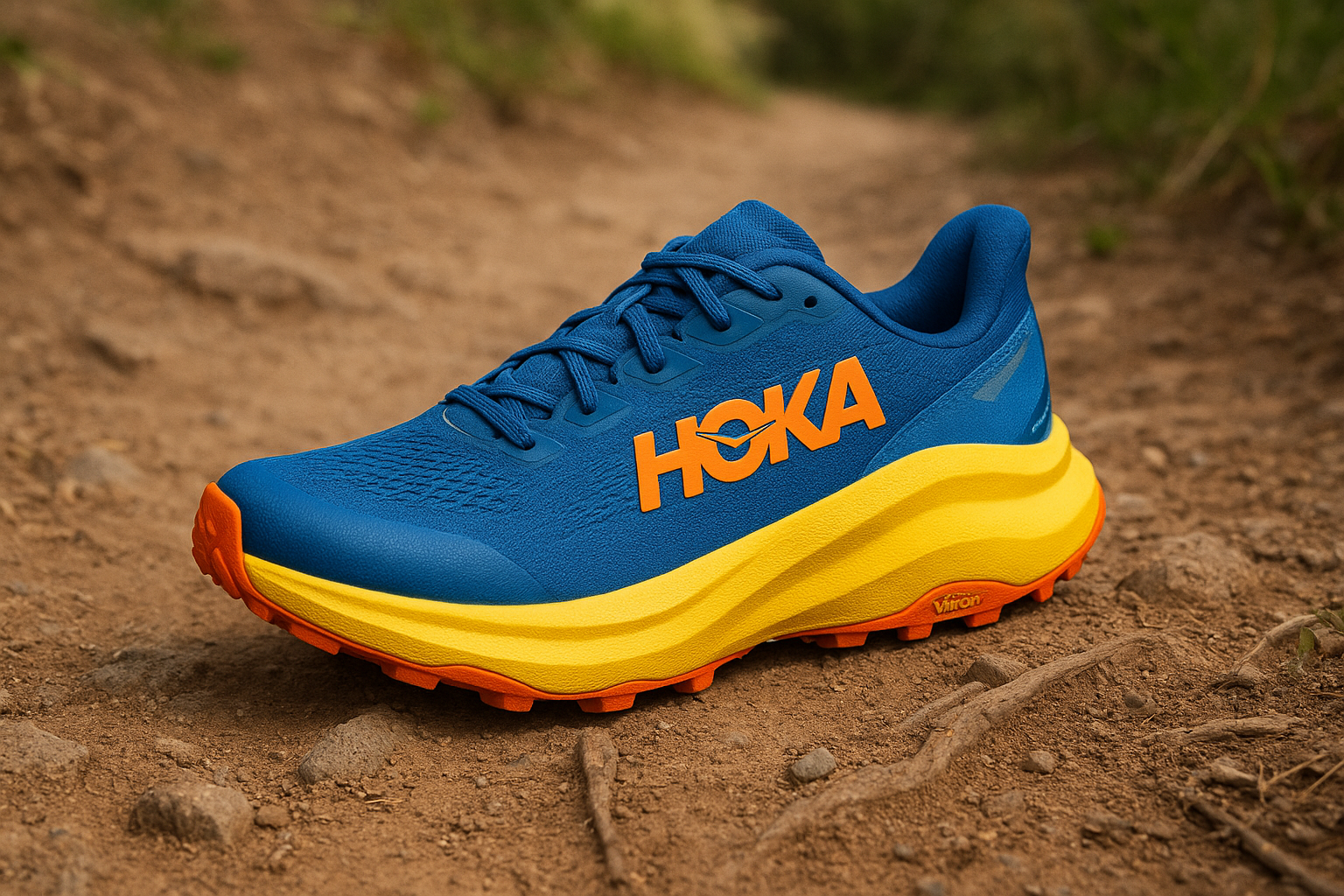
7. Hoka Speedgoat 7 for trail runs with flat feet
Trail running throws a different problem at flat feet than road running does, because uneven terrain forces your arch to work through constant micro-adjustments rather than a repetitive, predictable stride. The Speedgoat 7 is Hoka’s flagship trail shoe, and it earns its place here because it pairs an aggressive Vibram Megagrip outsole with the same generous midsole platform that makes Hoka’s road shoes suitable for overpronating runners. We recommend it to patients who want to keep running off-road without abandoning the arch support they rely on for pavement kilometres.
Why it suits flat feet
Beneath the tread sits a wide, stable base that spreads load across a bigger footprint than most trail shoes offer, which matters when your arch is already collapsing under normal conditions and now has to contend with rocks, roots, and camber. The compression-moulded EVA midsole holds its shape well on uneven ground, so a flat foot doesn’t get an extra push inward every time the trail tilts.
Trail terrain punishes a collapsing arch harder than flat pavement ever will, so stability underfoot matters even more off-road.
Best for
This shoe suits runners who split their training between road and trail, or who’ve moved to trail running specifically to reduce repetitive impact while managing flat feet.
- Trail and ultra-distance runners with mild to moderate overpronation
- Flat-footed runners transitioning from road to off-road training, who may also want beginner-friendly trail running shoes
- Those needing reliable grip on wet or loose surfaces
- Runners wanting maximum cushioning to offset technical, high-impact terrain
Key features
| Feature | Detail |
|---|---|
| Support type | Wide stable platform, neutral to mild guidance |
| Cushioning | Compression-moulded EVA, high stack |
| Drop | 4mm |
| Weight (men’s) | Approx. 316g |
| Outsole | Vibram Megagrip, 5mm lugs |
Grip depth is worth checking against your usual terrain, since the 5mm lugs suit soft and muddy trails well but can feel overkill on hard-packed fire trails.
Price
Expect to pay around AUD $270 to $300 for the Speedgoat 7, reflecting its position as a premium trail shoe. Durability runs to roughly 500 to 650 kilometres depending on surface abrasion, and if you’re unsure whether your flat feet need extra support for trail-specific loading, a biomechanical assessment will settle it before you commit to this price point.
8. Asics Magic Speed 5 for tempo and speed sessions
Speed sessions expose flat feet in a way easy runs never do, because faster paces shift more load onto the forefoot and reduce the time your arch has to stabilise before the next stride. The Magic Speed 5 is Asics’s lightweight tempo trainer, built around a curved carbon plate and a nitrogen-infused FF Turbo midsole, and it earns a spot here because it manages to keep some genuine stability control without the bulk of a daily trainer. We suggest it to patients who need a faster shoe for interval work but still overpronate enough that a pure racing flat would leave them sore.
Why it suits flat feet
Underneath the plate sits a slightly wider forefoot platform than most speed shoes offer, which gives a flat foot more surface to load into during the toe-off phase where overpronation tends to spike at pace. Asics also firmed up the medial midsole just enough to slow excessive inward roll without dulling the shoe’s snappy rebound, a balance that’s genuinely hard to get right in a plated trainer.
A tempo shoe doesn’t need to abandon arch support just because it’s built for speed, and the Magic Speed 5 gets that balance right.
Best for
This shoe suits runners who already have a stable daily trainer and want a second pair specifically for faster efforts.
- Tempo runs, fartlek sessions, and race-pace intervals
- Flat-footed runners with mild overpronation only
- Experienced runners comfortable in a firmer, more responsive ride
- Those wanting a plated shoe without full carbon racing stiffness
Key features
| Feature | Detail |
|---|---|
| Support type | Neutral to mild guidance, wide forefoot |
| Cushioning | FF Turbo foam with curved carbon plate |
| Drop | 5mm |
| Weight (men’s) | Approx. 224g |
| Best use | Tempo, speed work, shorter races |
Weight matters more here than on any other shoe on this list, since a lighter build is the whole point of a tempo trainer, and Asics kept the Magic Speed 5 close to 224 grams without stripping out the forefoot support entirely.
Price
Expect to pay around AUD $220 to $250 for the Magic Speed 5. Given the plate and lighter foam compound, durability sits lower than a daily trainer at roughly 300 to 450 kilometres, so most runners rotate it in only for key sessions rather than everyday mileage.
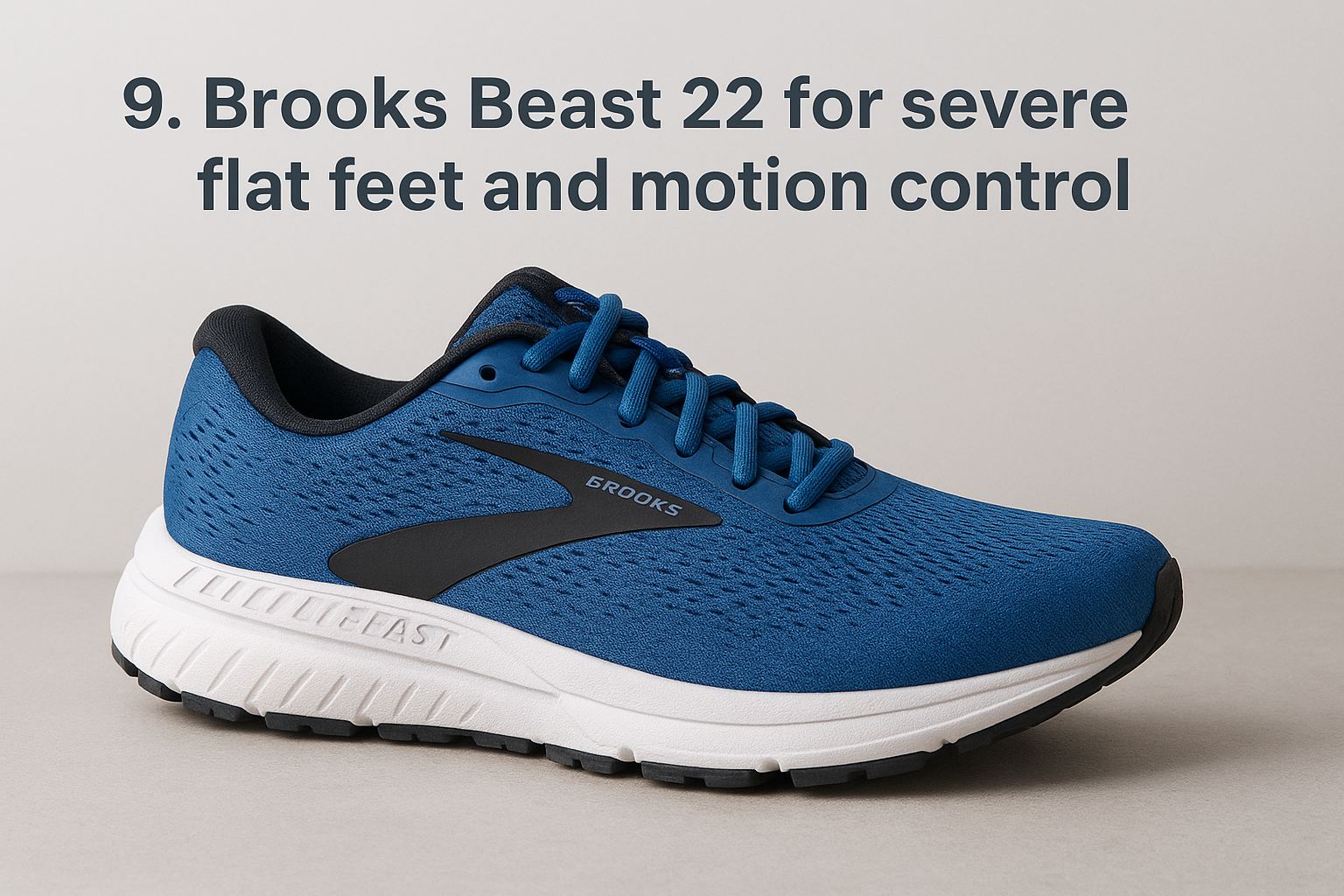
9. Brooks Beast 22 for severe flat feet and motion control
Severe flat feet need more than a guiderail nudging the stride back into place, they need a shoe built to physically limit how far the foot can roll. The Beast 22 is Brooks’ motion-control flagship, and it’s the shoe we reach for when a patient’s overpronation is significant enough that standard stability trainers still leave them sore after a few kilometres. Where the Adrenaline GTS 25 corrects a mild drift, the Beast 22 holds a genuinely collapsing arch in a much firmer frame, making it one of the most structured running shoes for overpronation built for this specific problem.
Why it suits flat feet
Extra-wide dual-density foam runs the full length of the medial midsole here, not just under the arch, which gives the Beast 22 far more resistance to inward roll than any shoe higher on this list. A rigid heel counter locks the rearfoot in place at initial contact, the moment where severe overpronators lose control fastest, and the wider base underneath adds a stable platform your arch can’t easily collapse past.
When mild stability shoes stop working, the answer isn’t a softer shoe, it’s a firmer one built specifically for severe overpronation.
Best for
This shoe suits a smaller, more specific group than the others on this list, but it’s often the only trainer that stops pain for these runners.
- Runners with severe, confirmed overpronation or collapsed arches
- Heavier runners needing maximum medial support
- Those who’ve cycled through several stability shoes without relief
- Runners recovering from posterior tibial tendon issues under podiatric guidance
Key features
| Feature | Detail |
|---|---|
| Support type | Full motion control, maximum stability |
| Cushioning | DNA LOFT, firm |
| Drop | 12mm |
| Weight (men’s) | Approx. 340g |
| Upper | Reinforced mesh, structured heel counter |
Price
Expect to pay between AUD $230 and $260 for the Beast 22, in line with other premium stability shoes despite its heavier build. Given the reinforced outsole and dense midsole, it holds support for roughly 700 to 900 kilometres. If you’ve tried several stability shoes without success, book a gait assessment before buying, since severe flat feet sometimes need orthotics alongside a shoe this firm rather than the shoe alone.
10. How to choose the right running shoe for flat feet
Getting the right shoe isn’t just about picking the highest-ranked model on this list. Your own foot shape, running volume, and history of injury all change what "best" means for you, so treat these picks as a shortlist rather than a final answer.
Match support level to your degree of overpronation
Flat feet aren’t all the same, and neither is the correction they need. Mild overpronators often do fine in a guiderail shoe like the Adrenaline GTS 25, while someone with a fully collapsed arch might need the firmer frame of the Beast 22. Guessing your category from how your feet look standing still is unreliable, since arch collapse in flat feet only shows up properly under load, mid-stride.
The right shoe corrects your specific stride, not a generic idea of what a flat foot needs.
Check fit before you check the brand
A supportive shoe that’s sized or fitted wrong will still let your arch roll. Run through this checklist in the shop or before your final purchase online:
- Leave a thumb’s width of space between your longest toe and the end of the shoe
- Make sure the midfoot doesn’t pinch when your foot naturally splays under weight
- Walk on a hard floor, not carpet, to feel how the arch support actually engages
- Try both shoes on, since most people have one foot slightly larger than the other
- Bring your usual running socks and, if you use them, your custom orthotics
Consider your surface and distance
A shoe built for tempo work won’t hold up the same way over a long trail run, and a plush daily trainer isn’t built for interval sessions. Match the shoe to what you’ll actually run in it most weeks, then rotate in a second pair if your training mixes road, trail, and speed sessions.
Replace shoes before the support disappears
Stability foam degrades before the outsole looks worn out, which catches a lot of runners off guard. Track kilometres rather than relying on visual wear, learn how long running shoes actually last, and swap shoes once you hit the upper end of the ranges listed above, particularly if you’re prone to shin or knee pain when a shoe starts breaking down.
11. Do you need to see a podiatrist about your flat feet
Shoes alone can’t fix every flat foot, and pretending otherwise wastes money on repeat purchases. Some overpronation responds well to a good stability shoe, but plenty of runners keep cycling through models on this list without any real change in pain, which usually means the shoe isn’t the problem anymore. Reaching that point is exactly when a proper podiatry assessment earns its cost, because guessing your way through another shoe release rarely solves a biomechanical issue that started well before the shoe did.
Signs it’s time to book an assessment
Certain patterns that mean it’s time to see a podiatrist show up again and again in clinic before someone finally books in, and they’re worth checking against your own experience:
- Pain that returns within a few kilometres no matter which shoe you try
- Recurring shin splints, medial knee pain, or Achilles tightness that flares every training block
- Visibly worn-out shoes on the inside edge within a couple of months
- A history of ankle rolls or repeated soft tissue injuries
- Children showing an unusual gait, toe walking, or complaints of leg fatigue
If three or four shoe changes haven’t fixed your pain, the shoe was never the whole problem.
What a podiatry consultation actually involves
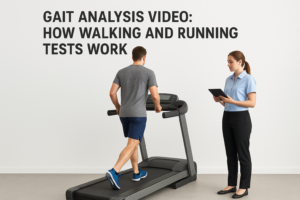
Expect more than a quick look at your feet standing still. A proper visit includes a gait analysis on a treadmill or pressure plate, a review of your training history and current footwear, and a hands-on check of your ankle and foot mobility. From there, a podiatrist can confirm whether you need orthotics made for your gait, a different shoe category entirely, or simply a lacing and fit correction you’ve been missing.
Booking one session usually settles months of trial and error. Rather than buying a fourth pair of shoes hoping this one finally works, a podiatry consultation gives you an actual diagnosis, and with Medicare EPC eligibility and HICAPS claiming available at our Sydney clinics, it’s often more affordable than another round of guesswork at the shoe shop.
Finding what works for your feet
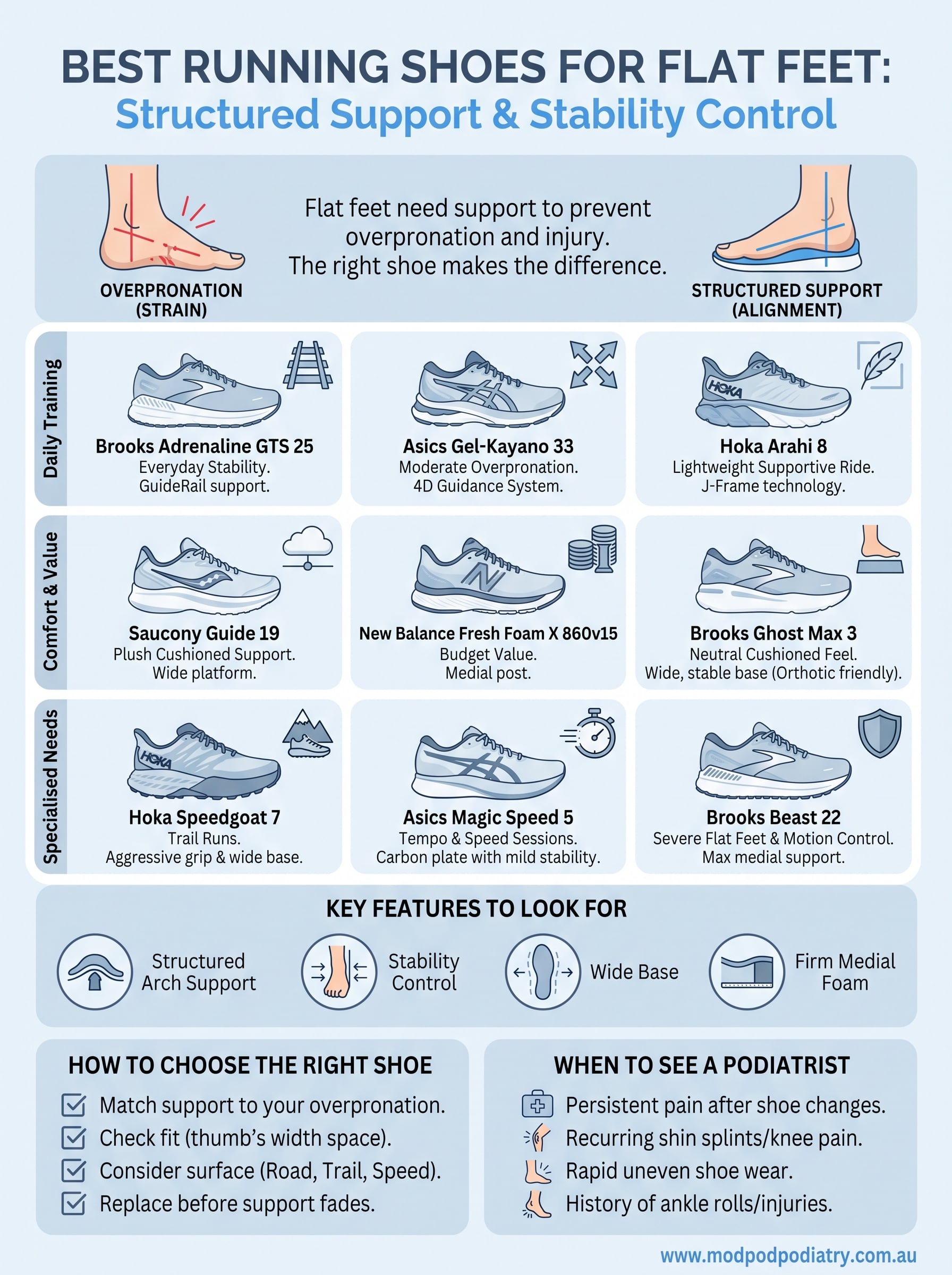
Nine shoes, nine different problems solved, but the real point is that running shoes for flat feet only work when they match your actual gait, not just your arch height. Somewhere on this list is a shoe built for how you run, whether that’s steady weekday kilometres, trail sessions, or race-pace intervals. Yet no shoe replaces a proper diagnosis if pain keeps returning no matter what you lace up.
Getting this right saves you money on trial-and-error purchases and saves your knees, shins, and Achilles from carrying a problem the shoe was never going to fix alone. Test a few options, track how your body responds over a few weeks, and don’t ignore pain that lingers past the first fortnight.
If you’re still unsure which category fits your feet, skip the guesswork and book a running gait assessment at one of our Sydney clinics.