

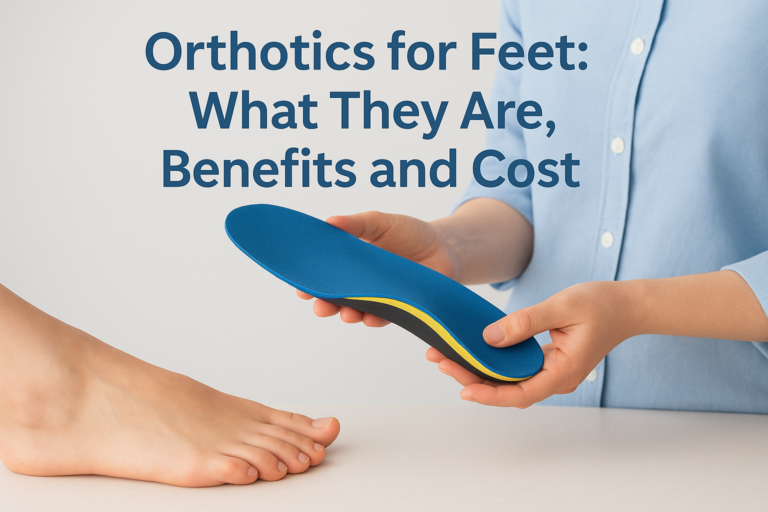
If your feet, knees or lower back ache after a day on your feet, someone has probably suggested orthotics. But between the podiatry jargon and the range of products sold online, it’s hard to know what you actually need. Orthotics for feet are custom-made or prefabricated inserts that sit inside your shoe, designed to correct how your foot moves and distributes pressure with each step. They’re not just cushioned insoles from the chemist, though the line between the two often gets blurred in marketing.
This article answers the practical questions people ask before committing to a pair: how orthotics actually work, what conditions they help with, and what you can expect to pay in Australia, whether you’re going custom or off-the-shelf. We also cover orthotics for small feet, a common gap in the market for people with petite or narrow shoe sizes who struggle to find proper support.
At ModPod Podiatry, we’ve fitted thousands of Sydney patients with custom orthotics using 3D scanning and pressure plate analysis, so we know where generic advice falls short. Read on for a clear, practical breakdown of what orthotics do, who benefits, and how to choose the right option for your feet.
Why orthotics for feet matter
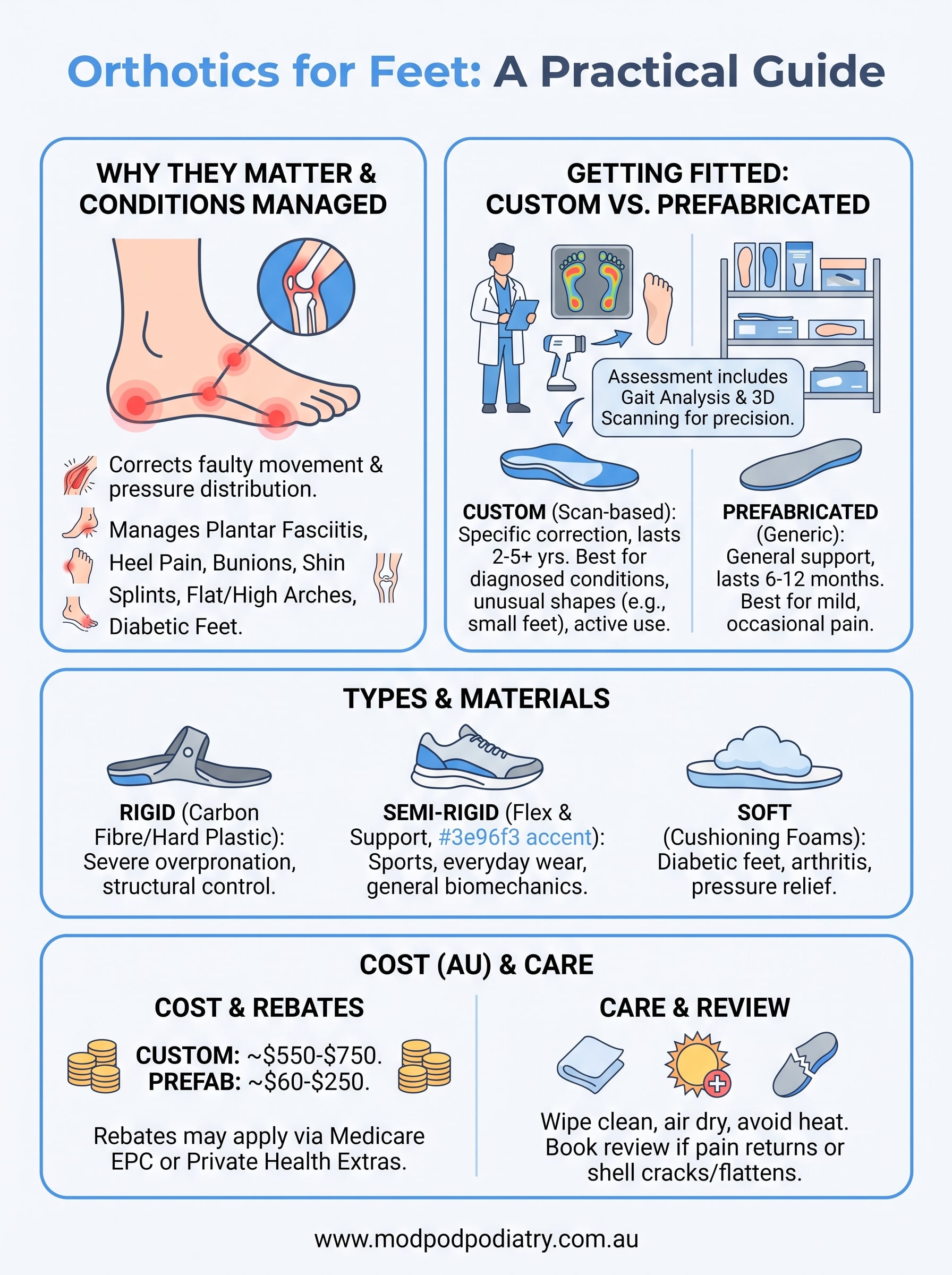
Every step you take sends force through 26 bones, 33 joints and over 100 muscles, tendons and ligaments in your foot. When that mechanism works properly, the load spreads evenly and your foot absorbs shock without complaint. When it doesn’t, the strain has to go somewhere, and it usually shows up as pain in your heels, arches, knees or lower back. Orthotics for feet exist to correct that imbalance before it turns into a chronic problem, by changing the angle and timing of contact between your foot and the ground.
How faulty foot mechanics cause pain
Most of the patients we see at ModPod Podiatry didn’t wake up with foot pain out of nowhere. It built gradually, often from overpronation (what makes a foot roll inward too much) or supination (rolling outward), both of which alter how weight travels up the leg. Overpronation flattens the arch and stretches the plantar fascia with every stride, which is why it’s so strongly linked to plantar fasciitis. Supination does the opposite, concentrating pressure on the outer edge of the foot and increasing the risk of ankle sprains and stress fractures. Neither pattern is something you can fix by willpower or better shoes alone. It requires a device that physically redirects the foot’s path through each phase of the gait cycle.
Foot pain rarely starts in the foot. It starts in how the foot moves, and that’s exactly what orthotics are built to change.
Common conditions orthotics help manage
We fit orthotics for a wide range of presentations, and the mechanism is always the same: reduce abnormal movement, redistribute pressure, and give injured tissue a chance to settle. The conditions we see most often include:
- Plantar fasciitis, where orthotics support the arch and reduce tension on the fascia with each step
- Heel pain and heel spurs, managed by cushioning impact and correcting the angle of heel strike
- Bunions, where orthotics and bunion correctors slow the progression by improving forefoot alignment
- Shin splints and knee pain, both frequently traced back to overpronation higher up the kinetic chain
- Diabetic foot complications, where pressure redistribution helps prevent ulcers in high-risk areas as part of a broader foot care plan for people with diabetes
- Flat feet and high arches in both adults and growing children, including how flat feet are assessed and treated
Each of these conditions responds differently depending on the underlying biomechanics, which is exactly why a proper assessment matters more than picking whatever insole looks supportive on a shelf.
Why generic insoles often fall short
Supermarket insoles are built to a single, generic foot shape and offer blanket cushioning rather than targeted correction. They might feel comfortable for a week or two, but they don’t account for your specific pronation pattern, arch height or leg length differences. A patient with a rigid high arch needs a completely different structure to one with a collapsing flat foot, and a generic insert simply can’t serve both. This is where the distinction between an insole and a genuine orthotic device becomes important: one cushions, the other corrects.
Active people feel this gap the most. Runners logging 30 to 50 kilometres a week put repetitive load through the same tissue thousands of times per session, and even a small mechanical fault gets amplified fast. That’s why our assessments with a podiatrist who treats sports injuries look closely at gait under load, not just how the foot sits when you’re standing still in a shop. Getting the mechanics right early on prevents the kind of overuse injury that sidelines training for months rather than weeks.
How to get fitted for orthotics
Getting fitted properly is the difference between a device that fixes your problem and one that gathers dust in a drawer. A proper fitting starts with a biomechanical assessment, where a podiatrist watches how you stand, walk and run before touching a single piece of foam. Skipping this step and buying online based on shoe size alone is the most common reason people end up with orthotics that don’t help.
What happens during a podiatry assessment
Booking an appointment at a clinic like ModPod Podiatry usually means walking through a structured process rather than a quick measurement, so it helps to know what happens at a first visit to a Sydney podiatrist. Here’s what a thorough fitting typically involves:
- A discussion of your symptoms, activity levels and footwear history
- A physical examination of joint range of motion, muscle strength and foot posture
- Gait analysis on a pressure plate, which maps exactly where load concentrates as you walk or run
- 3D scanning of the foot to capture precise arch height, width and shape
- A trial of the prescribed correction before the final device is manufactured
A device built from data beats a device guessed from a shoe size, every time.
Why pressure plate and 3D scanning matter
Pressure plate technology shows numbers, not guesses. It records the exact force under your heel, midfoot and forefoot in real time, which reveals asymmetries between your left and right foot that are invisible to the naked eye. Combined with a 3D scan, this data lets the podiatrist design a device that corrects your specific pattern rather than a generic average. Patients are often surprised to see, on screen, that one foot bears noticeably more load than the other, something no amount of standing in a shoe shop would ever pick up.
Who should see a podiatrist versus buying off-the-shelf
If your pain is mild, occasional, or you’re simply after extra comfort during long shifts on your feet, a well-made prefabricated insole might be enough. But if you’ve had pain for more than two to three weeks, have a diagnosed condition like plantar fasciitis or diabetes, or you’re training for an event, a proper fitting is worth the cost. Custom orthotics also make sense if you have unusual foot shapes, significant leg length differences, or you’ve already tried generic insoles without success. Medicare EPC plans and private health extras cover a portion of the consultation and device cost for eligible patients, which narrows the price gap between the two options more than most people expect.
Types of orthotics and how they differ
Not all orthotics for feet are built the same way, and the differences matter more than most patients expect when they first start comparing options. The right choice depends on your diagnosis, activity level and how much correction your foot actually needs, rather than personal preference or price alone. Understanding the different types of orthotics below helps you have a more informed conversation at your next appointment, whether that’s with us or another podiatrist.
Custom versus prefabricated orthotics
Custom orthotics are manufactured from a 3D scan or cast of your individual foot, built to correct your specific pronation pattern, arch height and pressure distribution. Prefabricated orthotics, by contrast, come in a range of standard sizes and shapes designed to suit a broad population rather than one person. Generally, prefabricated devices suit mild symptoms or general support, while custom devices suit diagnosed conditions, unusual foot shapes or higher activity demands where precision correction changes the outcome.
The more specific your foot’s problem, the less a generic device can solve it.
Rigid, semi-rigid and soft orthotics
Material and flexibility change what an orthotic is actually able to do once it’s inside your shoe. Rigid devices, usually made from carbon fibre or hard plastic, control excessive motion and suit conditions like severe overpronation. Semi-rigid orthotics balance support with some flex, making them the most common prescription for sports and everyday wear. Soft orthotics, made from cushioning foams, prioritise shock absorption and pressure relief over correction, which suits diabetic patients or those with arthritic joints.
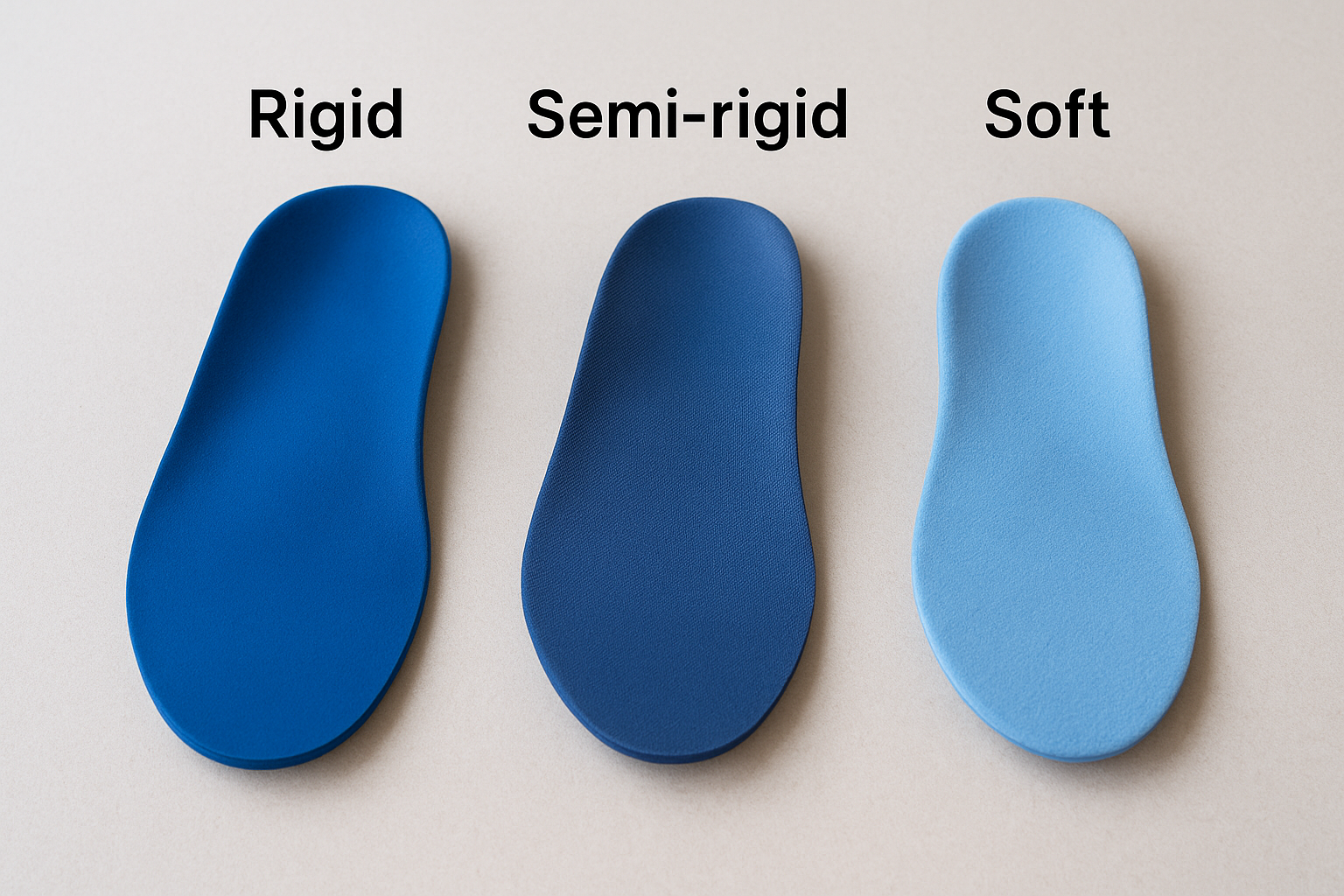
| Type | Best for | Typical lifespan |
|---|---|---|
| Rigid | Severe overpronation, structural correction | 5+ years |
| Semi-rigid | Sports, general biomechanical issues | 2 to 3 years |
| Soft/accommodative | Diabetic feet, arthritis, pressure relief | 1 to 2 years |
| Prefabricated | Mild pain, general support | 6 to 12 months |
Matching the type to the activity
Sporting activity changes which orthotic makes sense, since a device built for walking rarely holds up to running loads or the lateral movement of court sports. Runners typically need a lighter semi-rigid device that flexes with the gait cycle, while footballers and netballers often need extra forefoot control to manage rapid direction changes. Casual walkers or office workers standing for long shifts usually do fine with a softer, more cushioned device. Getting this match wrong is a common reason people abandon orthotics within weeks, assuming they simply don’t work rather than realising the type prescribed wasn’t suited to what they were doing in them.
How much do orthotics for feet cost in Australia
Money is usually the first question patients ask, and fair enough, since prices vary widely depending on where you look. Custom orthotics in Sydney typically cost between $550 and $750 per pair once you include the assessment, scanning and manufacturing, as our honest breakdown of orthotic pricing explains. Prefabricated devices sit much lower, usually $60 to $250 depending on the brand and level of correction built in. Podiatry consultation fees for the initial assessment generally run $110 to $140, separate from the device itself, though many clinics roll this into an orthotic package.
What affects the price
Several factors push the cost up or down, and understanding them helps you compare quotes properly rather than assuming a cheaper price means a worse product. The main variables are:
- Material and rigidity, with carbon fibre rigid devices costing more than soft accommodative foam
- Complexity of the correction needed, since severe deformities or leg length differences require more design work
- Whether 3D scanning and pressure plate analysis are included in the assessment
- Additional consultations for adjustments or refitting after the initial trial
- Clinic location and reputation, with established multi-clinic practices often bundling review appointments into the price
Medicare and private health rebates
Eligible patients under a Medicare EPC plan (Enhanced Primary Care), arranged through a GP, can claim a rebate on podiatry consultations, which reduces out-of-pocket cost for the assessment portion. Private health insurance with extras cover often rebates a portion of both the consultation and the device itself, though the amount depends entirely on your specific policy and annual limits. Most clinics, including ModPod Podiatry, offer on-site HICAPS claiming, so you get the rebate processed immediately rather than submitting paperwork later. It’s worth checking your policy’s annual orthotics limit before booking, since some funds cap this separately from general podiatry visits.
A device that lasts three years and actually solves the problem costs less, in the end, than three cheap pairs that don’t.
Is the higher cost worth it
Cheaper prefabricated inserts feel like the sensible choice until you factor in how often they need replacing and how little correction they actually provide for a diagnosed condition. A custom device built from your own scan data lasts two to five years depending on the type, spreading that $550 to $750 cost across hundreds of wears. Weighing cost against outcome matters more than comparing sticker prices alone, particularly if you’ve already tried a cheap insole without success and are back where you started.
Choosing orthotics for small feet
Finding proper support gets harder once your shoe size drops below a women’s 5 or a men’s 6, since most prefabricated orthotics for small feet are trimmed-down versions of a standard mould rather than a device designed for a genuinely smaller foot. The arch profile, heel cup width and overall proportions don’t simply shrink at the same rate as length, which means a cut-down large orthotic often sits wrong under the arch or juts into the toe box. This is one of the more overlooked gaps in the podiatry market, and it leaves plenty of people with petite feet stuck between inserts that are too bulky and shoes that no longer fit once an orthotic goes in.
Why standard sizing fails smaller feet
Manufacturers build their size ranges around average adult proportions, so anything below that range gets treated as an afterthought rather than a genuine size category. A shortened adult orthotic frequently keeps the same arch height and heel depth as its full-size counterpart, which crowds a smaller foot instead of supporting it properly. Petite women, some teenagers and adults with naturally narrow feet all run into this problem, often ending up with an orthotic that presses uncomfortably against the side of the shoe or forces them into a larger size just to make room for it.
A device that doesn’t match your foot’s actual proportions isn’t support, it’s just extra bulk.
What to look for when choosing
Getting this right comes down to a few specific checks before you commit to a pair:
- Heel cup depth scaled to a smaller foot, not just shortened at the toe
- Narrower width profile through the midfoot so the device doesn’t crowd the shoe
- Shell rigidity appropriate to lighter body weight, since a device built for a heavier adult can feel overly stiff on a smaller frame
- Compatibility with narrow or fitted footwear, particularly for school shoes, dress flats or fitted athletic shoes
Custom orthotics solve the fit problem directly
Custom orthotics sidestep this issue entirely because they’re built from your own 3D scan rather than trimmed from a standard mould. At ModPod Podiatry, our orthotics made from a scan of your own foot map the exact dimensions of a smaller foot, so the heel cup, arch profile and width all scale correctly together rather than being cut down from a bigger template. Parents fitting growing children and adults with naturally petite feet both benefit from this approach, since it removes the guesswork of finding a prefabricated size that was never really designed with a smaller foot in mind.
Caring for your orthotics and knowing when to replace them
Looking after orthotics for feet properly extends their working life well past the average patient’s expectations, yet most people treat them the same as any other insole and wonder why the correction fades early. A little routine maintenance keeps the shell doing its job and stops sweat, grit and heat from breaking down the materials faster than they should.
Daily care that actually matters
Grit trapped under the arch wears through the top cover fast, so a quick wipe with a damp cloth after heavy use keeps the surface intact. Heat is the other enemy: leaving orthotics in a hot car or gym bag for hours can warp plastic shells and soften the correction built into a semi-rigid device. Rotating between two pairs of shoes, rather than transferring one set of orthotics all day, also reduces the compression cycles each pair goes through.
- Wipe down after sweaty or wet activity rather than letting moisture sit
- Keep them out of direct heat, including car dashboards and heaters
- Air dry fully before returning them to a shoe
- Check the top cover every few months for splitting or thinning
Recognising when correction has worn out
Orthotics rarely fail suddenly. The shell loses its shape gradually, and by the time you notice visible wear, the correction has often already dropped off for weeks. Watch for these signs:
| Sign | What it means |
|---|---|
| Flattened or cracked arch shell | Structural support has weakened |
| Worn top cover exposing the base | Cushioning and grip are compromised |
| Pain returning in the original spot | Correction no longer matches your gait |
| Uneven wear pattern on the shoe sole | Device may be sitting incorrectly |
If the pain that brought you in the first place starts creeping back, that’s your orthotic telling you it’s time for a review, not a sign to push through.
When to book a review
Most custom devices hold their shape for two to five years depending on material and activity level, while prefabricated inserts wear out faster, often within six to twelve months of regular use. Rather than waiting for a device to fail completely, book a review appointment once symptoms return or the shell shows visible cracking. A podiatrist can reassess your gait, since feet and activity levels change over years, and a device fitted five years ago may no longer match how you move today. Regular check-ins, much like the fitting process itself, catch these shifts before they turn into a new injury rather than after.
Finding the right fit for your feet
Getting orthotics for feet right comes down to matching the device to your actual biomechanics, not picking whatever looks supportive online. A proper assessment, the correct material and rigidity, and a realistic view of ongoing care all decide whether an orthotic solves your pain or just sits in a drawer. Small feet, growing kids, weekend runners and diabetic patients all need a different answer, which is exactly why a generic insole rarely holds up against a device built from your own scan data.
If you’ve read this far because your feet, knees or back have been nagging at you for weeks, that’s usually the signal to stop guessing and get assessed properly. Our team across five Sydney clinics uses the same pressure plate and 3D scanning approach described above for every patient. Book an orthotics assessment at one of our five Sydney clinics and get a proper answer instead of another trial-and-error insole.

