

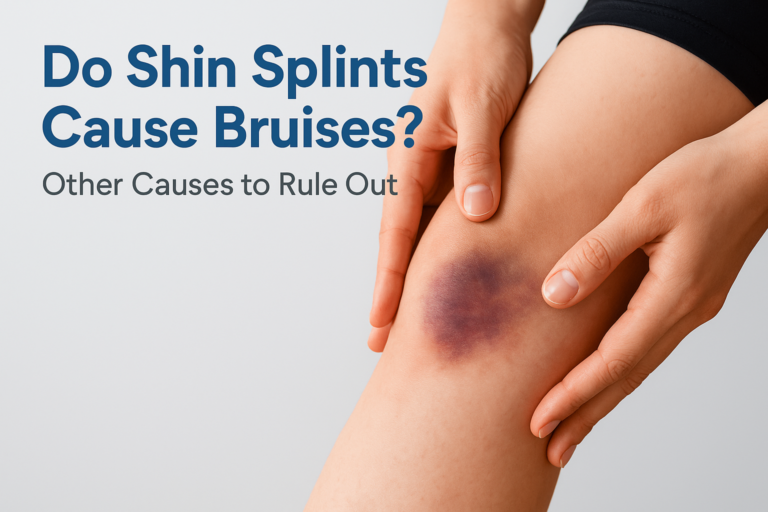
You finish a run, glance down and spot a purple mark on your shin. Your shins have ached for weeks, so you assume it’s shin splints. But do shin splints cause bruises? It’s a fair question, and the answer changes what you should do next.
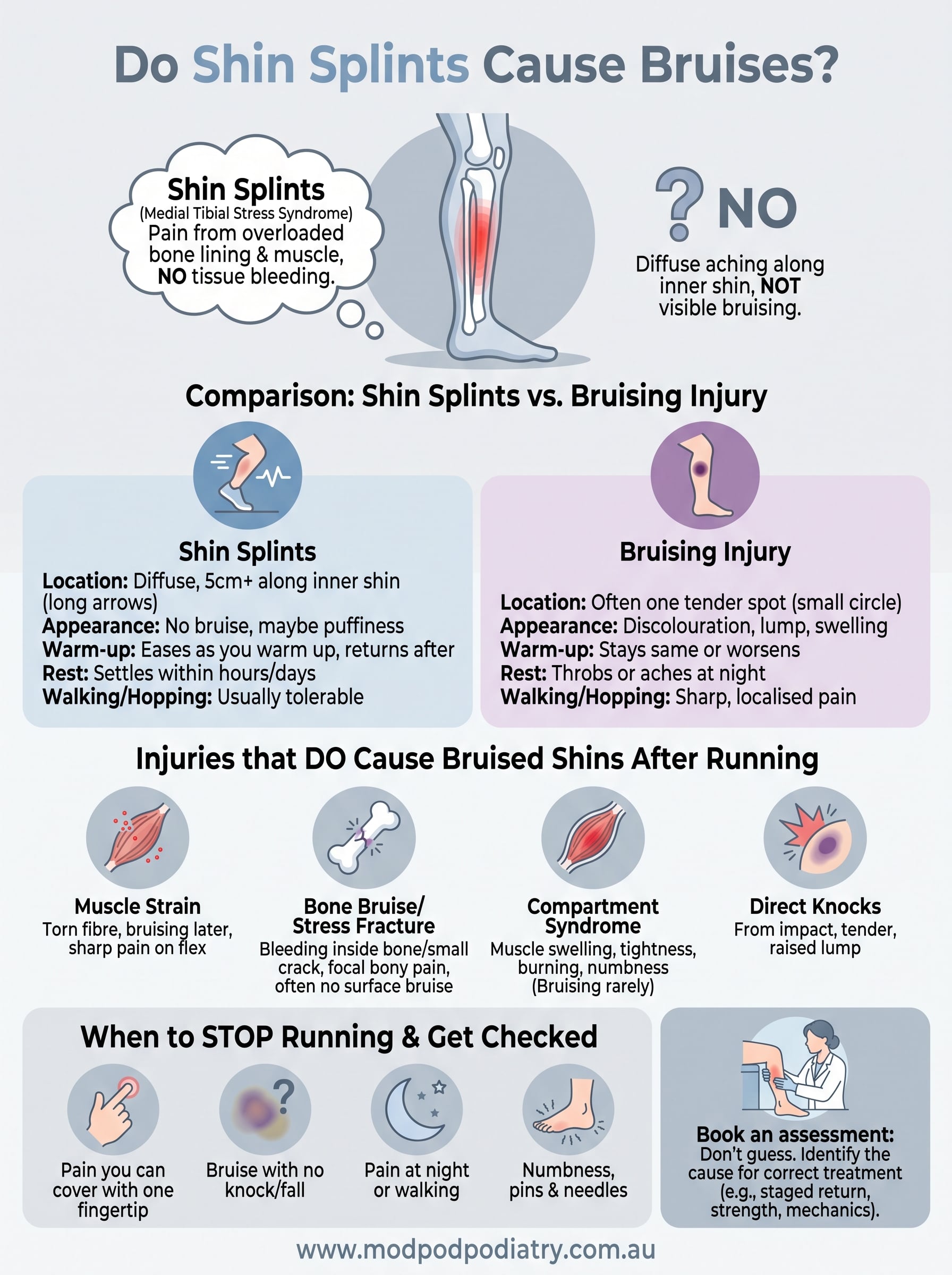
Generally, no. Shin splints (medial tibial stress syndrome) cause diffuse aching along the inner shin, not visible bruising. If you can’t recall a knock and you can see discolouration, something else is likely going on. Can shin splints cause bruising in rare cases? Only indirectly, if swelling or a second injury is involved.
This article walks through the injuries that do cause bruised shins after running: muscle strains, bone bruises, stress fractures and compartment syndrome. You’ll learn how each one feels, how it differs from shin splints, and which signs mean you should stop running. At ModPod Podiatry, our APodA-registered podiatrists assess lower limb pain across Sydney every week. We’ll also explain when to book an assessment rather than wait it out.
Why bruised shins need a closer look
What a bruise tells you that shin splints don’t
A bruise forms when small blood vessels break and blood leaks into the surrounding tissue. That needs a cause, such as a direct knock, a torn muscle fibre or damage to bone. Shin splints work differently. The pain comes from overloaded bone lining and attached muscle along the tibia, usually after a sudden jump in training. Nothing tears and nothing bleeds.
A bruise means tissue has bled, and shin splints on their own don’t make tissue bleed.
So if you’re still wondering whether shin splints cause bruises, the practical answer is that a bruise points away from simple shin splints. It deserves its own explanation before you decide how to train.
Why guessing wrong costs you time
Many runners label every shin ache as shin splints. True shin splints usually settle with load management over a few weeks. A stress fracture or compartment syndrome won’t, and running through either can stretch a problem of weeks into months.
The right response depends on the diagnosis:
- Shin splints: reduce load, strengthen the calves and hips, review footwear and running mechanics.
- Muscle strain: relative rest, then graded loading.
- Bone bruise or stress fracture: protected weight bearing, and sometimes imaging.
- Compartment syndrome: prompt medical assessment, because persistent cases may need specialist care.
Treating all four the same way, usually with "rest and ice", leaves some of them untreated.
Foot mechanics often sit behind the pain
Repeated shin trouble rarely comes from bad luck. Overpronation, stiff ankles, weak calves and worn shoes all raise the load on the lower leg with every stride. That’s true whether the shin ends up inflamed, strained or cracked.
This is why a podiatrist looks beyond the sore spot. A gait assessment can show why your shin is taking more stress than it should, which matters as much as naming the injury if you want to stay out of the same trouble next season.
How to tell shin splints from other causes of bruising
Three questions sort most cases: where does it hurt, can you see a mark, and how does the pain behave once you warm up? So, do shin splints cause bruises? Not on their own. A visible mark is the first sign to look elsewhere, and the pattern of pain usually confirms it.
Side-by-side comparison
Use this table as a rough guide. It can’t replace an assessment, but it shows which features fit shin splints and which suggest a different injury.
| Feature | Shin splints | Bruising injury |
|---|---|---|
| Pain location | Diffuse, five centimetres or more along the inner shin | Often one tender spot |
| Appearance | No bruise, sometimes mild puffiness | Discolouration, a lump or firm swelling |
| Warm-up | Eases as you warm up, returns afterwards | Stays the same or worsens |
| Rest | Settles within hours to days | Throbs or aches at night |
| Walking or hopping | Usually tolerable | Sharp, localised pain |
Red flags that change the plan
Certain signs rule out simple shin splints and justify stopping your runs until someone examines the leg:
- Pain you can cover with one fingertip
- A bruise with no knock or fall that you can remember
- Pain at night or during an ordinary walk
- Tightness, numbness or pins and needles in the leg or foot
Pain you can point to with one finger is rarely shin splints.
Any one of these deserves attention. Two or more together mean book an assessment this week rather than testing the leg on another run.
Other injuries that can bruise the shin after running
Four injuries explain most bruised shins after running. Shin splints can occur alongside any of them, which is why the picture gets muddy, but each one has its own tell-tale signs.
Muscle strain and direct knocks
A torn fibre in the tibialis anterior or calf muscle bleeds into the surrounding tissue. Bruising may appear a day or two later, often lower than the sore spot as blood tracks down the leg. The pain is sharp and worse when you flex the foot against resistance.
Direct knocks are simpler. A pedal strike, a box jump or a clash on the football field leaves a tender, raised lump that you can usually trace back to the moment it happened.
Bone bruise and stress fracture
A bone bruise is bleeding inside the bone after impact. A stress fracture in the shin is a small crack from repeated load. Both tend to give one tender spot you can cover with a fingertip, plus pain when hopping or at night. Surface bruising is uncommon, so a visible mark with bony pain needs checking.
A bruise plus one-finger pain is a reason to stop running, not to push through.
Early X-rays often miss stress fractures, so an MRI may be needed to confirm the diagnosis.
Compartment syndrome
Exertional compartment syndrome happens when working muscles swell inside a tight sheath. Pressure builds during a run, causing tightness, burning and numbness that ease within minutes of stopping. Bruising isn’t typical.
Acute compartment syndrome is different. After a fracture or heavy blow, severe pain, a tense shin and numbness need emergency care straight away.
What to do about bruised shins and when to see a podiatrist
Start with a few days of sensible rest
If you’re asking do shin splints cause bruises because you’ve spotted a mark on your leg, deal with the mark first. Stop running for several days and keep moving with walking or swimming, as long as it’s pain-free.
- Rest the shin from impact for 48 to 72 hours.
- Apply an ice pack wrapped in a cloth for 15 minutes at a time.
- Use a compression sleeve and elevate the leg when you’re sitting.
- Avoid heat, alcohol and massage over the bruise for two days, as they can increase bleeding.
If a bruise appears with no knock you can recall, don’t run on it until someone has examined the leg.
When to book a podiatrist
Book in if the bruise has no clear cause, if pain hasn’t eased after a week of rest, or if you’ve noticed any red flag from the comparison above. A podiatrist can examine the leg, test how it copes with load and refer you for an X-ray or MRI when a bone injury is possible. You don’t need a GP referral, and we offer same-week appointments across our five Sydney clinics.
Cost shouldn’t hold you back. Eligible patients can use Medicare EPC plans, and we process private health fund claims on the spot through HICAPS.
When to go straight to emergency care
Severe pain, a tense, rock-hard shin, numbness or an inability to bear weight after a heavy blow or fracture can signal acute compartment syndrome. That’s a medical emergency, so go to your nearest emergency department or call 000 rather than waiting for an appointment.
How to protect your shins and return to running safely
Return in stages, not in one go
Once the bruise has faded and walking is pain-free, resist the urge to jump back to your old routine. Sudden spikes in training load sit behind most shin trouble. Use a staged plan and move on only when the leg allows it.
- Walk briskly for 30 minutes with no pain.
- Jog one minute, walk two, for 20 minutes, every second day.
- Lengthen the jogs until you can run 20 minutes continuously.
- Add distance by roughly 10 per cent a week, keeping speed and hills easy.
Progress only if pain stays at 2 out of 10 or lower during the run and has gone by the next morning. If it returns, drop back a stage for a few days.
Return to running when your shin is pain-free, not when the calendar says you should.
Fix what loaded the shin in the first place
Do shin splints cause bruises? No, but the overload behind them can set up the injuries that do. Strengthen your calves and hips twice a week with calf raises and single-leg bridges. Replace running shoes roughly every 600 to 800 kilometres, and mix in softer surfaces such as grass or a track.
If shin pain keeps coming back, a gait and pressure plate assessment can show whether custom orthotics or a change in running mechanics would reduce the strain. Book it before your mileage builds, not after the next flare-up.
Key points on shin pain and bruising
So, do shin splints cause bruises? No. Shin splints give diffuse aching along the inner shin, while a visible bruise points to a muscle strain, bone bruise, stress fracture or, less often, compartment syndrome. Pain you can cover with one fingertip, a mark with no knock behind it, or pain at night all mean you should stop running and get the leg checked.
Most of these injuries respond well when they’re caught early. Rest for a few days, return to running in stages, and fix the calf and hip weakness or foot mechanics that overloaded the shin. Guessing wrong is what turns weeks into months.
If your shin is bruised and you can’t explain why, don’t wait for it to settle. Book an assessment with a ModPod podiatrist at one of our five Sydney clinics. We offer same-week appointments, and no GP referral is needed.

