
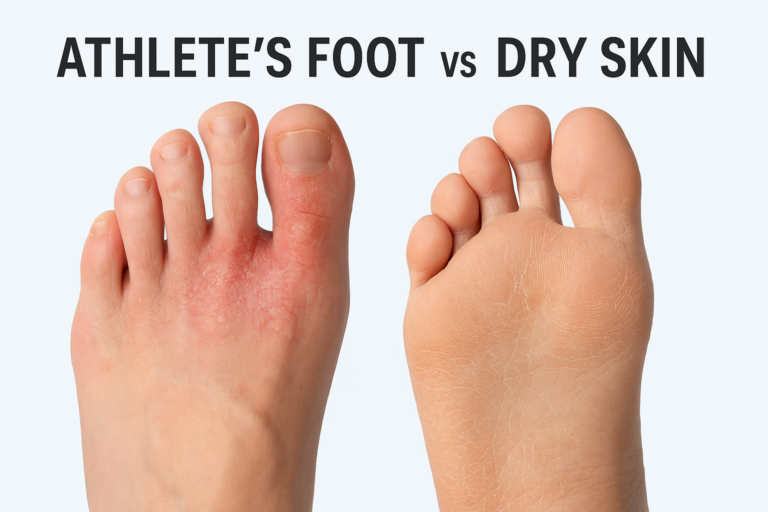
Flaky, itchy feet are common, and the cause is not always obvious. The question of athlete’s foot vs dry skin matters because the two need different treatment. Moisturiser will not clear a fungal infection, and an antifungal cream can irritate skin that is simply dry.
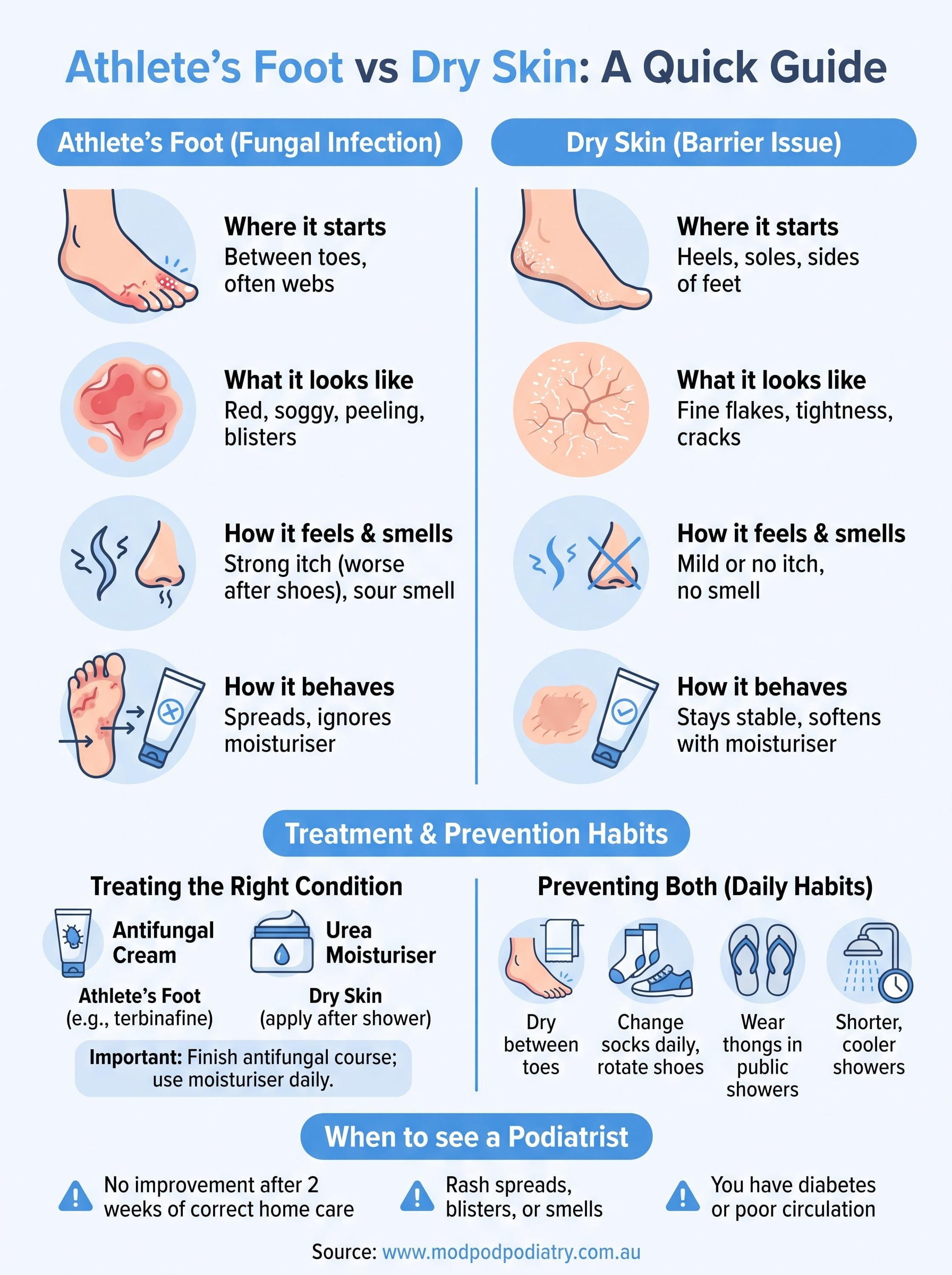
Here is the short answer. Athlete’s foot usually starts between the toes, often with redness, peeling, sogginess and an itch that worsens after you take your shoes off. Dry skin tends to affect the heels and soles evenly, looks flaky or cracked, and improves with regular moisturising. If you have blisters, a sour smell or a rash that spreads, think fungus first.
Below, we cover how each condition looks and feels, the clues that separate them, and what you can safely try at home. We also explain when to book a podiatrist. At ModPod Podiatry, our APodA-registered podiatrists see both conditions every week across our Sydney clinics, so we will help you decide when it is time to get your feet checked.
Why telling athlete’s foot from dry skin matters
Guessing wrong costs you time, and sometimes it makes the problem worse. The athlete’s foot vs dry skin question looks small, but the answer decides which product you buy and how long your feet stay sore.
What happens when you treat the wrong thing
Most people reach for whatever is in the bathroom cabinet. That is where problems start. A thick moisturiser rubbed between the toes can trap moisture, and fungus thrives in warm, damp skin. A hydrocortisone cream may calm the redness but let the infection spread, which can leave a rash looking like eczema and harder to diagnose.
| What you assume | What you apply | Likely result |
|---|---|---|
| Dry skin (actually fungus) | Rich moisturiser | Trapped moisture, fungus keeps growing |
| Dry skin (actually fungus) | Steroid cream | Itch eases, infection spreads and looks unusual |
| Athlete’s foot (actually dry skin) | Antifungal cream | Stinging, redness and more peeling |
Dry skin treated as an infection fares no better. Antifungal creams are not designed to hydrate, and some sting cracked heels. You lose weeks, and the real cause carries on.
Why delay carries real risks
Untreated athlete’s foot rarely stays put. It can move into the toenails, where fungal infection is much harder to clear, and onto your hands or groin. It also passes to family through shared bathroom floors, towels and socks. Caught early, a typical case clears with a few weeks of topical antifungal. Left alone, it can drag on for months.
Cracks matter whichever condition you have. Deep splits in the heels or between the toes let bacteria in, and that can lead to cellulitis, a skin infection that needs prompt medical treatment. If you have diabetes, poor circulation or a weakened immune system, a small crack is not minor, so get it checked early.
A flaky rash you cannot name is worth a proper look, because the right treatment depends on the right diagnosis.
How to tell the difference at home
Sorting out athlete’s foot vs dry skin at home comes down to three checks: where the rash sits, what it looks like, and how it behaves over a week or two. Start by looking at both feet in good light.
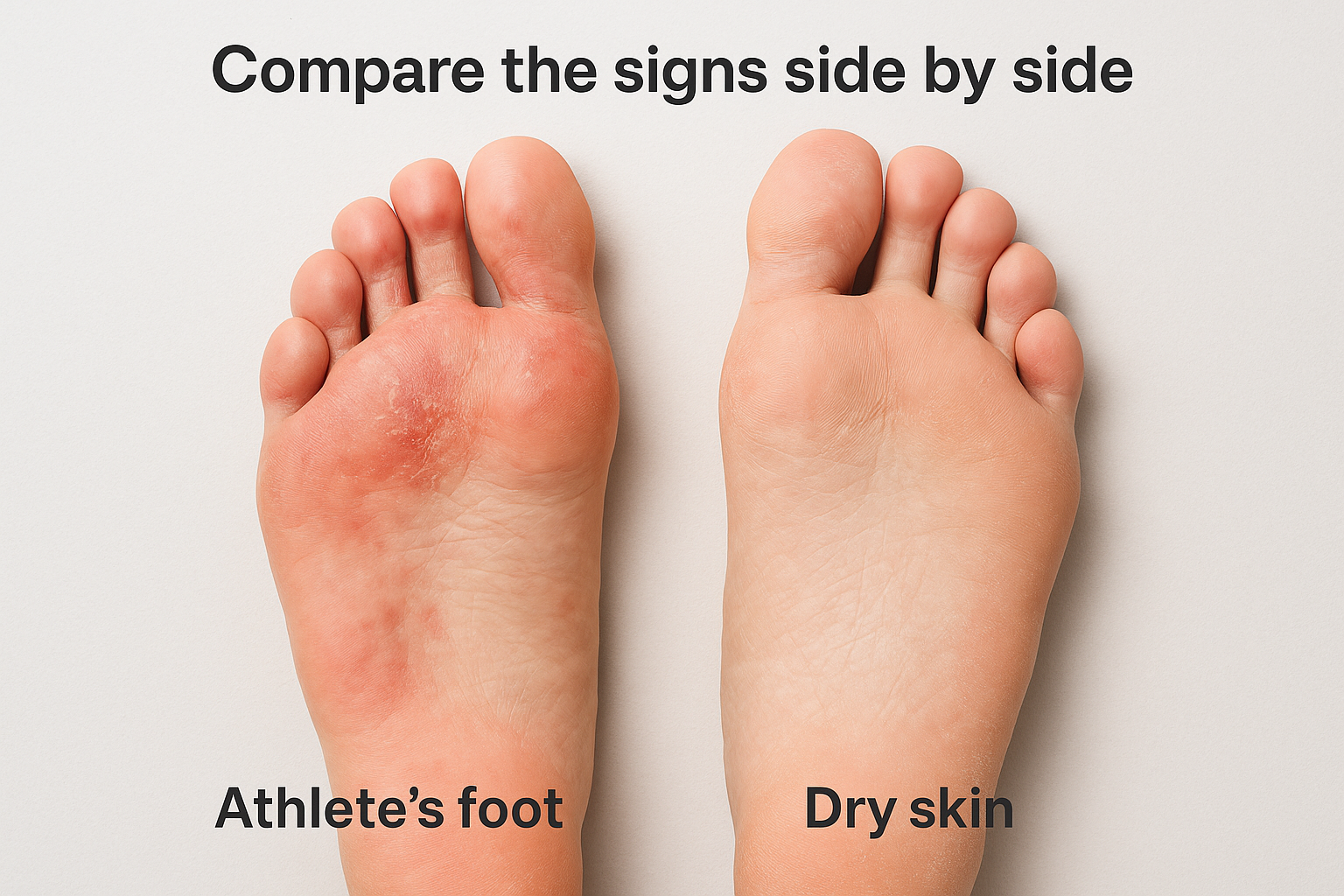
Compare the signs side by side
Use the table below as a checklist. If most of your symptoms land in one column, that is your best lead.
| Clue | Athlete’s foot | Dry skin |
|---|---|---|
| Where it starts | Between the toes, often the fourth and fifth | Heels, soles, sides of the feet |
| Look | Red, peeling, white and soggy, sometimes blisters | Fine flaking, tightness, dry cracks |
| Itch | Strong, worse when shoes come off | Mild or absent |
| Smell | Often sour or musty | None |
| Spread | Creeps across the sole or to the other foot | Stays even and stable |
Watch how it responds
Next, run a simple trial. Moisturise twice daily for two weeks with a plain urea-based cream, and keep it off the skin between your toes. Dry skin should soften within days. If the itch stays, the rash keeps spreading, or it returns the moment you stop, suspect fungus.
Dry skin improves with moisturiser, while athlete’s foot ignores it.
One catch is worth knowing. Moccasin-type athlete’s foot covers the sole and heel in fine, dry scale, so it passes for dry skin. Check the toe webs for itch and peeling, and note whether one foot is worse than the other. Athlete’s foot often favours one side, while dry skin usually affects both feet equally.
Causes and risk factors for each condition
The athlete’s foot vs dry skin question gets easier once you know what drives each one. One is an infection you catch. The other is a barrier problem your skin develops over time.
What causes athlete’s foot
Athlete’s foot comes from dermatophyte fungi, the same group that infects toenails. They feed on keratin in the outer skin layer and thrive in warm, damp places such as pool decks, gym showers and change rooms. You pick them up from floors, towels and shared socks.
Your risk goes up if you have:
- Sweaty feet or tight, non-breathable shoes
- Damp socks, or the same shoes worn every day
- A habit of walking barefoot in communal areas
- An existing fungal nail infection
- Diabetes or a weakened immune system
What causes dry skin
Dry feet come down to low moisture and no oil glands. The soles have none, so they rely on sweat and the skin’s own barrier. Your heels dry out first because they take the most pressure and friction.
Several things speed it up:
- Thongs and open-backed shoes
- Long, hot showers and harsh soap
- Cold weather and constant air conditioning
- Age, as skin thins and makes less oil
- Eczema, an underactive thyroid or diabetes
Notice the overlap. Age and diabetes raise the risk for both conditions, and cracked dry skin gives fungus an easier way in. That means you can have both at once, which is why a mixed picture is common in clinic.
Athlete’s foot is something you catch, while dry skin is something your feet lose.
How to treat each condition and prevent a repeat
The right fix depends on the cause, so match the product to your diagnosis. With athlete’s foot vs dry skin, the two routines barely overlap.
Treating athlete’s foot
Apply a terbinafine or clotrimazole cream to clean, dry skin once or twice a day, following the pack. Keep going for a week after the skin looks normal, because fungus lingers beneath the surface and returns if you stop early.
Finish the full antifungal course, even after the itch has gone.
Treating dry skin
Smooth on a urea-based foot moisturiser after showering, while your skin is still slightly damp. Wear cotton socks over a thick heel balm at night, and keep creams off the toe webs. Ease thick callus with a pumice stone, but never cut it yourself.
Preventing a repeat
Prevention is mostly habit, and the same habits protect against both conditions. Pick the ones that suit your routine and stick to them year-round:
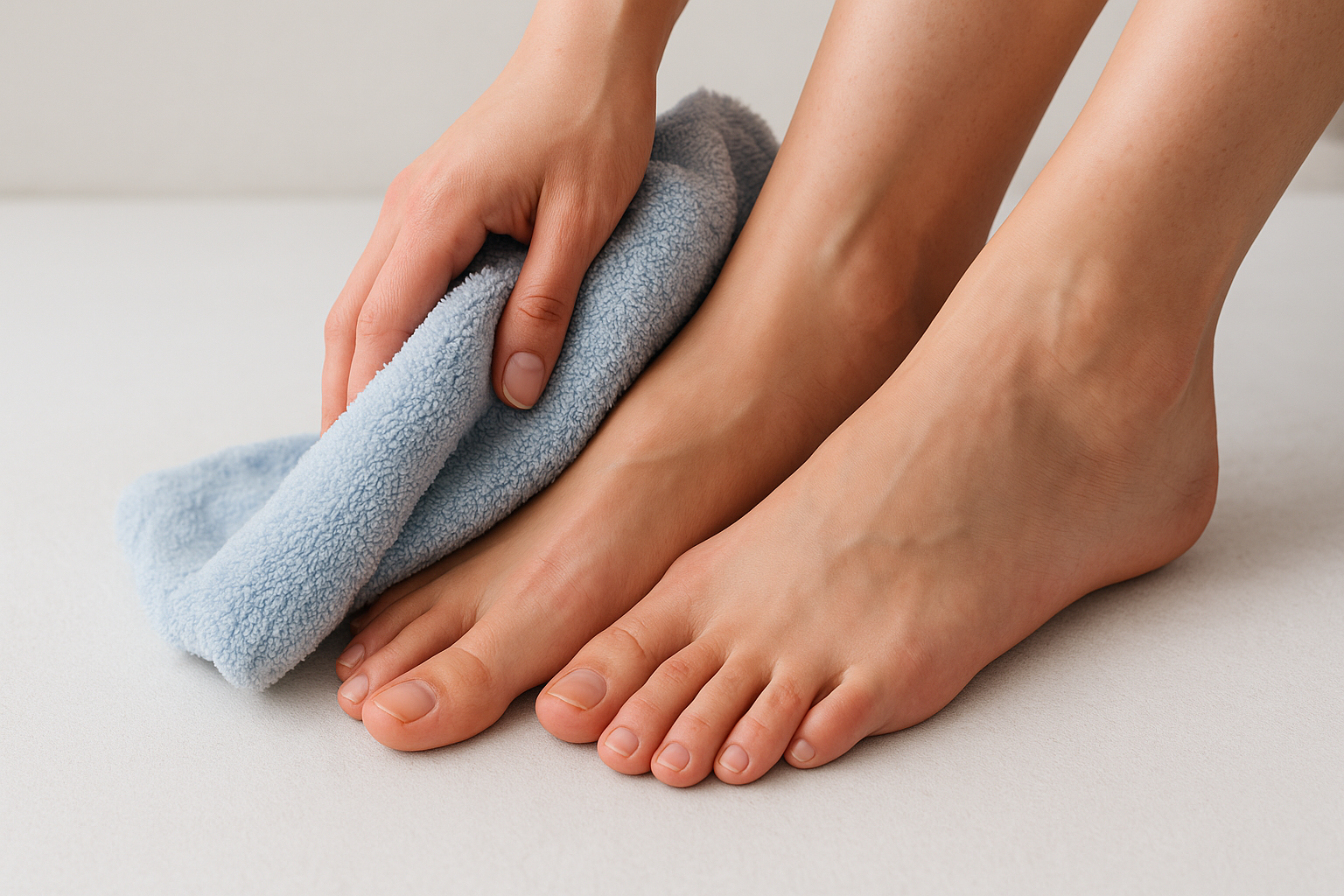
- Dry between your toes properly after every shower.
- Change socks daily, and choose cotton, merino or moisture-wicking blends.
- Rotate your shoes so each pair dries for 24 hours.
- Wear thongs in public showers and on pool decks.
- Keep your towels to yourself.
- Take shorter, cooler showers and moisturise your heels daily.
When to see a podiatrist and what to expect
Home care has limits. If the athlete’s foot vs dry skin trial has not given you a clear answer, book a podiatrist rather than keep guessing. You do not need a GP referral.
Signs it is time to book
Book an appointment if you notice any of these:
- No improvement after two weeks of the right treatment
- A rash that keeps coming back
- Blisters, weeping skin or a sour smell
- Thick, yellow or crumbly toenails
- Any skin break if you have diabetes, poor circulation or a weakened immune system
A rash that ignores two weeks of correct treatment needs a professional diagnosis.
Redness that spreads, heat, swelling, pus or red streaks up the foot point to infection. Those signs call for urgent medical care the same day, not a booking next week.
What happens at your appointment
Your podiatrist will examine your skin, nails and footwear, check your circulation and ask about your daily routine. If fungus is possible, they may take a gentle skin scraping for lab testing. This confirms the cause before you commit to weeks of treatment.
Treatment then matches the result. That might mean a prescription-strength antifungal, safe removal of thick callus, a heel-care plan or laser treatment for fungal nails. You leave with a clear plan and straightforward answers. Our clinics offer HICAPS on-site claiming, and eligible patients can use a Medicare EPC plan.
Getting your feet back to normal
Itchy, flaky feet have a cause, and you can usually work it out. In the athlete’s foot vs dry skin question, where the rash starts and how it responds to moisturiser tell you most of what you need. Fungus favours the toe webs and ignores cream. Dry skin favours the heels and softens within days.
Treat the condition you actually have, not the one you guessed. Finish the full antifungal course, or moisturise dry heels daily, and keep up the sock, shoe and towel habits that stop either problem returning. If two weeks of correct care changes nothing, stop guessing.
Our APodA-registered podiatrists can confirm the cause and give you a clear plan at any of our five Sydney clinics. Book a foot skin check online and you can usually be seen within the same week.