
If you’ve ever woken up, put your foot on the floor, and winced at that sharp, stabbing pain in your heel — you’re not alone. Heel pain is one of the most common complaints we see at our Sydney clinics, and two conditions come up time and again: plantar fasciitis and heel spurs. People often use these terms interchangeably, but they’re actually two different things. Understanding plantar fasciitis vs heel spurs — what each one is, how they differ, and how they’re treated — can make a real difference to your recovery. So let’s clear things up.
The Anatomy Behind Your Heel Pain
To understand both conditions, it helps to know a little about what’s going on inside your foot. Your heel bone is called the calcaneus, and running along the bottom of your foot is a thick band of connective tissue called the plantar fascia. This band connects your heel to your toes and plays a crucial role in supporting the arch of your foot with every step you take.
The plantar fascia absorbs an enormous amount of load — especially during running and walking. When that load becomes too much, or the tissue is placed under repeated stress without adequate recovery time, things can start to go wrong.
What Is Plantar Fasciitis?
Plantar fasciitis is an inflammation of the plantar fascia, particularly where it attaches to the heel bone. Despite the “itis” ending (which implies inflammation), recent research suggests it’s often more of a degenerative condition — sometimes called plantar fasciosis — where the tissue breaks down over time rather than purely inflaming.
Either way, the result is the same: pain. Lots of it.
Classic Signs of Plantar Fasciitis
- Morning pain — that awful first-step agony when you get out of bed
- First-step pain after sitting for a while (post-static dyskinesia)
- Pain that eases once you’ve “warmed up,” only to return after prolonged activity
- Tenderness along the arch and base of the heel
- Discomfort that worsens after (not always during) exercise
It’s a condition we treat every single day across our CBD, Mosman, Dee Why, Rose Bay, and North Ryde clinics. With over 20 years of podiatry experience, we’ve seen it in everyone from desk workers who spend too long in flat shoes to marathon runners ramping up their training.
For a deep dive into management options, see our dedicated page on plantar fasciitis treatment.
What Is a Heel Spur?
A heel spur (or calcaneal spur) is a bony growth — a calcium deposit — that forms on the underside of the heel bone. It develops gradually over months or even years, usually as a result of the body trying to reinforce an area that’s been under repeated stress.
Here’s the thing that surprises most people: heel spurs often cause no pain at all. Many people walk around for years with a spur on their X-ray and have absolutely no idea. In fact, research suggests up to 15% of the general population has a heel spur without any symptoms whatsoever.
So When Does a Heel Spur Hurt?
Heel spurs typically cause discomfort when they’re pressing on soft tissue — including the plantar fascia. This is why the two conditions so often appear together. The spur itself might not be the direct source of pain; rather, the inflammation and irritation of the surrounding structures is what hurts.
An X-ray is the only way to confirm the presence of a heel spur, and it’s an important part of our diagnostic process when the clinical picture warrants it.
Plantar Fasciitis vs Heel Spurs: The Key Differences
Let’s put this side by side to make things crystal clear:
- Plantar fasciitis = inflammation or degeneration of the plantar fascia (soft tissue)
- Heel spur = a bony calcium deposit on the calcaneus (hard tissue)
- You can have plantar fasciitis without a heel spur
- You can have a heel spur without plantar fasciitis
- But they very often co-exist, and one can contribute to the other
The distinction matters because it affects how we approach treatment. Treating a heel spur in isolation (without addressing the underlying biomechanical causes or fascial inflammation) is unlikely to give you lasting relief.
How Do We Diagnose the Cause of Your Heel Pain in Sydney?
Getting the right diagnosis is everything. At ModPod, we don’t just poke around and take a guess — we use a thorough assessment process that looks at the whole picture.
Clinical Assessment
Our podiatrists will examine your foot, assess range of motion in your ankle and subtalar joint, and palpate along the plantar fascia and heel to identify exactly where the pain is coming from. We’ll also ask about your footwear, activity levels, and how long the pain has been going on.
Gait Analysis
How you walk and run plays a massive role in heel pain. A gait scan to identify the cause of your heel pain gives us a detailed, computerised picture of how load is distributed across your foot with every step. Overpronation, supination, and altered foot mechanics are all common contributors to plantar fasciitis.
Biomechanical Assessment
We’ll often complement this with a biomechanical assessment for heel pain diagnosis — a comprehensive evaluation of your lower limb mechanics, muscle strength, joint range of motion, and how your body is loading your feet. This helps us design a treatment plan that targets the root cause, not just the symptoms.
Imaging When Needed
If a heel spur is suspected, or if the presentation isn’t straightforward, we may refer you for an X-ray or ultrasound. This helps confirm the diagnosis and rule out other causes of heel pain, such as a stress fracture or nerve entrapment.
Treatment: Is It Different for Each Condition?
In many ways, yes — but there’s also significant overlap, particularly when both conditions are present.
Treating Plantar Fasciitis
- Stretching and strengthening — calf stretches, plantar fascia stretches, and progressive loading exercises are the foundation of recovery
- Custom orthotics — prescription orthotics correct the biomechanical factors driving the condition and offload the inflamed tissue
- Footwear advice — supportive, cushioned footwear makes a significant difference, especially during the acute phase
- Taping — low-Dye or calcaneal taping provides immediate relief by supporting the arch and reducing fascial tension
- K-Laser therapy — our K-Laser therapy for heel pain uses specific wavelengths of light to accelerate tissue healing, reduce inflammation, and relieve pain. It’s particularly effective for stubborn or chronic cases
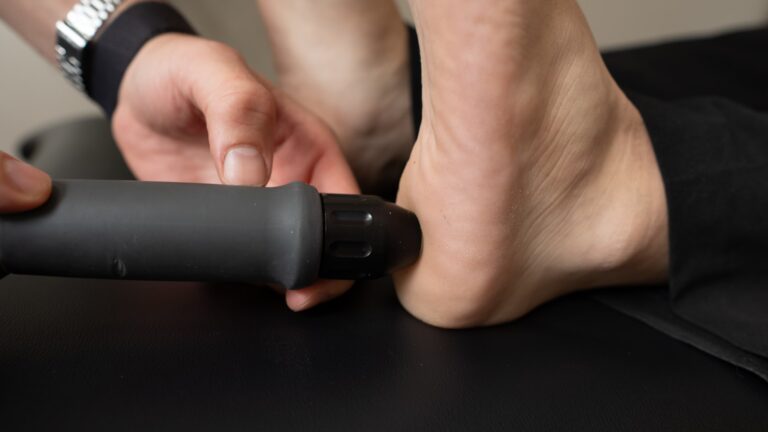
- Shockwave therapy — for cases that haven’t responded to conservative treatment, shockwave therapy delivers acoustic waves to stimulate healing in the affected tissue
Treating Heel Spurs
If a heel spur is causing symptoms, the treatment approach is largely the same — because the goal is to reduce the load and inflammation around the spur rather than remove it. Surgery to remove a heel spur is rarely necessary and is considered a last resort.
The great news is that most people with heel spurs respond very well to conservative podiatric care. We’ve helped hundreds of patients across Sydney get back on their feet without ever needing to go near a surgeon.
Autumn Running Season: A Perfect Storm for Heel Pain
If you’re a Sydney runner, you’ll know that March through May is peak training season. The heat of summer has eased, the air is crisp, and the City2Surf entries are already being planned. But it’s also prime time for plantar fasciitis vs heel spurs flare-ups.
Why? Because many runners increase their weekly mileage too quickly during autumn without allowing adequate recovery time. The Australian Physiotherapy Association recommends increasing running volume by no more than 10% per week — and that advice applies equally to podiatry. If your heel pain has coincided with ramping up your training, that’s a significant red flag worth addressing promptly.
Health Funds and Medicare: What’s Covered?
The good news for Sydneysiders is that podiatry is covered under most private health insurance Extras policies. Medibank, BUPA, HCF, NIB, and most other major health funds include podiatry as part of their ancillary cover — rebates typically range from $30 to $60 per consultation depending on your level of cover.
If you have a chronic condition such as diabetes or a condition contributing to your heel pain, you may also be eligible for Medicare-subsidised podiatry visits under a GP-referred Enhanced Primary Care (EPC) plan (item number 10964). Ask your GP whether this applies to your situation.
Frequently Asked Questions
Q: Can plantar fasciitis go away on its own?
A: Some mild cases do settle with rest and stretching, but without addressing the underlying biomechanical cause, plantar fasciitis often returns. Left untreated, it can become a chronic condition that’s significantly harder to resolve. Early intervention is always the best approach.
Q: Do I need surgery to remove a heel spur?
A: Rarely. The vast majority of painful heel spurs respond well to conservative podiatric treatment including orthotics, stretching, K-Laser therapy, and shockwave therapy. Surgery is considered only when all other options have been exhausted over an extended period.
Q: How long does plantar fasciitis take to heal?
A: With appropriate treatment, most people see significant improvement within 6–12 weeks. Chronic cases can take longer — sometimes 6–12 months — which is why starting treatment early makes such a big difference to your recovery timeline.
Q: What’s the best thing I can do right now for heel pain?
A: Start with some gentle calf and plantar fascia stretching, review your footwear (bin anything flat and unsupportive), and avoid going barefoot on hard floors, especially first thing in the morning. Then book in to see a podiatrist — the sooner you get a proper diagnosis, the sooner you can start the right treatment.
Q: Is heel pain the same as Sever’s disease in children?
A: No — Sever’s disease (calcaneal apophysitis) is a different condition that affects the growth plate in the heel and is specific to children and adolescents. You can read more in our guide to heel pain in kids.
Book a Heel Pain Assessment at ModPod Sydney
Whether it’s plantar fasciitis, a heel spur, or something else entirely causing your heel pain, our experienced podiatry team is here to help. We’ll give you a thorough diagnosis and a personalised treatment plan that gets you back on your feet — without relying on guesswork.
With clinics in the CBD, Mosman, Dee Why, Rose Bay, and North Ryde, there’s a ModPod location near you. Book online today and take the first step toward a pain-free heel.