


That dull ache down your shin after a run doesn’t just disappear because you rested for a few days. It flares up again the moment you’re back on the pavement, and you’re left wondering if your shoes, your stride, or something structural in your feet is to blame. Understanding shin splints and orthotics starts with knowing that this pain usually traces back to how your foot loads and absorbs impact, not just how far or fast you’re running.
So can orthotics help shin splints, or make them worse? The honest answer is that it depends on your foot type, your biomechanics, and whether the orthotic is properly prescribed rather than picked off a pharmacy shelf. Arch support insoles can reduce excess pronation and take pressure off the tibial muscles, but the wrong insole, or one used to mask a training problem, can genuinely aggravate symptoms.
In this article, we’ll unpack how custom orthotics compare to generic shoe inserts, what the research actually shows, and how our podiatrists across Sydney assess gait to work out whether orthotics belong in your recovery plan at all.
Why orthotics can help, or hinder, shin splint recovery
Shin splints, medically known as medial tibial stress syndrome, develop when the muscles and connective tissue along your shin bone get repeatedly overloaded, which is what causes shin splints to develop in the first place. Every time your foot strikes the ground, your tibialis posterior and surrounding tissue work to control how much your arch collapses. If that control breaks down, whether from overpronation of the foot, weak calf muscles, worn-out shoes, or a sudden jump in training volume, the tibia takes on stress it isn’t built to absorb. Over weeks, this repeated strain causes the microtears and inflammation that show up as that familiar shin ache.
When orthotic insoles genuinely help
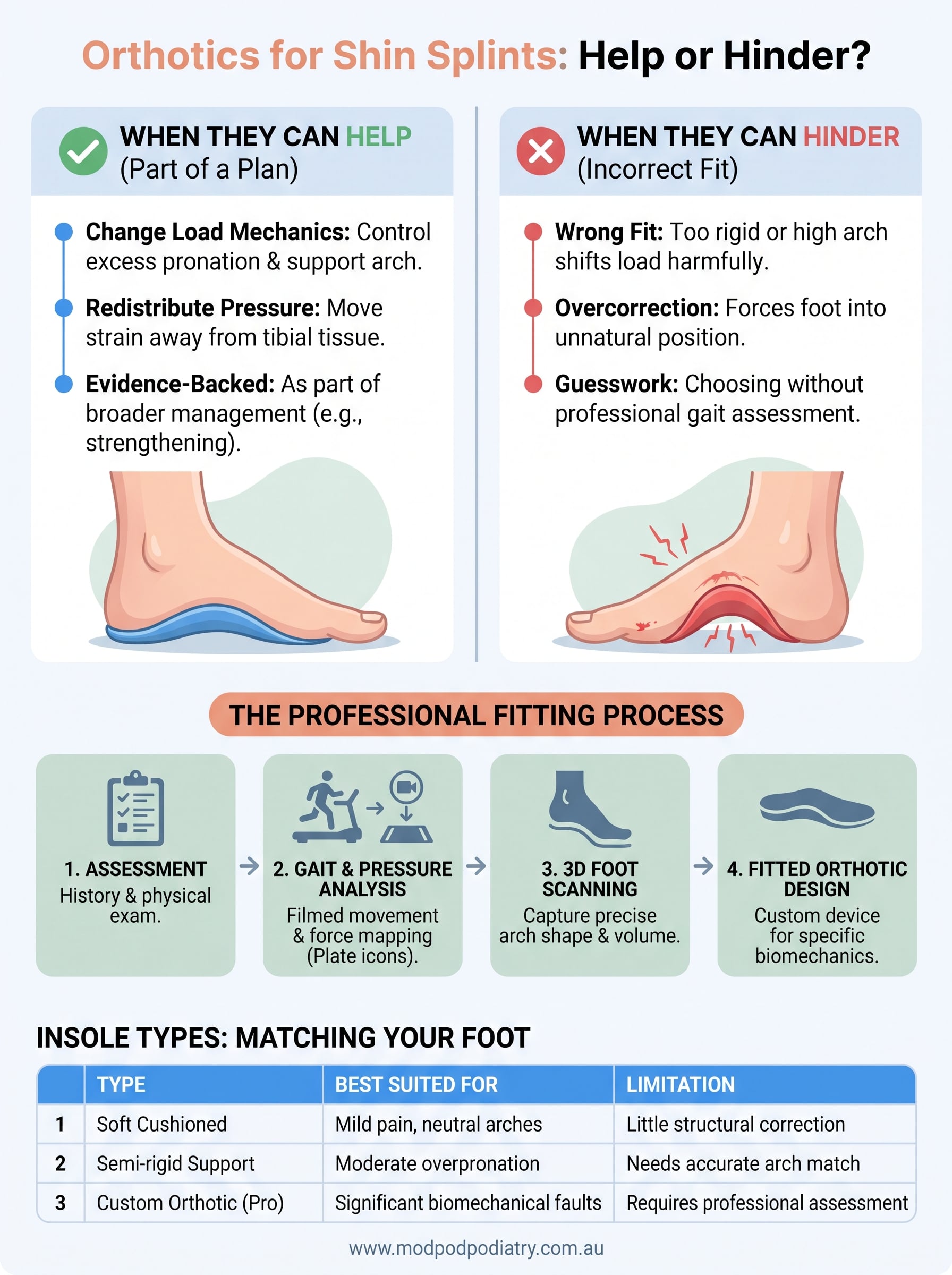
Orthotics work by changing how load moves through your foot before it reaches your shin. A well-prescribed custom orthotic controls excess pronation, supports the arch through midstance, and redistributes pressure away from the posterior tibial tendon. For runners with flat or overpronating feet, this can meaningfully reduce the repetitive strain that causes shin splints in the first place. Research published by Sports Medicine Australia and reflected in guidance from bodies like the Australian Institute of Sport supports orthotic use as part of a broader management plan that also addresses training load, footwear, and calf strengthening exercises for shin splints, not as a standalone fix.
Orthotics don’t cure shin splints on their own, they change the mechanics that caused them, and that only works if the mechanics were actually the problem.
When orthotics can make things worse
Here’s where it gets tricky, and where the question can orthotics cause shin splints becomes genuinely relevant. An insole that’s too rigid, too high in the arch, or simply the wrong shape for your foot can shift load onto areas that weren’t designed to handle it. We’ve seen patients arrive with off-the-shelf orthotic insoles for shin splints that actually increased their pain because the device forced their foot into a position it doesn’t naturally sit in. Overcorrection is a real risk, especially with generic or online-purchased inserts that assume every flat foot needs maximum arch support.
Why prescription matters more than the product
Oftentimes, the difference between relief and irritation comes down to fit and assessment, not the orthotic itself. A device chosen without gait analysis is a guess, and guessing with something strapped to your foot for hours a day carries real consequences. Podiatrists assess your walking and running pattern, muscle strength, footwear, and training history before recommending anything, because shin splints frequently have more than one contributing cause. Two runners with identical shin pain can need completely different solutions, one benefiting from a semi-rigid orthotic, the other needing calf strengthening and a softer, cushioned insole instead. That’s why shin splints insoles bought without assessment are a genuine gamble, and why proper diagnosis has to come before any device gets prescribed.
How to choose the right insoles for shin splints
Choosing between shoe insoles for shin splints isn’t about picking the thickest cushion on the shelf. Your arch height, pronation pattern, and the specific muscles under strain all determine what the insole actually needs to do. A high, rigid arch support shoe insert suits a flexible flat foot that rolls inward excessively, but the same device on a neutral or high-arched foot can push pressure into new areas and create fresh problems. Getting this wrong is exactly how insoles for shin splints end up doing more harm than good.
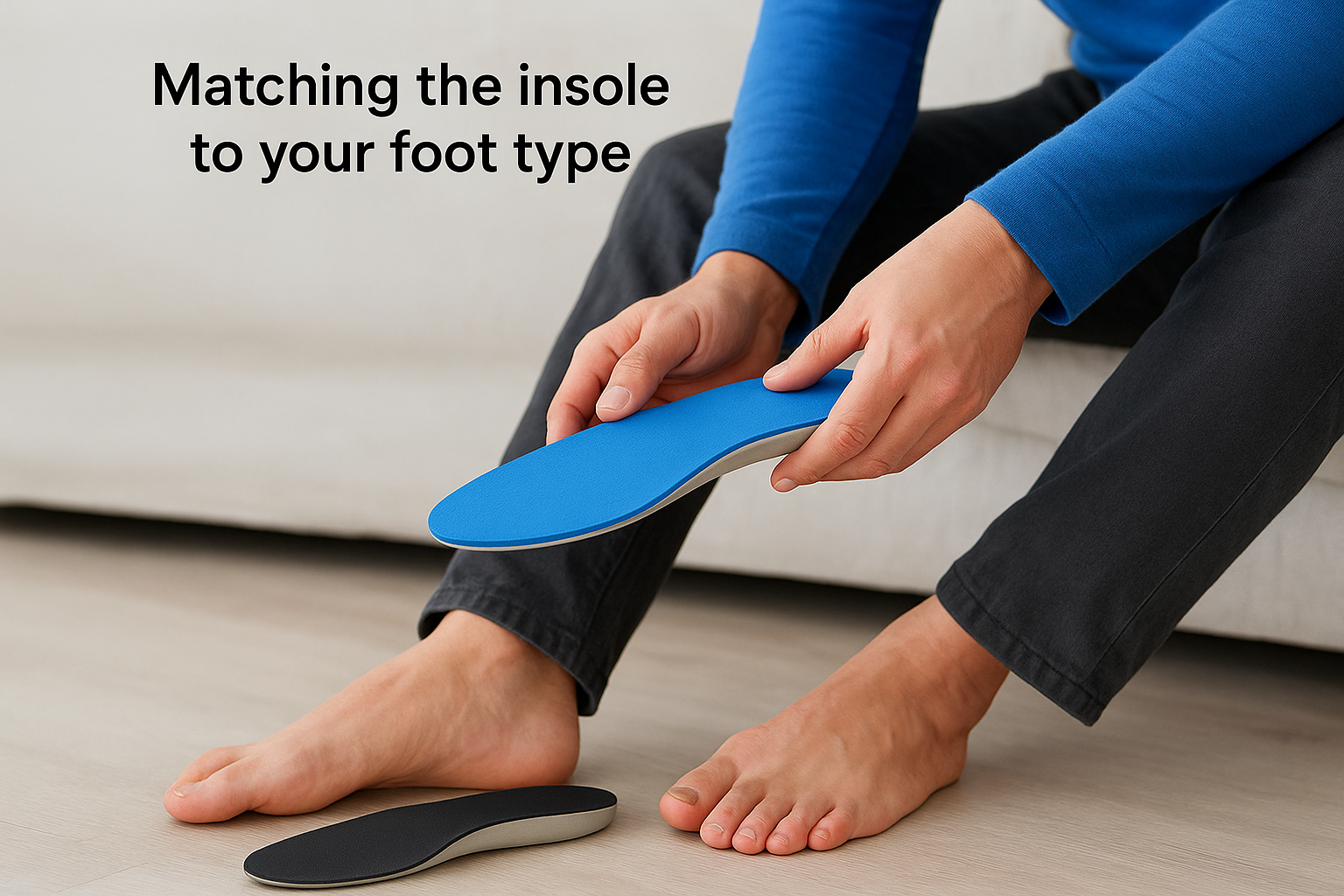
Matching the insole to your foot type
Before buying anything, think about what your foot actually does under load, not just how it looks standing still.
| Insole type | Best suited for | Limitation |
|---|---|---|
| Soft cushioned insert | Mild pain, neutral arches | Little structural correction |
| Semi-rigid arch support | Moderate overpronation | Needs reasonably accurate arch match |
| Custom orthotic | Significant biomechanical faults | Requires professional assessment |
The right insole matches your specific foot mechanics, not the loudest marketing claim on the packaging.
Practical buying considerations
Semi-custom or over-the-counter orthotic insoles for shin splints can work reasonably well for mild, early-stage symptoms, particularly if your pain started recently and your footwear is otherwise sound. Fit them into your actual running shoes before committing, since a device that shifts your heel or crowds your toe box will create new compensations. Replace insoles every six to twelve months regardless of type, because compressed foam stops supporting anything effectively. If pain persists past two to three weeks despite a reasonable insole, that’s your signal to stop guessing and get a proper gait assessment instead of trying yet another arch support insoles for shin splints off the internet.
What happens during a professional orthotic fitting
Walking into a proper orthotic assessment looks nothing like grabbing insoles off a pharmacy shelf. Your podiatrist starts by taking a full history, when the shin pain began, what training changes preceded it, what footwear you’re using, and whether you’ve had previous injuries in the same leg. Physical examination follows, checking ankle flexibility, calf strength, arch flexibility, and leg length, all factors that influence how load travels up through the tibia.
The assessment itself
From there, the process usually includes:
- Gait analysis on a treadmill or runway, often filmed to review foot strike and pronation frame by frame
- Pressure plate analysis, mapping exactly where and when force peaks across your foot during walking and running
- 3D foot scanning to capture arch shape and volume precisely
- Muscle and joint testing to rule out calf tightness or weakness as the real driver
Each step builds a picture that a shelf-bought insole simply can’t account for.
A proper fitting measures how your foot actually moves under load, not just what shape it happens to be at rest.
From scan to fitted orthotic
Once the assessment data is in, your podiatrist designs a device specific to your foot’s pronation pattern, arch height, and the exact pressure points contributing to your shin pain. Manufacturing typically takes one to two weeks, and you’ll come back for a fitting appointment to check the orthotic sits correctly in your actual running shoes, not just a demo pair. Gait re-assessment at follow-up confirms whether load has genuinely shifted away from the tibia. Many patients are also eligible for Medicare EPC rebates or private health fund claims through on-site HICAPS, which softens the cost of getting it right the first time. If you’re weighing up custom orthotics against another round of guesswork, our custom orthotics service page outlines exactly what the process involves at each ModPod clinic.
Taking the next step towards pain-free running
Shin splints and orthotics have a genuine, evidence-backed relationship, but only when the device matches your actual foot mechanics. Off-the-shelf insoles can settle mild, early symptoms, while more stubborn or recurring pain usually points to a biomechanical issue that needs proper assessment rather than another guess bought online. Skipping that step is how well-meaning treatment turns into months of repeated flare-ups.
Getting it right doesn’t need to be complicated. A gait assessment tells you whether orthotics belong in your recovery at all, and if they do, exactly what shape and rigidity your foot actually needs. Our podiatrists across Sydney see this pattern every week, and a proper diagnosis usually saves people far more time than another season of trial and error with generic inserts. If you’re ready for answers instead of guesswork, book a shin splints and orthotics assessment online and get your feet properly assessed before your next run.

