
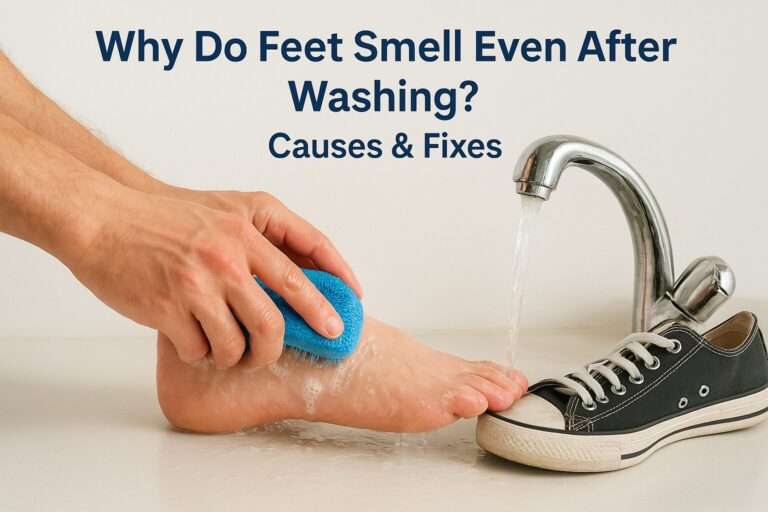
You scrub your feet every morning, dry them properly, and still peel off your socks to a smell that clears the room. If you’ve been asking why do my feet smell even after washing, you’re not doing anything wrong with your hygiene routine. The problem usually sits deeper than soap can reach.
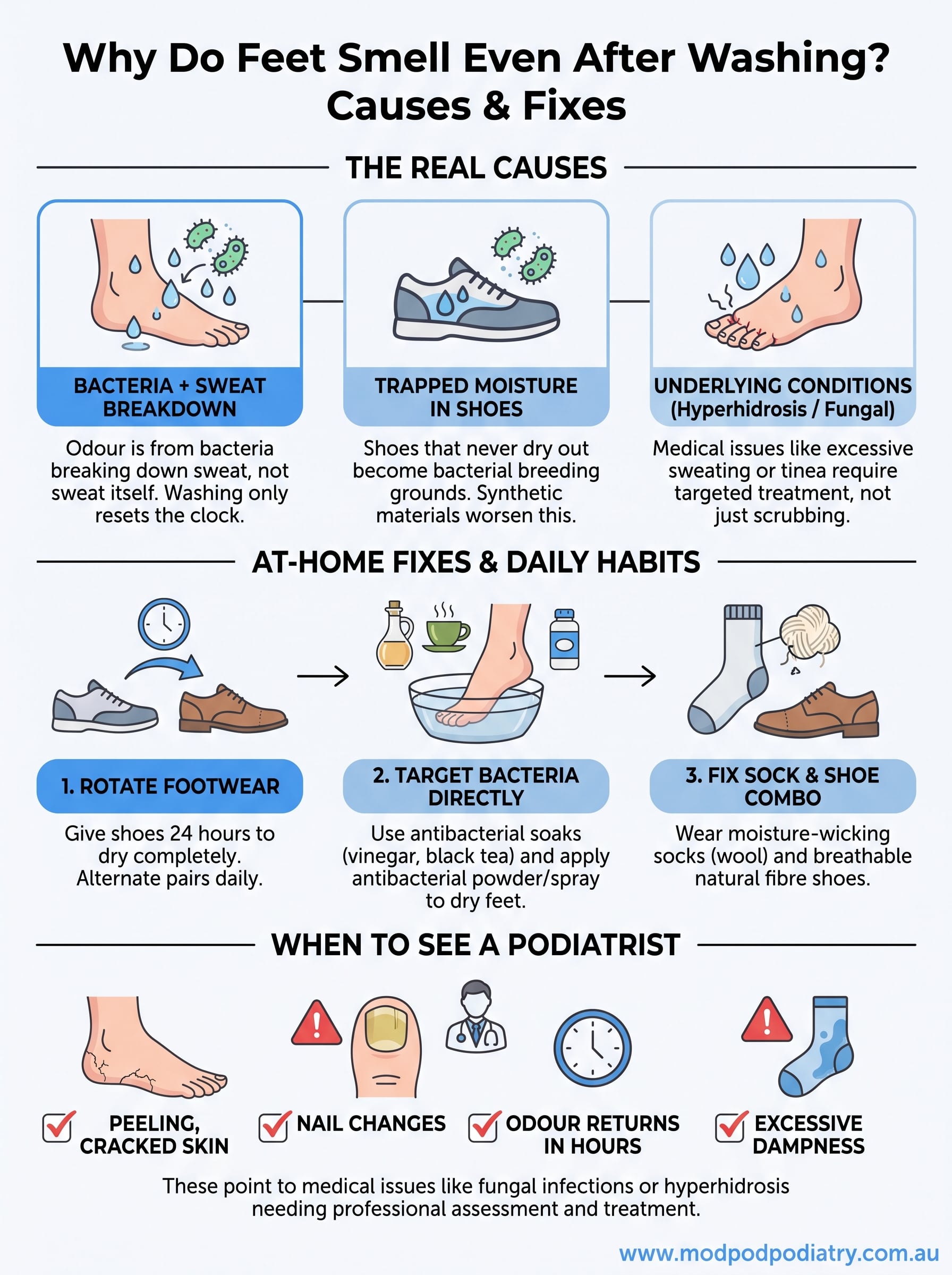
Sweat itself has no odour. The smell comes from bacteria on your skin breaking down that sweat, and washing only removes what’s on the surface at that moment. Within hours, fresh sweat and bacterial activity start the whole process again, especially if your shoes trap moisture. Some people also have excessive sweating (hyperhidrosis) or fungal infections that make the odour far worse than average, no matter how often they shower.
In this guide, we’ll walk through the real causes behind persistent foot odour, from footwear choices to underlying skin conditions, and give you practical fixes that go beyond another wash. We’ll also flag when it’s worth seeing a podiatrist, because sometimes smelly feet point to something that needs proper treatment rather than a scrub.
Why your feet still smell after washing them
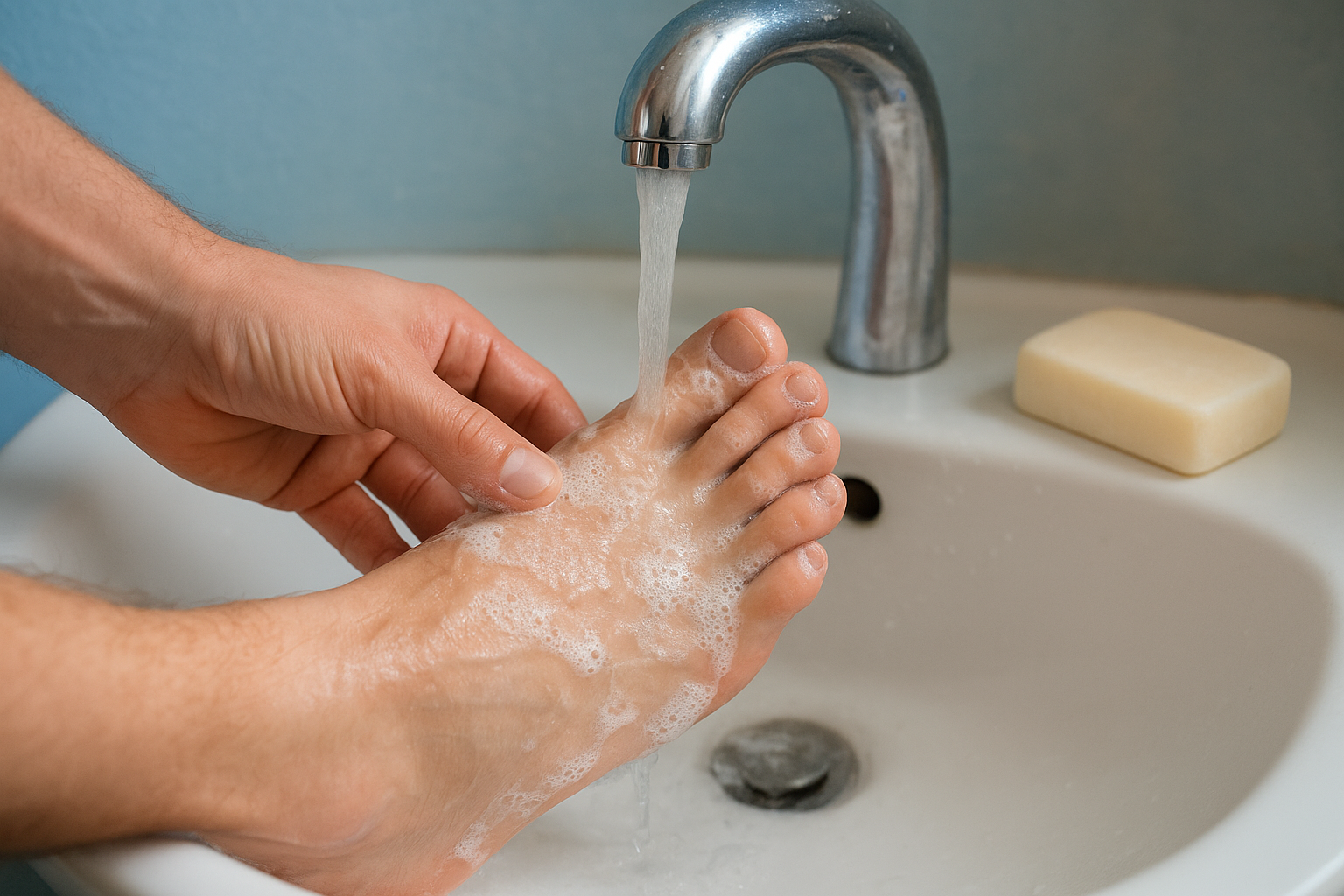
Soap kills bacteria on contact, but it can’t stop new sweat from reaching your skin an hour later. Your feet have more sweat glands per square centimetre than almost anywhere else on your body, and that moisture becomes a feeding ground for skin bacteria the moment it hits your socks. Washing resets the clock, but it doesn’t change the conditions that let the smell return.
Bacteria and trapped sweat
The culprit isn’t sweat itself, it’s the bacteria that break sweat down into smelly acids. Once your feet go into closed shoes, that bacterial process speeds up because heat and moisture have nowhere to escape. This is why the smell often gets worse by mid-afternoon, even though you washed and dried thoroughly that morning.
Washing removes yesterday’s bacteria, but it can’t stop today’s sweat from feeding a fresh batch inside your shoes.
Shoes that never dry out
If you wear the same pair of shoes two days running, they’re still damp from yesterday when you put them back on. That residual moisture means bacteria never get a break, and the odour compounds day after day. Synthetic shoe linings and non-breathable materials make this far worse, trapping sweat against your skin instead of letting it evaporate.
Underlying conditions that make it worse
Some people deal with hyperhidrosis, a condition causing feet to sweat well beyond what’s needed for temperature regulation. Others have a fungal infection like tinea, which produces its own sharp, musty smell separate from ordinary sweat odour. These aren’t hygiene failures, they’re medical conditions that respond to targeted treatment rather than extra scrubbing.
| Cause | What’s happening | Washing alone helps? |
|---|---|---|
| Bacterial breakdown of sweat | Bacteria feed on fresh sweat within hours | Temporarily |
| Non-breathable or damp shoes | Moisture trapped against skin, bacteria thrive | No |
| Hyperhidrosis | Excess sweat production overwhelms normal drying | No |
| Fungal infection (tinea) | Fungus produces its own odour and skin changes | No |
Understanding which of these applies to you is the first step toward an actual fix, rather than repeating a routine that isn’t working.
How to get rid of smelly feet at home
Once you know bacteria and trapped moisture are the real problem, you can fix most cases without a prescription. The goal is simple: kill bacteria, dry your feet properly, and stop shoes from staying damp long enough to breed a new batch.
Rotate your footwear
Never wear the same shoes two days in a row. Give them at least 24 hours to dry out completely before you put them back on, ideally with the insoles removed and sitting somewhere ventilated. Alternating shoes breaks the cycle that daily washing alone can’t touch.
You can’t out-scrub a pair of shoes that never gets the chance to dry.
Target the bacteria directly
An antibacterial foot soak makes a real difference here. Try one of these a few times a week:
- Diluted white vinegar soak (one part vinegar to two parts water, 10-15 minutes) to lower skin pH and slow bacterial growth
- Black tea soak (two tea bags in warm water, 15-20 minutes) for its natural tannins
- Antibacterial foot powder or spray applied to clean, dry feet each morning
Fix the sock and shoe combination
Swap synthetic socks for merino wool or moisture-wicking blends, and change them midday if you sweat heavily. Breathable socks paired with leather or canvas shoes, rather than rubber or synthetic-lined ones, cut down the moisture bacteria need to thrive. Together, these small changes usually clear up mild to moderate odour within one to two weeks.
When persistent foot odour needs a podiatrist
Sometimes the fixes above just don’t cut it, and that’s a sign the cause sits outside normal sweat and bacteria. If you’ve tried soaks, sock changes, and shoe rotation for a few weeks and you’re still asking why do my feet smell even after washing, it’s worth booking a proper assessment rather than trying yet another home remedy.
Signs it’s more than sweat
Watch for these alongside the smell:
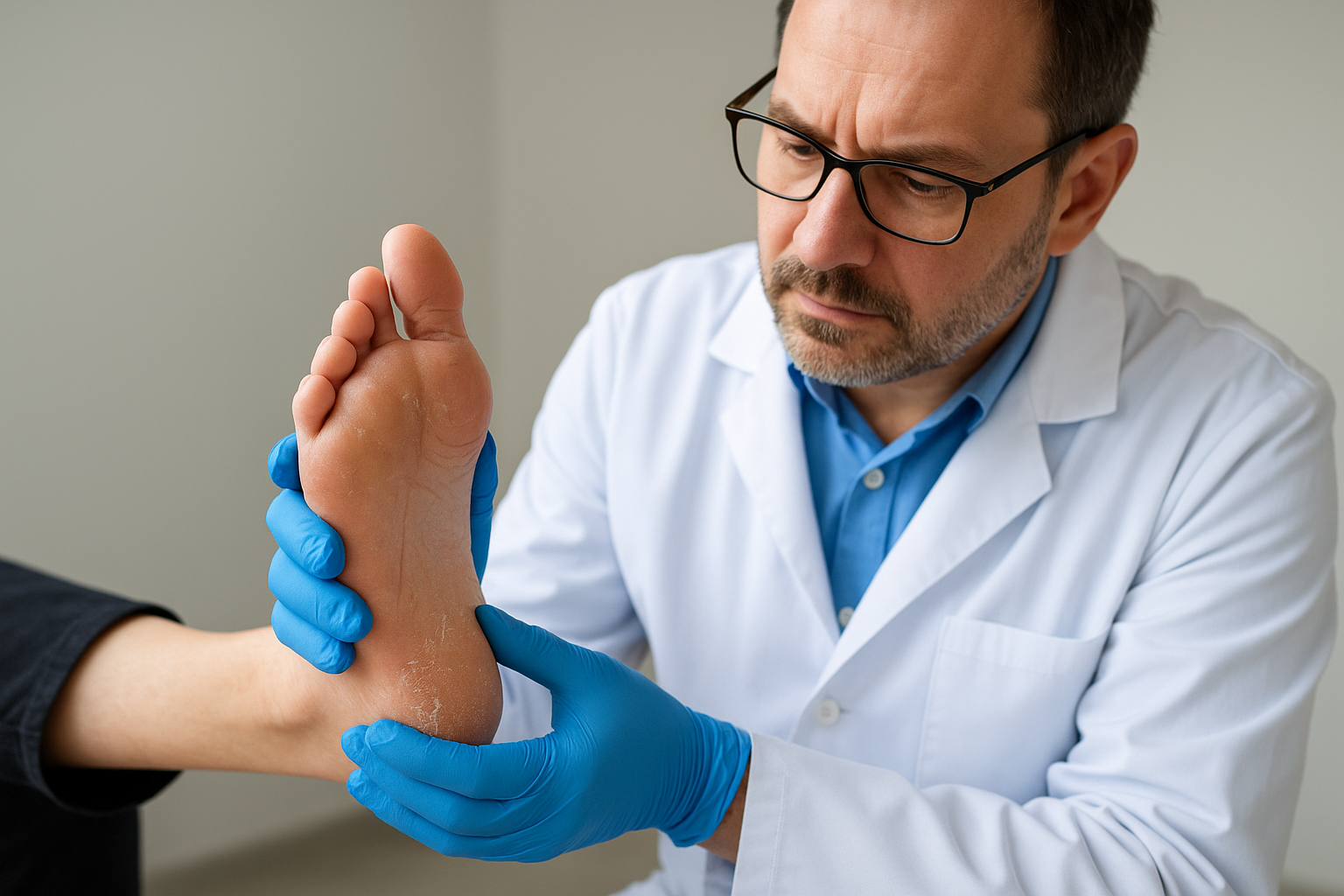
- Skin that’s peeling, cracked, or white and soft between the toes
- Thickened, discoloured, or crumbly toenails
- Odour that returns within hours of washing, not days
- Sweating so heavy your socks are visibly damp by mid-morning
Any of these point to a fungal infection or hyperhidrosis rather than ordinary hygiene gaps.
If the smell comes back within hours rather than days, it’s usually a medical issue, not a hygiene one.
What a podiatrist actually checks
A podiatrist can confirm whether you’re dealing with tinea, bacterial overgrowth, or genuine excessive sweating, and treat each one differently. Tinea often needs targeted antifungal treatment rather than soaks, while significant hyperhidrosis can respond well to clinical-strength antiperspirants, iontophoresis, or other management your GP or podiatrist can arrange. Persistent odour alongside skin changes or nail damage is worth checking properly, because treating the wrong cause at home just wastes weeks without results.
Daily habits that keep foot odour away for good
Prevention beats another emergency soak, and it takes less effort than you’d think once the routine sticks. Building a few small habits into your day stops bacteria getting the foothold that causes the smell in the first place, rather than fighting it after it’s already set in.
Build a simple daily checklist
Ticking off the same few steps each day is what actually breaks the cycle, not any single product. Try this as your baseline:
- Wash feet with antibacterial soap and dry thoroughly between toes, every day
- Apply antibacterial powder or spray to clean, dry skin each morning
- Change socks midday if you’re on your feet or sweating heavily
- Rotate between at least two pairs of shoes, letting each dry fully
- Remove insoles overnight so trapped moisture can actually evaporate
Foot odour is rarely about one bad habit, it’s about small gaps repeating every single day.
Choose materials that work with your feet
Going for natural fibres like leather, canvas, or merino wool over synthetic socks and shoes makes a measurable difference within a week or two. These materials breathe and wick moisture away instead of trapping it against your skin, which is exactly what synthetic linings do.
Consistency matters more than intensity here. One thorough soak won’t undo daily habits that keep feeding bacteria, but a boring, repeated routine of drying properly and rotating shoes usually beats even the strongest one-off treatment.
Getting on top of foot odour
Most persistent foot odour comes down to bacteria feeding on trapped sweat, not a hygiene failure on your part. Washing alone can’t fix what your shoes and socks keep feeding all day, so the fixes that actually work happen between showers: rotating footwear, drying properly, and choosing materials that let your feet breathe. If you’ve built these habits in and the smell still won’t budge, or you’re noticing skin changes and nail damage alongside it, that’s your cue to stop guessing and get it looked at properly.
A podiatrist can tell you in one visit whether you’re dealing with tinea, hyperhidrosis, or something else entirely, and treat the actual cause rather than another round of soaks. If weeks of home remedies haven’t shifted the odour, book an appointment online with ModPod Podiatry and get a proper answer this week rather than another guess.