

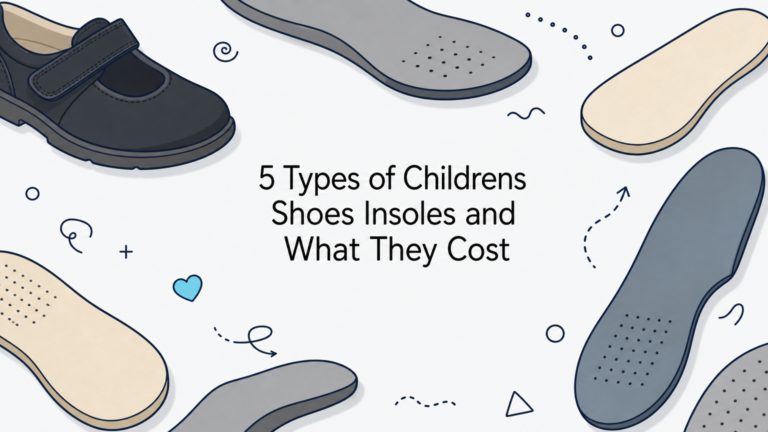
The right childrens shoes insoles depend on the problem you are solving. For flat feet with ankles that roll inward, choose a podiatrist-designed orthotic. For sport, choose a shock-absorbing insole with a heel pad. For comfort in school shoes, a cushioned cut-to-size insole is usually enough. If your child has pain, a limp or uneven shoe wear, see a podiatrist before buying anything.
Most parents arrive here after a sore heel, a comment from a teacher or coach, or a pair of school shoes that wears down on one side. The shelves are crowded, the labels promise a lot, and prices run from under $20 to far more for custom devices. It is hard to know which pair is worth buying.
This guide comes from ModPod Podiatry, a Sydney practice with APodA-registered podiatrists across five clinics. It ranks five options from most tailored to simplest. For each one you get who it suits, what it costs and how to fit it.
1. Custom orthotics from a podiatrist
Custom orthotics are the most precise of all childrens shoes insoles, because they are made from your child’s own foot scan and gait findings. Choose them when there is pain, strong over-pronation or uneven shoe wear, since a shelf product is unlikely to be enough.
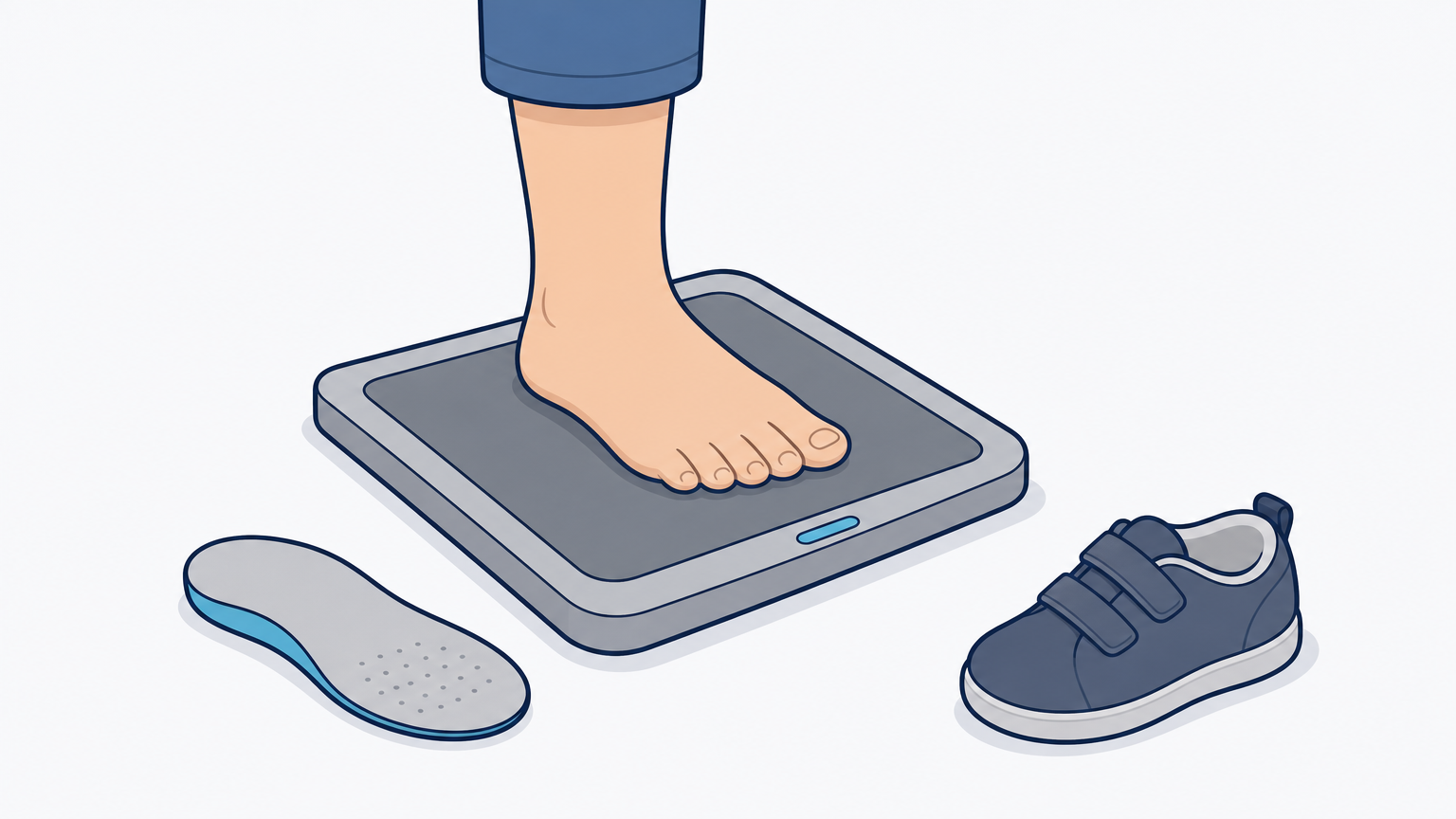
If your child has pain or a clear gait problem, assessment comes before any insole.
Who it suits
These orthotics suit children with persistent heel or knee pain, such as Sever’s disease or Osgood-Schlatter, and children whose flat foot clearly rolls inward. They also suit children who got nowhere with a prefabricated pair.
At ModPod, the podiatrist uses 3D scanning and pressure plate analysis to see how your child loads each foot, then designs the device around it. Our children’s podiatry team will also tell you plainly when your child does not need an orthotic at all.
Cost and fitting
Expect this to be the dearest option on the list, because the price covers assessment, scanning and manufacture. Consultation fees at ModPod sit between $110 and $140, and HICAPS on-site claiming lets you claim private health rebates on the day. Eligible patients can also use a Medicare EPC plan. You can read more about custom orthotics at our clinics.
- Bring your child’s school and sports shoes to the appointment.
- Build up wear gradually, starting with an hour or two a day.
- Book a review when shoe sizes change, because growing feet outgrow devices.
2. Full-length podiatrist-designed kids orthotics
A full-length, podiatrist-designed orthotic is the best-value option among childrens shoes insoles for mild to moderate flat feet. It gives real arch and heel support at a fraction of the custom price, and it is a sensible first step when your child has no significant pain.
Over-pronation, not arch height, decides whether a child needs support.
Who it suits
Start with the foot itself. All toddlers have flat feet, arches begin to form around age 4 to 5, and a normal arch is usually visible by 7 to 8. So orthotics for toddlers with flat feet are rarely needed unless there is pain, frequent tripping or clear over-pronation.
You can check for that rolling with a simple test. Draw an imaginary line from the tip of the ankle bone straight down to the floor. If it lands away from the foot, the ankles roll inward and support may help. Aching legs or strong growing pains are worth raising with a podiatrist.
Cost and fitting
Off-the-shelf orthotics for kids cost about $15 to $35 a pair when they are podiatrist-designed and sold through Australian retailers. That makes it realistic to buy one pair for school shoes and another for sport.
- Choose the size from the sizing chart, matched to shoe size rather than age.
- Take out the shoe’s own insole and use it as a template if trimming is needed.
- Increase wear from 1 or 2 hours a day over several days.
- Leave about a thumb’s width in front of the longest toe.
3. Shock-absorbing sports insoles
Sports insoles suit children whose problem is impact rather than alignment. Among childrens shoes insoles, these add a shock-absorbing footbed and a heel pad, usually with a low, non-corrective arch contour that does not change how the foot moves.
Sports insoles cushion impact, they do not correct alignment.
Who it suits
They suit active kids who run, play football or netball, or train several times a week and have no specific pain or gait concern. The extra cushioning helps on hard grounds and long school sports days.
If heel pain keeps returning, do not keep swapping insoles. Repeated heel pain in a growing child can be Sever’s disease, and that needs a proper assessment.
Cost and fitting
Prices vary by brand and retailer, and most sit in the same low range as other off-the-shelf pairs. Replace them when the cushioning feels flat or the top cloth wears through.
- Remove the original insole first, so the shoe does not become too tight.
- Check the heel pad sits fully under the heel with no bunching.
- Use a thin profile for football boots and tight trainers.
4. Cushioned foam insoles for school shoes
Cut-to-size foam insoles are the budget pick among childrens shoes insoles. They suit school shoes that rub or feel hard, adding cushioning and grip but no arch support.
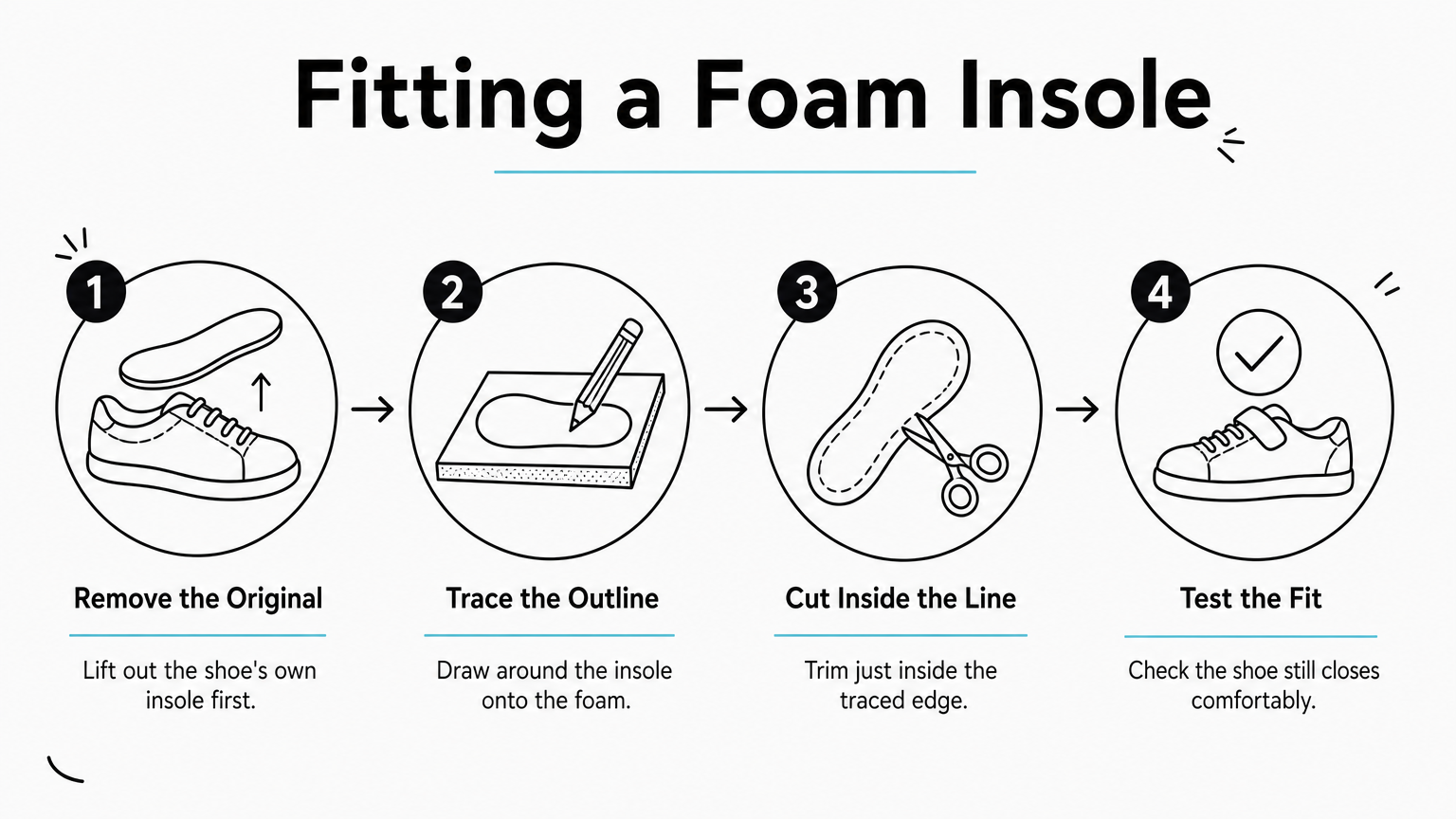
Foam cushions a hard shoe but cannot change how your child’s foot moves.
Who it suits
These suit children with new, stiff school shoes and no pain or alignment problem. A non-slip finish keeps the insole from creeping forward during the day, which matters for children who run in their school shoes.
Do not use foam to make a too-small shoe last another term. The insole adds thickness, so a snug shoe becomes tighter. Buy the next size up instead.
Cost and fitting
Foam is generally the cheapest option on the shelf. The trade-off is that it compresses over a school term, so plan on replacing it each term.
- Remove the original insole and trace it onto the foam.
- Cut just inside the line, then test the fit flat before putting it in the shoe.
- Check the shoe still closes comfortably over the top of the foot.
5. Three-quarter-length insoles for tight shoes
Three-quarter-length insoles stop short of the toes, so they work when the shoe has no spare room. Of all childrens shoes insoles, they are the easiest to fit in narrow school shoes, and they still give arch and heel support.
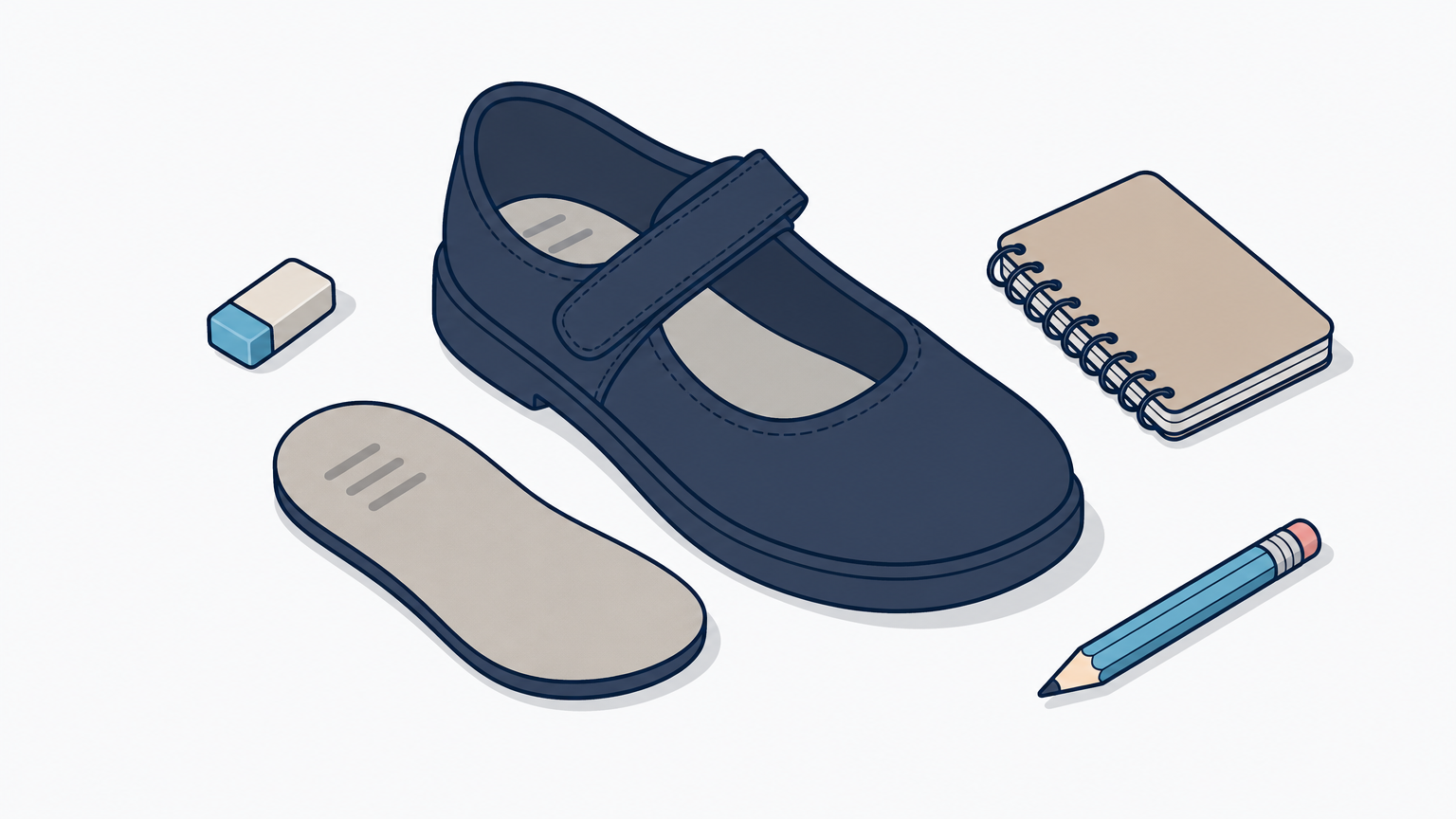
When a shoe is snug, a shorter insole beats forcing a full-length one in.
Who it suits
They suit children with narrow school or sports shoes, and children who swap between shoes often. Many prefabricated ranges come in both lengths, so you can pick by the shoe rather than by the foot.
Parents also like them because the toe box stays free for growing toes. That makes it easier to see when your child is about to outgrow the shoe.
Cost and fitting
A podiatrist-designed three-quarter pair is listed at about $30 from Australian retailers, a few dollars less than the full-length version of the same range. Because they are quick to move, one pair can cover school and weekend shoes.
- Take out the shoe’s own insole if it is removable.
- Slide the front edge under the existing insole so it cannot shift forward.
- Seat the heel firmly into the heel cup and check for bunching.
- Look for red marks after the first day of wear.
Which insole to start with
Match the insole to the problem. Foam suits sore or stiff school shoes, sports insoles suit impact, and a podiatrist-designed orthotic suits flat feet that roll inward. Anything involving pain, a limp or uneven wear needs an assessment first, because the right insole depends on the cause.
If you are unsure where your child sits, we can check at one of our five Sydney clinics and tell you plainly what is worth buying. You can book a children’s podiatry assessment and leave with a clear plan.

