

Tea tree oil and toenail fungus is a pairing many Australians try first. Tea tree oil is an essential oil from the leaves of Melaleuca alternifolia, a plant native to Australia, and it can kill some fungi in a lab dish. Whether it can clear a fungal toenail on a living foot is a different question. No strong trial shows that it can.
This article explains why the nail is so hard to treat and what the studies show. It also covers how to use the oil with care if you choose to try it. You will learn how long to wait before you judge the result, which signs mean you should stop, and which treatments have better results.
ModPod Podiatry has treated feet, ankles and lower limbs in Sydney for over 20 years, and our podiatrists treat fungal nails across five clinics. We wrote this guide to give you plain facts, so you can choose your next step with confidence.
Why tea tree oil is not a proven nail fungus treatment
Tea tree oil is not a proven treatment for toenail fungus. It can kill some fungi in a lab dish, but the evidence in people is small and mixed. Three points explain the gap between the dish and the toe.
What lab studies show
Test-tube work gives tea tree oil its reputation. A 2013 study found that it reduced the growth of Trichophyton rubrum, the fungus behind most toenail infections and athlete’s foot. A 2021 study found that it worked well alongside the antifungal drugs itraconazole and ketoconazole against the same fungus.
These results show antifungal action in a dish. They say nothing about a thick nail on a living foot.
What trials in people show
Human trials are few and small. In a 1999 trial, a cream with 2% butenafine, an antifungal drug, and 5% tea tree oil cured 80% of people. No one in the placebo group was cured. The researchers noted that no one who used tea tree oil alone had a full cure.
Mayo Clinic notes that one small study found pure tea tree oil helped a small amount. It adds that research has not shown the oil works on toenail fungus. A 2022 review of natural therapies for nail fungus found too little good evidence to back tea tree oil as a main or add-on treatment.
Tea tree oil kills fungus in a dish, but no strong trial shows that it clears a toenail.
Why the nail blocks the oil
The nail plate is hard keratin. The fungus lives in the nail and in the nail bed under it. A remedy must reach that depth to cure the infection.
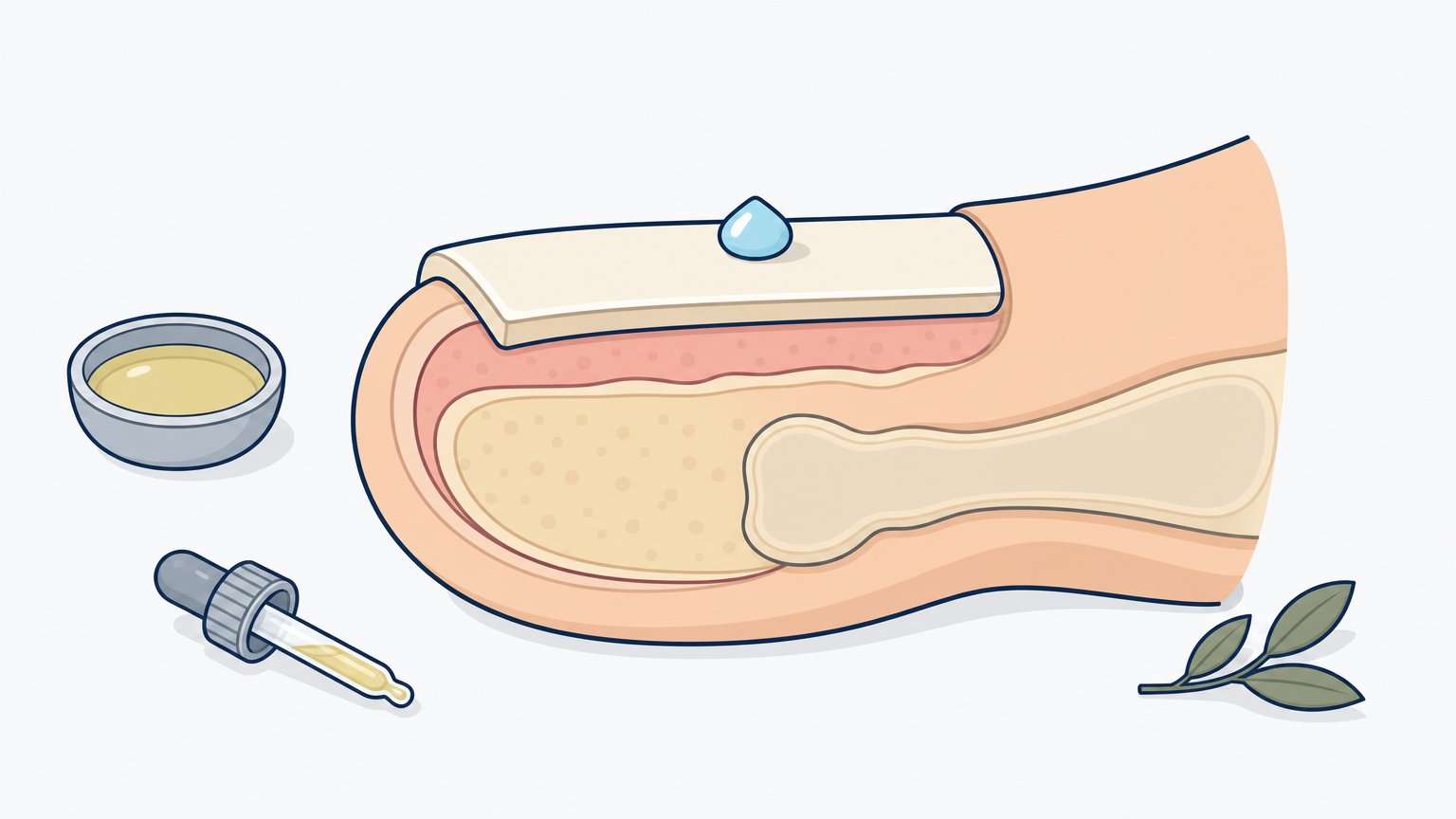
WebMD notes that most topical products for nail fungus do not soak in deeply enough. A drop of oil on the surface may touch the fungus at the top layer and miss the rest.
How to use tea tree oil safely if you try it
If you try tea tree oil, dilute it, patch test it, and apply it to a clean, dry, filed nail once a day. Never swallow it. Safe use matters more than strength, because irritated skin around the nail makes a bad problem worse.
Dilute and patch test
Undiluted oil can burn or inflame skin. Mix 1 drop of 100% pure tea tree oil with 12 drops of a carrier oil such as olive or coconut. That gives a mix of about 8%. If your skin is sensitive, use 1 drop to 19 drops, which gives 5%.
Sources set the safe ceiling at different levels. Some accept up to 15%. One study of skin reactions found dermatitis at 10% and above and advised against anything over 5%. Start weak and stay weak.
Test the mix first. Dab a little on your inner forearm and wait 24 hours. If you see redness, itch or swelling, do not use it on your nail.
Apply it step by step
Follow these steps once a day:
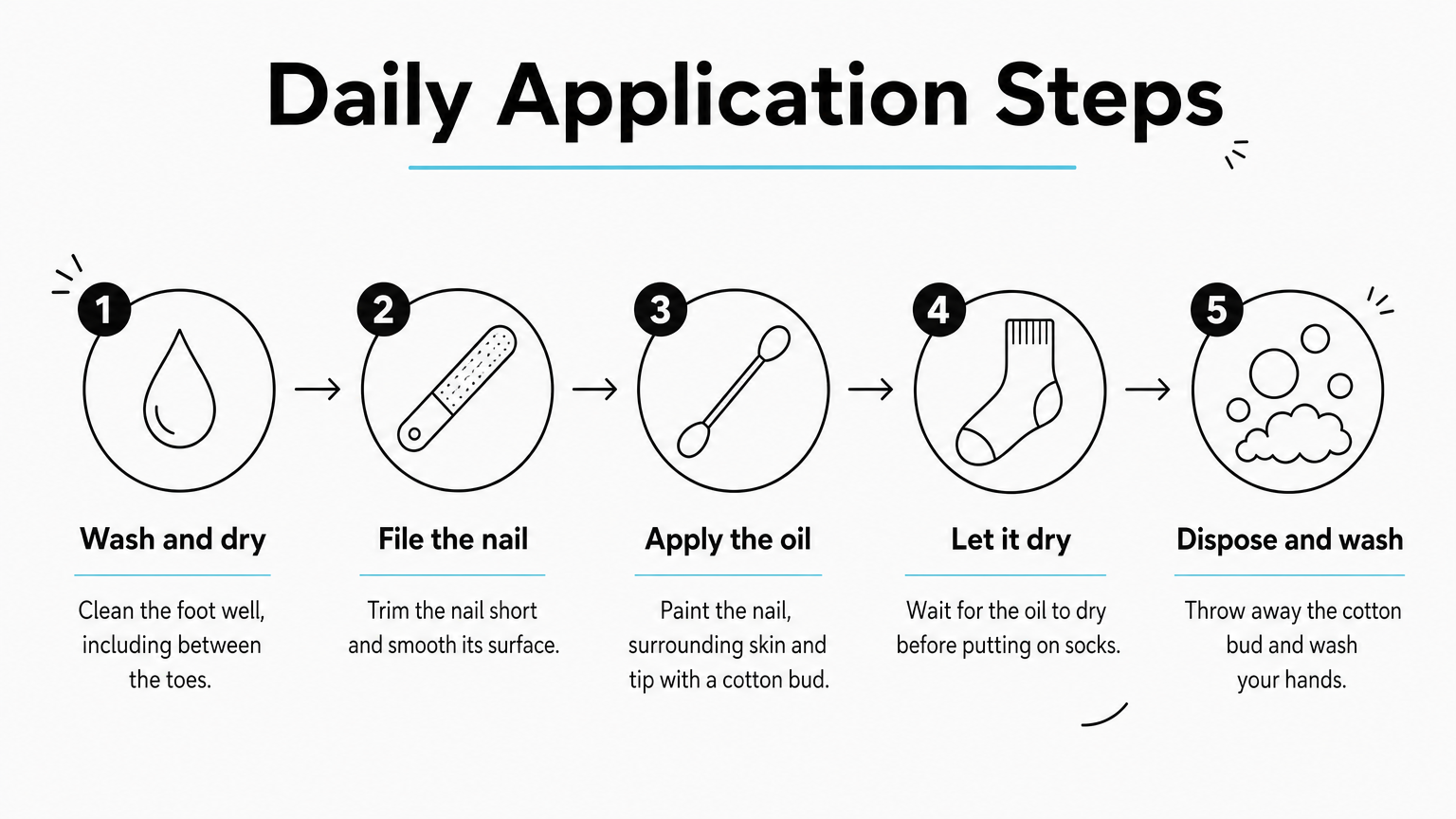
- Wash your foot and dry it well, including between the toes.
- Trim the nail short and file the surface smooth. Use a file that you throw away or keep for that foot alone.
- Dip a cotton bud in the diluted oil. Paint the nail, the skin around it and the area under the tip.
- Let the oil dry before you put on socks.
- Throw the cotton bud away and wash your hands.
Clean, dry feet and nails matter as much as the oil. Fungus spreads in damp socks and shoes, so change your socks daily and let your shoes dry between wears.
Storage and who should skip it
Air, light and heat break tea tree oil down, and aged oil irritates skin more. Keep it in a dark, tightly closed bottle away from heat, and replace it about 12 months after you open it. Buy 100% pure oil from a brand you trust.
Skip tea tree oil if your skin is broken or inflamed. Talk to a doctor first if you are pregnant or breastfeeding. Do not use it on children without medical advice, and keep it away from pets. If you swallow it, it is toxic. WebMD lists confusion, loss of muscle control and breathing problems as risks.
Dilute it, patch test it, and stop at the first sign of redness or itch.
How long to try it and when to stop
Give tea tree oil about three months, and judge the result by new nail growth. If you see no clear nail at the base by then, stop and see a podiatrist.
Set a review date
A fungal toenail does not heal. It grows out and gets replaced. Toenails grow about 1 mm a month, so a full new big toenail takes 12 to 18 months. Say your nail measures 15 mm from skin to tip. At 1 mm a month, you need about 15 months of clear growth to see a fully new nail.
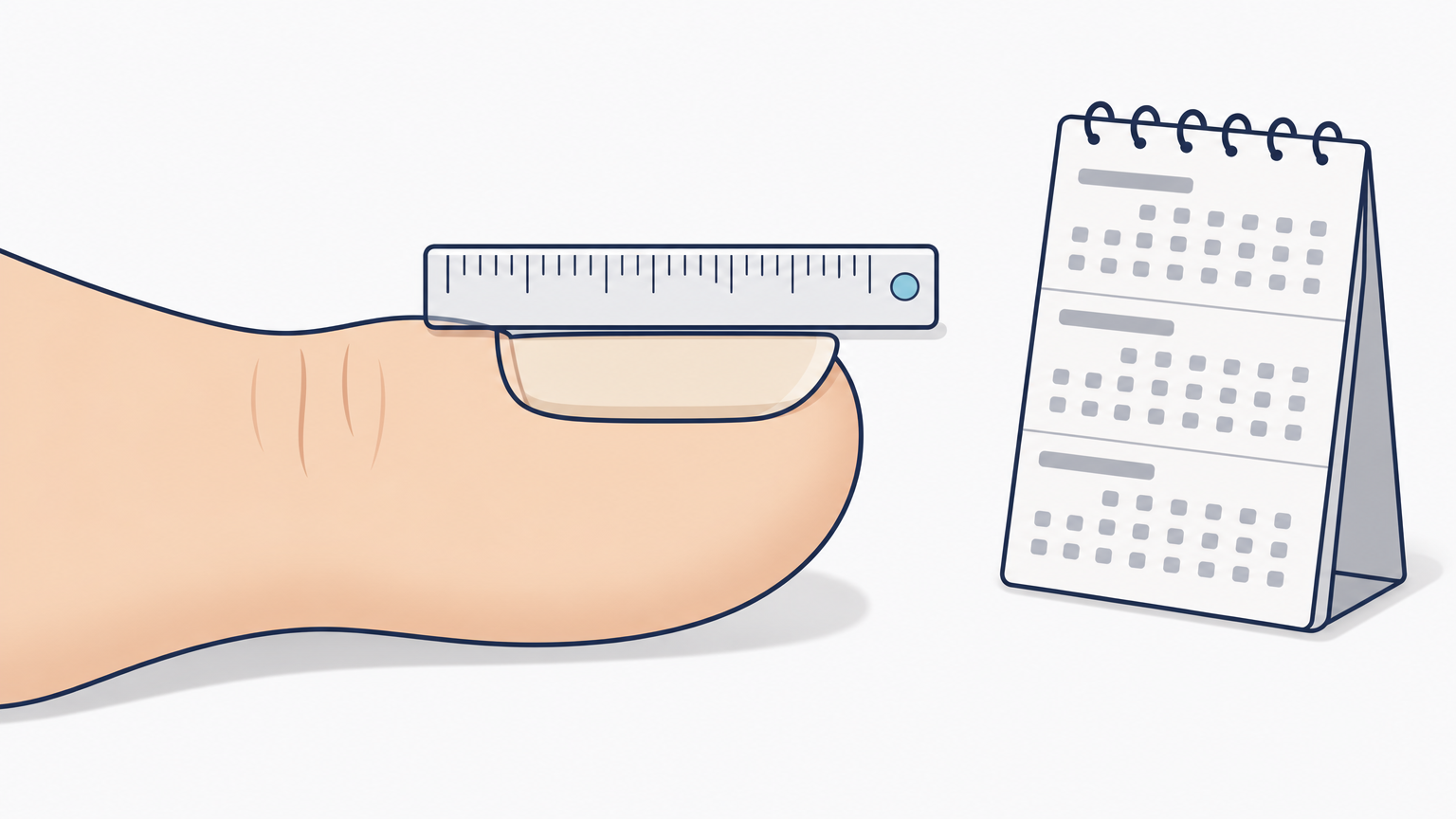
That is why a clear band at the base is the sign to look for. A cleaner surface does not mean the infection is gone. Use this schedule:
| When | What to check | What to do |
|---|---|---|
| Weeks 1 to 2 | Redness, itch or swelling | Stop if any appear |
| Month 3 | A band of clear, healthy nail at the base | Carry on if it is there. If not, book a podiatrist |
| Any time | Pain, pus, spreading redness or a lifting nail | See a podiatrist or doctor this week |
Signs you need a podiatrist now
Pain, pus, swelling or redness that spreads are not signs of a stubborn nail. They are signs to get help. People with diabetes or a weak immune system should get treatment early, since nail fungus can lead to cellulitis.
Thick, yellow, crumbly nails are not always fungus. Nail psoriasis, injury and other nail conditions can look the same. A podiatrist at ModPod diagnoses fungal nails by looking at them, with no clippings or lab tests, and treatment starts the same day. You do not need a GP referral.
A clear band of new nail at the base tells you more than any change on the surface.
Treatments with stronger evidence than tea tree oil
Prescription medicines and cold laser have better results than home oils. Each option suits a different person, and the table sets them side by side.
Your options compared
| Option | How you use it | Typical time | Points to know |
|---|---|---|---|
| Tea tree oil | Paint on the nail daily | Months, with no proof of cure | Skin irritation is possible |
| Medicated nail paint or cream | Apply as directed | Up to a year | A doctor may suggest it |
| Oral antifungal tablets | Prescribed by a doctor | 6 to 12 weeks of tablets | Best results for most people, but you need blood tests for your liver |
| Cold laser | Clinic visits | About 4 sessions | Painless, with no downtime |
Oral tablets suit many people, but they are not safe for everyone, such as those with liver disease. For a severe, stubborn infection, a doctor may suggest removing the nail.
How cold laser works at ModPod Podiatry
Our fungal nail laser treatment uses the Lunula cold laser. It is painless, it takes about 12 minutes a session, and you can walk out and carry on with your day. Most people need about four sessions, and treatment starts on your first visit. Clinic figures quote success rates of 75 to 90 per cent.
Each session costs $160, so four sessions come to $640. Your podiatrist confirms the number of sessions after they examine your nails. We accept HICAPS, so eligible patients can claim a private health rebate on the spot. We offer same-day appointments across our five Sydney clinics whenever we can.
Cold laser gives you a defined course with a clear end, where tea tree oil gives you months of guesswork.
Where to go from here
Tea tree oil kills fungus in a dish, but no strong trial shows that it clears a toenail. If you try it, dilute it, patch test it, and review the result at three months. Look for new, clear nail at the base. Stop at once if your skin reacts or the nail hurts.
If the nail has not improved, or you would rather skip months of trial and error, a podiatrist can tell you what you have and treat it. Book a fungal nail assessment online at the ModPod Podiatry clinic nearest you.

