
If your legs feel heavy, swollen or achy by the end of the day, you’ve probably come across compression socks for circulation as a suggested fix. It’s not just marketing. The right pair applies graduated pressure to your lower leg, helping push blood back towards your heart instead of letting it pool around your ankles. But not every sock on the shelf does this properly, and not everyone needs the same level of compression.
This article explains exactly what compression socks do, how graduated compression works, and who genuinely benefits from wearing them. Whether you’re on your feet all day at work, sitting through long-haul flights, managing varicose veins, or recovering from a sports injury, we’ll break down the difference between compression levels and when socks help versus when they’re a waste of money.
As podiatrists who assess lower limb circulation and biomechanics daily across our Sydney clinics, we see firsthand how the wrong compression choice can do more harm than good. This guide covers who needs compression socks, how to choose the right fit, and when it’s worth booking a proper assessment instead of guessing.
Why compression socks matter for healthy circulation
Blood doesn’t just flow downhill and stay there. Your veins rely on a network of one-way valves and the pumping action of your calf muscles to push deoxygenated blood back up towards your heart, working against gravity the whole way. When you’re standing at a market stall for eight hours, sitting through a long flight, or recovering on the couch after surgery, that calf-muscle pump barely fires. Blood and fluid start to pool in your lower legs and ankles, and that’s when you notice the heaviness, the swelling, and the dull ache that builds through the day. Compression socks for circulation work by applying external pressure that mimics what your muscles should be doing, squeezing the veins slightly to help blood move in the right direction.
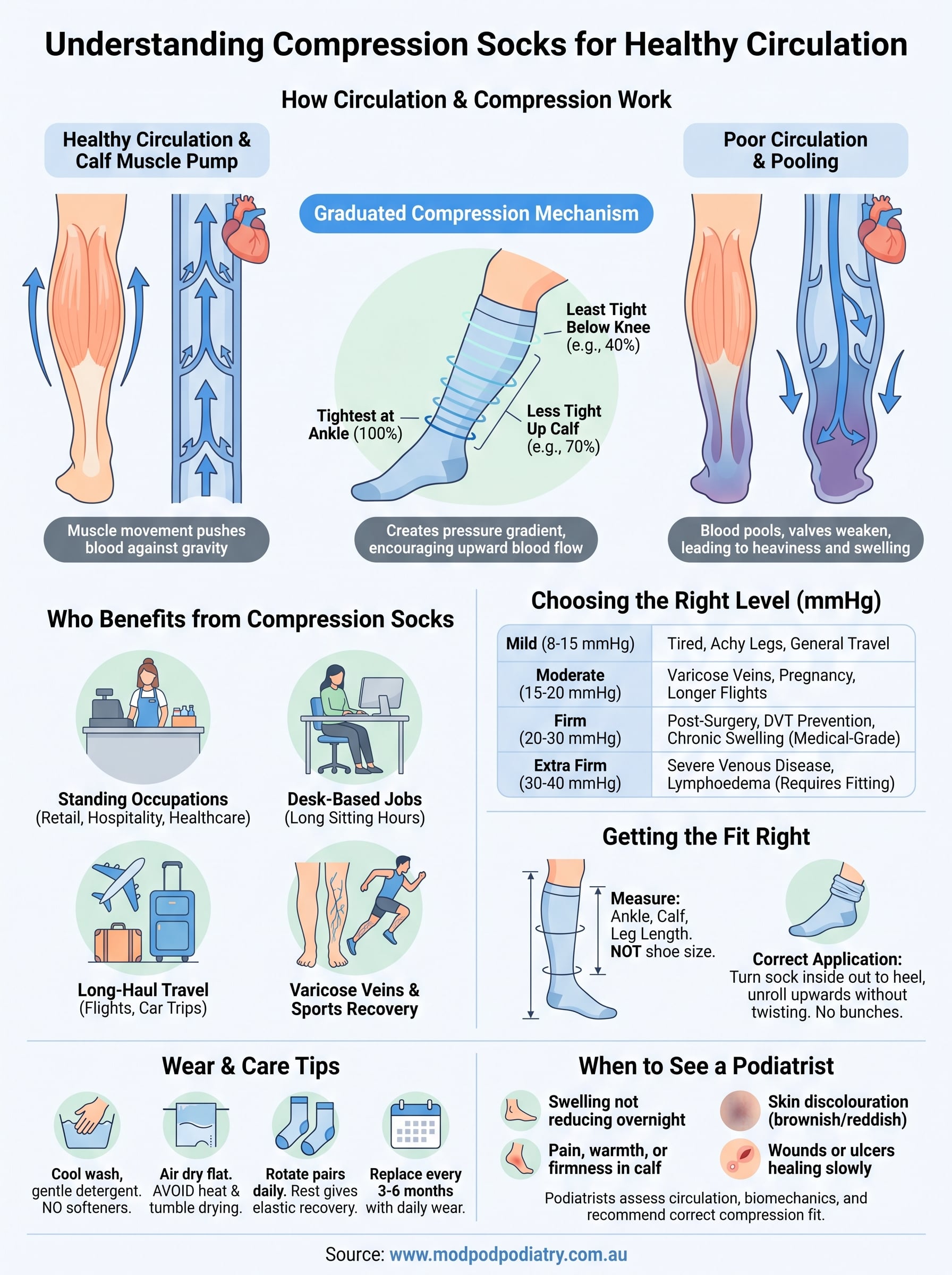
Graduated compression is the key detail most people miss. A proper medical-grade sock is tightest at the ankle and gradually loosens as it moves up the calf, creating a pressure gradient that actively encourages upward blood flow rather than just squeezing everything evenly. Generic "support" socks sold in supermarkets often apply uniform pressure, which can feel comfortable but doesn’t do the same job. Without that gradient, you’re not getting genuine circulation support, you’re just wearing a tighter sock.
Compression only helps circulation when the pressure is graduated, tightest at the ankle and easing up the leg.
What happens when circulation slows down
Poor venous return doesn’t just cause discomfort. Over time, blood pooling in the lower legs stretches the vein walls and puts extra strain on those one-way valves. Once a valve weakens, blood can leak backwards between heartbeats, a condition called venous reflux, which is one of the main drivers behind visible varicose veins and chronic swelling. Fluid that isn’t being pushed back into circulation also seeps into surrounding tissue, causing the puffiness around ankles that many of our patients describe as their shoes feeling tight by 4pm. Left unmanaged for years, this can progress towards skin changes and, in more severe cases, venous ulcers. According to the Better Health Channel, Australia’s own government health resource, varicose veins affect roughly one in five adults, and prolonged standing or sitting is a well-documented risk factor.
The measurable benefits of graduated compression
Worn correctly, graduated compression socks do a specific, well-studied job rather than a vague general one. We see the following benefits most consistently in patients across our Sydney clinics:
- Reduced ankle and lower leg swelling, particularly after long periods of standing or sitting
- Less end-of-day heaviness and fatigue in the calves and shins
- Improved venous return during travel, lowering the risk of blood pooling on flights over a few hours
- Faster recovery after intense training sessions, when paired with proper rest
- Reduced risk of blood clots in patients who are already at higher risk due to surgery, immobility, or existing vein disease
Athletes often ask us whether compression actually improves performance rather than just recovery. The honest answer is mixed. There’s decent evidence for recovery benefits, but performance gains during exercise itself are far less consistent across studies. If you’re training seriously and want a clearer picture of how compression fits into your recovery routine alongside gait and biomechanics, our sports injury podiatry clinic can walk you through it properly rather than guessing based on marketing claims.
Ultimately, the value of compression socks comes down to consistent, correct use rather than the sock alone doing all the work. They support a system that’s already under strain from your daily habits, whether that’s standing all shift at a hospital, sitting through back-to-back meetings, or clocking up long-haul flight hours several times a year. Understanding why circulation slows in the first place makes it much easier to judge whether compression is actually solving your problem, or just masking symptoms that need a proper look.
How to choose the right compression level and fit
Picking a pair off the shelf because the packet says "compression socks" is where most people go wrong, which is why it’s worth checking our compression socks reviews before you buy. Compression is measured in millimetres of mercury (mmHg), the same unit used for blood pressure, and the number on the packet tells you how much squeeze you’re actually getting. Medical-grade compression starts at 15mmHg, while anything below that is closer to a firm everyday sock than a therapeutic tool. Matching the correct compression level to your actual need matters far more than brand or price.
Compression levels explained (mmHg)
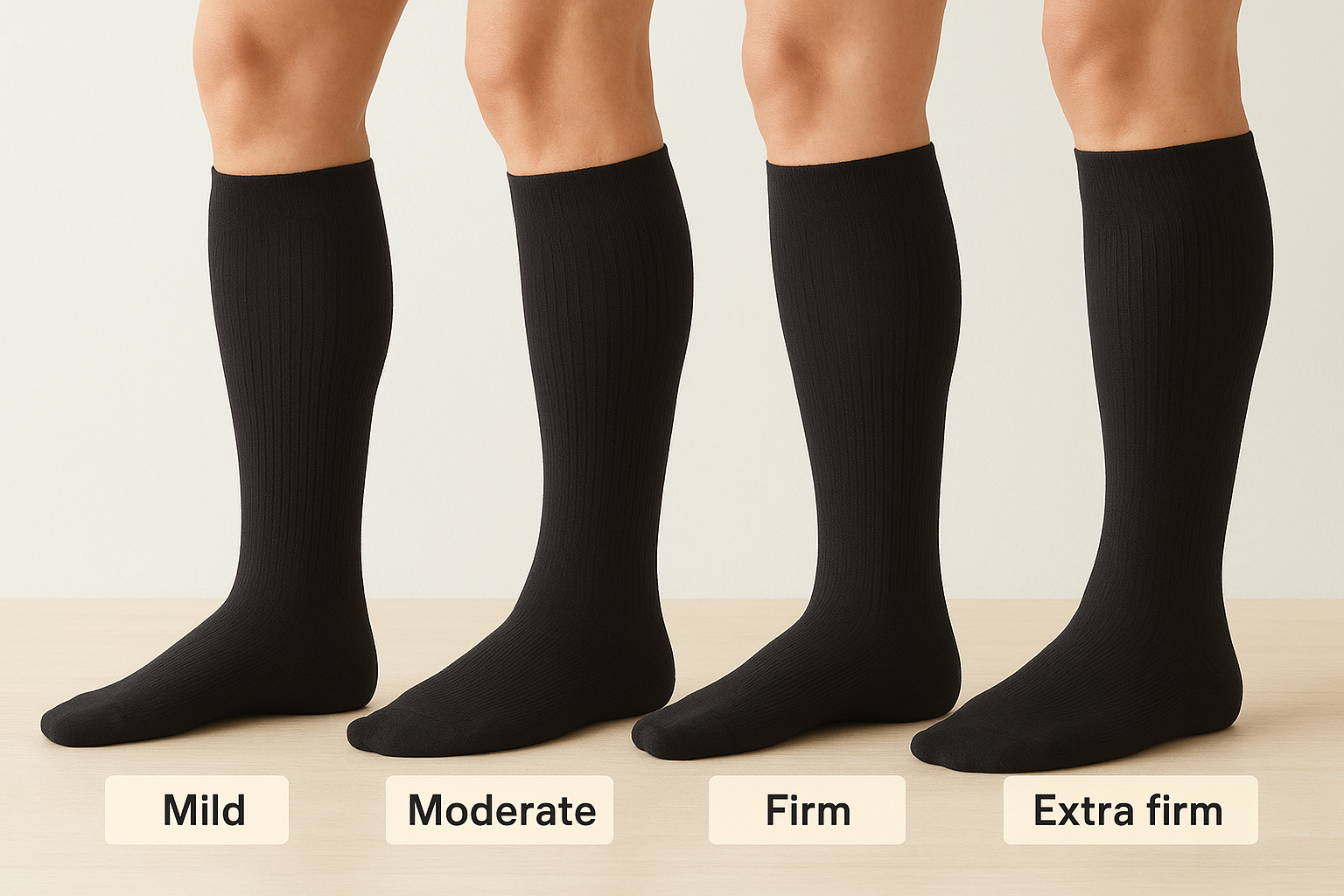
Each mmHg band is designed for a different job, and stepping up a level doesn’t automatically mean better results. Wearing 30-40mmHg socks for ordinary end-of-day tiredness can feel restrictive and uncomfortable rather than helpful, while 8-15mmHg won’t do much for someone managing diagnosed venous disease.
| Compression Level | mmHg Range | Best For |
|---|---|---|
| Mild | 8-15 mmHg | Tired, achy legs, general travel |
| Moderate | 15-20 mmHg | Varicose veins, pregnancy, longer flights |
| Firm | 20-30 mmHg | Post-surgery recovery, DVT prevention, chronic swelling |
| Extra firm | 30-40 mmHg | Severe venous disease, lymphoedema |
The mmHg number on the packet matters less than whether it’s the right one for your actual condition, not a guess off a pharmacy shelf.
Firm and extra-firm compression should really be fitted with professional guidance rather than self-selected. These levels are strong enough to genuinely restrict blood flow if the sizing is wrong, which defeats the entire purpose and can leave patients with numb toes or worsened swelling below the cuff line.
Getting the length and fit right
Fit matters just as much as the mmHg rating, and this is where most off-the-shelf socks fail. Compression garments are sized by leg measurements, not shoe size or the small/medium/large labels you’d use for regular socks. Get these three measurements before buying:
- Ankle circumference at the narrowest point above the ankle bone
- Calf circumference at the widest point of the calf
- Leg length from the floor to just below the knee (or to the top of the thigh for thigh-highs)
An ill-fitting sock rolls down, bunches behind the knee, or digs in at the top, creating a tourniquet effect that traps fluid exactly where you’re trying to move it away from. If swelling sits mainly around the ankle, knee-highs usually do the job. If it extends up the thigh or you’re managing varicose veins higher up the leg, you’ll need a thigh-high or waist-high garment instead.
How to wear and care for your compression socks
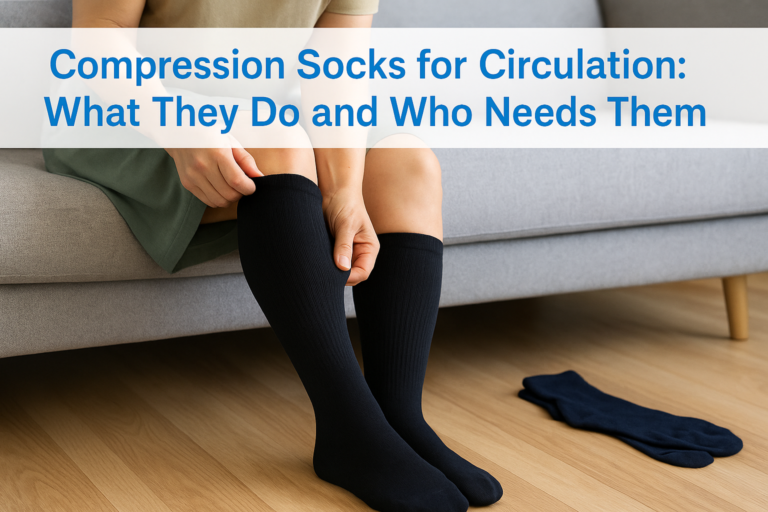
Getting compression socks on properly makes a bigger difference than most people expect. Bunched fabric, twisted seams, or a rolled-down cuff can turn a therapeutic garment into a tight band that restricts blood flow rather than assisting it. Correct application technique matters just as much as buying the right mmHg and size, especially with firmer compression levels where the margin for error is smaller.
A compression sock applied badly can do the opposite of its job, trapping fluid instead of moving it along.
Putting them on correctly
Morning application works best, before swelling has had a chance to build through the day. Bunching the sock down to the heel first, rather than trying to roll a full-length sock up in one motion, helps you avoid the twisting and tight bands that cause discomfort later.
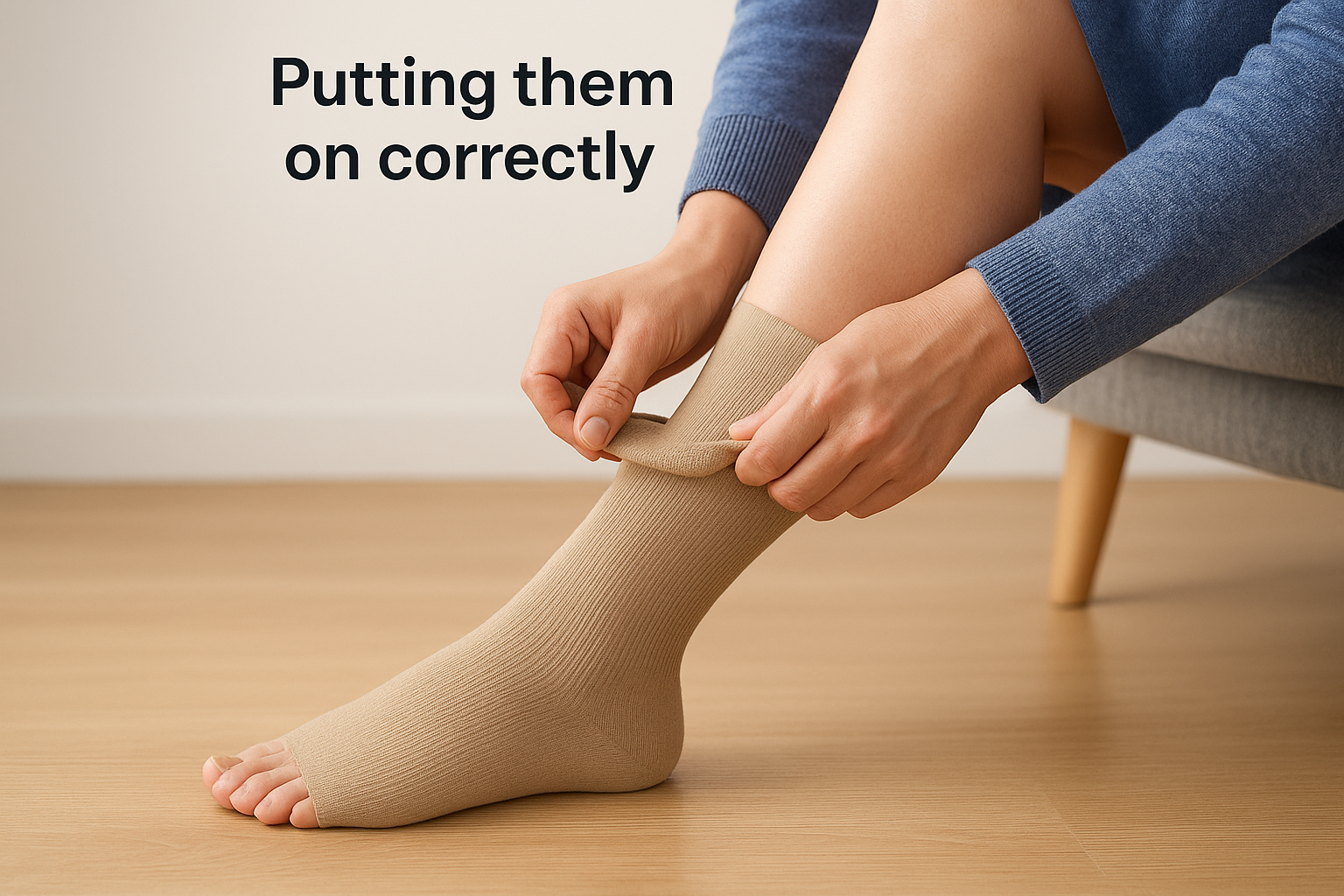
- Turn the sock inside out down to the heel before starting
- Slide your foot in and settle the heel pocket properly, then unroll upward in small sections
- Smooth out any wrinkles or bunching behind the knee and around the ankle as you go
- Check that the top band sits flat against the skin without digging in
- Avoid pulling from the top edge only, as this stretches and thins the fabric unevenly
Rubber gloves or a specialised donning aid can help if grip strength or flexibility is an issue, which is common among older patients or those recovering from surgery. If you’re consistently struggling to get firm or extra-firm compression on without help, that’s worth mentioning at your next appointment rather than just persisting.
Washing, drying and replacing your pair
Elastic fibres lose their stretch with heat, harsh detergents, and tumble drying, all of which shorten the working life of a sock far faster than normal wear. Hand washing or a gentle machine cycle in cool water, followed by air drying flat, keeps the compression gradient intact for longer. Fabric softener coats the fibres and reduces elasticity, so it’s best avoided entirely.
| Care step | Do this | Avoid this |
|---|---|---|
| Washing | Cool water, gentle detergent | Hot water, bleach, fabric softener |
| Drying | Lay flat to air dry | Tumble dryer or direct heat |
| Rotation | Own 2-3 pairs, alternate daily | Wearing the same pair every day without a rest |
| Replacement | Every 3-6 months with daily wear | Waiting until fabric visibly sags |
Once a sock loses its snap-back stretch, it’s no longer delivering the mmHg printed on the packet, even if it still looks fine on the leg. Rotating between two or three pairs spreads out the wear and gives each pair time to recover its elasticity between uses. Testing this yourself is simple: stretch the cuff between your fingers and compare it to a newer pair. If it springs back noticeably slower, it’s time to replace it rather than squeeze another few months out of it.
Conditions and lifestyles that benefit most
Some people notice a genuine difference within days of wearing compression socks properly, while others are wasting money on a product that was never going to solve their specific problem. Compression socks for circulation work best when there’s a clear underlying reason for poor venous return, whether that’s a medical condition, an occupation that keeps you static for hours, or a lifestyle habit that puts unusual strain on your legs. Matching the sock to the actual cause makes the difference between real relief and a slightly tighter sock that does very little.
Compression helps most when there’s a clear reason blood is pooling, not just because legs feel tired at the end of a long day.
Occupational and lifestyle triggers
Anyone whose job or routine keeps their calf muscles inactive for long stretches is a strong candidate for moderate compression. Hairdressers, retail staff, nurses, and hospitality workers who stand for entire shifts fall into this group, as do office workers sitting through back-to-back meetings without moving. Frequent flyers face a similar risk during long-haul trips, where cramped seating and cabin pressure changes contribute to swollen ankles after flying.
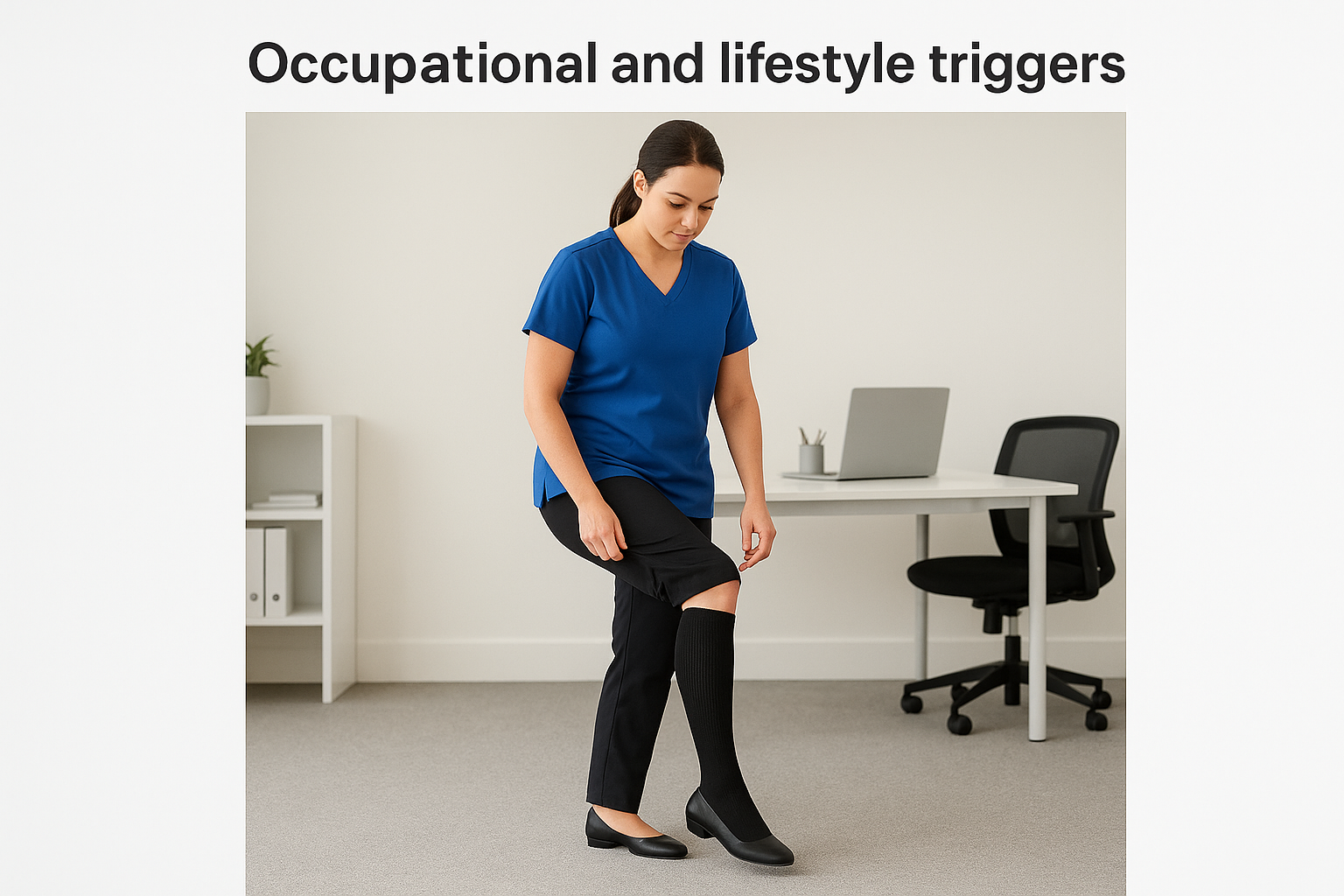
- Standing occupations (retail, hospitality, healthcare, teaching)
- Desk-based sitting for more than six hours a day
- Long-haul travel, particularly flights over four hours
- Pregnancy, where hormonal changes and increased blood volume put extra pressure on leg veins
- Recovery periods after surgery, injury, or extended bed rest
Medical conditions where compression genuinely helps
Beyond lifestyle factors, several diagnosed conditions respond well to graduated compression when it’s fitted correctly. Varicose veins and chronic venous insufficiency are the most common reasons we prescribe compression across our clinics, since the socks reduce the backward pressure on already-weakened valves. Lymphoedema patients rely on firmer compression to manage fluid build-up that the lymphatic system can’t clear on its own, and this usually needs a custom-fitted garment rather than something bought off a shelf. Patients recovering from deep vein thrombosis, or those at elevated risk due to reduced mobility, are often advised by their doctor to wear compression as a preventative measure, since it lowers clot risk during periods of immobility.
Athletes sit in a slightly different category. Sports podiatry patients often ask about compression socks for recovery after heavy training blocks or events like half marathons, and there’s reasonable evidence supporting reduced muscle soreness when compression is worn immediately after exertion. It’s less about preventing injury and more about speeding the clearance of metabolic waste from tired muscles, which is a different mechanism to the venous support benefits we’ve covered so far.
Children occasionally need compression too, though far less often than adults. Kids recovering from lower limb casting, or those with diagnosed circulatory conditions, sometimes need a properly fitted paediatric garment rather than an adult sock cut down to size. If you’re unsure whether your situation fits into any of these categories, or you’re just guessing based on how your legs feel by evening, that’s exactly the sort of question worth raising with a podiatrist rather than working through trial and error with different socks bought online.
When to see a podiatrist about circulation issues
Compression socks are a management tool, not a diagnosis. If you’ve been wearing the correct mmHg for weeks and your legs still ache, swell, or change colour, that’s your cue to stop guessing and get an actual assessment. Circulation issues can look identical on the surface, tired ankles, heavy calves, a bit of puffiness, while having very different underlying causes, and a sock that helps one cause can do nothing for another. Podiatrists are trained to look past the symptom and check what’s actually happening in the vessels, joints, and soft tissue of your lower limb.
If compression isn’t improving your symptoms within a few weeks, the problem needs assessing, not a stronger sock.
Warning signs that need a proper look
Some symptoms shouldn’t wait for a routine check-up. Book an appointment sooner rather than later if you notice any of the following:
- Swelling that doesn’t reduce overnight, even after resting with your legs elevated
- Skin discolouration around the ankle, particularly a brownish or reddish tinge
- One leg swelling more than the other, which can point to a localised blockage rather than general venous insufficiency
- Pain, warmth, or firmness in the calf, especially after a flight, surgery, or long period of immobility
- Numbness or tingling in the toes while wearing compression, which suggests the fit or level is wrong
- Wounds or ulcers near the ankle that heal slowly
Sudden calf pain and swelling after travel or surgery deserves urgent medical attention rather than a wait-and-see approach, since it can indicate a deep vein thrombosis.
What a podiatry assessment actually involves
When you come into one of our Sydney clinics with circulation concerns, we’re not just glancing at your legs and handing over a pair of socks. A proper assessment includes checking pulses and skin temperature down the leg, looking at how your gait and biomechanics might be contributing to pooling, and ruling out other causes like nerve compression or joint issues that mimic vascular symptoms. We also check whether your current footwear or activity levels are working against you, since poor arch support or long hours in unsuitable shoes can quietly worsen venous return regardless of what you’re wearing on top, which is often where custom orthotics come in.
For patients managing diagnosed vein disease, diabetes, or lymphoedema, we’ll often coordinate with your GP or vascular specialist rather than treating compression in isolation. Getting the mmHg and fit right from a professional consult also means you’re not wasting money on the wrong garment through trial and error. If you’ve been putting off a check because your symptoms feel minor, it’s worth remembering that early management is far easier than reversing years of unmanaged venous strain. Book a consultation with one of our podiatrists if any of the signs above sound familiar.
A final word on choosing the right pair
Good compression socks for circulation aren’t a one-size-fits-all purchase, and the right choice depends on matching mmHg, fit and length to whatever’s actually causing your legs to ache or swell. Grabbing the first pair you see at the pharmacy might ease things temporarily, but it won’t fix a valve problem, venous insufficiency, or a biomechanical issue that’s quietly making things worse each day. Guessing your way through different socks wastes money and delays proper treatment for something that usually responds well once it’s correctly identified.
Sorting out your circulation properly means getting an actual assessment rather than trial and error. Our podiatrists check pulses, gait and skin changes across the leg, then recommend a compression level and fit suited to your specific situation, not a generic recommendation off a shelf. If your legs have been telling you something for weeks, book a consultation and get a proper answer instead of another guess.