
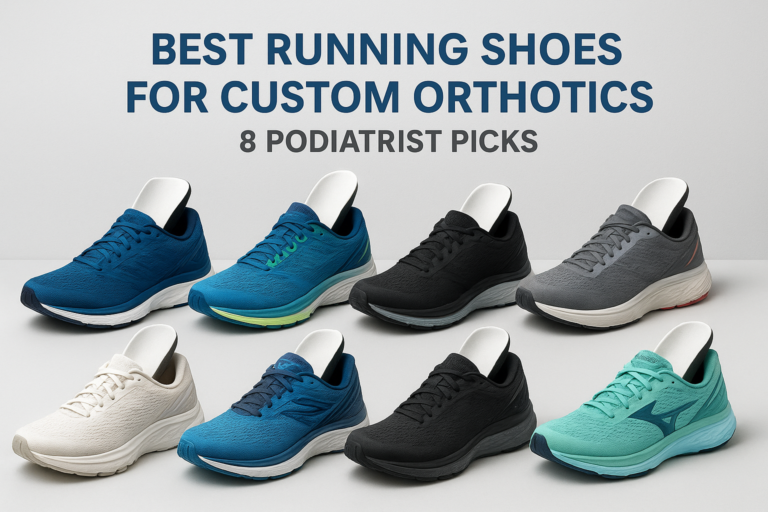
You’ve spent good money on custom orthotics, so the last thing you want is a shoe that fights against them. Finding running shoes for custom orthotics isn’t as simple as grabbing whatever’s on sale at your local sports store. Removable insoles, the right volume through the midfoot, and a stable heel counter all matter more than the brand name printed on the side.
At ModPod Podiatry, we fit orthotics into running shoes every week across our Sydney clinics, and we see the same mistakes over and over: shoes with sock liners glued in, toe boxes too narrow once the orthotic sits inside, or heel counters too soft to hold your foot in place. This article gives you our podiatrist picks for the best running shoes with custom orthotics, based on what actually works for our patients, not marketing claims.
Below, you’ll find eight shoe models we regularly recommend, plus practical guidance on what to look for when trying shoes on with your orthotics, so you can walk into a store and know exactly which boxes need ticking.
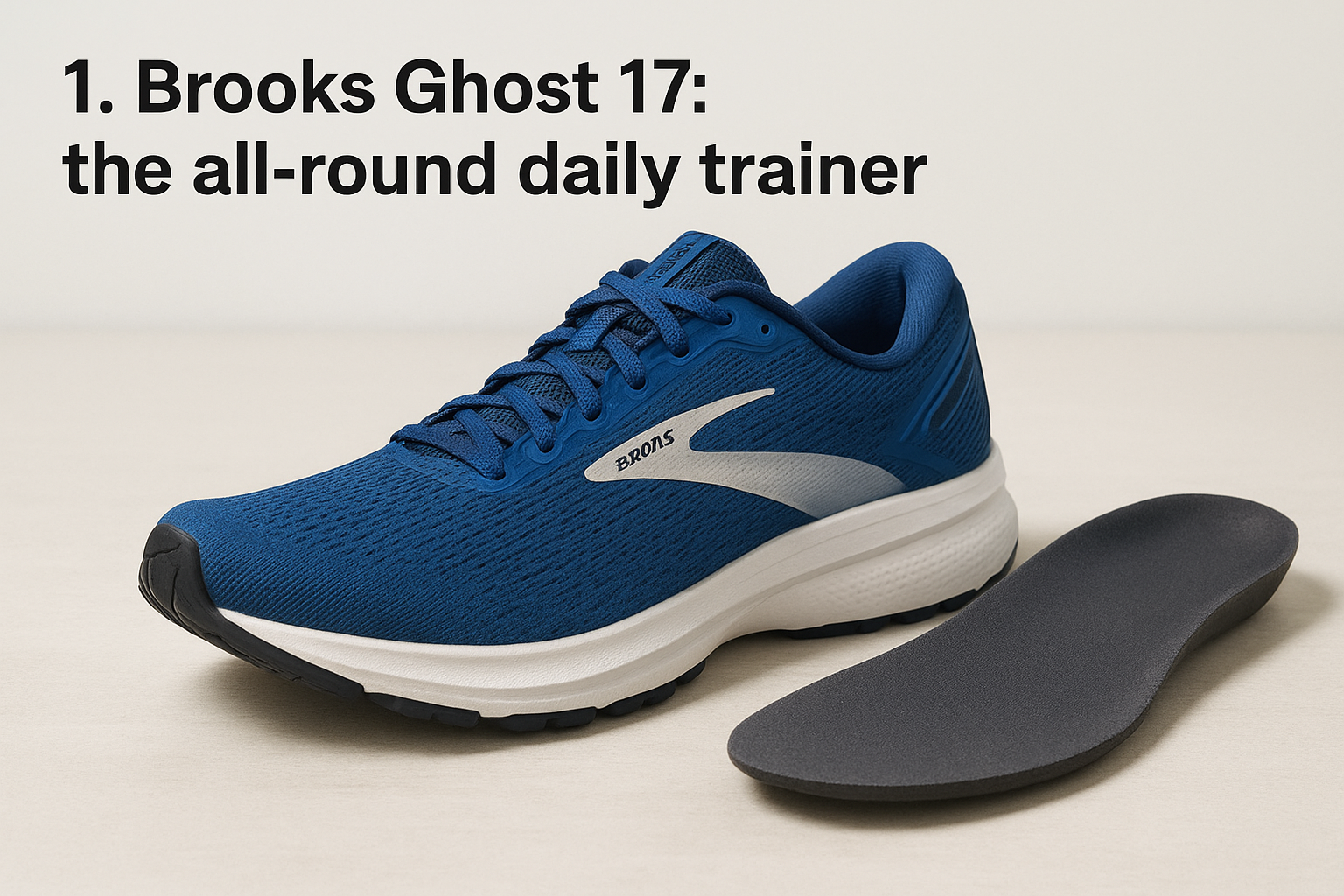
1. Brooks Ghost 17: the all-round daily trainer
The Ghost 17 is the shoe we reach for most often when a patient asks for a safe, no-drama option to pair with a new orthotic device. Brooks has kept the last relatively unchanged for years, which matters because it means the fit is predictable and the removable sock liner comes out cleanly without tearing the glue line. For anyone who’s never tried running shoes with custom orthotics before, this is usually where we start.
How it fits with orthotics
Brooks builds the Ghost 17 with a proper removable insole, not a token layer of foam, so pulling it out to slot in your device takes seconds. The midfoot has enough room that swapping the flat stock insole for a rigid or semi-rigid orthotic doesn’t create pressure points along the arch. We also find the heel cup deep enough that a heel post on your orthotic sits properly seated rather than shifting side to side during your stride.
A shoe that fights your orthotic on the shop floor will fight it on every kilometre after that.
Cushioning and support
Underfoot, the Ghost 17 uses Brooks’ DNA LOFT v3 foam, which strikes a middle ground between soft and responsive. It’s not as plush as a maximalist trainer, but it’s forgiving enough for daily kilometres on concrete footpaths around Sydney. The heel-to-toe drop sits at 12mm, giving a smooth, gradual rocking motion through toe-off that complements most orthotic corrections rather than working against them. Stability is neutral, so if your orthotic is doing the corrective work for overpronation, the shoe doesn’t need to fight it with built-in posting.
Who it suits best
Runners logging anywhere from 20 to 80 kilometres a week and needing one dependable shoe for most sessions will get the most from the Ghost 17. It also suits patients who walk long distances for work, since the cushioning holds up well beyond pure running use. We don’t tend to recommend it for people with significant overpronation who need built-in medial support, since the neutral platform relies more heavily on the orthotic doing the correcting.
Price in Australia
Expect to pay between $220 and $260 AUD at most Australian retailers, with prices creeping toward the top of that range for wide-fit versions. Wide and extra-wide options are worth checking specifically, because once an orthotic goes in, standard widths can feel snug through the forefoot.
| Detail | Ghost 17 |
|---|---|
| RRP (AUD) | $220–$260 |
| Drop | 12mm |
| Widths available | Standard, wide, extra-wide |
| Insole type | Fully removable |
If you’re unsure whether this model suits your specific orthotic prescription, bring both into one of our Sydney clinics and we’ll check the fit together as part of your custom orthotics review.
2. Saucony Ride 18: best for high-mileage comfort
Patients who run most days of the week tend to gravitate towards the Ride 18, and for good reason. Saucony has built a reputation for shoes that hold their cushioning over long distances, and the Ride 18 keeps that promise while leaving enough room inside for a custom orthotic device without needing to size up.
How it fits with orthotics
Saucony fits a generous internal volume through the midfoot on the Ride 18, which matters once you’ve swapped the stock insole for something with more structure underneath. The removable liner lifts out in one piece, and the forefoot doesn’t feel pinched even with a semi-rigid shell in place. We’ve found the lacing structure adjustable enough to compensate for the slight change in top-of-foot pressure that orthotics can introduce.
More room through the midfoot means your orthotic sits where it should, not where the shoe forces it.
Cushioning and support
The PWRRUN+ midsole foam is softer and more durable than older Saucony models, so it doesn’t pack down after a few hundred kilometres the way cheaper foams do. Drop sits at 8mm, slightly lower than the Ghost 17, giving a flatter platform that some patients with forefoot orthotic posting actually prefer. It’s a neutral shoe, so like the Ghost, it leans on your orthotic for corrective work rather than built-in stability posts.
Who it suits best
This shoe suits high-mileage runners training for half marathons or marathons who need consistent cushioning that won’t flatten out mid-training block. It also works well for patients who’ve had a forefoot orthotic modification, since the lower drop and roomy toe box accommodate that shape without crowding.
Price in Australia
The Ride 18 typically retails between $210 and $240 AUD, making it slightly cheaper than the Ghost 17 while offering comparable orthotic compatibility.
| Detail | Ride 18 |
|---|---|
| RRP (AUD) | $210–$240 |
| Drop | 8mm |
| Widths available | Standard, wide |
| Insole type | Fully removable |
3. ASICS Gel-Kayano 32: best for overpronation
Overpronators who need a shoe that shares the corrective load with their orthotic usually end up trying the Gel-Kayano 32. ASICS has kept this model as its flagship stability trainer for decades, and the current version pairs a wide, stable base with enough internal room to run one of the best running shoes with custom orthotics for anyone whose foot rolls inward through the gait cycle.
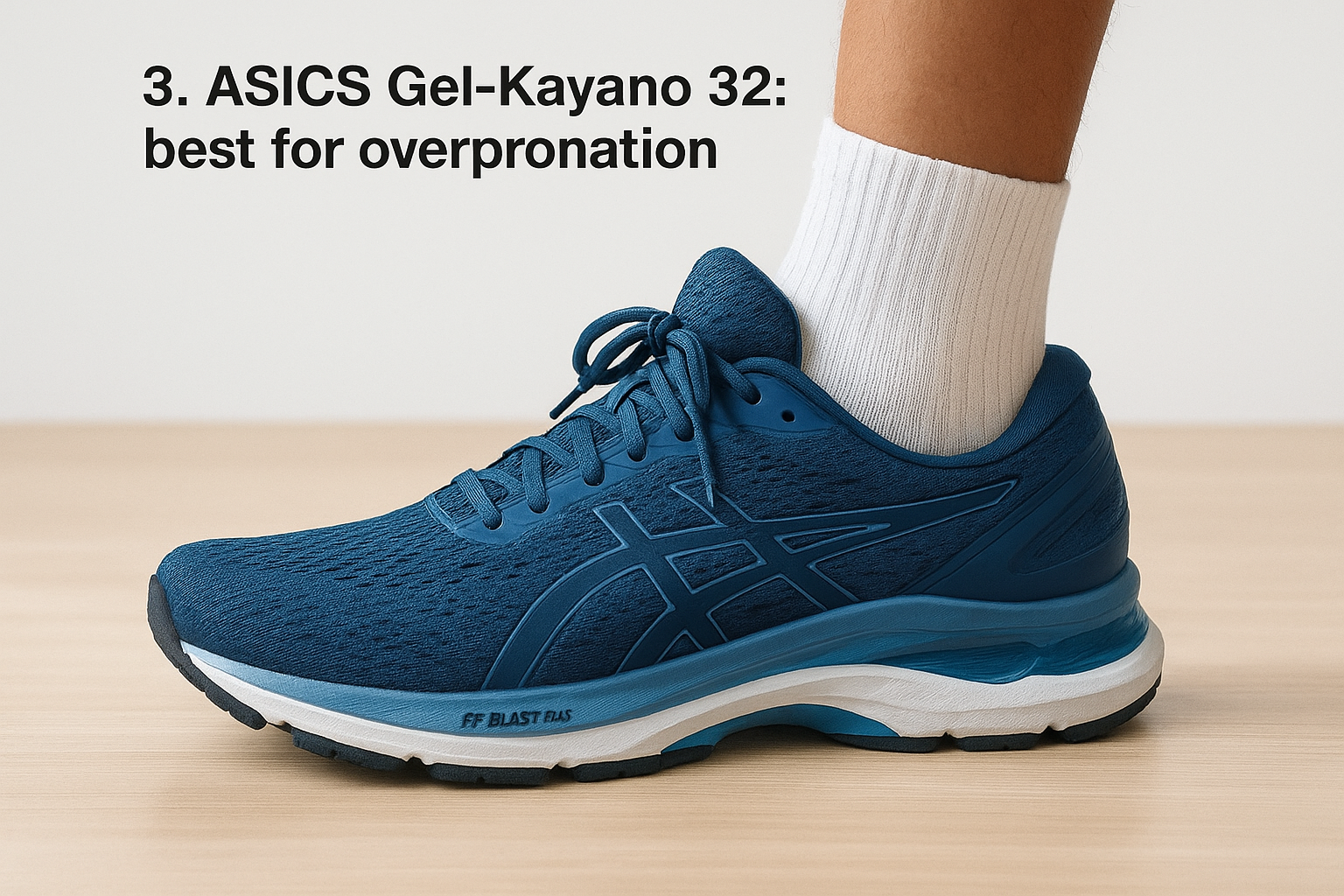
How it fits with orthotics
ASICS builds a firm, moulded heel counter into the Kayano 32 that locks the rearfoot in place once your orthotic’s heel post sits inside it, so there’s less lateral slide than you get in softer, less structured shoes. Lifting the sock liner out is straightforward, and the midfoot doesn’t pinch even with a rigid device sitting under the arch. We often pair this shoe with orthotics that include stronger medial posting, since the shoe’s own stability features and the device work together rather than duplicating the same correction twice.
Pairing a stability shoe with a stability orthotic only works when the two corrections point the same direction.
Cushioning and support
The FF Blast Plus Eco midsole under the Kayano 32 is firmer than a pure cushioning shoe like the Ghost 17, and that firmness is deliberate. Guidance through the gait cycle comes from a wider platform and a 4-point stability system rather than soft foam alone, which suits patients whose overpronation needs mechanical control, not just comfort. Drop sits at 10mm, giving a smooth transition without excessive rocking.
Who it suits best
Runners with moderate to significant overpronation, flat feet, or a history of medial tibial stress syndrome tend to do best in this shoe. We also recommend it to patients coming out of a sports podiatry assessment where gait analysis showed excessive inward rolling that a neutral shoe wasn’t managing on its own.
Price in Australia
Expect to pay between $260 and $300 AUD, making it one of the pricier options on this list, though the stability features justify the cost for patients who genuinely need them.
| Detail | Gel-Kayano 32 |
|---|---|
| RRP (AUD) | $260–$300 |
| Drop | 10mm |
| Widths available | Standard, wide |
| Insole type | Fully removable |
4. New Balance Fresh Foam X 1080v15: max cushioning
Patients dealing with sore joints, arthritis, or simply years of accumulated running mileage often ask for the softest shoe we can recommend, and the 1080v15 is our answer. New Balance built this model as its premium cushioned trainer, and it happens to pair well with custom orthotics thanks to a roomy internal chamber that doesn’t force you to compromise on cushioning to make space for a device.
How it fits with orthotics
Underneath the plush upper, New Balance fits a deep, removable insole board that lifts out easily, leaving a wide, flat platform for your orthotic to sit on. Volume through the midfoot is generous, so a bulkier orthotic with a deep heel cup or forefoot posting doesn’t crowd the sides of your foot. Quinn from our North Ryde clinic often fits this shoe for patients transitioning from a rigid device to a semi-rigid one, since the shoe absorbs the change in shape without needing a different size.
The softest shoe on the shelf still needs a firm, flat base underneath the orthotic to work properly.
Cushioning and support
Fresh Foam X midsole foam is noticeably plusher than anything else on this list, and the stack height sits higher too, giving real protection on hard surfaces like the concrete paths around Sydney Harbour. The 8mm drop keeps the ride relatively flat despite all that cushioning, which matters for orthotic users because a steep drop can push weight forward onto an area the device isn’t designed to manage. It’s a neutral shoe, so stability again comes from the orthotic rather than built-in posting.
Who it suits best
This shoe suits heavier runners, patients recovering from joint pain, or anyone doing long, slow distance work who wants maximum shock absorption. It’s less suited to faster training sessions, where the soft, high-stack ride can feel unstable underfoot.
Price in Australia
Expect to pay between $270 and $310 AUD, reflecting its position as a premium cushioning model.
| Detail | Fresh Foam X 1080v15 |
|---|---|
| RRP (AUD) | $270–$310 |
| Drop | 8mm |
| Widths available | Standard, wide, extra-wide |
| Insole type | Fully removable |
5. Hoka Clifton 10: best lightweight cushioning
Patients who want a maximalist ride without the weight penalty usually land on the Clifton 10. Hoka built its name on thick, protective midsoles, and the Clifton line strips away the bulk elsewhere so the shoe still feels quick despite the tall stack. For anyone hunting the best sneakers for custom orthotics who also wants something light enough for tempo days, this is one of the few shoes that manages both.
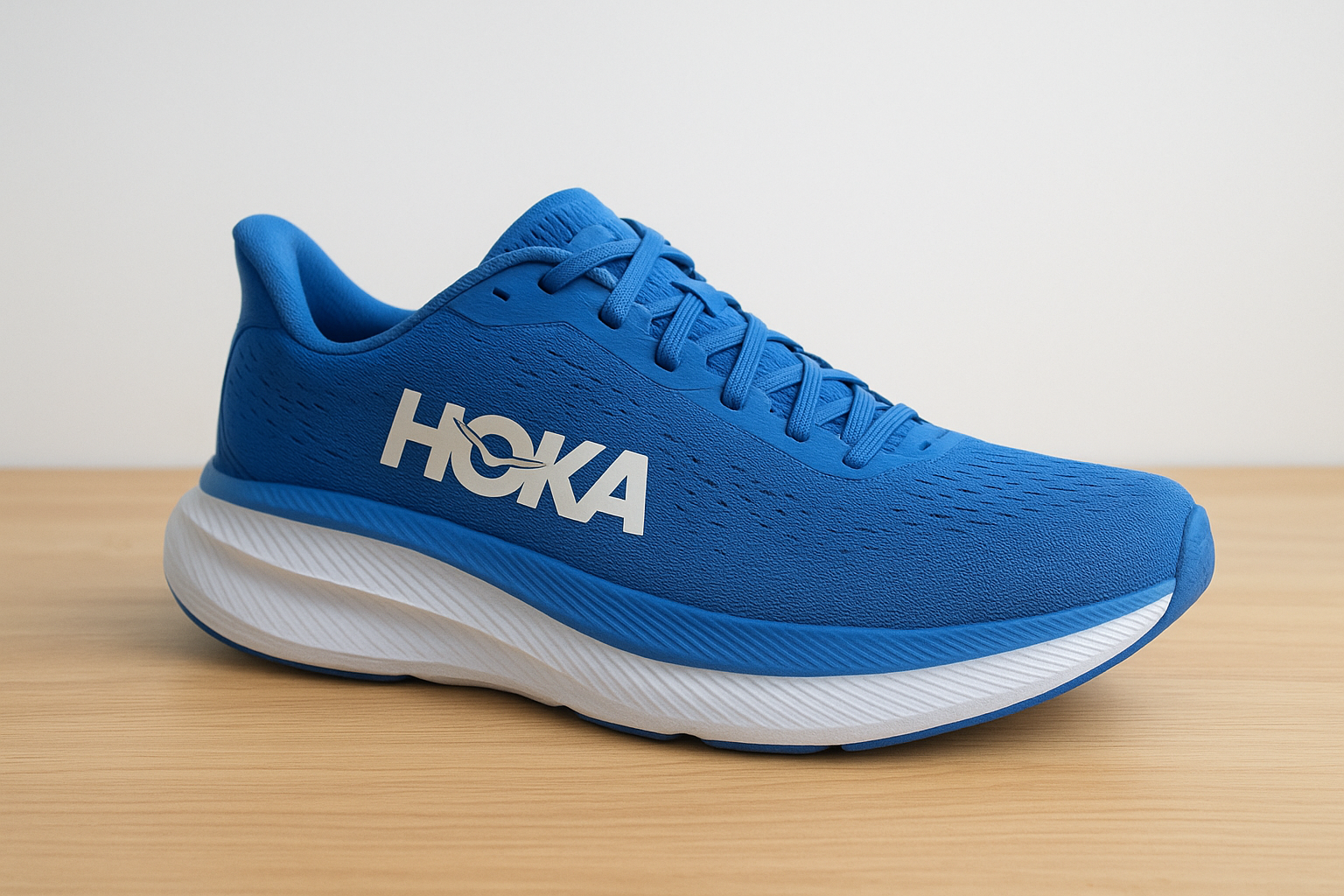
How it fits with orthotics
Hoka fits a removable insole into the Clifton 10 that lifts out cleanly, revealing a wide, flat footbed with plenty of room for a rigid or semi-rigid device. The rockered sole shape doesn’t interfere with orthotic placement, since the geometry sits in the midsole rather than the insole itself. We do recommend trying the wide fit if your orthotic has a deep heel cup, as the standard width runs slightly narrow through the rearfoot once a device is seated inside.
A tall midsole only helps you if the platform underneath your orthotic stays flat and stable.
Cushioning and support
The Clifton 10 uses Hoka’s signature compression-moulded EVA foam, giving a soft landing without the shoe feeling heavy on your foot. Drop sits at 5mm, one of the lowest on this list, which suits patients whose orthotic prescription already includes forefoot posting and doesn’t need extra help from a steep heel-to-toe slope. Stability is neutral, so the shoe leans on your orthotic device for any corrective work rather than built-in posting.
Who it suits best
This shoe suits runners wanting lightweight cushioning for faster sessions, plus anyone spending long hours on their feet at work who still wants protection without bulk. Patients recovering from forefoot pain often do well here too, given the low drop reduces pressure through the ball of the foot.
Price in Australia
Expect to pay between $250 and $280 AUD for the Clifton 10 at Australian retailers.
| Detail | Clifton 10 |
|---|---|
| RRP (AUD) | $250–$280 |
| Drop | 5mm |
| Widths available | Standard, wide |
| Insole type | Fully removable |
6. Mizuno Wave Rider 28: firm, responsive support
Mizuno has a smaller following than Brooks or ASICS in Australia, but patients who’ve tried both often stick with the Wave Rider once they feel the difference. This shoe suits anyone hunting for custom orthotics and running shoes that don’t fight each other through a soft, unpredictable midsole. The wave plate technology gives a firmer platform than most of the shoes on this list, which some orthotic users genuinely prefer once they’ve tried it.
How it fits with orthotics
Underneath the sockliner, Mizuno keeps a flat, wide insole board that suits a rigid orthotic shell particularly well, since there’s no soft foam layer underneath to compress unevenly over time. The removable insole lifts out without tearing, and the internal volume through the midfoot handles a semi-rigid device without pinching. We find the firm base means the orthotic’s correction translates directly into the stride, rather than getting absorbed by the shoe first.
A firm platform lets your orthotic do its job instead of getting lost in soft foam.
Cushioning and support
Wave Rider 28 uses Mizuno Enerzy foam paired with the brand’s signature wave plate, giving a ride that feels responsive rather than plush. Drop sits at 12mm, matching the Ghost 17, so the transition through toe-off feels familiar to anyone switching between the two. It’s a neutral shoe, meaning stability again comes from your device rather than built-in medial posting, but the firmer foam gives noticeably more ground feedback than the softer options higher up this list.
Who it suits best
Runners who dislike a mushy, unstable feeling underfoot, particularly those doing tempo runs or track sessions, tend to prefer this shoe over maximalist alternatives. It also suits patients whose orthotic prescription relies on a firm, unyielding base to hold its shape properly under load.
Price in Australia
Expect to pay between $200 and $230 AUD, making the Wave Rider 28 one of the more affordable options on this list.
| Detail | Wave Rider 28 |
|---|---|
| RRP (AUD) | $200–$230 |
| Drop | 12mm |
| Widths available | Standard, wide |
| Insole type | Fully removable |
7. Brooks Adrenaline GTS 25: structured support
Guidance without harsh correction is what the Adrenaline GTS 25 offers, and it’s why we recommend it to patients who need some built-in stability but don’t want a shoe that overrides their orthotic’s own correction. Brooks has run this model for over two decades, and the GuideRails support system it’s known for works alongside a device rather than duplicating what the orthotic is already doing. Anyone comparing best running shoes for custom orthotics who sits between neutral and full stability categories usually finds this one fits the gap.
How it fits with orthotics
Brooks fits a removable insole under a roomy midfoot chamber, so a semi-rigid or rigid device slides in without crowding the arch. The GuideRails sit along the outside of the midsole rather than inside the shoe, which means they don’t interfere with how your orthotic sits against your foot. Heel hold stays firm even with a heel post in place, keeping the rearfoot centred through each stride.
Support built into the outside of the shoe leaves the inside free for your orthotic to do its job properly.
Cushioning and support
DNA LOFT v3 foam gives a similar underfoot feel to the Ghost 17, though the GuideRails add a layer of guidance the Ghost doesn’t have. Drop sits at 12mm, and the platform stays wide through the heel, reducing the wobble some patients feel in narrower stability shoes. This makes it one of the better running shoes custom orthotics wearers reach for when mild overpronation needs a bit of extra help beyond the device alone.
Who it suits best
Runners with mild to moderate overpronation, plus anyone stepping down from a maximum-support shoe, tend to do best here. It also suits patients whose orthotic prescription is still being fine-tuned, since the shoe forgives small inconsistencies in gait during that adjustment period.
Price in Australia
Expect to pay between $230 and $260 AUD across most Australian retailers.
| Detail | Adrenaline GTS 25 |
|---|---|
| RRP (AUD) | $230–$260 |
| Drop | 12mm |
| Widths available | Standard, wide, extra-wide |
| Insole type | Fully removable |
8. ASICS Novablast 5: best wide-fit performance shoe
Patients who want a shoe that still feels quick on faster days, but who also need genuine width through the forefoot, usually end up in the Novablast 5. ASICS built this line as its bouncy trainer for tempo runs and parkrun efforts, and the current version comes in a proper wide fit rather than the token half-size-up trick some brands use. If you’ve been searching for best running shoes with custom orthotics that don’t feel like a compromise between performance and space, this is worth trying.
How it fits with orthotics
Underneath the sockliner sits a wide, flat insole board, and ASICS has widened the whole platform for this version, so a semi-rigid device with forefoot posting doesn’t push against the upper. The removable insole comes out cleanly, and the wide-fit option in particular leaves noticeable extra room through the ball of the foot once an orthotic is seated inside. Lacing runs slightly further down the shoe than on the standard Kayano, giving you more control over top-of-foot pressure once the device changes your foot’s shape inside the shoe.
A wide toe box means nothing if the shoe still pinches once your orthotic goes in, so always try both together.
Cushioning and support
FF Blast Max foam gives the Novablast 5 a springy, energetic ride with a 30mm heel stack, and the 8mm drop keeps the platform relatively flat despite all that cushioning. It’s a neutral shoe, so stability comes entirely from your orthotic rather than any built-in posting, which suits patients whose device already corrects for pronation.
Who it suits best
Runners with wider feet, bunions, or forefoot orthotic modifications who still want a responsive shoe for faster sessions get the most from this model. It’s less suited to patients needing built-in stability features.
Price in Australia
Expect to pay between $220 and $250 AUD, with the wide-fit version priced the same as standard widths.
| Detail | Novablast 5 |
|---|---|
| RRP (AUD) | $220–$250 |
| Drop | 8mm |
| Widths available | Standard, wide |
| Insole type | Fully removable |
9. What to look for in a shoe for custom orthotics
Buying running shoes for custom orthotics gets a lot easier once you know which features actually matter and which are just marketing. Forget stack height numbers and colourways for a moment. The fit test happens with your device inside the shoe, not the stock insole, so everything below should be checked with your orthotic in your hand at the store.
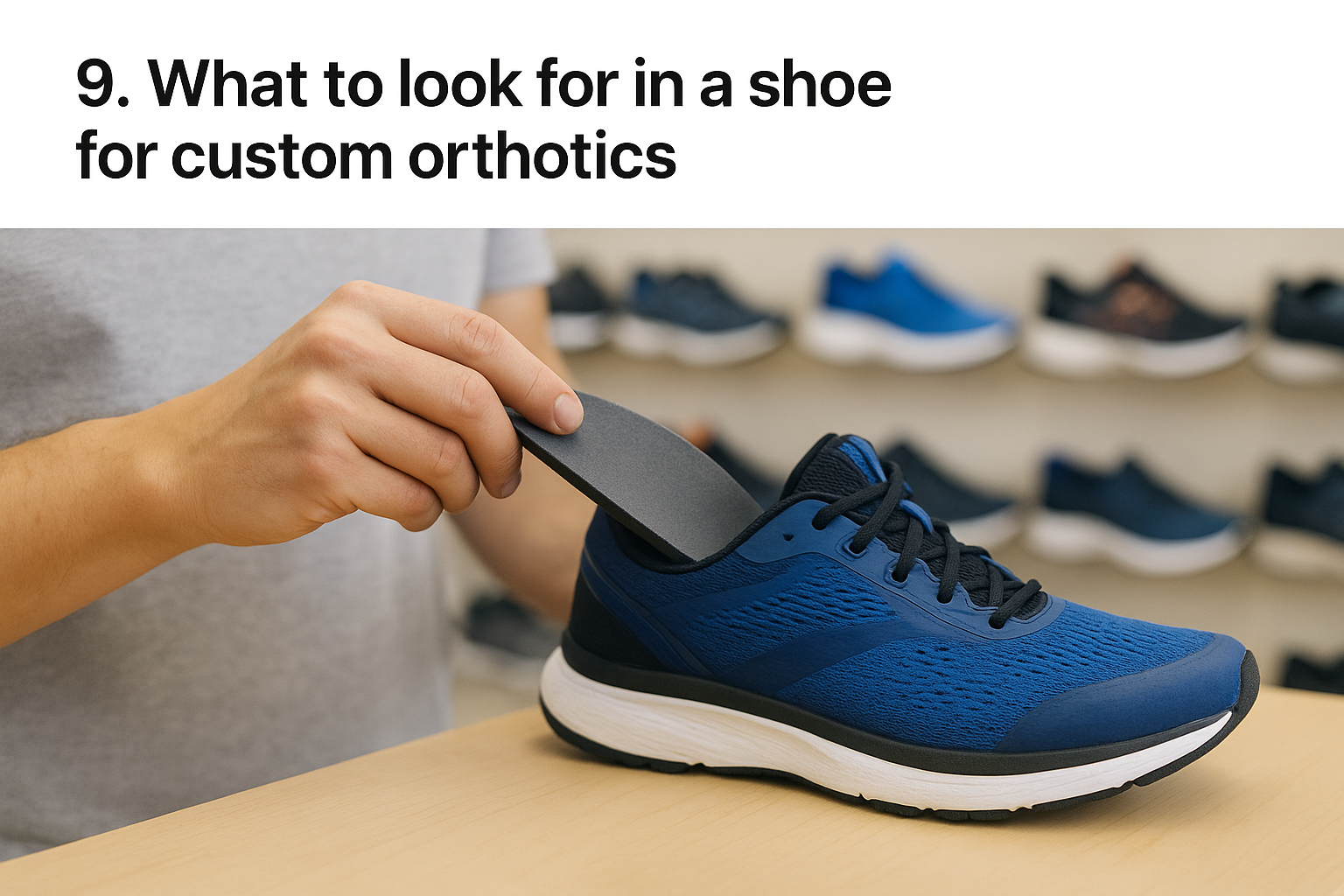
Genuine removability matters more than anything else on this list. A stitched-in or glued sock liner means you can’t get your orthotic in without damaging the shoe, so always ask a staff member to pull the insole out before you buy.
If you can’t remove the stock insole cleanly, that shoe was never built for an orthotic in the first place.
Width and volume through the midfoot come next, since a device adds bulk under your arch that the stock insole never had. Try a half-size up or a wide-fit version if your toes feel cramped once the orthotic sits inside, particularly with a rigid or semi-rigid shell.
Heel counter structure deserves a proper check too. A firm, deep heel cup keeps a heel post from sliding sideways during your stride, while a soft, collapsible heel lets your foot drift off the device entirely.
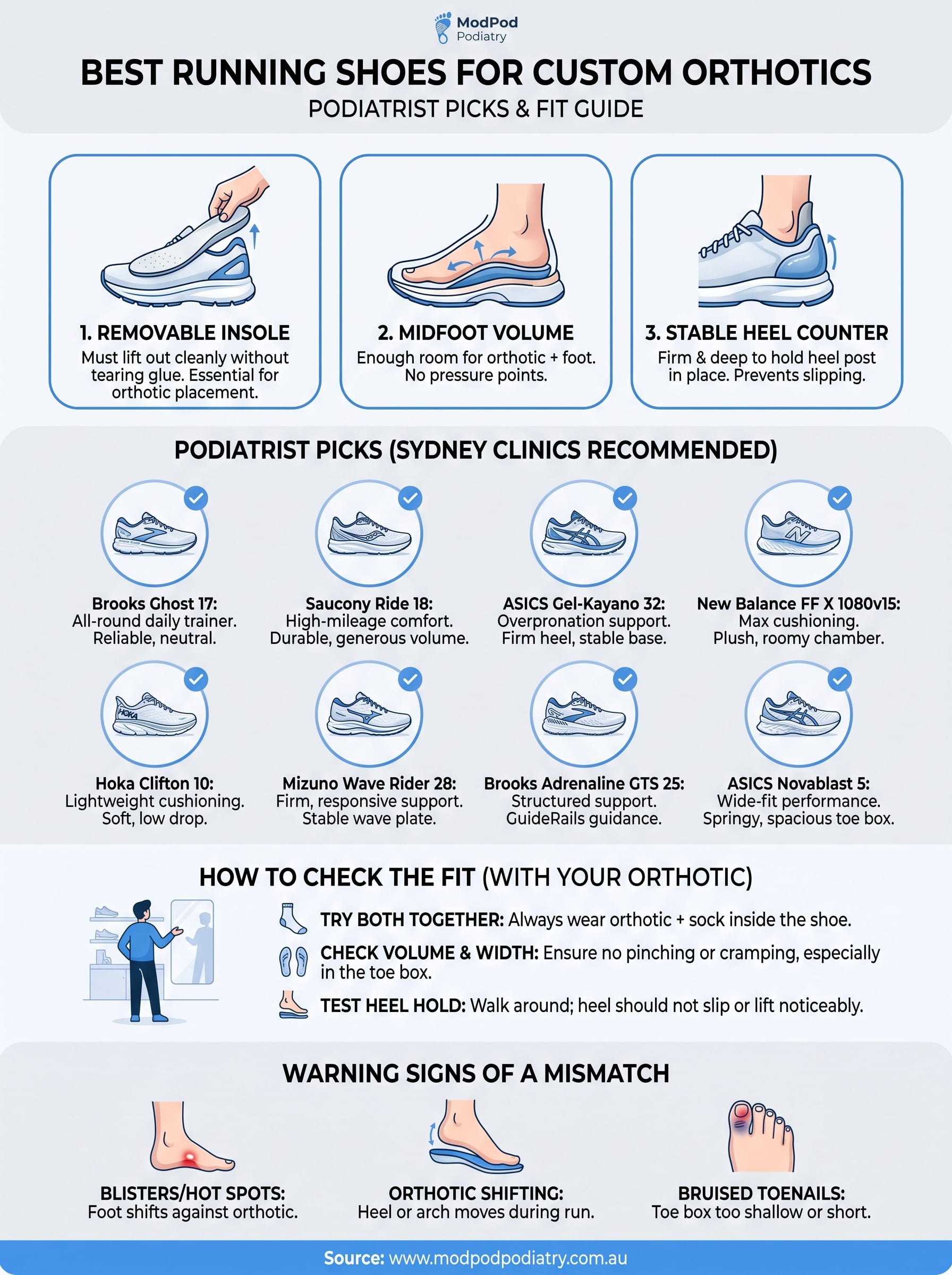
Here’s a quick checklist to run through before you commit to a pair:
- Removable insole: comes out in one piece without tearing
- Midfoot volume: no pinching once the orthotic sits inside
- Heel counter: firm and deep enough to hold a heel post
- Drop: matched to your orthotic’s forefoot or heel posting
- Width options: standard, wide, or extra-wide available
Finally, match the drop and stability category to what your orthotic is already correcting. Pairing a maximally supportive shoe with a strongly corrective device sometimes doubles up on the same movement pattern, which can feel awkward rather than helpful. A neutral shoe generally gives your orthotic room to do its job without interference.
10. Signs your shoes and orthotics aren’t a good match
Sometimes the mismatch between your shoes and your device shows up gradually, and patients often put it down to "just getting older" rather than a fit problem. Blisters along the arch or the inside of the heel are usually the first clue, since they mean your foot is shifting against the orthotic rather than sitting still on top of it. Catching these signs early saves you from buying another pair of the wrong shoe.
Discomfort that appears only after the orthotic goes in, but disappears the moment you pull it back out, points straight at the shoe rather than the device itself. If your toes feel jammed against the front of the shoe once the orthotic sits inside, the internal volume is too tight, no matter how good the shoe felt with the stock insole. A heel that lifts slightly with every stride, even with laces tightened properly, usually means the heel counter is too soft to hold a heel post in place.
Pain that only shows up once the orthotic is in the shoe is the shoe’s fault, not the device’s.
Watch for these warning signs specifically:
- New blisters or hot spots appearing after switching shoes, not before
- Visible gapping between your foot and the shoe’s sides once the orthotic sits inside
- Orthotic shifting forward or sideways during a run, especially on longer distances
- Toenail bruising, which often means the toe box is too shallow with the device in place
- Uneven sole wear appearing faster than usual, suggesting the shoe and orthotic are correcting in different directions
Worn-out cushioning that once felt fine but now feels flat is another sign worth checking, since a compressed midsole changes how your orthotic sits and can undo the correction it’s meant to provide. If any of these show up and swapping laces or sizing doesn’t fix it, it’s worth bringing both the shoe and the orthotic into one of our clinics rather than persisting through discomfort, since small adjustments to your device are often quicker to sort than replacing an entire pair of shoes.
Finding the right shoe-and-orthotic match
None of the eight shoes above will work properly if you skip the fitting basics: a removable insole, enough midfoot room, and a heel counter that actually holds your orthotic in place. Running shoes for custom orthotics aren’t a one-size-fits-all decision, and what suits a high-mileage marathon runner won’t necessarily suit someone managing overpronation or recovering from forefoot pain. The right pick depends on your gait, your orthotic’s prescription, and how many kilometres you’re putting through them each week.
If you’re still unsure which shoe on this list matches your specific device, or you’re noticing any of the warning signs we’ve covered, don’t guess your way through another pair. Bring your current shoes and orthotics into one of our Sydney clinics and we’ll check the fit properly. You can book an appointment online and get a same-week slot with one of our podiatrists.