
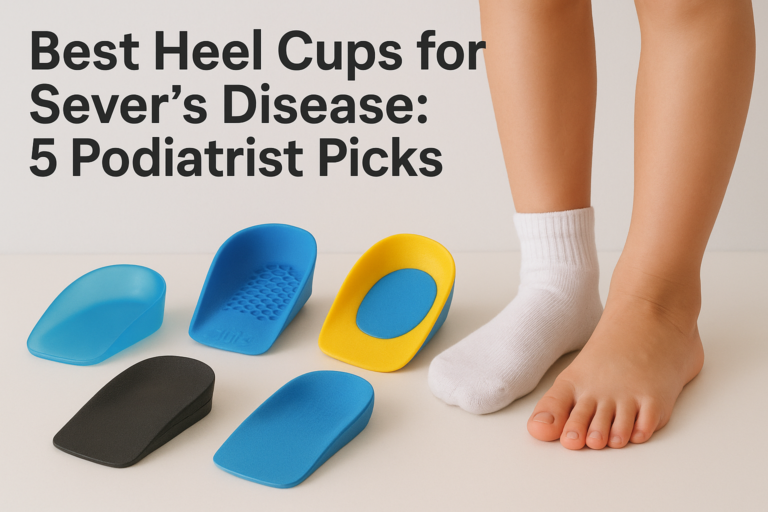
If your child limps off the field clutching their heel, or complains of heel pain every time they pull on their footy boots, you’re probably already searching for heel cups for Sever’s disease. It’s one of the most common causes of heel pain in active kids aged 8 to 14, and the right heel cup can make a real difference to their comfort while the growth plate settles down. Growing pains shouldn’t sideline them completely, and a good insert is often the simplest first step.
We’ve treated thousands of young athletes across our Sydney clinics, so we know which heel cups actually cushion the impact and which ones end up in the bottom of a sports bag, unused. This guide answers the real question parents ask us: which heel cups are worth buying, and where to get them without overpaying.
Below, we’ve picked five heel cups our podiatrists recommend most often, covering everything from budget gel options to firmer supports for kids still training hard. We’ll also cover when heel cups aren’t enough on their own, and what else helps speed up recovery.
1. Custom orthotics from a podiatrist
Custom orthotics sit at the top of our list because they treat the whole problem, not just the sore spot. A podiatrist takes a 3D scan of your child’s foot and combines it with pressure plate analysis to see exactly how their foot loads during running and jumping. That data shapes a device built specifically for their foot shape, growth stage and sport, rather than a generic heel cup pulled off a shelf. For kids with Sever’s disease, this often means a raised heel section built into the orthotic itself, which reduces pull on the Achilles tendon at the exact point where it attaches to the inflamed growth plate.
A custom orthotic doesn’t just cushion the heel, it corrects the mechanics causing the pain in the first place.
How it works
During the fitting, we assess gait, footwear and training load, then design an orthotic with a built-in heel raise and firm heel cup to control excessive movement. Unlike off-the-shelf heel cups for Sever’s disease, custom devices adjust as your child grows, since most clinics review the fit every six to twelve months.
Who it’s for
These suit kids playing representative sport, those with flat feet or excessive pronation, or anyone who’s tried shop-bought inserts without lasting relief. If your child’s heel pain keeps returning despite rest and stretching, a biomechanical assessment usually finds what’s driving it.
Price range
Expect to pay between $250 and $450 for a custom pair, though private health insurance extras cover often claims back a solid chunk through HICAPS on the day. Medicare EPC plans may also apply for eligible families, which we can check during the initial consultation.
2. Adjustable heel lift inserts
Adjustable heel lift inserts are small wedges that slot under the heel of any shoe, raising it slightly to take pressure off the Achilles tendon. They’re a practical middle step between a basic gel cup and a full custom orthotic, and many parents like them because you can add or remove layers as your child’s pain settles or flares up during a tough training block.
Raising the heel even a few millimetres can take real strain off an inflamed growth plate.
How it works
Each insert usually comes with stackable layers, so you increase the lift when pain is sharp and reduce it as symptoms ease. This adjustability makes them one of the more flexible shoe inserts for heel pain in kids, since one pair can last through several stages of recovery rather than being replaced.
Who it’s for
These suit kids mid-season who can’t afford to sit out entirely, or families wanting a cheaper option before committing to custom orthotics. They work well alongside stretching programs a podiatrist prescribes.
Price range
Most adjustable heel lifts cost between $20 and $40 per pair from pharmacies or sports stores, with no rebate typically available.
3. Tuli’s heavy duty heel cups
Tuli’s heavy duty heel cups are a favourite among sports podiatrists because they’re built from a dense, cupped heel material designed specifically to absorb shock rather than just pad the area. Unlike flat gel inserts, the raised walls cradle the heel pad and stop it spreading sideways on impact, which matters a lot for kids doing repeated jumping or sprinting on hard courts.
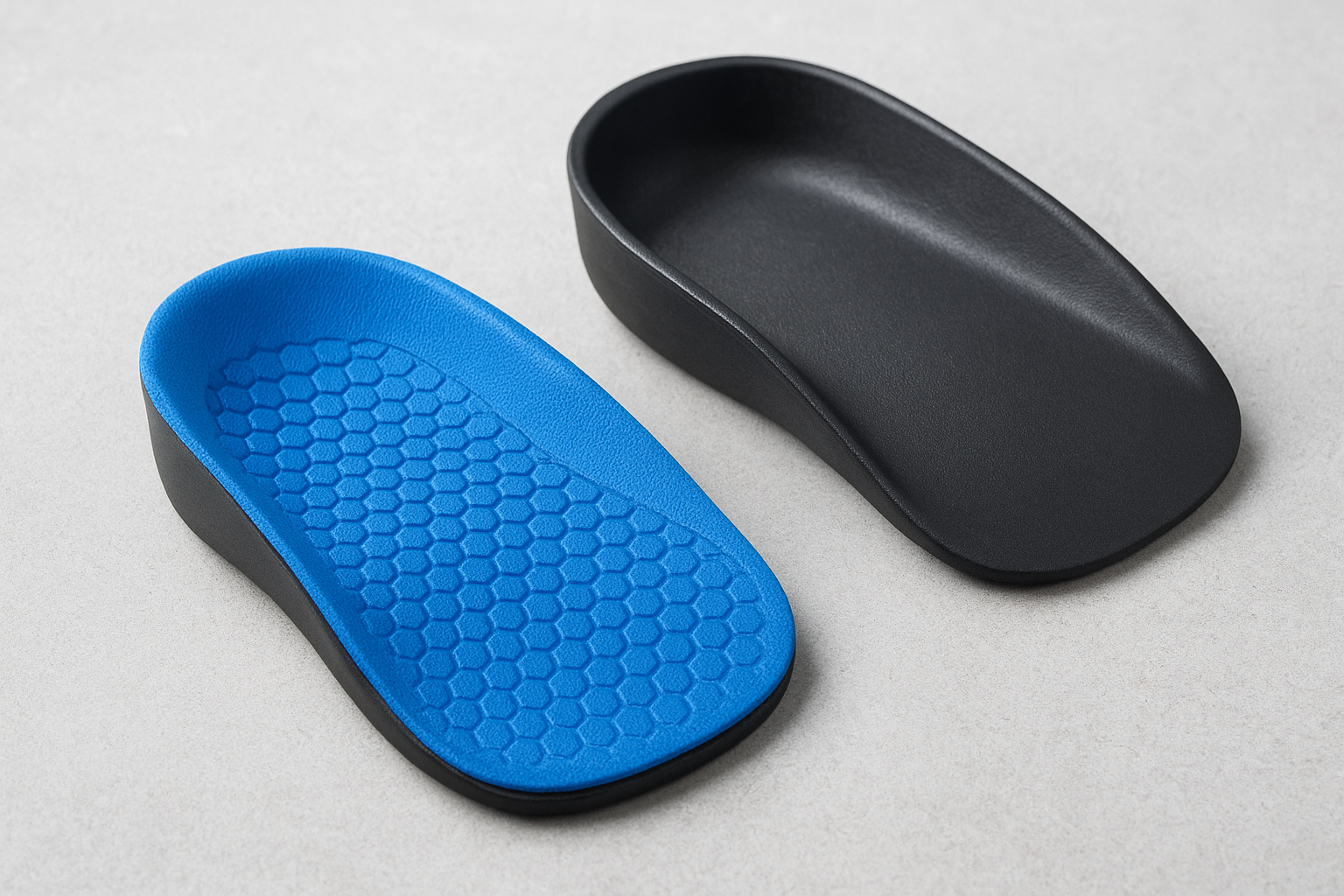
A heel cup that cradles the heel absorbs far more shock than one that simply sits flat underneath it.
How it works
The honeycomb internal structure compresses on landing and springs back, spreading force away from the growth plate rather than letting it concentrate at one point. This makes them noticeably more durable than standard gel heel cups for kids, holding their shape through a full season of training instead of flattening out after a few weeks.
Who it’s for
They suit kids in high-impact sports like basketball, netball or athletics, particularly those training more than three times a week. We often recommend them as a first trial before moving to custom orthotics.
Price range
Expect to pay around $25 to $35 per pair from podiatry clinics, pharmacies or sports stores, with no insurance rebate available.
4. Gel cushioning heel cups
Gel cushioning heel cups are the softest option on this list, made from a silicone or gel material that moulds around the heel rather than holding a firm shape. They’re the most widely available heel cups for Sever’s disease, sold in most pharmacies and often the first thing parents grab before booking a podiatry appointment. They won’t correct biomechanics, but for mild pain, that soft cushioning can take the edge off enough to keep a child comfortable through a school sport carnival or weekend match.
Soft gel cushioning eases mild heel pain fast, but it won’t fix what’s causing it.
How it works
The gel compresses evenly under the heel, spreading impact across a wider surface area and reducing the sharp jolt kids feel on landing. They slide easily into school shoes and sneakers alike, unlike bulkier orthotics that need extra shoe depth.
Who it’s for
These suit kids with mild, occasional heel pain, or as a short-term comfort measure between football training sessions. They’re not enough for persistent or worsening pain.
Price range
Gel heel cups typically cost between $10 and $25 per pair, with no insurance rebate applicable.
5. Full-length supportive insoles
Full-length supportive insoles run the whole length of the shoe rather than sitting only under the heel, giving the arch and midfoot support alongside heel cushioning. They’re a step up from a standalone heel cup because they control how the whole foot moves, not just the point of impact. For kids whose Sever’s disease flares up alongside flat feet or arch collapse, this extra support often reduces the strain travelling up to the heel with every stride.
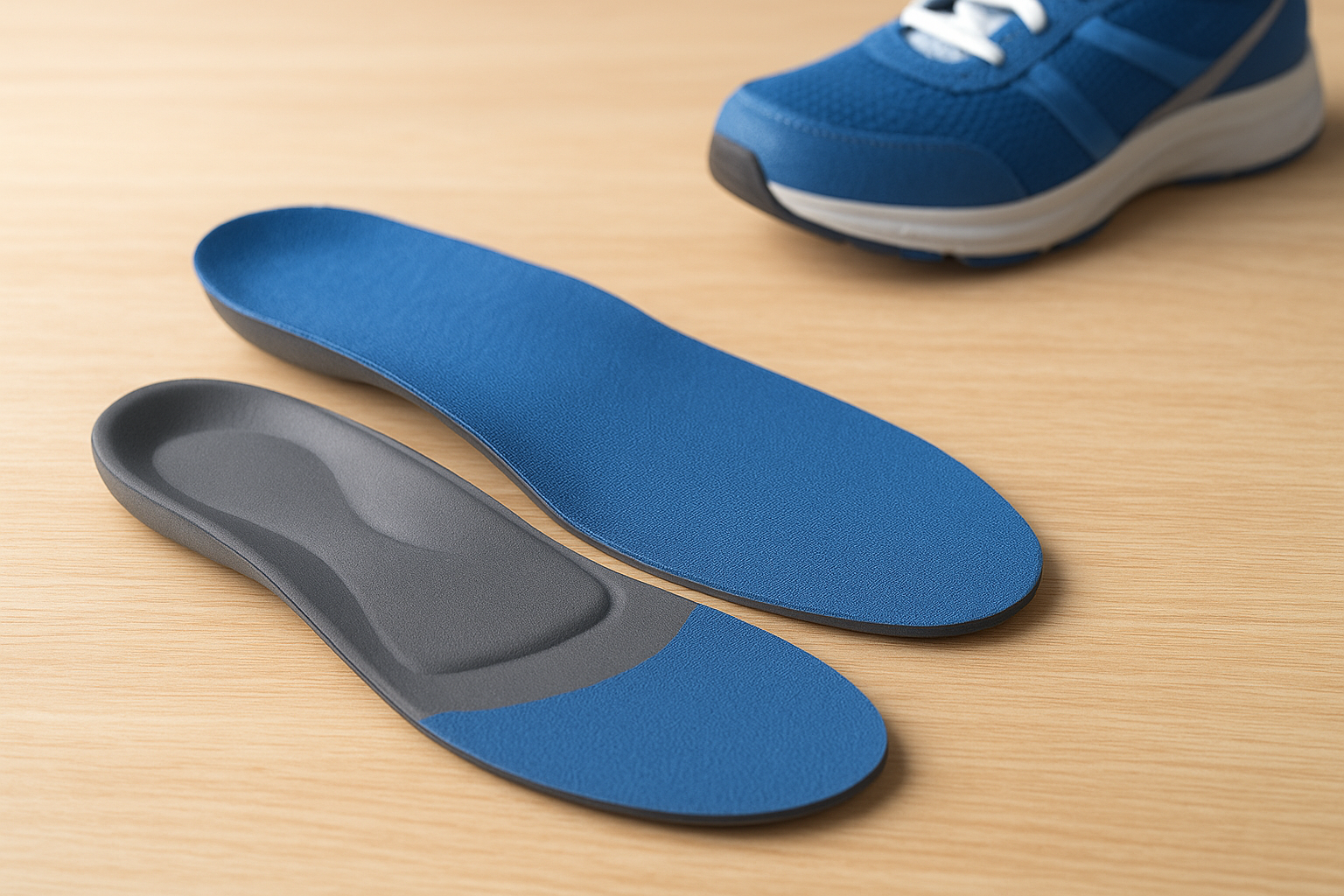
Supporting the whole foot, not just the heel, stops pain travelling back to the same spot.
How it works
A firmer arch shell paired with a moulded heel cup limits excess pronation, which reduces the pulling force on the Achilles tendon at the growth plate. Most prefabricated insoles for kids come in set sizes with some trimming allowed, so they fit into sports shoes and school shoes without needing a full custom mould.
Who it’s for
These suit kids with noticeably flat or rolling feet, or those who’ve outgrown basic heel cups but aren’t quite ready for custom orthotics. They’re a sensible trial option before booking a full biomechanical assessment.
Price range
Expect to pay between $40 and $90 per pair from podiatry clinics or specialist stores, with partial rebates sometimes available through private health extras cover.
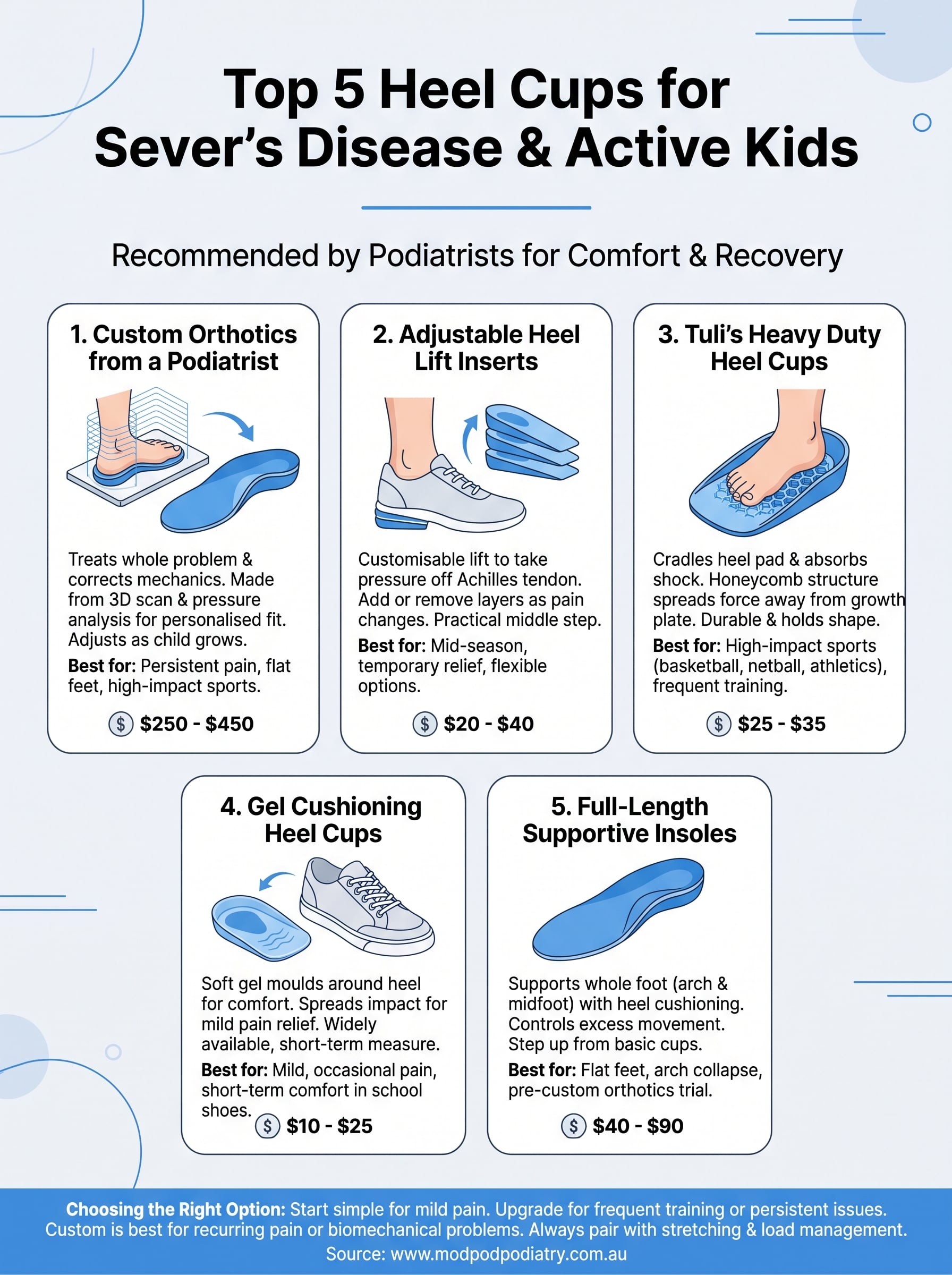
Choosing the right option for your child
Most families start simple and only step up if pain lingers. Try a gel heel cup or adjustable heel lift first, especially for mild or occasional pain around one activity. Move to Tuli’s heavy duty heel cups or full-length insoles if your child trains several times a week and needs more shock absorption through a full season. Reserve custom orthotics for kids whose pain keeps returning despite rest, stretching and a decent off-the-shelf insert, or those with obvious flat feet driving the problem.
Whatever you choose, heel cups work best alongside stretching, load management and proper footwear, not as a standalone fix. If your child’s heel pain isn’t easing after a few weeks, or keeps coming back each season, a proper biomechanical assessment will tell you exactly what’s going on and which fix actually suits their foot. Book an appointment online with one of our podiatrists and get your child back on the field without the limp.