

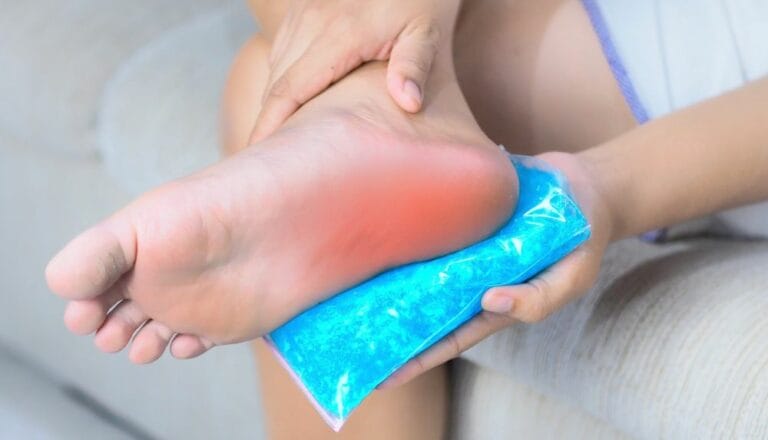
That sharp, stabbing pain in your heel when you first step out of bed — many people describe it as stepping on broken glass. It’s one of the most common complaints we see at ModPod Podiatry clinics across Sydney. In most cases, morning heel pain is the hallmark symptom of plantar fasciitis — a condition affecting the thick band of connective tissue that runs along the base of your foot. Plantar fasciitis accounts for around 15% of all foot complaints in Australia. This post explains why the pain happens specifically in the morning, why it eases after a few minutes of walking, and what to do when stretching alone is not enough.
Why Heel Pain Is Worst in the Morning
During sleep, your foot rests in a plantarflexed (pointed) position for hours. The plantar fascia — the band connecting your heel bone to the base of your toes — shortens and tightens in that position. The moment you stand and take your first steps, the fascia is suddenly stretched and loaded before it has had time to warm up.
Podiatrists call this post-static dyskinesia: pain that occurs after a period of rest, not during activity. It is one of the most reliable diagnostic signs of plantar fasciitis. If your heel hurts most in those first five to ten steps out of bed, that is almost certainly what is happening.
Why It Eases After a Few Minutes
As you walk, blood flow to the plantar fascia increases, the tissue gradually warms and lengthens, and the sudden loading stress at the heel attachment reduces. Within five to ten minutes, the pain often drops significantly. This improvement is real — but it does not mean the condition has resolved. The underlying damage to the fascial tissue is still present.
Many people with plantar fasciitis also notice the pain returning after sitting for long periods — during a commute, at a desk, or in a meeting. The cycle repeats: the fascia cools and shortens, then is loaded again when you stand.
What Makes Morning Heel Pain Worse
Several factors increase tension on the plantar fascia and intensify morning symptoms:
- Flat feet or high arches — both alter how load distributes across the heel insertion
- Tight calf muscles — the calf connects through the Achilles tendon directly into the plantar fascia; tightness increases strain at the heel
- Worn-out footwear — shoes with collapsed arch support or thin soles offer little protection
- Hard flooring at home — walking barefoot on tiles or polished concrete, common in Australian homes, is one of the most consistent aggravating factors we see clinically
- Sudden increase in activity — adding a new walking or running routine too quickly overloads the fascia before it adapts
- Increased body weight — the plantar fascia manages additional load with every step
What to Do Right Now
If you’ve noticed morning heel pain recently, these measures help in the short term:
- Stretch before your first step. Before getting out of bed, sit up and perform 10–15 calf stretches and plantar fascia stretches — pull your toes back toward your shin and hold for 20–30 seconds. This elongates the fascia before it bears full load.
- Put supportive footwear on immediately. Do not walk barefoot on hard floors. A supportive shoe or orthotic sandal significantly reduces loading on the heel.
- Apply ice after periods of loading. Five to ten minutes of ice directly on the heel after activity helps manage localised inflammation.
- Reduce high-impact activity temporarily. Avoid running, jumping, or prolonged standing on hard surfaces until you have a proper assessment.
For evidence-based options beyond self-management, our plantar fasciitis treatment page covers the full range of clinical approaches.
When to See a Podiatrist
Self-management is appropriate for mild, early cases. If any of the following apply, stretching alone will not resolve the problem and a clinical assessment is warranted:
- Pain has been present for more than 6–8 weeks
- Pain is severe at its worst, or it wakes you at night
- Both heels are affected simultaneously
- You have diabetes, inflammatory arthritis, or a history of foot problems
At ModPod, your podiatrist examines your foot mechanics, calf muscle length, arch structure, and footwear to identify what is driving the load on the fascia. That information determines the right treatment — not just symptom management.
Treatment Options at ModPod Podiatry
Depending on assessment findings, treatment may include:
- Custom orthotics — prescription insoles that redistribute load away from the heel insertion and support the arch through the full gait cycle
- Shockwave therapy — a non-invasive treatment using pressure waves to stimulate healing within the plantar fascia. Evidence from multiple clinical trials reports 80–90% success in chronic cases after three to five sessions
- Targeted stretching and loading programmes — eccentric and isometric calf protocols specific to plantar fascia rehabilitation
- Footwear review — assessment of what you’re currently wearing and recommendation of appropriate alternatives
For a full overview of heel pain causes and treatments, including conditions that can mimic plantar fasciitis, visit our heel pain resource page.
Medicare and Private Health Cover
Podiatry consultations at ModPod are covered by most private health extras plans. Medibank, BUPA, HCF, and NIB all provide rebates for podiatry, though amounts vary by policy. If you manage a chronic condition such as diabetes or arthritis, you may be eligible for a Medicare Enhanced Primary Care (EPC) plan through your GP. This covers up to five podiatry visits per calendar year at a significantly reduced out-of-pocket cost (item number 10960 applies).
Frequently Asked Questions
Q: Why is heel pain worse in the morning?
A: The plantar fascia tightens and shortens during rest. When you take your first steps, the fascia is suddenly stretched and loaded before it has warmed up — this is called post-static dyskinesia. The pain usually eases within five to ten minutes as blood flow increases and the tissue lengthens.
Q: Does plantar fasciitis go away on its own?
A: Mild cases can improve with rest, stretching, and supportive footwear over several weeks. However, around 10% of cases become chronic and persist for more than a year without proper treatment. Early management significantly improves outcomes.
Q: What is the fastest way to treat plantar fasciitis?
A: There is no single fastest approach. The most effective strategy combines accurate diagnosis with targeted treatment — usually stretching, footwear modification, and orthotics as a starting point. For chronic or severe cases, shockwave therapy produces faster results than passive measures alone.
Q: Should I see a podiatrist or a physio for heel pain?
A: Both can assess heel pain. Podiatrists specialise specifically in foot and lower limb mechanics, which makes them well placed to assess gait, arch structure, footwear, and orthotic needs. If pain appears related to the lower back or hip, a combined approach may be appropriate.
Q: Is it OK to keep walking with plantar fasciitis?
A: Moderate walking is fine — it does not cause additional structural damage. What worsens the condition is high-impact activity, walking barefoot on hard surfaces, and prolonged standing in unsupportive footwear. These should be avoided during recovery.
If morning heel pain is affecting your daily routine, don’t wait it out. Book online with ModPod Podiatry at our CBD, Mosman, Dee Why, Rose Bay, or North Ryde clinics. Our podiatrists will identify what’s driving the pain and give you a clear treatment plan.