
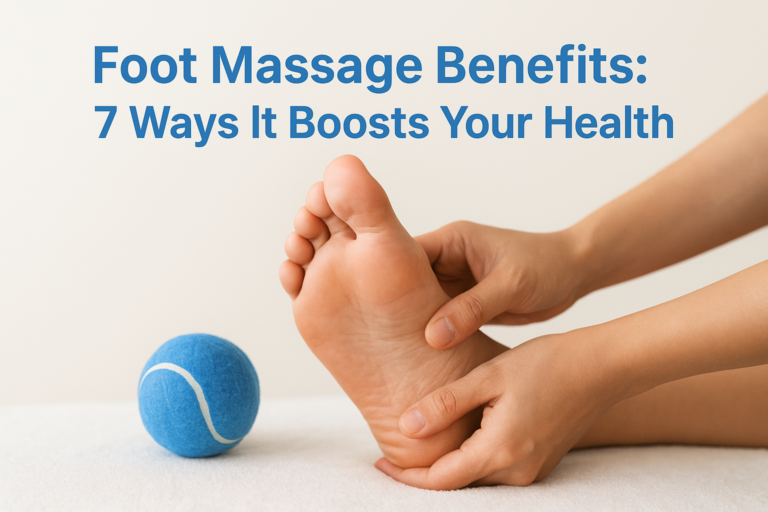
Your feet carry you through every step of the day, yet most people only think about them when something hurts. The good news is that a few minutes of hands-on pressure can do far more than feel nice. Foot massage benefits stretch well beyond relaxation, touching everything from circulation to how well you sleep at night.
If you’re wondering whether foot massage is actually worth your time, the answer is yes, and the research backs it up. It can ease chronic pain, calm an overactive nervous system, and even support better blood flow to areas that spend all day squeezed into shoes. For anyone managing conditions like plantar fasciitis or simply standing on their feet all day at work, that matters.
As podiatrists who see the effects of foot strain every day across our Sydney clinics, we’ve watched simple massage techniques make a real difference alongside proper treatment. Below, we break down seven specific ways foot massage supports your health, with practical tips you can use tonight, whether that’s reducing tension after a long shift or helping you wind down before bed.
1. Better blood circulation
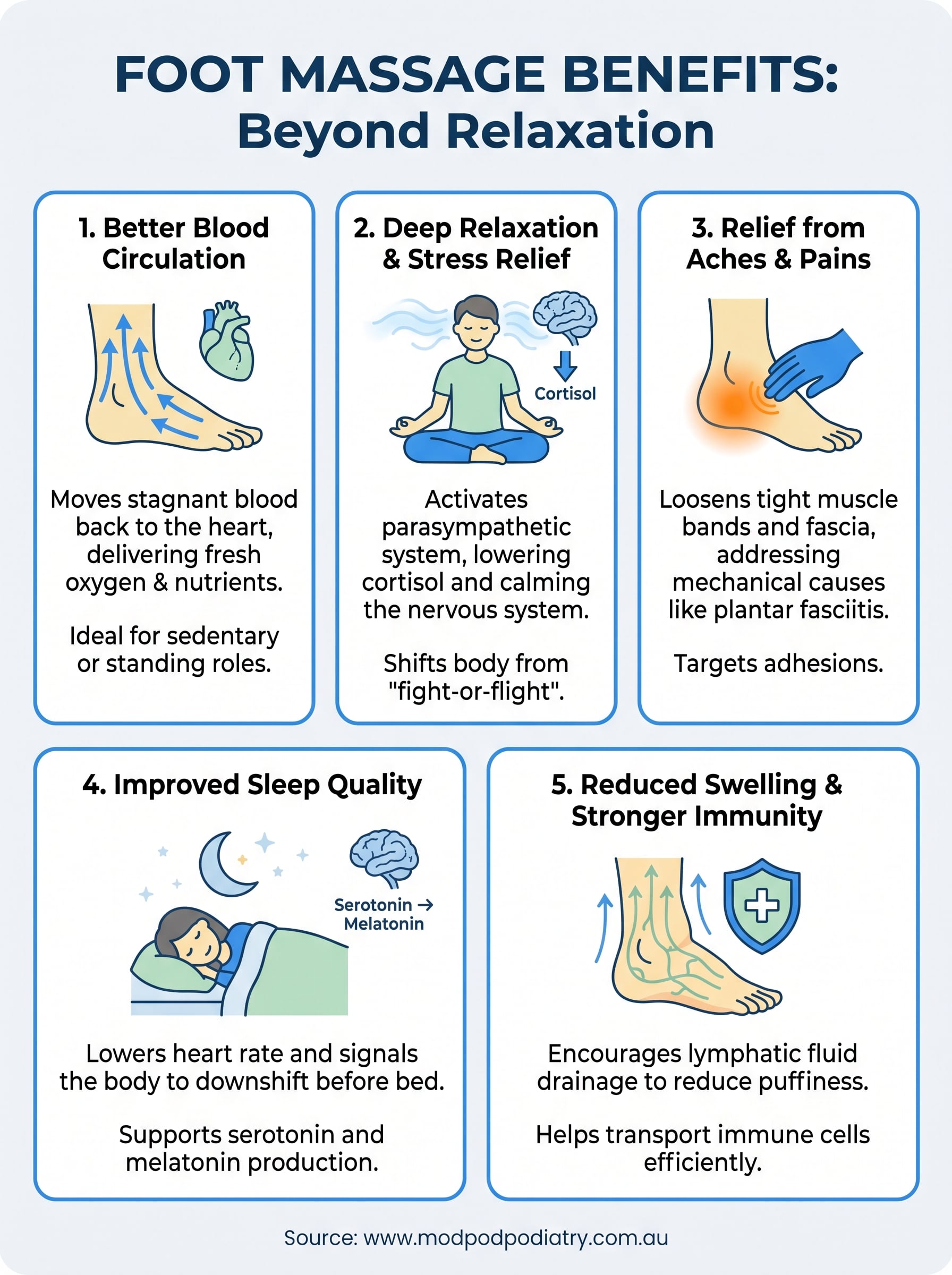
Circulation is the foundation most other foot massage benefits build on. When you spend hours standing at a clinic reception desk or sitting at a computer, blood tends to pool in your lower legs and feet, leaving them cold, puffy or tired by the end of the day. Massage physically pushes that stagnant blood back toward your heart, encouraging fresh, oxygen-rich blood to move into the tissue.
How it works
Pressing and kneading the soft tissue of the foot stimulates the blood vessels running through it, which helps improve blood flow to the smaller capillaries that don’t always get enough movement during a sedentary day. Better circulation means your muscles and skin receive more oxygen and nutrients, and waste products like lactic acid clear out faster. This is part of why athletes and people recovering from injury often notice less stiffness after a session.
Better circulation in your feet doesn’t just warm them up, it speeds up how quickly your whole body recovers from a long day on them.
Who it’s for
Office workers who sit still for long stretches and tradespeople or nurses who stand for entire shifts both benefit here, though for different reasons. People with mild circulatory sluggishness, cold feet in winter, or poor circulation linked to a sedentary lifestyle tend to notice the biggest difference. If you have diabetes or a diagnosed vascular condition, check with your podiatrist before starting any new massage routine, since pressure needs to be adjusted carefully in those cases.
How to try it at home
You don’t need special equipment to get started, just a few minutes and consistency.
- Sit comfortably and rest one foot on the opposite knee.
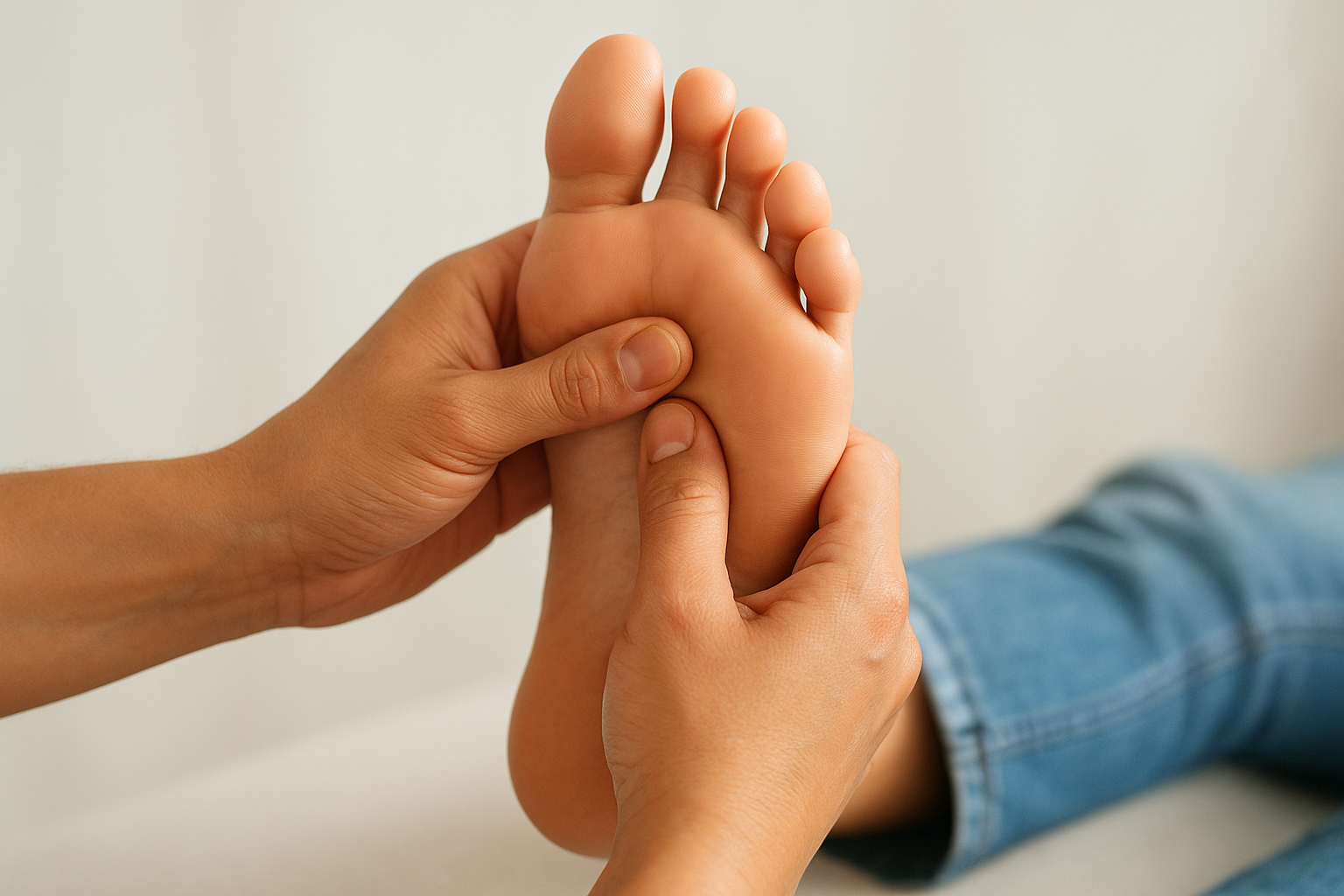
- Using both thumbs, press firmly into the arch and roll upward toward the toes.
- Work around the ball of the foot in small circles for 30 seconds.
- Squeeze and gently pull each toe from base to tip.
- Finish by stroking the whole foot from toes to ankle, which mimics the direction blood should be flowing.
Do this for five to ten minutes each evening, and pay attention to whether your feet feel warmer or less tight afterwards. That simple check tells you the technique is actually working.
2. Deep relaxation and stress relief
Stress doesn’t just live in your head, it settles into your body, and your feet are no exception. Your feet hold thousands of nerve endings, and applying firm, rhythmic pressure to them sends a calming signal through your nervous system, shifting you out of the fight-or-flight state that a busy day tends to leave you in. This is one of the foot massage benefits people notice almost immediately, even before any physical soreness eases.
How it works
Massaging the foot activates the parasympathetic nervous system, which slows your heart rate, lowers cortisol, and encourages your body into deep relaxation. Many people describe feeling noticeably calmer within minutes, and that response isn’t just psychological, it’s a measurable stress relief effect that shows up in reduced muscle tension throughout the body, not just the feet.
A few quiet minutes working pressure into your feet can calm your entire nervous system, not just your legs.
Who it’s for
Anyone dealing with a demanding job, disrupted routines, or general anxiety will find this useful. Parents juggling long days, shift workers, and people prone to tension headaches often respond particularly well, since foot massage gives the body a physical off-switch that’s hard to access otherwise.
How to try it at home
Sit somewhere quiet, dim the lights if you can, and use slow, steady strokes rather than quick kneading. Spend two minutes per foot, breathing deeply the entire time, and notice how your shoulders drop by the end.
3. Relief from aches and pains
Muscle and joint pain in the feet often comes from overuse, tight footwear, or conditions like plantar fasciitis that build up over months. Working pressure into the tissue helps loosen tight muscles and fascia, giving genuine foot pain relief rather than just masking discomfort. This is one of the more practical foot massage benefits, since it targets the actual mechanical cause of soreness rather than just the sensation of it.
How it works
Pressing into tight bands of muscle and connective tissue breaks up small adhesions that form when tissue stays under constant strain, which is common in the arch and heel. This eases muscle tension and reduces the pull on surrounding structures, which is why massage is often paired with stretching for conditions like plantar fasciitis.
Loosening tight tissue in your feet takes pressure off the joints and muscles that carry you all day.
Who it’s for
Runners, people who stand all day, and anyone managing heel or arch pain tend to benefit most. Those with diagnosed plantar fasciitis or general foot fatigue from unsupportive shoes often notice the quickest improvement.
How to try it at home
Roll a tennis or golf ball under your foot for two minutes per side, applying firm but comfortable pressure. Follow with thumb presses along the arch, holding each spot for five seconds before moving on.
4. Improved sleep quality
Tossing and turning often has more to do with an overstimulated nervous system than with your mattress. Working through the feet before bed helps your body downshift, and that spillover effect is one of the more welcome foot massage benefits for anyone who struggles to switch off at night. Better sleep quality rarely comes from a single trick, but a consistent bedtime foot routine gives your body a reliable cue that it’s time to rest.
How it works
Slow pressure on the feet lowers heart rate and cortisol in the same way it does for general stress relief, but doing this right before bed links the calming response directly to your sleep routine. Serotonin release triggered by touch also supports melatonin production, which is the hormone that actually governs your sleep cycle.
A calm foot before bed often means a calmer mind once your head hits the pillow.
Who it’s for
People with racing thoughts at bedtime, shift workers with disrupted routines, and anyone who relies on screens late into the evening tend to notice the biggest shift. Older adults managing restless legs or general insomnia often find it worth adding to their nightly habits too.
How to try it at home
Spend five minutes on each foot about twenty minutes before bed, using slow strokes and firm circles on the sole. Keep the room dim and avoid checking your phone straight after, since that undoes much of the calming effect.
5. Reduced swelling and stronger immunity
Swollen ankles and puffy feet aren’t just uncomfortable, they’re a sign that fluid is pooling instead of draining properly through your lymphatic system. Working pressure through the foot encourages that fluid to move again, which is why this sits among the more overlooked foot massage benefits. It’s particularly relevant after long flights, pregnancy, or a day spent standing in one spot, when reduced swelling becomes the most noticeable and welcome result.
How it works
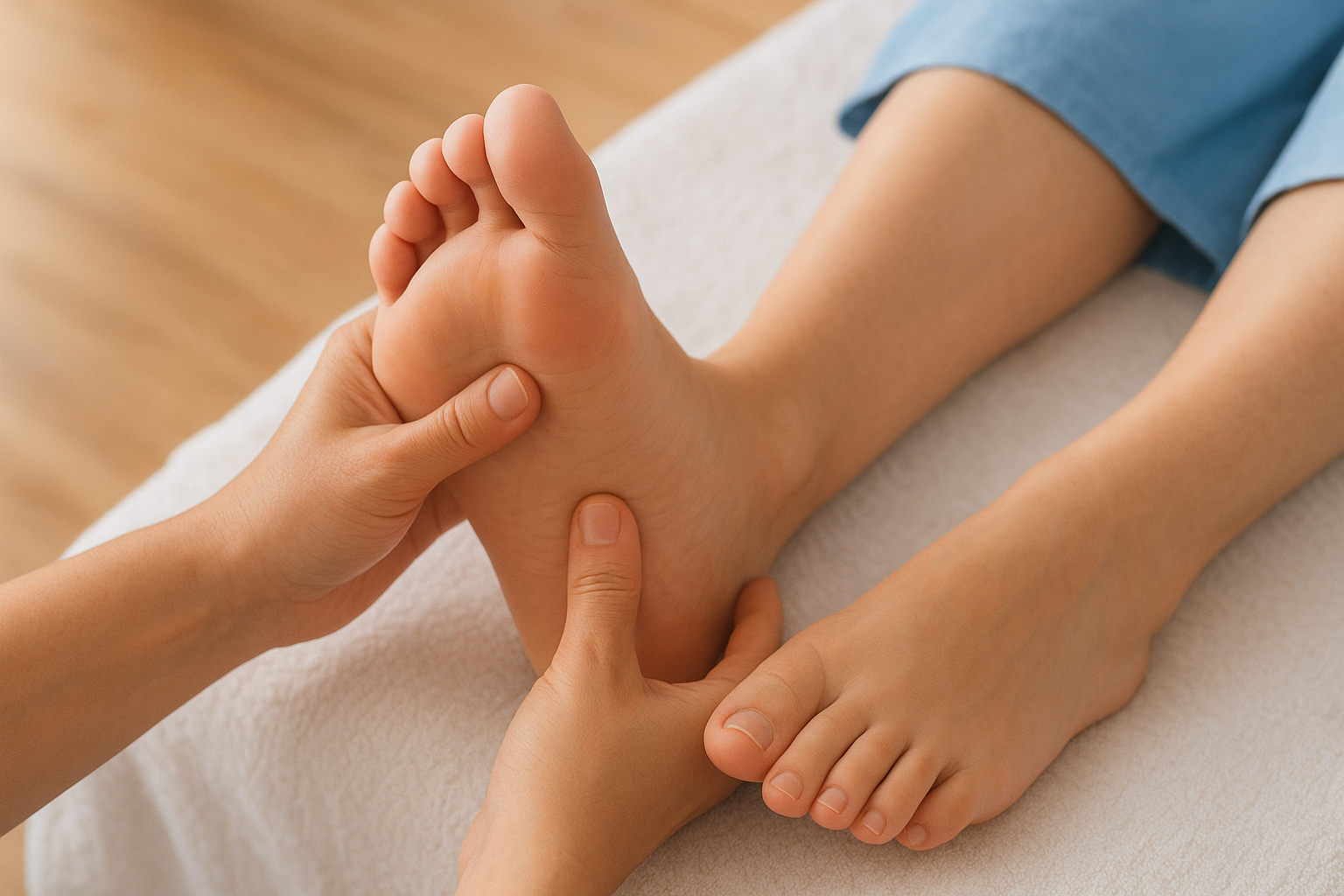
Gentle, directional strokes toward the ankle and up the leg help shift trapped lymphatic fluid back into circulation, easing that heavy, tight feeling in the feet. Because your lymphatic system also carries immune cells around the body, keeping it moving supports stronger immunity rather than just comfort. Less stagnant fluid also means less pressure on nerves and tissue, which is part of why swelling reduction often brings pain relief along with it.
Moving trapped fluid out of tired feet does more than reduce puffiness, it keeps your immune system working the way it should.
Who it’s for
Pregnant women, frequent flyers, and anyone on their feet for long shifts tend to see the clearest results. People recovering from minor injuries or managing mild lymphatic drainage issues often find it a useful addition alongside medical advice.
How to try it at home
- Elevate your feet slightly before starting.
- Use light upward strokes from toes to ankle, then ankle to calf.
- Repeat for three to five minutes per foot, avoiding firm pressure on visibly swollen areas.
Looking after your feet for the long run
A few minutes of pressure and movement each night can genuinely change how your feet feel and function, from better circulation to deeper sleep and fewer aches after a long day. These seven foot massage benefits aren’t a substitute for proper care, but they’re a simple, low-cost habit worth building alongside it. Consistency matters more than technique here, so pick one or two methods above and stick with them for a week before judging the results.
Home massage works well for everyday tension, but persistent pain, swelling, or changes in your feet deserve a proper look from someone who treats them for a living. If something feels off no matter how much you rub it out, our podiatrists across Sydney can find the actual cause and get you a real plan. Book an appointment online and get straightforward answers about what your feet are trying to tell you.