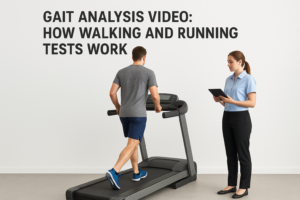

If you’ve been told to see a gait analysis podiatrist but aren’t sure what that actually involves, you’re not alone. Most people picture someone watching them walk in a straight line, then handing over a generic verdict. The reality is far more detailed, and far more useful if you’re dealing with recurring heel pain, shin splints, or a knee that niggles every time you increase your running distance.
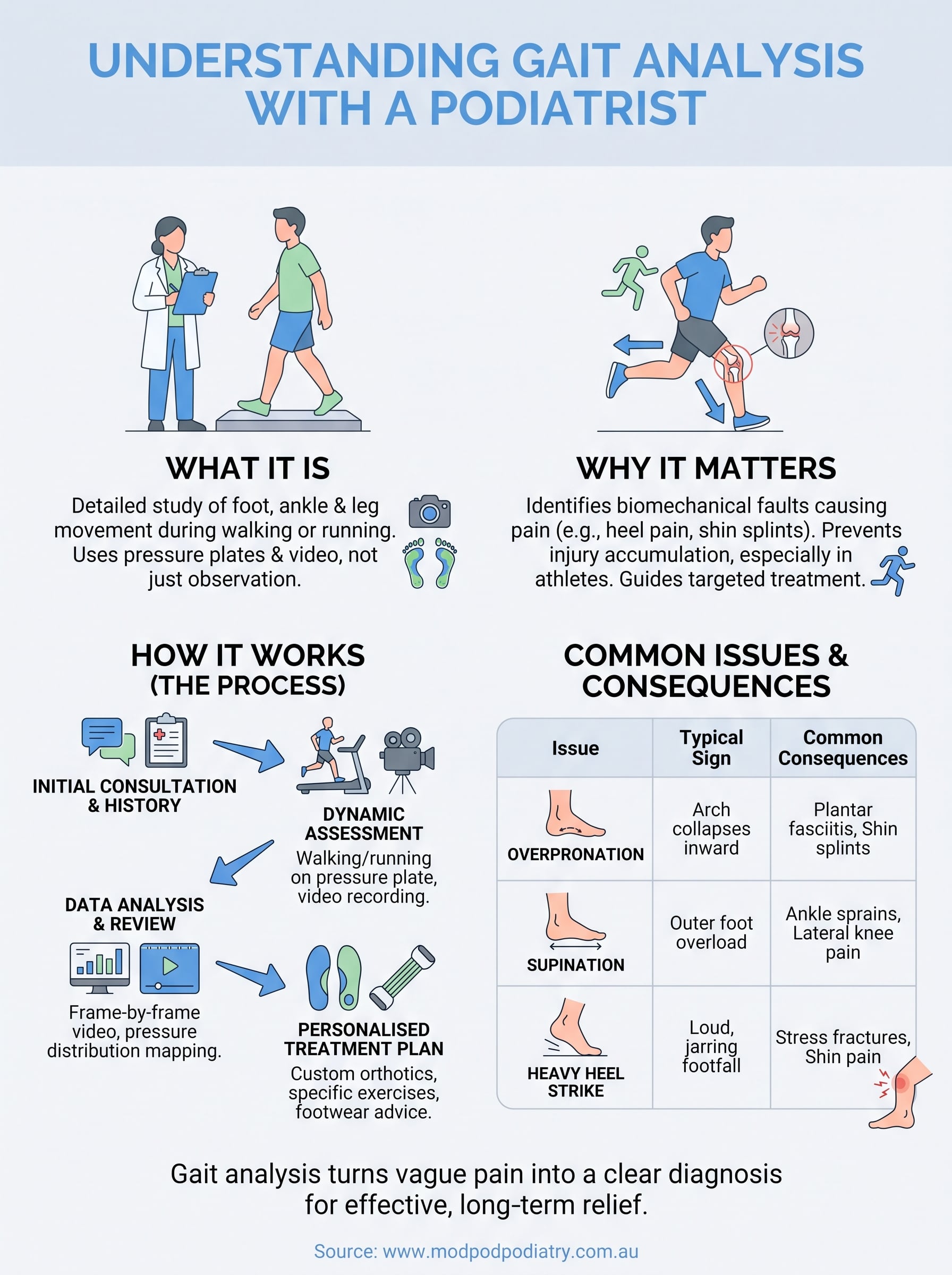
A gait analysis podiatrist studies how your foot, ankle and leg move together through each step, using tools like pressure plate technology and video assessment to spot the small biomechanical faults that cause bigger problems further up the chain. This isn’t guesswork. It’s a structured process that identifies exactly where your movement pattern breaks down, whether that’s overpronation, poor push-off, or uneven weight distribution, and connects it directly to the pain or injury you’re experiencing.
In this guide, we’ll walk through what actually happens during a gait assessment, which conditions benefit most from this approach, and how the findings translate into practical treatment options like custom orthotics or targeted exercise programs. If you’re weighing up whether this service is right for your situation, this should give you a clear answer.
Why gait analysis matters for your health and performance
Every step you take sends force through your foot, ankle, knee, hip and lower back. When your walking or running biomechanics are slightly off, that force doesn’t disappear, it just gets absorbed somewhere it shouldn’t be. Over months or years, this shows up as plantar fasciitis, shin splints, IT band syndrome, or lower back pain that no amount of stretching seems to fix. A gait analysis podiatrist looks past the symptom and finds the movement fault actually causing it.
Pain rarely starts where you feel it, it starts in the pattern that leads up to it.
Runners and athletes get the most obvious benefit here. If you’re clocking up 40 kilometres a week and your left foot overpronates on every stride, that’s thousands of tiny stress events accumulating in the same tissue. A biomechanical assessment catches this before it becomes a stress fracture or chronic tendinopathy. Sports podiatrists at ModPod see this constantly with runners, cyclists and team sport players who’ve plateaued or keep getting reinjured despite doing everything else right, rest, strength work, physio.
But this isn’t only a sports issue. Office workers with flat feet, older adults with balance concerns, and kids with in-toeing or awkward running styles all benefit from the same assessment process. Parents often bring children in because a teacher or relative pointed out an unusual gait, and early identification can prevent compensation patterns from becoming permanent habits by adulthood.
Think of gait analysis as diagnostic groundwork rather than a standalone fix. Without it, treatment becomes guesswork, you might get orthotics that don’t address your actual movement fault, or exercises targeting the wrong muscle group entirely. With accurate data on how your foot strikes, rolls and pushes off, your podiatrist can prescribe something built for your specific pattern rather than a generic recommendation. That distinction matters enormously if you’ve already tried off-the-shelf insoles or general stretching routines without lasting relief. According to Australia’s Department of Health, musculoskeletal conditions affect nearly one in three Australians, and many of these issues trace back to biomechanical inefficiencies that go undiagnosed for years simply because nobody looked closely enough at how the person actually moves.
How a gait analysis podiatrist assesses your walk or run
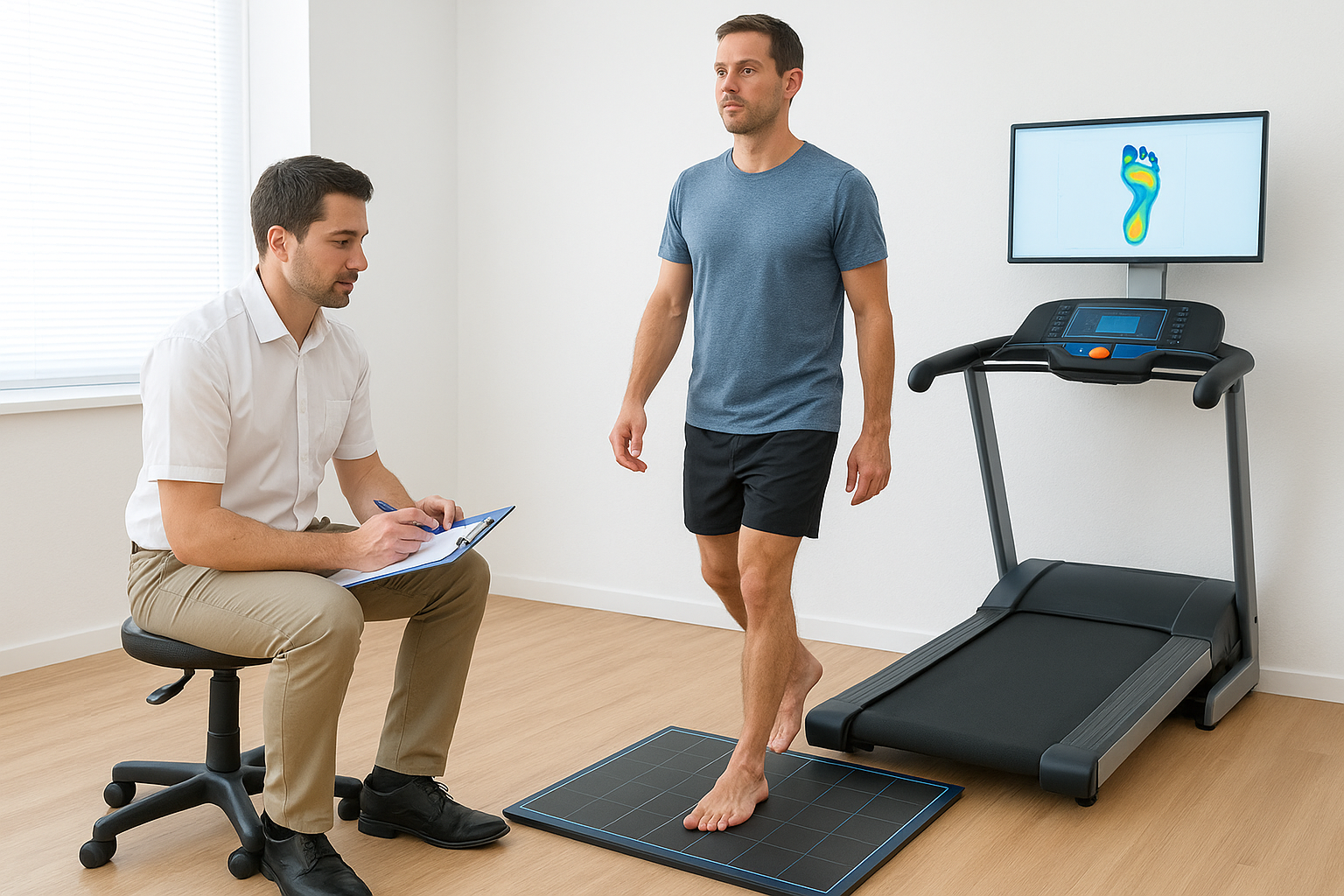
A proper assessment starts before you even step on the treadmill. Your podiatrist takes a history of your pain, activity levels and footwear, then checks your joint range of motion, muscle strength and foot posture while you’re standing still. This baseline matters because it tells them what your body is capable of before they watch what it actually does under load.
You can’t fix a movement pattern you haven’t properly measured.
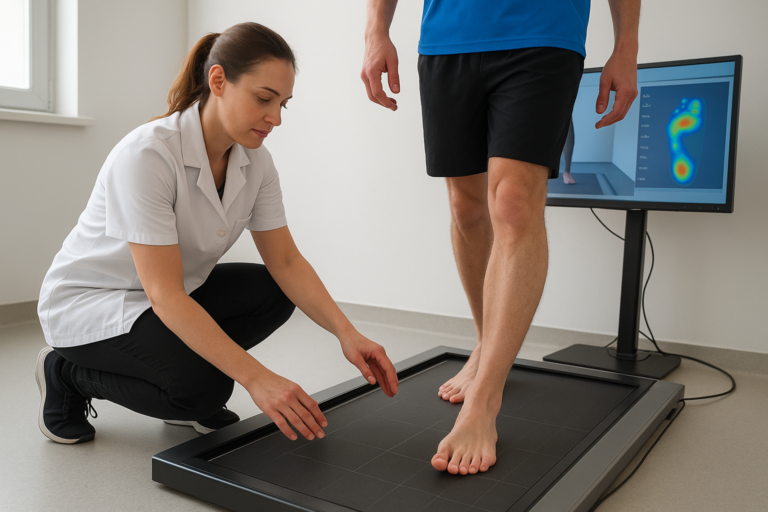
Next comes the dynamic part. You’ll walk or run on a pressure plate or treadmill while sensors map exactly how force distributes across your foot with each step, showing whether your heel, midfoot or forefoot is taking more load than it should. Video capture usually runs alongside this, recorded from behind and the side, so your podiatrist can slow footage down frame by frame and spot things the naked eye misses in real time, like a knee dropping inward or a heel rolling out at push-off.
Finally, all of this gets cross-referenced against your reported symptoms. If you’ve got right-sided knee pain and the data shows excessive pronation on that same foot, that’s a strong link worth acting on. Reputable clinics also compare findings against normal biomechanical ranges rather than relying on subjective impressions, which is part of why the Australian Podiatry Association requires accredited practitioners to maintain rigorous clinical standards around assessment and diagnosis.
Common gait issues a podiatrist can identify
Several movement faults show up again and again once you put someone under a pressure plate. Overpronation is the most common, where the foot rolls inward excessively at midstance, loading the arch and inner ankle far more than it should. Supination does the opposite, rolling the foot outward and putting extra strain on the outer edge, ankles and knees. Neither is inherently wrong, but combined with the wrong footwear or training volume, both become injury generators over time.
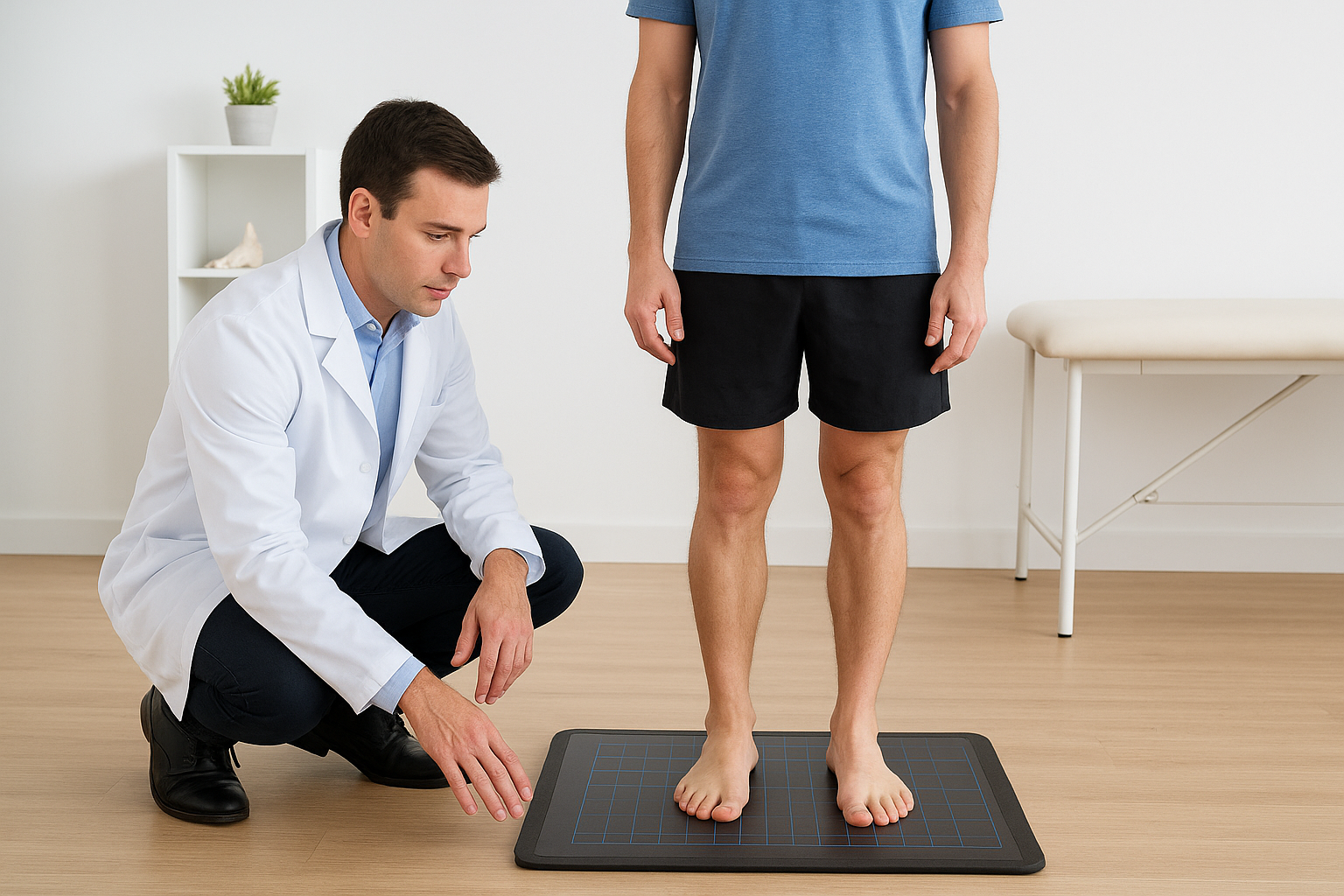
Beyond pronation patterns, a running biomechanics assessment often uncovers leg length discrepancies, weak hip stabilisers causing knee drift, or a heel strike so heavy it sends shockwaves straight up the tibia. Kids present differently again, with in-toeing, out-toeing, or a stiff-legged gait that parents notice but can’t quite explain.
A limp you’ve stopped noticing is still a limp your joints are paying for.
| Gait Issue | Typical Sign | Common Consequence |
|---|---|---|
| Overpronation | Arch collapses inward | Plantar fasciitis, shin splints |
| Supination | Outer foot overload | Ankle sprains, lateral knee pain |
| Heavy heel strike | Loud, jarring footfall | Stress fractures, shin pain |
| Hip drop/knee drift | Knee caves in on landing | ITB syndrome, patellofemoral pain |
| Leg length discrepancy | Uneven stride length | Lower back pain, hip asymmetry |
Spotting these patterns early, rather than after months of unexplained pain, is exactly what separates a targeted podiatry consultation from generic advice found online.
What to expect at your gait analysis appointment
Before you arrive
Booking a session with a gait analysis podiatrist at ModPod usually takes 45 to 60 minutes, longer than a standard consultation because of the extra testing involved. Bring the shoes you train or work in most often, plus shorts or leggings that let the podiatrist see your knees and ankles clearly. If you’ve had recent scans, X-rays or physio notes, pack those too, they speed up the diagnostic picture.
During the session
Once you’re settled, expect this rough sequence:
- A discussion of your pain history, activity levels and goals
- A standing assessment of foot posture, joint range and muscle strength
- Walking and running on a pressure plate while sensors record load distribution
- Video capture from the side and rear for frame-by-frame review
Twenty minutes of walking on a pressure plate can reveal what months of guesswork never will.
After the assessment
Expect your podiatrist to walk you through the footage and pressure data on screen, pointing out exactly where your pattern deviates from normal ranges. From there, you’ll get a clear treatment plan, which might involve custom orthotics, a specific strengthening programme, footwear changes, or a referral if something structural needs further imaging. Nothing here is generic advice pulled from a leaflet, it’s based directly on how your foot actually moves.
Taking the next step for your feet
A gait analysis podiatrist turns vague pain into a clear diagnosis. Instead of guessing why your shin aches or your knee gives out on longer runs, you get actual data on how your foot strikes, rolls and pushes off, then a treatment plan built around that specific pattern. Whether you’re an athlete chasing better times, a parent watching your child’s unusual walk, or someone who’s tried everything else without relief, this assessment gives you answers you can act on.
Ongoing pain rarely fixes itself, and generic insoles or stretching routines only go so far without knowing the root cause. If you recognise any of the patterns covered here, don’t wait for things to worsen. The team at ModPod Podiatry runs full gait assessments across five Sydney locations, with same-week availability. Book your gait analysis appointment online and get a plan built specifically for how you move.