
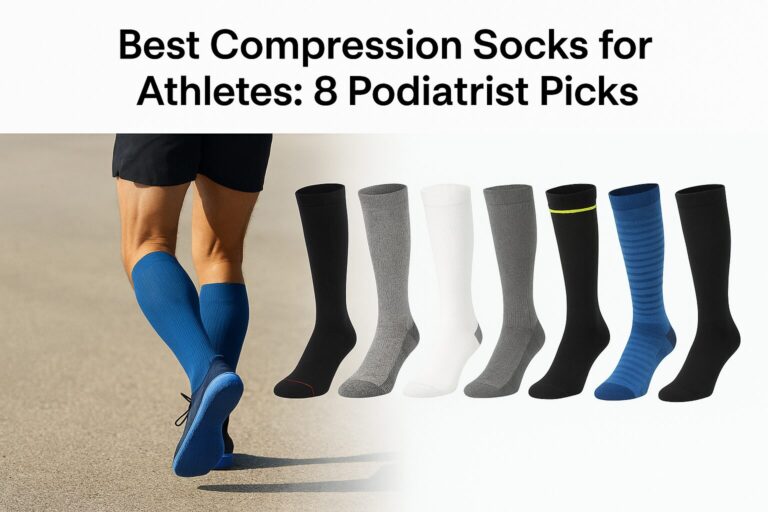
If you train hard, you’ve probably wondered whether compression socks for athletes actually do anything beyond looking good on race day. As podiatrists who fit runners, cyclists and weekend warriors across Sydney, we see the same question every week: which pair is worth the money, and which ones are just marketing hype with a tight cuff.
The short answer is that the right compression sock can genuinely support circulation and recovery, reduce calf fatigue on long runs, and take some pressure off shin splints and swelling after a hard session. The wrong one, though, can bunch at the arch, cut off circulation at the calf, or do nothing at all. Graduated compression matters far more than brand name, and most people buying online get the sizing wrong.
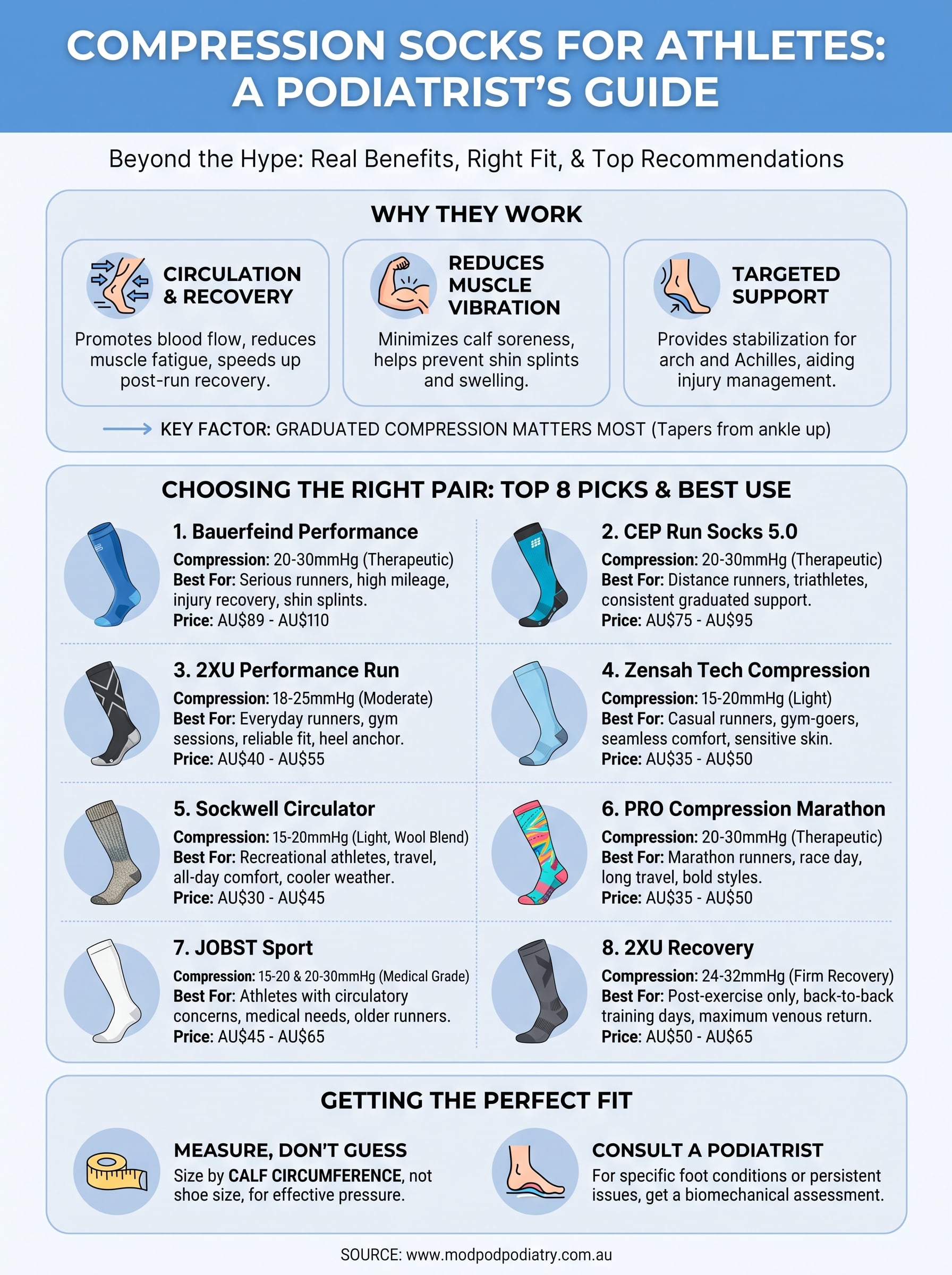
In this guide, we’ve pulled together eight pairs we’d genuinely recommend to patients, based on what we see working in clinic for sports recovery and day-to-day training. We’ll cover who each pair suits, what conditions they help with, and how to pick the right size and pressure level for your feet.
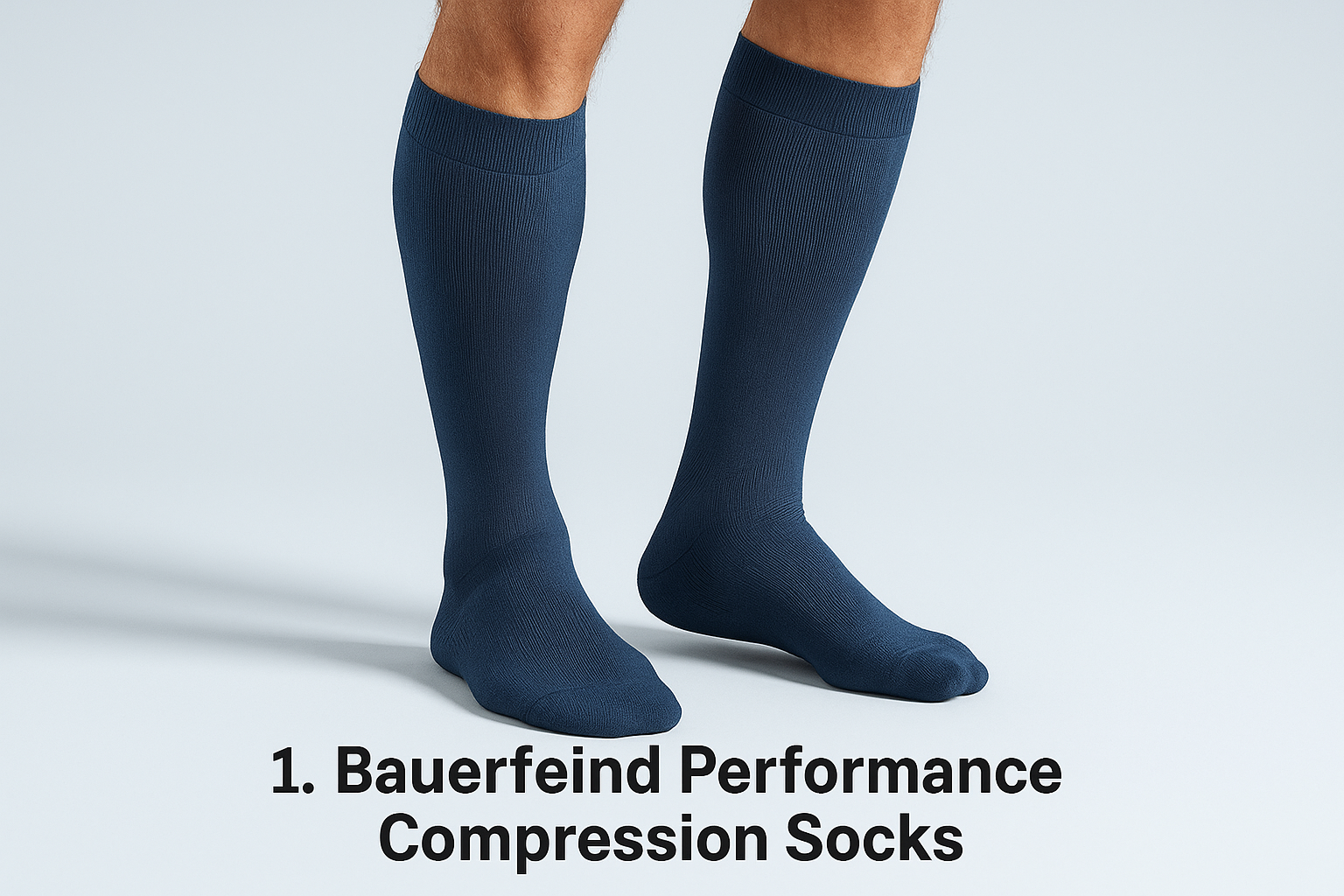
1. Bauerfeind Performance Compression Socks
Bauerfeind sits at the top of our list because it’s the brand we reach for most often when a patient needs genuine medical-grade support, not just a snug feeling. The German company builds these socks with flat knit compression zones that are engineered rather than guessed at, and you can feel the difference the moment you pull a pair on. For anyone searching for compression socks for athletes that a podiatrist would actually stock in clinic, this is usually where we start.
Compression level and fit
Bauerfeind’s Performance range sits at 20 to 30mmHg, which is firmly in the therapeutic bracket rather than the light "recovery lounge sock" category. That’s a meaningful pressure gradient, calibrated to taper from the ankle up through the calf, and it’s why we recommend a proper fitting rather than guessing your size off a size chart. The sock uses a targeted compression zone over the Achilles and arch, which we find genuinely helps patients managing plantar fasciitis or Achilles tendinopathy during return-to-running programmes.
A well-fitted 20-30mmHg sock does more for tired calves on a long run than any recovery gadget you’ll find online.
Best for
These suit serious runners and triathletes doing high weekly mileage, plus anyone recovering from a lower limb injury who needs more support than a standard sports sock offers. Patients with a history of shin splints, mild venous insufficiency, or swelling after long-haul flights combined with training also do well in this range. We wouldn’t put a first-time jogger into this pressure level without a fitting first, since 20-30mmHg can feel intense if you’re not used to graduated compression.
Standout features
What sets Bauerfeind apart is the combination of medical-grade engineering and athletic design, which isn’t common. Key features include:
- Flat knit technology that avoids the bulky seams found in cheaper compression socks
- Achilles and arch support zones targeting common overuse injuries
- Breathable, moisture-wicking fabric rated for multi-hour wear
- Reinforced heel and toe box for durability over hundreds of training kilometres
- Available in multiple lengths, including knee-high and calf sleeves
Durability is another reason patients stick with this brand. We’ve had runners bring the same pair back for a check-up after eighteen months of regular use, and the compression hasn’t dropped off the way it does with budget alternatives after a few dozen washes.
Price range in Australia
Expect to pay between AU$89 and AU$110 per pair from Australian stockists, depending on length and colourway. That’s at the premium end of the compression sock market here, but it reflects the medical-grade construction and the fact that these are built to outlast several seasons of hard training rather than one race cycle. If you’re managing a diagnosed condition like plantar fasciitis or chronic calf tightness, this is the pair we’d suggest budgeting for first.
2. CEP Compression Run Socks 5.0
CEP built its name on medical compression before it moved into sport, and the Run Socks 5.0 still carry that clinical DNA. This is the pair we suggest when a patient wants Bauerfeind-level pressure but with a more classic running sock feel underfoot. If you’ve tried a soft, loosely-graduated sock and felt nothing after a long run, this is usually a step up in genuine calf support.
Compression level and fit
The 5.0 sits at 20 to 30mmHg, matching the therapeutic range we mentioned above, with a snug ankle cuff that tapers precisely up the calf. CEP uses a medi compression technology background, so the graduation is consistent rather than a marketing claim slapped on a standard sock. Sizing runs by calf circumference rather than shoe size, which trips people up when they order online, so measure your calf before you buy.
Consistent graduated pressure, not a tight cuff, is what actually reduces calf fatigue over a long run.
Best for
These suit distance runners and triathletes who want firm support without the bulk of a knee-high recovery sock. We also recommend them to patients managing early-stage shin splints or calf tightness who still need to train through a modified programme. They’re less suited to anyone with sensitive skin around the ankle, since the compression at that point is quite firm.
Standout features
CEP’s construction focuses on function over flash, and it shows in the details:
- Anatomically shaped, cushioned sole for impact absorption
- Seamless toe construction to prevent blistering on long runs
- Moisture management fabric that stays dry over multi-hour efforts
- Reinforced arch support band for extra stability
The fabric also holds its shape well after repeated washing, which matters if you’re training five or six days a week.
Price range in Australia
CEP Run Socks 5.0 typically retail for AU$75 to AU$95 in Australia, sitting just below Bauerfeind on price while offering a comparable pressure profile. It’s a solid middle option if you want genuine graduated compression without stretching to the top of the market.
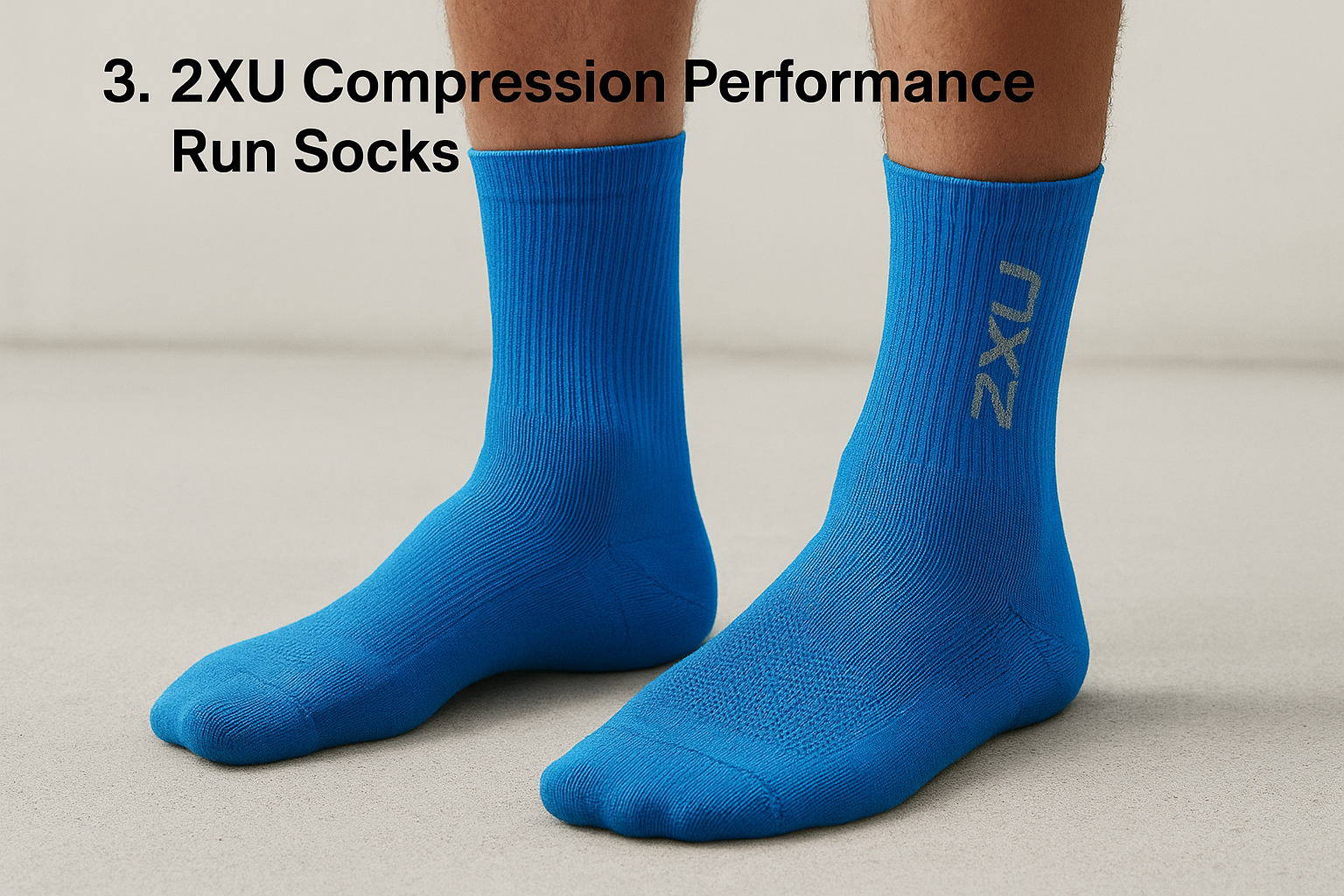
3. 2XU Compression Performance Run Socks
2XU is the Sydney-born brand most of our patients already own something from, and the Performance Run Sock is where the company’s compression research actually pays off. It’s a good middle-ground pick if you want an Australian brand backed by real biomechanical testing rather than an overseas label you have to import. For local runners who want compression socks for athletes made with our climate and training conditions in mind, this is the one we mention most.
Compression level and fit
2XU rates this sock at 18 to 25mmHg, slightly softer than the Bauerfeind and CEP options above but still firmly graduated from ankle to calf. The X2LOCK anchor system at the heel keeps the sock from sliding down mid-run, which is the single biggest complaint we hear about cheaper compression socks. Fit runs true to size using their calf and shoe size chart, and the sock has enough stretch to suit a wider range of calf shapes without bunching at the ankle.
A sock that stays put for forty kilometres is worth more than one with a higher number on the box.
Best for
These suit everyday runners training three to five times a week who want reliable compression without the intensity of a medical-grade pressure level. They also work well for gym-based athletes doing heavy leg sessions, since the graduated support helps with post-session tightness. We wouldn’t reach for these first for a diagnosed venous condition, where the higher pressure of the CEP or Bauerfeind ranges suits better.
Standout features
2XU built this sock around three practical problems runners actually face:
- The X2LOCK heel anchor to stop slipping during long efforts
- A cushioned footbed for impact protection on road and trail
- Breathable mesh panelling over the top of the foot for airflow
- Flat toe seam construction to reduce blister risk
The sock also comes in several colourways, which sounds trivial until you’re trying to match race-day kit.
Price range in Australia
Expect to pay AU$40 to AU$55 per pair, making this one of the more accessible options on this list without dropping into bargain-bin territory where graduation quality suffers.
4. Zensah Tech Compression Socks
Zensah made its name with seamless compression sleeves before expanding into full socks, and the Tech Compression range is the one we point patients toward when they want something lighter and more flexible than the German or Swiss brands above. It’s a popular pick with patients who find the firmer 20-30mmHg socks too restrictive for everyday training but still want genuine graduated support. If you’re after compression socks for athletes that feel more like a second skin than a medical device, this is where Zensah earns its spot.
Compression level and fit
Zensah sits at 15 to 20mmHg, the lightest pressure range on this list so far, using a seamless knit that moulds to the foot rather than relying on thick panelling. This makes it a genuinely comfortable option for people who’ve tried firmer compression and found it too tight around the calf or ankle. Sizing runs by shoe size rather than calf circumference, which simplifies the buying process, though we still suggest trying a pair on in clinic if your calves run larger than average.
Lighter compression still counts, provided the graduation from ankle to calf stays consistent.
Best for
These suit casual runners and gym-goers who want mild support during training without committing to a therapeutic pressure level. They’re also a sensible choice for patients easing back into exercise after injury, since 15-20mmHg offers a gentler introduction to graduated compression. We don’t recommend them for anyone managing diagnosed venous issues or significant swelling, where a higher pressure range does more genuine work.
Standout features
What makes Zensah stand out is comfort without sacrificing structure:
- Seamless, one-piece knit construction that eliminates chafing points
- Targeted arch compression band for extra midfoot support
- Moisture-wicking fabric suited to Sydney’s humid summer training months
- A relaxed cuff that doesn’t dig in behind the knee
Patients with sensitive skin or a history of blistering often gravitate toward this pair for that reason alone.
Price range in Australia
Zensah Tech Compression Socks typically cost AU$35 to AU$50 in Australia, making them one of the more affordable entries here and a sensible starting point if you’re new to compression wear.
5. Sockwell Circulator Compression Socks
Sockwell takes a different approach from the running-focused brands above, blending merino wool comfort with genuine graduated compression rather than chasing race-day speed. It’s the pair we mention to patients who spend long hours on their feet outside sport, plus athletes who want a warmer, more everyday sock for recovery days and travel. If you’re after compression socks for athletes who also need something comfortable for the office or a long flight, Sockwell fills that gap nicely.
Compression level and fit
Circulator socks sit at 15 to 20mmHg, matching Zensah’s lighter pressure range, but the merino wool blend changes how the sock feels on the leg. The graduation is still consistent from ankle to calf, built using Sockwell’s own compression mapping rather than a generic template. Fit runs by shoe size across a wide range, and the wool content gives a bit more give around wider calves without losing the pressure gradient.
Merino compression socks prove that graduated support doesn’t have to feel clinical to work properly.
Best for
These suit recreational athletes who want compression benefits without a purely performance-focused sock, plus anyone doing long travel days either side of a race or event. We also recommend them to patients who run in cooler months and want warmth alongside circulation support, since merino regulates temperature better than most synthetic blends. They’re less suited to hot, humid training sessions, where a lighter synthetic fabric breathes better.
Standout features
Sockwell’s point of difference is the natural fibre construction combined with genuine medical-grade graduation:
- Merino wool blend for temperature regulation and odour control
- Cushioned sole for comfort during long standing or walking days
- Arch support band that doubles as everyday plantar fasciitis relief
- Available in a wider range of colours and patterns than most sports brands
That wool content also means the sock holds compression well after washing, which matters if you’re wearing these several days a week.
Price range in Australia
Expect to pay AU$30 to AU$45 per pair through Australian stockists, putting Sockwell at the affordable end of this list while still delivering genuine graduated pressure.
6. PRO Compression Marathon Socks
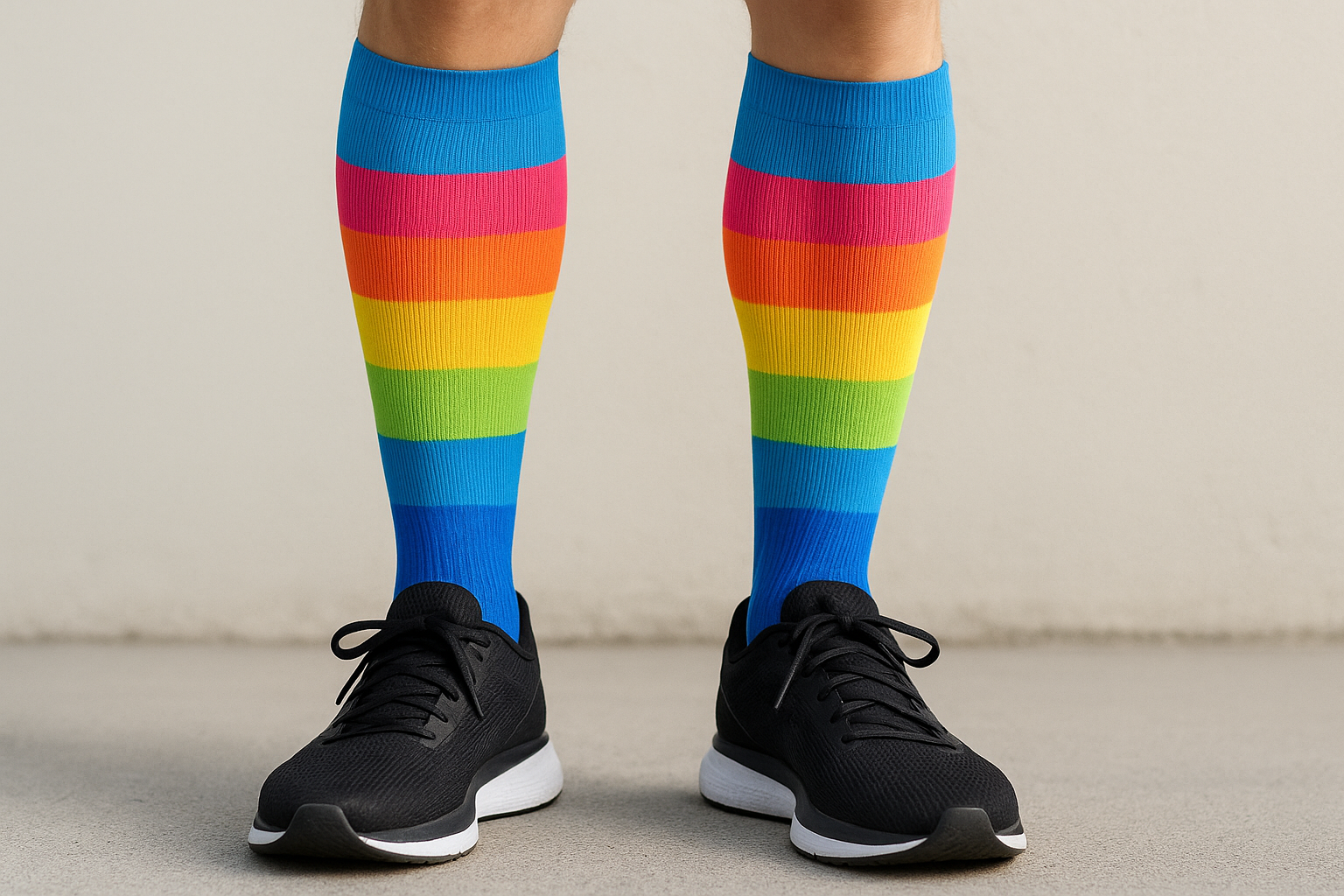
PRO Compression built its reputation on marathon expos, where its bold colours and tall knee-high cut stand out against a sea of plain white ankle socks. It’s the pair we mention to patients who want compression they’ll actually enjoy wearing on race day, not just tolerate for the benefit. If you’re chasing a personal best and want a sock that feels like part of your kit rather than a medical accessory, this is where PRO Compression fits into our list of compression socks for athletes.
Compression level and fit
Marathon Socks sit at 20 to 30mmHg, matching the therapeutic range we see in Bauerfeind and CEP, though the knit feels noticeably thicker underfoot. Graduation runs consistently from ankle to calf, and the knee-high cut means the pressure gradient extends further up the leg than most ankle-length options on this list. Sizing follows a simple height and weight chart rather than calf circumference, which works for most people but can undersize athletes with larger calves relative to their height.
A firm, well-graduated marathon sock can make the last ten kilometres feel less like a grind on tired calves.
Best for
These suit marathon and half-marathon runners who want strong compression for race day and long training runs, plus anyone who prefers a knee-high sock over a shorter cut. They also work well for patients doing back-to-back long-haul travel around race weekends, since the extended coverage helps with swelling on flights. We’d steer first-time compression wearers toward a lighter option before jumping into this pressure level.
Standout features
PRO Compression leans into personality without dropping performance:
- Wide range of bold colours and patterns, popular at races and expos
- Reinforced heel and toe for durability over repeated long runs
- Moisture-wicking fabric to manage sweat over marathon distances
- Knee-high cut for extended calf and shin coverage
That extended coverage is genuinely useful for patients managing shin splints who need support above the standard ankle-sock line.
Price range in Australia
Expect to pay AU$35 to AU$50 per pair from Australian stockists, positioning these as an affordable, therapeutic-grade option for runners training toward a race goal.
7. JOBST Sport Compression Socks
JOBST has been making medical compression garments for decades, and the Sport range is where that clinical background meets an athletic build rather than a hospital-grade look. We reach for this pair when a patient needs proven, evidence-backed compression but still wants something that looks and feels like a training sock rather than a post-surgical stocking. Among compression socks for athletes with genuine medical pedigree, JOBST is one of the few brands with decades of vascular research behind the graduation.
Compression level and fit
Sport socks come in two options, 15 to 20mmHg and 20 to 30mmHg, so you can match the pressure to your training load rather than being locked into one tier. The graduation is built using JOBST’s medical compression templates, adapted with a sportier fabric blend and reinforced zones underfoot. Sizing runs by calf and ankle circumference rather than shoe size, and we’d genuinely encourage a proper measurement here, since JOBST’s fit tolerance is tighter than most sports brands on this list.
Decades of vascular research count for more than a flashy marketing claim when you’re choosing serious compression.
Best for
These suit athletes with a diagnosed circulatory concern alongside their training, plus anyone who’s been told by a GP or podiatrist to wear graduated compression for medical reasons and wants an option that still performs on the track. They also work well for older athletes managing mild venous insufficiency who still train regularly. Casual gym-goers without a specific circulatory need are probably better served by a lighter, purely athletic brand further up this list.
Standout features
JOBST’s clinical background shows up in the small details:
- Moisture-wicking fabric engineered for multi-hour wear
- Reinforced heel and arch zones for durability and support
- Two pressure tiers to suit different medical and training needs
- Consistent graduation verified against medical compression standards
That consistency is why we trust this brand for patients who need compression for a genuine clinical reason, not just comfort.
Price range in Australia
Expect to pay AU$45 to AU$65 per pair through Australian pharmacies and medical suppliers, a reasonable price given the clinical-grade testing behind the graduation.
8. 2XU Recovery Compression Socks
We close this list with a dedicated recovery sock rather than another performance pair, because plenty of patients need compression for the hours after training, not during it. 2XU’s Recovery range is built specifically for post-exercise circulation, and it’s the pair we suggest when someone already owns a running-specific sock but needs something firmer to wear that evening on the couch. Among compression socks for athletes, this is the only entry here designed to be worn once the session is finished, not during it.
Compression level and fit
This range sits at 24 to 32mmHg, the firmest pressure on our entire list, built with a thicker, more structured knit than 2XU’s running sock. Graduation tapers steadily from ankle to calf, and the fit runs snugger than most athletic socks, since the design goal is maximum venous return rather than freedom of movement. Sizing follows a calf circumference chart, and we’d recommend measuring properly here, since a sock this firm will feel unbearable if it’s a size too small.
Recovery compression only works if you actually wear it after training, so comfort at rest matters as much as pressure on paper.
Best for
These suit athletes doing back-to-back training days or multi-event weekends who need faster turnaround between sessions. They also work well for patients managing post-race swelling or general calf heaviness after a hard block of training. We wouldn’t recommend wearing these during a run or ride, since the firm, structured knit is built for stillness rather than movement.
Standout features
A few details set this pair apart from 2XU’s running range:
- Firmer 24-32mmHg graduation aimed squarely at recovery, not performance
- Thicker, cushioned knit comfortable for hours of sitting or sleeping
- Reinforced heel and toe for repeated wear across a training block
- Available in knee-high length for full calf coverage
Price range in Australia
Expect to pay AU$50 to AU$65 per pair from Australian stockists, a fair price for a dedicated recovery sock you’ll likely wear most evenings during heavy training weeks.
Getting the right fit for your feet
Every pair on this list works when the compression level matches what your body actually needs, not what looks fastest on the box. A firm 20-30mmHg sock does nothing useful if it’s the wrong calf size, and a light recovery pair won’t touch genuine venous swelling. That’s the pattern we see week after week in clinic: patients guessing at pressure and sizing, then wondering why the sock feels wrong within a fortnight.
Getting it right usually takes five minutes with a tape measure and someone who knows what to look for, rather than another hour scrolling reviews online. If you’re managing heel pain, shin splints, or persistent swelling alongside your training, a proper biomechanical assessment will tell you far more than any sock ever could. Our podiatrists across Sydney can check your gait, measure you correctly, and point you toward the right pressure level for your feet. Book an appointment online and we’ll sort the rest.