

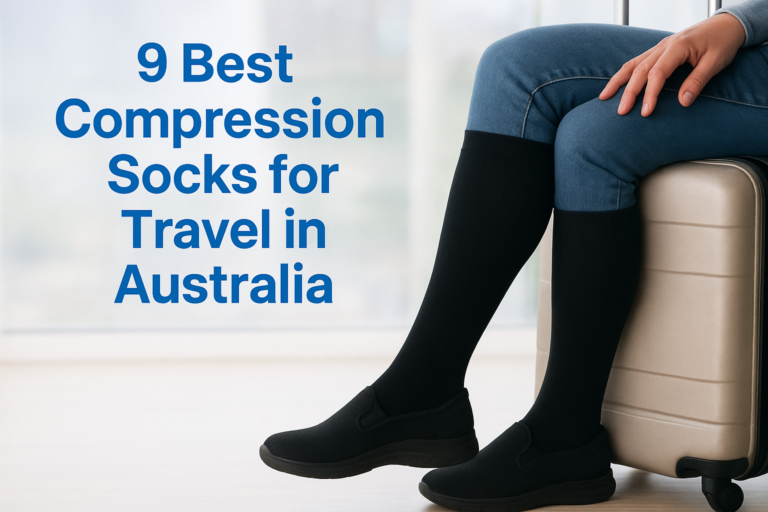
Long flights leave your feet and ankles swollen after flying, and if you’ve ever landed in Perth or flown to Europe with tight shoes and puffy legs, you already know why finding the best compression socks for travel Australia has to actually work is worth the research. Sitting still for hours slows blood flow through your lower legs, and that’s not just uncomfortable, it’s a genuine risk factor for deep vein thrombosis on longer routes.
This guide skips the marketing spin and focuses on what matters: graduated compression levels and how they work, breathable fabric for Australian summers, and sizing that fits real legs rather than a generic small-medium-large chart.
A quick note: ModPod Podiatry does not sell or stock compression socks, sleeves or stockings, and our podiatrists do not measure patients for them. The brands below are sold through pharmacies, sports retailers, medical suppliers and online stores.
Below you’ll find nine options covering different budgets and needs, from everyday travel socks to medical-grade compression for anyone with a history of circulation issues, alongside our wider comparison of compression sock brands sold in Australia. We’ll flag which ones suit short domestic hops, which are built for fifteen-hour international legs, and when it’s worth getting properly measured by an accredited fitter rather than guessing your size online.
1. TheRY The Comforter travel compression socks
TheRY is an Australian-owned brand, and The Comforter is their dedicated flight sock, built specifically around the discomfort of long economy-class legs. It sits at the accessible end of the market without feeling like a budget product, which is why it tends to be a first pick for people who’ve never worn compression gear before and aren’t sure they’ll get on with it.
Compression level and length
The Comforter delivers 15-20mmHg graduated compression, which lands in the general wellness range rather than the medical-grade category. That’s enough to noticeably reduce ankle swelling on a domestic flight from Sydney to Melbourne, and it holds up reasonably well across a long-haul leg too, though anyone with a diagnosed clotting risk should be looking further down this list. The sock runs to just below the knee, the standard length for travel compression, which keeps the graduated pressure working correctly from ankle to calf without bunching behind the knee joint.
Material and comfort
The fabric blend is where this sock earns its reputation. It uses a cotton-rich knit with added elastane, so it breathes better than the all-synthetic options you’ll find in pharmacy compression ranges, and it doesn’t get clammy on a warm Queensland afternoon waiting at the gate. The toe seam is flat-stitched, which matters more than people expect on a twelve-hour flight, since a bulky seam under the toes becomes genuinely irritating by hour six.
A compression sock only works if you’ll actually keep it on for the whole flight, and comfort is what decides that.
Best for
This is a sensible pick for first-time compression wearers and anyone doing a mix of domestic and international travel who wants one reliable pair rather than a drawer full of options. It also suits people who need compression socks for standing all day before the flight even starts, given the everyday wearability of the fabric. If you’ve had swelling, aching calves, or mild varicose vein discomfort on past trips but haven’t been assessed, it’s a reasonable starting point, though see your GP if the swelling is severe or only in one leg.
Price in Australia
A pair typically retails for around $25 to $35 AUD, with multi-packs bringing the per-pair cost down further. That price point makes it easy to buy two or three pairs so you’ve always got a clean pair for the return leg, which is useful on any trip longer than a week. Compared with medical-grade stockings later in this list, it’s a low-commitment way to test whether compression socks suit your travel habits before spending more.
2. TXG flight socks for long-haul travel
TXG built its reputation on medical and orthopaedic-grade compression before branching into travel-specific ranges, and that background shows in the flight socks. They are sold through pharmacies, health retailers and online stores, so check stock and sizing with the seller before you buy.
Compression level and length
TXG’s flight socks come in 20-30mmHg, a firmer graduated compression than most everyday travel brands, sitting closer to the medical threshold. They’re cut to a below-knee length with a wide, non-binding top band, so they don’t dig into the back of the knee on a long-haul flight where you’re shifting position constantly. This is one of the firmest options on this list for DVT prevention during international travel, so check with your GP first if you have any circulation concerns.
Firmer compression only helps if the band doesn’t cut off circulation at the top, and TXG’s wide band solves that specific problem.
Material and comfort
The knit is a nylon-spandex blend with reinforced heel and toe panels, giving it more structure than softer cotton-based socks. It’s not the most breathable fabric in warm cabin air, but the trade-off is durability and a stronger, more consistent squeeze across the whole flight.
Best for
Frequent flyers, people with a family history of clotting issues, and anyone who’s had swelling severe enough to worry them on a previous long-haul trip should look here first. It also suits travellers who want one pair that doubles as recovery wear on the ground.
Price in Australia
Expect to pay $40 to $55 AUD per pair, reflecting the firmer compression and medical-adjacent construction compared with entry-level travel socks.
3. Bauerfeind VenoTrain medical-grade stockings
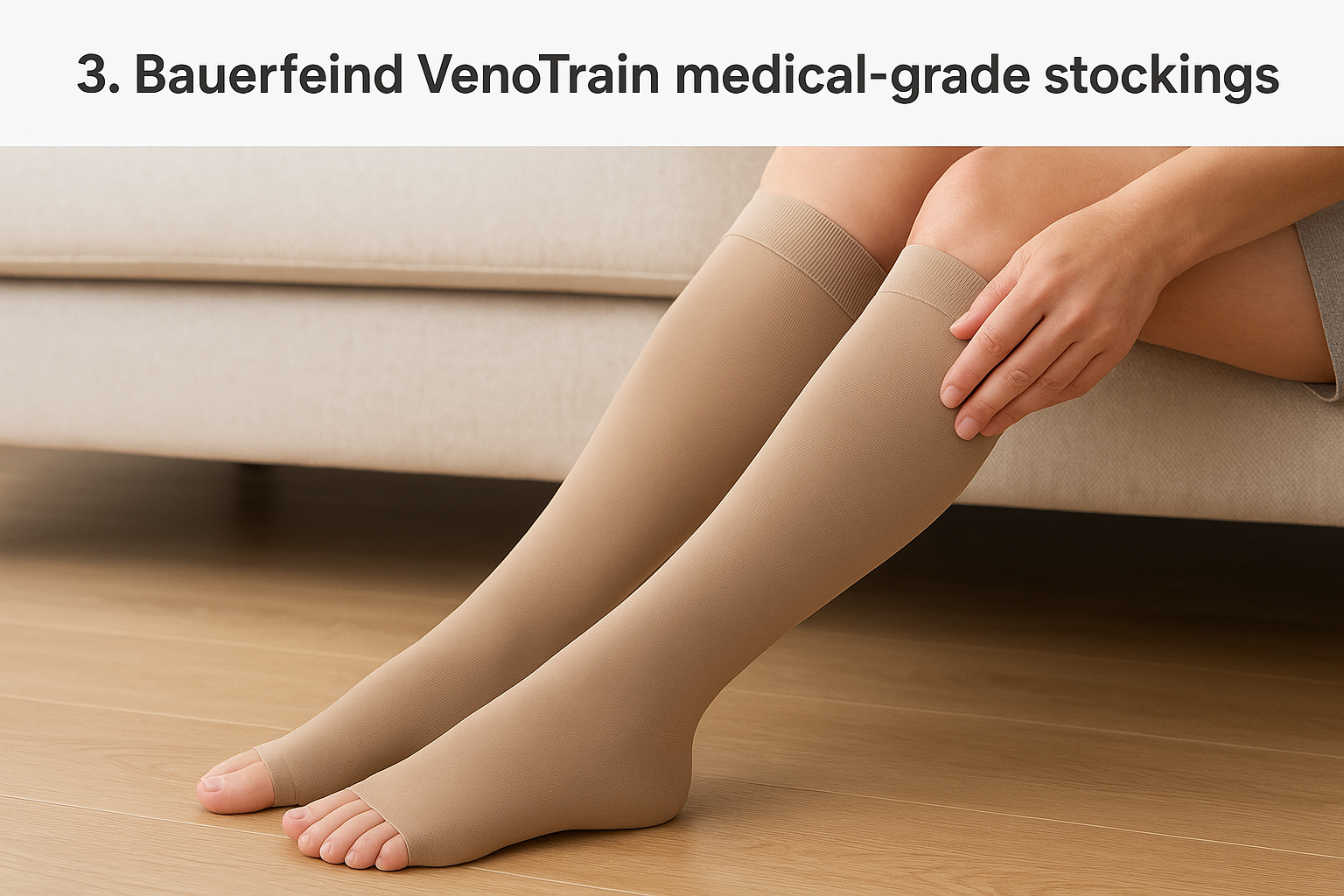
Bauerfeind is a German medical device manufacturer, and the VenoTrain range is about as clinical as compression hosiery gets. It’s used for diagnosed venous insufficiency, so it’s worth knowing before you buy that this isn’t really a casual travel accessory, it’s a therapeutic garment that happens to work well on flights too.
Compression level and length
VenoTrain stockings are sold in compression classes rather than a single mmHg range, typically Class 1 (18-21mmHg) through Class 2 (23-32mmHg), and they’re sized to individual leg measurements rather than a generic chart. Length options include below-knee, thigh-high, and full pantyhose styles, which matters if you’ve got swelling that extends above the calf.
Medical-grade compression is only as effective as its fit, which is why it should be measured by someone trained to do it, not guessed.
Material and comfort
The fabric is a tightly woven microfibre blend engineered for consistent pressure rather than softness, so it feels firmer against the skin than lifestyle brands. Flat-knit seams and reinforced heels reduce friction, though most wearers need to be properly measured by a trained fitter to get the size right.
Best for
Anyone with diagnosed chronic venous insufficiency, varicose veins, or a previous DVT should be looking here rather than at general wellness socks, ideally after your GP or a vascular specialist confirms the correct compression class and a trained fitter measures you.
Price in Australia
Expect to pay $90 to $150 AUD per stocking. Some private health funds may rebate part of the cost under extras cover, so check with your fund before you buy.
4. Dr Woof bamboo compression socks
Dr Woof is a Sydney-founded label that built its name on bamboo-fibre socks before adding a dedicated compression line, and it’s become a favourite with people who complain that synthetic travel socks make their feet sweat before the plane’s even left the tarmac. Given how much of Australia’s domestic flying happens in warm, humid conditions, that complaint is fair, and it’s the exact problem this sock was designed to solve.
Compression level and length
The range sits at 15-20mmHg, the same general wellness bracket as most everyday travel socks, and it’s cut to a below-knee length that stops just under the knee crease. It’s graduated correctly from ankle to calf, so it still does the job of moving fluid upward on a long-haul leg, it just isn’t firm enough for anyone managing a diagnosed circulation condition.
Material and comfort
The standout feature is the bamboo viscose blend, which is naturally moisture-wicking and stays noticeably cooler against the skin than nylon or polyester equivalents on a warm cabin floor. Bamboo fibre also has natural antibacterial properties, which helps if you’re wearing the same pair across a full day of connecting flights, though it’s still worth knowing how many hours a pair should stay on.
Compression socks that make your feet sweat get pulled off mid-flight, so breathable fabric isn’t a luxury, it’s what keeps the compression actually working.
Best for
This pair suits warm-weather travellers, anyone with sensitive or easily irritated skin, and eco-conscious flyers who’d rather avoid all-synthetic fabrics for a twelve-hour flight.
Price in Australia
A pair typically costs $30 to $40 AUD, putting it in similar territory to TheRY while offering a genuinely different fabric feel for anyone who runs hot.
5. 2XU Vectr cushioned compression socks
2XU is an Australian sportswear brand best known for triathlon and running gear, and the Vectr range crosses over neatly into travel because it was designed for recovery as much as performance. Runners wear these post-race to reduce leg fatigue, much like the compression socks athletes use for sport and recovery, and that same graduated squeeze translates well to a long-haul cabin where your calves are doing nothing but swelling for twelve hours straight.
Compression level and length
Vectr socks sit at a lighter graduated compression, generally cited around 10-15mmHg in the cushioned versions, which is gentler than most dedicated flight socks on this list. They come in ankle, crew, and full-length options, and for travel purposes the crew length below the knee is the one worth buying. It’s not built for anyone with diagnosed vein problems, but for general swelling relief on a long-haul flight it does the job.
Material and comfort
What sets Vectr apart is the cushioned sole construction, borrowed straight from running sock design, which makes a real difference if you’re walking through three airports in one day. The knit itself is a polyester-nylon-elastane blend that manages moisture well without feeling clinical against the skin.
A cushioned footbed matters as much as compression when your flight involves hours of walking through terminals either side.
Best for
Active travellers, runners heading to an overseas race with their long distance running shoes packed, and anyone connecting through multiple airports will get the most out of this pair, since the cushioning earns its keep on foot as much as in the air.
Price in Australia
Expect to pay $35 to $50 AUD per pair depending on length and retailer.
6. Paire merino wool compression socks
Paire has built a following among Australian travellers who fly long-haul to Europe or North America and want something warmer on their feet than synthetic knits allow. Its compression socks use merino and eucalyptus blends, and merino has a natural temperature-regulating quality that most compression brands don’t bother with, which is the whole reason this pair exists.
Compression level and length
Paire’s travel range is graduated and cut to a below-knee length with a soft, non-restrictive top band. Check the product page for the exact mmHg rating before you buy, since it varies by style. Graduation runs from ankle to calf, so it still encourages blood flow upward during a long sitting stretch, though a light compression sock isn’t firm enough for anyone with a diagnosed clotting history.
Material and comfort
The fibre blend is where merino earns its keep. It’s naturally moisture-wicking and temperature-regulating, meaning it doesn’t overheat on a warm cabin floor yet still feels comfortable if you land somewhere cold. Merino also resists odour far better than synthetic fibres, which matters on a long connecting itinerary where you’re wearing the same socks for over 24 hours.
Merino wool solves the one problem synthetic compression socks never quite manage, staying comfortable whether the cabin runs hot or cold.
Best for
This pair suits travellers heading to cooler climates, anyone who finds synthetic fabric uncomfortable against sensitive skin, and people who prioritise natural fibres generally in their wardrobe. It’s also a solid choice for multi-leg trips where freshness matters more than usual.
Price in Australia
Expect to pay $40 to $55 AUD per pair, though check the current price on the Paire website. That’s a premium over cotton or bamboo alternatives, but the merino fibre justifies it for anyone doing genuinely long-haul, multi-stop travel rather than a quick domestic hop.
7. VIM and VIGR 20-30mmHg compression socks
VIM and VIGR is a US brand that’s found a solid following among Australian travellers through online retailers, largely on the strength of its patterned designs and a firmer compression tier that sits above most everyday travel socks. It’s the pick for anyone who wants firm compression without the clinical, beige-sock look that puts a lot of first-time buyers off.
Compression level and length
This range sits at 20-30mmHg, the same firm bracket as TXG, which puts it well above general wellness compression and into territory that can help with swollen ankles on flights over eight hours. Socks are cut below-knee with a wide, cushioned top band designed not to dig in during long sitting stretches, which matters at this compression strength since a tight band can leave a painful mark by hour ten.
Material and comfort
The knit is a nylon-spandex blend with reinforced arch support, giving it more structure than lifestyle brands and a snugger, more consistent hold from ankle to calf. It runs warmer than bamboo or merino options, so it suits air-conditioned cabins better than a sweaty tarmac wait.
Firm compression paired with a fashion print means people actually wear these on the flights where they need it most.
Best for
Travellers wanting firm graduated compression without a purely clinical appearance, plus anyone who’s found softer 15-20mmHg socks don’t do enough on long-haul legs, will get the most from this pair.
Price in Australia
Expect to pay $45 to $60 AUD per pair, reflecting the firmer compression class and imported stock through Australian retailers.
8. Continuall Heeling light compression socks
Continuall is an Australian brand built around foot recovery rather than pure travel wear, and the Heeling range crosses into flight compression because of what it does for tired arches and heels after a day on your feet. It’s a newer name than most on this list, but it’s found a niche with people who already deal with plantar fasciitis or heel pain and want a sock that supports both circulation and foot structure on a long trip.
Compression level and length
Heeling socks sit at a lighter 12-15mmHg, below the general wellness range most travel brands use, cut to a below-knee length. The lighter squeeze means it’s not the strongest choice for DVT prevention on a fifteen-hour leg, but the graduation still supports normal circulation on shorter domestic flights and everyday wear either side of travel.
Material and comfort
What sets this sock apart is the built-in arch and heel support, stitched into the sole rather than relying on compression alone. The knit is a cotton-nylon blend that feels closer to a supportive everyday sock than a clinical compression garment.
A sock built for heel pain first and compression second suits people whose feet ache more than their calves swell.
Best for
This pair suits travellers managing plantar fasciitis or heel pain, and anyone who wants gentle circulation support without committing to firmer medical-grade compression for a short flight, though it’s worth reading whether compression socks really help foot pain first.
Price in Australia
Expect to pay $25 to $35 AUD per pair, making it one of the more affordable options here, though it’s better suited to comfort and foot support than serious swelling or clotting risk.
9. Beister thigh-high compression stockings
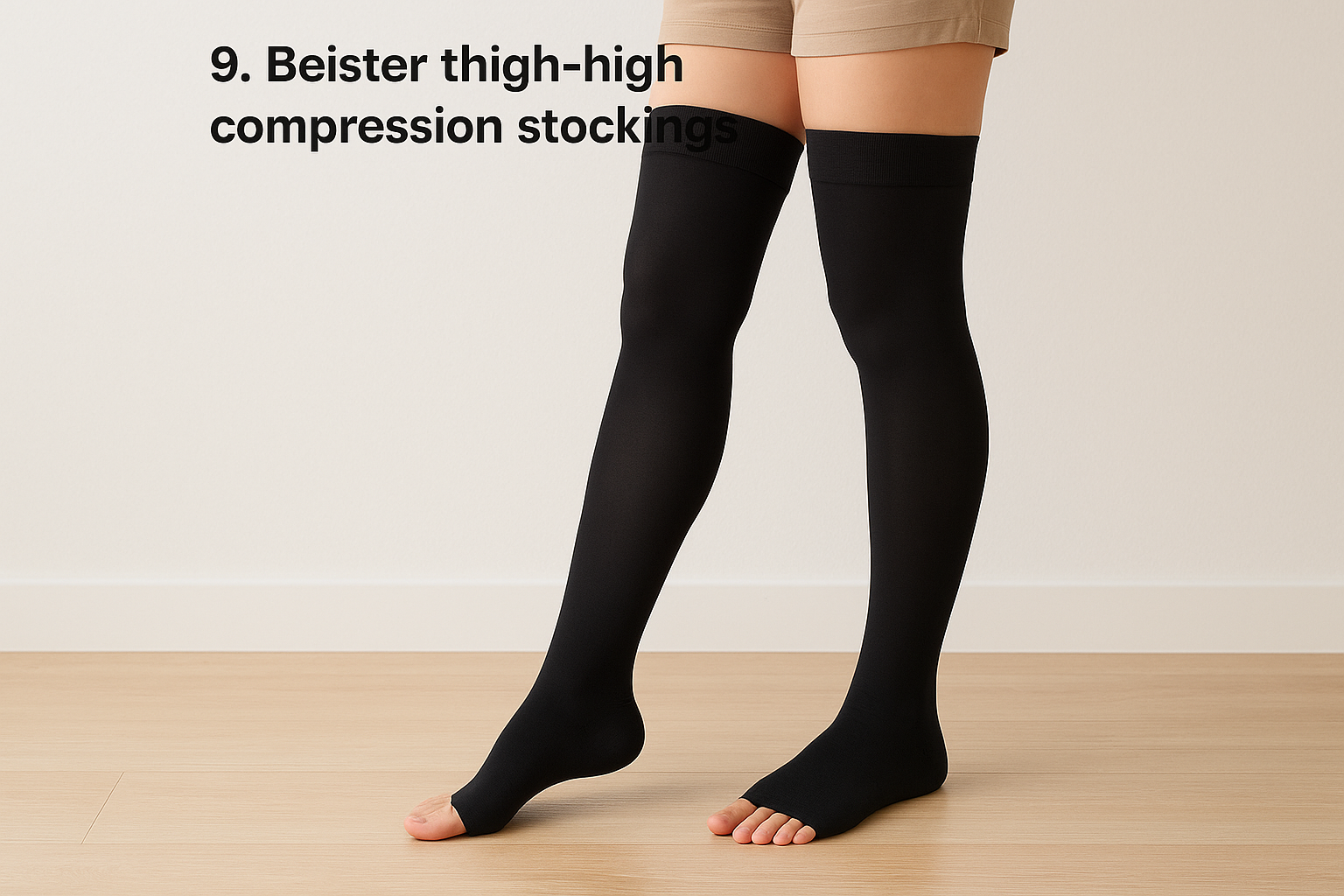
Beister is a budget-focused brand that’s carved out space on Australian online marketplaces by offering thigh-high compression at a fraction of the price of medical suppliers like Bauerfeind. It won’t suit everyone, but for travellers whose swelling extends above the knee, a below-knee sock simply doesn’t cover the problem area, so it helps to understand the difference between compression socks and stockings before choosing one of the more accessible thigh-high options available locally.
Compression level and length
Stockings come in 15-20mmHg and 20-30mmHg options, so you can choose general wellness or firmer support depending on your needs, and both run full thigh-high rather than the below-knee cut used by most brands on this list. A silicone grip band at the top keeps them from sliding during a long-haul flight, which is the main failure point of cheaper thigh-high designs.
Thigh-high compression only earns its place in your bag if it stays up for the whole flight, and that’s what the grip band is actually for.
Material and comfort
The knit is a nylon-spandex blend, functional rather than luxurious, with a reinforced heel and toe. It runs warmer against the skin than bamboo or merino alternatives, so it suits an air-conditioned cabin better than a sweaty layover.
Best for
Anyone with swelling above the knee, pregnant travellers advised by their GP to wear compression, and budget-conscious flyers who need thigh-high coverage without paying medical-supplier prices will find this the most practical fit here.
Price in Australia
Expect to pay $20 to $30 AUD per pair, making it the most affordable thigh-high option on this list by a clear margin.
Making the right choice for your flight
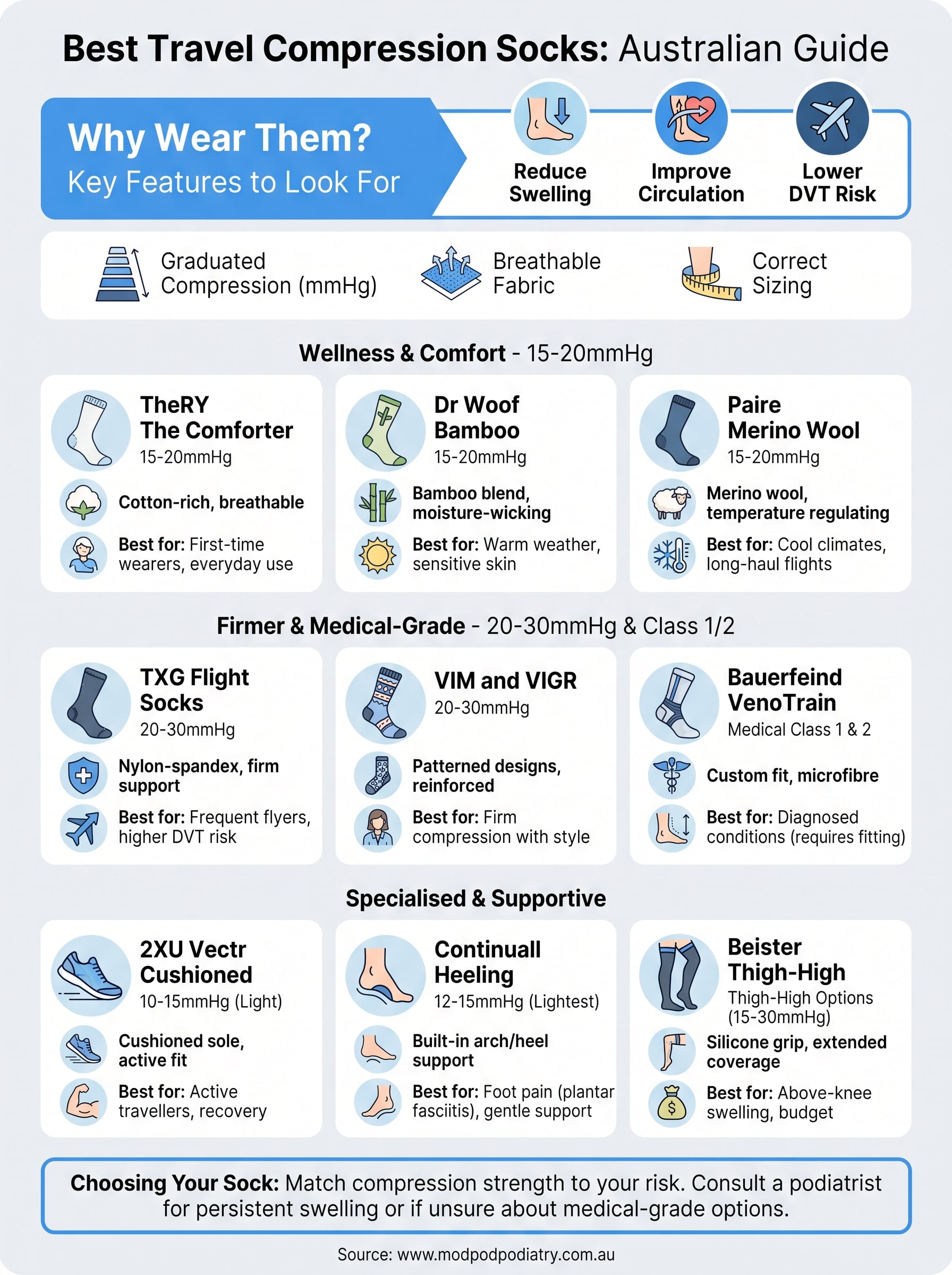
Picking the best compression socks for travel Australia flyers actually rely on comes down to matching compression strength to your real risk, not the flashiest packaging. A short domestic hop calls for something light and breathable like TheRY or Dr Woof, while long-haul legs or any history of swelling and clotting point you towards TXG, VIM and VIGR, or genuine medical-grade Bauerfeind stockings. Thigh-high options earn their place only when swelling sits above the knee, and cushioned or arch-support styles suit travellers who’ll be walking as much as sitting.
If you’re unsure which compression level suits your legs, or you’ve noticed swelling that doesn’t settle after a flight, don’t guess from an online chart. See your GP, and get measured by a pharmacy, medical supplier or accredited fitter. ModPod Podiatry doesn’t sell, stock or measure for compression garments, but if foot or heel pain is part of what’s bothering you on trips, book a foot and ankle assessment with our Sydney podiatrists.

