
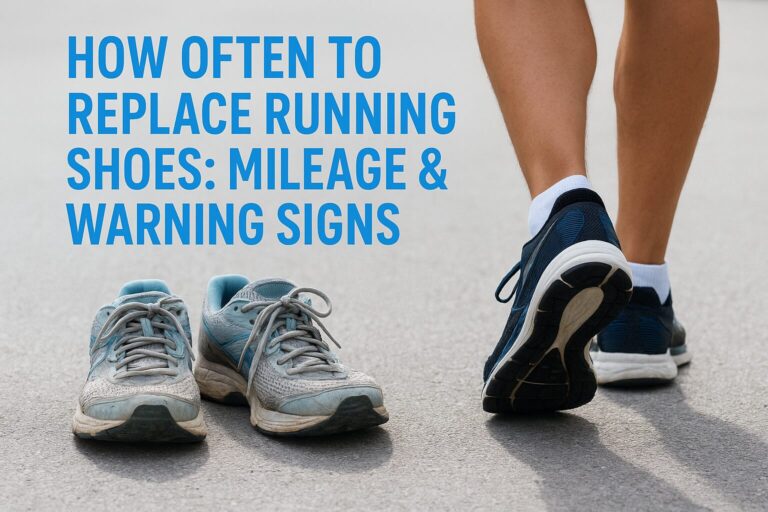
Most runners remember exactly when they bought their shoes but have no idea when to stop running in them. That’s a problem. Worn-out running shoes lose the cushioning and structural support your feet depend on, and continuing to train in them is one of the most common causes of preventable lower limb injuries we see at ModPod Podiatry. Knowing how often to replace running shoes isn’t just about performance, it’s about protecting your feet, ankles, and knees from unnecessary damage.
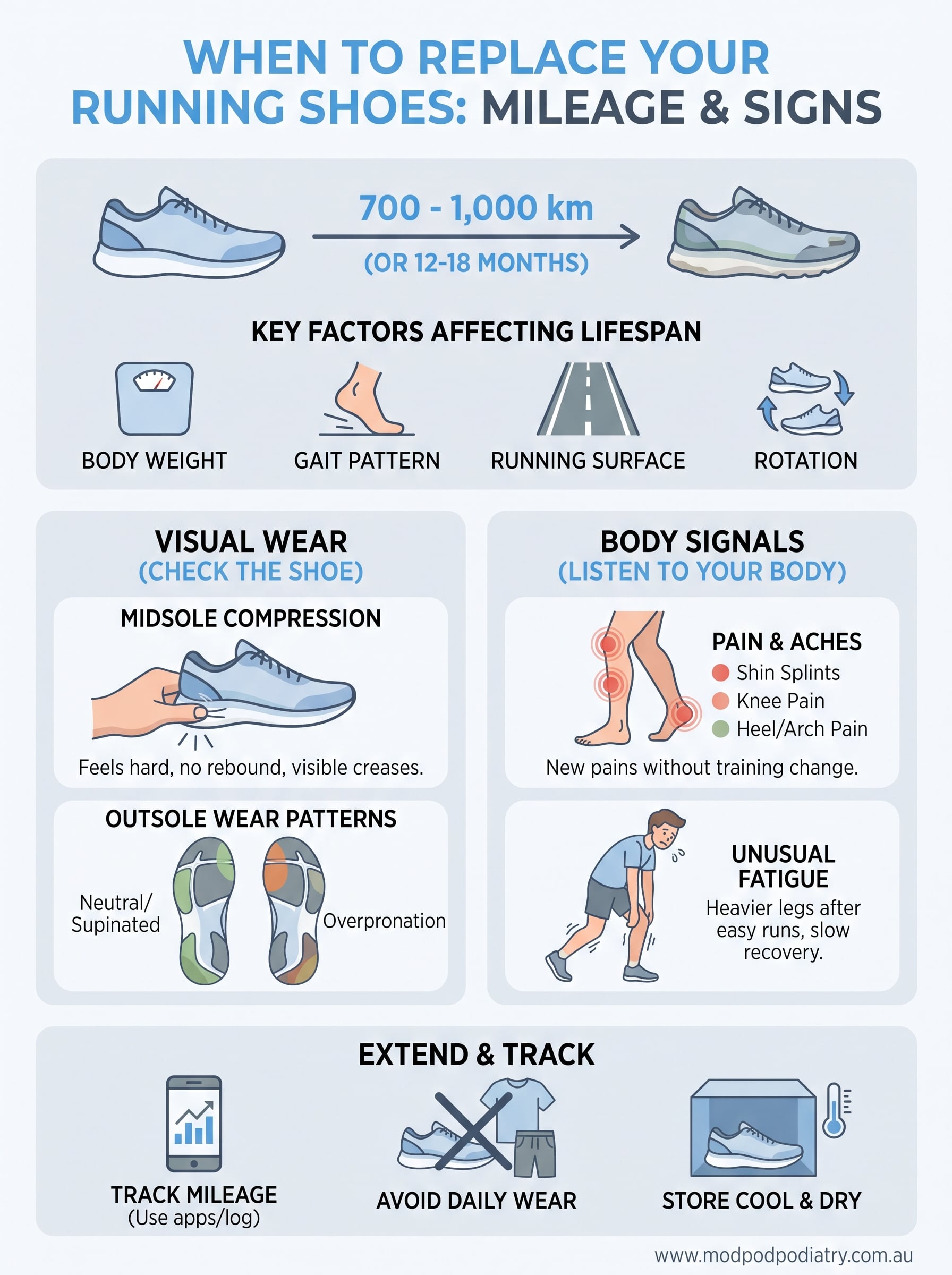
The general guideline sits between 700 and 1,000 kilometres, but that number shifts depending on your body weight, running surface, gait pattern, and the shoe itself. Some runners burn through a pair in four months; others get a solid year. The real answer comes down to a combination of mileage tracking and physical warning signs that tell you the shoe has done its job.
In this guide, we break down the key indicators that your running shoes need replacing, what happens to your body when you ignore them, and how to get the most life out of every pair. As podiatrists who treat runners across our five Sydney clinics every week, this is something we talk about with patients constantly, so consider this the straightforward advice we’d give you in the consultation room.
What affects how long running shoes last
No two runners put the same demand on a shoe. Body weight, running frequency, terrain, and shoe construction all interact to determine how fast the materials inside break down. Before you can answer the question of how often to replace running shoes, you need to understand which of these variables apply to your situation, because the difference between a shoe lasting 600 kilometres and 1,000 kilometres often comes down to exactly these factors.
Your body weight and gait pattern
Heavier runners compress the midsole foam faster, which is the layer responsible for cushioning and shock absorption. A runner weighing 90 kg will break down that foam considerably faster than a runner weighing 65 kg covering the same distance. Your gait pattern matters just as much: if you overpronate heavily or strike hard on your heel, specific zones of the shoe absorb repeated, concentrated impact rather than distributing load more evenly across the sole.
The midsole fails before the outsole in most cases, which is why a shoe can look fine on the outside while offering almost no protection underneath.
That concentrated compression in one spot can make the whole shoe functionally worn out well before the outer rubber shows any obvious damage. This is why two runners in identical shoes, covering identical distances, can reach the replacement point at very different times.
The surface you run on
Trail running and road running age shoes differently. Hard bitumen surfaces wear down the rubber outsole faster but tend to compress the midsole at a more even rate. Trail terrain puts multi-directional stress on the upper and sole simultaneously, which can accelerate breakdown in less predictable ways. Running on a treadmill is generally easier on the outsole because the belt provides some give, though it does not meaningfully extend the life of the foam inside.
As a practical guide, factor in your primary surface when estimating replacement intervals:
- Road only: expect wear closer to the 700-800 km range if you run daily
- Mixed road and trail: check for uneven sole compression every 600 km
- Treadmill only: outsole wear is slower, but still check the midsole regularly
How many pairs you rotate
Rotating between two pairs of running shoes is one of the most practical ways to extend the life of each pair. Foam needs 24 to 48 hours to decompress and return toward its original shape after a run. When you wear the same pair every day, the foam never fully recovers between sessions.
Using a second pair on alternate days gives each shoe time to decompress, keeps both pairs functional for longer, and reduces your cost per kilometre over a full training year. It is a simple habit with a measurable impact on how long your shoes remain protective.
Step 1. Estimate replacement by kilometres and months
Mileage is your most reliable starting point when thinking about how often to replace running shoes. Most quality running shoes are built to deliver adequate protection across 700 to 1,000 kilometres, but treat that as a range to investigate rather than a fixed expiry date. Where you land within that range depends on everything covered in the previous section: your weight, your gait, your terrain, and whether you rotate pairs.
The standard mileage range by runner type
Different runners hit the replacement threshold at different points. Higher body weight and heavy weekly training volume push you toward the lower end of the range, while lighter runners with more varied schedules typically extract more kilometres from each pair. Use this table as a starting reference:
| Runner profile | Estimated replacement range |
|---|---|
| High mileage (50+ km/week), heavier build | 600-700 km |
| Moderate mileage (25-40 km/week), average build | 700-850 km |
| Low mileage (under 25 km/week), lighter build | 850-1,000 km |
| Rotating two pairs regularly | Add 10-15% to each pair |
If you are unsure of your total mileage, a running app or your phone’s built-in health tracker will give you a reasonable cumulative estimate to work from.
When months matter more than kilometres
Time is a secondary factor that many runners overlook entirely. Even if you have covered only 400 kilometres, foam degrades through heat, UV exposure, and repeated compression over months, regardless of how often you lace up. Shoes stored in a hot car boot or left near a sunny window age faster than their mileage alone suggests.
Treat 12 to 18 months as your upper time limit for any pair, regardless of total kilometres logged, particularly if any physical warning signs are already present.
Step 2. Spot the wear patterns that matter
Physical wear gives you concrete visual evidence that a shoe has reached its limit, often before your mileage tracker does. Knowing where to look and what the damage actually means is a practical skill that takes less than a minute to apply after any run.
Check the midsole for compression
The midsole is the foam layer sitting between the outsole rubber and the upper fabric, and it is where most of the protective work happens. When this layer compresses and stays compressed, it stops absorbing impact and starts transferring force directly into your joints. Press your thumb firmly into the midsole along the heel and forefoot – if the foam feels hard, gives minimal rebound, or shows visible creasing lines across the sidewall, the cushioning is spent.
A shoe that looks clean on the outside can have a completely collapsed midsole underneath – always check the foam directly, not just the rubber.
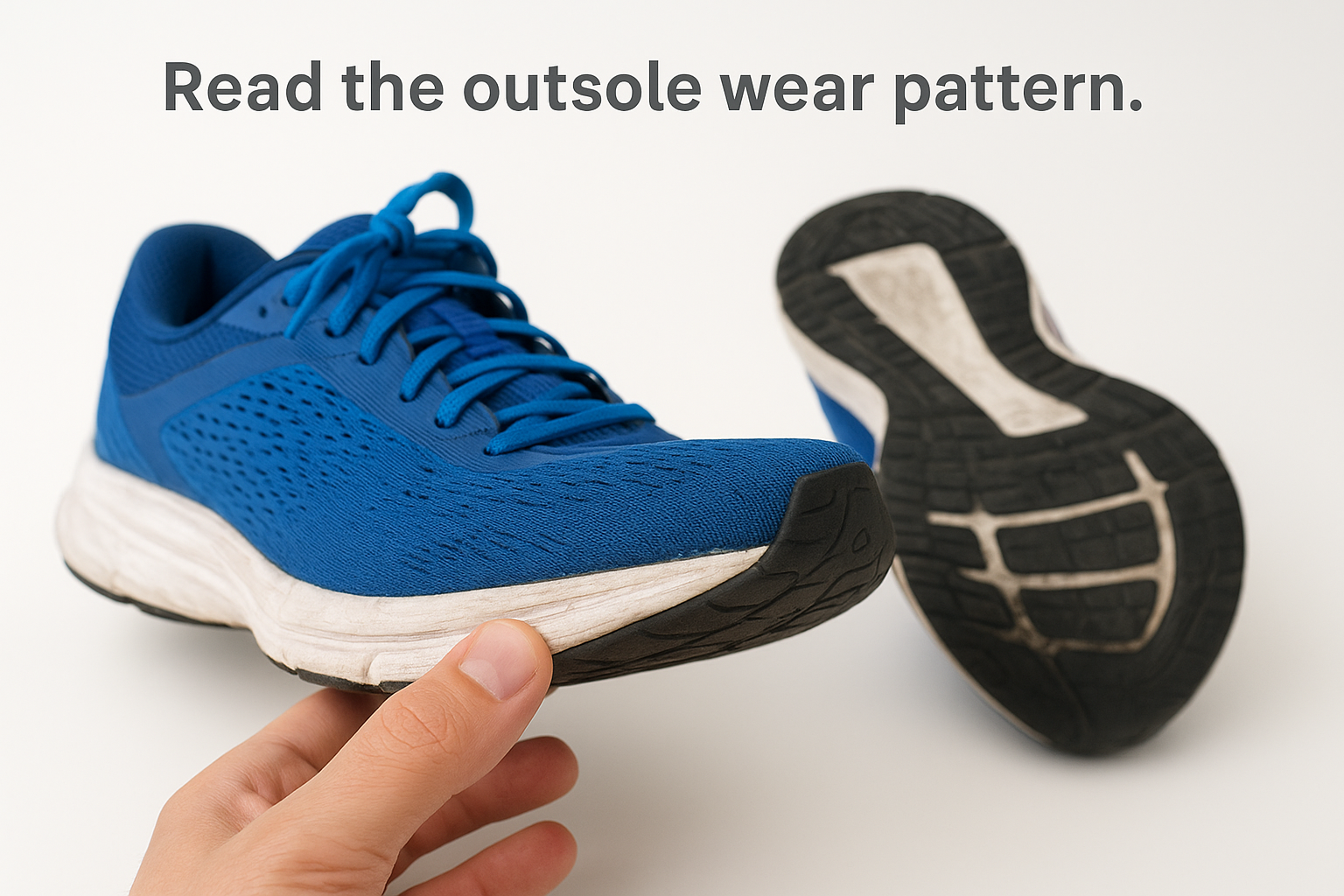
Read the outsole wear pattern
Rubber wear on your outsole reveals how your foot strikes the ground, which helps you understand both your gait and how quickly your specific shoe will deteriorate. Use this as a quick reference:
| Wear location | What it indicates |
|---|---|
| Outer heel and forefoot | Neutral or supinated gait |
| Inner heel and big toe area | Overpronation pattern |
| Central ball of foot | Forefoot strike pattern |
| Heavily worn on one side only | Asymmetrical loading |
Uneven wear across your left and right shoes is worth paying close attention to, as it can point to a leg length difference or a gait issue a podiatrist should assess before you replace the pair and repeat the same loading pattern.
Step 3. Use pain and fatigue as a warning sign
Mileage and visual wear give you objective data, but your body often sends the clearest signal that a shoe has stopped doing its job. Pain or unusual fatigue appearing during or after runs that previously felt manageable is a direct indication that the protection between your foot and the ground has dropped below what your body needs. Do not assume new aches are a training problem until you have ruled out the shoes first.
Recognise the pain locations that point to shoe failure
Shin splints, knee pain, and plantar heel pain are among the most common complaints we hear from runners who have unknowingly trained through the end of a shoe’s useful life. When cushioning fails, impact forces travel further up the chain, stressing the shins, knees, and hips in ways that were previously absorbed by the midsole foam. If new aches appear without a change in your training load, your shoes are the first thing to investigate.
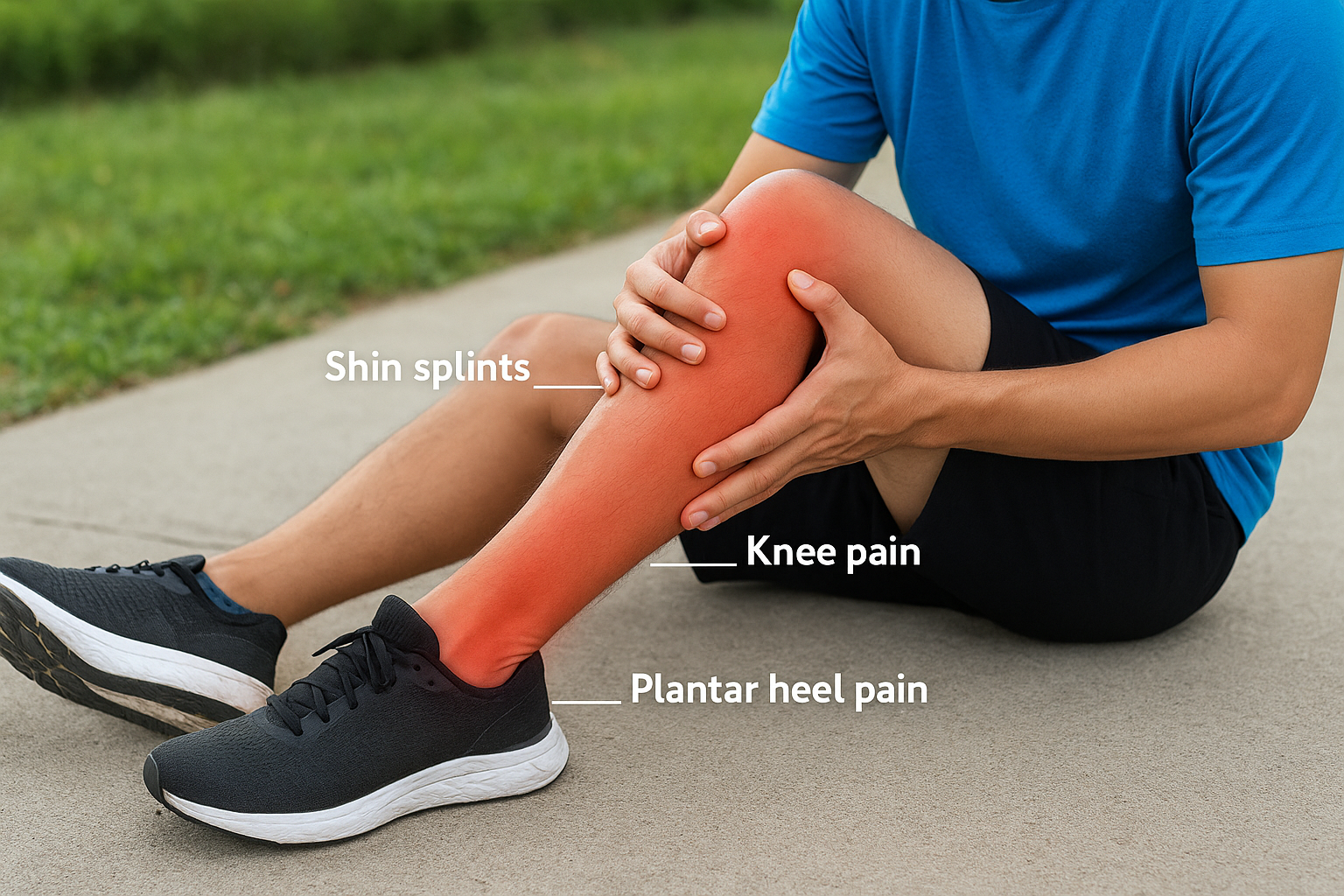
If you are asking yourself how often to replace running shoes because you have started developing pain, the answer is: the shoes likely needed replacing before the pain started.
Common pain signals linked to shoe breakdown include:
- Heel pain during or after runs: midsole compression at the rear of the shoe
- Knee soreness on flat runs: reduced shock absorption transferring load to the joint
- Shin soreness on easy days: cumulative impact from depleted cushioning
- Arch fatigue: loss of structural support through the midfoot
Take post-run fatigue seriously
Heavier legs after shorter or easier runs than usual is a sign worth taking seriously. Your muscles compensate for inadequate shoe support by working harder, which leads to earlier fatigue and slower recovery between sessions. If your legs feel worn out after a run that should feel routine, check the shoes before you adjust your training plan.
Step 4. Track mileage and extend shoe life
Knowing how often to replace running shoes becomes much easier when you actually record the kilometres each pair accumulates. Without tracking, most runners are guessing, and guessing tends to mean either replacing shoes too late or spending money unnecessarily. A basic mileage log takes under one minute per run and removes all the uncertainty from the decision.
Use a simple mileage log
Set up a dedicated log for each pair of shoes you run in. Free apps like Strava and Garmin Connect let you assign runs to specific shoes and will notify you when you approach a set kilometre threshold. If you prefer a non-digital method, a notes app or a small notebook works just as well.
Use this template as a starting point:
| Entry | Date | Kilometres | Surface | Running total | Notes |
|---|---|---|---|---|---|
| 1 | 01/07/2026 | 8 km | Road | 8 km | Felt good |
| 2 | 03/07/2026 | 12 km | Trail | 20 km | Soft ground |
| 3 | 05/07/2026 | 6 km | Treadmill | 26 km | Recovery |
Set a calendar reminder to review both your log and the physical shoe condition at every 100 km mark – this keeps replacement decisions proactive rather than reactive.
Practical habits that protect your shoes
Avoiding everyday wear is one of the simplest ways to extend your running shoes’ life. Each step in a running shoe outside of training compresses the foam without the benefit of any fitness gain. Store your shoes away from direct sunlight and heat, as UV exposure and warmth accelerate foam degradation even when the shoes sit untouched. Keeping laces loosely tied during storage also helps the upper retain its shape between sessions.
Next steps
Replacing your running shoes at the right time is one of the simplest things you can do to reduce your injury risk and keep training consistently. Apply the four steps in this guide: estimate your replacement window using the mileage ranges, check the midsole and outsole regularly for physical wear, take new pain or fatigue seriously as a shoe signal, and log your kilometres so the decision is never a guess. Knowing how often to replace running shoes stops being complicated once you have a system in place.
If you have already been training in worn-out shoes and pain has started to develop, it is worth getting a professional assessment. Heel pain, shin soreness, and knee complaints that appear without a training change can indicate damage that needs attention beyond a new pair of shoes. Book an appointment at ModPod Podiatry and one of our Sydney podiatrists will assess your feet and get you back running without the guesswork.