
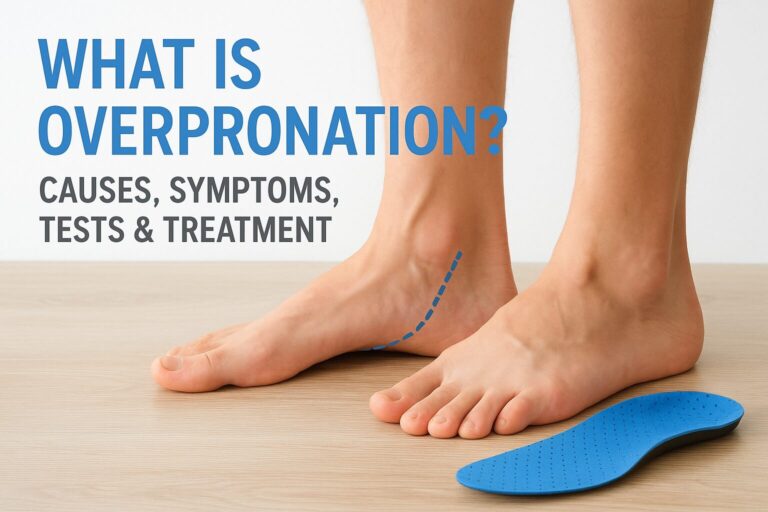
If you’ve been told your feet roll inward too much when you walk or run, you’ve probably searched what is overpronation, and landed on a pile of vague or contradictory answers. Here’s what matters: some degree of pronation is normal. It’s your foot’s natural shock-absorbing mechanism. The problem starts when that inward roll becomes excessive and repetitive, placing extra strain on your feet, ankles, knees and hips.
Overpronation is one of the most common biomechanical issues we assess at ModPod Podiatry across our Sydney clinics. We see it in runners chasing PBs, parents concerned about their child’s flat feet, and office workers who can’t shake persistent heel pain. It’s rarely a diagnosis on its own, it’s a movement pattern that, left unchecked, can contribute to a range of injuries over time.
This article breaks down what overpronation actually is, what causes it, how to spot it in your own gait, and the treatment options that work. Whether you’re trying to figure out if your foot mechanics are behind your pain or you’ve already been told you overpronate and want to understand your next steps, you’ll find straightforward answers below.
What overpronation looks like in the real world
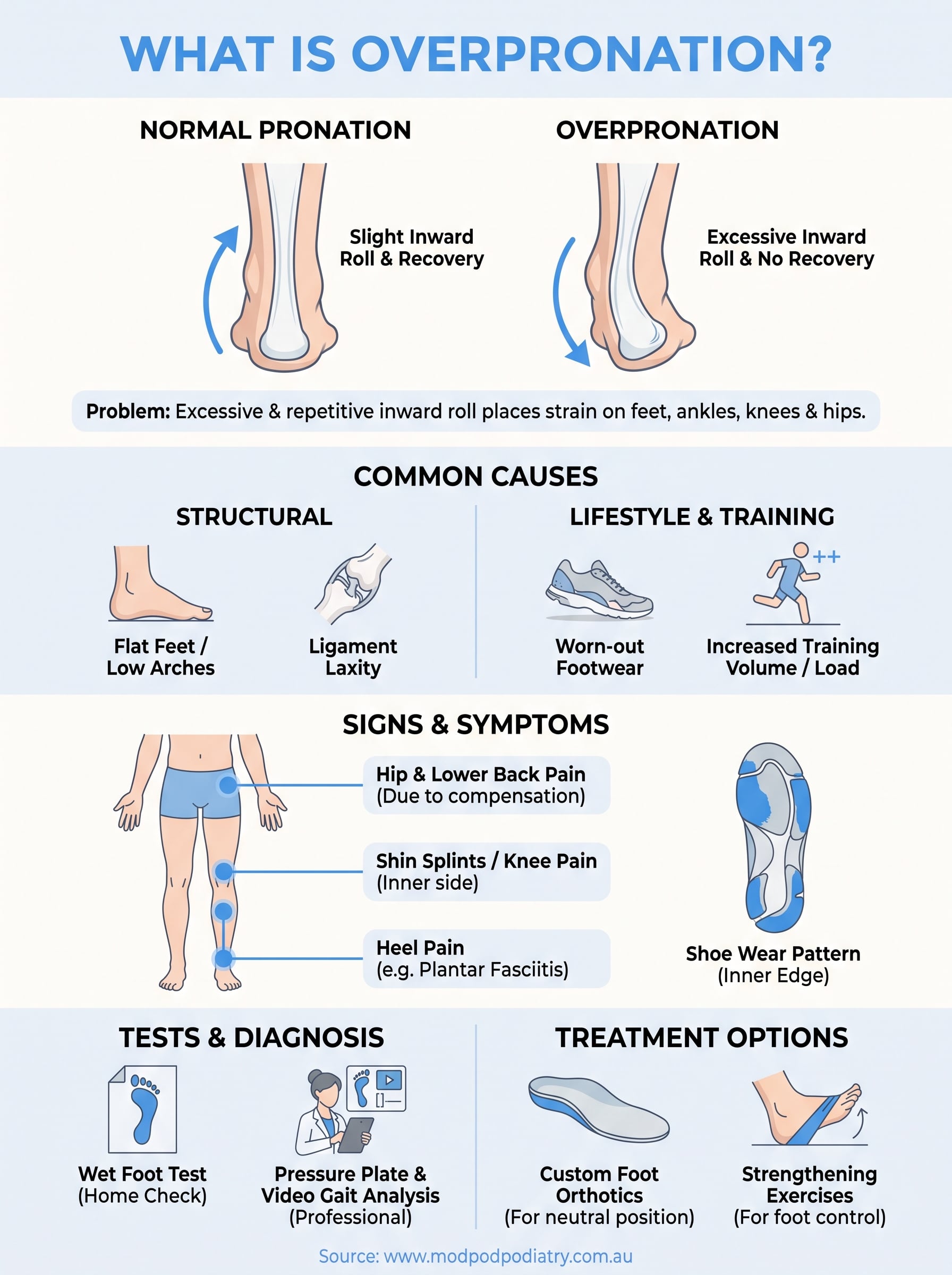
When you walk or run, your foot is designed to roll slightly inward after your heel strikes the ground. This motion, called pronation, distributes impact force across the foot before you push off. With overpronation, that inward roll goes too far and for too long, meaning your arch collapses more than it should and your foot doesn’t recover a neutral position before the next stride begins.
Overpronation isn’t about whether your foot rolls inward at all – it’s about how much it rolls and whether your foot can correct itself in time for the next step.
What it looks like from behind
If someone watched you walk from behind, they would see your heel and ankle tipping inward rather than staying vertical. Your Achilles tendon, instead of running in a straight line down to the heel, would appear to bow inward at the base. This is one of the most reliable visual signs of overpronation, and it’s one of the first things a podiatrist checks during a gait assessment.

Your foot’s arch also gives it away. In a normal stride, the arch lifts as your foot pushes off. With overpronation, the arch stays low or collapses further inward during push-off, placing uneven load on the inner structures of your foot.
What you might notice in your shoes and body
Your footwear is a useful indicator. Overpronators tend to wear down the inner edge of the heel and forefoot more heavily than the outer edge. Turn your runners over and compare the sole wear pattern. If the inside is significantly more degraded, that points clearly to overpronation.
Further up, because your arch collapses inward with each step, your shin and knee rotate slightly inward as well. That repetitive rotation can contribute to pain in your knees, shins, hips and lower back well before your feet start hurting.
Common causes of overpronation
Understanding what is overpronation means looking at why the foot rolls inward excessively in the first place. Causes generally fall into two categories: structural issues you’re born with or develop over time, and lifestyle factors that place more demand on the foot than it can handle.
Structural factors
The most common structural cause is flat feet or low arches, where the arch provides little resistance to inward collapse during weight-bearing. This foot shape means your arch flattens more with each step, allowing the ankle to tip further inward than it should.
Ligament laxity, where the connective tissue around your joints is naturally looser than average, also reduces your foot’s ability to hold a neutral position under load. You can inherit both flat feet and ligament laxity from your parents, making your family history directly relevant to how your feet move.
Flat feet don’t automatically cause pain, but they significantly increase the likelihood that overpronation will become a problem over time.
Lifestyle and training factors
Worn-out footwear is one of the most overlooked contributors. Once the midsole breaks down, it stops controlling how your foot moves through each stride, removing a key layer of mechanical support.
Sudden increases in training volume, prolonged standing on hard surfaces, and carrying excess body weight all amplify the load on your foot’s structures, turning a manageable movement pattern into one that causes injury.
Signs and symptoms to watch for
Part of understanding what is overpronation is knowing how it shows up in your body. The symptoms don’t always start in your feet. Because overpronation shifts load through your entire lower limb, pain often surfaces further up the chain before your feet register anything at all.
Pain that starts in the foot
Heel pain is the most common complaint, particularly along the inner heel where the plantar fascia attaches to the bone. Many people also report arch pain or a burning sensation along the inner border of the foot, especially after prolonged standing or during the first few steps out of bed in the morning.
If your heel pain is worst first thing in the morning, overpronation and plantar fasciitis are very often working together.
Pain that travels up the leg
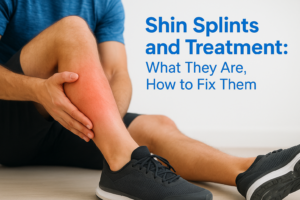
Overpronation places inward rotational stress on your shin and knee with every step you take. This frequently shows up as shin splints or aching pain on the inner side of the knee, both of which runners tend to dismiss as training load issues.
Your hips and lower back can also take the strain. When your foot collapses inward repeatedly, your pelvis compensates with each stride, creating cumulative tension that many people treat as a back or hip problem rather than a foot mechanics issue.
How to tell if you overpronate at home
You don’t need a clinic appointment to get a first indication of whether overpronation is affecting your movement. Two simple home checks give you useful clues about your foot mechanics before you see a podiatrist.
These checks give you a starting point, not a diagnosis. A podiatrist uses pressure plates and video gait analysis to assess your gait accurately.
The wet foot test
Wet the sole of your foot and step onto a piece of paper that holds a clear imprint. A normal arch leaves a band roughly half the width of your foot between the heel and forefoot. If your print shows almost the entire sole, your arch is collapsing significantly under load.
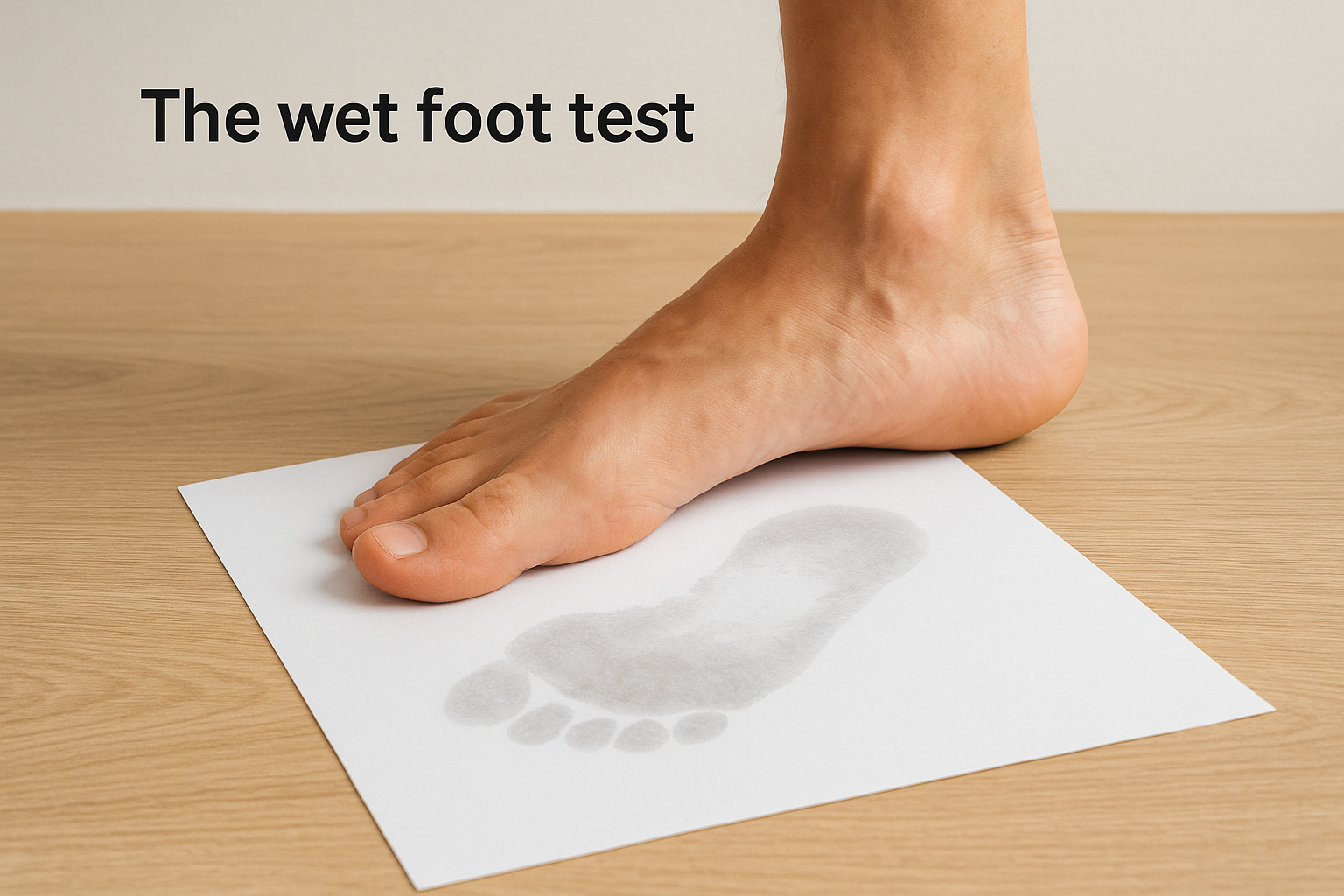
A full sole print strongly suggests overpronation. A very thin or absent midfoot band suggests the opposite, a high arch. Either pattern is worth raising with a podiatrist.
Check your shoes and posture
Turn your runners upside down and examine the sole. Heavy wear along the inner heel and forefoot is a reliable sign your foot rolls inward excessively with each stride.
Standing barefoot in front of a mirror also helps. If your ankle bones tilt inward and your arch sits flat against the floor, that pattern is exactly what a podiatrist looks for when assessing what is overpronation in a patient.
Tests, diagnosis and treatment options
When you visit a podiatrist to investigate what is overpronation in your specific case, the assessment goes well beyond a quick look at your feet. A thorough diagnosis gives your podiatrist the information needed to prescribe a treatment that addresses your mechanics, not just your symptoms.
What a podiatrist assesses
Your podiatrist will typically use a pressure plate or force plate system to measure exactly how your foot loads and unloads during walking and running. Video gait analysis adds a visual layer, allowing the clinician to review your movement frame by frame and identify where your foot control breaks down.
Getting an accurate assessment means your treatment targets the actual cause rather than managing symptoms indefinitely.
A biomechanical examination also looks at your ankle flexibility, arch height under load, and how your whole lower limb moves together, giving a complete picture of what is driving the overpronation.
Treatment options
Custom foot orthotics are one of the most effective interventions. A podiatrist prescribes these based on your pressure plate data and foot structure, positioning your foot in a more neutral position throughout each stride.
Targeted strengthening exercises for the intrinsic foot muscles and calf complex complement orthotics by building your foot’s ability to control its own movement over time.
Next steps for healthier feet
Now that you understand what is overpronation and how it affects your movement, the next step is finding out whether it’s driving your pain or limiting your performance. Overpronation rarely resolves on its own, and managing symptoms without addressing the underlying mechanics tends to lead to the same injuries recurring.
Start by checking your shoe wear and doing the wet foot test outlined above. Both checks take under five minutes and give you a clearer picture before you book in. If either points toward excessive inward rolling, or if you’re already dealing with heel pain, shin splints, or knee discomfort, a proper gait assessment is the most direct path to answers.
At ModPod Podiatry, our podiatrists use pressure plate analysis and video gait assessment to identify exactly what your feet are doing and prescribe treatment that fits your situation. Book an appointment online and get a clear answer about your foot mechanics.