
Choosing the best running shoes for long distance can make or break your training. Get it right, and you’ve got a shoe that supports you through those 20km+ weeks without complaint. Get it wrong, and you’re dealing with blisters, sore knees, or worse, an injury that pulls you off the road entirely. With dozens of models on the Australian market claiming to be built for high mileage, narrowing down the right pair takes more than just reading a spec sheet.
At ModPod Podiatry, our team assesses runners across five Sydney clinics using pressure plate gait analysis and biomechanical assessments. We see firsthand what happens when shoes don’t match a runner’s foot type, gait pattern, or training load. That clinical experience, built over 20+ years of treating thousands of patients, directly informs how we evaluate running shoes and what we recommend to the runners who walk through our doors.
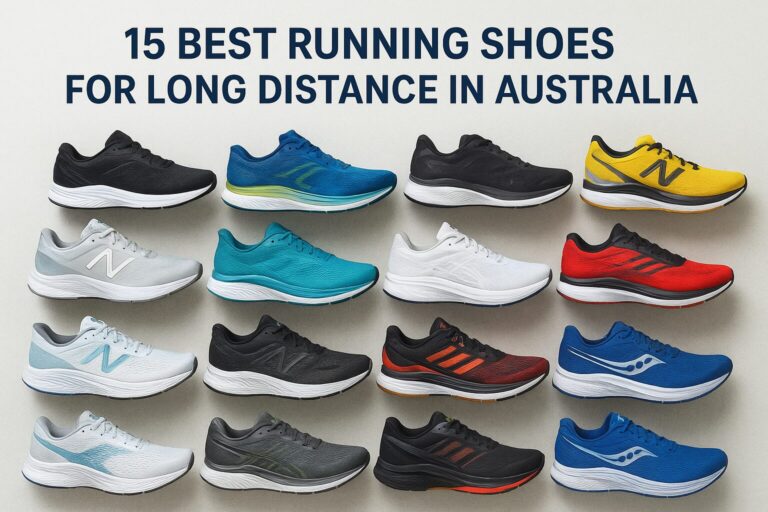
This guide breaks down 15 long distance running shoes available in Australia right now, covering everything from stack height and cushioning systems to durability across serious weekly kilometres. Whether you’re training for your first half marathon or grinding through ultra prep, we’ve assessed each shoe based on the features that actually matter for endurance running: comfort, support, shock absorption, and longevity. You’ll find the best running shoes of 2026 for every type of long run, from plush cushioned trainers to lighter options for chasing a personal best. Let’s get into it.
1. ModPod Podiatry Running Shoe and Gait Assessment
Before spending $200 to $300 on shoes, it’s worth knowing that the best running shoes for long distance are not the same for every runner. What cushions one person’s heel strike perfectly can overload another’s knees within two weeks. A professional gait assessment takes the guesswork out of that decision by matching a shoe to your actual biomechanics, not a generic foot shape category.
What the appointment covers
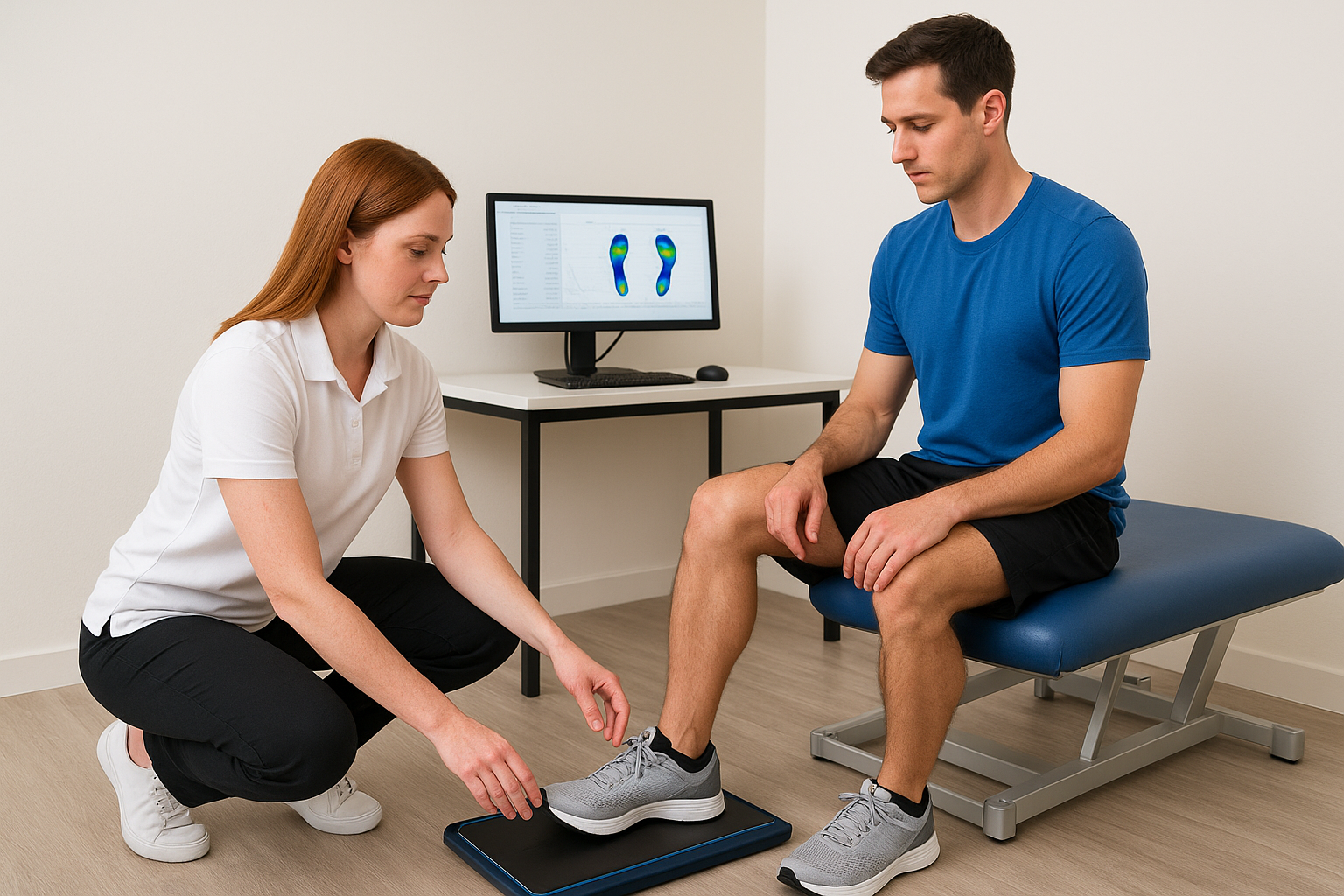
A ModPod Podiatry gait assessment is led by an APodA-registered podiatrist who examines your foot structure, arch profile, ankle mobility, and loading patterns across the full stride cycle. We use pressure plate analysis to capture real-time data on how you move, which reveals over-pronation, supination, heel striking tendencies, and any asymmetries between your left and right foot.
The assessment covers:
- Foot posture and arch type classification
- Over-pronation or supination patterns under load
- Heel strike and forefoot loading distribution
- Side-to-side symmetry through the gait cycle
Best for
This service suits runners who log consistent weekly kilometres through half marathon or marathon training, and those who have never had their gait formally assessed. It’s particularly valuable if you’ve dealt with recurring pain in your feet, knees, or hips during or after runs, or if you’ve worked through multiple pairs of shoes without ever landing on something comfortable.
If you keep rotating through shoes hoping the next pair solves the problem, a clinical assessment identifies the mechanical cause rather than masking it.
What you’ll walk away with
After your appointment, you receive a written summary of your gait findings with specific shoe type and category recommendations tied directly to your mechanics. Your podiatrist will also advise whether custom orthotics could address any underlying structural issues contributing to discomfort or inefficiency.
Locations across Sydney
ModPod Podiatry runs gait assessments across five Sydney clinic locations: Sydney CBD, Mosman, Dee Why, Rose Bay, and North Ryde. Same-week appointments are generally available, and you can book directly online through the ModPod Podiatry website without needing a GP referral.
Typical pricing in Australia
Initial consultations are priced between $110 and $140, depending on the clinic location and appointment type. Runners with private health insurance extras cover can claim through on-site HICAPS at the time of their appointment, and eligible patients with a GP referral may access Medicare EPC rebates to offset the cost.
2. Adidas Adizero Evo SL
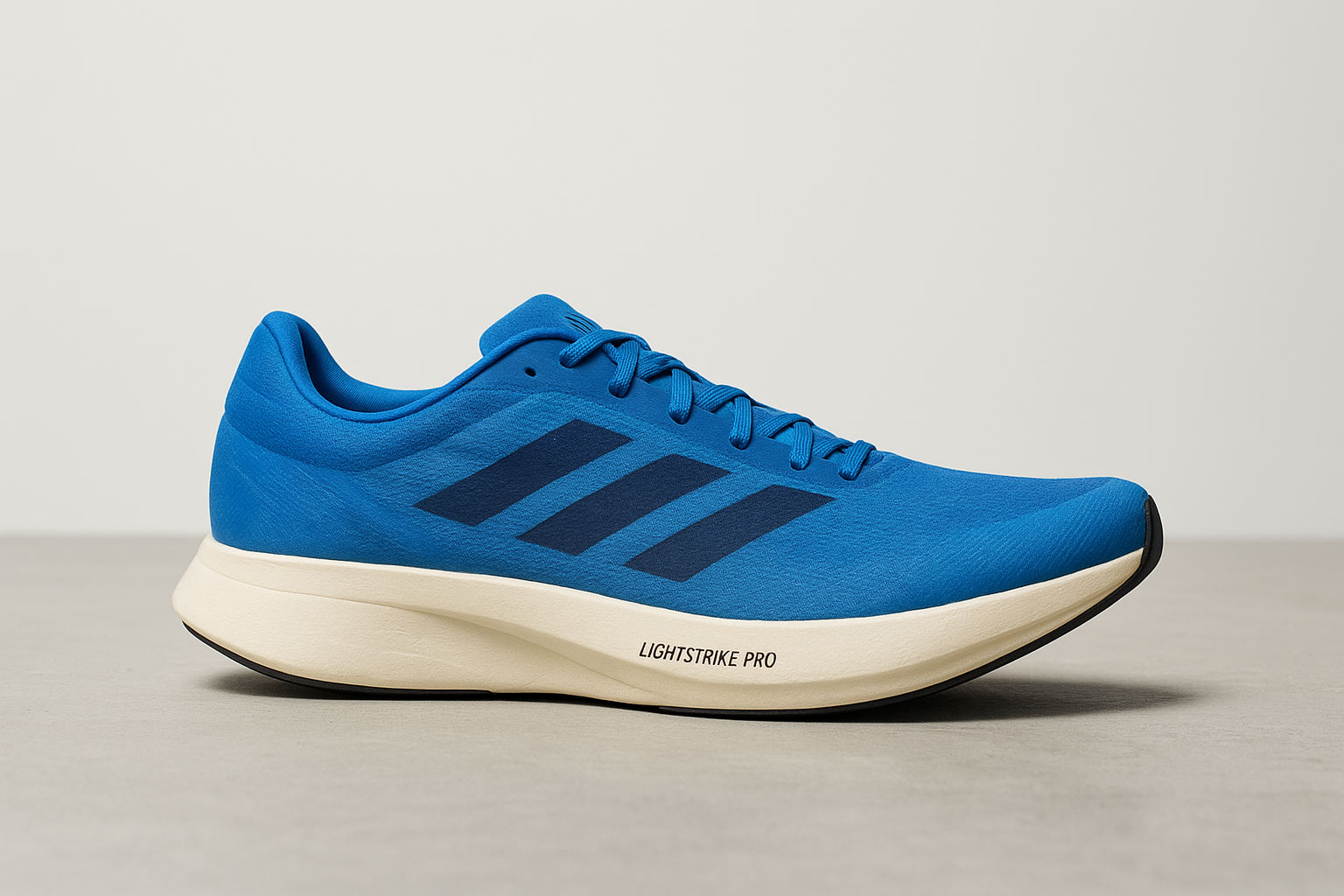
The Adidas Adizero Evo SL sits in a sweet spot for runners who want lightweight performance in a daily trainer without the price of a full carbon race shoe. It uses Light Strike Pro foam throughout the midsole, which delivers a springy, responsive ride that holds up across longer efforts without feeling punishing by the final kilometres.
Ride and cushioning
The Adizero Evo SL offers a firm-to-moderate cushioning feel that leans toward responsiveness rather than plush comfort. The Light Strike Pro midsole returns energy efficiently, which makes the shoe feel faster than a standard daily trainer. If you prefer a softer, more forgiving platform for your long distance running, this one will feel lean compared to max-cushion alternatives.
The Evo SL suits runners chasing pace on long runs more than those prioritising comfort on easy recovery days.
Best for
This shoe works well for tempo long runs and marathon-pace training blocks where you want a shoe that rewards a quicker turnover. It suits neutral to mild pronators logging moderate to high weekly kilometres who prioritise a performance-oriented feel over cushioned comfort.
Watch-outs
Runners with a history of plantar fasciitis or metatarsal pain should approach this shoe cautiously given its firmer ride. It also runs narrow through the forefoot, which can cause friction on longer efforts if your foot spreads under load.
Fit notes
The fit runs true to size but narrow. Runners with wider feet or a broader forefoot should try before they buy or size up half a size for better comfort across 20km-plus sessions.
Typical price in Australia
Expect to pay $220 to $260 AUD at major Australian sports retailers.
3. New Balance 1080 v15
The New Balance 1080 v15 is one of the most consistent high-mileage daily trainers on the Australian market right now. It uses Fresh Foam X midsole technology, which New Balance has refined across multiple versions to deliver a plush, cushioned ride that holds up well across long training weeks without becoming sluggish underfoot.
Ride and cushioning
The 1080 v15 delivers a notably soft and forgiving ride that suits runners who prioritise comfort on long, easy efforts. The Fresh Foam X midsole absorbs impact effectively across a range of paces, making it one of the best running shoes for long distance training days where the goal is accumulating kilometres rather than chasing speed.
The 1080 v15 rewards patience on easy days, letting you build weekly volume without your legs paying for it by the weekend.
Best for
This shoe suits neutral runners and mild overpronators training for half marathons or marathons who want a reliable, cushioned platform for their high-mileage weeks. It also works well for runners returning from injury who need a softer landing to rebuild load tolerance gradually.
Watch-outs
Runners with significant pronation under load may find the softer midsole feels slightly unstable. The shoe also carries more weight than performance-oriented trainers, so if you’re targeting faster long-run paces, you may find it limits your natural turnover.
Fit notes
Sizing on the 1080 v15 runs true to size with a generous toe box that accommodates foot splay well on longer efforts. Narrow-footed runners may want to try a half size down to avoid excess movement in the heel.
Typical price in Australia
Expect to pay $280 to $320 AUD at major Australian sports retailers.
4. ASICS Novablast 5
The ASICS Novablast 5 brings a bouncy, energetic ride to the daily trainer category that stands out from most cushioned long-distance options. ASICS rebuilt this version around their FF Blast+ Eco midsole foam, pushing the stack height up while keeping the overall weight surprisingly manageable for a shoe with this much cushion underfoot.
Ride and cushioning
The Novablast 5 delivers a distinctly springy feel that sits between a pure cushioned trainer and a responsive race shoe. The FF Blast+ Eco foam compresses and rebounds quickly, so the shoe rewards a midfoot to forefoot strike pattern rather than punishing slow, heavy heel contact. On longer efforts, this translates to legs that feel less fatigued by the final kilometres.
The Novablast 5 is one of the few cushioned trainers that genuinely feels fun to run in rather than just protective.
Best for
This shoe suits neutral runners chasing comfortable long distance running across moderate weekly volumes. It works particularly well for marathon training cycles where you need a trainer that handles both easy long runs and slightly faster aerobic efforts without switching shoes.
Watch-outs
Runners who overpronate significantly may find the rocker geometry and softer midsole combination feels unstable under load. The outsole also wears faster than firmer trainers on rough Australian bitumen or concrete surfaces, so inspect it regularly if you train on hard roads.
Fit notes
The Novablast 5 fits true to size with a roomy toe box that handles foot splay well. Runners with a narrower heel may notice some movement during longer efforts, so experiment with lacing techniques if needed.
Typical price in Australia
Expect to pay $230 to $270 AUD at major Australian sports retailers. ASICS has since released the Novablast 6, so check which version your retailer is stocking. The Novablast 5 is often discounted as stock clears.
5. ASICS Gel Kayano 32
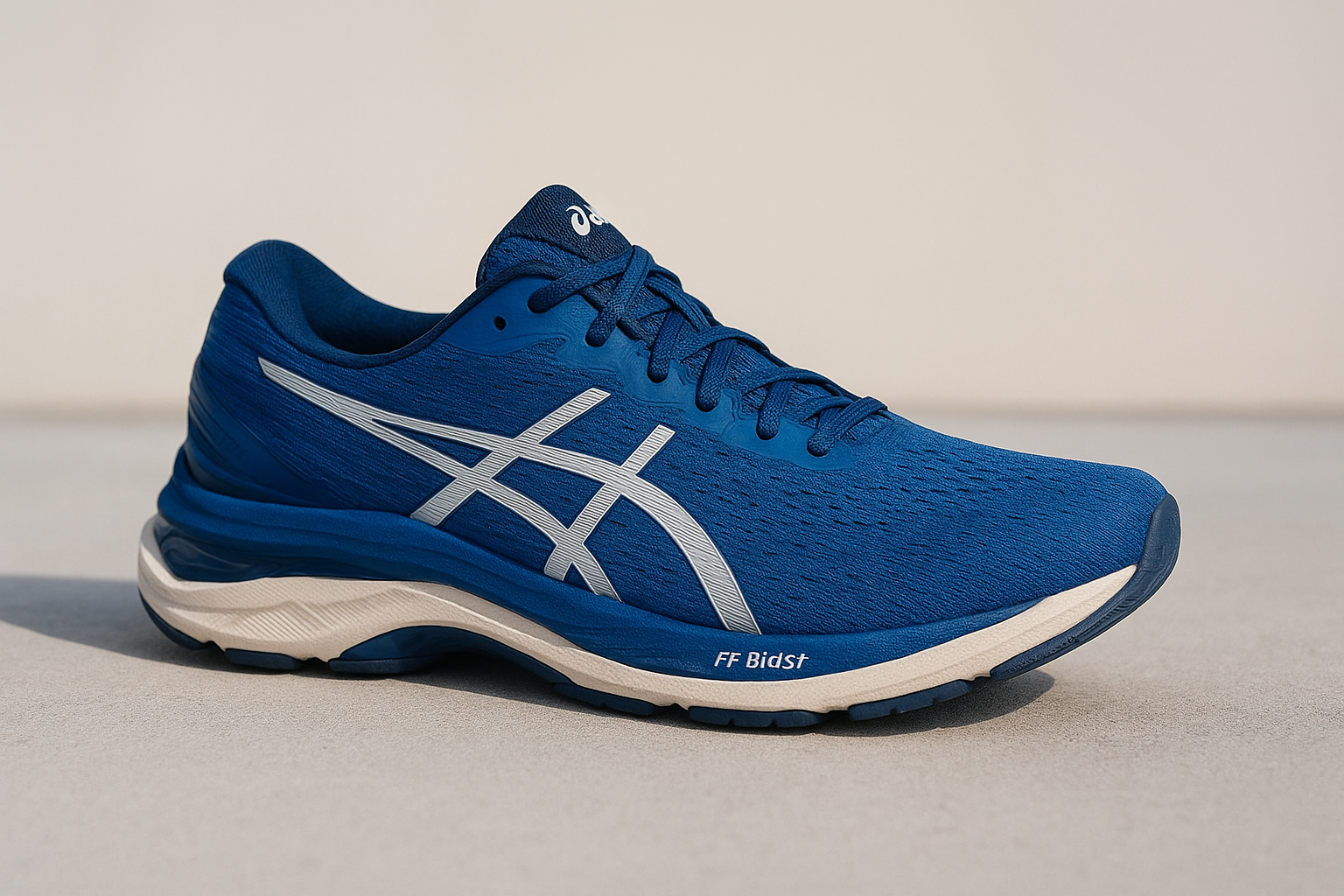
The ASICS Gel Kayano 32 is one of the most established stability trainers in the long-distance running category. Built around ASICS’ 4D Guidance System and a dual-density midsole, it delivers structured support for runners who need help controlling overpronation across high-mileage training weeks.
Ride and cushioning
FF Blast+ midsole foam combined with rear-foot Gel cushioning creates a ride that feels protective and controlled rather than bouncy. The cushioning absorbs impact well across sustained efforts, making the Kayano 32 one of the best running shoes for long distance training for anyone who needs both stability and comfort over the kilometres.
Best for
This shoe works best for moderate to severe overpronators building through half marathon or marathon training blocks. It also suits the following runners particularly well:
- Heavier runners who need extra structural support as fatigue builds late in long runs
- Runners returning from knee or ankle issues who need a more controlled platform
- Those who have worn through multiple neutral trainers without resolving discomfort
If overpronation has caused you knee or ankle soreness in previous training cycles, the Kayano 32’s stability framework gives you a more controlled base to build volume on.
Watch-outs
Neutral runners will find the medial post feels intrusive on longer efforts. The shoe also carries noticeable weight compared to lighter daily trainers, which can drag on your natural cadence and turnover during faster long-run paces.
Fit notes
Sizing runs true to size with a standard width that suits most foot shapes. Runners with a wider forefoot should look for the wide-width version, which ASICS offers in select colourways.
Typical price in Australia
Expect to pay $280 to $330 AUD at major Australian sports retailers.
6. Saucony Endorphin Speed 5
The Saucony Endorphin Speed 5 sits at the crossroads of daily trainer and race shoe, built around a nylon speed plate and PWRRUN PB foam that give it a propulsive, forward-driving feel without the full carbon price tag. It’s one of the most versatile long-distance options available to Australian runners right now.
Ride and cushioning
Built to reward efficient form, the Endorphin Speed 5 delivers a fast, snappy ride that pushes energy back into each stride rather than absorbing it passively. The PWRRUN PB foam keeps the overall weight low while still offering enough underfoot protection for sustained long-distance efforts. For runners looking for the best running shoes for long distance training at moderate to quick paces, this shoe consistently punches above its price point.
The Speed 5 handles marathon-pace long runs and threshold workouts equally well, which makes it one of the most training-versatile shoes in this list.
Best for
This shoe suits neutral runners building through half marathon or marathon training who want one shoe flexible enough to cover both aerobic long runs and faster workout days. It also works well for runners moving up in distance from 10km who need more propulsion and responsiveness than a standard cushioned trainer offers.
Watch-outs
On slower recovery-paced long runs, the firmer platform can feel fatiguing compared to max-cushion alternatives. Runners managing plantar fasciitis or forefoot sensitivity should test carefully before committing to high-mileage weeks in this shoe.
Fit notes
Sizing runs true to size with a moderately snug midfoot and a slightly narrow toe box. Runners with wider feet should try a half size up or check if a wide-width version is available.
Typical price in Australia
Expect to pay $250 to $290 AUD at major Australian sports retailers.
7. Nike Vomero 18
The Nike Vomero 18 is Nike’s answer to the max-cushion daily trainer category, rebuilt around a full-length ReactX foam midsole that delivers one of the softest underfoot experiences Nike has produced. It is a shoe built for runners who want serious protection on long, slow efforts without sacrificing too much weight.
Ride and cushioning
ReactX foam in the Vomero 18 delivers a plush, deeply cushioned ride that absorbs impact effectively across sustained long-distance efforts. Unlike firmer performance trainers, this shoe leans into comfort rather than energy return, making it one of the best running shoes for long distance easy days where your goal is protecting your legs for the next session.
If you stack heavy training weeks back to back, the Vomero 18’s forgiving platform gives your joints meaningful recovery between hard efforts.
Best for
This shoe suits neutral runners logging consistent high-mileage weeks who prioritise cushioning and comfort over pace. It handles marathon training long runs particularly well when the focus is staying comfortable across 25km to 35km efforts.
Watch-outs
The soft midsole can feel unstable for runners who overpronate under fatigue. Runners chasing faster long-run paces may also find the cushioning stack dampens their natural turnover and makes the shoe feel sluggish above aerobic effort levels.
Fit notes
Sizing runs true to size with a generously wide toe box that accommodates natural foot splay well. Narrow-footed runners may notice some lateral movement in the forefoot over longer sessions, so experiment with your lacing before committing to a full long run.
Typical price in Australia
Expect to pay $250 to $290 AUD at major Australian sports retailers.
8. ASICS Superblast 3
The ASICS Superblast 3 takes a different approach to the max-cushion trainer category by stacking a massive column of FF Blast+ Eco foam under your foot without any carbon or nylon plate. The result is a shoe built to carry you through serious volume with a ride that feels both light and protective at the same time.
Ride and cushioning
The Superblast 3 delivers a soft yet surprisingly responsive ride thanks to its thick midsole geometry and the rebounding properties of FF Blast+ Eco foam. For a shoe with this much stack height, it handles quicker paces better than you’d expect. It sits among the best running shoes for long distance if your priority is accumulating big weekly kilometres on a forgiving platform.
The Superblast 3 is one of the few high-stack trainers that doesn’t punish you for running at a decent pace, making it a genuine workhorse across a full training block.
Best for
This shoe suits neutral runners building serious marathon or ultra marathon training volume who want one shoe capable of covering both easy long runs and moderate aerobic efforts. Runners who find carbon-plated shoes too aggressive for daily training will appreciate the cushioned but controlled feel of the Superblast 3.
Watch-outs
The tall stack height can feel unstable on cambered roads or uneven surfaces, so stick to flat footpaths and tracks. Significant overpronators may find the lack of medial support insufficient across long efforts as fatigue sets in.
Fit notes
Sizing runs true to size with a roomy toe box that handles natural foot splay comfortably across long sessions.
Typical price in Australia
Expect to pay $280 to $330 AUD at major Australian sports retailers.
9. Saucony Triumph 23
The Saucony Triumph 23 is a premium high-cushion daily trainer that has earned a loyal following among runners who want serious comfort across long efforts. Saucony rebuilt this version around their PWRRUN+ cushioning compound, which delivers a noticeably softer and more responsive ride than previous iterations without adding significant weight to the shoe.
Ride and cushioning
The Triumph 23 sits at the plush end of the daily trainer spectrum, with a forgiving midsole that absorbs impact well across sustained long-distance running. The PWRRUN+ foam compresses smoothly under load and rebounds efficiently, so the shoe doesn’t feel dead underfoot by the time you hit the final kilometres of a long run. Among the best running shoes for long distance easy and aerobic paces, the Triumph 23 consistently ranks among the most comfortable options available in Australia.
If your legs feel beaten up heading into a long run, the Triumph 23’s midsole takes the edge off rough surfaces without making you feel disconnected from the ground.
Best for
This shoe works best for neutral runners accumulating high weekly volume through half marathon or marathon training who prioritise comfort over pace. Runners who spend extended time on their feet during longer weekend efforts will appreciate how well the foam holds up without compressing flat.
Watch-outs
Runners with significant overpronation will not find adequate medial support in this shoe. The softer midsole can also feel unstable on cambered road sections or technical trail crossings, so keep it on flat surfaces.
Fit notes
The Triumph 23 fits true to size with a generously padded collar and a roomy toe box that suits most foot shapes well on longer efforts.
Typical price in Australia
Expect to pay $280 to $320 AUD at major Australian sports retailers.
10. Hoka Clifton 10
The Hoka Clifton 10 is one of the most recognisable high-cushion daily trainers in Australia, and for good reason. Hoka rebuilt this version with an updated compressed EVA midsole that keeps the shoe’s signature plush feel intact while improving the overall responsiveness compared to earlier iterations.
Ride and cushioning
The Clifton 10 delivers a smooth, well-cushioned ride that absorbs impact consistently across long, sustained efforts. The midsole geometry promotes a natural foot rocker motion, so your stride transitions efficiently from heel to toe without requiring you to think about it. For runners searching for the best running shoes for long distance easy days, the Clifton 10 is a dependable choice that protects your legs across high-volume training weeks.
The Clifton 10’s rocker profile does a lot of the mechanical work for you, which matters when your form starts breaking down late in a long run.
Best for
This shoe suits neutral runners and mild overpronators who prioritise comfort and impact protection over pace during their longer aerobic efforts. It handles consistent weekly volumes of 50km or more without the midsole compressing noticeably over time.
Watch-outs
Runners with significant overpronation will not find adequate medial support in the Clifton 10’s neutral platform. The shoe also feels less dynamic at faster paces, so it works better as a dedicated easy-day trainer than a versatile all-rounder.
Fit notes
The Clifton 10 fits true to size with a wide, accommodating toe box that suits runners whose feet splay under load during longer sessions.
Typical price in Australia
Expect to pay $240 to $280 AUD at major Australian sports retailers.
11. Hoka Bondi 9
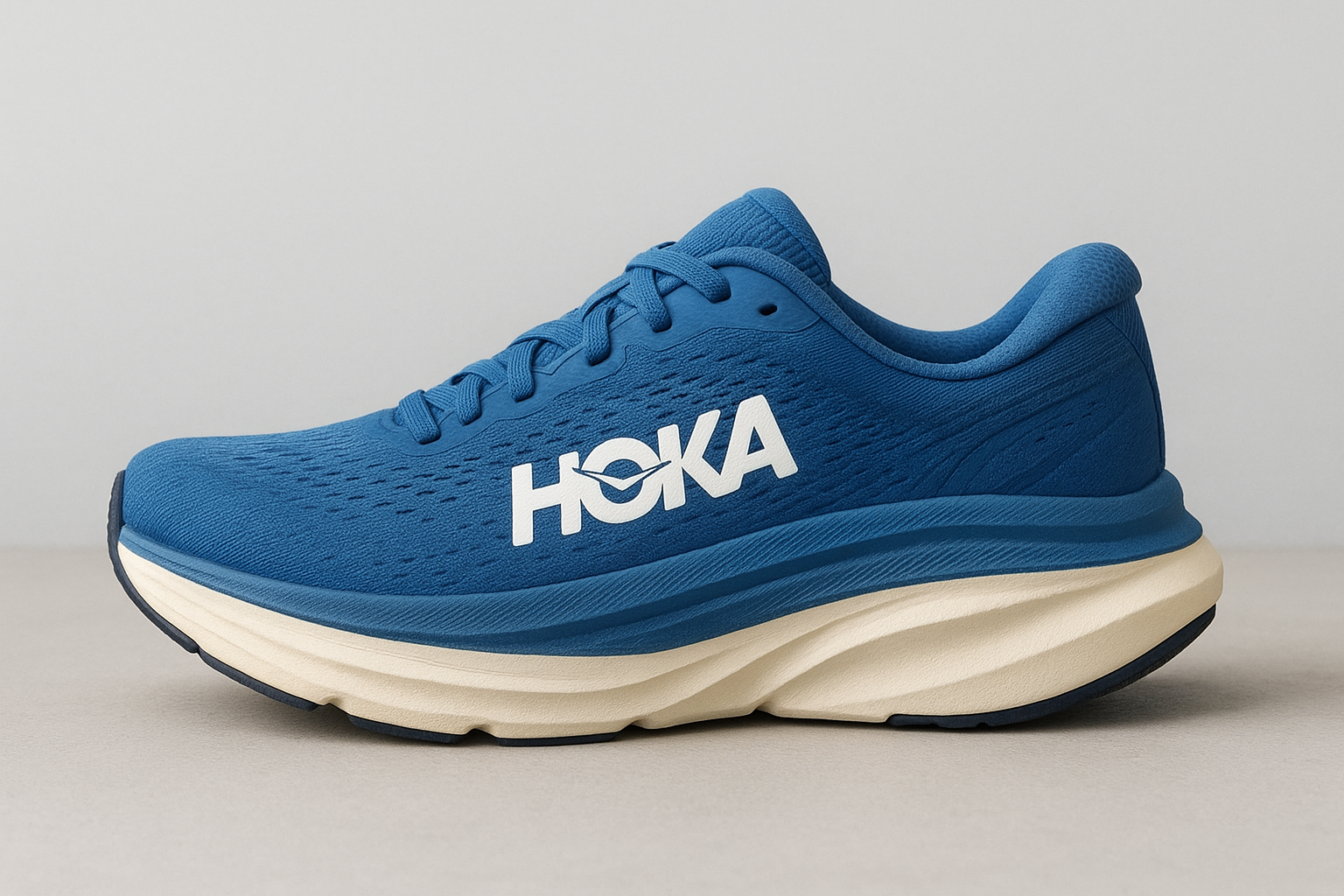
The Hoka Bondi 9 is Hoka’s most cushioned road trainer in their lineup, and it earns its reputation as a workhorse for runners who want maximum protection across long kilometres. Hoka updated this version with a refreshed extended EVA midsole and an improved Meta-Rocker geometry that makes the ride feel smoother and more guided than the Bondi 8.
Ride and cushioning
The Bondi 9 delivers the softest, most protective ride in Hoka’s entire road range. The thick midsole stack absorbs impact aggressively across sustained long efforts, making it one of the best running shoes for long distance easy days when your legs are already carrying accumulated fatigue. The Meta-Rocker geometry keeps your foot transitioning forward without requiring much mechanical effort from your ankle, which matters late in a long run.
The Bondi 9 is built for runners whose primary goal is protecting their joints across heavy training weeks rather than chasing faster times.
Best for
This shoe suits heavier runners and those recovering from lower limb injuries who need maximum impact absorption during their long aerobic sessions. It handles consistent high-volume training particularly well for runners whose knees or hips struggle on harder surfaces.
Watch-outs
The tall stack height reduces ground feel significantly, which some runners find disorienting on longer efforts. Overpronators should note that the Bondi 9 offers minimal medial structure, so it is not the right choice if you need stability support through fatigue.
Fit notes
The Bondi 9 fits true to size with a wide, well-padded toe box that accommodates natural foot splay comfortably across long sessions.
Typical price in Australia
Expect to pay $280 to $320 AUD at major Australian sports retailers.
12. Brooks Ghost 18
The Brooks Ghost 18 continues one of the most trusted lines in road running, built around Brooks’ DNA Loft v3 cushioning that delivers a smooth, consistent ride across a wide range of paces and weekly volumes. It sits firmly in the neutral daily trainer category, making it one of the most accessible long-distance options for runners who want reliable performance without overthinking foam chemistry or plate technology.
Ride and cushioning
The Ghost 18 delivers a balanced, medium-cushioned ride that sits between the plush max-stack alternatives and the firmer performance trainers. DNA Loft v3 foam adapts to your stride pattern across the session, so the shoe feels consistent whether you are five kilometres in or twenty-five. Runners searching for the best running shoes for long distance training that covers a range of effort levels will find the Ghost 18 handles easy aerobic days and moderate progression runs without needing to swap shoes mid-week.
The Ghost 18’s consistent cushioning profile makes it a reliable choice across an entire training block, not just selected sessions.
Best for
This shoe suits neutral runners and mild overpronators building volume through half marathon or marathon training who want a dependable, versatile daily trainer. It works particularly well for runners newer to long-distance training who need a forgiving platform that does not demand perfect running form to stay comfortable through 20km-plus efforts.
Watch-outs
Runners with significant overpronation will find the Ghost 18 lacks the medial structure to control their gait under fatigue. The moderate cushioning stack also means heavier runners or those with joint sensitivity may prefer a higher-stack alternative for their longest sessions.
Fit notes
The Ghost 18 fits true to size with a comfortable, accommodating toe box that handles natural foot splay well across longer sessions.
Typical price in Australia
Expect to pay $230 to $270 AUD at major Australian sports retailers.
13. Brooks Adrenaline GTS 25
The Brooks Adrenaline GTS 25 is the latest iteration of one of Australia’s most reliable stability trainers for long-distance running. Brooks rebuilt this version around their GuideRails support system and a refined DNA Loft v3 midsole, producing a shoe that controls excess movement without forcing your foot into an artificially rigid motion path.
Ride and cushioning
The Adrenaline GTS 25 delivers a smooth, cushioned ride that balances impact absorption with enough responsiveness to feel engaged across longer aerobic sessions. The DNA Loft v3 foam performs consistently across the full duration of a long run, so your comfort level at kilometre 25 closely matches what you felt at kilometre five. Among the best running shoes for long distance training for runners who need both support and comfort, the Adrenaline GTS 25 holds up well through heavy training weeks.
The GuideRails system works by supporting your knees rather than simply correcting your feet, which makes it a more biomechanically sound stability solution than traditional medial post designs.
Best for
This shoe suits moderate overpronators building through half marathon or marathon training who need structural support without the rigidity of older stability designs. It also works well for runners who have experienced knee or hip discomfort linked to excess inward rolling through the gait cycle.
Watch-outs
Neutral runners will find the GuideRails unnecessary and potentially intrusive across longer sessions. The shoe also carries more weight than comparable neutral trainers, which can affect natural cadence on faster long-run efforts.
Fit notes
The Adrenaline GTS 25 fits true to size with a comfortable, standard-width toe box that suits most foot shapes across long training sessions.
Typical price in Australia
Expect to pay $240 to $280 AUD at major Australian sports retailers.
14. PUMA Velocity Nitro 4
The PUMA Velocity Nitro 4 brings genuine competition to a category long dominated by the bigger running brands. Built around PUMA’s NITRO Elite foam, it delivers a performance-oriented daily trainer that punches well above its price point for Australian runners chasing high-mileage consistency on a tighter budget.
Ride and cushioning
The Velocity Nitro 4 delivers a firm-to-moderate cushioning feel that leans toward responsiveness rather than plush protection. The NITRO Elite foam provides solid energy return across sustained efforts, making it one of the more engaging daily trainers at this price level. For runners searching for the best running shoes for long distance training who want a capable shoe without paying premium prices, this model is worth serious consideration.
Best for
This shoe suits neutral runners building through half marathon training who want a responsive platform for moderate-to-faster aerobic long runs. It also works well for runners transitioning from shorter distances who need a durable daily trainer that handles consistent weekly kilometres without breaking down.
Watch-outs
The firmer midsole can feel taxing on your legs across slower recovery-paced long runs compared to higher-stack alternatives. Runners with a history of plantar fasciitis or forefoot sensitivity should test carefully before committing to heavy training volume in this shoe.
The Velocity Nitro 4 rewards efficient form, so it suits runners who already have reasonable running mechanics rather than those still developing their stride.
Fit notes
The Velocity Nitro 4 fits true to size with a moderately snug midfoot and a standard-width toe box that suits most foot shapes across longer training sessions.
Typical price in Australia
Expect to pay $190 to $230 AUD at major Australian sports retailers.
15. ASICS Dynablast 5
The ASICS Dynablast 5 rounds out this list as one of the lightest and most energetic daily trainers ASICS produces. Built around a full-length FF Blast+ midsole, it delivers a bouncy, responsive ride that suits runners who want speed and efficiency on their long efforts rather than maximum cushioning protection.
Ride and cushioning
FF Blast+ foam throughout the Dynablast 5 creates a firm, responsive cushioning feel that prioritises energy return over plush comfort. The midsole rebounds quickly underfoot, rewarding a natural midfoot to forefoot strike pattern and keeping your stride feeling light across the full duration of a long run. For runners searching for the best running shoes for long distance efforts at faster aerobic paces, the Dynablast 5 delivers a training-day feel that sits much closer to a race shoe than a standard daily trainer.
The Dynablast 5 suits runners who want their long runs to feel sharp rather than comfortable, making it a strong choice for race-pace rehearsal sessions.
Best for
This shoe works best for lightweight neutral runners targeting half marathon or marathon performance who want a fast, responsive platform for their aerobic long runs and progression efforts.
Watch-outs
Runners with a history of heel pain or plantar fasciitis should approach this shoe carefully given its firmer midsole and lower stack height compared to max-cushion alternatives. Outsole durability can also wear faster on abrasive Australian road surfaces under high weekly kilometres.
Fit notes
Sizing on the Dynablast 5 runs true to size with a snug midfoot and a moderately narrow toe box that suits runners with a standard foot width best.
Typical price in Australia
Expect to pay $200 to $240 AUD at major Australian sports retailers.
Next Steps
Finding the best running shoes for long distance comes down to matching the shoe to your specific mechanics, not just picking the most popular model on the shelf. Every shoe on this list has real strengths, but none of them work equally well for every runner. Foot type, gait pattern, and training load all influence which option will serve you across a full marathon prep block without causing problems along the way.
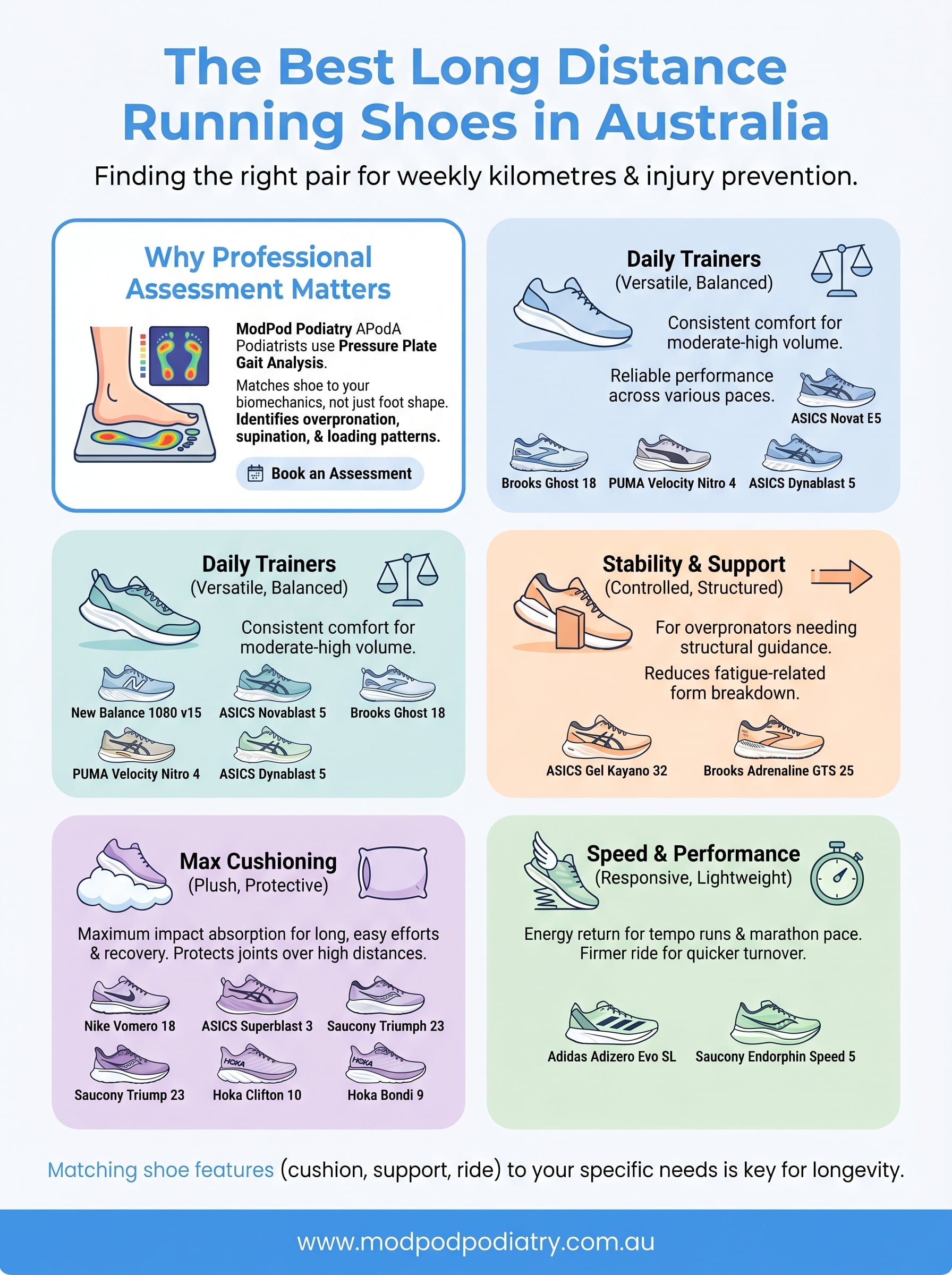
Here is a quick way to narrow the list down by what you need most:
- Support with a comfortable ride: The ASICS Gel Kayano 32 and Brooks Adrenaline GTS 25 pair stability with cushioning that holds up past 20km. If you have flat feet or overpronate, start here.
- Lasting comfort without bulk: The Brooks Ghost 18, ASICS Novablast 5 and Hoka Clifton 10 are well cushioned without feeling clunky. The Dynablast 5 is lighter again if you want less shoe underfoot.
- Comfort for daily mileage: The New Balance 1080 v15, Saucony Triumph 23 and Hoka Bondi 9 are the softest options for stacking easy kilometres.
- Personal bests: The Adidas Adizero Evo SL, Saucony Endorphin Speed 5 and ASICS Dynablast 5 give you the pop for faster long runs and race-pace rehearsal.
Are premium running shoes worth it for long-distance comfort? Often, yes, but only up to a point. The $280 to $320 shoes on this list typically use newer foams that stay springy for longer, which matters if you run 40km or more a week. The PUMA Velocity Nitro 4 at $190 to $230 shows you don’t need to pay top dollar for a solid daily trainer. Fit and mechanics matter more than price. A $300 shoe that doesn’t suit your gait will cost you more than a $200 one that does. Plan to replace any shoe after roughly 600 to 800km, whatever you paid.
If you are unsure where to start, a professional gait assessment takes the uncertainty out of the decision entirely. Our APodA-registered podiatrists analyse your stride using pressure plate technology and give you clear, specific shoe recommendations based on your actual biomechanics rather than a generic category. You also walk away knowing whether custom orthotics could address any underlying issues contributing to discomfort or inefficiency. Book a running assessment at ModPod Podiatry and get a recommendation you can trust.