

You kick off your shoes after a long day and the smell hits, unmistakable and unpleasant. If you’ve ever wondered what causes foot odour, the short answer is bacteria breaking down sweat on your skin. But the full picture involves several overlapping factors, from the type of footwear you choose to underlying fungal infections that many people don’t realise they have.
Foot odour is one of the most common complaints we hear at ModPod Podiatry, and it’s far more than a social inconvenience. Persistent smell can signal conditions like hyperhidrosis, tinea, or bacterial overgrowth that benefit from proper assessment and targeted treatment rather than just masking the problem with sprays or powders.
This article breaks down exactly why feet smell, the biology of sweat glands, the bacteria responsible, and the role fungal infections play. We’ll also cover practical, evidence-based solutions you can start using straight away, plus when it makes sense to see a podiatrist for professional help.
What foot odour is and why it happens
Foot odour, known medically as bromodosis, is a persistent or intermittent smell coming from the feet that ranges from mildly noticeable to strongly unpleasant. It’s not the sweat itself that smells. Your feet produce sweat to regulate temperature, and sweat is largely odourless on its own. The smell comes from bacteria breaking down the organic compounds in that sweat, producing volatile fatty acids and other compounds that create the characteristic odour.
Why your feet produce more sweat than most body parts
Your feet contain roughly 250,000 sweat glands, making them one of the highest concentrations of sweat glands anywhere on the body. This means your feet produce a significant amount of moisture throughout the day, particularly during physical activity or in warm conditions. When that moisture gets trapped inside closed footwear, you create exactly the warm, dark, damp environment that bacteria thrive in.
The combination of sweat, warmth, and enclosed shoes creates near-ideal conditions for bacterial growth, which is why foot odour is so common compared to other areas of the body.
Understanding what causes foot odour starts with recognising that this is a biological process, not simply a hygiene failure. Some people naturally produce more sweat than others, some wear shoes for longer periods, and some have skin conditions that accelerate bacterial or fungal activity on their feet.
Why the smell varies from person to person
The specific odour you experience depends on which bacteria are most active on your skin, how much you sweat, your footwear choices, and whether any underlying infections are present. Isovaleric acid, produced by bacteria like Staphylococcus epidermidis, creates the sharp, cheese-like smell many people recognise. Other compounds produce different scents depending on the bacterial population on your skin, which varies considerably from person to person.
The biology: sweat, bacteria and skin cells
Understanding what causes foot odour at a biological level helps explain why standard deodorants don’t work on feet the way they do elsewhere. Your skin hosts a natural microbiome of bacteria, and this community thrives in the warm, moist conditions inside your shoes. When bacteria metabolise the proteins and fatty acids in your sweat, they release volatile compounds including isovaleric acid and methanethiol, which produce the distinctive smell most people associate with foot odour.
How bacteria produce odour compounds
The primary culprits belong to genera including Staphylococcus and Corynebacterium, both of which are normal residents of healthy skin. They become problematic when moisture levels rise and allow their populations to expand rapidly. Brevibacterium linens is particularly responsible for the sharp, cheese-like smell, as it produces the same compounds found in aged cheeses.
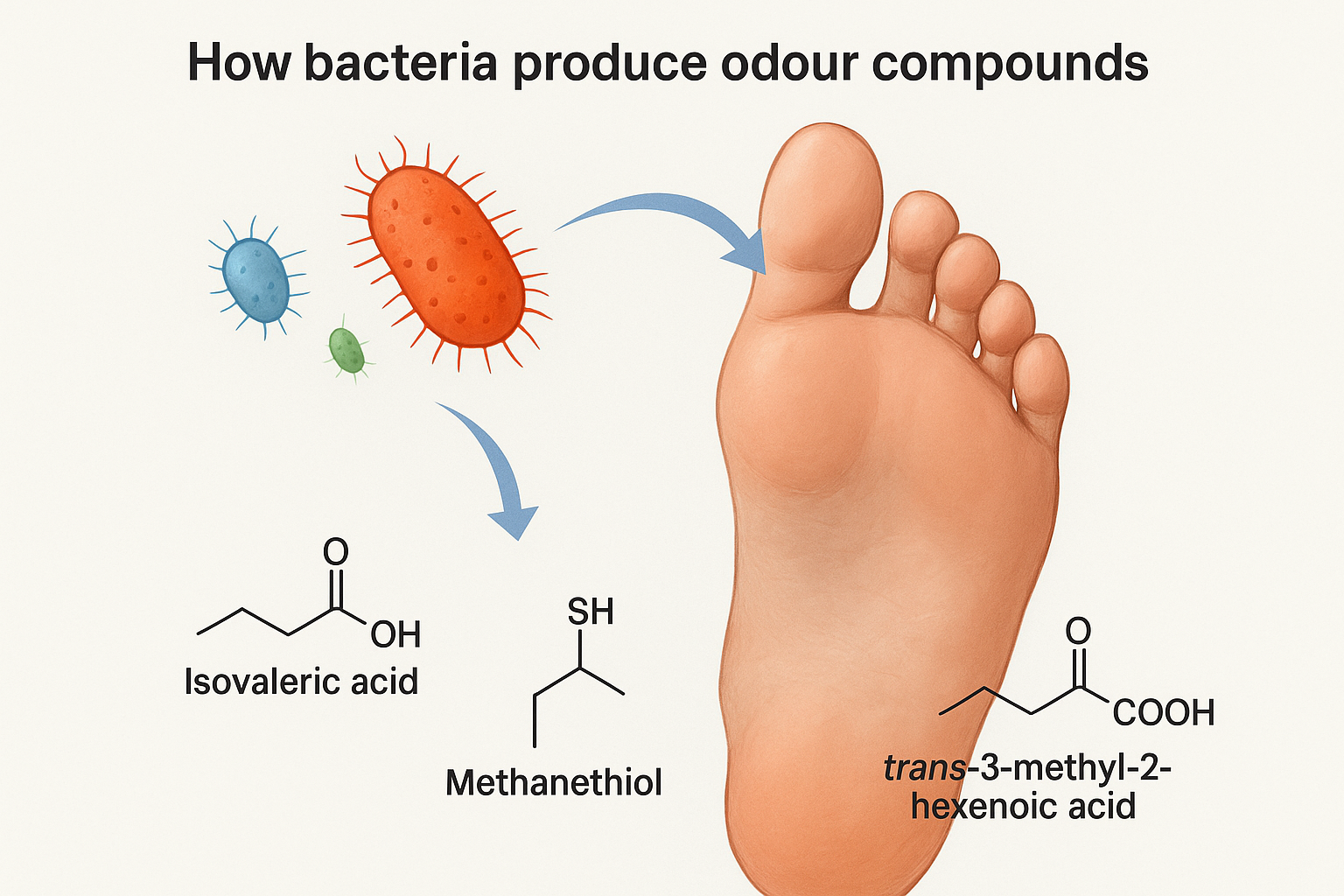
The smell intensity directly reflects how many bacteria are active on your skin, which is why foot odour worsens after long days in enclosed footwear.
Why dead skin cells make it worse
Your feet shed dead skin cells continuously, and these cells give bacteria an additional food source beyond sweat alone. The soles and spaces between your toes accumulate the most dead skin, which explains why these areas tend to produce the strongest odour.
Regular exfoliation removes this bacterial fuel and reduces the organic matter available between washes. Pumice stones and foot files work well on thickened skin and form a practical part of any odour management routine.
Fungal and bacterial infections to rule out
Sometimes what causes foot odour goes beyond everyday bacterial activity. Persistent or unusually strong smell that doesn’t respond to standard hygiene measures may indicate an underlying infection that requires specific treatment to resolve. Two conditions are worth ruling out before assuming the issue is purely a hygiene matter.
Tinea pedis (athlete’s foot)
Tinea pedis is a fungal infection caused by dermatophytes, the same group of fungi responsible for ringworm. It typically affects the spaces between your toes, causing itching, scaling, and a sour, musty odour. The infection thrives in moist environments, and many people carry it without recognising the symptoms as anything more than dry or itchy skin.
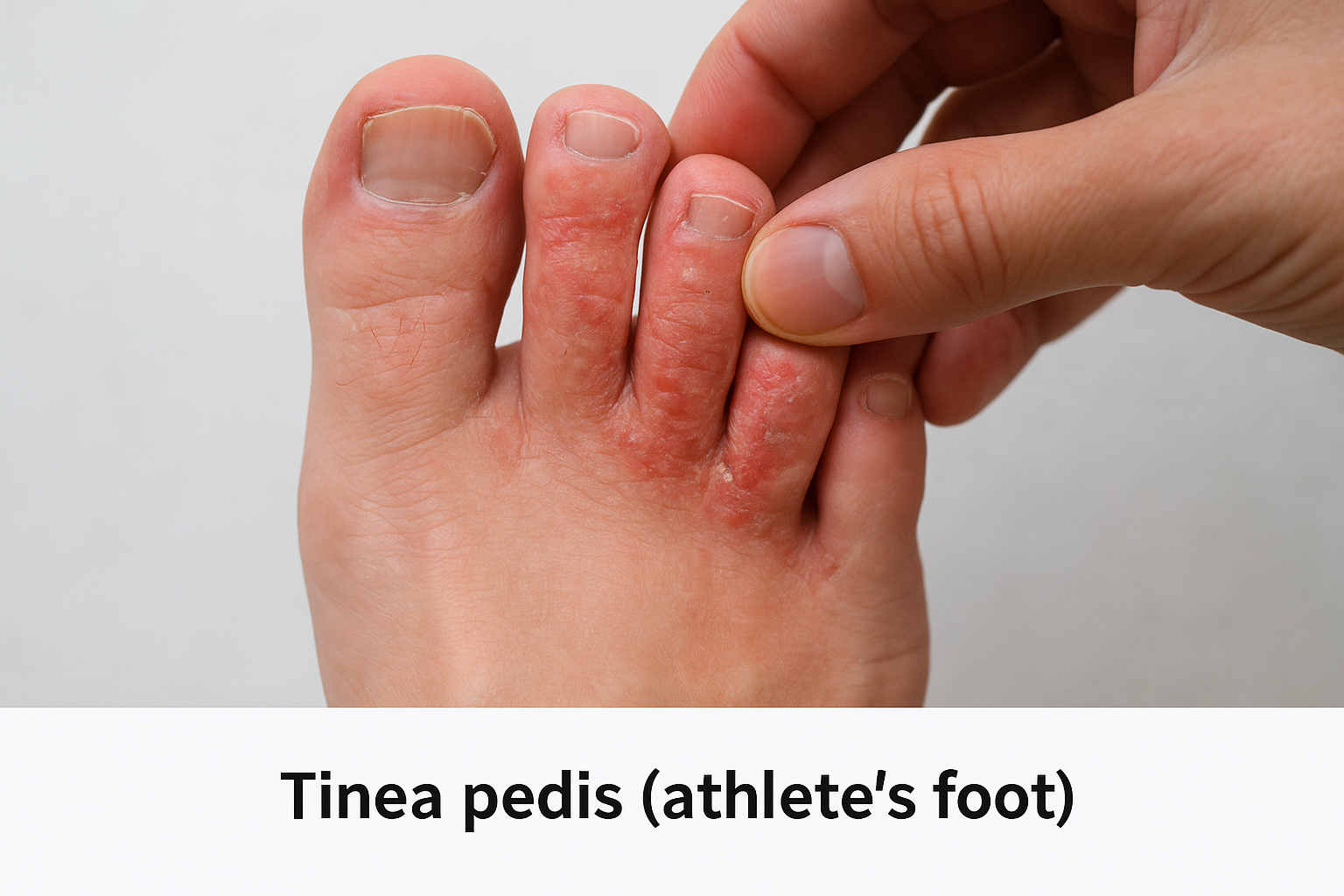
Left untreated, tinea pedis can spread to your toenails and become significantly harder to clear, so early identification matters.
Your podiatrist can confirm the diagnosis quickly and recommend targeted antifungal treatment appropriate for the severity of your infection.
Pitted keratolysis
Pitted keratolysis is a bacterial skin condition that produces a distinctive, strong odour alongside small pits or craters on the soles of your feet. It’s caused by bacteria including Kytococcus sedentarius breaking down your skin tissue. The condition is common in people whose feet stay moist for extended periods, such as those who wear boots or non-breathable footwear all day. Prescription topical treatments clear it effectively once diagnosed.
Triggers that make foot odour worse
Even when underlying infections aren’t the cause, certain habits and circumstances consistently amplify foot odour. Recognising your personal triggers gives you a clearer picture of what causes foot odour to spike on particular days and puts you in a better position to manage it proactively.
Footwear and sock choices
Synthetic materials like nylon and polyester trap moisture against your skin far more than natural fibres do, accelerating bacterial growth throughout the day. Wearing the same pair of shoes on consecutive days also contributes, since damp footwear rarely dries completely overnight and creates a ready environment for bacteria to multiply before you’ve even put them back on. Rotating between at least two pairs gives each one adequate drying time.
Moisture-wicking socks made from merino wool or bamboo significantly reduce the bacterial load on your skin compared to standard cotton or synthetic options.
Diet, stress and health conditions
Certain foods increase the concentration of odour-producing compounds your body excretes through sweat. Garlic, onions, and strong spices are common contributors. Stress also plays a direct role because emotional sweating activates different glands than heat-related sweating, producing a richer secretion that bacteria break down more readily. Medical conditions including hyperhidrosis, diabetes, and hormonal changes can all increase sweat output and shift the bacterial balance on your skin.
How to stop foot odour and keep it away
Addressing what causes foot odour directly gives you a clear path to fixing it. Target bacteria and moisture together rather than just masking the smell after it develops.
Daily hygiene habits that work
Wash your feet with soap and water daily, paying close attention to the spaces between your toes where bacteria concentrate most. Dry thoroughly after washing, since residual moisture drives bacterial growth more than almost anything else.
Drying between your toes completely after every wash is one of the simplest steps you can take to prevent recurring odour.
Antibacterial soap or a diluted white vinegar soak a few times per week further reduces bacterial populations on your skin. Regular exfoliation of dead skin cells removes a key bacterial food source and keeps odour under control between washes.
Managing footwear and moisture
Antiperspirant applied directly to your soles reduces sweat output at the source. Standard roll-on products work well for mild cases, and your podiatrist can prescribe stronger formulations if excessive sweating is the core issue.
Replace insoles regularly, as they absorb bacteria and sweat over time and generate odour even after you’ve washed your feet. Rotating between at least two pairs of shoes gives each pair enough time to dry fully before the next wear, removing the damp environment bacteria depend on.
Key takeaways and next steps
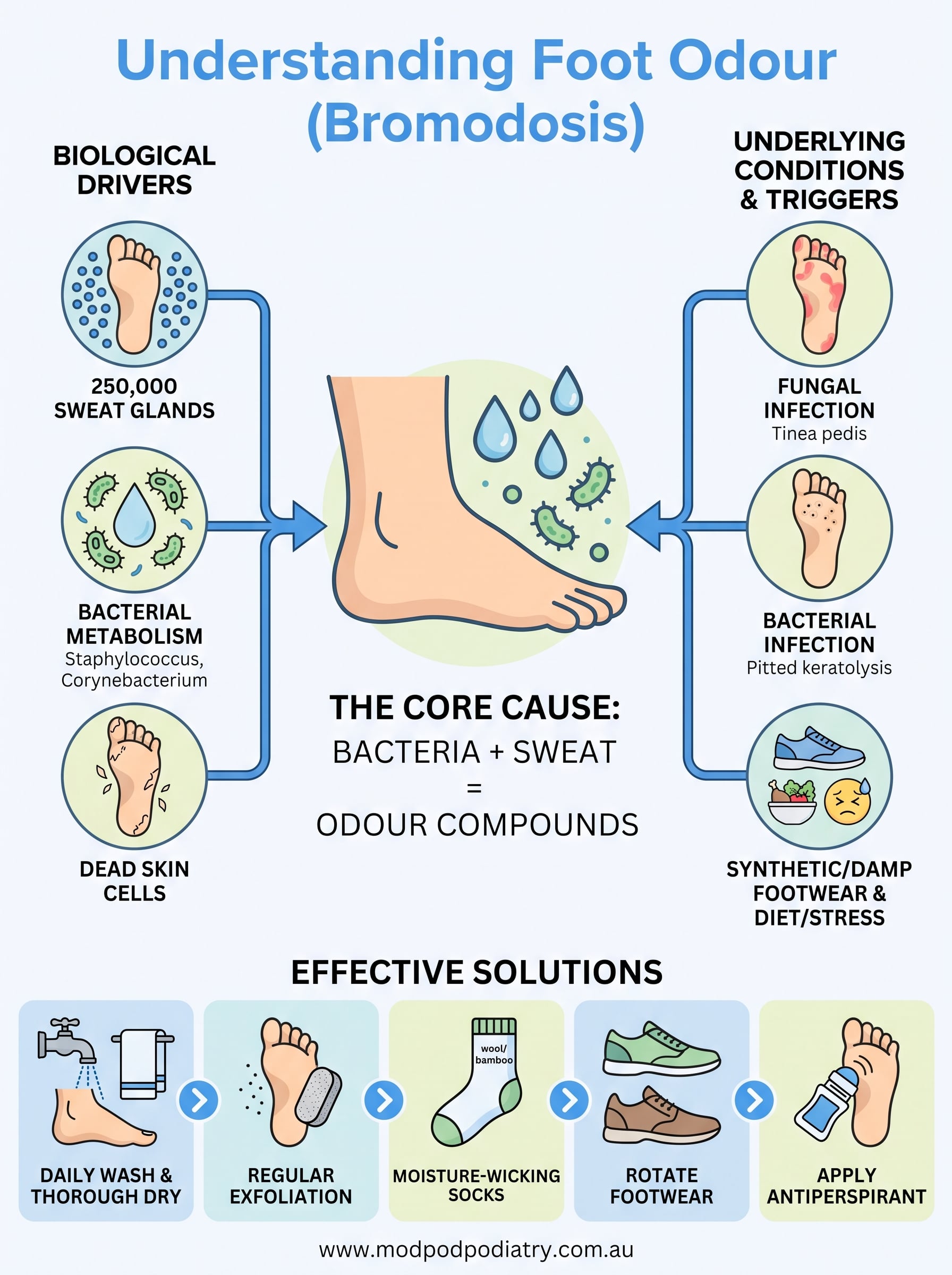
Understanding what causes foot odour makes it far easier to treat effectively. The smell comes from bacteria breaking down sweat on your skin, and it gets worse when moisture builds up inside closed footwear, dead skin cells accumulate, or an underlying infection like tinea pedis or pitted keratolysis goes undiagnosed. Targeting both moisture and bacterial load together gives you the best results, rather than reaching for sprays that only cover the problem temporarily.
Most people see significant improvement within a few weeks of consistent hygiene changes, rotating footwear, and switching to moisture-wicking socks. If the smell persists despite these steps, that signals something more specific is driving it. A podiatrist can identify the exact cause, whether that’s hyperhidrosis, a fungal infection, or a bacterial skin condition, and recommend treatment that actually resolves it.
If you’re dealing with persistent foot odour, book an appointment with ModPod Podiatry and get a clear answer.