

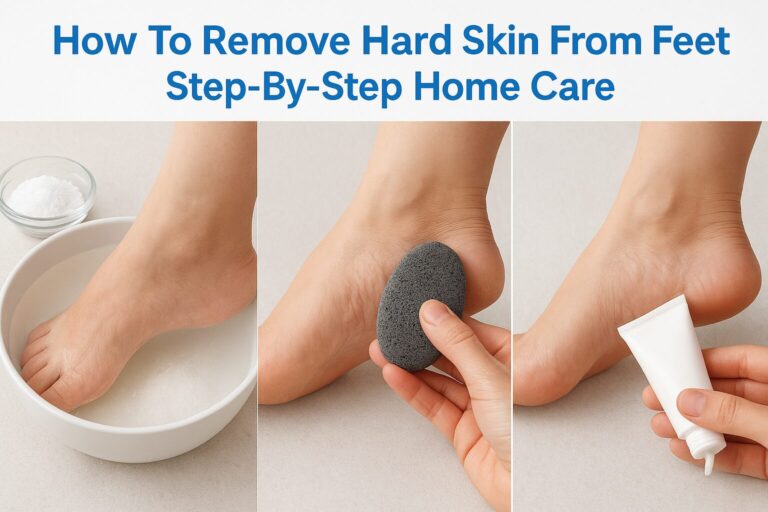
Hard, thickened skin on the feet is one of the most common complaints we see at ModPod Podiatry. Whether it’s built up on your heels, the balls of your feet, or along your toes, knowing how to remove hard skin from feet safely can make a real difference to your comfort. The good news is that most cases respond well to simple home care, when you use the right technique.
That said, not all hard skin is the same. Some calluses are your body’s protective response to pressure or friction, while others signal an underlying biomechanical issue that keeps the skin coming back no matter how often you file it down. After treating thousands of patients across our Sydney clinics over the past 20 years, we’ve seen what works, what doesn’t, and when it’s time to get professional help.
This guide walks you through practical, step-by-step methods for removing hard skin at home, from soaking and filing to moisturising and prevention. We’ll also cover when a callus needs more than a pumice stone and a good foot cream, so you can keep your feet healthy and comfortable long-term.
Understand what hard skin is and why it forms
Hard skin on the feet, known medically as a callus (or hyperkeratosis), is your body’s response to repeated pressure and friction. When your skin detects ongoing mechanical stress, it produces extra layers of a protein called keratin to protect the tissue underneath. This is a normal, protective process, but when the pressure never lets up, the keratin keeps building and the skin thickens into rough, sometimes painful patches.
The skin isn’t malfunctioning when it hardens; it’s responding to a signal that tells it protection is needed.
What calluses and hard skin actually are
Calluses typically develop on the balls of the feet, heels, and sides of the toes, where load and friction are highest. They tend to have a diffuse, flat surface and are usually not painful to touch unless they’ve built up to the point where they create pressure on deeper tissue. A corn is a related but distinct problem: it’s a concentrated plug of hard skin with a defined centre, often found on the tops or tips of toes, and it tends to be significantly more tender than a callus.
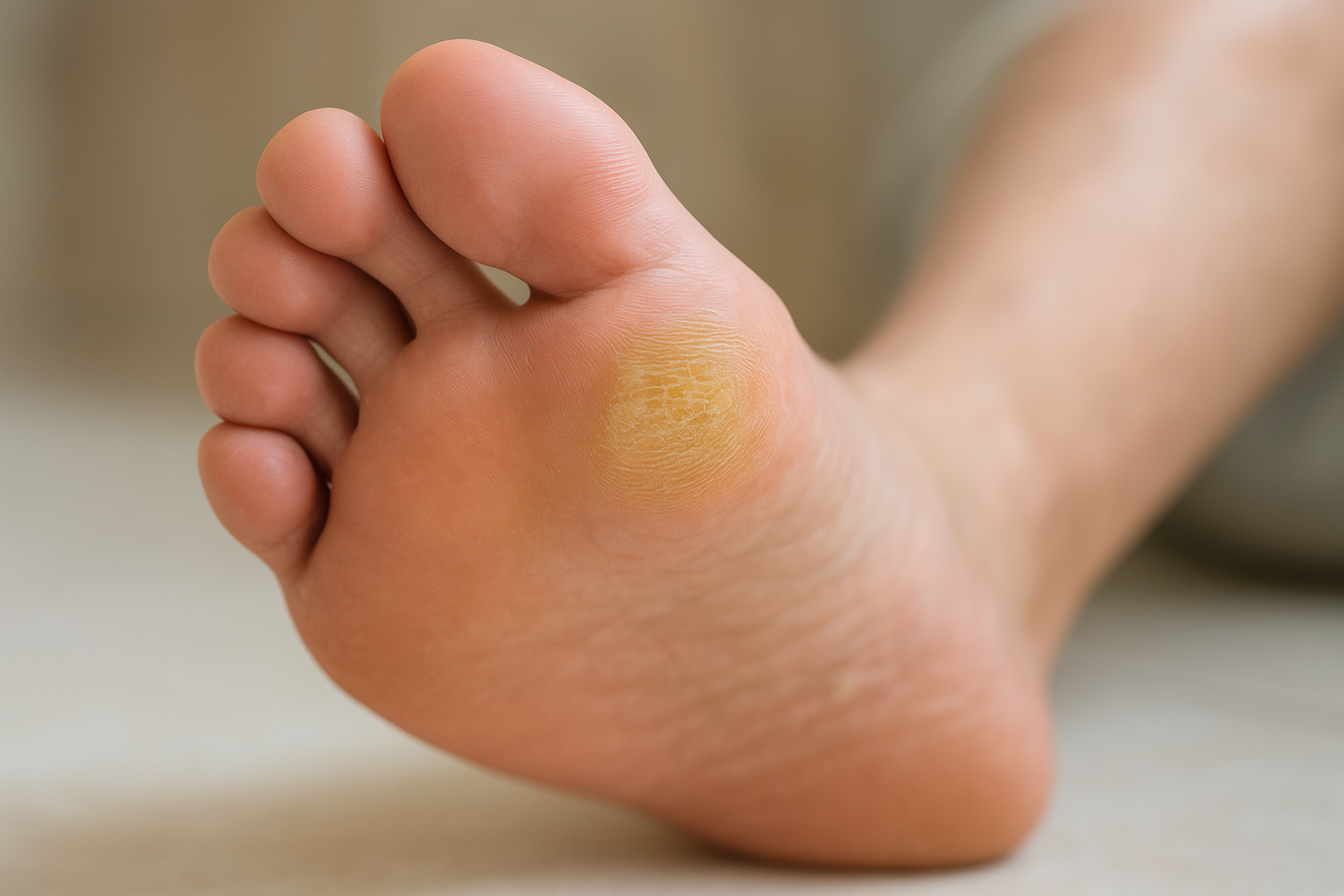
Hard skin also varies in severity, from a thin, flaky surface layer to a dense, yellowed build-up several millimetres thick. The thicker and drier it gets, the more likely it is to crack, particularly around the heels. Cracked heels (heel fissures) can become painful and even bleed if the skin splits deeply enough, so addressing the build-up early matters.
Common causes of hard skin on feet
Understanding why your hard skin forms is the first step in knowing how to remove hard skin from feet effectively and stop it returning. Several factors drive the build-up:
- Footwear: Shoes that are too tight, too loose, or lack adequate cushioning create localised pressure points that trigger thickening.
- Gait and foot mechanics: An abnormal walking pattern, flat feet, or a high arch can shift excess load onto specific areas of the foot.
- Going barefoot: Walking on hard floors without footwear removes the cushioning between your skin and the ground.
- Occupation: Jobs that keep you on your feet all day accelerate thickening through cumulative load over time.
- Age and skin condition: Skin loses moisture and elasticity as you get older, making it more prone to dryness and cracking.
- Underlying health conditions: Diabetes and certain skin conditions can alter the way your skin responds to pressure and reduce your ability to heal efficiently.
Step 1. Soften the skin safely
Softening the skin before you do anything else is the most important step when learning how to remove hard skin from feet. Hard, thickened skin is significantly harder to shift when it’s dry, and attempting to file or scrape it without preparation increases your risk of skin tears and uneven removal. A proper soak loosens the keratin layers, making the exfoliation stage safer and far more effective.
Never skip the soak. Trying to remove dry, hardened skin without softening it first is the most common reason people either injure their skin or see minimal results.
How to soak your feet correctly
Fill a basin with warm (not hot) water and soak your feet for 10 to 15 minutes. Hot water strips the skin of its natural oils and leaves it more vulnerable to dryness afterward. To boost the softening effect, you can add one of the following to the water:
- Epsom salts: Add two tablespoons per litre of water. Epsom salts help break down callused skin and ease achiness in tired feet.
- Mild liquid soap or cleanser: A small amount loosens surface debris and prepares the skin for exfoliation.
- Urea-based foot soak products: These are particularly effective for very thick or cracked skin, since urea works directly on the keratin build-up.
After soaking, pat your feet dry with a clean towel rather than rubbing. Your skin should feel noticeably softer and more pliable at this point, which means it’s ready for step two.
Step 2. Exfoliate and remove build-up
With your skin softened from the soak, you can now safely exfoliate. This is the core mechanical step in how to remove hard skin from feet, and using the right tool with the right technique makes all the difference between smooth results and irritated, uneven skin.
Choosing the right tool
Your choice of tool depends on how thick and stubborn your hard skin is. A pumice stone works well for mild to moderate build-up and is widely available, inexpensive, and easy to control. For thicker calluses, a foot file or paddle file with a coarser grade will be more effective. Avoid metal scraper-style tools; they remove too much skin too quickly and make it easy to overdo it.
Here is a quick guide to help you choose:
| Tool | Best for | Avoid if |
|---|---|---|
| Pumice stone | Mild, general hard skin | Skin is cracked or broken |
| Foot paddle file | Moderate calluses | You have reduced foot sensation |
| Electric callus remover | Thick, stubborn build-up | You have diabetes or poor circulation |
How to file safely
Apply gentle, circular or back-and-forth strokes using light pressure. You are aiming to gradually reduce the thickened layer, not strip it down to raw skin in a single session. Filing for two to three minutes per area is usually sufficient per treatment.
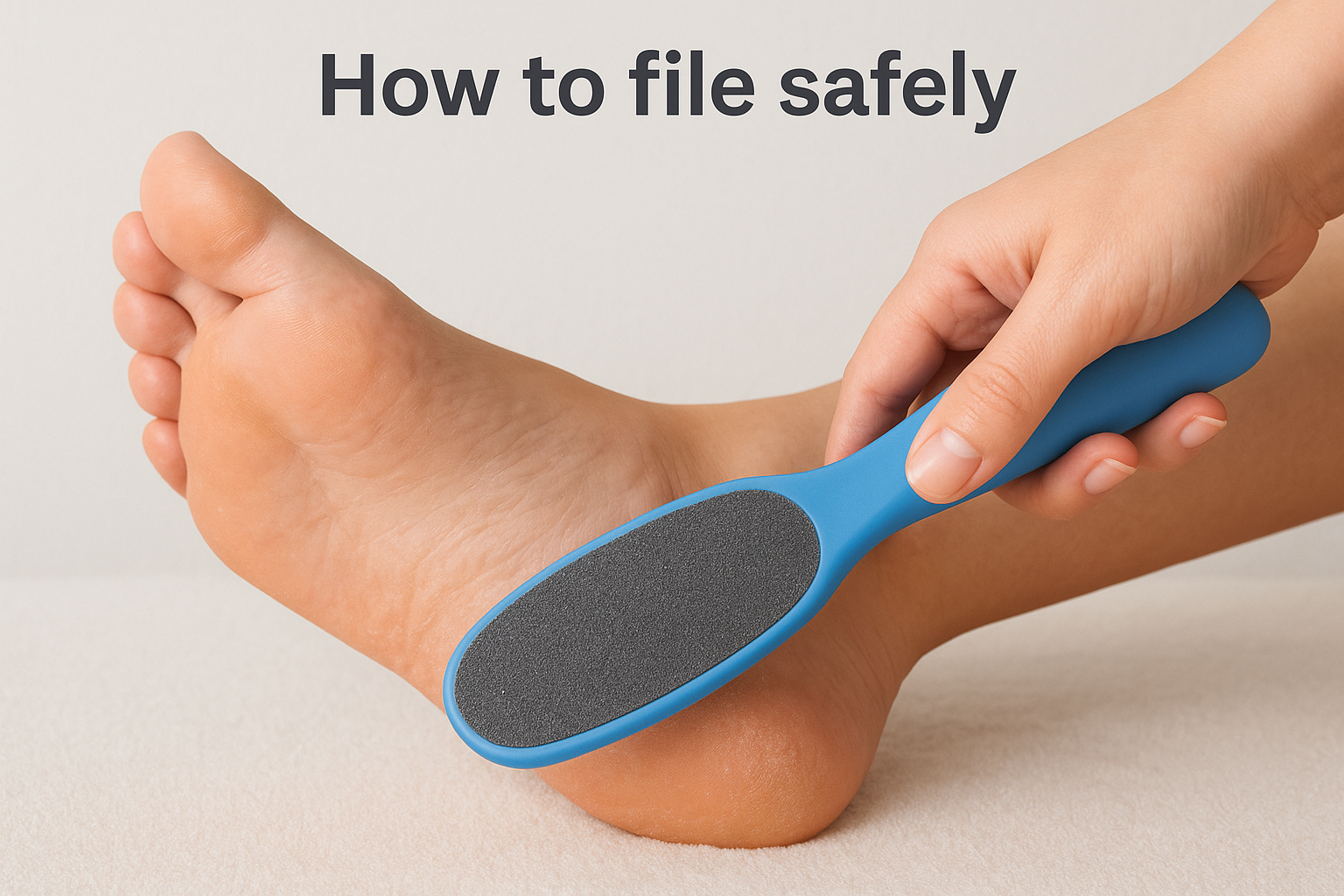
Stop immediately if you see redness or feel discomfort; over-filing causes more damage than the hard skin itself.
Rinse your feet after filing to clear away the loose skin debris, then pat them completely dry before moving to step three.
Step 3. Treat, moisturise, and protect
Once you’ve removed the build-up, the skin underneath is freshly exposed and vulnerable to drying out quickly. Moisturising immediately after filing is the step that locks in your results and prevents the hard skin from returning just as fast. This final stage separates a one-off improvement from sustained, softer skin over time.
Pick the right product for your skin
Not all foot creams perform equally when it comes to targeting thickened skin. Urea-based creams (look for concentrations between 10% and 25%) are the most clinically effective option for softening residual callused skin and maintaining moisture levels between treatments. Salicylic acid creams also break down keratin effectively, making them a solid choice if your hard skin is particularly stubborn and doesn’t respond quickly to urea alone.
A good urea cream applied consistently does more for your feet than any single filing session will.
| Product type | Concentration | Best for |
|---|---|---|
| Light foot lotion | 5-10% urea | General dryness and maintenance |
| Callus cream | 15-25% urea | Established hard skin and heel cracks |
| Salicylic acid cream | 10-17% | Stubborn, thickened patches |
Apply and protect correctly
Massage a generous amount of cream into the affected areas immediately after drying your feet, while the skin is still slightly warm from the soak. Applying moisturiser at night and covering your feet with a pair of cotton socks traps moisture against the skin and significantly boosts absorption. For very dry or cracked heels, repeat this nightly routine for at least two weeks before expecting a consistent improvement. Knowing how to remove hard skin from feet is only part of the solution; the moisturising step is what keeps results lasting.
Prevent it from coming back and know when to get help
Knowing how to remove hard skin from feet solves the immediate problem, but stopping it from rebuilding is where the real long-term difference is made. Hard skin returns because the underlying cause, whether that’s footwear, gait, or prolonged standing, hasn’t changed. Addressing those root factors is what breaks the cycle.
Keep pressure and friction under control
Footwear choice is the single most impactful factor you can control at home. Wear shoes with adequate cushioning and a wide enough toe box to prevent localised pressure points. Replace shoes that have worn unevenly, since a collapsed midsole shifts load onto areas that weren’t designed to bear it. If you tend to walk barefoot indoors, wearing supportive slippers on hard floors reduces friction significantly.
Maintaining a weekly moisturising routine with a urea-based cream and a brief filing session every one to two weeks keeps the skin manageable before it has a chance to rebuild into thick calluses.
Consistent, light maintenance is far easier than removing months of built-up hard skin in one session.
When to see a podiatrist
Some situations call for professional assessment rather than home care. If you have diabetes or poor circulation, always see a podiatrist rather than attempting to treat hard skin yourself, since reduced sensation makes it easy to injure the tissue without realising it. Book an appointment if any of the following apply:
- Your hard skin returns quickly despite regular treatment
- You notice pain, redness, or swelling beneath a callus
- Cracks in your heels are deep, bleeding, or not healing
- A corn or callus is affecting your walking pattern
A podiatrist can identify structural issues like flat feet or an abnormal gait that drive the build-up and recommend custom orthotics or other targeted treatment to address the cause directly.
A simple plan for softer feet
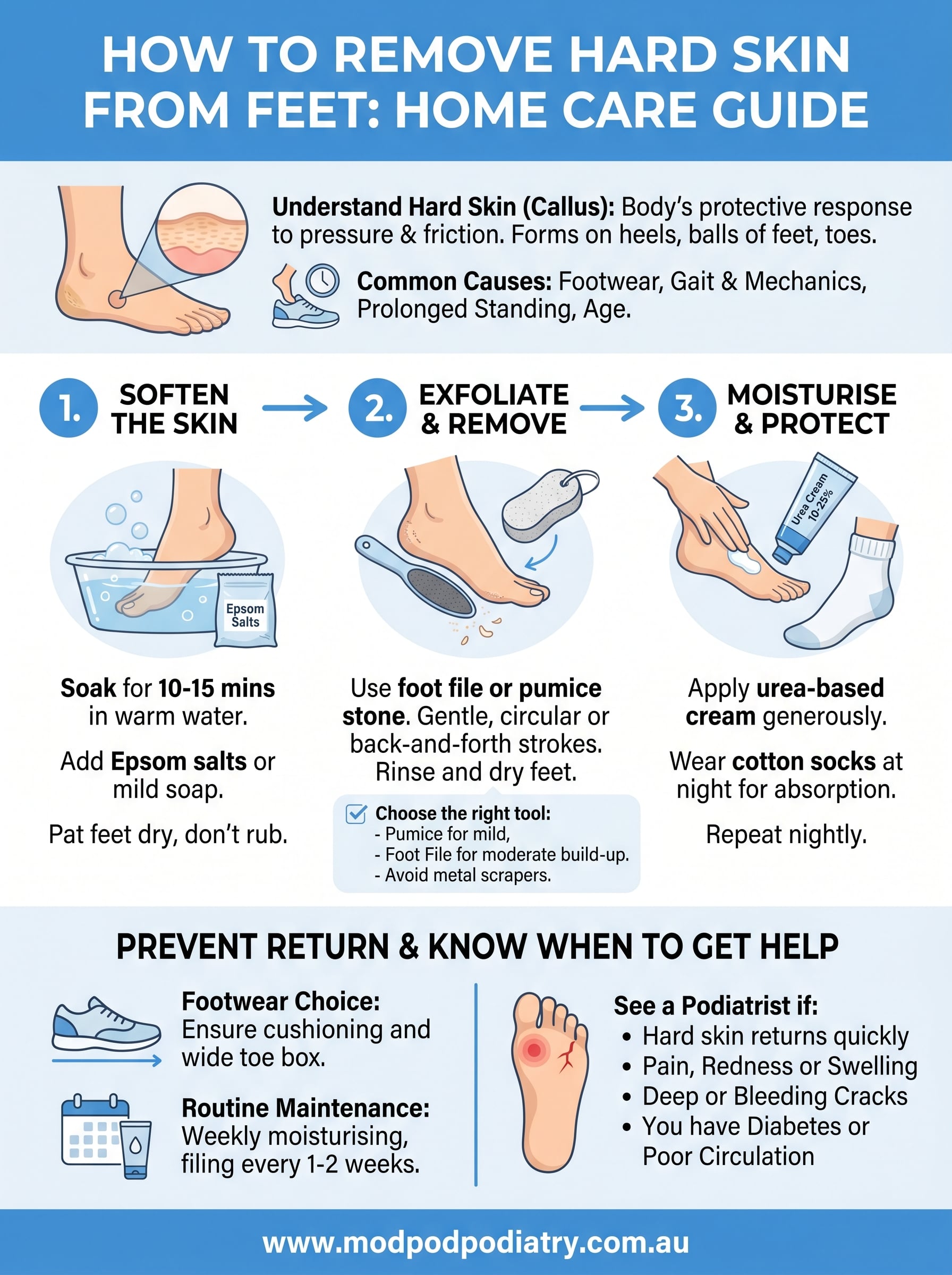
Removing hard skin from your feet does not require expensive treatments or complicated routines. The three-step process covered in this guide, soaking, filing, and moisturising, gives you a reliable method you can repeat at home every one to two weeks to stay on top of the build-up. Consistency matters more than intensity: short, regular sessions will always outperform infrequent, aggressive ones.
Knowing how to remove hard skin from feet is straightforward once you understand what drives it. Footwear, gait mechanics, and daily load are the root causes worth addressing if your skin keeps returning despite regular care. For most people, home treatment is enough. For persistent calluses, deep heel cracks, or any situation where you have diabetes or reduced foot sensation, getting a professional assessment is the right call.
If your hard skin keeps coming back or is causing pain, book an appointment with our podiatry team and get to the root of the problem.